
The Search for a Bad Credit Startup Loan
October 1, 2013Are you trying to start a business despite having no income, bad credit, and no collateral? Well I’ve got news for you… and it isn’t good. There isn’t any hope for you to get a loan. None. Call me a pessimist or a sensationalist for saying so. Heck, I dare someone to prove me wrong! If there is something out there that even exists for people in that situation, be sure to also explain why undertaking such risk would be viable. Let me reiterate the circumstances again:
 So why this example? Well it just so happens thousands of people per day that face all 3 circumstances at once are applying online for business loans. How do I know this? I’m in the lending business. I’ve experienced it firsthand in sales and have also amassed the data through a venture I operate. First let me applaud the entrepreneurs that are making an effort to do something. Some folks believe that people with no job and bad credit just sit at home all day waiting for an unemployment check to come in. That doesn’t seem to be the case at all, not by a long shot. People want to work and when they can’t find a job, they’re trying to start a business. Thousands, tens of thousands, or perhaps even millions of people are saying “Hey you know what? My situation sucks, so I’m going to try and open that store I’ve always dreamed of. I have nothing else to lose.” And that’s great but that’s also the problem. Someone that has absolutely nothing to lose has absolutely nothing to offer a lender.
There are those that are dreamers who pursue their business idea thinking they’re going to get a $2 million loan at 4% interest. They interpret ads that say business loans UP TO $2 million as something of a borrower’s choice instead of the lender’s cap for the most qualified applicant in the world. Believe me, there are actually people with no income, bad credit, and no collateral that will not settle for less than the $2 million stated loan cap. And there are those that accept their predicament of not being credit worthy and broke and apply for a small loan with a very high rate of interest. There’s a still a flaw in that plan though since you can’t even get a payday loan if you don’t actually have a pay day.
Some applicants see this as a challenge. If they just search the Internet long enough and hard enough then surely someone will give them a loan, even if it’s expensive. My belief is that if there is a lender that is willing to give you a loan when you don’t have a business, don’t have an income, don’t have collateral to offer, and have a history of not repaying debts, then it is likely a scam. They’ll ask you for money upfront to secure getting the loan, a hustle known as an advance fee loan scam.
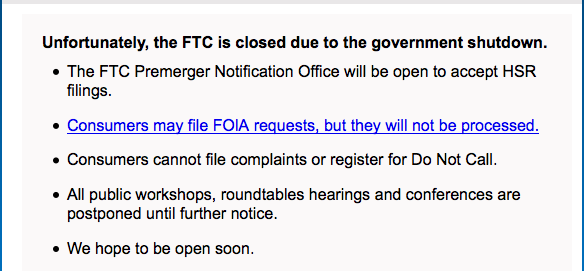
I partially blame search engines for keeping loan hopes alive for someone that has no income, no collateral, and bad credit. Some merchant cash advance companies tell it like it is though in their advertising and are still overwhelmed by startups that have no shot.

Search engines present links and ads that allude that ANYTHING is possible, but the responders to one search result in a Yahoo Answers question seem to understand reality. One commenter emphasizes that if you got a loan with bad credit, no job, no co-signer, and no checking account, then you’d best get it on film since it would be an act of divine intervention.
But Yahoo Answers is just one result in Google’s endless link options and searchers are likely to disregard it.
If you’re familiar with Google’s knowledge graph and the coming age of Semantic Search, I’d advise they get right to the point to save a lot of people time and energy. I mean if you search for what is a manual imprinter? Google will literally get right to the point and spell it out for you. Notice the authoritative source for this definition below:
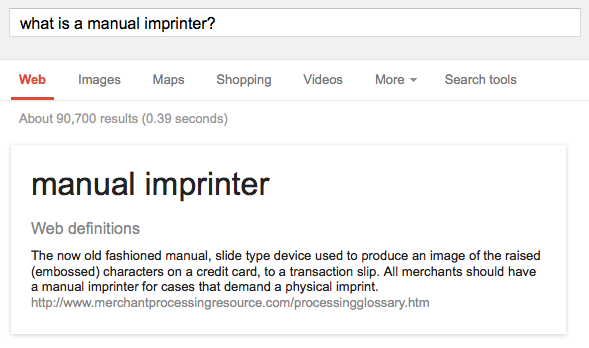
Since Google trusts our content so intently, I’d like to add the following to their worldwide library of facts:

Is there an opportunity here?
No one is serving the incomeless, creditless, and assetless loan market… my God is there an opportunity here?! Kind of… but not with loans. There is a lot this massive market could benefit from and that’s guidance. A loan is out of the question, but it doesn’t mean these distressed entrepreneurs can’t get their hands on capital. Crowdfunding is a term that a lot of people throw around but startups shy away from it. I mean… what is crowdfunding really? Sites like Kickstarter and Indiegogo allow people to pitch their ideas to try to raise donations. If enough donations are pledged to meet the entrepreneur’s goal, the money is granted to the entrepreneur. If the donation goal is not reached, the money is returned to the donors.
What I like to think is different between myself and your average journalist on this topic is that I have been down this road. If you’re wondering who in the world is going to donate funds to launch your startup, project, or product idea, you should know that I have done just that. About a month ago, time expired on an Indiegogo campaign to produce an Ubuntu phone. Ubuntu is a Linux OS distribution. It’s like Mac OS or Windows, except it’s neither of those, it’s Linux. Ubuntu believed there was demand for their distro on the mobile platform. In an iOS and Android world, who says there’s not room for one more? Ubuntu users tend to be passionate about their systems and so Ubuntu called on everyday people to take their product to the mobile level.
$12,814,196 was raised but they fell short of the $32 million goal so the funds were returned to the donors. I was one of those donors.
Now you may only need $5,000 or $10,000 or $20,000 and that’s probably a whole lot easier than $32 million. If your business is really viable in the first place, then pitching it on a crowdfunding site is the best trial run you could possibly hope for. Get people emotionally invested or excited about your business. Go nuts promoting your campaign on social media and on blogs. If you can’t get anyone to care about your campaign through crowdfunding though, then you need to seriously consider how you would somehow make people care about your business once it’s operational. I didn’t donate money to the Ubuntu phone project just because it was posted on the site, I did it because I felt like I couldn’t imagine a world where there wasn’t an Ubuntu phone. I became emotionally invested in it.
Supplementary solutions
In my experience, many individuals applying for a startup loan want to address issues like their bad credit, not being incorporated, and not having a business plan until AFTER they get the money. Not all, but many think these are roadblocks or tricks to get them to shell out money they don’t have. They want a guarantee that if they do X, then they will be approved for Y, but it doesn’t work that way. Sometimes you have get your ducks in a row just to make the case that you are credit worthy even if it’s ultimately decided that you are not. Stinks right? That’s the way it goes though.
No income, bad credit, BUT you have collateral
I may have started my rant by painting an apocalyptic picture for startups faced with 3 terrible circumstances, but there is light in the darkness if you’re shooting only 2 for 3. If you’ve got collateral, that’s awesome. My question is though, what do you have? You might be able to get a title loan with your car or a pawn loan for your valuables. I didn’t say the heavens were opening up with these choices, but the possibilities are. Lenders like Borro will actually let you put your jewelry, artwork, antiques, diamonds, gold, or luxury automobiles up as collateral for a short term loan. The only downside is that they will actually come and pick up the item(s) for safekeeping to make sure you pay. And if you don’t, they’ll sell the item(s) off to make up the difference. But hey, if you fully plan on paying back the loan, then what’s the problem?
You have an income, but you have bad credit
This is a start. Having a steady income just upped your chances of repaying a loan. The bad credit is still a problem though, a big one. Mainstream lenders and mainstream alternative lenders are a long shot because the FICO scoring model predicts with high likelihood that you will become delinquent on your payments. Payday lenders are in reach with an income, but they’re probably not a good source for startup capital. How much can you really do with $500 to $2,000 anyway? Just the act of incorporating can run $500.
You have both income and really good credit
 This is the only point where the merchant cash advance industry has a chance to find common ground with startups. People have been asking me for years about what in the heck to do about all the startups that flood their phone lines and mob their websites. First the question was about how to make them go away, then how to sell them products to help get their businesses started, then how to find someone who will lend to them, and the back again to how to make them go away. The consensus is that no one will fund startups. Well, some will say they do but as long as they are in business already and can show documented sales history and bank statements. 99% of startups that apply for a loan in the merchant cash advance arena haven’t gotten that far yet though.
A 600 FICO is not a good credit score. Maybe some folks in the merchant cash advance industry will tell you that it is but in the traditional lending world this score is crap. If you have good credit (700+) and a verifiable income, you can in fact get a loan to start a business. It won’t be a true business loan though, perhaps to the dismay of entrepreneurs that falsely believe they can set up a legal entity to shield them from any liability to guarantee it. It will be a personal loan that is personally guaranteed.
This is the point where a regular journalist would cite a random press release about all the startup loans available to small businesses even though they have no idea what’s involved or how true it is. Much like my personal experience with Indiegogo above, I have personally succeeded in taking applicants with no operational or functional business and helped them get a loan. It hasn’t been a lot of people and there’s very little money to be made in it from a reseller standpoint but startup loans exist. I’ve done it with Prosper and Lending Club, but I should warn you, they are very strict on credit criteria and manually underwrite files like a bank would. The only difference is that it’s faster and there are realistic odds of approval.
I didn’t particularly like my experience with Prosper, mainly because they seemed to harbor ill will towards the merchant cash advance industry. This was communicated to me in my conversations with them and as such the decline rate on applicants I referred to them neared a whopping 99%. My experience with Lending Club was a little bit better, in part perhaps because of their recent backing by Google. The last time I ran the numbers, they had approved 11.1% of my deals. To an entrepreneur this success rate probably sounds horrible, but compare it to the 0% approval rate for a startup loan with a merchant cash advance company.
Entrepreneurs with really good credit and an income can up the approval rate by trying another channel, the credit card. Just know that even if you get it in the name of the business, it’s going to be personally guaranteed. And how do I know that you can get a business credit card for a startup? There’s that experience thing again… When I was starting a business, I was able to get a business credit card with a decent sized line just because I had good credit and sufficient income. They didn’t care so much about the business itself, so long as I met their other criteria. You will need to be incorporated and have all of your business ducks in a row though to make this happen.
You have a very young operating business
Once you cross the threshold from a startup business with no sales to a startup business with sales, supporting business documents, and bank statements, well then congratulations because you’ve finally entered the realm of being eligible for a merchant cash advance. You’re not guaranteed an approval and there are still minimum criteria to be met depending on where you apply. Credit may or may not be a factor. Sales volume will make a major difference in what you’re eligible for. Most funders require an absolute minimum of $10,000 in monthly gross sales. The rates will be less than ideal and you’ll likely have to settle for less than the lender’s $2 million loan maximum. $10,000 in monthly gross sales might only equate to a $5,000 approval.
If you’re looking for that real shot in the arm, like a million dollars on really low sales volume, then you could always try the equity game and pitch investors like on Shark Tank:
If you had to ask Billionaire Mark Cuban where to get a startup loan, he’d say not to bother with one at all. Good credit? Bad credit? It doesn’t matter. So many startups fail so why would you risk screwing yourself over with debt if things just don’t work out?
I agree with Cuban’s comments in the video that it’s a hell of a risk to a take out a loan when you’re just getting started and lenders look at it the same way… one giant hell of a risk.
That’s why I shake my head when I see applicants out there with no income, bad credit, and no collateral applying for loans on any and every lending website on the Internet. The odds of an approval no matter what the advertisement says is astronomically low. I don’t think startup loans for applicants like that exist and I invite anyone to prove me wrong.
I’m serious about this. E-mail me at Sean@merchantprocessingresource.com
No End in Sight for Alternative Lending
September 17, 2013 Which one of these three isn’t like the other two?
- Quicken Loans
- RapidAdvance
- Cleveland Cavaliers
It’s a trick question because as of September 16, 2013, All three are owned by Rockbridge Growth Equity, a Detroit-based private equity firm. RapidAdvance announced the acquisition over the news wire, shocking many people around the industry. The move opens RapidAdvance to the connections and prowess of Dan Gilbert, the 126th richest man in the United States. Gilbert is worth approximately $3.9 Billion, is the founder of Quicken Loans, and he owns 4 sports teams, including the NBA’s Cleveland Cavaliers.
Compare that to On Deck Capital board member Peter Thiel, who is worth $1.9 Billion and is the 309th richest person in the U.S. You may remember Thiel, the co-founder of PayPal and first investor in Facebook as participating in a series D round for On Deck Capital along with Google Ventures back in May.
These are truly some historic times. Two of the richest people on all of planet Earth have stock in the merchant cash advance industry. Does that tell you anything about the direction things are moving in? Think about that one again… Two of the richest men in the world have invested in the merchant cash advance industry.
Four years ago, an influential friend advised me that this industry would be eradicated by 2010. As told through The Bubble That Wasn’t, some people left the business prematurely fearing the best days of alternative lending were over. At present, it looks as if those best days are still yet to come.
The Rockbridge Growth Equity move comes less than a year after Steven Mandis bought into RapidAdvance. He will reportedly stay on as a shareholder.
On Deck Capital
In other news, On Deck Capital announced that they’ve raised another $130 million in debt financing, leveraging themselves out even further. ISOs in the industry report that they’re ON FIRE with approvals. Rumors about a possible IPO on the horizon are starting to pick up again but my sources tell me that isn’t likely to happen with On Deck for another 2-3 years.
Alternative Lending: People are Finally Getting it
September 12, 2013 Alternative lending is all the rage these days and so much so that BusinessWeek asked the question: What Do Small Businesses Need Banks for Anyway?. They go on to name many companies with ties to the merchant cash advance industry, which is no surprise to us of course. It is interesting however to notice that the mainstream media is not only giving us the time of the day, but starting to treat us like royalty.
Five and a half years ago this very same collective of lenders were referred to as bottom feeding vampires¹. Over the next couple years they upgraded us to a very expensive alternative, then to an acceptable alternative, and now finally to who the hell needs banks when you have these great companies?!. You have to laugh just a little bit at the shift.
It’s easy to call a lender that charges high rates a bad seed when you have no sense of the context. The reality in lending is that a material amount of borrowers don’t make their payments on time or they don’t pay back the loan at all. That causes rates to go up to compensate for the losses. Critics argue that borrowers can’t make the payments or default because the rates were too high to begin with. Some lenders cave to that assumption and position themselves as a fair lender by undercutting the market rates. They eventually learn that defaults are less related to the cost of the loan and more so tied to a borrower’s willingness to repay or ability to repay. Meaning, loans with no interest tacked on to the principle will still be rocked by late payers and defaults. Wait, seriously?
Yes, welcome to America where sometimes borrowers face circumstances beyond their control or they maliciously decide they don’t want to pay. The overwhelming majority are in the former camp, the ones where sudden or gradual hardship is interfering with their ability to make good on their commitment. I admit, even I feel uncomfortable mentioning this. Nobody wants to be seen as picking on borrowers. We’d all rather pretend that lenders are inherently bad and borrowers are inherently innocent. The truth is that most lenders and borrowers are good but some lenders and borrowers are bad. Lending is a two way street and what’s fair for all is somewhere in the middle.
My friends in the commercial banking sector tell me their tolerance for bad debt is less than 1%. Even 1 single loan default over the course of a year could cause their entire portfolio performance to come crumbling down. They do make loans, but they’re often in the tens of millions or hundreds of millions of dollars and only to large established businesses that quite often, don’t even need the capital but would rather not jeopardize their liquidity by spending their own cash. Some of these loans end up getting classified as small business loans even though there’s nothing small business about them.
Mom and pop shops see the statistics and the corresponding rates of say 4% to 10% APR and set that as the bar to shoot for. Then they head down to their local bank and hit a roadblock. The average small retail/food service business is going to have a greater than 1% chance of default no matter how good it looks on paper. I mean think about it, what are the odds that things will go 99% as planned for a restaurant over the next 12 months? Do you think it’s reasonable to assume there is at least a 5% chance that any of the following could happen in the next year even without knowing anything specific? A failed health inspection, bad reviews published online, a revoked liquor license, construction outside impeding pedestrian traffic, internal damage caused by a flood or disaster, extreme weather hurting sales, major job losses in the area leading to people having lower disposable income, key employees quitting, theft, landlord not renewing the lease, competitor opening up in the neighborhood, or declining sales for no single identifiable reason? Lending money to retail businesses is risky, really risky. Suppose the above business owner had a history of late payments and defaults to begin with. At what cost does it begin to make sense to do this deal? And those are just the risks of what could happen to the business itself, so what about the other risks involved?

To a bank, the stereotypical entrepreneur is damaged goods. The hard knock humble beginnings of turning a vision into a successful business usually comes with personal financial sacrifice and in turn a lower credit score. And just as the successful entrepreneur is getting ready to explain his/her high debt to income ratio and story of triumph, they’re already being declined. Banks don’t care about the story. They care about the aggregate mathematics. If there’s just a 5% chance that the business isn’t going to be where it thinks it will be in a year from now, then the deal’s probably a non-starter. Leveraged? Declined. Poor credit? Declined. Business is running smoothly? Who cares, it’s declined already!
 Extension on your taxes? Declined. Showing modest profit or a loss for tax purposes ::wink wink:: ? Declined. Didn’t file a tax return? Declined. Co-mingling funds with your personal finances? Declined. Overdrafts or NSFs? Declined. Unaudited financials? Declined. No collateral? Declined. Doing the books with paper and pen? Declined. Have less than 5 employees? Declined. Can’t find a document the bank wants? Declined. Need the money really badly? Declined. Experiencing a downturn? Declined. Have a tax lien? Declined. Have a criminal record? Declined.
Get the picture? If you take a look at Lending Club, an alternative lender, they’re widely known to have a 90% decline rate. Their maximum interest rate is 29.99% APR. Think about that for a second. Some people would say, “WOW, 30% are you kidding me?” but statistically, Lending Club would be losing money on the deal 9 times out of 10 if they approved every single person that applied. Lending Club actually used to be more liberal with their approvals when they first started and what happened is that too many borrowers just didn’t pay. If you believe that Lending Club should approve even more loan applications than they already do, then they would have to compensate for the increased risk and we’d quickly see APRs reach well into the 40s,50s,and 60s.
A critic might argue that once an applicant exceeds the risk of a 30% APR loan, they probably shouldn’t be getting a loan from anyone. That’s not a bad suggestion and what happened is that when the lending world concurred with that 5 years ago, Americans and politicians went up in arms because “Banks weren’t lending.” No loans? Businesses can’t hire. No loans? Businesses can’t grow. No loans? Economy gets stuck in neutral. The nation demanded that capital flow despite the risks presented to the lenders. And so the finance world heeded the call to provide solutions and came up with a smorgasbord of financial products. Merchant Cash Advance financing was already established but had an especially unique characteristic that allowed it to take off. It structured financing as a sale, not a loan. A big problem was that traditional lenders and alternative lenders were at the mercy of state regulated interest rate caps. Once an applicant reached a certain risk threshold, they just couldn’t do the deal anymore. But when financial companies came in to buy future revenues in exchange for a large chunk of cash upfront, the system started to gain some traction.
The effective cost of the money got high, very high, yet they weren’t predatory. I say that because despite how expensive it seemed, most of them were getting eaten alive by defaults. From 2008 – 2010, many merchant cash advance companies filed for bankruptcy. One of the main attributes of a predatory lender is for the lender to actually be getting filthy rich. That means layering on interest way in excess of a healthy profit. Losing a lot of money to help borrowers and small businesses when no one else will can hardly describe a predatory lender.
One has to wonder that perhaps there is a better way. If unsecured financing breeds high defaults, then surely things would be different if a risky applicant secures the loan with collateral. Have the borrower put skin in the game and we’d have a different outcome right? Lenders such as Borro publicly describe their default rate as falling between 8-10%. They offer collateralized personal loans and are described as a “pawn shop for the posh” in the below video, though most of their clients are small business owners. This tells me that even in the instance where borrowers have something very valuable to lose, a significant percentage of them will not repay the loan in full regardless.
A look around at what merchant cash advance companies have been willing to admit has put their average bad debt between 2-5%. In my experience in this industry however, 8% – 15% is a lot more realistic. But are these funding companies getting filthy rich or treading water? Anyone can look at the financial statements of IOU Central², a lender that’s part of the broader merchant cash advance industry. Since they’re owned by a publicly traded company in Canada, we get to see firsthand that they’re suffering tremendous losses quarter after quarter. I find that to be perfectly in line with what I suggested about undercutting the market earlier. IOU Central’s allure is that their loans cost less than a traditional merchant cash advance. The end result is that after paying commissions to sales agents, paying interest on their capital, and factoring in bad debt, they’re hurting pretty badly.
On Deck Capital too, a company mentioned in the BusinessWeek article above acknowledges that they are not profitable, though they do not make their financials public to verify how unprofitable they are or if that’s really even the case.
An SBA loan through a bank may cost approximately 5.5% APR, but if the loan goes bad, the SBA covers almost all of the bank’s losses. There is no such security blanket in the real private sector. The market determines the rates based on the risk. Each funder measures risk differently and in 2013, there is no longer a one-size-fits-all cost of unsecured funding much like there was in 2007 with merchant cash advances. Compared to a bank loan, almost all of these alternative options will be perceived as expensive, but if banks don’t approve anyone, then they’re a terrible standard for a comparison.
It’s taken a long time for the public and the media to come to terms with that. Banks are still technically in the game but by proxy. They are financing numerous alternative lenders and merchant cash advance companies. Banks shouldn’t be lending out their client’s deposits to really risky businesses anyway. A bank is supposed to be safe. If they’re lending money to 100 businesses and 15 of them aren’t paying it back, then that’s the opposite of safe.
 So what do small businesses need banks for anyway? Checking, payroll, overdraft coverage, debit cards, wires, record keeping, CDs etc. There is a place for banks in 2013 and beyond. Alternative lenders charge more and that’s okay. Ultimately it’s up to the borrowers to decide what they can sustain. It is better to have expensive options than no options at all. There’s endless proof of that when credit dried up five years ago. Small businesses cried foul so the market reacted. And here we are now with Kabbage, On Deck Capital, Business Financial Services, and Capital Access Network being portrayed as the norm, the new standard. Almost everything that would cause a bank to say “no” can be resolved in some way. That’s incredible and how it should be.
People are finally getting it.
– Merchant Processing Resource
../../
MPR.mobi on your iPhone, Android, or iPad
¹ It took 5 years but Forbes has Finally deleted the March 13, 2008 article that haunted the merchant cash advance industry forever. In Look Who’s Making Coin off the Credit Crisis, Maureen Farrell referred to merchant cash advance companies as vampires that were feasting on small businesses and singled out some of the biggest names in the business at the time. It was Global Swift Funding* (GSF), one of the major funders cited by Farrell that exposed this assertion to be blatantly false. Not too long after the article was published, GSF closed their doors and filed for bankruptcy. It would seem that small businesses actually feasted on them by defaulting in record numbers. Back in April of this year, Forbes essentially rebuked that article when Cheryl Conner revisited the industry to note how much good it was doing in ‘Money, Money’ — How Alternative Lending Could Increase Your Company’s Revenue in 2013
*Disclosure: Raharney Capital, LLC the owner of this website currently owns the former domain of Global Swift Funding (GlobalSwiftFunding.com) though the companies did not have and do not have any ties to each other.
² IOU Central is a subsidiary of IOU Financial Inc. Management’s Discussion and Analysis of Financial Condition and Results of Operations as of August 22, 2013 are available at: http://cnsxmarkets.com/Storage/1563/144040_MDA_%282Q2013%29_-_FINAL.pdf
Don’t Throw That Deal Away, Factor It
September 3, 2013 As we start off our first blog post in Merchant Processing Resource, I’d like to talk about a deal that we just got a factoring line for:
A landscaping company came to SFS because his business was starting really to take off and was beginning to get large contracts to provide masonry and landscaping work. The merchant was approved for a cash advance but it was not enough to cover the funds he needed. He applied to SFS+ for an Accounts Receivable factoring line and was approved for $500,000. The line allowed the merchant to sell SFS+ outstanding invoices for work that was already completed for a large office complex and shopping center. Between the factoring line and the Cash advance line the merchant received $650k in working capital!
He went to his local bank and while the bank said they love the depositing relationship, they have no interest in lending him money. Next stop: his accountant — the accountant said they would have to have a balance sheet for the bank. Well his business did not have 12 months to build his balance sheet he needs to address the opportunity (not a problem) today!
He found us though an SFS ISO and realized that we were a one stop solution for ALL of his cash flow needs.
SFS and SFS+ provided his business with a cash advance and factoring line. So, not only did they address his current opportunity they also enabled him to expand his business as much as he wants, and when his balance sheet is stronger he can go back to the bank.
So how do you know when factoring is a good option??
Ask them: “does your business have receivables?” if they say yes, ask them to submit your cash advance application and their business’ accounts receivable aging reports, we can then give you a quick response on how we can move forward.
Split Funding is Here to Stay
August 21, 2013 I’ll say it for the hundredth¹ time, the advantage of split-funding is the ability to collect payments back from a small business that has traditionally had average, weak, or poor cash flow. Let’s put that into perspective. There is a distinct difference between a working business with poor cash flow and a failing business. A failing business is typically not a candidate for merchant cash advance or similar loan alternatives.
Poor cash flow could be the result of paying cash up front for inventory that will take a while to turn over. A hardware store with a healthy 50% profit margin may be able to turn $10,000 worth of inventory into $15,000 in revenue over the course of the next 90 days. The only problem is that the full $10,000 must be paid in full to the supplier on delivery.
Enter the merchant cash advance provider of old that discovers the hardware store has had a fair share of bounced checks in the past, mainly because of the timing of payments going in and out. Cash on hand is tight, the credit score is average, but the profit margin is there. Most lenders would take a pass on financing a transaction that carries legitimate risk such as this one does, that is until the ability to split-fund a payment stream became possible.
Advocates of the ACH method tout that it’s just so much easier to set up a daily debit and scratch their heads and wonder, “man, why didn’t we think of just doing ACH in the first place?”
The thing is, people did think of it and they concluded that for a large share of the merchants out there that needed capital, it didn’t make financial sense to try and debit out payments every day with the hope that there would always be cash available to cover them. Banks have had a hard enough time collecting just one payment a month, so what makes 22 payments in a month so much more likely to work?
I’m not inferring that there is something wrong with the daily ACH system that has taken the alternative business lending industry by storm. There’s plenty of situations for which that may be the best solution, especially for businesses that take little or no credit card payments. My point is that the split-funding method isn’t going to shrivel up and die. It’s here to stay. So long as businesses have electronic payment streams, they will be able to leverage them to obtain working capital.
When it comes to splitting card payments however, it’s important for a business to have faith in the payment processor. Reputation, compatibility with payment technology, and the assurance that the business will be able to conduct sales just as it always has are important. If you’re a funder, ISO, or account rep, it’s your responsibility to make sure that those three factors are addressed. A lot of processors are willing to split payments but they haven’t all made a name for themselves in the industry. Integrity Payment Systems (IPS) comes to mind as one that almost everyone works with and I’ve been in touch with Matt Pohl, the Director of Merchant Acquisition of IPS for some time. He’s been nice enough to share a little bit about what makes a split partner special, and what has made them particularly stand out in the merchant cash advance industry.
Clearly, the role of the credit card processor has diminished over the last couple years when it comes to merchant funding. ACH/Lockbox models have become more prevalent which created a sales mindset that switching a merchant account was more of a hindrance than a necessity. Some argue the decline in profit margin on residuals, due to price compression, made it no longer worth the time and effort to make an aggressive pitch to switch the merchants processing. ISOs also argue that too often merchants have reservations to switch processors because of previous bad experiences, cancellation fees, or because they simply know its not necessary in order to be funded. This is where it’s important to have the RIGHT split partner, not just any split partner
What makes Integrity Payment Systems a “special” split partner is the fact we control the settlement of the merchants funds, in house. IPS is partnered with First Savings Bank (FSB), which allows us a unique way of moving money. Because of our state-of-the-art settlement system and direct access to FSB’s Federal Reserve window, we eliminate the necessity of having layers of financial institutions behind the scenes that merchants funds typically filter through. This is a HUGE benefit to cash advance companies for several reasons. First, we implement the fixed split % when we receive the request, in real time. This allows the deal to be funded quicker. Secondly, since we handle the settlement process we have access to the raw authorization data which allows us to provide comprehensive reporting on a daily basis from the previous days activity. But also we can do true next day deposits, including Friday, Saturday, and Sunday funds available for the merchant on Monday morning. This is especially valuable when selling to restaurants/bars, or any other industry with a lot of weekend volume. Lastly, IPS makes outbound calls to merchants, on behalf of the sales agent and cash company, to download and train the merchant on their terminal. A confirmation email is sent to the agent which includes any batch activity so the deal can fund.
As an added example of this, on the last week of every month, the merchant boarding and sales support team fully understands that our MCA partners have monthly funding goals they need to reach. The IPS team goes above and beyond to ensure merchants get setup properly in time so those accounts can be funded before the month is over. We have a motto at IPS that the sales force are our #1 customers, and nowhere is that more apparent than by the way we take over all the heavy lifting once the agent gets the signatures on our contract. We firmly believe that by helping the agent by taking over the boarding process, that this will allow them to do what they do best, sell more deals!! A lot of competitors expect the agent to be involved in the boarding process, and that’s valuable time that takes them away from selling.
IPS has opened their doors to every MCA company that wishes to have an exceptional split funding partner/processor. We have all the necessary tools to provide this service the right way, and we want the opportunity to earn the business of every working capital provider out there. You don’t have to listen to a sales pitch from me, because I strongly believe that our reputation in the cash advance space speaks for itself. We would love the opportunity to talk to any MCA provider about a few additional services we offer utilizing our settlement system that will allow ISOs to fund more deals.
– Matt Pohl
(847) 720-1129
Integrity Payment Systems
One thing I can personally attest to about Integrity is their human factor. You can actually meet some of their team and see inside their office in the fun youtube video below:
Getting deals done
Ultimately, the financing business is about getting deals done and there are countless small businesses that just won’t ever be a candidate for ACH repayment. Heck, for many years the merchant cash advance industry wasn’t even a financing industry of its own, but rather it was one of many acquisition tools for merchant account reps. (See: Before it Was Mainstream). Technically it still is. You don’t want to sign up a merchant for processing and then have to move the account because the processor doesn’t split or because there is no dedicated customer service. I’ve been in that situation before personally and it’s a nightmare.
There’s a reason this website which is dedicated mainly to merchant cash advance is called the Merchant Processing Resource. You can’t know everything about cash advance without knowing about merchant processing. Get acquainted!
If you’d like to read the lighter side of Merchant Cash Advance History, you just might want to check out MCA History in Honor of Thanksgiving. 😉
¹ I said it for the 99th time on the Electronic Transactions Association’s Blog in Preserving the Marriage Between Merchant Cash Advance and Payment Processing
The Alternative Business Lending Worker Shortage
July 1, 2013“You open 40 accounts, you start working for yourself. Sky’s the limit.“
Is the dream getting harder to sell? The alternative business lending industry is booming and so much so that many job openings are going unfilled. I am asked on almost a daily basis if I know any experienced sales people that are looking for work. There really aren’t that many people out there with a strong merchant cash advance background and I think it’s impacting how fast this industry can grow. On the one hand, the industry is a lot less sophisticated than it used to be. Hold on for a second and allow me to explain myself. There was a good chunk of time in this business where saying the word, loan could get you fired. Loan?! Are you kidding? We buy future receivables at a discount!
Anyone could sell a prospect on working capital but only a select group of people could explain the purchase of future sales properly all while justifying the relatively high cost. And an even smaller group of people could take the deal to the next step and discuss the merchant’s current 3 tiered or interchange based rates, pick out the junk costs, and sell them on a better deal with a new payment processor. And an even smaller group of people could sell the merchant on the idea of using a new terminal due to PCI compliance issues or acquirer compatibility. And an even smaller group of people could sell or lease the merchant a new terminal instead of swapping out their current one or lending one for free with a multi-year contract. And still an even smaller group of people could convince the underwriter to approve their file in order for the 5 closed sales to even go through. Merchant cash advance in the traditional manner was and is a highly complicated multi-layered sale. The men and women that churn(ed) these deals out month after month on a consistent basis are nothing short of pros. Let’s not forget that payment processors have underwriters too so even after 6 closes, the payment processor could decline the approval of a merchant account, nuking the entire deal from start to finish.
Do you have any idea how comical it was when the mortgage brokers invaded the industry as the housing market neared collapse? They had no idea what they were doing and some of them barely lasted for 90 days before saying “I give up, this makes no sense.”
In today’s market, there’s a faster learning curve. I’d estimate that 55-60% of all new deals being funded with daily repayment in this country are using direct debit ACH to collect. Some funders and brokers lean towards this model so much so that they report funding more than 90% of their deals on ACH. That’s good news for new account reps because there isn’t much to learn about the product. There’s the amount being funded, the cost, and a daily debit to pay it back. Pretty simple stuff. This isn’t to say it’s not a tough sell or that it’s not competitive, because it is both of those things. Companies that swear by the ACH product have a hiring advantage because they don’t necessarily need salespeople with MCA specific experience. Almost any financial sales background will work or even no experience at all.
The smaller part of the industry is a mishmash of the old school sophisticated reps and the newbies that rely on the old schoolers to help them out with anything technical. When companies post ads saying they are looking for MCA sales reps with experience, they’re implying that they want people that can handle the multi-layer sale. A good craigslist ad should say:
Are you hungry?!
Must be able to do the following in a single phone call while driving at least 65 MPH on the Brooklyn Queens Expressway regardless of whether or not traffic is backed up:
- Convert a Micros POS system
- Lease an additional wireless terminal for off-premise sales
- Shave 12 basis points off the non-qualified tier (but make it back up by adding a $15 monthly statement fee)
- Close a 150k deal on a 1.40 (but know that the reduced factor rate is coming out of YOUR end)
- Write in a 6% closing fee
- Cut off 47 cars in traffic without hitting them
- Eat a slice of greasy pizza with your left hand without getting a single drop on your lap
 Oh and below it will be a note that says “THIS POSITION IS COMMISSION BASED ONLY, NO DRAW, SELF-STARTERS WANTED, HOURS ARE 7-7 Mon-Sat“. Don’t laugh. This was the MCA industry for a time and a lot of people did very well in it. If you wanted to make money, you had to be able to do it all. For some of you, it’s still this way.
And let’s face it, the split-funding market may shrink but it will never die. Split-funding’s advantage is the ability to finance businesses that have poor cash flow. The risk of a bounced check is removed when payments are diverted to the funder by the payment processor. You hear that kids? You should be brushing up on your payment processing-ology.
Even as the ACH market boom continues, there are whispers of woe as funders deal with ACH rejects and closed bank accounts. It’s no surprise then that some companies are looking for pros, not just bodies to put on the telephone. It seems as the product has become less sophisticated, merchants have become more sophisticated. In 2007, I’d be willing to bet that more than 90% of small businesses had never even heard of a merchant cash advance and that was basically the only alternative available. In 2012 I actually did a presentation to a large room of business owners about merchant cash advance and none of them had ever heard of it until I taught them about it. That’s astounding!
 Now I don’t think that many more people know about the purchase of future credit card sales in 2013 specifically, but I am inclined to believe that 90% of merchants are at least aware that alternatives to bank loans exist. And when they encounter somebody offering an alternative, they do their homework and check these companies out online. They get 2nd opinions and question why they have to switch processing when four other account reps said they don’t have to. They ask for better deals, longer programs, and they look you up on facebook to see who you really are. This is a different sales environment than what there used to be. The lowest price, the fastest process, or the most charming personality won’t guarantee you’ll win anything. Seeing that you’re backed by Wells Fargo or learning that Peter Thiel is on your company’s board of directors might be the hook, line and sinker for a business with a full plate of options at their disposal. Yes, it’s a different world, a different sale, and even a different product.
Funders and brokers need human resources to keep up with the fast pace of growth and there’s not too many of the old school guys looking for work. Not to mention that fewer people are willing to work on a 100% commission only basis these days. During and after the financial crisis, the herd of out-of-work financial service people flocked to whatever opportunity the could find. It was like you could throw a fishing net in front of the Lehman Brothers entrance and use it to scoop up 50 brokers as they all ran out the door for the last time. Newly minted graduates wanted to build their resumés instead of remaining unemployed. Some people were willing to work all 31 days of a month just for the opportunity even if they walked away with zero dollars at the end of it. Although the economy hasn’t recovered much, that hunger has relaxed and job seekers are being a bit more selective of the opportunities they choose. They want a base salary (even if small), benefits, and vacation time. Somewhere out there in another universe, Ben Affleck’s younger self is crying at the thought of this. “Vacation time?”
So when you put up an ad on LinkedIn or Craigslist and say you’re looking for 10 guys with MCA experience, just know that breed is in short supply and high demand. If you’re heavy on ACH, you can train new guys quick but they’re not going be equipped to take on the multi-layered sale if the tide turns back towards split-funding. There are tons of job openings out there for sales reps but those spots aren’t as easy to fill as they used to be.
“You become an employee of this firm, you will make your first million within three years. I’m gonna repeat that – you will make a million dollars.”
Happy hiring.
– Merchant Processing Resource.com
../../
MPR.mobi on iPhone, iPad, and Android
The Economics of Lending: Money vs. Goods and Services
May 21, 2013 If I were to offer you the choice between a free DVD with a retail value of $20 or a free $20 bill, which one would you take?
Unless the DVD was something you were going to buy anyway or unless it was a rare item that is hard to find, you’d probably accept the cash. I would too, and that’s because I can turn around and exchange the $20 for anything I want. This isn’t to say that someone wouldn’t accept a DVD and give you something of value in return. You could probably do this but it would be a hassle compared to buying something with cash. Cash is the ultimate liquid asset. It has the same numerical value to all that evaluate it and it is acceptable everywhere.
If this is the case, then why do governments set limits on transactions that only involve cash vs. transactions that involve cash in exchange for a good or service? The reference I’m making here is to usury. Many states govern the interest that can be charged on a loan. This is done to protect borrowers but in doing so, they end up hurting them.
For example:
A manufacturer spends $100 to create a commercial refrigerator, but they sell it to a business for $1,000. That’s equates to a fee of 900%. Once the business books it as inventory, they will attempt to sell that refrigerator to a consumer for an even higher price to make a profit. While it’s a nice windfall for the manufacturer, it’s capitalism at its finest.
But what if the manufacturer lent the business $100 cash in exchange for $1,000 back? Does that change the transaction significantly? In our example above, the manufacturer gave the business an item worth $100 and got $1,000 cash in exchange. The business hopes to sell that item for more and turn a profit but a couple things could happen:
- Consumers might not be willing to pay more than $1,000 or anything at all for that model/make/color
- The refrigerator could get damaged and lose its value
If these scenarios were to occur, the business may try to liquidate the inventory for a lesser amount and take a loss, but doing that might not be easy. The refrigerator might have to be inspected and appraised before a buyer is confident to make the purchase. This problem doesn’t happen with cash. People don’t go out and appraise the value of a $100 bill to determine if it’s worth more or less than $100. The other possibility is that the business can’t liquidate it at all and they end up losing the entire $1,000 they spent.
What’s interesting is that if the business had accepted a $100 bill in exchange for paying $1,000 at a later date, that $100 bill wouldn’t have the real risk (discounting hyper-inflation) of becoming worthless tomorrow or becoming the object of a difficult liquidation.
 So when faced with choices again… would you rather take a refrigerator someone spent $100 to make and try to sell it for more than $1,000 or would you rather someone give you $100 cash and you do whatever you want to try to turn that into more than a thousand bucks? On the one hand you have a refrigerator which might have a decent retail market and on the other hand you have cold hard cash that you can do anything with to try and make the necessary profit. You might choose refrigerator but you might choose the cash especially if you had a rock solid idea for that hundred bucks.
If you’re an expert in your trade, you might be able to build your own higher-quality refrigerator for the same cost of $100 and be able to sell it for $2,000. Sure beats buying a crappy lower quality one and struggling to sell it for more than a thousand doesn’t it? Then you could pay the $1,000 owed and walk away with $1,000 in profit.
Sounds awesome except some states might deem the transaction illegal because to give a business $100 cash in exchange for $1,000 over a certain time period is usurious and predatory to the borrower. But selling a refrigerator valued at $100 to a business for $1,000 is okay, even if the business is never able to sell it.
In the eyes of a state, it is okay for a business to pay a 900% markup for an illiquid asset but it is dangerous to pay a 900% markup for the most liquid asset of all. I don’t understand it. If the idea is to prevent lenders from poaching borrowers or borrowers from making bad business decisions, then why is it okay for someone to sell a product for a lot more than they paid for it? Is a manufacturer selling a $100 refrigerator to a business for $1,000 usurious?
Perhaps your answer would be that a business owner wouldn’t engage in such a transaction if he/she didn’t believe it could be sold for more, either because there is an established retail market or because of sufficient market research. That is a weak defense because businesses get stuck with inventory they can’t sell all the time. Whether the market changed or it was just a bad business decision, Americans attitude towards speculation on a good or service is one of total acceptance. But give a man a dollar and he can’t be trusted to earn back more than a few cents on it. A legislator might evaluate these potential returns on a $1 investment like this:
Turn it into $1.05? sure!
Turn it into $1.15 maybe…
Turn it into $2.00? Let’s make laws to prevent people from thinking that way!
In many states, if you borrow a dollar so you can make three but it cost you a dollar in interest to make this happen, it’s illegal. But if you pay a dollar for an old banana peel with the hope of selling it for $3, that’s a business transaction.
I could rehash examples over and over, but where I’m going with this is that there are things like credit history and risk criteria that prevent people from borrowing a dollar at a relatively low rate. Naturally, the more risky the borrower, the higher the cost. After a certain level though, the law intervenes. If the amount of risk warrants a very high rate of interest, more than what is allowed by law, the government would rather the borrower get nothing than allow the transactions to go through. It’s a very sad position the government takes on its citizens, that the borrower is not capable of generating the return they believe or that that they lack the intelligence to know what they’re engaging in and therefore the transaction should be stopped altogether. In a utopian society, saving people from themselves might seem fair and just, but in reality there are millions of people and businesses with less than stellar credit, disqualifying them from borrowing at all because to compensate for risk would require a rate of interest disallowed by law.
At this time last year, 53% of Americans had credit scores of 700 or better. 700 is that magic threshold and it means that 47% of Americans are going to have a hard time obtaining credit or won’t be able to get it at all. When the laws were written to protect borrowers, I highly doubt the legislators understood they would be locking out almost half the country.
It’s ironic then that in times of financial crisis, government points the finger at banks for keeping credit tight, when it is nearly impossibly to free it up because of how regulated it is.
 Credit has been screwy the last few years because government intervention is wreaking havoc on the market. The maximum allowable interest rate on an SBA 7(a) loan maturing in less than 7 years is the Prime Rate + 2.25%. That would be 5.5% annually. FICO states that the odds of a borrower becoming delinquent on their loan (90 days or more behind) range from 15% to 87% if their score is less than 700.
How can you expect to make money if you can only charge a maximum of 5.5% when 47% of all Americans have a 15 to 87% chance of going delinquent or defaulting? You can’t and that’s why the Small Business Administration exists. In order to manipulate banks into making wildly unprofitable loans to businesses, the Federal Government via the SBA guarantees up to 85% of the losses banks are stuck with. It’s a bandaid solution to the broken market that usury laws create.
The SBA also empowers banks to crush private sector competition since many non-bank financial institutions do not participate in the SBA program and therefore need to charge vastly higher rates to compensate for risk.
But even the SBA has strict criteria on default coverage. Many borrowers do not meet the SBA’s criteria, leaving the bank unable to lend to them.
It is no surprise then that the end result of continued credit market dysfunction has led to non-bank financial institutions getting creative. If you can’t loan a man a buck in return for two, then buy 2 bucks worth of his future success in exchange for a buck today. That was the original basis behind Merchant Cash Advance financing and the concept is rooted in factoring. Americans accept the buy/sell arrangement in business no matter how much risk each party is taking and so if we start treating cash as an asset, of which there is nothing more liquid, then we’ve finally cured the disconnect of money versus product/service.
For those with heavy debt, critics point fingers at the lenders, disregarding the cash the borrower got as a seemingly empty asset with no value that disappeared over night, a trick they’ll conclude was all part of the lender’s plan to saddle the borrower with evil debt and interest charges.
Somewhere along the line, a few people stopped thinking about how they could turn a dollar into two and started thinking how they could use the dollar to pay for something they already got while worrying about the dollar and interest owed on it at a later date. As this psychology has taken root in our culture, people have painfully learned that the ability to borrow runs out and the reality of owing a lot of money interferes with the comfort of living the way they did before. Lenders have taken losses and legislators have enacted laws to prevent people from hurting themselves. It all comes back full circle as we wonder now why banks aren’t lending and people can’t get credit.
There are many solutions, some temporary, some long-term, some will help a little, and some will help a lot. All of the debates, arguments, and finger pointing don’t change the fact that no matter how much progress we make, there are people out there that are wondering how they can borrow a dollar today to pay for something they already got. Businesses borrow to pay for past due rent, pay off inventory, taxes, payroll, and equipment. There are instances when a cash infusion is appropriate because the business will bounce back and there are instances when a loan will prop an insolvent business up for a short while, only for it to finally fail because the profitability or cash-flow problems were never fixed.
In America we all understand the trading of goods and services for money, but when money is traded for money, we get confused. If you are willing to pay $1,000 for a refrigerator it cost someone else $100 to make with the belief that you could resell it for $2,000, then there is no reason why the manufacturer shouldn’t be able to borrow $100 and go direct to the consumer themselves. The $900 interest fee is justified. Let’s not forget that a competing lender will charge less to try and steal the borrower away. The market will takeover until the perfect balance is met between risk and reward. When we legislate away this natural process we cause dysfunction, creating the needs for bandaids like government guarantees to force a market into existence while disrupting all of the other ones.
Undo the regulations and inspire the masses to turn a dollar into two, a hundred, or a thousand! The possibilities are endless with cash. If you can’t think of a way to turn a healthy profit with the most liquid asset on Earth, then chances are your luck won’t be much better with selling refrigerators or anything else.
– Merchant Processing Resource
../../
MPR.mobi on iPhone, iPad, and Android