
Online Lenders Ask Congress For Capital For Help and To Help
March 20, 2020 Members of Financial Innovation Now (FIN) have called on senior members of Congress to play a role in supporting small businesses with capital support and by loan distribution. Among their suggestions are:
- To direct Treasury to provide conditional capital to alternative lenders
- Permit these non-bank lenders to disburse loans, including via partnership with financial institutions
- Allocate a portion of funds for distribution via these lenders
FIN’s members include Amazon, Apple, Google, Intuit, PayPal, Square, and Stripe.
The organization also said:
An emergency Treasury facility will get funding to small businesses in a timely manner. FIN welcomes Congressional efforts to dramatically streamline Small Business Administration loans and include alternative lenders in this process as well.
The Pandemic, The Economy, and The Presidential Race
March 20, 2020Note from the Editor: In early February, I asked one of our regular journalists, Paul Sweeney, to look into the economy and the presidential race to size up the coming election season. As he was wrapping up his interviews over the span of a month, things took a startling turn, and COVID-19 came to the forefront and changed everything. This story is an amalgamation of reporting that started one way and quickly morphed into another. In light of how fast the situation is changing, we are publishing it now rather than waiting until early April to release it in print.

Chris Hurn, who heads an Orlando-area financial firm in Florida that specializes in small business lending, says he is witnessing fear and desperation among business owners whose stores, shops and enterprises have been thrown into a tailspin by the coronavirus pandemic.
“We’ve been overwhelmed with telephone calls and e-mails,” says Hurn, chief executive at Fountainhead Commercial Capital, a non-bank Small Business Administration lender which boasts more than $250 million in originations last year. “I’ve fielded over 300 inquiries from borrowers about these loans in just the last few days,” he added. “People are telling me that they’re being harmed and don’t know how they’ll make payroll. The SBA needs to act.”
What Hurn is experiencing in Florida is not just an isolated incident. Thousands of small businesses are under siege nationwide as Americans’ have gone into isolation in response to the pandemic, helping precipitate a full-blown economic crisis. As of March 17, the coronavirus – also known as Covid-19 – had leapfrogged across the globe since appearing in China in December, 2019, infecting people in 100 countries. There are now some 272,000 confirmed Covid-19 cases worldwide and close to 11,300 deaths, according to data compiled by scientists at Johns Hopkins University in Baltimore.
In the U.S., the number of cases has cleared 19,000 as of March 20, the death toll has climbed above 230, and coronavirus cases have been recorded in all 50 states. The Center for Disease Control reports that the number of cases are growing at 25-30% per day. But experts warn that, because of a lack of testing, the actual number of cases is certainly higher.
 The outbreak is drawing comparisons to the worldwide influenza pandemic of 1918. Popularly known as the “Spanish Flu,” that virus may have claimed as many as 100 million lives, according to estimates by the World Health Organization. Medical officials say that persons 70 and older and those with underlying medical conditions, such as a weakened immune system, are most at risk in the current pandemic.
“What makes this disease so lethal,” says Rachel Scott, a family physician in Austin, Texas and the author of “Muscle and Blood,” a pathbreaking study of occupational diseases, “is that people in the vulnerable population who come down with the virus are prone to contract severe acute respiratory distress syndrome. In ARDS, the virus destroys the sacs in the lungs, preventing oxygen from being delivered into the blood stream. By the time people with severe ARDS are hospitalized and treated with a ventilator, it may already be too late.”
To blunt the accelerated pace of contagion, governors and mayors are putting restrictions on citizens by curbing gatherings and monitoring interactions. Governors in 44 states have forced restaurants and bars to close shop in an unprecedented regulation of U.S. citizens. Meanwhile, millions of Americans self-quarantined and self-isolated and re-examined how they interact socially, commercially and professionally. Increasingly draconian controls to moderate the trajectory of the outbreak are not only turning cityscapes into ghost towns from coast-to-coast but throwing a giant monkey wrench into the U.S. economy.
Treasury Secretary Steven Mnuchin has reportedly warned Congressional leaders that the unemployment rate could spike to 20%.
Former Labor Secretary Robert Reich has gone Mnuchin one better amid reports that 1.2 Americans had filed for unemployment insurance. In an interview on MSNBC Thursday, Reich said he feared that the unemployment rate is likely to hit that 20% mark in the next two weeks. “Eighty percent of Americans are living paycheck to paycheck,” he declared ominously. “We’re in a national emergency.”
The pandemic and the ensuing economic crisis is also casting a giant shadow over the 2020 presidential election. “It’s a black swan event that wasn’t anticipated by any of the candidates, and the reverberations for the election are going to be huge,” said Richard Murray, a political scientist and elections expert at the University of Houston.
For the past 50 years, political analysts have generally agreed, the condition of the U.S. economy was a key predictor – if not the key predictor – to the outcome of presidential elections. President Jimmy Carter, for example, had the bad fortune to preside over a problematic economy marked by oil-price shocks and energy shortages, mile-long queues at gasoline stations, and sky-high interest rates. There was even a new word — “stagflation” – coined for the phenomenon of stagnant growth and runaway inflation, recalls David Prindle, a government professor and expert on voting behavior at the University of Texas at Austin.
There were, of course, additional negative complications to Carter’s presidency. Most notable was the “Hostage Crisis” in which Iranian students attacked the U.S. Embassy in Teheran in the fall of 1979, held 44 American diplomats and aides captive for more than a year, and made Carter look hapless and helpless. Nonetheless, Ronald Reagan, a former governor of California and longtime matinee idol, hammered Carter mercilessly on the economy, demanding: “Are you better off than you were four years ago?”
Answering that question sent Carter packing to his Georgia peanut business. “In 1980, as in every election, there were multiple causes,” says Prindle, “but the deciding factor was the economy.”
 A healthy economy can serve as a mighty bulwark against opponents in a president’s bid for a second term. In the mid-1990s, an expanding economy and relentlessly buoyant stock prices – a Dow Jones Industrial Average so robust in the mid-1990’s that Federal Reserve chairman Alan Greenspan famously admonished investors for their “irrational exuberance” – allowed Bill Clinton to sail to re-election. (The good times also buffered Clinton during the ensuing sex scandal involving White House intern Monica Lewinsky.)
As the election year of 2020 dawned, a decently performing economy seemed to be serving President Donald Trump’s cause. Before the World Health Organization declared the coronavirus outbreak a pandemic in early March, the U.S. economy was coming off 10 full years of job growth and the unemployment rate had sunk to 3.5 percent, its lowest level in 50 years. Wages were also rising by nearly 4 percent per annum, noted Aparna Mathur, a labor economist at the business-backed American Enterprise Institute in Washington, D.C. “The economy is not spectacular,” she said, “but everything is moving in the right direction.”
Since then, however, the economy has been slammed as an alarmed country reacted to the pandemic. The NBA and NHL closed down their basketball and hockey seasons. Major League Baseball called a halt to spring training. The NCAA initially declared that “March Madness” would proceed and that hoopsters would perform before empty arenas, but then it pulled the plug. Even professional golf, an outdoor sport, hung up its cleats, announcing that The Masters, played at Augusta (Ga.) National Golf Course in April and the crown jewel of professional golf, would be postponed indefinitely.
 Almost overnight, colleges and universities shut down classrooms, emptied their dorms, and opted for online coursework. Some 33 million schoolchildren in 41 states have ceased attending school. Hundreds of companies, including Amazon and Microsoft in Seattle, a city hit hard by the coronavirus, are requiring their employees to “telecommute” by working at home on their laptops.
The CDC at first advised Americans not to cluster in groups of more than 25 people, then cut that figure to 10. Americans are being prodded to engage in “social-distancing” by avoiding shaking hands and separating themselves from others by a separation of three-to-six feet from others. San Francisco has gone still further, grounding cable cars, closing down clubs and bars and restaurants and effectively putting the city on lockdown.
The city of Boston called off its iconic St. Patrick’s Day parade, Broadway theaters dimmed their lights, and Starbucks forbade customers to sit down in its coffee shops. Major events like South by Southwest, the music and cultural festival in Austin, Texas, was canceled, depriving Texas’s capital city of some $350 million in economic activity.
Jilting the festival cuts deeper than the losses to airlines, hotels, bars, restaurants, and music venues, notes Alfred Watkins, a Washington, D.C.-based economist and chairman of the Global Solutions Summit, an international consulting firm. “You have all of these people in Austin who are running events and they’re hiring caterers for sandwiches and refreshments,” he said. “You have independent contractors like videographers and photographers, sound-equipment suppliers, Uber and Lyft drivers, hairstylists, and even freelance entertainment journalists — all of whom are no longer making money. For these entrepreneurs,” he added, “losing this event is a little like retailers missing out on the Christmas season. It’s when they make their money.”
The airline, travel, leisure, and tourism industries are in free-fall. Major cruise lines suspended bookings and cut short voyages after horrific reports of coronavirus outbreaks among passengers trapped at sea, temporarily putting a $38 billion industry in dry dock.
The conventions industry, which has come to a standstill after wholesale cancellations, remains a vastly under-appreciated sector of the U.S. economy, argues George Brennan, former executive vice-president of marketing at Arlington (Va.)-based Interstate Hotels and Resorts, the world’s largest independent hotel management company.
These mass gatherings are an unheralded engine of growth, he says, packing a bigger economic wallop than they get credit for. “Conventions typically draw anywhere from 2,000 to 25,000 people,” he said. “They run 6,000 to 8,000 attendees on average, and most can only be accommodated by the top 10-20 U.S. cities, which include Chicago, San Francisco, Las Vegas, Atlanta, New Orleans and Orlando.
“Conventions are often multi-dimensional,” he added. “Attendees usually spend three to five days in town. They often shop at clothing stores and other retailers. They’ll take in sporting events or, if they’re in New York, a Broadway play. They’ll go to attractions like the San Diego Zoo, or spend an afternoon on a golf course in Florida or California.”
Conventions generate a tremendous amount of commerce and revenues for vendors and exhibitors. As an example, Brennan cites his former employer, the hospitality industry. “At hotel conventions,” he said, “you’ll see people there selling curtains and sheets, soaps and towels.”
In addition, many trade groups – Brennan cites the National Association of Civil Engineers and the American Medical Association as examples – count on the annual convention as an important component of their organization’s annual revenues. “When you pay to attend,” he says, “a significant portion goes back to the association. The convention often covers the yearly salary for a group’s staff.”
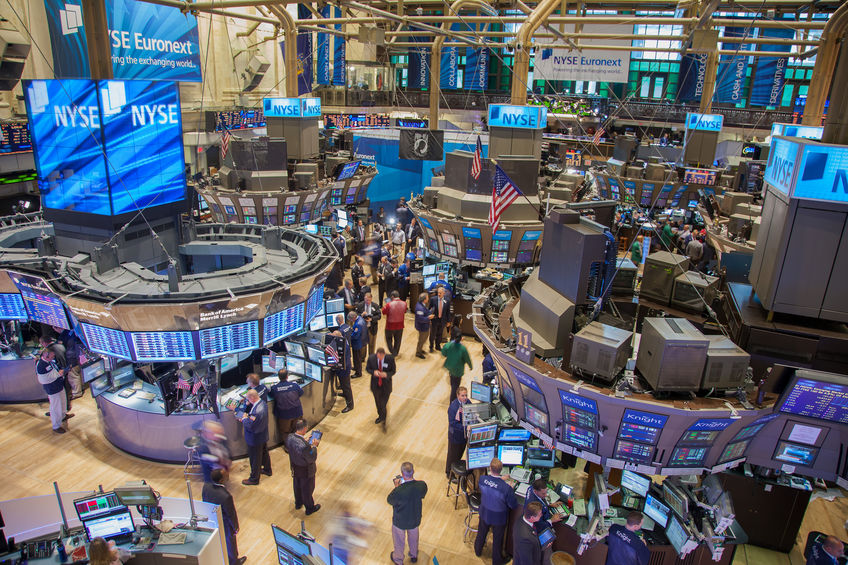 Amid the dramatic behavioral changes, the stock market registered several days of panic-selling in March, capped by a record, single-day plunge on March 16: The Dow Jones index plummeted 2,997 points, the third-worst percentage loss in history. After flirting with the level at which the Dow was reading on Inauguration Day Jan. 20, 2017, the market continued see-sawing this week, herky-jerkying between mini-rallies and skids.
Hoping to prevent a coronavirus recession, the U.S. Senate adopted by an overwhelming, 90-8 bipartisan vote a $100 billion bill sent by the Democraticac-led House that expands free testing for the coronavirus, provides for paid sick leave and medical leave for some workers, and an emergency unemployment insurance and food assistance programs. The bill was signed late Wednesday night.
Meanwhile, Congress was taking up a monumental $1 trillion economic rescue plan proposed by the White House on St. Patrick’s Day (March 17) that included a bailout for the hotel and airline industries, help for small businesses, and $500 billion in direct cash payments to Americans households.
“We’re looking at sending checks to Americans immediately,” Treasury Secretary Steve Mnuchin said in a Rose Garden press conference at the White House on St. Patrick’s Day. By immediately, he added, “I’m talking about the next two weeks.”
The Trump Administration’s proposed help for small businesses has a strong supporter in Karen G. Mills, former SBA administrator and senior fellow at Harvard Business School. During her tenure in the Obama Administration, Mills was a troubleshooter in several crises including the Great Recession and Hurricane Sandy. “In a worst-case scenario with this virus contagion, getting loans to people through banks is not going to be fast enough,” she told AltFinanceDaily just before the White House drew up its rescue plan. “They’ll need direct loans to people and other aid. If we lose our small business economy, it will be catastrophic.”
So how will the pandemic and the state of the economy play out politically in the November, 2020 general election between President Trump and former Vice President Joseph Biden, the presumptive Democratic nominee? The result remains shrouded in the fog of the future, of course, but the election’s contours are coming into focus.
Having seen him through numerous scandals, impeachment, and a trial in the U.S. Senate, Trump’s political and electoral following has been put to the test. Yet his backers remain unshakably loyal in a way not seen in 80 years, observed the University of Houston’s Murray. “More people are dug in now than at any time since the 1930s,” he says, as roughly 43% of the electorate is firmly lodged in Trump’s camp. “Trump’s support has been remarkably stable.”
The business community is a key demographic in the pro-Trump cohort, notes Ray Keating, chief economist at the Small Business & Entrepreneurship Council, a Washington, D.C. advocacy group claiming 100,000 members. “We have not polled our membership,” Keating says, “but when you look at the data they overwhelmingly vote Republican. We find that support for Donald Trump is clear and substantial.”
Richard Yukes, a Las Vegas-based oilman and longtime entrepreneur who votes his pocketbook, will be pulling the lever for Trump in the November election. The reason? Trump not only presided over a robust economy for the past several years, Yukes says, but the president slashed Obama-era regulations imposed on his industry. “Government regulation and bureaucratic regulation often get mishandled and misdirected by federal bureaucrats and Trump is for less regulation,” Yukes says. “I think America works best with less regulation.”
The owner and operator of oil wells in Wyoming, Yukes benefited handsomely last year when Trump’s Environmental Protection Agency relaxed rules governing methane leaks. The oilman reckons that complying with the regulations had been costing him an extra $1,500 per well each year.
No matter how well the economy has performed in the past three years, however, the pandemic economy promises to be a “game-changer,” says political scientist Murray, and history shows that voters are likely to take stern measure of the incumbent president’s performance during any a crisis.
Trump’s initial response to the coronavirus reminds Murray of Woodrow Wilson’s reaction to the Spanish Flu pandemic in 1918 while World War I was still raging. “As the U.S. was approaching climactic battles in Europe, President Wilson suppressed the news of the flu and the story didn’t get out though eventually people knew about it,” Murray says.
Wilson’s deceit hurt Democratic candidates who were battered in the 1918 midterm elections, just a few days before the November 11 armistice. Two years later, after Wilson had a stroke, the Democratic presidential candidate got crushed in the 1920 election by Warren G. Harding, a Republican senator from Ohio.
After war and influenza, Americans voted enthusiastically for Harding’s promise of “normalcy.”
2020 and Beyond – A Look Ahead
March 3, 2020 With the doors to 2019 firmly closed, alternative financing industry executives are excited about the new decade and the prospects that lie ahead. There are new products to showcase, new competitors to contend with and new customers to pursue as alternative financing continues to gain traction.
Executives reading the tea leaves are overwhelming bullish on the alternative financing industry—and for good reasons. In 2019, merchant cash advances and daily payment small business loan products alone exceeded more than $20 billion a year in originations, AltFinanceDaily’s reporting shows.
Confidence in the industry is only slightly curtailed by certain regulatory, political competitive and economic unknowns lurking in the background—adding an element of intrigue to what could be an exciting new year.
Here, then, are a few things to look out for in 2020 and beyond.
Regulatory developments
There are a number of different items that could be on the regulatory agenda this year, both on the state and federal level. Major areas to watch include:
- Broker licensing. There’s a movement afoot to crack down on rogue brokers by instituting licensing requirements. New York, for example, has proposed legislation that would cover small business lenders, merchant cash advance companies, factors, and leasing companies for transactions under $500,000. California has a licensing law in place, but it only pertains to loans, says Steve Denis, executive director of the Small Business Finance Association. Many funders are generally in favor of broader licensing requirements, citing perceived benefits to brokers, funders, customers and the industry overall. The devil, of course, will be in the details.
- Interest rate caps. Congress is weighing legislation that would set a national interest rate cap of 36%, including fees, for most personal loans, in an effort to stamp out predatory lending practices. A fair number of states already have enacted interest rate caps for consumer loans, with California recently joining the pack, but thus far there has been no national standard. While it is too early to tell the bill’s fate, proponents say it will provide needed protections against gouging, while critics, such as Lend Academy’s Peter Renton, contend it will have the “opposite impact on the consumers it seeks to protect.”
- Loan information and rate disclosures. There continues to be ample debate around exactly what firms should be required to disclose to customers and what metrics are most appropriate for consumers and businesses to use when comparing offerings. This year could be the one in which multiple states move ahead with efforts to clamp down on disclosures so borrowers can more easily compare offerings, industry watchers say. Notably, a recent Federal Reserve study on non-bank small business finance providers indicates that the likelihood of approval and speed are more important than cost in motivating borrowers, though this may not defer policymakers from moving ahead with disclosure requirements.
“THIS WILL DRIVE COMMISSION DOWN FOR THE INDUSTRY”
If these types of requirements go forward, Jared Weitz, chief executive of United Capital generally expects to see commissions take a hit. “This will drive commission down for the industry, but some companies may not be as impacted, depending on their product mix, cost per lead and cost per acquisition and overall company structure,” he says.
- Madden aftermath. The FDIC and OCC recently proposed rules to counteract the negative effects of the 2015 Madden v. Midland Funding LLC case, which wreaked havoc in the consumer and business loan markets in New York, Connecticut, and Vermont. “These proposals would clarify that the loan continues to be ‘valid’ even after it is sold to a nonbank, meaning that the nonbank can collect the rates and fees as initially contracted by the bank,” says Catherine Brennan, partner in the Hanover, Maryland office of law firm Hudson Cook. With the comments due at the end of January, “2020 is going to be a very important year for bank and nonbank partnerships,” she says.
- Possible changes to the accredited investor definition. In December 2019, the Securities and Exchange Commission voted to propose amendments to the accredited investor definition. Some industry players see expanding the definition as a positive step, but are hesitant to crack open the champagne just yet since nothing’s been finalized. “I would like to see it broadened even further than they are proposed right now,” says Brett Crosby, co-founder and chief operating officer at PeerStreet, a platform for investing in real estate-backed loans. The proposals “are a step in the right direction, but I’m not sure they go far enough,” he says.
Precisely how various regulatory initiatives will play out in 2020 remains to be seen. Some states, for example, may decide to be more aggressive with respect to policy-making, while others might take more of a wait-and-see approach.
“I think states are still piecing together exactly what they want to accomplish. There are too many missing pieces to the puzzle,” says Chad Otar, founder and chief executive at Lending Valley Inc.
As different initiatives work their way through the legislative process, funders are hoping for consistency rather than a patchwork of metrics applied unevenly by different states. The latter could have significant repercussions for firms that do business in multiple states and could eventually cause some of them to pare back operations, industry watchers say.
“While we commend the state-level activity, we hope that there will be uniformity across the country when it comes to legislation to avoid confusion and create consistency” for borrowers, says Darren Schulman, president of 6th Avenue Capital.
Election uncertainty
The outcome of this year’s presidential election could have a profound effect on the regulatory climate for alternative lenders. Alternative financing and fintech charters could move higher on the docket if there’s a shift in the top brass (which, of course, could bring a new Treasury Secretary and/or CFPB head) or if the Senate flips to Democratic control.
If a White House changing of the guard does occur, the impact could be even more profound depending on which Democratic candidate secures the top spot. It’s all speculation now, but alternative financers will likely be sticking to the election polls like glue in an attempt to gain more clarity.
Election-year uncertainty also needs to be factored into underwriting risk. Some industries and companies may be more susceptible to this risk, and funders have to plan accordingly in their projections. It’s not a reason to make wholesale underwriting changes, but it’s something to be mindful of, says Heather Francis, chief executive of Elevate Funding in Gainesville, Florida.
“Any election year is going to be a little bit volatile in terms of how you operate your business,” she says.
Competition
The competitive landscape continues to shift for alternative lenders and funders, with technology giants such as PayPal, Amazon and Square now counted among the largest small business funders in the marketplace. This is a notable shift from several years ago when their footprint had not yet made a dent.
This growth is expected to continue driving competition in 2020. Larger companies with strong technology have a competitive advantage in making loans and cash advances because they already have the customer and information about the customer, says industry attorney Paul Rianda, who heads a law firm in Irvine, Calif.
It’s also harder for merchants to default because these companies are providing them payment processing services and paying them on a daily or monthly basis. This is in contrast to an MCA provider that’s using ACH to take payments out of the merchant’s bank account, which can be blocked by the merchant at any time. “Because of that lower risk factor, they’re able to give a better deal to merchants,” Rianda says.
Increased competition has been driving rates down, especially for merchants with strong credit, which means high-quality merchants are getting especially good deals—at much less expensive rates than a business credit card could offer, says Nathan Abadi, president of Excel Capital Management. “The prime market is expanding tremendously,” he says.
Certain funders are willing to go out two years now on first positions, he says, which was never done before.
Even for non-prime clients, funders are getting more creative in how they structure deals. For instance, funders are offering longer terms—12 to 15 months—on a second position or nine to 12 months on a third position, he says. “People would think you were out of your mind to do that a year ago,” he says.
Because there’s so much money funneling into the industry, competition is more fierce, but firms still have to be smart about how they do business, Abadi says.
Meanwhile, heightened competition means it’s a brokers market, says Weitz of United Capital. A lot of lenders and funders have similar rates and terms, so it comes down to which firms have the best relationship with brokers. “Brokers are going to send the deals to whoever is treating their files the best and giving them the best pricing,” he says.
Profitability, access to capital and business-related shifts
Executives are confident that despite increased competition from deep-pocket players, there’s enough business to go around. But for firms that want to excel in 2020, there’s work to be done.
Funders in 2020 should focus on profitability and access to capital—the most important factors for firms that want to grow, says David Goldin, principal at Lender Capital Partners and president and chief executive of Capify. This year could also be one in which funders more seriously consider consolidation. There hasn’t been a lot in the industry as of yet, but Goldin predicts it’s only a matter of time.
“A lot of MCA providers could benefit from economies of scale. I think the day is coming,” he says.
He also says 2020 should be a year when firms try new things to distinguish themselves. He contends there are too many copycats in the industry. Most firms acquire leads the same way and aren’t doing enough to differentiate. To stand out, funders should start specializing and become known for certain industries, “instead of trying to be all things to all businesses,” he says.
Some alternative financing companies might consider expanding their business models to become more of a one-stop shop—following in the footsteps of Intuit, Square and others that have shown the concept to be sound.
Sam Taussig, global head of policy at Kabbage, predicts that alternative funding platforms will increasingly shift toward providing more unified services so the customer doesn’t have to leave the environment to do banking and other types of financial transactions. It’s a direction Kabbage is going by expanding into payment processing as part of its new suite of cash-flow management solutions for small businesses.
“Customers have seen and experienced how seamless and simple and easy it is to work with some of the nontraditional funders,” he says. “Small businesses want holistic solutions—they prefer to work with one provider as opposed to multiple ones,” he says.
Open banking
This year could be a “pivotal” year for open banking in the U.S., says Taussig of Kabbage. “This issue will come to the forefront, and I think we will have more clarity about how customers can permission their data, to whom and when,” he says.
Open banking refers to the use of open APIs (application program interfaces) that enable third-party developers to build applications and services around a financial institution. The U.K. was a forerunner in implementing open banking, and the movement has been making inroads in other countries as well, which is helping U.S. regulators warm up to the idea. “Open banking is going to be a lively debate in Washington in 2020. It’ll be about finding the balance between policymakers and customers and banks,” Taussig says.
The funding environment
While there has been some chatter about a looming recession and there are various regulatory and competitive headwinds facing the industry, funding and lending executives are mostly optimistic for the year ahead.
“If December 2019 is an early indicator of 2020, we’re off to a good start. I think it’s going to be a great year for our industry,” says Abadi of Excel Capital.
Patreon Adds MCA-like Product With Patreon Capital
February 20, 2020 Patreon, the membership platform that provides payment and subscription services for creators, will now start funding those artists that are on its site through Patreon Capital. Said to be modeled after Shopify Capital, the service will be available to certain creators initially, with Patreon reaching out directly to them to offer merchant cash advances.
The move comes after CEO Jack Conte had been quoted in January saying that “The reality is Patreon needs to build new businesses and new services and new revenue lines in order to build a sustainable business.”
It seems like this new service is part of a trend that has overtaken tech companies recently, best exemplified by the Apple Card, wherein established players, worried about longevity, are moving further into financial services, hoping to get long-lasting hooks into their customers.
Historically, Patreon has made money by taking a 5% cut from the subscription payments made to artists on its platform, with a further 5% going towards covering transaction fees, and the remaining 90% being left for the artist, who retains complete ownership of their work. It currently has over 100,000 creators on its site and over three million active monthly users. Contributions begin at $1, with content being unlocked in exchange for payment. Thus far, Patreon has paid out over $1 billion.
It has been reported that about a dozen deals have been made between creators and Patreon Capital so far. Hot Pod News ran a story featuring one such case, in which Multitude, a Brooklyn-based podcast studio, disclosed that it took funding of $75,000 over two years in order to pay the SAG-AFTRA rates of the actors it wanted to employ for a new audio sitcom titled Next Stop.
“We were running into this problem where we have a ton of great ideas, but because we’re a small business, we constantly have to decide between putting money towards paying our people and getting more equipment versus saving it up for a bigger project,” Multitude’s CEO, Amanda McLoughlin, told Hot Pod.
The premium attached to the financing was not revealed, however Multitude did note that the revenues of one of the studio’s other shows, Join the Party, would be taken as collateral if Next Stop is not profitable enough to pay the premium after two years.
“This arrangement is directly tied to the fact that we have successful podcasts making money on Patreon, and that we’ve already invested in the Patreon system to pay this stuff back,” comment Eric Silver, Multitude’s Head of Creative, underlining how Patreon Capital is linked with the analytics of Patreon’s base service. Much like how Amazon uses sales metrics and user data to gauge which retailers to lend to on its own marketplace, Patreon appears to be making use of seven years of data on its creators to determine who is best positioned to receive funding.
“Patreon has access to all the data about a creator’s earnings history, what they offer as benefits, how much they engage with their patrons … everything needed to forecast their earnings and retention, without a creator even needing to submit an application.” Patreon VP of Finance Carlos Cabrero stated. “This would be essentially impossible for a bank to replicate.”
Kabbage Introduces Customized Short Term Loans
February 4, 2020 Today Kabbage, the Atlanta-based fintech company that has been funding businesses since 2009, announced its latest product: customized short-term loans that are a result of the combination of Kabbage Payments and Kabbage Funding.
The loans, which run for the length of 3-45 days, are best suited to those businesses who need funding to cover issues in cash flow caused by the unpredictability of revenue, says Kabbage’s Head of Income Products Abraham Williams. “Rent and payroll are on set days every month, but getting paid is variable. We’ve done loans for 6, 12, and 18 months, and we’ve seen that people pay those off sooner, so we saw a need to have a short-term loan to fill gaps in cash flow.”
The terms of such loans will be decided upon by making use of the aggregate data that Kabbage has access to. With its customers providing a number of data points, such as their Amazon account, banking details, payment processes, and social media accounts, Kabbage is in “a really unique position because of the way that we make decisions on loans for small businesses,” notes Williams. “We can really see a very complete picture of a business, which can be different than how other people are essentially underwriting and assessing risk for loans.”
Two options are available for repayment: a traditional balloon payment to be paid at the end of the 45-day period, or a percentage of each sale made using Kabbage Payments going towards repayment. The latter of these provides more flexibility, with merchants being able to choose the percentage of each sale that is to go toward Kabbage and, as well as this, the fee attached to the Kabbage Payments option is smaller.
With the fee’s amount and terms being dictated by aggregated data, Kabbage is describing them as “dynamic,” providing individualized offers. Fees begin at 0.1% with the minimum amount to be borrowed being $500 and the maximum set at 10% of a merchant’s available line of credit for the short-term.
The End Of An Era – AltFinanceDaily Through The Decade
December 30, 2019
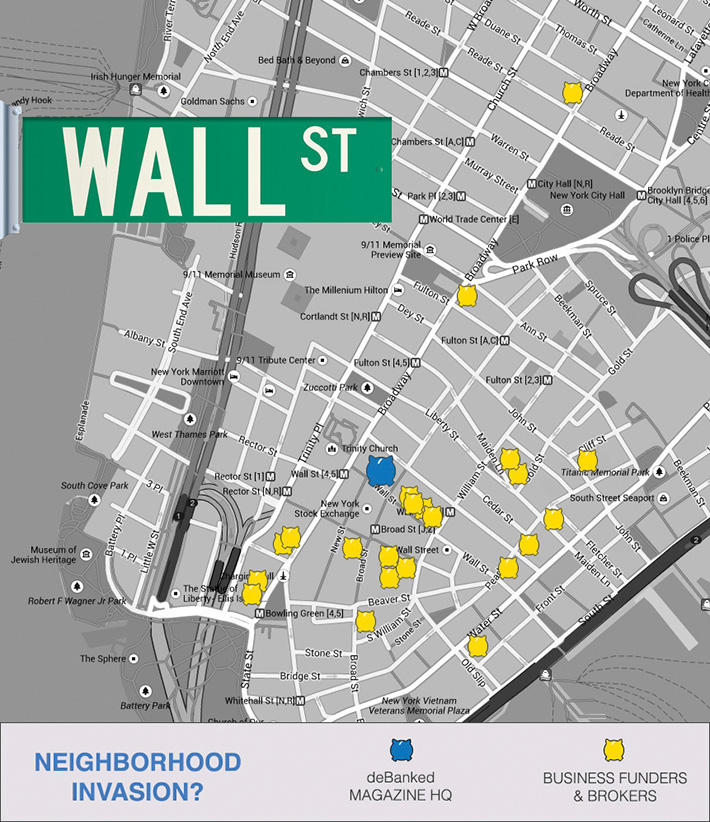
AltFinanceDaily estimated that approximately $524 million worth of merchant cash advances had been funded in 2010.
In 2019, merchant cash advances and daily payment small business loan products exceed more than $20 billion a year in originations.

First Funds
Merchant Cash and Capital
Business Financial Services
AmeriMerchant
Greystone Business Resources
Strategic Funding Source
Fast Capital
Sterling Funding
iFunds
Kabbage
OnDeck
Square Capital
Amazon Lending
Funding Circle USA
Yellowstone Capital
Entrust Cash Advance
Merchants Capital Access
Merchant Resources International
American Finance Solutions
Nations Advance
Bankcard Funding
Rapid Capital Funding
Paramount Merchant Funding

















Big Money, Small Town: How SBA Loans Are Powering America
December 26, 2019
 “The Mountains Are Calling” is the motto of Gatlinburg, an East Tennessee town of roughly 4,000 citizens known for its spectacular views of the Smoky Mountains and as a jumping-off spot for hikers, campers and winter skiers. The town also offers attractions such as Ripley’s Aquarium and arts-and-crafts festivals.
To get around, 800,000 tourists and locals alike hop aboard the 20-odd trolley buses operated by Gatlinburg Trolley, the private transit system. Few riders marveling at the picturesque scenery and enjoying the sprightly vehicles, which recall San Francisco’s cable cars, know that they’re riding a custom-made trolley-bus built by Hometown Trolley of Crandon, Wisconsin.
 And even fewer would know that the chief executive and president of that company is Kristina Pence-Dunow, making it the only female-owned manufacturer of transit vehicles in the US. Bolstering the manufacturing enterprise—which Pence-Dunow acquired in 1997 from her ex-husband, who wanted to “liquidate” it, she says—have been multiple bank loans backed by the Small Business Administration.
The most crucial SBA loan came in 2005, she says, just as she was nearly driven out of business in a price war. “We had to be innovative” to survive the cutthroat competition, Pence-Dunow told AltFinanceDaily in a telephone interview.
Using a $350,000, five-year SBA credit issued by River Valley Bank (now Incredible Bank of Wausau, Wis.), the transit company developed the prototype for a “lowfloor entry vehicle.” The design feature made her trolleys accessible to riders with walkers and wheelchairs and enabled the company to beat out its competitor for a key contract with Hampton Roads (Va.) Transit. That deal, in turn, generated sales to transit authorities in Miami Beach, Laguna Beach, and the University of Oklahoma.
Subsequent SBA loans, Pence-Dunow says, enabled the company to create its own dealer network and develop battery-powered, clean-energy vehicles. The financings also allowed her to buy out, in 2016, the rival trolley company that had tried to run her buses off the road.
Her grit and determination—for many years Pence-Dunow ran the company as a single mother raising two children—have also paid dividends for her Wisconsin community. With annual sales of $20 million and 65 employees receiving health and life insurance as well as pension benefits, Hometown Trolley has brought good-paying jobs to successive generations of families in the Northwoods.
In 2018, she earned the SBA’s “Small Business Person of the Year” award for the state of Wisconsin.
Hometown Trolley, meanwhile, is just one of 30 million small businesses that make up the backbone of the US economy. Small businesses—a small business is broadly defined as a commercial or professional enterprise with fewer than 500 employees—accounted for the employment of 58.9 million people in 2015, according to the US Census Bureau’s most recent figures. That’s just shy of 50% of the country’s total workforce. And it seems that the smaller the better: In 2018, firms employing fewer than 20 employees added 1.1 million net jobs to the US economy, the largest gains among the small business cohort.
 By contrast, large manufacturing companies only employ about 11% of the total workforce, notes Karen G. Mills, former SBA administrator and member of President Barack Obama’s cabinet. The bottom line is that the contribution to the economy made by both small business and the SBA “is under-appreciated,” says Mills, now a senior fellow at Harvard Business School and author of Fintech, Small Business & the American Dream. “It’s a much more powerful job-creator than the manufacturing component of the US economy,” she adds.
During the Great Recession, which coincided with her tenure at the SBA, Mills reports that 60% of the country’s job losses were in the small business sector. As many as 1.8 million jobs disappeared in a single quarter in 2009. Mills credits the SBA’s lending as playing a key role in buffering the US economy against even more severe ravages.
To help reverse the economic free-fall, the SBA eliminated all SBA fees and temporarily upped the 75% government credit guarantee to 90%. The agency also persuaded a thousand commercial banks that had not issued an SBA-backed credit since 2000 to turn on the spigots. “Banks are the primary source of financing for small businesses,” she notes. “They (small businesses) can’t go to the credit markets like big business does.”
S.R. Rosati, Inc., an Italian ice manufacturer based in Clifton Heights, Pa., is one of those small businesses that nearly went belly-up. Headed by Richard Trotter, a West Point graduate, former US Army captain and company president, the Italian ice business is thriving today. It has just under 30 employees and reports annual sales of $10 million. But ten years ago it was in desperate straits. “Even though we’re a 100-year-old company,” Trotter says, “we could have been like a ton of businesses that went out of business every week. The SBA helped us get through tough economic times in 2007-2008 when a lot of businesses took a hit.”
The SBA’s flagship product is the 7(a) loan, which range up to $5 million. Almost 2,000 US banks, as well as a number of nonbanks, participate in the program. The loans are currently backed by a 75% government guarantee and are targeted to those entrepreneurs who, the SBA states, “otherwise would not have access to capital to start, grow, or expand their small businesses.”
An SBA loan, former Administrator Mills explains, “is designed to fill a market gap— to make loans to creditworthy borrowers that the market feels are too risky to make without some support.”
Currently bearing an interest rate of 7.75%-9%, according to financial technology firm Fundera, 7(a) loans are affordable and the terms are fairly generous: typically, the borrower has 10 years to repay the loan. The loans can be used for multiple purposes: as working capital, to purchase equipment and inventory, make a business acquisition, meet payroll, hire new employees, and (in some cases) refinance crushing debt.
If a borrower is eligible and able to secure a 7(a) loan, “it’s the gold standard,” remarks Levi King, chief executive and co-founder of Utah-based Nav, an online, credit-data aggregator and financial matchmaker for small businesses.
William McSweeney, chief operating officer in the business banking section at Citizens Bank in Boston, says that insufficient collateral is most often the reason that a small business fails to qualify for a conventional business loan. With an SBA loan, he says, the government guarantee serves as a bulwark “to cover the weakness of a collateral position.”
 He cites the case of a dentist who’s attempting to acquire an existing dental practice for $1 million. Unless the practice owns a building, McSweeney says, there’s probably not enough collateral to support a $1 million borrowing. Yet the deal is attractive: Dentistry is a reliable industry (or “vertical” in lender jargon), the targeted practice has a solid client base, there’s strong cashflow, and the practice boasts a fully equipped armamentarium. “An SBA loan will guarantee the $1 million loan for 75 percent,” McSweeney says. “Now I can ask, ‘Is there $250,000 in collateral.’ That’s the way I look at it.”
Adds Kirk Jacobson, an SBA lender at Northwest Bank branch in Independence, Ohio: “In my experience, the preponderance of SBA loans have a collateral shortfall. Even lending to hotels or something tangible can be risky. The collateral (the hotel) can lose value quickly. The challenge for banks like ours is to use the SBA as the tool where conventional lending doesn’t work.”
By at least one yardstick SBA lending appears to be at a crossroads. The SBA reports that the number of small businesses taking advantage of the 7(a) program fell by 13% in the most recent fiscal year, which ended September 30, 2019. The 52,000 small businesses securing 7(a) credits in 2019 was more than 8,000 fewer than the previous year. The dollar amount of credits acquired also dropped; the $23.7 billion in lending was a 6.5% drop.
This is being taken as a good sign by the agency. “A strong economy is powering America’s 30 million small businesses, and the SBA’s numbers bear that out,” Chris Pilkerton SBA’s acting administrator and general counsel, said in a recent statement. “When the economy is doing well, 7(a) lenders are more willing to provide capital without the need for a federal loan guarantee.”
But even small businesses that are outwardly healthy and experiencing growth often face hardship. Consider the case of Kyle McClelland, owner of Have Lights Will Travel, a Reno-based contractor that handles illumination for office buildings, stores, parking lots, and warehouses across northern Nevada. He got in over his head this year when he subcontracted lighting work for Macy’s and Target parking lots in a string of northern California cities.
There was no money advanced by the main contractor for materials, wages or expenses, he says. As a subcontractor, McClelland doesn’t get paid until the job is done. Yet, almost overnight, he doubled his workforce to 70 employees, footed the bill for a platoon of workers to lighting equipment, all of which exhausted his $100,000 line of credit with a Reno bank. His situation looked dire and it was taking an emotional toll. “The company was on life support.” he says. ”I realized that I needed extra funds to make payroll. I honestly didn’t sleep for months. I was lucky to get three hours of sleep a night.”
McClelland was bailed out in August when he secured a $350,000 line of credit through an SBA Express loan fronted by Five Star Bank, a Sacramento financial institution. SBA Express loans, which are part of the 7(a) program but carry only a 50% government guarantee, can be made in as few as 36 hours. But McClelland says that it took him four weeks to obtain the loan.
Trotter, the owner of the Italian ice company, says that his business too is in an expansion phase and that its financial situation was cramped. He had been saddled with a pricey, short-term note for $1.4 million that was weighing down business. With the intercession of Multifunding, a Philadelphia-area broker, Trotter took out a $2.5 million, 10-year loan with Celtic Bank in Utah at prime plus 2.75%, his third SBA loan in 20 years. The refinancing, which closed in late July, is saving him $30,000 in monthly cashflow, he says, more than $100,000 to date.
“Now we can play a little bit of offense,” he says. “We have the up-front money to go into convenience stores and supermarkets with our product.”
One common experience of the business-people who spoke to AltFinanceDaily is that assembling the required documents and applying for SBA loans can be a daunting and often discouraging task. “The whole thing with these loans is making sure the I’s are dotted and the T’s are crossed,” says Domenic Rinaldi, managing partner at Sun Acquisitions, a Chicago-based firm specializing in lower middle-market, merger-and-acquisition deals using SBA loans. “The government is demanding,” he adds, “and if everything is not in order, you won’t get your money.”
To cut through the inordinate amount of red tape, many businesses turn to brokers like Multifunding and other financial midwives, who receive a commission from the bank. “The fastest I’ve done an SBA loan is two weeks and the longest is 18 months,” says Ami Kassar, founder and chief executive of Multifunding. He says that the firm’s SBA credit business constitutes 70% of his work and that he relies on a network of 10 banks. “The average time it takes for an SBA loan is probably 90 days,” he adds.
“Grueling” is how Daniel Shemtob of Los Angeles describes his experience obtaining an SBA loan. “I had gone to 30 banks,” he says, “and I did qualify for a loan but I didn’t like the deal.”
Shemtob is the chief executive and—thanks to securing an SBA backed financing for an acquisition—the sole owner of The Lime Truck, which has bragging rights to winning the Food Network’s “Great Truck Race.”
In addition to the truck, his Southern California business also includes a couple of brick-and-mortar restaurants and a catering company. The operation, which will do $5.5 million in sales this year, employs 40 full-time workers plus part-time catering help.
Shemtob finally scored an SBA loan with assistance from Kassar’s Multifunding, which he found through Entrepreneurs’ Organization, where he’s a board member of the L.A. chapter. He was able to take out a pair of 10-year loans totaling $1.8 million with IncredibleBank at prime plus 2.75%. Even with a broker, he says, it took him three months to get the loan, which closed earlier this year. “The ten-year loans give you stability and an affordable payment,” he says. “If I hit my sales targets,” he adds, “the loans will allow me to grow the business.”
But what if he hadn’t obtained SBA-backed financing? “I don’t know if the company would be around today,” Shemtob says.
SBA loans used for acquisitions play a major role in extending the life of enterprises that likely would have disappeared upon the retirement or death of an entrepreneur, the unwillingness of succeeding generations to take control of a family business, or the break-up of a partnership, notes Rinaldi, the Chicago M&A specialist.
To arrange SBA acquisition loans for purchasers of small businesses, Rinaldi deals mainly with 18 banks, including Busey Bank (Champaign, Ill.), U.S. Bancorp (Minneapolis), Byline Bank (Chicago) and Canadian Imperial Bank of Commerce (Toronto). “Banks may say, ‘Bring us all your manufacturing deals’ and two years later there’s a management change and they’ll only make loans to distribution and service companies,” Rinaldi says. “Part of my job is understanding which sectors are handled by which banks.”
 Meanwhile, an emerging debate is brewing within banking circles about the best use of SBA 7(a) loans, which were capped at $28 billion in the last fiscal year. While the overall U.S. economy has continued to prosper since the Great Recession, and the official unemployment rate has dipped below 4%, the lowest in 50 years, the bounty is being shared unevenly. While most large US cities and suburbs are generally adding jobs and experiencing good times, many rural areas and Rust Belt communities are dealing with stagnant wages, job losses and population outflows.
The question is: Should more banking resources be directed to distressed communities through SBA loans? Or should the banking industry lend as it sees fit, largely focused on profitability and shareholder value, albeit within the SBA’s guidelines, perhaps with a nod to businesses owned by women, minorities and veterans? Many banks incorporate both philosophies. But this dichotomy in operational goals can sometimes be seen in sharp relief.
The stark difference in SBA lending practices between Live Oak Bank of Wilmington, N.C. and Northwest Bank of Warren, Pa. is a case in point.
With $4.6 billion in assets, Live Oak Banking Company, which was founded in 2007, is just a dozen years old but it’s already become the No. 1 SBA lender in the US. In the most recent fiscal year, from just one branch on North Carolina’s seacoast, it made 913 SBA loans totaling $1.347 billion, an average of nearly $1.5 million per loan. To comprehend the magnitude of that accomplishment: Live Oak nearly lapped Wells Fargo Bank, the No. 2 lender with $786.4 million in loan totals, despite the latter’s making triple the number of SBA loans. It also out-lent such worthies as J.P. Morgan Chase and Bank of America, both of which lagged well behind Live Oak in the SBA lending tables.
With its adroit use of technology and its meteoric rise to become an SBA powerhouse, Live Oak has emerged as a Wall Street darling. Thomas Brown, a founder and chief executive at Second Curve Capital, a hedge fund that invests exclusively in financial services companies and manages $150 million in assets, calls Live Oak “a freak of nature.”
“For their veterinarian-lending practice,” Brown observes, “they hire a vet as their lending officer. They do this with all their verticals, whether it’s chicken farming or funeral homes. And when they’re dealing with a client, they have all this incredible expertise.”
Steve Smits, chief credit officer at Live Oak, told AltFinanceDaily that the bank now lends to 29 verticals across all 50 states. Its most recent additions were early childhood education centers and franchisees for aftermarket companies like Jiffy Lube and Meineke. Not only does Live Oak have experienced loan officers with deep knowledge of their sectors making the loans, but the bank is conscientious about keeping up with its clients. So much so that it maintains a stable of consultants, accountants and other professionals who are on call to add value.
For example, says Smits, a former associate administrator of the SBA’s office of capital access, one of Live Oak’s board members is Jerald Pullins, a former president of Service Corporation International, the Houston-based owner and operator of nearly 1,500 funeral homes and 481 cemeteries in the US and Canada.
For critics who say that an SBA lender should be modeled on George Bailey, the small-town banker immortalized in “It’s a Wonderful Life,” Smits says: “On a moral plane, we visit 100 percent of our small business owners face-to-face at a minimum of a two-year rotation. With 10-year loans, it would be easy to take a hands-off approach, but we’re very vigilant.”
Smits adds: “We’ve had our customers say to us, ‘You know what. You’ve traveled across the country to see me. And I’ve been banking with the branch down the street and they’ve never been in my office.’”
Founded in 1896 and headquartered in Warren, Pa., Northwest Bank’s service area looks like a jagged triangle traversing three states, running from Lancaster, Pa. to greater Cleveland to Buffalo, N.Y. and back. Inside the tri-state perimeter are a plethora of gritty old factory towns and Rust Belt communities.
“Our banks are located in all kinds of small cities,” Jacobson, the bank’s chief SBA lender, says. “I’m biased,” he adds, “but I believe in reinvesting in our communities. Our business model is to lend in our footprint. It’s where our branches are and where our clients are. Our strategy is not to lend around the US.”
One example of Northwest’s targeted SBA lending, Jacobson says, can be seen in Lorain, Ohio, a city of 64,000 on Lake Erie that is working to reinvent itself. Lorain was once the proud home of iconic heavy industries like the American Ship Building Company, a Ford Motor assembly plant, and U.S. Steel’s sprawling mill on the city’s south side. The economy was so dynamic that it “outshined Cleveland” says Kevin Nelson, the Lorain-based president of Northwest Bank’s Ohio region.
 But in the 1980s deindustrialization began to take its toll and the city experienced high unemployment, rising poverty, and urban decay. Now, however, Lorain is hoping to rise like the mythical Phoenix from its ashes. And Northwest Bank is doing its part by marshaling resources in concert with the city’s government, the Black River Port Authority, the Chamber of Commerce, the Lorain Historical Society and other citizens groups to transform the waterfront and downtown into an entertainment center and destination for weddings, rock concerts, and other events.
Nelson is bullish on the just-completed Broadway Streetscape, in the heart of downtown, which has given Lorain a physical makeover. There are, Nelson says, “new sidewalks, lighting, archways, and parking areas.” Condominiums are being built and the marina is under new management, which could make the city a boating center. Black River Landing has become a magnet for celebrants with more than 200,000 people attending the “Rockin’ on the River” concerts over the summer. And the city is witnessing “new restaurants, coffee shops, bars, and other gathering places for people,” the banker says. “We’re seeing outside investment and we’re just beginning to see Lorain becoming a destination for millennials.”
Many of the trendy new establishments are being financed with SBA loans. “SBA lending has helped us support some of these new ventures coming in,” Nelson says. “They don’t make up for bad credit, lack of a business plan or cashflow,” he adds. “It has to be the right type of business. But SBA loans are a component.”
Who knows? Maybe Lorain will be home to the next Ben & Jerry’s or Calloway Golf, both of which commenced life as small business start-ups. A city can hope, can’t it?
1 Week Until AltFinanceDaily CONNECT MIAMI
December 19, 2019|
|
 |
|
Get inspired by Brian Holloway’s Total Market Domination, find out how much your company is worth, and learn how to make the dough from the pros in 2020. Still need a ticket? Register here! Meet The Sponsors – Form Relationships Get deals done, sign up a new vendor, network and more at AltFinanceDaily CONNECT MIAMI on January 16, 2020  |

|
 |
 |
 |
 |
 |
 |
 |
 |
 |
 |
 |
 |
 |
 |
 |
 |
 |
 |
 |
 |
 |
 |
 |
 |
 |