
State That Wooed Yellowstone Capital to Its Shores Has Changed Its Mind
December 8, 2020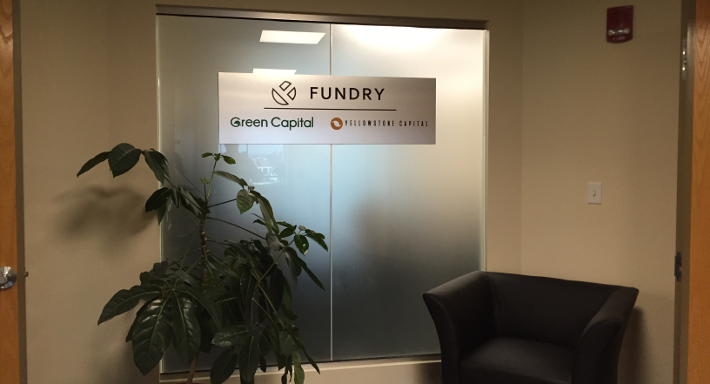 The Attorney General of the State of New Jersey filed a lawsuit against Yellowstone Capital, LLC and several affiliated parties on Tuesday.
The 55-page complaint trots out a long list of allegations but appears to hone in on the company’s actions or alleged lack of action on the reconciliation provision of its merchant cash advance agreements. The AG alleges that the manner in which the defendants conducted themselves should subject the agreements to the state’s lending laws.
Notably, the State says these unlawful acts began in July 2015, months before the State lured Yellowstone to relocate its headquarters there from New York.
In September 2015, for example, the New Jersey Economic Development Authority approved Yellowstone for up to $3.3 million in Grow New Jersey tax credits. When Yellowstone officially moved to Jersey City in 2016, the city’s mayor even made a personal appearance at the office to welcome them.
Now that Covid-19 is ravaging the state’s economy, the political opinion has seemingly changed.
“We are taking action today to protect our State’s small businesses and small business owners from predatory practices in the market for merchant cash advances,” said Attorney General Gurbir Grewal. “Local businesses are struggling due to the COVID-19 pandemic, especially since many were unable to take advantage of the limited relief made available by the federal government through the Paycheck Protection Program. We will not tolerate – now or ever – efforts to take advantage of them through predatory lending and collection practices.”
In 2015, however, New Jersey officials assessed that Yellowstone would have a “net benefit to the State of $23.3 million over [a] 20 year period” and that it was economically important to attract their business operation. Yellowstone was at that time considering a move to White Plains, NY from the company’s original Manhattan offices, State officials argued, so they really had to offer the tax credits for them to come to New Jersey instead.
“Yellowstone is comprised of a team with years of industry experience,” says a 2015 project summary prepared by NJ Economic Development Authority officers Diane Ubinger and Mark Chierici. “As both a direct source of funding and as part of the country’s largest Independent Sales Organization network (‘ISO’) it has numerous in-house funders who concentrate on specific industries/businesses, while also having numerous funding partners within the MCA industry who fund its ‘outside-the-box’ transactions.”
But later in 2019, the deal changed when Yellowstone’s capital investment requirement was not met, the Authority’s communications director told AltFinanceDaily. As a result the company ended up not receiving the tax credits.
“The NJEDA is committed to ensuring that businesses approved for tax incentives are compliant with all program requirements and to making sure that companies that do not meet their commitments to the taxpayers of New Jersey do not benefit from NJEDA-administered programs.”
Additional allegations in today’s complaint were made regarding Yellowstone’s historical use of confessions of judgment, a recovery tool that was largely eradicated by the passing of a law in New York in 2019.
The AG’s case was filed in Hudson County in the Superior Court.
Yellowstone Capital offered no comment to this story.
Update: 12/9/20 This story has been updated to reflect the current status of the tax credits as provided by NJ EDA.
Shopify Capital Originated $252M in MCAs and Business Loans in Q3
October 29, 2020 Shopify Capital, the finance arm of the 2nd largest e-commerce platform in the United States, reported making $252.1M worth of merchant cash advances and loans in the 3rd quarter. This is a 79% increase over the same period last year and spans three markets, the US, UK, and Canada. It’s also a quarterly record for the company.
The figure also solidly trumped the numbers recently reported by rival OnDeck.
Shopify CFO Amy Shapero said that the company has maintained loss ratios in line with historical performance.
“Businesses need financial resources to survive and fulfill their potential especially in these uncertain times and as you heard just now capital greatly increases the value of Shopify to our merchants,” she said during the earnings call.
Franklin Capital Group Has Been Acquired
October 23, 2020 This month, Franklin Capital Group was acquired by Wing Lake Capital Partners with the help of Rocky Mountain Bank. Franklin Capital will change its name and add funding capability- but the entire team will stay on. CEO Shaya Baum was happy to announce the deal, explaining that the firm would use acquisition funds to create more deals and continue to grow.
“It gives us the ability to fund many deals that are outside of our box previously,” Baum said. “We’re going to be launching a couple of sister funds alongside what we currently have and scale the business.”
Franklin Capital was founded in 2012 as an equity fund for companies in financial trouble during, before, or post-bankruptcy. The firm discovered a market for refinancing MCA advances, finding companies that should have never obtained cash advances in the first place. Franklin Capital began offering a product to refinance cash advances through traditional loans.
“We buy out the cash advance deals,” Baum said. “In fact, most if not all of our deals come from brokers in the cash advance industry saying ‘Hey can you get us out of these deals?'”
Baum said that his firm had seen a continually growing demand for capital this year.
“I know the cash advance companies have gotten killed, but we’ve actually had the opposite problem,” Baum said. “We don’t do one-off restaurant [advances.] We’re dealing with companies that are larger, more established: they’ve all pivoted into industries that have grown during this period of time.”
Yellowstone Capital Moves to Dismiss FTC Lawsuit
October 3, 2020 Newly revealed in court documents filed on Friday is that the recent FTC lawsuit against Yellowstone Capital culminated after a 2-year inquiry. What may have been a surprise to the Yellowstone defendants is how the FTC brought its case or that it ultimately even decided to bring one at all. A motion to dismiss has been filed.
Specifically, counsel for Yellowstone references in its papers that in the preceding years, Yellowstone had already complied with FTC discovery requests that amounted to the production of “24,000 pages of documents, more than 1,400 audio recordings, and responses to numerous interrogatories and follow-up inquiries.”
Following that, the FTC filed suit on August 3, 2020, alleging Misrepresentations Regarding Collateral and Personal Guarantees, Misrepresentations Regarding Financing Amount, and Unfair Unauthorized Withdrawals. In it, it relies heavily on alleged materials dating as far back as five years ago to make its case.
This is fatal to the FTC’s suit, the defendants contend, because the FTC laid out its claims under a very specific statute of the FTC Act, Section 13(b), which can only be brought in federal court if they believe a defendant “is violating, or is about to violate” this area of the law. Past conduct, they say, even if it were true, is not applicable. No acts in 2020 or even from 2019 are alleged with any particularity, nor is it said that any might be happening or will happen.
 Some of the purported web pages, ads, or contracts that the FTC refers to no longer exist, have long since been replaced, were taken out of context, or could not even be identified as to where or whom they even originated from, defendants say.
Defendants make further arguments for dismissal, one of which takes issue with alleged quotes or comments made by anonymous merchant customers. “The Complaint does not indicate, for instance, if these unidentified customers had breached their MCA agreements or otherwise incurred additional fees beyond the Purchased Amount that were due and owing to Yellowstone under their respective agreements.”
Deprived of all context and specifics, the complaint is loaded with elements that look bad but fall well short of the necessary legal burden, defendants essentially argue.
“The FTC has overextended itself in this litigation,” defendants say in their papers.
They further raise concern that it arises from a possible personal agenda rather than a legally-founded one. Reference is made to an NBC interview in which FTC Commissioner Rohit Chopra told the interviewer that “We’ve started suing some [merchant cash advance companies] and I’m looking for a systemic solution that makes sure they can all be wiped out before they do more damage.”
Chopra had also issued an official statement regarding Yellowstone in which he expounded almost entirely on legal questions that were not even raised in the lawsuit itself but create the impression that they are.
Yellowstone has asked for a stay of discovery pending the outcome of the motion to dismiss.
You can read Yellowstone’s full motion to dismiss here.
The FTC’s interest in this area of finance has been known for some time.
Bitty Advance Has Been Acquired By Industry Veteran Craig Hecker
July 23, 2020 There’s new management over at Bitty Advance. The Fort Lauderdale-based funding company has been acquired by long-time industry veteran Craig Hecker. Hecker, who years ago founded, grew, and sold Rapid Capital Funding had originally acquired a stake in Bitty earlier this year, but in the following months purchased the remainder of the business from founders Eddie Siegel and Lenny Duvdivani.
Hecker told AltFinanceDaily that under his management Bitty has committed capital that will allow the business to fund up to $10 million per month.
“I’m very excited to take my industry experience and knowledge and apply it to this segment of the MCA space,” he says.
As part of the takeover, Hecker says that he has “re-assembled his dream team of technologists and ops” that have been part of his inner-circle for nearly a decade and “were critical in building out the platform” that had made Rapid Capital Funding successful.
Bitty has historically focused on micro-advances and the company plans to really scale up its efforts in the $2,500 – $12,500 small merchant market segment with the aid of automated technology. In addition to this, Bitty has launched a new sales partner portal for ISOs. “That way [ISOs] will always know what’s going on with merchant applications,” hecker said.
Impact Of COVID-19 on The Merchant Cash Advance Market
June 8, 2020AltFinanceDaily recently caught up with Gunes Kulaligil, author of Merchant Cash Advance Valuation Dynamics.
 Gunes Kulaligil (gkulaligil@methodicalmgmt.com) is a co-founder of Methodical Management, a New York based firm providing valuations, transaction advisory and due diligence services to lenders and investors active in the specialty finance sector. www.methodicalmgmt.com
deBanked: The economic effects of the coronavirus are myriad and widespread. What are some of the specific challenges that the merchant cash advance market is currently experiencing? And what new obstacles can the industry expect further down the line as a result of the pandemic?
Gunes Kulaligil: The pandemic has redefined what “off the charts” means for unemployment claims and other leading economic indicators, but the full impact of job losses and halted economic activity has yet to be observed in the credit performance of many specialty finance assets. MCAs are unique in the sense that payments are daily or weekly and tied directly to revenues. As such, we were able to observe the preliminary impact of the lockdown on MCA cashflows earlier than for most other types of non-bank specialty finance loans.
When incomes and revenues are disrupted, consumers and businesses alike will often prioritize which debt to service first. They may be unwilling to pay certain accounts, even if able to do so, in order to preserve cash for prolonged uncertainty. However, this is not the case for MCAs as payments are remitted automatically; therefore, the cashflows are aligned with and reflect true business performance free of the impact of payment prioritization. As early as the second half of March, we observed payments from merchants drop approximately 20% to 30% depending on the type of industry. In addition, payment pace continued to decline into April and May, albeit at a slower pace, as modifications and servicing efforts picked up. Funders have a vested interest in merchants being able to stay in business and to build their revenues back up. Thus, any modification effort — whether that is a deferral, reduced percentage of sales remitted, or lower payback amounts — that incentivizes the merchant and provides some flexibility goes a long way.
At the same time, funders’ portfolios look worse as performing MCAs pay down and a lack of new origination results mechanically in the remainder of their portfolios having more tail risk – a lack of new origination would be a drag on performance even without the pandemic. For these portfolios, it is crucial to monitor portfolio performance at a granular level to identify businesses that will successfully navigate reopening and increase their revenues; so that servicing resources can be directed where they are most needed and will be most effective. Funders that have invested in technology and maintain connectivity with merchants via CRM tools and with established servicing / resolution teams and processes will have a competitive edge in doing so.
Poor performance caused by the pandemic has also led warehouse facilities to breach covenants or take-out partners to pause purchases unless platforms pledge additional skin in the game or pay higher interest rates to go forward with covenant modifications or resume purchases. They may also increase monitoring requirements and the level of oversight they apply.
deBanked: Conversely, is the pandemic creating any opportunities for funders and brokers as the situation develops?
Gunes Kulaligil: Indeed. While the near-term outlook is grim, a lot of relief and stimulus is working its way through the economy. The U.S. Government is intent on providing support as states are starting to re-open as quickly and as safely as possible. In retrospect, nobody had a pandemic playbook and programs like PPP were designed, deployed and funded on the fly with collaboration from both banks and non-bank lenders during volatile markets.
Non-bank lenders’ success in being able to reach truly small businesses, as well as the speed and efficiency in deploying the funds, has not gone unnoticed. The PPP experience also highlighted stark differences between the types of clients that large commercial banks serve versus those served by non-bank lenders. As AltFinanceDaily reported, banks focused on larger clients whereas non-bank and fintech lenders assisted much smaller businesses in comparison. Origination fees on PPP loans were not insignificant either. SBA pays PPP lenders a 1% to 5% origination fee depending on the funded amount. For example, Ready Capital reported a gross revenue of $100 million on $2.1 billion funded. Notably, Ready Capital’s average PPP loan size was approximately $70,000 compared to an average of more than $500,000 for JP Morgan Chase for approximately $15 billion the bank funded in round one of PPP.
Small business activity is not only a leading indicator of distress but also at the center of any significant economic recovery. Small businesses account for 45% of GDP with 88% of these businesses employing fewer than 20 people. There is no meaningful recovery without small businesses getting back on their feet. As businesses re-emerge, their financing needs will vary widely in timing, amount, frequency, term, etc. depending on industry and many other factors. Continued involvement from the federal government whether in the form of deploying more low-interest rate loans, forgivable loans or loans with some sort of guarantee is likely. Lenders who can continue to serve their clients either by extending a suite of bespoke private credit or by facilitating the deployment and servicing of government funds will succeed.
Bitty Advance Has a New Major Partner
February 21, 2020Craig Hecker, who founded and sold Rapid Capital Funding, has acquired a stake in Bitty Advance. According to the press release, Hecker and Bitty Advance CEO Edward Siegel first met more than ten years ago when Siegel had just entered the merchant cash advance industry at Rapid Capital Funding.
Bitty has been on the move. The company has been a regular participant in the networking conferences that AltFinanceDaily puts on each year.
Siegel says of Hecker in the announcement that “I am thrilled to bring on Craig with all of his MCA experience and his creative thinking to help scale Bitty’s growth.”
The newly-made partners told AltFinanceDaily that they believe this deal will enable Bitty Advance to leap forward to the next level by adding technology to fund faster and create an industry changing awesome customer experience.
Craig Hecker Acquires Stake in Bitty Advance
February 21, 2020 Fort Lauderdale FL – February 21, 2020: Craig Hecker has acquired an equity stake in Bitty Advance.
Hecker is a pioneer and leader in the merchant cash advance industry who founded, grew, and sold Rapid Capital Funding.
Bitty Advance CEO Edward Siegel first crossed paths with Hecker in 2009 when Siegel was employed by Rapid Capital Funding. Siegel since then went on to launch Bitty Advance in 2017 to cater exclusively to small businesses that generate less than $100,000 in annual revenue.
Hecker will be providing valuable thought leadership and capital to help Bitty continue to grow and become the leader in the space.
“I am thrilled to bring on Craig with all of his MCA experience and his creative thinking to help scale Bitty’s growth,” Siegel says.
The start of the partnership was memorialized with a video, attached below.
About Bitty Advance
Bitty Advance was founded in 2017 and is based in Fort Lauderdale, FL. To reach the company, call 800-324-3863 or email partners@bittyadvance.com.