
How Raising The Debt Limit Affects MCA
May 22, 2023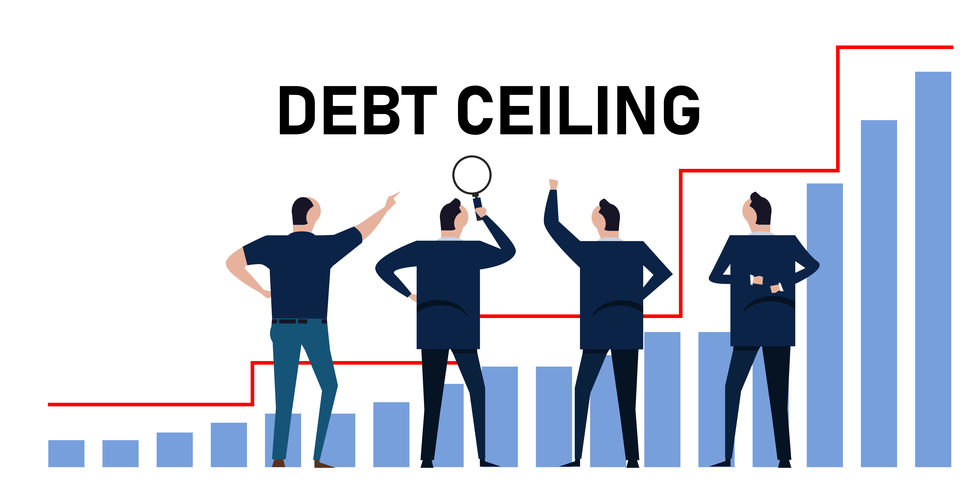 Every few years, particularly during the administration of a divided government, the threat of a default on raising the debt limit of the United States rears up in the political and economic spheres. While both sides tend to play chicken before ultimately settling on a negotiated outcome that they can sell to their bases, the current debt limit crisis feels more serious as the X date of June 1 looms with no settlement in site.
This crisis has a significant effect on various industries, and amongst them is the merchant cash advance business. MCA companies are heavily relied upon by small businesses for immediate financial needs, and understanding what this crisis means for the industry is crucial for getting through it unscathed.
Let’s compare the current landscape to running a business:
When a company opts to increase its debt limit, it essentially seeks to borrow more money, trading liability for an asset. For example, if the company’s equity is worth 100 billion dollars, borrowing doesn’t change this figure as long as the borrowed amount is an idle asset in their account.
The U.S. government should theoretically operate similarly to a regular company, borrowing only what it can pay back, but with the only growing expenses, when the government borrows money and raises the debt ceiling, it doesn’t always have enough funds for repayment.
In addressing its fiscal shortfall, the government operates distinctly from a conventional business. Unlike a company compelled to confront its financial mismanagement head-on, the government possesses the ability to print additional U.S. dollars. However, this course of action inherently devalues the currency.
For the sake of illustration, consider the worth of the dollar as a fixed entity. Suppose every thousand dollars equates to one bar of gold. If we slice this bar of gold into a thousand pieces, each piece represents $1. When the government initiates the printing of more money, it is essentially the government carving that same bar of gold into tinier segments. Meaning, if sliced in 2,000 pieces, the same bar of that once held the value of $1,000 is now $2,000. The total quantity of gold remains constant, regardless of whether it’s divided into 1,000 or 2,000 slices. However, with increased currency in circulation, each dollar—like every slice—holds less value, thereby shrinking everyone’s piece of the proverbial gold bar.
Now that we’ve explained the dangers of wantonly raising the debt limit, how does this affect MCA companies?
The debt limit crisis’s impact on MCAs is pronounced due to the time-value factor of money.
Suppose a mortgage of $100,000, repaid with interest over 30 years, amounts to $300,000. If the value of the dollar reduces significantly over this period – say by 50% – the bank, despite appearing to make a profit, loses money. That’s because the money they receive later has less purchasing power than the same amount ten years prior.
This reality can be acutely felt in periods of high inflation, such as in 2021 and 2022, where inflation neared 9%, and many felt it was closer to 20%. We all feel it during our grocery shops, the prices of experiences, and in other areas of our lives. Here, $100 can only buy what $80 could a couple of years ago, eroding the value of the interest charged.
At Better Accounting Solutions, a number of the MCA businesses we’re working with are concerned with this rapid devaluation of the money they’re funding.
The key factor to consider is the duration for which the capital will be deployed and how it will be recouped. For instance, if you advance $1 million at a 24% factor rate over 24 months and the debt ceiling is raised causing the dollar value to drop, your returns in the second year might be significantly less valuable despite the factor rate. This depreciation means that even though you’re receiving the agreed-upon returns, the funds’ purchasing power is considerably less, translating into a net loss of what would have been 13.5% over the past two years.
However, if you’re giving out (after careful consideration) riskier short-term advances with higher factor rates, daily repayments, and shorter durations, the situation would be different. Here, you’re receiving your return within, say, six months. Even if the dollar’s value decreases by 20% over a year, you’re less affected because your returns are realized in a shorter time and at higher rates, leaving you with a net gain.
Therefore, the debt limit affects MCA providers significantly, whether it’s being covered in the news or not. The devaluation of the dollar, high inflation rates, and other economic consequences of a debt limit crisis can dramatically impact the returns on cash advance businesses, especially those with longer repayment periods. As a player in the finance industry, it’s crucial to consider these elements when making advances or lending money. By factoring in these variables, providers can better protect their interests, minimize risks, and ensure the stability of their operations even during times of economic uncertainty.
Impact of ChatGPT Era Already Being Felt
May 16, 2023 Anyone that’s ever faced a coding hurdle has inevitably ended up on Stack Overflow, the go-to platform for developers to solicit answers from more experienced professionals about their challenges. Users typically explain what they’re trying to accomplish and paste a copy of the code that’s not achieving the desired result. That’s where the community chimes in, coming forth with their own solutions while other users upvote the best answers. The end result is not just a grateful user but an ever growing public database of questions and solutions available for public consumption. The sheer scope of what’s been compiled has opened up the door for other users to simply find a similar enough question that’s already been asked and copy the answer. It’s a very valuable tool.
Stack Overflow has been around for 15 years but from March to April of this year, traffic plummeted by 17.7%, according to SimilarWeb. Tech blog Gizmodo has suggested that a contributing cause is ChatGPT-4, the OpenAI chatbot technology that can write its own code, edit a user’s code, and even converse about what a user is trying to accomplish. A spokesperson for Stack Overflow confirmed to Gizmodo that ChatGPT was partially responsible for its loss of users. “However, our vision for community and AI coming together means the rise of GenAI is a big opportunity for Stack,” the spokesperson added.
But what’s a coding forum for nerds and brainiacs got to do with the lending industry? Well, for one thing borrowers were already flirting with asking virtual assistants for help with financial services products before ChatGPT even entered the ring. According to the most recent Smarter Loans survey, 16% of loan applicants surveyed said that they had at some point used Alexa, Siri, or other voice search tools to find information about financial services. None of those come even remotely close to what ChatGPT-4 is able to do. And AI is popular, so popular in fact that ChatGPT became the fastest growing app in history, crushing even the likes of TikTok in pace of growth. ChatGPT already had 100 million monthly users as of February, before its signature ChatGPT-4 model was released.
Therein lies the threat because not only is ChatGPT-4 incredibly adept at making coherent conversation but it is also ready to explain a concept or make a recommendation, just like a very knowledgeable friend would. For example, when asking it to make a list of the top small business funding companies, these were among the names it spit out:
- OnDeck
- American Express (Kabbage)
- Funding Circle
- Credibly
- Square Capital
- National Funding
- PayPal Working Capital
It’s not a vomit of names. ChatGPT-4 was familiar with their areas of expertise. When pressed further it said that OnDeck would help get the cash fast but working with Square Capital might work better if one is processing a high volume of credit card transactions. For strong credit and a large loan, it suggested Funding Circle. After expressing an interest in OnDeck, the AI provided instructions on how to apply via the OnDeck website and a phone # to call with questions. In this real-world example, the AI replaced both the online search and the role of a broker all in one and all within minutes. It can also read the contracts and alert borrowers to certain clauses. When pressed about an unusually high APR, for example, the AI even offers an encouraging explanation for how moving forward could still make sense.
“Be sure to also consider the potential return on investment from using the loan funds,” it said. “If the growth or savings you anticipate from using the loan funds exceeds the cost of the loan, it may still be a good decision despite a high APR.”
eCapital Expands With Two Senior Hires
May 11, 2023MIAMI – May 11, 2023 – eCapital Corp. (“eCapital” or “the Company”), a leading finance provider across North America and the U.K., has reinforced its commitment to delivering specialized finance solutions to small to medium-sized businesses by recently appointing two accomplished Business Development Officers (BDOs) to its team. These new hires bring a wealth of experience to eCapital, as they serve clients across a variety of industries. With a focus on delivering customized financing options, eCapital has been able to distinguish itself in the current market conditions, leading to significant momentum for the company.
The two new hires, Matthew DeBernardo, SVP, Business Development Officer, and Bret Aaron Meuschke, SVP, Business Development Officer, will be involved in managing Factoring and Asset-based Lending transactions as part of the company’s Commercial Finance division. Bringing more than 25 years of industry knowledge, the two seasoned BDOs will prioritize meeting clients’ business and financial requirements while providing exceptional customer service.
“eCapital’s sustained expansion is drawing exceptional talent, such as Matthew and Bret, to our company because of our distinct business model and advanced technology capabilities,” stated James Poston, Chief Sales Officer at eCapital Corp. “Their specialized expertise, combined with eCapital’s extensive resources, will enable us to further elevate our capacity to deliver the quick, adaptable financing options that we are renowned for. Matthew and Bret have already demonstrated impressive results in their new positions, and we are excited to see them continue to thrive as integral members of our team.”
eCapital has been a champion of SMBs for almost two decades, harnessing its profound understanding of finance solutions and its remarkable capacity to cultivate and maintain strong business relationships. By adopting a personalized approach and promoting valuable connections with clients, eCapital offers rapid and hassle-free access to working capital, empowering SMBs to thrive and succeed.
“eCapital’s reputation in the industry along with today’s economic climate made it ideal timing to join the company and support clients in getting the financing they need,” said Meuschke. “eCapital’s business model plus the strength of the team was very attractive and something special I knew I wanted to be a part of as they continue to help solve a major pain point in the market.
“eCapital takes an innovative approach to problem-solving and supporting its customers, which is even more critical now as businesses look for options outside of traditional lending,” said DeBernardo. “I’m excited to put my background in alternative lending and expertise in government contracts to work for eCapital as we continue to support and service customers across North America, quickly getting them the funding they need, when they need it.”
About eCapital Corp.
eCapital is committed to accelerating access to capital for companies in the United States, Canada, and the U.K. By leveraging a team of over 700 experts and proprietary, industry-leading technology, eCapital is creating the future of business funding. With a full suite of products such as freight factoring, invoice factoring, lines of credit, asset-based lending, payroll funding, and equipment refinancing, eCapital ensures businesses have the funds they need to do more. Through its Transportation, Staffing, Wellness, Healthcare, Factoring and ABL divisions, eCapital delivers customized funding solutions for over 80 industries. To learn more about eCapital, visit eCapital.com.
Amazon’s Seller Lending Program Receivables Cool Off
April 30, 2023 According to documents purportedly obtained by Business Insider in January, Amazon had planned to increase its business loan operations in 2023, estimating that its loan receivables would eventually exceed $2B. Instead, the receivables figure has been slowly going in reverse, according to an examination of the company’s regular quarterly earnings reports. Amazon’s seller lending receivables hit a high of $1.4B in Q3 of 2022 but then ticked downward to $1.3B by year end. In Q1 of this year, those receivables had gone down again to $1.2B.
Amazon’s Seller Lending Receivables
2016: $661M
2017: $692M
2018: $710M
2019: $863M
2020: $381M (covid)
2021: $1B
2022 (Q1): $1.1B
2022 (Q2): $1.3B
2022 (Q3): $1.4B
2022 (Q4): $1.3B
2023 (Q1): $1.2B
Not counted in these figures is financing to Amazon sellers conducted through a third party. Amazon teamed up with Parafin on merchant cash advances, Lendistry for Business Loans, and Marcus for lines of credit, for example. Data on funding from these parties is a little more difficult to come by.
Are You Prepared For a Recession?
April 26, 2023 “Different industries thrive through different times and circumstances where others may not weather them as well,” said Kevin Duffy, SVP of Sales & Business Development at Channel Partners Capital.
The new interest rate environment and slowing economy could be viewed as a specific circumstance and some experts say we’re on pace to experience a recession. But that might not be all bad, according to some industry veterans. Duffy’s colleague at Channel, Chris Cainion, VP of Sales and Business Development, told AltFinanceDaily that if things slow up a bit, it could be a opportunity to “work on efficiences within your business.” For those in the funding industry specfically, the Channel colleagues said that it’s a time to leverage your strengths, monitor your portfolio, communicate with your customers, be opportunistic, and manage your liquidity.
“Cash is king as the credit crunch is increasing,” said Eleni Delimpaltadaki Janis, Managing Partner & Chief Investment Officer at Equivico. “Focus on looking at your expenses very carefully, looking at where can we create efficiencies in your balance sheet and reserving cash for the future.”
Recessions tend to separate the really good companies from poor ones, said the folks at Channel, who emphasized that they are among the ones prepared for change or a slowdown.
“It’s important for us to be able to first hone in on a type of industries that are good for this type of climate,” said Duffy. “And then the ones that aren’t, we got to be a little bit more careful. It also gives us a chance to work on other things that make us flow, our app-to-funding or funding-to-conversions and things of that nature that helps us be more competitive and more competent as we progress and starting to pick up business again.”
For Janis, if an eventual recession becomes a crisis, she said to never let a crisis go to waste. “In other words, crisis comes with opportunity in the industry, whether you are a FinTech high growth startup or small business, the reality is that a crisis will end up eliminating some of your competitors, and will bring a spotlight on weaknesses that your company or others may have, and an opportunity for those who are solving real problems and have quality products to stand up and gain market share,” Janis said.
IOU Financial Reveals 2022 Financials, Is Adapting to Current Macroeconomic Conditions
April 26, 2023 IOU Financial originated $82.7M in funding in Q4 2022, according to the company’s latest financial report. That put them at $275.5M for the year total, a new all-time record for the company. IOU was profitable for the year but by a razor thin margin, eking out a net income of just $38,826.
In an official announcement, IOU disclosed that “During the fourth quarter of 2022 macro-economic factors including inflation and rising interest rates impacted the operating environments of many small businesses and negatively impacted IOU’s collections efforts and servicing revenues. This has led to a write down of specific servicing assets and reduced revenue accrual rates, resulting in a net loss of $(2.7) million on an IFRS basis and $(0.9) million on an adjusted earnings basis for the quarter ended December 31, 2022.”
IOU has already taken decisive action to adapt, the company stated, which has already led to a positive impact on collections but also resulted in sigifnicantly reduced originations in the first quarter of 2023.
“IOU Financial has weathered many storms and always emerged stronger than before,” said Robert Gloer, President and CEO of IOU. “We’ve pivoted to adjust to current macro-economic conditions and remain committed to investing in products and technology designed around the needs of small business owners and our broker network.”
SBA Lifts SBLC Moratorium
April 11, 2023
It’s official. The SBA is lifting the moratorium on licenses for Small Business Lending Companies (SBLCs), ending the 40-year pause that began in 1982. The SBA is also adding a new type of lending entity called a Community Advantage SBLC while also removing the requirement for a Loan Authorization in the 7(a) and 504 Loan Programs.
The 37-page rule, which is slated to be published in the federal register on April 12th, included the SBA’s analysis of all the comments it had received, including the criticisms. Some argued, for example, that opening up the doors would allow the unscrupulous world of fintech to participate in the market. The SBA was unmoved by this, countering that existing participants already rely on fintech.
“SBA has for many years provided oversite to non-depository entities participating in the SBA business loan programs,” the SBA said. “This includes SBLCs, non-federally regulated lenders (NFRLs), 504 Certified Development Companies (CDCs), and Microloan Intermediaries. In fact, most all lending institutions incorporate the use of financial technology in their delivery of loans and other financial products.”
One such fintech that has been eager to become a participant, issued a prepared statement on the decision earlier today.
“Funding Circle applauds the Biden Administration for ending the SBA’s 40 year moratorium on licensing additional state and SBA licensed and regulated non-depository lenders thus ending its lender oligopoly in favor of competition and innovation,” said Funding Circle. “This is an opportunity for the more than 8,000 community banks and credit unions that don’t offer 7(a) loans to partner with Fintech lenders to offer affordable loans quickly in underserved communities. Congress should now focus on ensuring SBA has the resources necessary to license more than three new lenders in its SBLC program in order to increase competition and distribution of government guaranteed loans in underserved communities.”
The SBA also published new rules on April 10th that will amend various regulations governing the 7(a) and 504 loan programs.
Federal Judge: Legal Challenge to California’s Commercial Financing Disclosure Law Has Merit, Orders SBFA Case to Proceed
April 3, 2023 A federal judge has ordered the Small Business Finance Association’s (SBFA) case against Clothilde Hewlett in her capacity as Commissioner of the California Department of Financial Protection & Innovation (DFPI) to proceed. On March 30, The Honorable R. Gary Klausner denied defendant’s motion to dismiss the claims that the State’s commercial financing disclosure law is both unconstitutional and preempted by the federal Truth in Lending Act (TILA).
The case, originally filed on December 2, 2022, argued, broadly speaking:
- That the regulations violate the First Amendment on the premise that they compel the group’s members to make inaccurate disclosures to customers while at the same time prohibiting members from engaging in communications that could be used to clarify or correct the required false or misleading information to customers.
- That APR is defined and governed at the federal level by TILA and that California’s own customized spin on it would only serve to confuse customers.
The Court has now ruled that these claims have been sufficiently alleged, allowing the SBFA the opportunity to prove its case.
Steve Denis, the Executive Director of the SBFA, told AltFinanceDaily that the win at this juncture was validation for what the organization has been saying for the past few years.
“I think [this victory] is really good news. It’s a lawsuit that the entire industry should be behind,” he said.
The outcome of the case could have far reaching effects. New York, for example, has enacted similarly misleading APR rules that are soon slated to go into effect while other states have contemplated following in its footsteps.
“I think if we win this lawsuit the APR argument is over,” Denis said.
To that end, anyone in the industry that would like further information about what’s taking place can contact Denis at sdenis@sbfassociation.org.