Steve Denis Talks About SBFA Study: APR is a Bad Metric For SMB Loan Transparency
October 19, 2020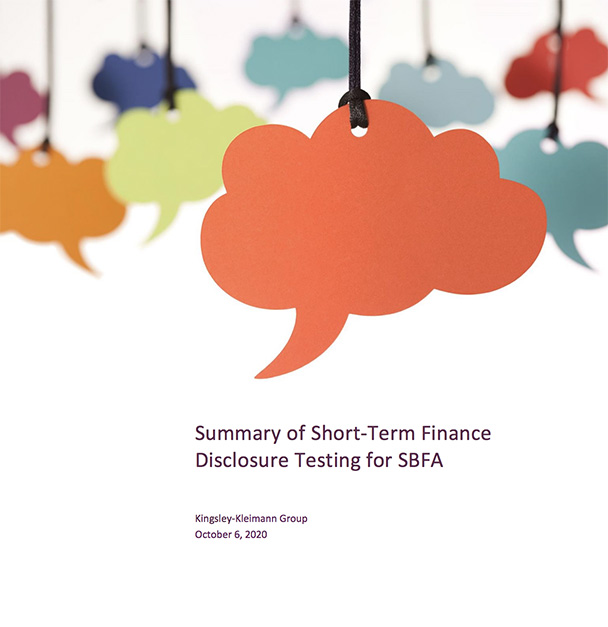 In response to regulatory bills in California and New York that will enforce APR disclosures on small business capital providers, the Small Business Finance Association (SBFA) funded a study by Kingsley-Kleimann to find out if APR is a good metric to use for business loans.
Steve Denis, the Executive director of the SBFA, said his group supported the study because the states should test concepts with actual small business owners before passing regulation. In the NY disclosure bill awaiting signature, Denis said there was no concept testing. Some of the companies that support the bill might not have even read what it stipulates.
“You have a group of companies that are pushing these types of disclosures, for no reason other than their own self-interest,” Denis said. “We’re fine with disclosure, we are all for transparency, but it needs to be done in a way that we believe is meaningful to small business owners.”
In qualitative testing of 24 small business owners and executives who have experience taking commercial loans, the study concluded participants did not understand what APR was. The study found that the total cost of financing model was a better way to understand and compare options for their use.
“As one participant, when asked to define APR, answered: ‘I feel like you are asking a kid, why is the sky blue?’ (Participant 3, NY).” The study concluded, “In other words, [APR] is ever-present yet also inscrutable.”
Kingsley-Kleimann is a research-based organization that studies communication and disclosure for government agencies like the FTC and private or public business. Participants were selected from Califonia and NY.
Denis said that the findings show what SMB lending companies have already known- Anual Percentage Rate is not a useful metric for short term loans. Many do not know that APR represents the annualized cost of funds for the loan term, with the fees and additional costs included.
“People don’t know what APR is; it confuses them,” Denis said. “They know it’s a metric they should use, but they don’t know why. The APR is such a marketing tool now, it’s not a valuable tool.”
The study showed most respondents thought APR was the same as an interest rate. It’s not.
 Denis said using an annualized rate for shorter-term loans or SMB loans that have no ending date worsens the problems. In those cases, firms estimate an APR, and it is inaccurate.
“When you have a merchant cash advance, there’s no term,” Denis said. “So you have to estimate a term, and I mean that is just a recipe for fraud.”
Denis said that the firms supporting California SB1235 and the New York S 5470/A 10118-A disclosure bill and taking credit for writing the laws are the same companies that will suffer under the strict tolerance of an APR rule.
“The companies pushing this, the trade associations pushing it, they like to take credit for writing the bill in California and writing the bill in New York: I don’t even think they’ve read it,” Denis said. “It’s going to subject their own members to potentially millions if not hundreds of millions of dollars in potential liability [fines.]”
The SBFA is not against disclosure by any means, Denis said, but supported other avenues. The trade group believes knowing the total cost of a loan and the cost and timeline of payments will help protect and inform borrowers better than APR. Firms that support the disclosure bill are banking off the positive press, hoping to be seen as pro-consumer protections but forcing APR will make it harder to compare the actual value of loans, Denis said.
Denis is still optimistic that regulators will work with businesses affected by the incoming legislation. He said the NY legislature and governor’s office, as well as the California Department of Business Oversight, understand the problems of using APR.
“They’re receptive to these arguments, and they know what they’re doing,” Denis said. “The last thing they want to do is pass a bill that’s going to further confuse businesses, especially during a pandemic when businesses are relying on this capital to stay afloat.”
Keeping Up With Kabbage
October 17, 2020 On Friday, American Express announced that it had completed its acquisition of Kabbage.
“Kabbage, An American Express Company will continue to provide quick and easy cash flow management solutions for small businesses, now backed by the trust, service, and security of a American Express,” American Express wrote on social media. “We’re excited to welcome Kabbage’s talented colleagues to American Express. Together we will combine our over 60 years of experience backing small businesses with Kabbage’s innovative technology to support our customers through this challenging time, and help them get back on their feet and thrive.”
Meanwhile, below is a copy of a Q&A AltFinanceDaily had with Kabbage co-founder Kathryn Petralia that appeared in our magazine’s July/August issue.
Q: How specifically do you think the pandemic will change the way SMEs bank?
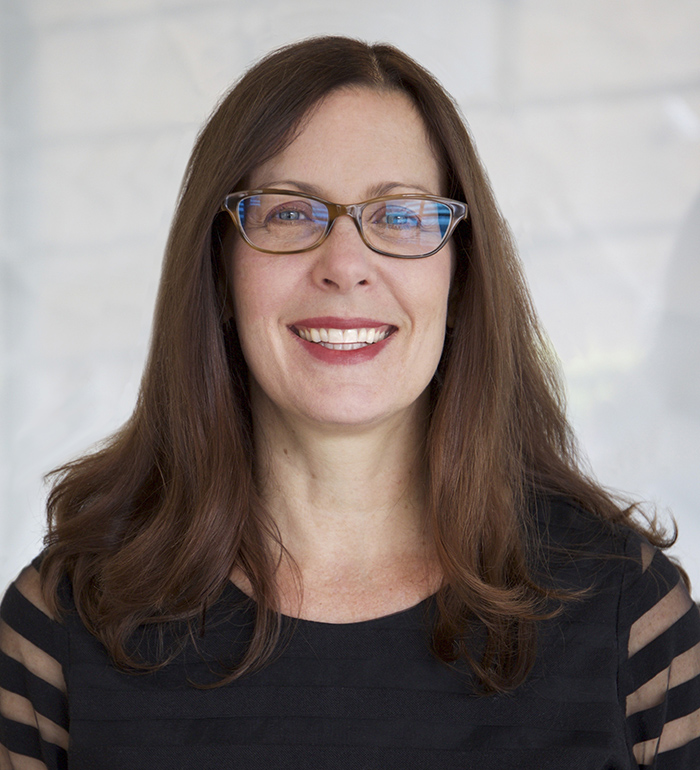 A: The pandemic will first change with whom they bank, and that choice will change the way they bank. For perspective, one hundred percent of Kabbage customers have a bank account, but very few of them can get a loan from their bank. We launched Kabbage Checking earlier this year to serve the smallest of businesses without sacrificing the features they expect and offering other products banks don’t. We’re focused on making cash flow tools accessible to the businesses traditionally underserved and overlooked, and the pandemic has been a catalyst for businesses to find new solutions.
Q: How might the dynamic of banking change after the crisis?
A: It was well-reported that businesses without an existing credit relationship with their bank were turned away from applying for PPP loans. We’ve heard directly from many of our PPP customers that this will compel them to change banks, and the demand for Kabbage Checking has reflected that sentiment since its launch. In the short term, businesses of all sizes and ages will seek out and sign up for new, tech-forward banking partners. In the long term, that shift will change customers’ expectations of what banks should offer. For example, prior to the PPP, Kabbage had issued well over a billion dollars to customers during non-banking hours. On-demand, 24/7 access to funding and cash flow insights, or faster settlements and money transfers will soon become commonplace, and large retail banks will need to adapt if they want to capture or reclaim these customers.
Q: How are these changes likely to impact alternative lenders and funders?
A: For starters, single-product lending companies will realize they must diversify their offerings in order to compete in the new financial-services marketplace. I would expect to see lenders launch new products to more resemble a bank. Conversely, traditional banks will need to begin adopting automated ways to serve customers with a tech-forward experience. Especially in the new normal where customers may be apprehensive about in-person banking meetings, they must adapt online to acquire and serve customers.
Q: What’s still needed to help Main Street recover?
A: The PPP was only the first phase; we’re not out of the woods yet. Businesses now need to restart and eventually grow. The crisis made business owners realize they need tighter controls over their cash flow, as many found themselves on the back foot and ill-equipped to withstand a long-term crisis such as the one through which we are all muddling.
They’ll need cash-flow tools to be more prudent and appropriately plan for similar events. Having said that, it’s not only on the shoulders of small businesses or tech solutions. They need customer demand, and local economies need to begin to reopen safely so consumers feel comfortable returning to normal commerce. That will take the support of cities and states encouraging consumers to shop local so small businesses have greater incentive to recall their employees and get back to work.
Q: How can alternative lenders and funders best play a role in this recovery?
A: Much of what we’re already doing is exactly what our economy needs. For the most part, fintech companies serve the customers banks won’t or can’t. That reality is unfortunately unchanged today. That’s why during the pandemic Kabbage made every effort possible to provide products that helped SMBs through this crisis. With respect to PPP, we helped nearly 300,000 small businesses access over $7 billion, helping preserve an estimated 945,000 jobs. Our payments product saw a near 4X spike in adoption as businesses sought contactless payment options. We built www.helpsmallbsuiness.com in three days to allow any small business to generate needed revenue by selling online gift certificates. We also launched Kabbage Checking, giving small businesses a new banking option, and Kabbage Insights remains available and free to access for any small business.
Q: What changes do you expect to see in the alternative lending and funding industry as a result of the pandemic?
A: Everyone will expand their services. Whether it’s larger companies expanding their solutions through acquisitions, or start-ups investing beyond their primary product, everyone will aim to enhance their offerings to give customers more data-driven products that help them rebuild.
Q: Kabbage just agreed to be purchased by American Express. Should we expect to see more consolidation in the alternative lending/funding space? If so, over what time frame and why do you expect this to happen?
A: I would not be surprised if we saw more deals announced before the end of the year.
Q: Tell us a little about why Kabbage decided to sell and why the timing was right?
A: For us, it has always been about finding the right company with the right mission and intentions. We just happened to be in the middle of a crisis when the conversations started, despite having the financial capacity to support operations for multiple years. American Express shares our vision to be an essential partner to small businesses, and we couldn’t be more excited at the opportunity to continue the important work of providing solutions and innovative capabilities that address a range of small business cash flow needs alongside AmEx.
Nav CEO Talks About Platform Enhancements
September 28, 2020 “Our news is really about improving and enhancing our platform to use real-time business data to uncover and align qualifications for small business owners to the best financing options available to them,” said Nav CEO Greg Ott about a recent announcement.
Nav is a small business information service that connects borrowers to lenders across the entire finance industry, from SBA loans, major credit cards, to nonbank lenders, and more. This new enhancement streamlines the finance process for both sides of the transaction, Ott explained.
“Historically, the model is inverted disproportionately against the small business owner, in that they can’t see what they’re qualified for until after they apply,” Ott said. “By using real-time business analysis and dynamic financing profiles, Nav is the only place that can show them what they can qualify for before they apply.”
Nav is also adding a new service team that connects to small businesses through the digital platform, offering a more personalized experience; someone will be on the line to help borrowers find their way. The platform uses cash flow, revenue, credit, and behavioral data to match SMBs with loan offers.
Nav is expanding its service because Ott said this year, many businesses could not find financing at all. Nav began helping customers find lenders for PPP loans, facilitating 70k applications in all and built an online community of 18k businesses going through the process this year alone.
Ott said it became clear during the rounds of PPP and government stimulus that banks gave preferential treatment to some of their customers and left out small businesses.
“Many banking options aren’t available to the vast majority of small businesses,” Ott said. “The traditional financial system is not always available or not the best option for a small business owner. Small business owners know this in spades, It’s just now that in the growth of this fintech ecosystem that it’s becoming clear how big that addressable market is.”
OLA CEO Mary Jackson: Colorado True Lender Bad for Borrowers
September 21, 2020 Last month, the Colorado Attorney General’s office announced a settlement with Avant and Marlette Funding, setting a precedent for how “true lender” cases will be handled. The fintech lenders and their partners are free to lend in the state, subject to a lot of restrictions, as long as they stick below the 36% APR level.
Some touted the decision as a safeguard for fintech bank partnerships. Still, many, like those represented in the Online Lenders Alliance (OLA)- saw misplaced regulation that harms borrowers more than it helps.
Mary Jackson, CEO of OLA, said that while well-meaning, the 36% rule arbitrarily limits the ability for non-prime credit customers to get a loan at all. The limit draws an arbitrary line in the sand, based on an outdated centuries-old lending system, and doesn’t describe loans that last shorter than a year very well, Jackson said.
“What it did was drive out all the lenders,” Jackson said. “Non-prime consumers have fewer choices. They have to go and be subject to fraud or more unscrupulous lenders, or they have to go back to overdraft as another option.”
Jackson represents a group of lenders that offer online services, which regularly partner with banks to provide loans nationwide at higher APR rates than some states allow. Jackson said these are not fintech “rent-a-bank” cases to skirt state regulations, but natural partnerships that enable larger institutions to gain the tech and talent of leading tech companies to reach a greater customer base.
“Big banks cannot keep up with the technology that fintech providers have developed,” Jackson said. “A key US bank has a lot of data scientists that they employ, but if you’re a regional or smaller bank, you don’t have that capability: it’s nearly impossible to drive an IT team as a banker.”

Jackson said that when her firm Cash America, that offered storefront cash advances, was bought by online lender CashNetUSA, she saw the differences between in-person transactions and the IT teams necessary for online lending. “It’s like two different worlds, two different ways of looking at something.”
“Our lenders are sophisticated like Enova, Elevate, CURO, Access Financial,” Jackson said. “These are companies that employ hundreds of data scientists that compete for jobs with Google in Chicago and a small regional bank can’t keep up.”
Fintech talent is helping to reach the 42% of Americans that have non-prime credit scores- FICO scores below 680, according to the Domestic Policy Caucus.
Jackson said these customers, many of whom can pay for loans, have almost no options. Jackson sees many of her partner companies offering a “pathway to prime” service, empowering customers to rehabilitate their credit.
“Most of these people are non-banking customers, these folks have damaged or thin file credit,” Jackson said. “Most banks don’t service that customer, except for overdraft- a 35$ fee for lack of money in their account- I think bankers want to be able to offer longer-term installment loans.”
Jackson said research backs up her claims, pointing to a 2018 US Treasury report that discussed how banks would have to rely on fintech partnerships to innovate and drive product change. That’s what is finally happening, Jackson said.
She also pointed to a 2017 study into the effects of the 2006 Military Lending Act. The act intended to protect military families from lending products with an APR above 36%. The study out of West Point found that the limit only hurt military members, some of which lost their security clearances when their credit fell too low.
“We find virtually no statistically or economically significant evidence of any adverse effects of payday lending access on credit and labor outcomes. In a few cases, we find suggestive evidence of the positive impacts of access. For example, our second survey suggests that a 1 standard deviation increase in the fraction of time spent in a payday loan access state decreases the probability of being involuntarily separated from the Army by 10%”
Not only was there no harm done, but the paper argues on behalf of payday lending as a healthy way to maintain the credit necessary to keep a military job.
She sees similarities in the legal fight over the creation of interstate credit card laws in the 50s and 60s, saying it used to be the case that consumers had to use a texas-based or California based card. The country had to decide how interstate credit worked then, and with the induction of new technology to loans today, the same question is being asked.
The majority of Jackson’s clients offer products above the 36% limit, in the 100 to 175% APR range. She said that looks high, but consumers are looking at it on a monthly basis, and most of them pay it off early.
“These fintech partnerships allow the bank to offer one rate to everybody across the United States,” Jackson said. “We feel that really adds more democracy to credit, making sure that those who’ve been left out of banking have a shot at it.”
University of Delaware, Other Universities Going Long on Fintech
September 15, 2020The University of Delaware recently received a $9 million tax incentive to construct a new Fintech Center on its premier Science, Technology, and Advanced Research (STAR) campus, with help from a community-building company Cinnaire. Slated for completion in 2021, the building marks yet another fintech-focused resource for higher education.
Financial technology programs have long been offered at prominent business schools such as Harvard, Stanford, and Columbia, international schools such as Oxford, and research institutions like MIT since the late 2000s.
Now that fintech has become a long term value creator in the financial world, other institutions such as the University of Michigan, Fordham, and Delaware are excited to implement fintech opportunities on campus for undergraduate and graduate students alike.
 Discover Bank and Cinnaire jointly funded the building, a $39 million project. According to Delaware plans, it will create a space on the Delaware STAR campus to host a new Financial Services Incubator to encourage research and collaboration between students and industry leaders.
“The FinTech building will bring together computer science, engineering and business experts in cybersecurity, human-machine learning, data analysis, and other emerging financial technologies,” said Levi Thompson, Dean of the College of Engineering. “These collaborations will allow us to provide our students with a very unique experience that prepares them to excel in the workforce. Furthermore, our Fintech discoveries will benefit people throughout Delaware and the world.”
Cinnaire is a national nonprofit that focuses on improving communities’ financial health by creating capital solutions to revitalization projects: lending funds, managing, and building housing structures.
Funding communities is what Cinnaire does best: in this case, utilizing a New Markets Tax Credit to fund an addition to the Delaware campus.
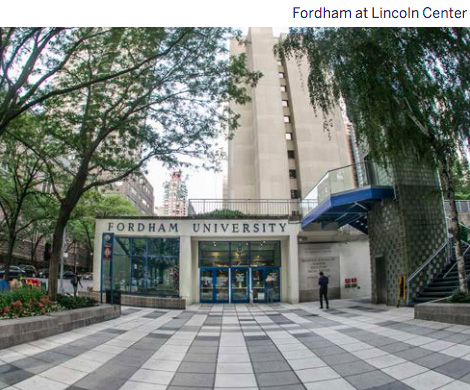 The nearby University of Fordham at Lincoln Center has also been trending toward preparing students for a fintech world. Undergrad and graduate students pursuing an MBA through the Gabelli School have the option of a fintech concentration.
The course work not only incorporates data science and machine learning skills into the worlds of credit lending and risk management but facilitates relationships between students and a wealth of industry partners.
Sudip Gupta, professor, and Director of the MS Quantitative Finance program, spoke about the courses’ popularity there. The program is ranked in the top 20 of its kind in the world by Risk Magazine.
He has seen a revolution in fintech in the past few years that has recently received a big push by pandemic forces, introducing the wholesale adoption of fintech techniques into traditional financial institutions.
“The fintech revolution in the industry- big data, machine learning techniques, storage capacity, and cloud computing has been going on for the last couple of years,” Gupta said. “The pandemic provided the big push to move toward that direction.”
Gupta has been following the development of alternative credit closely, recently publishing an award-winning paper studying machine learning to create alternative consumer credit scores using mobile phone and social media data.
“The idea of my research- let’s look at people who do not have a credit history or enough traditional credit you could get from a FICO score,” Gupta said. “Using this data, it turns out they are better predictors, and better to judge than FICO, and can reach out to more people.”
Gupta is excited for the adoption of big data techniques into alternative and traditional consumer loans because it offers a win-win for consumers and institutions alike, he said. Echoing the findings of many successful alternative finance companies, Gupta said his research showed that collected data could offer better insight for lending than “stale FICO scores.”
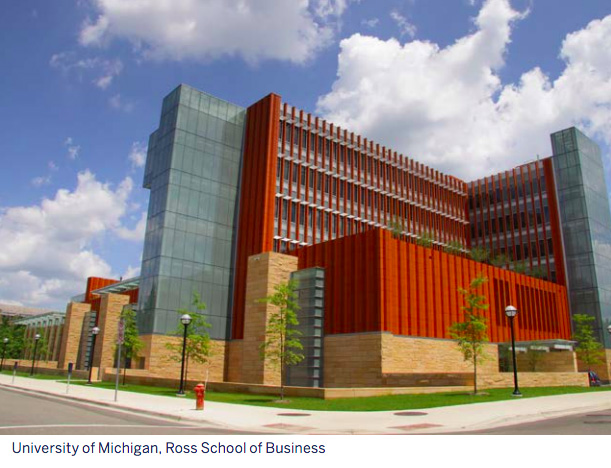 Up north at the Univerisity of Michigan, Professor Robert Dittmar at the Ross School of Business heads the Fintech Initiative. He is working on adding even more fintech classes. Recently, through a partnership with PEAK, a Chicago fintech lending company, Michigan launched a fintech initiative that incorporates undergrad and grad classes, faculty research, and a fintech entrepreneurial club that connects students to industry leaders.
Michigan Ross is adding fintech classes for a variety of reasons.
“The simplest reason: students are interested in learning more about this kind of space,” Dittmar said. “And we’re seeing more demand from the industry side for students that know more.”
For years Dittmar said tech companies and startups in silicon valley were pioneering innovations in the industry. Through talking with alumni and contacts in the industry, Michigan found that fintech has gotten to the place where there is an excellent supply of data engineers. Still, there is a demand for professionals with the financial business expertise to implement these technologies.
“What we are trying to do at Ross is fill in that gap,” Dittmar said. “what we’d like is for [students] to know enough about the technology that they can provide the insights of finance and business to the people that are doing that technical work.”
At Ross, they are organizing what will one day be like a fellowship program. The program will feature a combined learning experience: students will learn data analytic finance, apply their computing skills in credit decision making classes, and then connect with the industry in experiential learning classes.
“In the last couple of years, I have been taking students to London to work at fintech startups in the UK,” Dittmar said. “And we are hoping to expand that program so that most or all graduate students have the opportunity to participate in something like that.”
Last year Ross hosted a “Fintech Challenge” competition to design a banking service to reach customers in a “banking desert” in rural Michigan. The program is hoping to host another challenge this year, despite complications of COVID-19.
What Stimulus is Next for SMBs?
September 4, 2020 Next week, lawmakers will finally be back from vacation, arguing over the next stimulus package. There are various proposals, and the two competing Republican and Democrat offerings are nearly a trillion dollars apart.
It’s the Senate GOP HEALs act vs. the House Democrats HEROs act. But in between, what may be getting the most support? Standalone bipartisan bills that focus on extending and forgiving PPP loans.
Ryan Metcalf, head of the office of Government affairs and Social Impact for Funding Circle, has been following conversations on The Hill closely.
“Up until Monday, Pelosi said they weren’t even going to even put a bill forward for a new stimulus,” Metcalf said. “But then yesterday [Tuesday] Secretary Mnuchin said he was open to doing a standalone PPP loan. It’s the one that has the most bipartisan support; they can’t meet anywhere else than PPP.”
Funding Circle is one of the world’s largest online lenders, with about $10 billion in global loans to date. Metcalf said Funding Circle mostly offers US loans in the $25,000 to $500,000 range, and as a funder for PPP, offered more loans in just eight days in August than half of their total business in July. His company had to cut off funding requests, locking out some customers that needed help, simply because the deadline had ended.
“When PPP ended on August 8th, the narrative was that PPP had died out, and there was no interest in it, but that is a complete fallacy,” Metcalf said. “We were processing loans for the smallest of small businesses- 10-15 employees- well under $50,000 loans, the people still needed help.”
Steve Denis, Executive Director of the Small Business Finance Associaton (SBFA), has also been engaged in the process. He has been petitioning members of Congress on behalf of what he calls truly small business, those under 10 employees or nonemployers that still need help.
“‘Real’ small businesses: ones with under ten employees that are really grinding, like small hair salons, retail stores, and mechanics don’t really have traditional banking relationships,” Denis said.
SBA data from July found that most of the loans made (66.8%) were in the $50k range and to very small businesses, but the largest amount of capital went towards firms that applied for a $350k-$1M sized loan.
Denis said that the higher dollar amount PPP loans were more profitable for banks to make, so disproportionate funding went toward bigger businesses with pre-established finance connections. This disparity is backed up by research. Studies, like one from the National Bureau of Economic Research (NBER), found that firms with stronger connections to banks were more likely to be approved for PPP funds.
“The way fees are structured: there’s an incentive for big banks to prioritize bigger deals at [commission] rates like 3% or 5%,” Denis Said. “They’d rather make that on a $500,000 deal than on a $40,000 deal.”
Denis said the SBFA was lobbying for Congress to create a prioritized amount of money authorized only for smaller loans, under $100,000-$150,000, to focus on those really small businesses with less than five employees.
Like Metcalf, Denis sees the most likely outcome is an extension of PPP- at least until the end of the federal fiscal year budget in September. If the Fed cannot agree on a budget, the government will go into shutdown- and this year would be the worst time to shut down.
“The only thing that motivates Congress to move big legislation like this are deadlines; there’s a big deadline coming up,” Denis said. “At the end of September, the fiscal year runs out and there needs to be a budget agreement.”
 Metcalf said that the next round of PPP programs need to make sure businesses can get their first loan if they haven’t already, and streamline the loan forgiveness process to keep the SBA from getting overwhelmed.
“We need a forgiveness bill that streamlines the process; lenders will not have the resources to process forgiveness, a first PPP and second PPP as it is,” Metcalf said. “In my call with the SBA two weeks ago, they said for processing new 7(a) lender applications and all the other business they do to resume their normal business we’re looking at six months.”
The PPP proposal that Metcalf likes the best is called the Paycheck Protection Small Business Forgiveness Act, which stipulates a one-page forgiveness form for all loans made under $150,000. Metcalf said he saw support from a bipartisan group of over 90 members of Congress.
Another opportunity is the Economic Injury Disaster Loan (EIDL) program- offering long term loans to businesses with less than 500 employees that need financial help. Both Denis and Metcalf encouraged business owners to check out the program, which offers loans directly from the government without the need to prove forgiveness.
In the end, Denis said he was interested in the Republican “Skinny Bill” that is a cheaper breakdown of the GOP HEALS Act, but he said it is all up in the air.
“This is just me guessing,” Denis said. “I have talked to these people every day, but even members of Congress on Capitol Hill have no clue what’s going to happen.”
Checkout in the time of COVID
August 10, 2020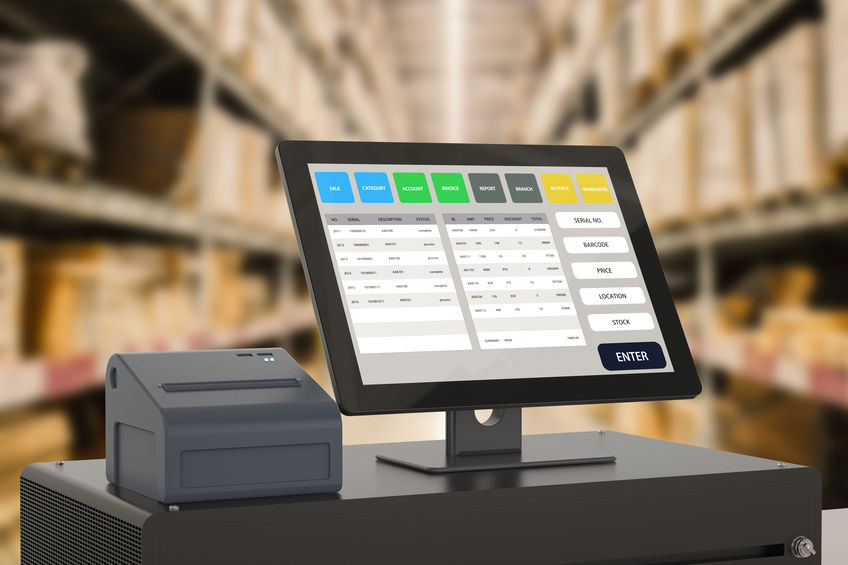 Point-of-sale (POS) lenders, also referred to as buy-now-pay-later (BNPL) firms, allow shoppers to break up their individual purchases into installments, often without interest. By adding BNPL as an option at checkout or further upstream in the purchase process, the consumer’s buying power is increased and they are often less likely to abandon their checkout cart. It is a win / win for all stakeholders.
For these reasons, POS lending is one of the fastest growing segments in unsecured credit, with volume increasing at 40 percent year-over-year. COVID has further accelerated the demand for credit options at checkout.
According to McKinsey, annual growth is expected to jump to 150 percent thanks to an explosion in online shopping and government subsidy programs boosting retail sales. In Canada, firms such as Uplift, Paays, and PayBright are all seeing merchant demand skyrocket for their services, with the latter onboarding over 250 merchants per month.
K-Ching!
POS lenders are able to subsidize APRs by charging the merchant a fee of 4-6 percent of the purchase price. This is on average 2 percent more than the fees charged by credit cards companies. Despite the larger fee, BNPL is very attractive for retailers for a number of reasons. By providing point of sale financing retailers see:
- 30% increase in basket size
- 25% reduction in cart abandonment
- 20% increase in repeat traffic
With installment payments as an alternative, credit cards have seen a decrease in popularity among young shoppers, particularly on smaller ticket items under $500. There are a number of reasons why:
1. Clunky signup experience. Signing up for a credit card at checkout requires lots of paper, personal information, signatures and significant patience – antithetical to the one-tap checkout shoppers are accustomed to. Alternatively, BNPL approval is instant at checkout. 75% of merchants even advertise POS financing far before the register, at the beginning of the customer journey which can increase conversion by two to three times.
2. Challenge to qualify. 19 percent of consumers ages 22 to 30 lacked the credit history to be approved for credit cards in the first place. Many BNPL products do not perform credit checks, and those that do use alternative data sources to underwrite thin-file borrowers.
3. High APRs. With their parent’s household debt in their rear view mirror, many younger shoppers have an aversion to carrying revolving credit balances. Millennials on average carry two fewer cards than their parents. Psychologically, $1000 on your credit card looks scarier than four installments of $250 over time.
4. Customer confusion. Inactivity fees, late fees, over-the-limit fees, cash advance fees, are all poorly understood and masked within dense monthly statements. BNPL offers an elegant digital first experience and straightforward reporting.
The Supporting Cast
Today POS lenders are competing in a land grab for merchant partnership. But for FIs and fintechs who have yet to plant their flags, there are still ways of participating in the BNPL boom.
- Banks. Banks have largely participated indirectly in the BNPL sector, by providing portfolio financing to fintechs or by offering installment options for larger ticket items within their existing credit card programs. Wayne Pommen, CEO of PayBright, sees more bank and fintech collaboration in the next few years: “I predict more buying and partnering, Banks are too far behind to build this themselves.” Marcus Pay, the recently launched retail banking arm of Goldman Sachs is the only group to directly compete in the POS financing ring, with JetBlue as their launch partner.
- Platforms. E-commerce enablers that power millions of independent merchants are piling in to embed POS financing within their platforms. Marketplaces Ebay and Etsy have partnered with Afterpay and Klarna, while the digital infrastructure whale Shopify has an agreement with Affirm.
- Cards. Traditional credit card companies who have the most to lose from BNPL are getting ahead of the trend in several ways. Visa took a controlling stake in Klarna in 2007. More recently they launched Visa Installments, a developer tool for issuers in the Visa network to pilot branded installment products. Though Visa Installments stretches the definition of BNPL, David Fry, CEO of travel financing startup Paays does not mind the ambiguity. “I am not religious about the distinction between cards and installments. What we care about is what the customer is looking for, and what they have to pay to get access to that product”.
POS Lending has the potential to transform consumer lending as it’s evolution is inextricably tied to the growth of e-commerce. It is all about understanding the needs of the shopper and their digital journey. POS lenders are making it increasingly easy for merchants to streamline the buyer path to purchase.
IN DEFAULT OR ABOVE WATER: How PPP Saved or Didn’t Save America
July 31, 2020 Kristy Kowal, a silver medalist in the 200-meter breast stroke at the 2000 Olympic games in Australia, had recently relocated to Southern California and embarked on a new career when the pandemic shutdown hit in March.
After nearly two decades as a third-grade teacher in Pennsylvania, Kowal was able to take early retirement in 2019 and pursue her dream job. At last, she was self-employed and living in Long Beach where she could now devote herself to putting on swim clinics, training top athletes, and accepting speaking engagements. “I’ve been building up to this for twenty years,” she says.
But fate had a different idea. The coronavirus not only grounded her from travel but closed down most swimming pools. At first, she tried to collect unemployment compensation. But after two months of calling the unemployment office every day, her claim was denied. “‘Have a great day,’ the lady said, and then she hung up,” Kowal reports. “She wasn’t rude; she just hung up.”
Then, in June, the former Olympian heard from friends about Kabbage and the Paycheck Protection Program. Using an app on her smart phone, Kowal says, she was able to upload documents and complete the initial application in fewer than 20 minutes. A subsequent application with a bank followed and within a week she had her money.
“I was down to ten cents in my checking account,” says Kowal, who declined to disclose the amount of PPP money for which she qualified, “and I’d begun dipping into my savings. This gives me the confidence that I need to go back to my fulltime work.”
 Kowal is one of 4.9 million small business owners and sole proprietors who, according to the U.S. Small Business Administration, has received potentially forgivable loans under the Paycheck Protection Program. The PPP, a safety-net program designed to pay the wages of employees for small businesses affected by the coronavirus pandemic, is a key component of the $1.76 trillion Coronavirus Aid, Relief, and Economic Security Act (CARES Act). Since the U.S. Congress enacted the law on March 27, the PPP has been renewed and amended twice. It’s now in its third round of funding and Congress is weighing what to do next.
Kowal’s experience, meanwhile, is also a wake-up call for the country on the prominent role that both fintechs like Kabbage as well as community and independent banks, credit unions, non-banks and other alternatives to the country’s biggest banks play in supporting small business. Before many in this cohort were deputized by the SBA as full-fledged PPA lenders, a significant chunk of U.S. microbusinesses – especially sole proprietorships — were largely disdained by the brand-name banks.
“After the first round,” notes Karen Mills, former administrator of the U.S. Small Business Administration and a senior fellow at the Harvard Business School, “more institutions were approved that focused on smaller borrowers. These included fintechs and I have to say I’ve been very impressed.”
Among the cadre of fintechs making PPP loans – including Funding Circle, Intuit Quickbooks, OnDeck, PayPal, and Sabre — Kabbage stands out. The Atlanta-based fintech ranked third among all U.S. financial institutions in the number of PPP credits issued, its 209,000 loans trailing only Bank of America’s 335,000 credits and J.P. Morgan Chase’s 260,000, according to the SBA and company data. Kabbage also reports processing more than $5.8 billion in PPP loans to small businesses ranging from restaurants, gyms, and retail stores to zoos, shrimp boats, beekeepers, and toy factories.
To reach businesses in rural communities and small towns, Kabbage collaborated with MountainSeed, an Atlanta-based data-services provider, to process claims for 135 independent banks and credit unions around the U.S. The proof of the pudding: Eighty-nine percent of Kabbage’s PPP loans, says Paul Bernardini, director of communications at Atlanta-based Kabbage, were under $50,000, and half were for less than $13,500.
The figures illustrate not only that Kabbage’s PPP customers were mainly composed of the country’s smaller, “most vulnerable” businesses, Bernardini asserts, but the numbers serve as a reminder that “fintechs play a very important, vital role in small business lending,” he says.
The helpfulness of such financial institutions contrasts sharply with what many small businesses have reported as imperious indifference by the megabanks. Gerri Detweiler, education director at Nav, Inc., a Utah-based online company that aggregates data and acts as a financial matchmaker for small businesses, steered AltFinanceDaily toward critical comments about the big banks made on Nav’s Facebook page. Bank of America, especially, comes in for withering criticism.
“Bank of America wouldn’t even take my application,” one man wrote in a comment edited for brevity. “I have three accounts there. They are always sending me stuff about what an important client I am. But when the going got tough, they wouldn’t even take my application. I’m moving all my business from Bank of America.”
Lamented another Bank of America customer: “I was denied (PPP funding) from Bank of America (where) I have an individual retirement account, personal checking and savings account, two credit cards, a line of credit for $20.000, and a home mortgage. Add in business checking and a business credit card. Yesterday I pulled out my IRA. In the next few days I’m going to change to a credit union.”
Many PPP borrowers who initially got the cold shoulder from multi-billion-dollar conglomerate banks have found refuge with local — often small-town — bankers and financial institutions. Natasha Crosby, a realtor in Richmond, Va., reports that her bank, Capital One, “didn’t have the applications available when the Paycheck Protection Program started” on April 6. And when she finally was able to apply, she notes, “the money ran out.”
Crosby, who is president of Richmond’s LGBTQ Chamber of Commerce, is media savvy and was able to publicize her predicament through television appearances on CNN and CBS, as well as in interviews with such publications as Mother Jones and Huffington Post. A “friendly acquaintance,” she says, referred her to Atlantic Union Bank, a Richmond-based regional bank, where she eventually received a PPP loan “in the high five figures” for her sole proprietorship.
“It took almost two months,” Crosby says. “I was totally frozen out of the program at first.”
Talibah Bayles heads her own firm, TMB Tax and Financial Services, in Birmingham, Ala. where she serves on that city’s Small Business Council and the state’s Black Chamber of Commerce. She told AltFinanceDaily that she’s seen clients who have similarly been decamping to smaller, less impersonal financial institutions. “I have one client who just left Bank of America and another who’s absolutely done with Wells Fargo,” she says. “They’re going to places like America First Credit Union (based in Ogden, Utah) and Hope Credit Union (headquartered in Jackson, Miss.). I myself,” she adds, “shifted my business from Iberia Bank.”
 Main Street bankers acknowledge that they are benefiting from the phenomenon. “In speaking to our industry colleagues,” says Tony DiVita, chief operating officer at Bank of Southern California, an $830 million-asset community bank based in San Diego, “we’ve seen that many of the big banks have slowed down or stopped lending small-dollar amounts that were too low for them to expend resources to process.”
At the same time, DiVita says, his bank had made 2,634 PPP loans through July 17, roughly 80% of which went to non-clients. Of that number, some 30% have either switched accounts or are in the process of doing so. And, he notes, the bank will get a second crack at conversion when the PPP loan-forgiveness process commences in earnest. “Our guiding spirit is to help these businesses for the continuation of their livelihoods,” he says.
Noah Wilcox, chief executive and chairman of two Minnesota banks, reports that both of his financial institutions have been working with non-customers neglected by bigger banks where many had been longtime customers. At Grand Rapids State Bank, he says, 26% of the 198 PPP applicants who were successfully funded were non-customers. Minnesota Lakes Bank in Delano, handled PPP credits for 274 applicants, of whom 66% were non-customers.
“People who had been customers forever at big banks told us that they had been applying for weeks and were flabbergasted that we were turning those applications around in an hour,” says Wilcox, who is also the current chairman of the Independent Community Bankers of America, a Washington, D.C.-based trade group representing community banks.
Noting that one of his Gopher State banks had successfully secured funding for an elderly PPP borrower “who said he had been at another bank for 69 years and could not get a telephone call returned,” Wilcox added: “We’ve had quite a number of those individuals moving their relationships to us.”
For Chris Hurn, executive director at Fountainhead Commercial Capital, a non-bank SBA lender in Lake Mary, Fla., the psychic rewards have helped compensate for the sometimes 16-hour days he and his staff endured processing and funding PPP applications. “It’s been relentless,” he says of the regimen required to funnel loans to more than 1,300 PPP applicants, “but we’ve gotten glowing e-mails and cards telling us that we’ve saved people’s livelihoods.”
Yet even as the Paycheck Protection Program – which only provides funding for two-and-a-half months – is proving to be immensely helpful, albeit temporarily, there is much trepidation among small businesses over what happens when the government’s spigots run dry. The hastily contrived design of the program, which has relied heavily on the country’s largest financial institutions, has contributed mightily to the program’s flaws.
“The underbanked and those who don’t have banking relationships were frozen out in the first round,” says Sarah Crozier, director of communications at Main Street Alliance, a Washington D.C.-based advocacy organization comprising some 100,000 small businesses. “The new updates were incredibly necessary and long overdue,” she adds, “but the changes didn’t solve the problem of equity in access to the program and whom money is flowing to in the community.”
Professor David Audretsch, an economist at Indiana University’s O’Neill School of Public and Environmental Affairs and an expert on small business, says of PPP: “It’s a short-term fix to keep businesses afloat, but it missed in a lot of ways. It was not well-thought-out and a lot of money went to the wrong people.”
The U.S. unemployment rate stood at 11.1% in June, according to the most recent figures released by the Bureau of Labor Statistics, about three times the rate of February, just before the pandemic hit. The BLS also reported that 47.2% of the U.S. population – nearly half –was jobless in June. Against this backdrop, SBA data on PPP lending released in early July showed that a stunning array of cosseted elite enterprises and organizations, many with close connections to rich and powerful Washington power brokers, have been feasting on the PPP program.
In a stunning number of cases, the program’s recipients have been tony Washington, D.C. law firms, influential lobbyists and think tanks, and even members of Congress. Many businesses with ties to President Trump and Trump donors have also figured prominently on the SBA list of those receiving largesse from the SBA.
 Businesses owned by private equity firms, for which the definition of “small business” strains credulity, were also showered with PPP dollars. Bloomberg News reported that upscale health-care businesses in which leveraged-buyout firms held a controlling interest, were impressively adept at accessing PPP money. Among this group were Abry Partners, Silver Oak Service Partners, Gauge Capital, and Heron Capital. (Small businesses are generally defined as enterprises with fewer than 500 employees. The SBA reports that there are 30.7 million small businesses in the U.S. and that they account for roughly 47% of U.S. employment.)
Boston-based Abry Partners, which currently manages more than $5 billion in capital across its active funds, merits special mention. Among other properties, Abry holds the largest stake in Oliver Street Dermatology Management, recipient of between $5 million and $10 million in potentially forgivable PPP loans. Based in Dallas, Oliver Street ranks among the largest dermatology management practices in the U.S. and, according to a company statement, boasts the most extensive such network in Texas, Kansas and Missouri.
Meanwhile, the design of the program and the formula for the looming forgiveness process is proving impractical. As it currently stands, loan forgiveness depends on businesses spending 60% of PPP money on employees’ wages and health insurance with the remaining 40% earmarked for rent, mortgage or utilities.
 Many businesses such as restaurants and bars, storefront retailers and boutiques – particularly those that have shut down — are preferring to let their employees collect unemployment compensation. “Business owners had a hard time wrapping their heads around the requirement of keeping employees on the payroll while they’re closed,” notes Detweiler, the education director at Nav. “They have other bills that have to be paid.”
The forgiveness formula remains vexing for businesses where real estate costs are exorbitant, particularly in high-rent cities such as New York, Boston, Washington, D.C., San Francisco, and Chicago. Tyler Balliet, the founder and owner of Rose Mansion, a midtown Manhattan wine-bar promising an extravagant, theme-park experience for wine enthusiasts, says that it took him a month and a half to receive almost $500,000 from Chase Bank. Unfortunately, though, the money isn’t doing him much good.
“I have 100 employees on staff, most of whom are actors,” he says. “We shut down on March 13. I laid off 95 employees and kept just a few people to keep the lights on.”
At the same time, his annual rent tops $1 million and the forgivable amount in the PPP loans won’t even cover a month’s rent. “I haven’t paid rent since March and I’m in default,” Balliet says. “Now I’m just waiting to see what the landlord wants to do.”
Like many business owners, Balliet financed much of his venture with credit card debt, which creates an additional liability concern, notes Crozier of the Main Street Alliance. “It’s very common for borrowers to have signed personal guarantees in their loans using their credit cards,” she says. “As we get closer to the funding cliff and as rent moratoriums end,” she adds, “creditors are coming after borrowers and putting their personal homes at risk.”
Mark Frier is the owner of three restaurants in Vermont ski towns, including The Reservoir — his flagship — in Waterbury. In toto, his eateries chalked up $6.5 million in combined sales in 2019. But 2020 is far different: the restaurants have not been open since mid-March and he’s missed out on the lucrative, end-of-season ski rush.
Consequently, Frier has been reluctant to draw down much of the $750,000 in PPP money he’d secured through local financial institutions. “We could end up with $600,000 in debt even with the new rules,” Frier says, adding: “We live off very thin margins. We need grants not loans.”
As the country recorded 3.7 million confirmed cases of coronavirus and more than 141,000 deaths as of mid-July, PPP money earmarked by businesses for health-related spending was not deemed forgivable. Yet in order to comply with regulations promulgated by the Occupational Safety and Health Administration and mandates and ordinances imposed by state and local governments, many establishments will be unable to avoid such expenditures.
“What we really needed was a grant program for companies to pivot to a business environment in a pandemic,” says Crozier. She cites the necessity businesspeople face of “retrofitting their businesses, buying masks, gloves and sanitizers and cleaning supplies, restaurants’ taking out tables and knocking down walls, installing Plexiglass shields, and improving air filtration systems.”
 Meanwhile, as Covid-19 was taking its toll in sickness and death, the economic outlook for small business has been looking dire as well. The recent U.S. Census’s “Pulse Survey” of some 885,000 businesses updated on July 2 found that roughly 83% reported that Covid-19 pandemic had a “negative effect on their business. Fully 38% of all small business respondents, moreover, reported a “large negative effect.”
Amid the unabated spikes in the number of coronavirus cases and the country’s grave economic distress, PPP recipients are faced with the unsettling approach of the PPP forgiveness process. As Congress, the SBA, and the U.S. Treasury Department continue to remake and revise the rules and regulations governing the program, businesses are operating in a climate of uncertainty as well. Currently, the law states that the amount of the PPP loan that fails to be forgiven will convert to a five-year, one-percent loan — a relaxation in terms from the original two-year loan which is not necessarily cheering recipients.
“One of the biggest problems with PPP is that the rule book has been unclear,” frets Vermont restaurateur Frier, glumly adding: “This is not even a good loan program.”
Ashley Harrington, senior counsel at the Center for Responsible Lending, a research and policy group based in Durham, N.C., argued in House committee testimony on June 17, that there ought to be automatic forgiveness for PPP loans under $100,000. Such a policy, she declared, “would likely exempt firms with, on average, 13 or fewer employees and save 71 million hours of small business staff time.”
She also said, “The smallest PPP loans are being provided to microbusinesses and sole proprietors that have the least capacity and resources to engage in a complex (forgiveness) process with their financial institution and the SBA.”
William Phelan, president of Skokie (Ill.)-based PayNet, a credit-data services company for small businesses which recently merged with Equifax, sounded a similar note. Observing that there are some 23 million “non-employer” small businesses in the U.S. with fewer than three employees for whom the forgiveness process will likely be burdensome, he says: “Estimates are that it will cost businesses a few thousand dollars just to get a $100,000 loan forgiven. It’s going to involve mounds of paper work.”
The country’s major challenge now will be to re-boot the economy, Phelan adds, which will require massive financing for small businesses. “The fact is that access to capital for small businesses is still behind the times,” Phelan says. “At the end of the day, it took a massive government program to insure that there’s enough capital available for half of the U.S. economy” during the pandemic.
For his part, Professor Audretsch fervently hopes that the country has learned some profound lessons about the need to prepare for not just a rainy day, but a rainy season. The pandemic, he says, has exposed how decades of political attacks on government spending for disaster-preparedness and safety-net programs have left the U.S. exposed to unforeseen emergencies.
“We’re seeing the consequence of not investing in our infrastructure,” he says. “That’s a vague word but we need a policy apparatus in place so that the calvary can come riding in. This pandemic reminds me a lot of when Hurricane Katrina hit New Orleans,’ he adds. “The city paid a heavy price because we didn’t have the infrastructure to deal with it.”