
Large Fintech Companies Helping to Normalize Revenue Based Financing
May 6, 2022 With business increasing for wide-reaching financial technology companies like Square, Paypal, and Shopify, this has brought more attention to revenue-based financing products like the ones they offer. Henry Abenaim, Founder and CEO of Fundingo, said that it brings more businesses to the table.
“…you sometimes think it’s a small world or small group of merchants, and you really come to realize that it’s huge,” he told AltFinanceDaily. “And the more they’re serviced, the more they need, the more they grow. So it just feels like there’s just more awareness of the product, and then more merchants that are going to come in demand and ask for it, as well as these bigger players are always going to service only a subset of the businesses.”
At the same time, a greater public awareness of options could tighten margins for certain funding providers. “I think it’s going to make the merchants that are way more bankable… get lower price deals, so it’s going to hurt the margins, it’s going to hurt the profits,” Abenaim commented.
John Bulnes, Vice President of Business Development at Fenix Capital Funding, expressed how it is not yet determined what kind of effect the larger mainstream companies will have on the industry. “I do think it’s something that the larger first position MCA companies may feel the effects of first, because they’re going to be competing more or so with taking away clients from those companies first, as opposed to the companies that are smaller that are doing shorter term deals.”
As these big companies operate with larger capital bases, it may indeed become more difficult for smaller companies to compete.
“… it’s going to be something that’s going to constantly adapt and fluctuate as time goes, but I do see it as an expanding industry… it’s kind of a sign that when you see more commercials and we see these bigger companies jumping into the space, that it is something that’s going to continue to grow,” said Bulnes.
And commercials and ads are definitely increasing. One of the largest online small business lenders in the country was asked about their TV and radio campaigns during their recent quarterly earnings call.
“We’ve definitely been ramping [commercials up] hopefully with a little bit more diligence than OnDeck was running ads three or four years ago,” said David Fisher, CEO of Enova. “But we’ve definitely jump back into kind of broader base advertising in that business and it’s been working really well.”
Tomorrow’s Broker/Funder Relationship, According to Funders
February 23, 2022 “In the end, we all press zero to talk to someone.”
The conversation about what characteristics will make up tomorrow’s loan brokers is surrounded with ideas latched in fintech, social media, and more. Brokers from around North America have been showcasing these new strategies on social media or in chats with AltFinanceDaily, which sparked the question — what do the funders think of all of this?
Efraim Kandinov, CEO of FundFi Merchant Funding, has a lot of ideas about how brokers should function in a constantly changing financial landscape. According to him, it’s not the style of funding or modernization of business logistics that will make tomorrow’s broker, but it’s leveraging ethics with both merchants and funders to preserve future business down the line.
“I believe more and more merchants look for the digital aspect and remove the broker because of the dishonesty that we usually uncover and want something clean without interpretation. Many issues with merchants in my opinion [stem] from being misled by the broker, promising something after to just take this deal or promising to get payments lowered and take an overleveraged position.”
Other funders think much differently, identifying a sense of community being brought about by tech, having a ‘we’re in this together’ type of mantra to hold the legacy industry up.
“There’s a sense of familiarity when dealing with my brokers,” said Amanda Schuster, CEO and President of Fundhouse LLC. “We’re your friends, we get you, we get your business.”
Schuster believes that relationships between funders, brokers and merchants alike will help them weather the storm of tech’s emergence into their industry.” We are your business and it’s just as important to us that you succeed,” she said. “I have business owners that I still speak to this day, that I funded over five years ago.”
Schuster dismissed companies like PayPal, Square, and Shopify’s takeover of small business lending, circling back to the interpersonal value that a broker provides as a face to a financial product.
“At the end of the day, business is always about the people,” she said. It’s about creating a need and filling it. You can’t do that on a website.”
When asked about the value of this happy-go-lucky community of brokers, funders and merchants, Kandinov brought up how some brokers have found ways around the ‘repeat business’ model of funding deals, thus making relationships between brokers and merchants pointless.
“I think brokers are less caring of repeat business because they have discovered a short term model of stack, stack, stack, and then put in a reverse. This front loads commission. I believe a broker has a huge advantage in creating the relationship. [This] unfortunately is starting to take a back seat to a new way to score big commissions.”
Kandinov spoke about brokers who will say anything to make a sale carelessly shooting themselves in the foot when it comes to forming a book of business. By saying whatever they need to get paid now, merchants are either going straight to the funders to big tech for their next source of funding.
“Jaded merchants then look to only speak to the funding house in the future and stay or just prefer the direct to consumer model of fintech,” said Kandinov.
Despite these feelings, Kandinov does believe that there’s a bright outlook on the future of the broker/funder relationship if some change occurs.
“[Brokers] deserve their high commissions as they do a lot of work. I think funding houses have much less overhead with the broker model, but lately with the broker behavior it is almost pushing themselves out if it continues. I do not believe fintech alone is advantageous, just in speed and clarity. It’s a byproduct of poor behavior.”
Não é bom: When Split-Payment Business Loans Fail
February 20, 2022 As tech companies like Square and Shopify capitalize on their respective abilities to collect loan payments from borrowers by withholding a percentage of their credit card sales, similar companies have replicated that model across the world. StoneCo, for example, which is traded on the Nasdaq but operates in Brazil, had a market cap last year of over $25 billion. More recently, however, it’s dropped to nearly $3 billion.
In Brazil, StoneCo used its wide reaching payment business to start originating small business loans that were paid back through their customers’ credit card sales. That business seemed to hold up quite well early on in the pandemic but then took a turn for the worse. According to Bloomberg, distressed businesses came up with ways to circumvent their payments. “…[B]usinesses started jumping to other payments firms, meaning Stone no longer had access to their card purchases,” it said.
“Lockdowns pressured businesses’ cash flows and several sought ways to not pay back their loans,” StoneCo CEO Thiago Piau said.
Historically, diverting sales through another payment processor to avoid this type of obligation was known as “splitting.” It’s an inherent risk to finance companies that make underwriting decisions based on the assumption that the customer is unable to exit the relationship without seriously disrupting its business.
StoneCo was hit so bad that it stopped lending altogether and a significant percentage of its customers went into default. In the company’s Q3 2021 earnings call, Chief Strategy Officer Lia Matos said that they intend to get back into lending again but with some adjustments.
“So, those improvements are, for example, the inclusion of personal guarantees from the business owners and potentially other business they may have, improve risk scoring through additional data,” said Matos.
Covid may have been less damaging to similar companies in the US like Square, for example, because Square was able to repurpose itself to a PPP lender. The incentive to move to another payments platform may have been diminished by the allure of leveraging a pre-existing relationship to secure PPP funds.
StoneCo in Brazil is an example of what can happen to a fintech lender reliant on recouping credit card sales when that relationship doesn’t stick.
To help ensure the team gets things right in the future, StoneCo recently acquired Gyra+. Described as “a data-driven SME lender, which operates under a fee-based, asset-light approach,” the company plans to gently ease back into lending.
“I think that we are not ready to provide a specific guidance in terms of scaling the credit,” said CEO Thiago Piau in November. “We are really focused toward engineering and getting the feedback of clients and all the clients’ experience that we have learned throughout this.”
Brazil has a population of 212 million people.
Nuula, Still in the Business Lending Game, Lays Groundwork for Larger Ecosystem
December 29, 2021 Nuula, formerly known as BFS Capital, has 5,000 merchants on a waitlist to access a line of credit after just four months of its application process being made available.
But there’s more.
“Nuula is built to not only deliver our own financial products, but it’s developed to help us provision and deploy third party financial products that come from our ecosystem,” said Mark Ruddock, Nuula’s CEO. “So what we’re trying to do here is not really be a broker, but we will carefully curate products.”
“That could be larger, longer loans from one partner, it could be insurance from another partner, it could be entrepreneur wealth management from a third partner,” he continued.
“So we bring those partners onto the platform, and then we expose their functionality within the app, in a way that’s consistent with all the other tools in the app. So yes, there is room for third party lenders.”
Ruddock spoke about how as of now, Nuula’s infrastructure only offers opportunities to those interested in directly funding businesses. The company profits via revenue sharing when businesses are provided with capital from a third party funder on the platform.
Despite not being available yet, he hinted at possibly incorporating broker-esque products as the app’s financial product suite grows.
“Today, we don’t see a near term role for brokers on the app, because we’re not really trying to create a marketplace of a multitude of products, we’re really trying to curate things very, very carefully,” said Ruddock. “However that’s not to say say that we will not over time provide the ability for the more digital brokers or intermediaries to play a role as we seek to broaden the portfolio of tools that we offer.”
“I would say no to brokers in the sense that we really don’t have a compelling offer for them at the moment, but yes to other financial services providers.”
Ruddock described how Nuula is serving a niche customer base, a tech-centric merchant who is looking for an easy-to-use mobile software that can manage their businesses’ X’s and O’s. Not only is this type of merchant underserved and beginning to substantiate in numbers according to Ruddock, but they are extremely eager for access to capital.
“It’s a fundamental change in the way underwriting has been done, away from kind of a rearward looking model, towards a real-time forward looking model, and that’s what we believe is going to be required to unlock capital to this new generation of businesses.”
“[Nuula] reimagines underwriting in a way that says ‘don’t just look at the last six months of bank statements’,” Ruddock said. “[We] look on not only of the day of lending, but the lifetime of your relationship, and how those businesses are recovering, growing, and thriving.”
He spoke about how with real-time data being accessible through Nuula, businesses that are building their creditworthiness can have a mobile reference point for the data that they need to see their real-time financial state, while simultaneously giving lenders a live picture of the businesses’ books.
“So even if a business is not strong enough for credit today, it might be in three months, and we can go watch your progression through this period and unlock the capital when the time is right, and then if that business grows out of the pandemic and recovers and is stronger, we’re going to be able to a broader and richer portfolio of credit.”
Although their target customer seems to be a digitally native merchant, Ruddock says that Nuula’s onboarding process is designed to be simple enough for a merchant who may not be as familiar with fintech.
“I’m a fifty-plus year-old CEO of a fintech company, and I would say I’m as digitally savvy as a twenty year-old, so it isn’t really about age anymore,” said Ruddock. “It’s by the way which [merchants] have embraced technology.”
“What we’ve done with Nuula is we’ve tried to make this product intuitive and simple for a first time app user and we’ve tried to help these folks get access to the data that now is sitting in a multitude of systems. While we believe people who have grown up in an app-centric world are going to be amongst the first adopters, we’re trying to make this product accessible for the fifty year-old restaurant owner too.”
Nuula plans on expanding their data harnessing tools with other fintechs early next year. “Over the next two weeks, we will actually unlock the ability for [merchant] sales data from Shopify or Square,” said Ruddock.
And One of the Largest Small Business Funders is… Pipe?
December 22, 2021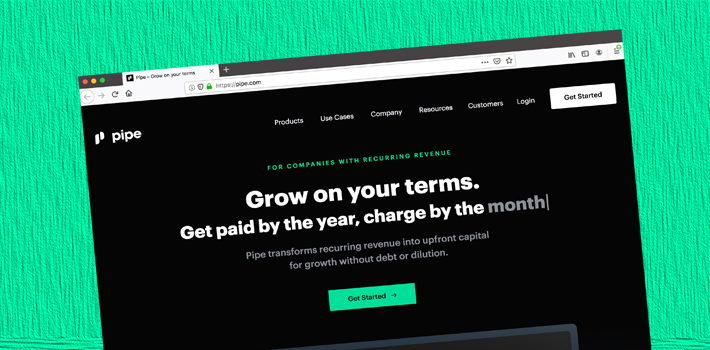 It’s not a loan, Pipe says. Instead businesses can sell their future recurring revenue to investors on a trading platform for cash upfront today. Led by CEO Harry Hurst, the former founder of a rental car delivery service, Pipe has provided an astounding $1.2B worth of capital to businesses this year, putting them on pace to become one of the largest small business finance companies nationwide.
The company claims to have made recurring revenue into an asset class while making Miami their home base, much to the joy of the city’s tech-friendly mayor.
I am so grateful for everyone participating and joining forces to make Miami a global hub for innovation.
This is just one of many! @harryhurst @m_cieplinski @pipe
Read more: https://t.co/OtxrRad0yq
— Mayor Francis Suarez (@FrancisSuarez) December 22, 2020
Pipe considers itself to be the “Nasdaq for revenue” and calls its employees “plumbers” instead of sales agents, underwriters, and engineers.
People wonder how big @pipe is.
In our first full year of trading we’ve provided access to over $1.2B in financing to companies of all shapes and sizes, from bootstrappers to public co’s – all on their terms.
Proud of our team of 76 plumbers is an understatement.
Bring on ‘22!
— Harry Hurst (@harryhurst) December 21, 2021
Pipe has already raised $300 million of equity financing in the last year from investors including Shopify, Slack, Okta, HubSpot, Next47, Marc Benioff’s TIME Ventures, Alexis Ohanian’s Seven Seven Six, Chamath Palihapitiya, MaC Ventures, Fin VC, Greenspring Associates, Counterpoint Global (Morgan Stanley) and more at a valuation of over $2 billion.
“Pipe is levelling the playing field for companies in the capital markets,” said Chamath Palihapitiya, Founder & CEO, Social Capital, to finledger. “By taking the underlying contracts that generate recurring revenue streams and making them tradable for the first time, Pipe has unlocked a multi-trillion dollar asset class, revenue.”
Kabbage Re-enters Small Business Funding Arena
December 8, 2021 When Kabbage stopped lending in the Spring of 2020, many assumed they would pick up where they left off when they were acquired by American Express. Not quite. Since the deal in August 2020, Kabbage had been repurposed as a checking account service.
On Wednesday, however, Kabbage finally announced a return to funding.
“Kabbage from American Express today launched Kabbage Funding™, offering eligible small businesses flexible lines of credit between $1,000 and $150,000—now with the powerful backing of American Express. With Kabbage Funding, small businesses can apply in minutes to access working capital 24/7 to help manage their company’s cash flow.”
The only strange thing about it is the marketing that makes it sound as if Kabbage had never actually been in the funding business until just now.
Kabbage had been one of the largest online small business lenders in the country in 2019, generating approximately $2.7 billion in loan originations. At the time, it was more than Square, OnDeck, ClearCo, Funding Circle, Amazon, and Shopify.
Affirm Continues Surge after Exclusive Amazon Deal
August 30, 2021 In a move announced Friday that can change the way consumers interact with the largest online retailer, Amazon and Affirm have partnered together to bring flexible payment options to Amazon customers. A leader in the buy-now-pay-later (BNPL) space, Affirm saw share prices soar as high as 40% Monday morning after inking the exclusive agreement.
According to the deal, Affirm plans to offer financing options for purchases greater than $50 for qualified Amazon customers. Buyers are approved, given the cost of financing and the price of their product prior to purchase upfront, and allowed to make payments via installments on those products. Customers who choose to finance through Affirm will not be charged any late or hidden fees.
“By partnering with Amazon we’re bringing the transparency, predictability and affordability that Affirm provides today to the millions of people who shop on Amazon.com in the U.S.,” said Eric Morse, Senior Vice President of Sales at Affirm in a press release. “Offering Affirm’s alternative to credit cards also delivers more of the payment choice and flexibility consumers on Amazon want.”
After an exclusive deal with Walmart in February of 2019, the company is continuing their attempt at a market takeover by striking a deal with Apple’s Canadian market and Shopify in the states — both within the last month. Affirm is quickly beginning to show dividends by putting together some of the largest exclusive flexible payment option deals out there.
With competition heating up in the BNPL industry, Affirm isn’t the only one trying to incorporate exclusive deals with large markets. Square, a company founded by Twitter’s Jack Dorsey recently acquired the Australian firm Afterpay for $29 billion. Paypal has also made their presence known by offering similar services. With a market cap at over $26 billion, Affirm will be in the fight to compete in the flexible payment option space. With competition from companies like Paypal and moguls like Dorsey, Affirm CEO Max Lechvin is in familiar territory. Prior to starting Affirm, Lechvin was a co-founder at Paypal.
With transparency a major component of their business model, Affirm customers may begin to spend more while initially paying less, a move that can provide a better experience for customers— something that seems like a no-brainer for any company selling pricey consumer-based products.
Funding E-Commerce Businesses Helped This Startup Get Acquired Right After They Launched
June 23, 2021 Less than eight months after Yardline announced their launch in the e-commerce financing space, they were acquired by Thrasio. The blazing fast progression from launching to selling the company suggests that Yardline’s niche presents a unique opportunity.
“There are many companies out there that look at e-commerce businesses in the space and say, ‘there’s no barrier for entry to operate in e-commerce, they’re all drop shippers, it’s a hobby, they have no skin in the game,'” said Seth Broman, Chief Revenue Officer of Yardline. “What Yardline does is really unique: One, we obviously have a lot more information and understanding of how they operate their business, and we can really break down on a deal by deal basis, what their margins look like, to get them a more customized offering that meets their needs.”
Yardline will fund Amazon sellers, for example.
Broman said that while most MCA funders know how to look at a merchant’s fixed costs like rent, payroll, taxes, and inventory to provide funding based on a gross revenue, those same funders don’t have a risk tolerance for e-commerce.
Yardline pulls data from digital marketplaces like Amazon and online storefront platforms like Shopify to make better credit decisions, Broman said, and this was a banner year for digital shopping.
“During COVID, you were seeing such an increase of demand for e-commerce goods; Amazon, Shopify, if you look at their stock price over the last 15 months, it’s incredible,” he said. “And the reason being retails closed, everybody’s shopping from home, and the demand for all my goods is through the roof.”
Before everyone was stuck inside, e-commerce already made up 20% of consumer commerce, Broman estimated. Then everything was online-only, and demand became nearly unlimited, he said. Amazon’s third-party sellers transact 60% of all products sold on the site, and Thrasio is one of the largest consolidators of those sellers in the world, Broman said.
 Now, Yardline will have access to Thrasio’s international seller network.
“We’re confident in saying that untapped ecosystem can be very profitable for ISOs if they were to start focusing on e-commerce businesses,” Broman said. “There’s less demand for it, less competition, and now they have a home for where they can get these deals done.”
Broman said after the pandemic, typical brick and mortar stores were hit hard and required PPP to keep the doors open while e-commerce flourished.
“It’s not a matter if shopping online is the future; shopping online is the present. People will continue to shop at brick and mortar, people want to eat out, just look at New York City,” Broman said. “If you look at what Amazon offers, what Walmart’s doing, what Target’s doing, what these online marketplaces are doing to make commerce quicker and easier, there’s no doubt that it’s going to continue to grow.”