Australian Lenders Commit to Best Practices Code
July 10, 2018 Six small business fintech lenders operating in Australia, including OnDeck, have signed a self-imposed “code of best practice lending principles,” according to a recent statement from Prospa, one of Australia’s largest online small business lenders. This comes shortly after Prospa paused its June IPO, having received a letter from the Australian Securities and Investments Commission (ASIC) requesting information.
Possibly in response to ASIC’s inquiries into the Prospa IPO, what has emerged is a code of best practices signed by Prospa, OnDeck, Capify, GetCapital, Moula and Spotcap. This set of self-imposed rules, referred to as the Code, has not yet been solidified, but it already includes a number of constituents in a highly collaborative effort.
The six small business signatories will be contributing to the Code, along with a trade group for the Australian finance sector, the Australian Finance Industry Association (AFIA), the Australian Small Business and Family Enterprise Ombudsman, Kate Camel, the Bank Doctor, an SME advocate, and FinTech Australia, an industry association. According to the Prospa, the Code will be fully operational and enforceable by December 31, 2018.
“Our Online Small Business Lender Group members have embraced the sentiment of improving transparency and disclosure and took proactive action to come together quickly and collegiately to develop a Code,” said Helen Gordon, CEO of AFIA.
Acknowledging that small business lenders are already subject to rules from a number of regulatory bodies, the Prospa document stated:
“This Code is a proactive move to pull the obligations of online small business lenders together into one document. This makes it easier for current market participants and will also help new entrants understand their obligations.”
Already, some of the central elements agreed upon in the Code include:
- The introduction of a pricing comparison tool providing key metrics that will allow customers to compare the cost of unsecured loans from the signatories (including the total repayment amount, APR, simple annual interest rate)
- An easy-to-understand loan summary
- A glossary of key terms in accessible language that applies directly to online small business loans
- Signatories must attest their compliance with the Code on an annual basis
According to the Prospa statement, the Code was modelled after best practice examples and feedback from the US and UK, where the online lending industry is more developed.
This list of tenets already seems quite progressive, or onerous, depending on who you ask. The notion of introducing or requiring a price comparison tool is a hot button topic here in the US. Requiring that loans and merchant cash advance products be labeled with an APR or an Annual Cost of Capital (ACC) is what the state of California is moving towards with a highly contested bill that passed in the state assembly committee in June.
Proponents of the bill SB 1235, introduced by California State Sen. Steven Glazer, want to make certain that all small businesses can easily understand and compare the cost of loan and finance products. Opponents of the bill, many in the merchant cash advance industry, insist that a requirement like this amounts to shutting down their industry because a precise APR or ACC cannot be applied to a cash advance product given that the product depends on the duration of the deal, which is variable.
While not as formal, some efforts in the U.S. are also being made by alternative finance industry players to self-regulate. In May, the Small Business Finance Association (SFBA) announced the launch of an initiative called the SFBA Broker Council, which has a mission to create standards and best practices for brokers.
Report Demonstrates How Online Lenders Benefit Economy
May 31, 2018 A report on “The Economic Benefits of Online Lending to Small Businesses and the U.S. Economy” was released yesterday, using data from 180,000 U.S. small businesses that represented nearly $10 billion in funding from 2015 to 2017.
The report used data from five online lenders, including OnDeck, Kabbage and Lendio, and was sponsored by the Electronic Transactions Association (ETA), the Small Business Finance Association (SBFA) and the Innovative Lending Platform Association. The report was researched by three economists at NDP Analytics, an independent research firm.
One of the key findings was that the ten billion dollars funded from 2015 to 2017 by five of the top alternative small business lenders generated $37.7 billion in gross output and created 358,911 jobs and $12.6 billion in wages.
“I think the most important takeaway from this study is that small businesses are benefiting from a wide variety of choices in lending products,” said Jason Oxman, CEO of the ETA. “And, in particular, the online small business lenders have provided really a remarkable amount of working capital to small businesses in this country.”
Oxman told AltFinanceDaily that he was surprised to learn from the report the percentage of borrowers that operate extremely small businesses. According to the report, 24 percent of online business borrowers operate businesses that have less than $100,000 in annual sales. And two-thirds of online business borrowers had less than $500,000 in annual sales.
“These are clearly small businesses,” Oxman said. “These are companies that obviously have capital needs and are getting those needs met by online small business lenders.”
New York State was a focus of part of the research. According to a press release for the report, data extracted from it indicated that “overall, the small business loans provided by online lenders [from 2015 to 2017] generated $2.5 billion in gross output and created 20,154 jobs with over $795 million in wages” for communities in New York State.
“We [organized the report] with New York in mind,” said Steve Denis, Executive Director at the SBFA. “We wanted to send a message to show how much of an impact the online lending industry had on the state.”
Other interesting data from the report include:
— 75 percent of U.S. businesses have less than 10 employees.
— 22 percent of small business owners use their personal savings to expand
— Online lenders offer loans to companies in all stages of their life cycle and the distribution of company age is relatively uniform.
“[Alternative small business lending] is creating a lot of economic activity,” Denis said. “We’re helping to create jobs, and we need to protect this tool. It’s a valuable resource for businesses…and this [report] demonstrates how important it is to the economy.”
Despite Movement of Negative Bill for MCA and Factoring Industries, Hope for a Solution
April 23, 2018 Last week, California State politicians gathered for a hearing on SB 1235, a bill that would require the disclosure of an Annual Percentage Rate (APR) for all loans and non-loans, including MCA and factoring products. This is very problematic because APR (which includes interest rate) cannot be calculated for most MCA and factoring products for one reason: time. What makes merchant cash advance and factoring unique is that the timing of payments is flexible, and therefore unknown.
“It’s impossible to compute,” said veteran factoring lawyer Bob Zadek about calculating APR for most MCA and factoring products. “Interest = principal x rate x time. Since [they] cannot determine how long the advance will be outstanding – since repayment is a function of the borrower’s cash flow – the algebra doesn’t work.”
The bill, introduced by California State Senator Steve Glazer, moved out of the Senate committee on Banking and Financial Institutions and is headed to the Judiciary committee – closer to potential passage. Yet advocates of the MCA industry, one of whom testified in the assembly room in Sacramento, are hopeful.

“There were a number of state senators who clearly understood the problems with applying an APR to a commercial transaction and to a purchase and sale of receivables transaction,” said Katherine Fisher, a partner at Hudson Cook, LLP who spoke on behalf of the Commercial Finance Coalition (CFC). CFC is an alliance of financial companies that educates government regulators and elected officials on issues related to non-bank commercial finance. CFC Executive Director, Dan Gans, told AltFinanceDaily that he believed the committee really understood what Fisher was trying to convey.

Another major advocacy group is the Small Business Finance Association (SBFA). They brought Joseph Looney, COO and General Counsel of RapidAdvance, to testify against SB 1235, and SBFA Chief of Staff Steve Denis sounded optimistic, saying that they have a very good relationship with State Senator Glazer’s office.
“To me, despite the fact that they moved [on] a bill that we’re opposed to through the process,” Denis said. “I think the folks that we’ve been meeting with out there – the senators – they’re all very open to our industry and open to having broader discussion about how to [best] disclose these terms and how to make sure we’re doing what’s in the best interest of small business owners. That’s a real positive, and I’m optimistic that we can get something done.”
As for concern about the bill moving forward, Denis said it’s what he expected.
“It’s just the way the process works in California,” Denis said. “If you look at committee history, they don’t really reject a lot of bills. They like to move bills forward so they can be discussed and negotiated.”
As of this story’s publication, SB 1235’s Judiciary committee hearing had not yet been scheduled.
Update 4/26/18: The hearing is scheduled for May 8, 2018 at 1:30 p.m. PST in Room 112.
Full video of the April 18th hearing below:
What Got Said in The California Senate Hearing About Commercial Loan Disclosures
April 19, 2018
California State Senator Steve Glazer was the reason that representatives from small business finance trade associations were in Sacramento on Wednesday. Glazer’s bill, SB 1235, calls for mandatory APR disclosures on loan and non-loan products alike, even if the transaction is business-to-business and even if the transaction assesses no interest charges and even when no such APR can be calculated or exists.
That proposal caught the attention of several interested groups, including those whose members offer short term small business loans, factoring, and merchant cash advances. Among those who testified in front of the Senate Committee on Banking and Financial Institutions on Wednesday was Joseph Looney, COO & General Counsel of RapidAdvance, who spoke on behalf of the Small Business Finance Association, and Katherine Fisher, Partner at Hudson Cook, LLP, who spoke on behalf of the Commercial Finance Coalition. Each of them were there representing separate constituents with their own individual views.
Transcripts of their testimonies are below:
 “Chairman Bradford, Vice Chair Vidak, and Members of this committee. I am Joseph Looney and I am the General Counsel for a commercial finance company named RapidAdvance. We are a California Finance Lender licensee and have provided more than $200,000,000 in capital to thousands of businesses in California. Today I am providing testimony on behalf of the Small Business Finance Association or SBFA, which is the leading association for companies that provide funding to Main Street businesses. The SBFA is in opposition to Senate Bill 1235 as currently drafted. While there are various issues with the Bill, the overarching concern we have is that it treats small businesses like consumers. States and the federal government have generally refused to treat small businesses the same as consumers when it comes to financing disclosures for two reasons. First, there is a significant concern that imposing consumer disclosures and regulation on small businesses would reduce the flow of capital and negatively impact the economy. Second, small business owners are sophisticated and do not need the same protections provided to consumers. Business owners hire and fire employees, handle taxes and payroll, negotiate with customers and vendors, arrange financing, handle litigation and execute on business strategies every day. Also, businesses look at money differently than consumers. A business gets capital and uses it to make more money or solve a problem in their business. In this scenario, the most important item to the business owner is how fast can they get the money and what are the conditions for getting it. The APR disclosure included in the Bill is problematic as it will create confusion. The CFPB has recently concluded the APR is confusing, does not provide as much value as thought and is extremely complicated for creditors to calculate. In fact, the CFPB is making the APR less important by moving it to the end of some disclosures and completely removing it in some cases. The APR is so complicated to calculate there are numerous pages in the Code of Federal Regulations devoted to explaining the calculation. Additionally, there are pages of guidance on how to handle various consumer products and payment types and what assumptions should be made for various products as well as shielding creditors from liability for minor calculation errors. This Bill does not address any of these issues. It simply takes an APR disclosure requirement for fixed monthly payment consumer finance transactions and concludes it should apply to materially different commercial products. While we do not support the Bill as it imposes consumer disclosures such as the APR on small business transactions, we are supportive of the idea of providing businesses with cost disclosures. Thank you.” |
 “Chairman Bradford and committee members: Thank you for the opportunity to present testimony today regarding SB-1235. My name is Kate Fisher and I am here today on behalf of the Commercial Finance Coalition, a group of responsible finance companies that provide capital to small and medium-sized businesses through innovative methods. Small businesses face a gap in credit availability. Commercial Finance Coalition member companies are trying to close this gap and help spur entrepreneurship so more Americans and Californians can own and operate their own businesses. I also am a lawyer who works with providers of commercial financing on complying with state and federal law. The Commercial Finance Coalition supports California’s efforts to make business financing more transparent. Businesses benefit from having different types of financing available, and being able to comparison shop. SB 1235 would require commercial finance providers to disclose the cost of capital by providing the following helpful disclosures: The Total Amount of Funds Provided These three disclosures will help a California business owner understand and compare the cost of financing across different products. However, the Commercial Finance Coalition opposes requiring an APR disclosure. It’s important to note that SB 1235 aims at providing comparable disclosures across very different financing types. Commercial Finance Coalition members mostly engage in “accounts receivable purchase transactions.” These transactions are also known as merchant cash advance or factoring, and involve a business selling its receivables at a discount. For example, if a business’s sales go down, the business can pay less. If a business’s sales go up, the business can pay more. And if a business is burned down in a fire, the business can pay nothing until it can reopen its doors. SB 1235 would require disclosure of an Annual Percentage Rate (or APR). There are two problems with requiring an APR disclosure or even an “Estimated APR”: First – SB 1235 fails to address the complexity of calculating APR for different types of commercial finance transactions. This creates a significant litigation risk and minefield for finance providers making a good faith effort to disclose APR, and may stifle small business financing in California. Second – Requiring an Estimated APR disclosure creates an unfair disadvantage for offers of “accounts receivable purchase transactions” – or factoring. Again, these transactions are purchases, and do not need to be “paid back” unless the business has sufficient sales. Also, this disclosure could confuse a business owner who is looking for alternatives to lending. I’m very optimistic that California can lead the way in providing businesses with disclosures that are helpful – and not confusing. |
In response, Senator Glazer deferred to the experts who testified but he was not willing to make a key concession in the moment. At Glazer’s prodding, the bill made it out of committee with enough votes, and with the goal of continuing to fine tune the details particularly with respect to APR.
More information surrounding the bill and it’s progress will be made available soon.
Full video of the hearing below:
Mad Over Madden
March 15, 2018 In a dispute that reflects the nation’s rigid political polarization, a piece of legislation pending before Congress either corrects a judicial error or condones “predatory lending.” It depends upon whom one asks. Either way, the proposed law could affect the alternative small-business funding industry indirectly in the short run and directly in the long term by addressing the interest rates non-banks charge when they take over bank loans.
The easiest way to understand the controversy may be to trace it back to a ruling in 2015 by the United States Court of Appeals for the Second Circuit in New York. The case of Madden v. Midland Funding LLC started as claim by a consumer who was challenging the collection of a debt by a debt buyer, says Catherine Brennan, a partner in the law firm Hudson Cook LLP.
“Debt buyers like Midland are sued on a regular basis,” Brennan notes. “That’s a common occurrence.” What’s uncommon is that the appellate court affirmed the idea that the loan debt that Midland sought to collect from Madden became usurious when Midland bought it. The court ruled that because Midland wasn’t a bank it was not entitled to charge the interest the bank was allowed to charge, she maintains.
Under the ruling, non-banks that buy loans can’t necessarily continue to collect the interest rates banks charged because non-banks are generally subject to the limits of the borrower’s state, according to the Republican Policy Committee, an advisory group established by members of the House of Representatives in 1949. Banks can charge the highest rate allowed in the state where they are chartered, which could be much higher than allowed in the borrower’s state.
“So it undermines the concept that you determine the validity of a loan at the time the loan is made,” Brennan says of the decision in the Madden case. The “valid-when-made” doctrine – a long-established principle of usury law – states that if a loan is not usurious when made it does not become usurious when taken over by a third party, published reports say. In 2016, the U.S. Supreme Court declined to hear the Madden case, which in effect upheld the appellate court ruling.
In response, both houses of Congress are considering bills that would ensure that the interest rate on a loan originated by a bank remains valid if the loan is sold, assigned or transferred to a non-bank third party, the Republican Policy Committee says.
On Feb. 14, 2018, the House passed its version of the proposal, H.R. 3299, the Protecting Consumers’ Access to Credit Act of 2017, or the “Madden fix,” as it’s known colloquially. The vote was 245 to 171, mostly along party lines with 16 Democrats joining 229 Republicans to vote in favor. The Senate version, S. 1642, had not reached a vote by press time.
“It’s not a revolutionary concept,” Brennan says of the proposed law. “It had been understood prior to Madden that you determine usury at the time the loan is originated, and that should be restored.”
As the alternative small-business funding industry continues to mature it could benefit from the legislation, Brennan predicts. In the future, alt funders may begin to buy or sell more debt, which would make it subject to the state caps if the legislation fails to pass, she says.
The proposed law would also benefit partnerships in which banks refer prospective borrowers to alternative funders because it would eliminate uncertainty and would thus improve the stability of the asset, Brennan continues. “I would think anyone in the commercial lending space would want to see the Madden bill pass,” she contends.
Stephen Denis, executive director of the Small Business Finance Association, a trade group for alt funders, agrees. While most of the SBFA’s members don’t work with bank partners, the trade group has supported the lobbying efforts of other associations and coalitions representing financial services companies directly affected, he says. “We are concerned on behalf of the broader industry because we all work closely together and everyone has the same goal of making sure that we’re providing capital to small businesses,” he maintains.
That goal of keeping funds available to entrepreneurs also motivates the sponsor of H.R. 3299, Rep. Patrick McHenry, R-N.C., who’s chief deputy whip of the House and vice chair of the House Financial Services Committee. His interest in crowdfunding, capital formation and disruptive finance is fueled by events he experienced in his childhood, when his father attempted to operate a small business but struggled to find financing, according to the Congressman’s website.
 Although H.R. 3299 passed in the House with mostly Republican votes, it attracted bipartisan co-sponsors in that chamber. They are Rep. Gregory Meeks, D-N.Y.; Rep. Gwen Moore, D-Wis., and Rep. Trey Hollingsworth, R-Ind. The Senate version of the legislation is sponsored by Sen. Mark R. Warner, D- Va.
But opponents of the proposed law aren’t feeling particularly bipartisan and argue vehemently against it, Brennan contends. “There’s been a lot of misinformation put out there by consumer advocates saying this would somehow embolden payday lending in all 50 states,” she says. “It’s simply not true.”
Payday lenders aren’t banks, so the proposed legislation would not apply to them and thus would not enable them to avoid interest caps imposed by borrowers’ states, Brennan notes, adding that some states don’t even allow payday consumer lending.
Consumer advocates are spreading propaganda because they oppose interest rates they consider high, Brennan continues. Advocates are incorrectly conflating payday lending with marketplace lending, she maintains.
The latter is defined as partnerships where non-banks sometimes work with banks to operate nationwide platforms, mostly online and sometimes peer-to-peer, she says, noting that examples include LendingClub and Prosper.
There’s no evidence marketplace lenders would astronomically increase their interest rates if the president signs into law a bill that resembles those now before Congress, Brennan says. It wasn’t happening before Madden, she notes, and banks involved in those partnerships operate under strict guidance of the Federal Deposit Insurance Corp. (FDIC) or the Office of the Comptroller of the currency, depending upon their charters.
But consumer advocates haven taken to the warpath, Brennan reports. Opponents of the legislation call partnerships between banks and non-bank lenders by the derogatory term “rent-a-bank schemes.” But it’s lawful to create such relationships because the FDIC oversees them, she asserts.
Just the same, the House is considering H.R. 4439, a bill to ensure that in a bank partnership with a non-bank, the bank remains the “true lender” and can set the interest rate, Brennan notes. If the bill becomes law, it would clear up the conflict that has arisen in inconsistent case law, some of which has defined the non-bank as the true lender, she says.
Meanwhile, opponents of H.R. 3299 and S. 1642 have written a letter to members of Congress, urging them to vote against the bills. The letter, drafted by the Center for Responsible Lending (CRL) and the National Consumer Law Center (NCLC), was signed by 152 local, state, regional and national organizations. Most of the signers belong to a coalition called Stop the Debt Trap, says Cheye-Ann Corona, CRL senior policy associate.
The bills create a loophole that enables predatory lenders to sidestep state interest rate caps, Corona maintains. That’s because non-banks are actually originating the loans when they work in tandem with banks, she says. The non-banks are using banks as a shield against state laws because banks are regulated by the federal government. If the legislation passes, non-banks would not have to observe state caps and could charge triple-digit interest rates, she contends.
“This bill is trying to address the issue of fintech companies, but there is nothing innovative about usury,” Corona says. “They are just repackaging products that we’ve seen before. A loan is a loan. These lenders don’t need this bill if they are obeying state interest-rate caps.”
The lenders disagree. In fact, a trade group formed by OnDeck, Kabbage and Breakout Capital calls itself the Innovative Lending Platform Association, according to a report in the Los Angeles Times. The article cites the need for small-business capital but questions whether the loans are marketed fairly.
Innovative or not, lenders offering credit with higher interest rates could condemn consumers to a nightmare of debt, according to the letter from the CRL and NCLC to Capitol Hill. “Unaffordable loans have devastating consequences for borrowers – trapping them in a cycle of unaffordable payments and leading to harms such as greater delinquency on other bills,” the letter says.
However, alt funders say their savvy small-business customers understand finance and thus don’t need much government protection from high interest rates. But the CRL doesn’t adhere to that philosophy, Corona counters. “Small businesses are at risk with predatory lending practices,” she says, maintaining that some alt funders charge interest rates of 99 percent.
Small-business owners plunged themselves into hot water by borrowing too much in anecdotal examples provided by Matthew Kravitz, CRL communications manager. In one example, an entrepreneur found himself automatically paying back $331 every day. He overestimated his future income and now says he feels like hiding under the covers every morning.
Corona also dismisses the idea that high risk calls for high interest rates to compensate for high default rates. When interest rates rise to a level that borrowers can’t handle, no one wins, she maintains.
The right to charge higher interest rates could also encourage lenders to loosen their underwriting criteria, Corona warns. That could result in shortcuts reminiscent to the practices that gave rise to the foreclosure crisis and the Great Recession, she says, adding that, “we don’t want to see that happen again.”
Online Small Business Lending Provides Benefits to Small Business Owners, Finds New Survey
October 23, 2017
Washington, D.C., October, 23, 2017 – Four leading trade associations – Electronic Transactions Association, Innovative Lending Platform Association, the Marketplace Lending Association, and the Small Business Finance Association – commissioned a comprehensive survey of U.S. small business owners from Edelman Intelligence. The survey conducted by Edelman Intelligence found that a large majority (70%) of small business owners believe there are more credit options today when compared to five years ago, and 97% of those feel that the growing number of financing options is a good thing.
Small businesses owners need quick and streamlined access to credit to grow their businesses and the American economy. Online small business lenders are financial firms that provide credit to small business owners through automated, technology-enabled platforms. They regularly work with traditional lenders to deliver loans. By leveraging the ubiquity, speed and convenience of the Internet, online small business lenders use sophisticated software platforms to provide American small business owners with fast, easy and affordable credit.
Key findings of the study include:
- An overwhelming majority of small business owners reported more lending options available now than five years ago. 70 percent of small- and medium-sized business owners say there are more lending options now, and 97 percent of those believe that the increase in options is a positive thing for their businesses.
- Most small business owners reported using online small business lenders to help them expand their locations, make necessary hiring and equipment purchases, and help manage cash flow.
- Of the small business owners considering taking out a loan in the next 12 months, close to 40 percent say they will consider borrowing from an online lender.
- Online small business lenders have high levels of satisfaction and scored high marks for ease of use and business growth enablement. According to the study, 98 percent of small business owners who have used online lenders say they are likely to take out another loan with an online lender.
- For many small business owners, online small business lending platforms are a popular alternative to asking friends and family for a loan.
Media inquiries should be directed to:
ETA PRESS CONTACT:
Laura Hubbard, lhubbard@electran.org
ILPA PRESS CONTACT:
Jim Larkin, jlarkin@ondeck.com
203-526-7457
MLA PRESS CONTACT:
Nat Hoopes, nat.hoopes@marketplacelendingassociation.org
SBFA PRESS CONTACT:
Steve Denis, sdenis@sbfassociation.org
As NY Lending License Proposal Looms, Industry Trade Groups Mobilize
February 13, 2017
The alternative small-business finance community plans to lobby hard against a far-reaching proposed expansion of the New York state lending license. The proposal calls for any person or company that solicits, arranges or facilitates business and consumer loans – or other types of financing – to obtain a license. That could include MCA companies, business loan brokers and ISOs.
Critics claim the expansion, which Governor Andrew M. Cuomo included in his proposed state budget, could trigger a series of ominous and possibly unintended events in the courts and on Wall Street. “It could destroy the industry if the worst comes to fruition,” declared Robert Cook, a partner at Hudson Cook LLP.
Some opponents also contend that the public hasn’t had a reasonable opportunity to respond. “Sneaking a provision with significant impact like this into the budget and not going through regular order is really disturbing,” said Dan Gans, a Washington lobbyist who also serves as executive director of the the Commercial Finance Coalition. “They should allow all the stakeholders to have their voices heard.”
The industry’s trade groups have been quick to react. The Small Business Finance Association has been in contact with New York state legislators to help them understand the ramifications of the proposal, according to Stephen Denis, the trade group’s executive director. Meanwhile, Gans is recommending that the CFC’s board hire an Albany lobbying firm to help advance the industry’s interests.
New York’s current consumer licensing law is written broadly enough to cover any loan to an individual for less than $25,000, even if it’s made for commercial purposes, said Cook. That means the current law could cover loans to sole proprietorships but would not affect loans to corporations, limited liability companies, partnerships or limited liability partnerships, he noted.
 Under the proposal in Governor Cuomo’s budget, any type of commercial loan of up to $50,000 would require a license, Cook said. Today, the state requires a license only if a loan carries a simple interest rate of more than 16 percent. Under the budget proposal, all lending would require a license, even if the interest rate is less than 16 percent. Loans made by alternative funders typically carry interest rates of 36 percent to 100 percent, he said.
New York already has a criminal usury rate of 25 percent, but lenders have two methods of avoiding that cap, according to Cook. Under one method, the parties to the loan can use a provision called the “choice of law clause” and thus agree that the contract is subject to the laws of a state that does not limit commercial usury rates, he said. Or, using the second method, the small-business finance company can solicit the loan and refer it to a bank in a state without a cap. The bank makes the loan but then sells the loan back to the small-business finance company or an affiliate, he noted.
But adopting the changes proposed in the New York budget could possibly stymie both methods of circumventing the state’s usury laws. Consider the choice of law clause, Cook suggested. The courts could interpret the proposed expansion as an effort by the state to gain more control of commercial lending. That could prompt the courts to refuse to enforce choice of law clauses involving New York state because doing so would violate a significant policy in New York, he maintained. The proposal could also gut the second way around the usury law – the bank model – by requiring employees of out-of-state banks to have a license in order to originate loans or by prohibiting rates in excess of New York’s cap, he said. Both outcomes are speculative but constitute distinct possibilities, he added.
 Expanding the license would also grant additional regulatory authority to the New York State Department of Financial Services, Cook maintained. Besides requiring the license, the DFS would have the ability to regulate, supervise and examine commercial lenders, he said. In the past the department has imposed some significant regulations on licensees, including fair lending requirements and cyber security requirements, he said. “They’re a very active regulator,” he contended. “They could require commercial lenders to jump through a lot of hoops that aren’t there today.”
What’s more, time would pass while a company negotiates the initial hoops simply to obtain a license. Qualifying for the current New York license, for example, can take up to nine months, Cook said. “It’s a fairly intensive licensing process that requires a lot of information about the company, the officers and directors of the company,” he noted. “The licensing process is tough in New York.”
The expansion could also limit the industry’s access to capital, Cook warned. Some alternative funders raise money by selling loans or interests in loans on the secondary market. Requiring a license to buy those products could prompt Wall Street to look elsewhere for less-burdensome investment opportunities, he said.
The laundry list of potential bad effects has many in the industry wondering about the state’s intentions toward the industry. “It’s not clear whether the people up in Albany understand the potential effect this has,” Cook said.
To help bring about that understanding, the CFC intends to call upon its members and merchants who have benefitted from alternative finance to visit officials in the state capital, Gans said.
Gans finds reason for optimism as the associations coalesce around the issue. The state Senate in Albany tends to be pro-business, and I am confident we will find allies that will stand up to this, he said.
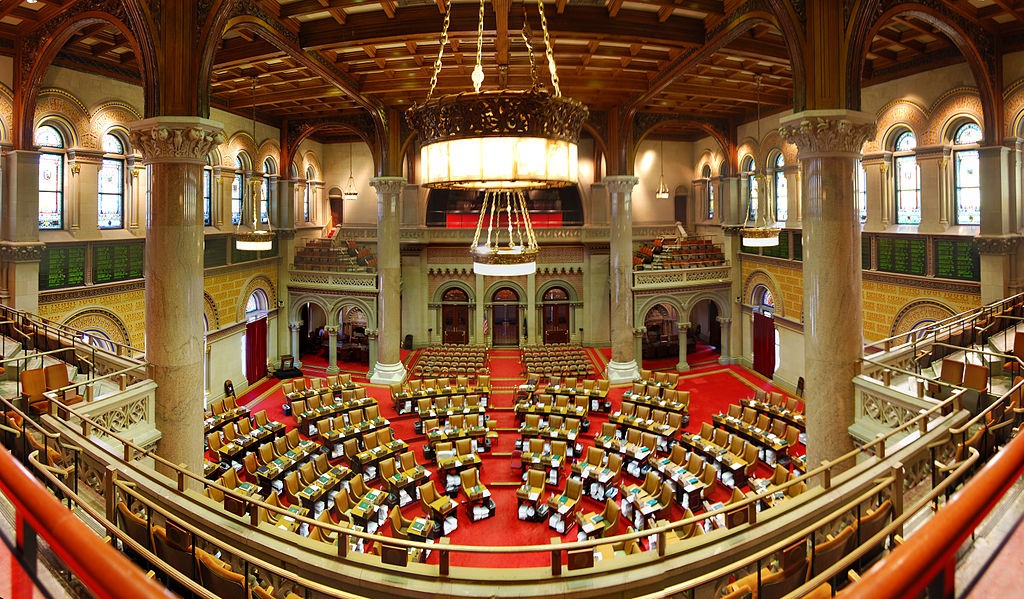
Denis also seems upbeat about the industry’s efforts to make itself heard in Albany. In Illinois, some legislators failed to differentiate between consumer loans and commercial loans when considering legislation last year, he noted. That might be the case in New York, too, and the SBFA might help them make the distinction, he said. As an example of the differences, he pointed out that business loans often carry high interest rates because of high risk. “We have talked to some folks in Albany, and everyone is receptive to the industry,” he said. Small business is a powerful constituency, he maintains.
Gans, Denis and Cook all said they’re not opposed to legislation or regulation that addresses problems caused by bad actors in the industry, but all three oppose government action that they believe unnecessarily limits members of the industry who are operating in good faith.
The proposed license in New York differs in at least one significant way from the California lending license that many alternative funders have obtained, Cook noted. The California license doesn’t impose a cap on interest rates, he said. If the New York proposal imposed licensing requirements but did not limit interest rates, the industry probably would reluctantly accept it, he suggested.
—-
Dan Gans at the CFC can be contacted at dgans@polariswdc.com
Stephen Denis at the SBFA can be contacted at sdenis@sbfassociation.org
Robert Cook at Hudson Cook can be contacted at rcook@hudco.com
FIRE DRILL IN ILLINOIS: BUSINESS FUNDING COMPANIES TARGETED IN REPRESSIVE BILL
June 30, 2016* Update 6/30 AM: Sen. Jacqueline Collins, D-Chicago is expected to introduce a revised bill today.
** Update 6/30 PM: Reintroduction of the bill has been delayed while they wait for comments from additional parties
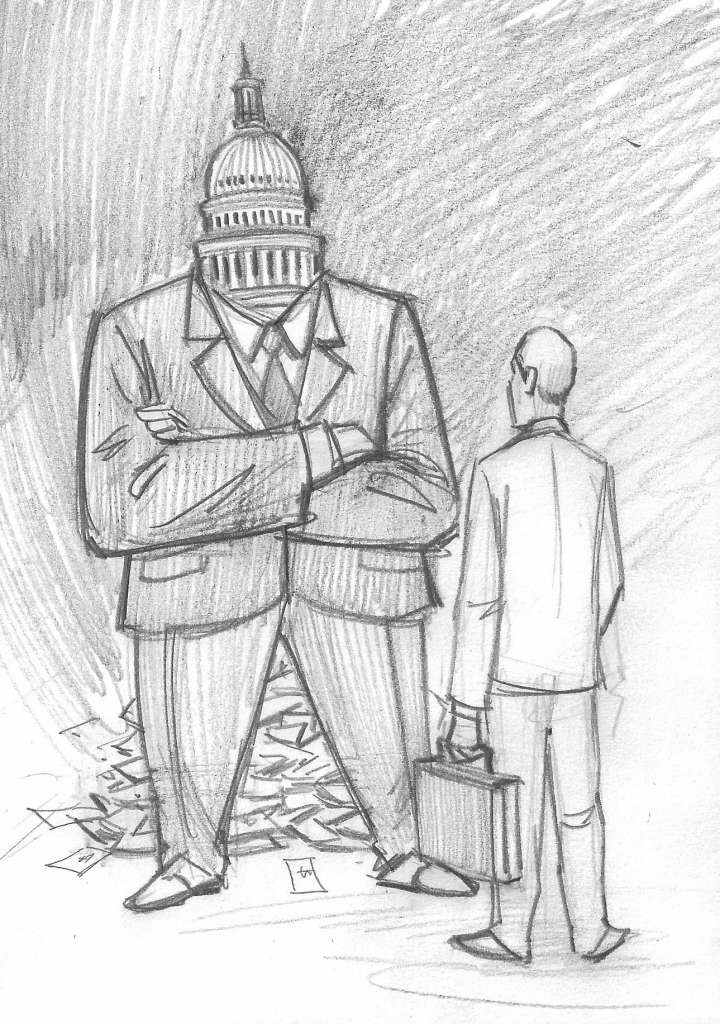 Bankers and non-bank commercial lenders – two groups that often disagree – are united in their opposition to financial regulation proposed in Illinois. Both contend that if the state’s Senate Bill 2865 becomes law it could choke the life out of small-business lending in the Land of Lincoln and might set a precedent for a nightmarish 50-state patchwork of rules and regulations.
Foes say the measure was created to promote disclosure and regulate underwriting. They don’t argue with the need for transparency when it comes to stating loan terms, but they maintain that a provision of the bill that would cap loan payments at 50 percent of net profits would disrupt the market needlessly.
Opponents also regard the bill as an encroachment on free trade. “The government shouldn’t be picking winners or losers – the market should be,” said Steve Denis, executive director of the Small Business Finance Association, a trade group for alternative funders.
The states or the federal government may need to protect merchants from a few predatory lenders, but most lenders operate reputably and have a vested interest in helping clients succeed so they can pay back their obligations and become repeat customers, several members of the industry maintained.
“The ability to pay is really a non-issue,” noted Matt Patterson, CEO of Expansion Capital Group and an organizer of the Commercial Finance Coalition, another industry trade group. “I don’t make any money if a borrower doesn’t pay me back, so I don’t make loans where I think there is an inability to pay.”
Outsiders may find interest rates high for alternative loans, but companies providing the capital face high risk and have a short risk horizon, said Scott Talbott, senior vice president of government affairs for the Electronic Transactions Association, whose members include purveyors and recipients of alternative financing. Several other sources said the risks justify the rates.
Besides, a consensus seems to exist among industry leaders that most merchants – unlike many consumers – have the sophistication to make their own decisions on borrowing. Business owners are accustomed to dealing with large amounts of money, and they understand the need to keep investing in their enterprises, sources agreed.
In fact, no one has complained of any small-business lending problems in Illinois to state regulators, said Bryan Schneider, secretary of the Illinois Department of Financial and Professional Regulation and a member of Gov. Bruce Rauner’s cabinet.
Regulators should not indulge in creating solutions in search of problems, Sec. Schneider cautioned. “When you’re a hammer, the world looks like a nail,” he said, suggesting that regulators sometimes base their actions on anecdotal isolated incidents instead of reserving action to correct widespread problems.
But the proposed legislation could itself cause problems by placing entrepreneurs at risk, according to Rob Karr, president and CEO of the Illinois Retail Merchants Association, which has 400 members operating 20,000 stores. “It would stifle potential access to capital for small businesses,” he warned.
Quantifying the resulting damage would present a monumental task, but a shortage of capital would clearly burden merchants who need to bridge cash-flow problems, Karr said. Shortfalls can result, for example, when clothing stores need to buy apparel for the coming season or hardware stores place orders in the summer for snow blowers they’ll need in six to eight months, he said.
Restaurant owners and other merchants who rely on expensive equipment also need access to capital when there’s a breakdown or a need to expand to meet competition or take advantage of a market opportunity, Karr observed.
Capital for those purposes could dry up because just about anyone providing non-bank loans to small merchants could find themselves subject to the proposed legislation, including factoring companies, merchant cash advance companies, alternative lenders and non-bank commercial lenders, said the CFC’s Patterson.
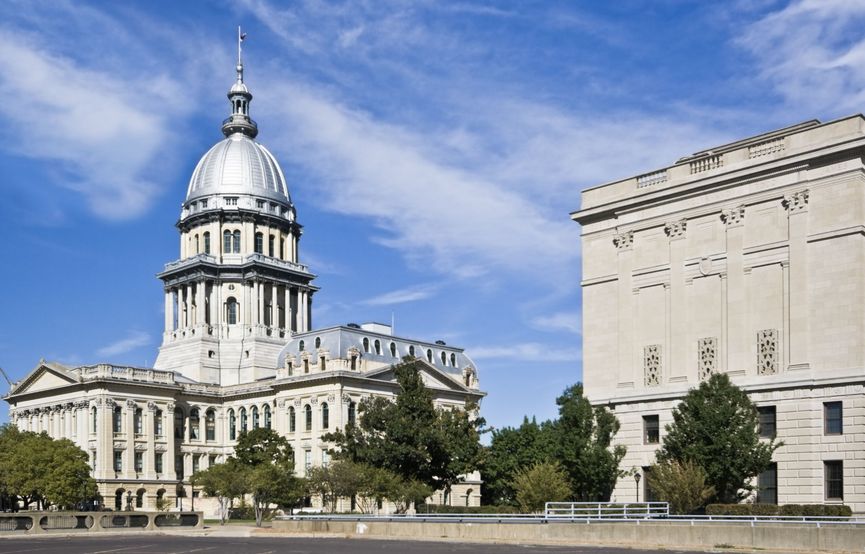
Banks and credit unions are exempt, the bill says, but a page or two later it includes provisions written so broadly that it actually includes those institutions, said Ben Jackson, vice president of government relations at the Illinois Bankers Association.
Trade groups representing all of those financial institutions – including banks and non-banks – have joined small-business associations in working against passage SB 2865. “The most important thing is to make sure we’re coordinating with the other groups out there,” the SBFA’s Denis contended. “Actually, Illinois was good practice for the industry in how we’re going to go about dealing with attempts at regulation.”
Patterson of the CFC agreed that associations should coordinate their responses to proposed legislation. “We’ve tried to gather all the affected players in the space and have dialogue with them,” he maintained.
Even though that various associations reacting to the bill generally agreed on principles, their competing messages at first created a cacophony of proposals, according to some. “There was a lot of noise, and I think we’ll all learn from that,” Denis said. “The industry has to learn to speak with one voice to legislators.”
Citing the complexity of dealing with 50 states, 435 members of Congress and 100 senators, Denis said everyone with an interest in small-business lending must work together. “If we don’t, we lose,” he warned.
Many of the groups came together for the first time as they converged upon the Illinois capital of Springfield last month when the state’s Senate Committee on Financial Institutions convened a hearing on the bill. The committee allowed testimony at the hearing from three groups representing opponents. The groups huddled and chose Denis, Jackson and Martha Dreiling, OnDeck Capital Inc. vice president and head of operations.
City of Chicago Treasurer Kurt Summers was the only witness who testified in favor of the bill, according to Jackson. The idea of regulating non-bank commercial lenders in much the same way Illinois oversees lending to individuals arose in Summers’ office, said an aide to Illinois Sen. Jacqueline Collins, D-Chicago. Sen. Collins serves as chairperson of the Financial Institutions Committee and introduced to the bill in the senate.
Sen. Collins declined to be interviewed for this article, and Treasurer Summers and other officials in his of office did not respond to interview requests. However, published reports said Drew Beres, general counsel for Summers, has maintained that transparency, not underwriting, is the main goal. Talbott has met with Sen. Collins and said she’s interested primarily in transparency.
Support for the bill isn’t limited to the Chicago treasurer’s office. Some non-profit lending groups and think tanks back the proposed legislation, opponents agreed. The bill appeals to progressives attempting to shield the public from unsavory lending practices, they maintained.
Politicians may view their support of the bill as a way of burnishing their progressive credentials and establishing themselves as consumer advocates, said opponents of the legislation who requested anonymity. “It’s an important constituency,” one noted. “No one is against small business.”
After listening to testimony at the hearing, committee members voted to move the bill out of committee for further progress through the senate, Jackson said. Eight on the committee voted to move the bill forward, while two voted “present” and one was absent. But most of the senators on the committee said the legislation needs revision through amendments before it could become law, according to Jackson.
The legislative session was scheduled to end May 31. If the bill didn’t pass by then it could come up for consideration in a summer session if the General Assembly chooses to have one, Jackson said. If it does not pass during the summer, it could come to a vote during a two-week “veto session” in the fall or in an early January 2017 “lame duck session.” Unpassed legislation dies at that point and would have to be reintroduced in the regular session that begins later in January 2017, he noted.
Although time is becoming short for the proposed legislation, it’s a high-profile measure that could prompt action, particularly if amendments weaken the rule for underwriting, Jackson said. The Illinois General Assembly sometimes passes important legislation during lame duck sessions, he said, noting that a temporary increase in the state sales tax was enacted that way.
Whatever fate awaits SB 2865, some in the alternative funding business have suspected that the bill came about through an effort by banks to push non-banks out of the market. But cooperation among groups opposed to the proposed legislation appears to lay that notion to rest, according to several sources.
“I don’t get that impression,” Denis said of the allegation that bankers are colluding against alternative commercial lenders. “I think this shows banks and our industry can get together and share the same mission.”
Talbott of the ETA also counted himself among the disbelievers when it comes to conspiracy theories against alternative lenders. “I’d say that’s a misreading of the law and not the case,” he said. “Traditional banks oppose this because it would effectively reduce their options in the same space.”
The interests of banks and non-banks are beginning to coincide as the two sectors intertwine by forming coalitions, noted Jackson of the state bankers’ association. A number of sources cited mergers and partnerships that are occurring among the two types of institutions.
In one example, J.P. Morgan Chase & Co. is using OnDeck’s online technology to help make loans to small businesses. Meanwhile, in another example, SunTrust Banks Inc. has established an online lending division called LightStream.
 At the same time, alternative funders who got their start with merchant cash advances and later added loans are contemplating what their world would be like if they turned their enterprises into businesses that more closely resembled banks.
And however the industries structure themselves, the need for small-business funding remains acute. Banks, non-banks and merchants agree that the Great Recession that began in 2007 and the regulation it spawned have discouraged banks from lending to small-businesses. The alternative small-business finance industry arose to fill the vacuum, sources said.
That demand draws attention and could lead to bouts of regulation. Although industry leaders say they’re not aware of legislation similar to Illinois SB 2865 pending in other states, they note that New York state legislators discussed small-business lending in April during a subject matter hearing. They also point out that California regulates commercial lending.
Many dread the potential for unintended results as a crazy quilt of regulation spreads across the nation with each state devising its own inconsistent or even conflicting standards. Keeping up with activity in 50 states – not to mention a few territories or protectorates – seems likely to prove daunting.
But mechanisms have been developed to ease the burden of tracking so many legislative and regulatory bodies. The CFC, for instance, employs a government relations team to monitor the states, Patterson said. The ETA combines software and people in the field to deal with the monitoring challenge.
And regulation at the state level can make sense because officials there live “close to the ground,” and thus have a better feel for how rules affect state residents than federal regulators could develop, Sec. Schneider said.
Easier accessibility can also keep make regulators more responsive than federal regulators, according to Sec. Schneider. “It’s easier to get ahold of me than (Director) Richard Cordray at the Consumer Financial Protection Bureau,” he said.
Also, state regulators don’t want to take a provincial view of commerce, Sec. Schneider noted. “As wonderful as Illinois is, we want to do business nationwide,” he joked.
State regulators should do a better job of coordinating among themselves, Sec. Schneider conceded, adding that they are making the attempt. Efforts are underway through the Conference of State Bank Supervisors, a trade association for officials, he said.
At the moment, state legislatures and federal regulators have small-business lending “squarely on their agenda,” the ETA’s Talbott observed. The U.S. Congress isn’t paying close attention to the industry right now because they’re preoccupied with the elections and the presidential nominating conventions, he said.
The goal in Illinois and elsewhere remains to encourage legislators to adopt a “go-slow approach” that affords enough time to understand how the industry operates and what proposed laws or regulations would do to change that, said Talbott.
At any rate, the industry should unite in a proactive effort to explain the business to legislators, according to Denis. “We need to work with them so that they understand how we fund small businesses,” he said. “That’s the way we can all win.”