LendIt’s Peter Renton is Still Earning 8.72%
August 25, 2016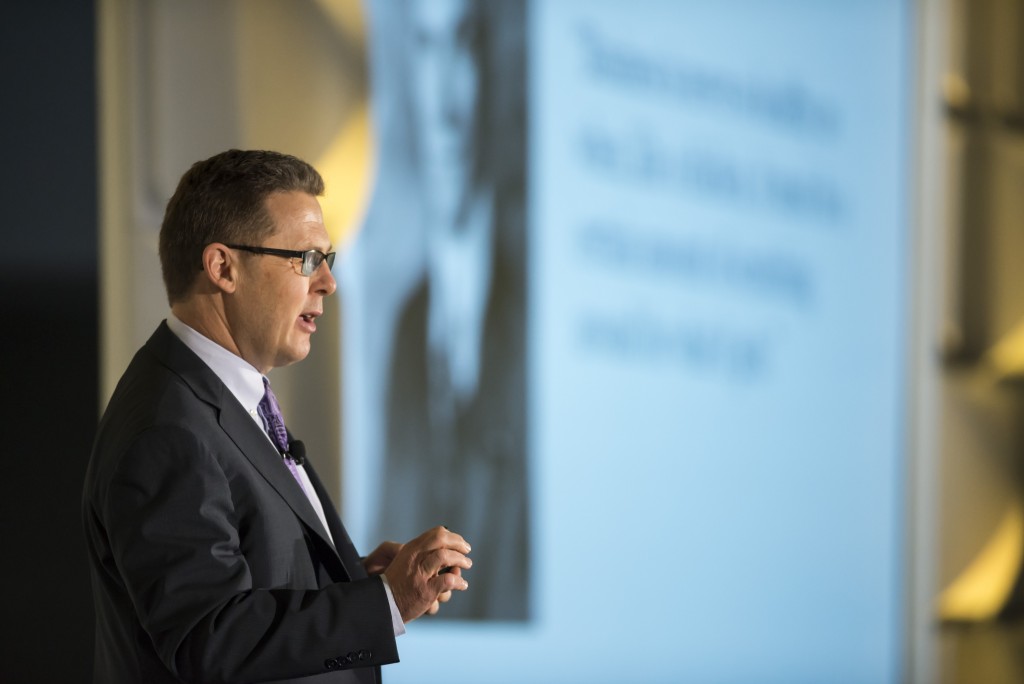
LendIt, speaking to LendIt USA 2016 conference in San Francisco, California, USA on April 11, 2016. (photo by Gabe Palacio)
LendIt Conference founder Peter Renton made more from his marketplace lending investments in the last twelve months than some people earn in a year just from their nine-to-five job. $54,936 to be exact, according to his latest blog post detailing his performance. That’s a result of investments on the Lending Club platform, Prosper, P2Binvestor (which requires you to be an accredited investor), the LendAcademy P2P Fund (which includes Funding Circle, Upstart, Lending Club and Prosper), and the Direct Lending Income Fund managed by Brendan Ross (which invests with lenders such as Quarterspot and IOU Financial).
Unsurprisingly, his business loan performance through the Direct Lending Income Fund has earned the highest yield, a TTM return of 12.77%.
While reporters and critics seem to be planning the funeral for several lending platforms, Renton remains steadfast in his optimism. “Eventually, I plan to have a diversified seven-figure portfolio made up of consumer, small business and real estate loans,” he wrote on his Lend Academy website.
Though Renton is reaping the benefits of being a platform investor, it’s the platforms themselves that may be in trouble, according to a recent op-ed by Todd Baker, a senior fellow at the Mossavar-Rahmani Center for Business and Government at Harvard University’s John F. Kennedy School of Government. On American Banker, Baker wrote, “Almost all [Marketplace Lending] revenue is generated from ‘gain on sale’ fees earned from new loan sales. This dependence on origination volume and gain-on-sale margins makes MPL results exquisitely sensitive to macro and micro trends in investor demand and risk appetite.”
And if a platform isn’t sustainable, the theory is that future investment opportunities may not be as available as they have been historically.
“MPLs need to shift to a more sustainable mode — either as banks or as nonbank balance-sheet lenders — before the end of the current credit cycle brings on a real shakeout and the MPL experiment becomes a financial failure,” Baker wrote.
Renton himself acknowledged a downward trend in his yield, conceding that it may never return to previous levels. “While I would love to be earning more than 10% again I don’t expect to get back there any time soon,” Renton wrote.
He also recently rebutted a Bloomberg article that argued Lending Club was being shady with repeat borrowers.
Peter Thiel’s Fund Invests $100M in Consumer Lending Startup Affirm
April 15, 2016 There’s another unsecured consumer loan lender on the block and it raised $100 million from PayPal founder, Peter Thiel.
Thiel invested in long time friend and PayPal cofounder Max Levchin’s startup Affirm which finances online purchases like high end furniture, jewelry and gym equipment to be paid back in monthly installments.
Thiel’s Founders Fund led the latest round, bringing the total capital raised by Affirm to $425 million since 2013. Affirm’s consumers are typically immigrants and recent college grads who do not own credit cards and have no credit history.
The San Francisco-based company’s loans are funded by Cross River Bank and its investors include marquee Silicon Valley names like Lightspeed Ventures, Khosla Ventures and Andreesen Horowitz.
“The financial industry has managed to avoid significant disruptive innovation since the mid-90s, and we are working hard to change that. Our first goal is to bring simplicity, transparency, and fair pricing to consumer credit,” says Levchin on the company website.
Affirm is just one of the many upstarts that are eager to bring ease into people’s financial lives. Another millennial lender, Pave Inc recently raised $8 million from Maxfield Capital that included existing investors C4 Ventures and Seer Capital. The four year old company lends unsecured personal loans, typically used for skill-based vocational training offered at institutions like General Assembly.
To provide some bird’s eye view context, recent data from Transunion showed that most borrowers securing personal loans jumped close to 30 percent in recent years, to 13.72 million in 2015 from 10.57 million in 2013, with 24 million Americans likely to obtain one this year alone.
With more loans comes the probability of more defaults? Data from Transunion further noted that In 2015, the average balance was $7,235, up more than 7 percent from the year earlier. As more money is available for lending, lenders are going after borrowers that might be otherwise deemed subprime by credit reporting standards like FICO scores. Companies like Affirm, Avant and Prosper loans have thus created propriety credit risk models which they claim go beyond traditional credit metrics and assess a consumer’s ability based on filters like the school they attend, rents, utilities etc.
Santander Cuts Branches, Partners with Kabbage
April 4, 2016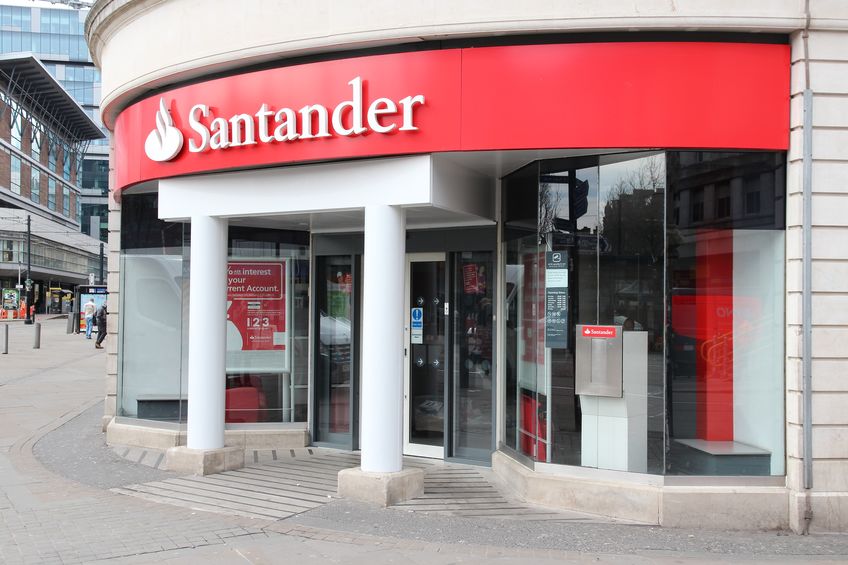
Santander is putting its money where its mouth is and launching Kabbage in UK.
The Spanish banking giant, an investor in Kabbage will use its technology to underwrite quick loans up to 100,000 pounds the same day for loans that typically take 2-12 weeks to process.
The service will roll out over the next two months and will be the bank’s second attempt at allying with an online partner. In 2014, it set up a referral program with UK-based Funding Circle for small business borrowers.
The announcement comes at a time when big banks are shedding weight and becoming leaner to adapt to the digital times. Last Friday (April 1st), Santander said that it will close up to 450 of its 3,467 (13 percent) branches to transition into “cheaper digital channels.”
The road to saving 3 billion euros by 2018 is paved in working with lean businesses like Kabbage. “The way we internalise and adapt to new technology in the coming years will determine our success,” Ana Botin, chairman of Santander said.
This isn’t a one off announcement by Santander. Through its venture arm, Innoventures set up in 2014, the bank dedicated $100 million to invest in fintech startups. The fund participated in Kabbage’s Series E funding last year along with Scotiabank, ING and Reverence Capital Partners.
The bank also set up what it called a “tech-focused international advisory board” led by former US Treasury Secretary Larry Summers with a panel consisting of Red Hat CEO Jim Whitehurst, former Oracle president Charles Phillips and Francisco D’Souza, CEO of software services company Cognizant.
As the alternative lending industry shapes itself into stability with regulation, reducing its dependency on Wall Street’s institutional money, there are doubts whether the industry will stand the test of time in tough credit markets. While venture dollars are increasing in these companies, investors demand more. Fintech upstarts raised $19 billion in 2015 and in the same time, bank staff has been slimming down as investors bet on automated finance to eventually overthrow banking. Already, 46 percent of private funding has gone to lending companies selling cheaper loans easily while the banks focus on the shift of a branch’s transactionary functions to a strategic, consultancy role.
Will we see more such debanking?
Online Lender Avant Hires Ex-FDIC Chief to Board
April 1, 2016 Soon, non banking lending will be made up of ex bankers.
The latest announcement comes from Chicago-based online lender Avant which hired the former head of Federal Deposit Insurance Corporation Sheila Bair to its board. Avant sells unsecured personal loans from $1,000 to $35,000 and has issued loans worth $3 billion.
Bair joins Avant after months of due diligence and said she was impressed Avant’s lending standards are similar to big banks where it retains half the loans on its balance sheet. At the FDIC where she spent five years between 2006 to 2011, she pushed for stricter lending standards with capital and risk. In 2014, she joined the board of Spanish bank Santander for a brief stint.
In the recent months, the new crop of fintech upstarts, backed by venture dollars and fiery ambition have clocked fast growth to justify the impressive hires. Stealth P2P insurance startup Lemonade brought on famous behavioral economist Dan Ariely to design risk models. Student lender SoFi hired Deustche Bank chief Anshu Jain to its board, Funding Circle appointed ex ECB chief Jorg Asmussen and last year Prosper hired former CFPB chief Raj Date.
The alternative lending space is garnering a lot of regulatory attention. SEC Chairwoman Mary Jo White called for more disclosure to investors as well as proprietary risk and lending models adopted by companies. The Small Business Finance Association is working on building a guide for industry best practices.
Small Businesses Say ‘Yes’ to Online Lending Through NFIB Partnership With Kabbage
March 31, 2016 The largest association of small and independent business owners in the country is embracing online lending.
The National Federation of Independent Business (NFIB) announced a strategic partnership with Kabbage yesterday. The NFIB has more than 325,000 members.
Speaking about Kabbage, NFIB SVP Mark Garzone said, “Access to working capital for an expansion, repairs or short-term cash flow needs is essential for small businesses to thrive. We know that our members will benefit from this valuable resource.”
While the partnership is clearly a sign of Kabbage’s prowess, it also serves to reinforce the value that online lenders can provide to small businesses in general. “Many of our members – like a number of small businesses – struggle with the standard loan process when they need access to working capital,” said Garzone.
Not all online lenders are created equal, but a few have stood out from the crowd, in this case, Kabbage.
Earlier this month in The Atlanta Journal-Constitution, NFIB representative Holly Wade said, “Our fear is that they will over-regulate [online lending] out of existence or to the point that it’s no longer a benefit.”
Watch out Bank Tellers, Robots are Coming for your Job
March 31, 2016 Watch out bank tellers, robots are coming for your job.
Investment in private fintech companies and upstarts has grown ten fold from $1.8 billion in 2010 to $19 billion in 2015 and in the same time, bank staff has been slimming down as investors bet on automated finance to eventually overthrow banking. Already, 46 percent of private funding has gone to lending companies selling cheaper loans easily.
The ambition to oust bank behemoths however will need continuous fueling. As things stand now, these lenders are nowhere close to managing that coup. Revenue impact from the digital banking upstarts cause a one percent dent in the $850 billion global banking revenue.
It may be negligible but not to be neglected, investors might say. In the US, online lenders like Lending Club and Prosper Loans sold loans worth $8 billion last year and are looking at a target market of $254 billion, 8 percent of the total consumer credit market.
In its report, Citigroup predicts that US and European banks will shed 1.7 million jobs by 2025 as the banking sector undergoes its own “Uber moment,” forcing banks to automate some lines of business. Anthony Jenkins, former Barclays CEO translates this to halving the number of branches and people over the next few years. If this is an eventuality, different markets will take different paths to get there.
While Nordic and Dutch banks have cut total branch levels by around 50 percent from recent peak levels, branch openings in the top US cities including Seattle, Denver and Dallas have increased between 2-17 percent in the last five years. Part of the reason is because customers still have to visit a branch for identity verification but mostly the benefits (easy access, brand recall) of having a bank branch in wealthy states outweighs the costs involved. “With wealth concentrated in the top cities in the US, a strong branch presence in these cities allows banks to capture wealth,” the report said.
Though the transition of the branch’s role from transactions to advisory/consultancy is imminent, the pace has been gradual, about 11-13 percent since peak pre-crisis. That number could reach 30 percent by 2025. As for the US, there are 15 percent less tellers than there were in 2007.
But the banks want in and are willing to pay. Citigroup and Goldman Sachs have been active in seeding fintech rivals. In the last five years, Citigroup has invested in 13 companies including Square.
Is it time to make another David and Goliath reference?
Banks Admit They’re Scared of Startups
March 16, 2016If you cannot keep up with everything that is happening in fintech, you are not alone.
In the post financial crisis world, fintech startups perched themselves in the crevice between the big world of banks and the regulatory reform which controls their free reign. And since then, financial upstarts have only multiplied.
From P2P insurance, realty crowdfunding, marketplace loans and not to forget bitcoin, the capital infusion in fintech testifies for the market hype. In its report in November last year, CB Insights estimated that $24 billion has been invested in fintech startups and half that amount ($12.2 bn) was invested in 2015 alone.
It can be argued that some of these startups with multibillion dollar valuations are essentially smaller banks without the frills. Take SoFi for example, the San Francisco-based online lender is which worth $4 billion known for its touting we-are-not-a-bank image but provides most services from student loans, mortgage lending, personal loans to loan refinancing without the “bank branch.” The company also wants to start a hedge fund.
So, are the banks feeling left out? It depends on whom you ask, but a recent report from PwC surveying 544 CEOs, revealed that 23 percent believed their businesses were “at risk” by fintech innovation and 67 percent of the respondents said that they were under profit margin pressure.
“We thought we knew our customers, but FinTechs really know our customers,” the report quoted a senior bank official as saying. The report ranked consumer banking, payments and wealth management to be disrupted the most by these fintech startups.
The big bucks and the hype that follows it has made regulatory authorities sit up and take notice of the financial services upstarts and bring them under the supervisory purview. And while that may be legitimizing their foothold on the industry, the real questions around project revenues, possible exits and the companies’ wherewithal to handle a complex credit market remain unanswered.
Are we really at a tipping point of innovation or is it just new wine in old bottles?

Cost of Online Lenders Takes Back Seat to Cost of Government Regulations
March 8, 2016 Study indicates that regulation and taxes are the chief problems, not borrowing costs.
Small businesses are being smothered in the age of marketplace lending… by the government. According to the National Small Business Association’s (NSBA) most recent year-end annual report, regulatory burdens and federal taxes ranked among the most significant challenges to business survival.
The NSBA is a non-partisan small business organization with 65,000 members. In the survey they used to prepare their report, 33% of respondents said regulatory burdens were one of the most significant challenges to their future growth and survival. 24% cited federal taxes. The cost of health insurance benefits beat both of those with 36% of respondents choosing it.
Only 3% of those surveyed reported using an online lender or non-bank lender within the last 12 months. 43% used a bank loan, half of which came from a large bank. In another study, dissatisfied borrowers were slightly more likely to have transparency problems with big banks than online lenders.
Regulators might want to take notice of these statistics when considering future regulations for the commercial side of the marketplace lending industry. That’s because the cost of complying with any such regulations would likely increase the cost to borrowers, not reduce it.
Such was the case with Dodd-Frank and its impact on community banks. Speaking on behalf of the Independent Community Bankers of America last fall during a House Committee hearing, B. Doyle Mitchell Jr., the CEO of Industrial Bank, said that “Dodd Frank has only increased our costs.”
For bank loans in particular, 11% of respondents to the NSBA study that had taken a bank loan within the past 12 months said that the terms have become less favorable to their business. Only 4% reported the terms becoming more favorable.
When it came to the number one issue that small businesses believe that Congress and President Obama should address first, 15% said simplify the tax system, 9% said reduce the tax burden, 9% said rein-in the cost of health care reform, 8% said reduce the regulatory burden on businesses, and only 5% said increase small business access to capital.
Regulators mulling more regulation might want to consider what their constituents are actually saying, and that’s to roll back regulations, not come up with new ones. Online lenders might be expensive, but when asked what’s challenging their growth and survival, they barely even register, if they even register at all.
In a recent story by The Atlanta Journal-Constitution, Holly Wade, a representative of the National Federation of Independent Business, said “Our fear is that they will over-regulate [online lenders] out of existence or to the point that it’s no longer a benefit.”