Fora Financial & Expansion Capital Group Partner with Ocrolus to Automate Underwriting Legwork
October 8, 2018
New York, NY — Ocrolus, the emerging leader in analyzing loan documents, today announced integrations with Fora Financial and Expansion Capital Group, two of the fastest-growing online small business lenders. Enabling quicker and more precise loan decisions, Ocrolus has seen rapid adoption since its debut in the small business lending world with flagship customer Strategic Funding Source in May 2017. Following its Series A round highlighted by QED Investors, Ocrolus is quickly growing its customer base and team with laser-focus on the lending space.
Ocrolus employs crowdsourcing and artificial intelligence to drive efficiencies in the origination process, from document collection to calculating credit model inputs. The Company’s simple API ingests and analyzes bank statements and other loan files, returning actionable data and risk analytics, with 99+% accuracy.
Fora Financial, one of the most prominent New York City-based online lenders, has partnered with Ocrolus to automate bank statement reviews, resulting in a faster, more accurate end-to-end underwriting workflow. The benefits of automation have become increasingly important as Fora Financial accelerated growth after its June 2018 acquisition of US Business Funding. Leveraging Ocrolus to parallelize underwriting tasks, Fora Financial is poised to eclipse $400 million in annual originations over the next year.
“We are excited to automate an additional step in our underwriting process that has historically been very laborious, requiring additional staffing as we grew originations,” said Dan Smith, Co-founder and President of Fora Financial. “As a tech-enabled SMB lender, we rely on our technology to achieve scale while delivering a frictionless process for small businesses to access capital.”
Expansion Capital Group (ECG), recently honored on the 2018 Inc. 5000 as one of the fastest-growing private companies in America, has also partnered with Ocrolus to enhance its underwriting process. ECG sought a loan automation partner to facilitate ambitious growth objectives while improving risk management capabilities. With Ocrolus now handling its document analysis work, ECG, who has grown 627% over the past three years, looks forward to scaling its operation to new heights, thanks to its leaner, technology-enabled infrastructure.
Herk Christie, Head of Operations at ECG says, “Using Ocrolus solutions, we have been able to create a lean, smart and tech-enabled underwriting infrastructure that focuses on quality without sacrificing speed. The level of data Ocrolus provides will continue to feed the growth of our statistical models, further benefiting our clients and partners alike.”
Growing beyond online small business lending, into online personal lending and traditional banking, Ocrolus has added a couple of prominent lending executives to its team. Matt Burton, former CEO of Orchard Platform has joined Ocrolus as a Board Advisor. Kevin Bailey, former Senior Advisor at the US Department of Treasury, has joined Ocrolus as Head of Growth.
As CEO of Orchard Platform (acquired by Kabbage), Matt Burton became a cornerstone of the online lending community. Orchard’s Online Lending Meetup events regularly brought together industry thought leaders from all over the world, helping to shape the next generation of financial services. As an Advisor to Ocrolus, Mr. Burton is continuing his mission to grow online lending into an efficient, transparent, and global financial market.
A former White House and Treasury official, Kevin Bailey brings more than fifteen years of experience as a financial services and public policy professional. Prior to joining Ocrolus, Kevin was the Director of Business Development & Capital Markets at CommonBond, a leading marketplace student lender. Mr. Bailey is a graduate of Rice University and the University of Chicago Booth School of Business. At Ocrolus, Mr. Bailey is leading growth efforts as the Company expands beyond its core online small business lending market, into online personal lending and traditional banking.
Visit www.ocrolus.com for more information.
About Ocrolus
Ocrolus is a RegTech company that automates data verification and analysis for bank statements and other loan documents. The Company analyzes e-statements, scans, and cell phone images of documents from any financial institution with over 99% accuracy, and rigorous process documentation. By replacing tedious, imperfect human audits with sharp, AI-driven analyses, Ocrolus modernizes financial review processes in lending with unprecedented speed and accuracy.
Media Inquiries:
media@ocrolus.com
$400M A Year: Fora Financial / US Business Funding Deal to Make Fora an Originations Leader
June 5, 2018 Fora Financial’s newly acquired stake (a significant one) in US Business Funding will put them on track to originate $400 million a year, the company said. Those numbers will place them on the list with industry titans like BFS Capital, Strategic Funding and National Funding.
The co-founders of Fora were previously featured on AltFinanceDaily’s Jan/Feb 2016 magazine issue.
US Business Funding (USBF), who is based in Santa Ana, CA facilitates different financing products for small businesses including vendor programs, capital equipment loans, and leasing solutions.
“This is an exciting time for all of us at US Business Funding,” said USBF CEO Peter Ribeiro in a published statement. “We have rapidly built one of the top sales organizations in the industry, and now we have the opportunity to leverage the expertise and resources of Fora Financial to fuel our growth even further. Jared and Dan have established Fora Financial as one of the top lenders in the space, and we are motivated to build on our terrific relationship with them to create even more opportunities for our companies to succeed.”
IOU Planning for 25%-30% Originations Growth
May 29, 2018IOU Financial CEO Phil Marleau spoke confidently this afternoon on a public conference call to discuss the company’s first quarter performance. The company had a net income of $797,198 from the start of the year to March 31, which is notable because it produced a $995,085 loss during the same period last year.
On the call, Marleau said that the company plans to increase loan originations next year by 25 to 30 percent.
An analyst at TD Wealth asked if the company’s plan for a 25 to 30 percent increase in loan originations should produce a similar increase in earnings.
“We’re working on getting our numbers back on a growth trajectory,” Marleau said. [To do this…] we may need to increase marketing spend in order to increase the direct channel and the referral channel.”
Marleau explained that IOU Financial has three channels: the wholesale sales channel, which is responsible for the bulk of its business, the direct channel, which is driven by marketing, and the referral channel, which involves strategic partnerships with associations, payment processors, suppliers to small businesses and others. The company makes business loans of up to $300,000.
“We’re not going to lose sight of the bottom line,” Marleau said. “We’re not going to grow at the expense of profit.”
Another question came in asking what the status was on the company’s strategy of taking aggressive legal action against merchants that default on loans. President and Chief Operations Officer Robert Gloer answered this question by noting that once a lawsuit is filed against a merchant, it generally takes about a year for any money to be recovered. But the company has recovered money from defaults.
“We have started to see recoveries and we see that as a huge success,” Gloer said.
Another question dealt broadly with alternative financing in Canada as opposed to elsewhere, like the US. Marleau said that compared to the US, there is a lot less competition in Canada and that there are higher margins and usually fewer defaults.
IOU Financial is headquartered in Montreal and has an office in Kennesaw, GA.
Startups, Big Financial Institutions Play Nice in the Sandbox
December 20, 2017Data is the lifeblood of financial technology and more established companies frequently supply data to fintech startups for free as part of their growth model.
A Boston business incubator is basing its operations on that dynamic.
FinTech Sandbox, a non-profit group, launched two years ago and now claims more than 30 data sources that it calls partners for the startups going through its six-month program that benefits both data providers and users.
Testing new technology under a load of data is an important factor facing fintech startups so there’s a tradeoff: established financial services companies are providing data in exchange for a glimpse of the latest tech tools being developed.
FinTech Sandbox participants get to test drive their technology with large amounts of free financial data, which can be crucial step before taking on customers real time, Executive Director Jean Donnelly told AltFinanceDaily.
“In order to be taken seriously, you have to test. That’s why we came about,” she said. “It’s for beta testing, to get feedback.”
Without partnerships, startups would need to buy data or scrape it from the Internet. However, providers generally don’t want to deal with the small amounts startups need versus larger paying customers. As a result, programs such as FinTech Sandbox’s can play an important role in the fintech ecosystem.
To date, four FinTech Sandbox portfolio companies have been acquired by larger companies. Most recently, machine learning company DataRobot Inc. bought software maker Nutonian in May.
Data sources for FinTech Sandbox’s startups include Fidelity Investments, F-Prime Capital, Thomson Reuters and Silicon Valley Bank.
Several banking and financial services companies operate accelerator programs and gain access to the latest technology by doing so. They include Deutsche Bank Innovation Labs, Barclays Accelerator and the Wells Fargo Startup Accelerator.
Earlier this year, Pricewaterhouse Coopers reported that the demand for data analytics is fueling the trend of traditional financial institutions folding fintech startups—and the tools they develop—into their companies.
“FinTech companies create an ecosystem that fosters the collection of vast amounts of data and builds trusted relationships with clientele. Financial institutions have realized the importance of these ecosystems and are attempting to engage with and bring innovation inside their companies. Partnering with FinTech companies is up from 32 percent in 2016 to 45 percent this year on average, but large discrepancies by country do exist.”
Ninety-eight startups have participated in FinTech Sandbox’s six-month program. They’ve raised a combined $380 million in funding, Donnelly said.
Artificial intelligence may be the hottest trend in the technology industry. But tech tools related to environmental, social and governance, also called ESG or socially conscious business models, are fueling the strongest growth trend with fintech entrepreneurs, she said.
One such startup, California-based Data Simply Inc., went through the FinTech Sandbox program in fall 2015 and now provides data to sustainability-focused companies.
The financial technology sector has changed over time to become one in which legacy and startups regularly team up, Data Simply CEO Michelle Bonat told AltFinanceDaily.
“It used to be more of a competitive environment, but it’s now more collaborative,” she said. “Each realizes they can gain more from the other.”
FinTech Sandbox also collaborates with 11 accelerator programs such as Techstars, Startup Bootcamp and FinTex Chicago. Partnering with larger fintech companies turbo charges the growth of a business, Bonat said.
“It started so many useful discussions and it happened so much faster than it would have happened otherwise,” she said. “It’s all about an ecosystem and accelerating that in different ways.”
In July, Boston-based investment analytics startup FinMason Inc. disclosed that it was making its enterprise software available to FinTechSandbox participants.
The software is a suite of investment analytics with access to more than 700 analytical data types, including risk and performance metrics, aggregate factor exposures, scenario analyses and stress testing.
CEO Kendrick Wakeman told AltFinanceDaily FinMason is partnering with the accelerator’s portfolio companies with a plan that such startups are prospective customers in the future.
Startup partnerships are more common in the financial services industry because an aversion to risk has slowed the adoption of innovation. Now, the industry is playing catch up and working with startups and young entrepreneurs is one way to close the innovation gap faster than developing products in house, Wakeman said.
“Institutions know they have to innovate. Consumers demand it and regulators demand it,” he said. “They have a long ways to go.”
LENDUP HIRES FIRST CHIEF FINANCIAL OFFICER, ANNOUNCES SIGNIFICANT GROWTH MILESTONES
November 7, 2017San Francisco, November 8, 2017 — LendUp, a socially responsible fintech company for the emerging middle class, today announced that Bill Donnelly, former VP of Global Financial Services for Tesla, has joined as its first CFO. The company further strengthened its leadership team with the addition of a General Manager for its loans business and a Chief Data Scientist.
“Our strengthened leadership team, from some of the world’s fastest-growing and most impactful companies, will help LendUp accelerate our efforts to build a lasting, iconic company that will be a category leader for years to come,” said Orloff.
 Donnelly is a 30-year consumer credit veteran with extensive experience in credit cards and loans products. Donnelly spent the last four years with Tesla as VP of Global Financial Services, responsible for providing financing solutions for Tesla’s customers across 29 countries. He also served as President of Tesla’s captive finance company, Tesla Finance LLC, which offered an industry-leading leasing program innovative for its consumer-friendly agreement and for being the first end-to-end electronic lease with the ability to execute contracts on a vehicle’s touchscreen.
“We couldn’t be more excited to have an executive of Bill’s caliber join our quickly expanding team,” said Sasha Orloff, co-founder and CEO of LendUp. “Tesla is one of the most innovative companies in the world, and completely disrupted the sleepy auto industry. Bill’s experience leading complex global financing programs, and building first-of-their-kind, mobile-first platforms, will be invaluable to us as we continue to build out our product ecosystem and be on the forefront of serving more Americans in need of better financial services options.”
Donnelly previously spent a decade with BMW. As CFO and then President of its industrial bank, he led BMW’s credit card program and was awarded a patent for a new credit card product. In addition, Donnelly’s background includes more than 15 years with the credit card, installment loan, and automotive finance divisions of JPMorgan Chase. He was also President and CEO of retail card issuer First Electronic Bank, where he led the bank’s turnaround and achieved record profits.
“I have long admired LendUp for the important work the company is doing to expand credit access and help people improve their financial health,” said Donnelly. “At Tesla I witnessed how a strong sense of mission combined with a talented, passionate team can lead to incredible success and to overcoming seemingly insurmountable challenges. I have found that same sense of mission among LendUp’s amazingly talented and passionate team. I look forward to leading our finance organization and serving as a strategic partner to the entire team as we continue building innovative and mobile-first financial services products. Together, I can’t wait to achieve extraordinary success — for our customers and for our investors.”
In addition to Donnelly, Anu Shultes has joined as General Manager of the company’s loans business, which recently surpassed $1.25 billion in originations. Shultes has 25 years of experience in financial services across lending and credit card products, primarily focused on underserved consumers. Shultes is passionate about financial inclusion, and has managed multi-billion-dollar loan portfolios and built $1B businesses from product launch to widespread adoption. Shultes most recently served as Chief Operating Officer of mobile-first global gifting platform Swych, and before that served in senior leadership roles at Blackhawk Network, AccountNow, National City Bank, and Providian Financial.
Dr. Leonard Roseman has joined LendUp as Chief Data Scientist, to lead a growing team that uses Machine Learning to improve financial inclusion through expanded credit access and lowering the cost of credit to borrowers. Dr. Roseman has 30 years of experience in modeling credit risk, pricing, and model risk capital. He has worked with a variety of companies as a statistician, technical consultant, and strategy consultant focused on experimental design, predictive modeling, and strategic analysis. Roseman most recently served as Head of Group Decision Sciences at the Commonwealth Bank of Australia, and before that served as Deputy Chief Model Risk Officer at Capital One.
LendUp is also announcing a number of significant growth and social impact milestones. The company has now saved its borrowers $150 million in fees and interest through use of its credit card and loan products. These savings have helped close the gap caused by poor credit, which costs Americans roughly $250,000 more over the course of their lifetimes. Additionally, consumers have taken LendUp’s free online financial education courses more than 1.7 million times. Finally, the company launched one of the most innovative credit cards out of beta at the beginning of 2017.
About LendUp
LendUp is a socially responsible fintech company on a mission to redefine financial services for the emerging middle class—the 56% of Americans shut out of mainstream banking due to poor credit or income volatility. LendUp builds tech-enabled loans and credit cards paired with educational experiences to help people save money and get on a path to better financial health.
Follow LendUp
Twitter: @LendUpCredit
Facebook: facebook.com/LendUpCredit
LinkedIn: linkedin.com/company/LendUp
PayPal & LendUp Bridge Financial Inclusion Gap
July 25, 2017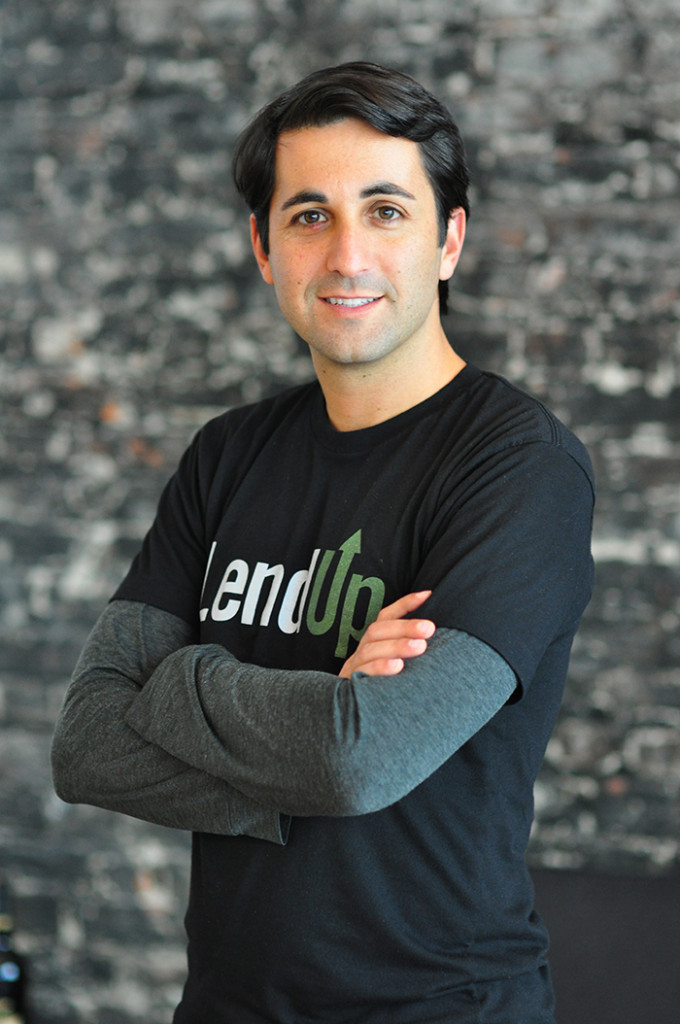
PayPal put its stamp of approval on fintech startup LendUp, evidenced by a strategic investment by the eBay spinoff in recent weeks. In doing so PayPal demonstrated its commitment to non-prime borrowers, which is the demographic that San Francisco-based LendUp targets.
The pairing brings together the chief executives of two companies – Sasha Orloff and Dan Schulman of LendUp and PayPal, respectively — who have been at the forefront of fintech and who together will likely play an expanded role together.
“People care about the ability to build credit and about having a safe product and a really great user experience. We are aligned with PayPal there. Dan is a pioneer in financial inclusion. He is a ringleader in the industry. There is an exciting momentum from an executive leader with a voice for financial inclusion from one of the largest and most successful fintech companies,” Orloff told AltFinanceDaily.
PayPal’s mission is similar.
“LendUp and PayPal share a vision of reimagining financial services and offering innovative solutions to people typically underserved by the traditional financial system. PayPal has made a strategic investment in LendUp to help this fintech innovator continue to grow and broaden its positive impact on improving financial health,” according to a PayPal spokesman.
LendUp focuses on the emerging middle class, including those who were left behind in the wake of the financial crisis. Orloff pointed to a macroeconomic shift beginning in 2008 with the creation of Dodd Frank, which is contributing to a deep well of financial exclusion. “More than half of the country has a credit score below 680 and are excluded from many bank products,” Orloff added.
Meanwhile as online lending has taken root banks have demonstrated a stubborn inability to become tech focused
Second Time Around
Orloff and Schulman are no strangers to one another. Previously the LendUp chief was senior vice president at Citi Ventures, Silicon Valley’s maiden venture capital firm for early stage fintech, while the PayPal president and CEO served as group president of enterprise growth at American Express.
“Through the process I met Dan Schulman [then] at American Express. He was a big champion of financial inclusion. He had been tooting the horn at AMEX for a long time and had been leading their financial inclusion revamp,” said Orloff.
While at Amex Schulman was LendUp’s executive sponsor before taking the helm at PayPal. Soon after the teams reconnected and recognized even more possibilities beyond the PayPal ecosystem, such as providing access to credit and helping borrowers to build a credit score. There is also the massive PayPal database to consider.
“PayPal has a bigger reach and a more relevant audience,” said Orloff, declining to tilt his hand to the specific ways in which LendUp and PayPal will partner. “We have a lot of conversations in the works. That is absolutely part of the investment and we are excited,” noted Orloff.
LendUp earlier this year surpassed the $1 billion threshold for loan originations since the company was founded half a decade ago.
“We are a balance sheet lender,” said Orloff. “But we just continue to grow so quickly that we’re going to need to diversify our funding sources over time. We set up structures to do that now, and [investor] Victory Park is an amazing supporter,” said Orloff, pointing out that LendUp just doubled its access to capital with a $100 million credit facility to fund loan growth. “Eventually we will outgrow them as a single funding source. And that will come up soon.”
LendUp’s trifecta of offerings include credit cards, loans and financial education. The education is delivered via online videos and courses that highlight how much bad credit can cost borrowers, evidenced by $250,000 in fees paid by an average consumer with bad credit over their lifetime, according to LendUp stats. LendUp provides tools to help people to improve their credit score, ultimately making it easier and cheaper to borrow money. LendUp has saved its customers nearly $150 million in fees and interest.
Meanwhile LendUp and Beneficial State Bank recently announced an expansion of their credit card, the L Card, which should quadruple the availability of the Visa product.
“We launched the card recently and already by just having a simple and transparent credit card we’ve gotten a top rating in the credit card space,” said Orloff, adding that there is more to come. “We are going to completely revolutionize what credit cards mean for the emerging middle class. We are going to bring innovation that has not happened before. We are almost ready to launch and share that.”
Orloff expects that LendUp will grow in “overwhelming influence” over the course of the next year.
Grameen Bank Effect
For his part, Orloff has always had a penchant for helping the poor, evidenced by his efforts with the Grameen Foundation supporting financial services in rural and under-served areas. His work with the foundation was inspired after reading Nobel Peace Prize winner Dr. Muhammad Yunus’ book Banker to the Poor.
From there he moved on to Citi, where he did credit underwriting before joininig Silicon Valley’s maiden venture capital firm for fintech, Citi Ventures. In 2012 LendUp was born and Orloff has been determined to provide good structured products with embedded education that can help to make people more successful ever since.
Blazing Trails in Unexplored Financial Markets
April 4, 2017 Once upon a time people with health insurance who were treated for medical emergencies, illnesses or chronic health conditions –an illness or accident requiring hospitalization, an appendectomy, or a hip replacement, say – could rest easy. Insurance underwriters like United Health, Wellpoint or Humana would surely handle most, if not all, of a patient’s medical expenses.
Today? Not so much. As healthcare becomes ever more pricey, employers are increasingly offering health insurance plans that are less generous and require consumers to pay higher deductibles. Individuals as well are finding that the same goes for them: The only way to afford health insurance is to purchase a plan with a high deductible.
“We’re at a tipping point where the cost of healthcare is outpacing GDP,” says Adam Tibbs, chief executive and co-founder of Parasail Health, a start-up alternative lender in the San Francisco Bay area. “As a result,” he adds, “the only way health insurance can work is either to raise (the cost of) premiums or opt for higher deductibles.”
Statistics confirm Tibbs’s assertion. As of last autumn, according to a September, 2016, survey by Kaiser Family Foundation, the average deductible for workers’ health insurance policies jumped to $1,478, up by more than 12% from $1,318 in 2015. The survey found, moreover, that – for the first time — slightly more than half of all covered workers have deductibles of at least $1,000. At smaller companies, the average deductible is now more than $2,000.
Parasail, a Sausalito-based alternative lender which opened its doors last September, is angling to fill that void. Funded with seed capital raised from four venture capital firms — Healthy Ventures, Montage Ventures, Peter Thiel, and Tiller Partners, reports online data-publisher Crunchbase – Parasail acts as a go-between, connecting the medical practitioners to third-party lenders.
In partnering with doctors, hospitals, and medical clinics, Parasail employs a business model that resembles an auto dealership. After the customers picks out a four-door sedan or a sport utility vehicle, he or she drives it home thanks to a five-year, monthly-payment plan from, say, Capital One.
Similarly, after agreeing to a costly medical procedure, the patient can strike an arrangement with a medical provider’s billing department for on-the-spot financing. Once the deductible is covered, the patient is cleared to glide into the operating room.
Despite being open for less than a year, Tibbs says, Parasail has enlisted as partners some 2,500 medical practitioners with unpaid patient debt of roughly $4 billion. The typical loan averages $6,000. “Our goal,” remarks Parasails marketing vice-president, Dave Matli, “is to create a normal retail experience” so that financing medical debts is as seamless as swiping a credit card.
Meanwhile, industry experts say that Parasail represents a new breed in the financial technology sector. As online alternative lending and the broader fintech industry grow more established, institutional investors and financiers are increasingly wagering bets on companies that promise more than disruptive technologies or cheaper loans.
Increasingly, they are hunting for companies like Parasail that are introducing new products or blazing trails in unexplored markets. “The area that I find most interesting,” says Phin Upham, a venture capitalist and board member at Parasail, is investing in companies that “are developing products that didn’t exist before, serving people who haven’t been served, and playing a unique role incentivizing long-term behaviors.” (Upham, who is a principal at Peter Thiel’s VC firm, emphasizes that he is speaking only for himself.)
 Parasail’s fundraising and launch has taken place against a dramatic drop in both global and U.S. fintech financing, according to KPMG’s annual report on the industry, “The Pulse of Fintech.” The accounting firm reports that total funding for fintech companies and deal activity plummeted by more than 50% in the U.S. in 2016 to $12.8 billion from $27 billion the prior year. KPMG attributed much of the drop to “political and regulatory uncertainty, a decline in megadeals, and investor caution.”
The year “2016 brought reality back to the market” after the banner, record-shattering year of 2015, the report noted.
Venture capital financing in the U.S., however, did not slip as dramatically as overall funding, sliding some 30% to $4.6 billion from $6 billion in 2015. (Almost overlooked in the report was that corporate investment capital was “the most active in the past seven years,” KPMG’s report notes, representing 18 percent of venture fintech financing.)
Steve Krawciw, a New York-based fintech startup executive asserts that “the business has matured and, yes, there have been defaults, but the business model for fintech has stabilized.” The author of “Real-Time Risk: What Investors Should Know About FinTech, High-Frequency Trading, and Flash Crashes,” Krawciw expects more funding to stream into the industry as new players such as banks, insurance companies, hedge funds and private equity get involved. They’ll “go in a number of different directions,” he reckons, “especially direct lending by hedge funds and private equity firms.”
No figures have yet been released by KPMG for the first quarter of 2017, just ended in March, but fintech industry participants are mightily impressed at news of the $500 million financing for Social Finance Inc. (SoFi). Best known for its refinancing of student loans, the San Francisco firm reported on February 24 that it raised a half-billion dollars in a financing round led by private equity firm Silver Lake Partners. Other investors include SoftBank Group and GPI Capital, bringing SoFi’s total investment to $1.9 billion, the company said in a press release.
 SoFi, which plans to use the funds to expand online lending into international markets and devise new financial products, is ambitiously transforming itself into an online financial emporium. Along with a suite of online wares that mimic traditional banking and financial products – savings accounts, life insurance policies and mutual funds – SoFi has also invented new online offerings.
For example, SoFi formed a partnership with secondary mortgage lender Fannie Mae and, together, the companies are enabling borrowers to refinance both mortgage and student debt. The SoFi financing, says Krawciw, “is not a seminal deal, it’s a sign of what’s coming.”
SoFi may also be providing a road map for fintech companies like Parasail. After building a customer base with health-care loans at 5.88% annual percent rate — compared with credit cards charging interest rates about four times as much – Parasail could be poised to sell additional products to its built-in audience.
Just as SoFi got big on refinancing student loans, Parasail could use healthcare lending as a springboard for future financial endeavors. Its revenues have been growing by 50% month-over-month.
By the first quarter of next year, Tibbs says, the firm will be breaking even.” And at that point, he adds, it expects to roll out a menu of new products too.
Prosper Marketplace Appoints Usama Ashraf Chief Financial Officer
February 1, 2017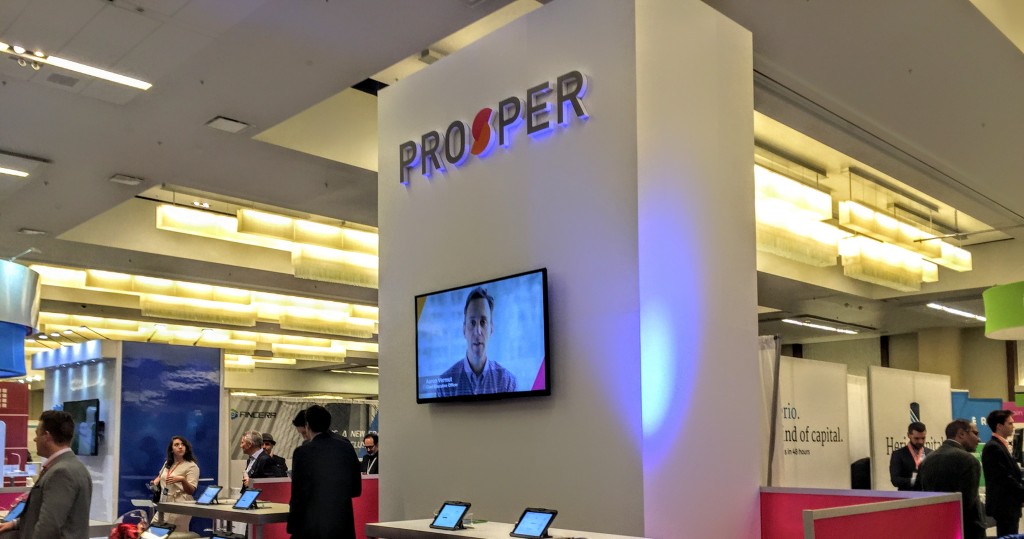
SAN FRANCISCO–(BUSINESS WIRE)–Prosper Marketplace announced today it has appointed Usama Ashraf as Chief Financial Officer. As CFO, Ashraf will oversee the company’s capital markets function, as well as all of the company’s finance activities. As head of the Capital Markets team, he will be responsible for expanding the company’s funding sources by bringing new investors onto the Prosper lending platform.
Ashraf brings more than 18 years of experience spanning corporate finance and global capital markets, including funding, securitization, financial reporting, planning, investor relations, balance sheet management, strategy, and mergers and acquisitions. He has held senior leadership positions at prominent financial services companies, most recently as Deputy Chief Financial Officer and Treasurer at Annaly Capital Management and Corporate Treasurer at USAA. Ashraf will start his new position at Prosper Marketplace on February 27.
“We’re thrilled to have someone with Usama’s experience and track record in finance and global capital markets join our team,” said David Kimball, CEO, Prosper Marketplace. “Usama will be instrumental in bringing new institutional investors onto the Prosper platform, including banks, as we continue to grow the platform in 2017.”
“I’ve watched the online lending industry with keen interest over the past year, and I have been impressed with Prosper’s resiliency and commitment to innovation,” said Ashraf. “I am a strong believer in Prosper’s mission to advance financial well-being, and I look forward to working closely with David and the Prosper team to take the business to the next level.”
Prior to joining USAA, Ashraf spent 13 years in the Treasury and Corporate M&A departments of CIT Group, most recently serving as Deputy Treasurer with responsibility for the firm’s Treasury activities in the U.S. Previously, he worked in the Investment Banking Division of Salomon Smith Barney/Citigroup focused on M&A. Ashraf received a BS in Economics with concentrations in Finance and Accounting from The Wharton School of the University of Pennsylvania.
About Prosper
Prosper’s mission is to advance financial well-being. The company’s online lending platform connects people who want to borrow money with individuals and institutions that want to invest in consumer credit. Borrowers get access to affordable fixed-rate, fixed-term personal loans, and investors have the opportunity to earn attractive returns via the platform’s data-driven underwriting model. To date, Prosper has originated over $8 billion in personal loans for debt consolidation and large purchases such as home improvement projects, medical expenses and special occasions. The award-winning Prosper Daily app offers essential tools to help people manage their financial wellness every day.
Prosper launched in 2006 and is headquartered in San Francisco. The lending platform is owned by Prosper Funding LLC, and Prosper Daily is owned by BillGuard Inc., both subsidiaries of Prosper Marketplace. Visit www.prosper.com and follow @Prosperloans on Twitter to learn more.
Contacts
Prosper Marketplace
Sarah Cain, 415-593-5474
scain@prosper.com