
Go West, MCA Broker
August 16, 2017
If you check out the AltFinanceDaily forum, one of the latest discussions originated from a self-described newbie business owner who wants to know, ‘What separates a successful ISO from the rest?’ The user, who calls himself jellyfish capital, asks the AltFinanceDaily universe:
“I’m trying to figure out what the variables are that would dictate a successful brokerage/ISO vs. a shop that has a ton of turnaround and doesn’t make any money and ultimately ends up shutting its doors.”
The answer just might lie in the types of financial products the broker can sell.
MCA Broker Shift
Noah Grayson is managing director and founder of South End Capital, a commercial and investment residential real estate lender launched in 2009 that also started doing SBA loans and MCA consolidation loans in recent years to help out merchants with stacked MCA positions. Grayson pointed to a shift in the types of brokers signing up with the Encino, Calif-based lender.
“We’ve noticed a large number of brokers signing up with us are coming over from the MCA space. They’ve relayed to our staff that competition is too stiff to make enough money only originating MCAs, and they are looking for other avenues to bring in revenue,” Grayson said.
Indeed, South End Capital has seen an influx of brokers from the MCA industry gravitating their way. In fact, there has been more than a 10 percent spike year-to-date versus the same period last year in the number of brokers that discovered South End Capital through some form of Internet origin, such as AltFinanceDaily, versus a targeted ad in a real estate related publication or through more traditional real estate origination means.
“What we’re hearing from our MCA industry referral partners is that their[customers] now want any option other than an MCA. These brokers are coming to us now because they are trying to evolve their businesses to stay afloat. Offering real estate or SBA loans has proved to be the next logical step for these brokers and it has provided a big bump to our business,” said Grayson.
As in any industry, making a career change can introduce unexpected challenges. A hurdle for the brokers, particularly as it relates to making the jump to commercial real estate lending, has been unrealistic expectations.
“Many MCA brokers have an expectation that real estate or SBA loans will work similarly to an [MCA], but it’s a more involved process. There’s more documentation and more moving parts to understand. There has been a big learning curve for a lot of these brokers — some have been willing to learn and are excited about the opportunity. However, many MCA brokers have proven extremely resistant to change and unable to adapt” noted Grayson.
There are hurdles facing the MCA industry, too.
 Merchant Motivation
So what’s driving the shift? Small businesses, some of which are saddled with short-term obligations, have begun to realize that thanks to the rise of alternative lenders they have more options. Meanwhile unscrupulous collection agencies are throwing a monkey wrench into the situation, making it trickier for merchants to gain access to cash advances.
David Soleimani, CEO of LendFi Corp, said a major setback for the MCA industry has been the interference of collection companies convincing good paying merchants to default and cut their payments in half. By negotiating payments with a third party, merchants essentially become blacklisted from receiving any further MCAs.
LendFi senior account rep Jonathan Meyer specializes in cash advances, term loans, equipment leasing and lines of credit. He’s noticing a trend of more MCA brokers expanding their line of business in the last year.
“Companies are overextended [with cash advances.] It’s a problem,” said Meyer. “If everything is perfect, we can do a term loan or a line of credit if it falls under certain criteria.”
One small business came to LendFi’s Meyer recently and as a result saved himself a lot of cash. “I consolidated someone’s loan recently. I got him a term loan and saved him $14,000 a month. He had two loans at $110,000. I got him a term loan for $165,000 and he saved $14,000 a month. He was paying $22,000 per month,” said Meyer, adding that he also consolidated the payments from a daily to a monthly schedule. “That’s a huge savings,” he said.
For all of the twists and turns that may be up ahead for brokers and merchants alike, one thing seems clear. The MCA industry isn’t going anywhere.
“There will always be a [customer] whose only option is an MCA, and it has its benefits for many. For example, the only way to get business funding in one or two days is with an MCA. However, I think the reasons why someone would need an MCA are becoming fewer and fewer as other more viable financing options emerge,” said Grayson.
Catching Up With Marketplace Lending – A Timeline
August 13, 20175/17 – Funding Circle surpassed Zopa in cumulative lending to become the UK’s biggest marketplace lender
5/18 – Breakout Capital announced appointment of Douglas J. Lanzo as EVP and General Counsel
5/22 – The New York State legislature held a joint hearing on online lending
5/25
- OnDeck had the maturity date of its $100M credit facility extended
- China Rapid Finance reported Q1 net revenue of $10.5M
- Prosper Marketplace closed $495 securitization transaction
- SoFi co-founder Dan Macklin announced his departure from the company
5/31 – IOU Financial reported Q1 results, had $1M loss on $4.3M in revenue and lent (CAD) $22.1M
6/2 – Zopa began allowing investors to sell loans that have previously been in arrears
New York State legislators proposed the formation of an online lending task force
6/6 – AltFinanceDaily and Bryant Park Capital published their Q1 confidence index in which industry CEOs scored their confidence in the continued success of the MCA and small business lending industry at 73.8%, the lowest level since the survey started in Q4 2015. It peaked at 91.7% in Q1 2016.
6/8 – Amazon surpassed $3 billion in loans made to small businesses since their lending program launched
6/9 – RealtyMogul announced that they had exited the residential fix-and-flip market
6/12 – The US Treasury published a report that called for the repeal of Section 1071 of Dodd Frank
6/13
- SoFi applied for a bank charter, specifically an Industrial Loan Company charter
- Lendio announced a pilot agreement with Comcast business
6/14 – Patch of Land expanded its debt facility from $10M to $30M
6/19 – Goldman Sachs’ online lender Marcus surpassed $1 billion in loans made since inception
6/20 – Former Lending Club CFO Carrie Dolan joined Metromile, an insurance company, as CFO LendingTree acquired MagnifyMoney
6/21 – Pearl Capital secured $15M in financing from Chatham Capital Management
6/27
- Square Capital announced that it will pilot a consumer loan program
- Former RapidAdvance CFO Rajesh Rao became the CFO at Beyond Finance, Inc.
6/29
- Funding Circle hired Joanna Karger as US Head of Capital Markets and Richard Stephenson as US Chief Compliance Officer
- Pave suspended lending operations
- Ron Suber, president of Prosper Marketplace, announced that he was stepping down from the company
- The SEC announced that all companies will now be able to submit draft IPO registrations confidentially, a perk previously only reserved for businesses designated as “emerging growth companies” under the JOBS Act.
6/30
- PayPal Holdings Inc announced that it had invested in LendUp
- Yellowstone Capital announced that they had funded $47 million to small businesses in the month of June
7/3 – Funding Circle announced that Sean Glithero had joined the company as its new global CFO
7/5 – Lending Club appointed Ken Denman to its Board of Directors
7/6
- CAN Capital announced that they had been recapitalized and were resuming funding operations
- Orchard Platform and Experian announced a strategic collaboration on data
7/7
- CFPB announced that it was extending the deadline of its small business lending RFI from July 14th to September 14th
7/10
- China Rapid Finance announced that they had made 20 million cumulative loans since inception
- CFPB announced new arbitration rule that effectively bans class action waivers from consumer finance contracts
- Former OnDeck VP of External Affairs and Associate General Counsel Daniel Gorfine, was appointed by the Consumer Future Trading Commission to be Director of LabCFTC and Chief and Innovation Officer
7/11
- dv01 and Upgrade (Former Lending Club CEO Renaud Laplanche’s new company) announced a strategic reporting partnership
- PayPal hired former Amazon executive Mark Britto to lead its lending business
- Fora Financial expanded its credit facility led by AloStar
See previous timelines:
4/6/17 – 5/16/17
2/17/17 – 4/5/17
12/16/16 – 2/16/17
9/27/16 – 12/16/16
Is The End Near For This Debt Settlement Firm?
August 11, 2017 Corporate Bailout, a New Jersey based firm that purports to help businesses lower the monthly payments on their debts, is back in the news. This time it’s for allegedly running a sex-fueled office with stripper parties, sex dolls, and sexual harassment, according to the New York Post who published video footage of the debauchery. Warning: the New York Post link is not safe for work.
AltFinanceDaily has written about Corporate Bailout previously, in one case recently where the company is alleged to be robo-dialing out of control. Corporate Bailout never responded to the lawsuit and the court entered a default against the company this past Monday, according to the docket.
Back in April, AltFinanceDaily also received the recording of a call purportedly between a representative of Corporate Bailout and a small business owner. We had the lengthy dialogue transcribed and it appears below with the names between the parties changed.
Of note, the alleged Corporate Bailout representative in the call makes several references to a partner law firm named Protection Legal Group. There are several lawsuits pending against Protection Legal Group, one of which alleges the firm didn’t have a lawyer licensed to practice in the state they claimed to offer defense in. In that situation, a merchant had to hire another lawyer to sue his lawyer at Protection Legal Group.
| Person Answering Phone: | Hello. |
| Robo Agent: | Hello. How are you today? |
| Person Answering Phone: | I’m good. |
| Robo Agent: | Great! Can I speak to the business owner please? |
| Person Answering Phone: | Who is this please? |
| Robo Agent: | This is Alex from Corporate Bailout. Are they available? |
| Person Answering Phone: | Yeah. One second please. One second. |
| Robo Agent: | Thanks. |
| John: | Hello. |
| Robo Agent: | Can I speak to the business owner please? |
| John: | Speaking. |
| Robo Agent: | This is Alex from Corporate Bailout. I know your time is valuable. So, let me get straight to the point. We help small business owners eliminate their unsecured debts. If your business has taken a merchant cash loan or advance, a high interest credit card debt, accounts payable debt, or any other unsecured business debt, you are now able to settle your outstanding balances for just a fraction of what you owe. I just need to ask two qualifying questions. Okay? |
| John: | Sure. |
| Robo Agent: | What type of entity is your business registered as? LLC, Corp, etc.? Hello? |
| John: | LLC. |
| Robo Agent: | Do you have at least $25,000 in unsecured debt? |
| John: | Yes. |
| Robo Agent: | Great! It looks like you may qualify. Hold on one second while I get a specialist on the phone who can explain further. |
| [Phone Ringing] | |
| Derrick: | Hello. Hi. |
| Robo Agent: | Hi, I have someone here that is interested in moving forward. I will let you take it from here. |
| Derrick: | Thank you for that. My name is Derrick by the way. Who am I speaking with? |
| John: | John. |
| Derrick: | John, it’s a pleasure, John. So, John, go ahead and tell me a little bit. What kind of unsecured debt are you experiencing? Is this with cash advances? |
| John: | Yes. |
| Derrick: | All righty. And that’s our cup of tea. So, I wanna give you an example— |
| John: | What exactly— |
| Derrick: | …of exactly how this would work for you. |
| John: | Okay. Perfect. Yeah. |
| Derrick: | All right. Tell me how many advances do you have. Do you have one or a couple out there? |
| John: | I have 3. |
| Derrick: | 3. Okay. And what do you owe approximately in combined balances? |
| John: | About $85,000. |
| Derrick: | Okay. And lastly, what are they charging you daily? |
| John: | Total of about $2,000. |
| Derrick: | At this day? |
| John: | Yeah. |
| Derrick: | Okay. Obviously, they’re overextending you for sure. Now, you open these advances yourself? Is this your business, John? |
| John: | Yes. |
| Derrick: | Okay. What is it that you do? I just wanna get a better grasp of what’s going on. |
| John: | We’re a trucking company. |
| Derrick: | Oh okay. Yeah. Yeah. I work with a lot of trucking clients. All right. So, here’s the deal. I mean, at 85,000, knowing that these are cash advances, we’re able to reduce that down to about 63,000. Saving you well over 21,000 just on principal. |
| John: | How do I do that? |
| Derrick: | That’s very simple. I mean, what we do is we appoint you a power of attorney that represents the association. And what they’ll do is that by power of attorney they’ll contact your creditors in a form of hardship for you. Okay? And that’s the key word there because by law— And it doesn’t matter if it’s a cash advance or a Capital One Visa. Whoever that creditor is, whatever obligations you have to that creditor comes to an immediate halt. That means no more interest accruement. That means that whatever number I’m telling you by the time you hire us let’s say by today, that’s the number. Yeah. |
| John: | One second. Why does it come to a sudden halt if I have a contract with them? Like can’t they sue me for this? I mean, I signed a contract with them and everything. How is it legal to go and say that I can’t pay them? I’m not understanding you. |
| Derrick: | Well, #1, these are cash advances, which is highly unregulated. Everyone knows if you look into it. Okay? Everyone knows— |
| John: | I did. |
| [Crosstalk] | |
| Derrick: | Okay. Yeah. There you go. Well, they’re tiptoeing the line of legalities here by pressing [0:04:55][Inaudible] laws. That’s why we’re able to snatch them and nip them in the butt. Okay? When you are charging on a daily basis an overextended amount way past 25% APR, this is abuse. This comes to abuse now and we have to come at them in a form of hardship. By law, that’s what happens and everything comes to a halt right then and there. Now, they have to settle. Now, here’s the thing. I know you’re saying can they sue you. You know, they can. They can. Probability is very low. |
| John: | Why would I take the risk of getting sued? I mean, I’m just trying to understand. Is what you guys doing also legal? I mean, no offense, it sounds a little— |
| Derrick: | Oh yeah. |
| John: | This sounds a little less legal. What you’re doing sounds a little more illegal than what they’re doing because I really have a contract with them that I signed and I notarized. I mean, that is like legal documents. |
| Derrick: | Yeah. We give you a legal contract. It needs to be notarized and all that too. Okay? But here’s the thing. It is legal here. You’re working with the law firm. Okay? The law firm will then take that responsibility and make sure that they do reduce your debt size. Okay? It’s a cash advance. It’s a slam dunk every time. Who do you work with by the way? |
| John: | [0:06:15][Inaudible] I’ll give it to you in a couple minutes. Where did you get my information from? ‘Cause I usually get calls from them. Like this is the first call I’m getting from this type of company. Where did you guys get my information from? |
| Derrick: | So, we essentially look through UCC filings and UCC filings are only liens that are basic entry companies that normally take out cash advances. Normally. |
| John: | Right. |
| Derrick: | 9 times out of 10 when I see a UCC file that looks like yours and, you know, I’m usually right it’s a cash advance, so yeah. |
| John: | Which business were you referring to though? |
| Derrick: | I don’t know. I don’t know. Your phone call got transferred to me. So, we have several ways of finding new clients and one of them is that we have a database. People make outbound calls. I’m the one on the receiving end. I work with my clients one-on-one to get them enrolled, have them feel good about the program, and then I pass them along to the law firm. That’s my role here. So essentially, it happens like this, John. Right? Let’s say hypothetically today you’re like “You know what? This makes sense. I am in a hardship. I need to get out of this crap. All right, what do I need to do today?” I get you on board today just hypothetically. By Thursday because today is Tuesday— We need at least 48 hours. By Thursday, the law firm contacts you and they say, “You know, John, we reviewed everything. You know, you’re good to go. Let’s now help you stop making those payments so that way your bank no longer honors the ACHs you’re making daily. So essentially, by Thursday, we’ll put a stop, a complete halt to your payments. And then we can culminate maybe a week to 2 weeks before there’s any expense. And by the way, it will be a fraction of that cost. We’re talking at least 50% less in those payments. That’s how overextended they have you on. We don’t have to have that start for at least 2 weeks from today or whenever— |
| John: | So, in essence, I will still have to pay them. Just in a longer period of time you’re saying? |
| Derrick: | Right. Yeah. Well, we can work that out, but the whole point of this program is not to stress anybody. And that’s where the idea of a scam needs to be thrown out of the window. Okay? |
| John: | So, they’re scamming me you’re saying? |
| Derrick: | Yeah. I would say so. You don’t feel like you’re being highway robbed right now paying 2,000 a day? And I can give you even better numbers if I look at— you know, if I take a peek at the contract just to see the real numbers ‘cause on average they’re charging anywhere from 30 to 60 percent on a borrowed amount. That’s an average. I know you’re in that category. |
| [Crosstalk] | |
| John: | I understand, but I didn’t know about it that’s why I’m saying if I knew about all this, I can’t deny in court if they sue me. They do have a legal document against me. I mean, it is an issue. |
| Derrick: | Right. Well, here’s the good thing. I mean, people are in such a worse shape than you, John, that they’ll hire any company who’s gonna promise them that they’ll be able to negotiate, but the greater thing why this is such a more wise decision for you is that you’re not hiring a middle man. As a matter of fact, I can show you, okay, any agreements that we have. We provide litigation defense services on top of the settlement. So, if ever anything should happen, which being at 85,000 likely not, but if ever anything should happen, you have attorneys there that will show up in court for you, that will battle, that will counter lawsuit if we have to, whatever, drag out the process, whatever it takes. Whatever it takes. But at the end of the day if they wanted to sue you, you know how long a sue takes place or takes to convert? |
| [0:09:59] | |
| John: | I know, but— |
| Derrick: | It takes a long time. |
| John: | At the end of the day, I would still be found guilty that I did sign the contract. What defense could I possibly have for that? I’m just trying to understand what the legality is. |
| Derrick: | The defense is #1 it’s a hardship. If you look into that, hardships create a big deal in the law system. So, that’s #1. Number 2 is that this is technically not even a debt that you have. Check in on technicalities. They only purchase future receivables at expect it let’s say 2,000 a day. |
| John: | Yeah. And they also have a judgment against me though. |
| Derrick: | That is all scare tactics. That’s all. Confession of judgments you’re talking about, right? |
| John: | Yeah. Yeah. |
| Derrick: | Confession of judgment that you signed. Yeah. Yeah. Almost everybody signs a confession of judgment now. They just started implementing that the last 3 years. |
| John: | They can’t do anything with that? |
| Derrick: | Not when you have a power of attorney reaching out to them for settlement against the hardship cost. They can’t do that. |
| John: | Oh. |
| Derrick: | And if they use that– |
| John: | And also like with this document, they can like freeze accounts and they can freeze assets and stuff like that. But if you guys trick them and they can’t do that– |
| Derrick: | Yes. They won’t be able to. But if we need to take any preventative actions, your law firm, your adviser there will tell you to possibly change. |
| John: | So, you guys have a lawyer? You are the lawyer then? |
| Derrick: | I’m not the lawyer. I’m not the lawyer. I don’t do the negotiation. I told you my role here is just to get you on board so I can pass you to the law firm. That’s it. That’s my role. Give you the information– |
| John: | what’s your charge? |
| Derrick: | Okay. Good question, John. So, let me look at this number here again. I wanna give you something real. So let’s say it’s 85, right? 85,000 you owe. That gets reduced down to $63,340. That 63,000 is going to cover absolutely everything. That covers paying back your cash advances. That will cover for our services and fees all inclusive. Okay? The only reason why we’re able to do that, John, is because we are a nationwide law firm that does negotiations for cash advances specifically. That’s what Protection Legal Group does. And so, are you familiar with a class action lawsuit? Are you familiar with that? |
| John: | Yeah. |
| Derrick: | Okay. So, we approach settlements in that same format. Class action settlement is what we call it. So, essentially you’re one drop in the ocean. Right? And that’s why I wanted to ask you who you work with so I can give you references. But guaranteed we have, you know, up in the hundreds of clients in those cash advances that we have already control such a large portion of their funds. So, because we’re going to– Who do you have? do you have Swift? [inaudible] |
| John: | I’m not gonna reveal that information yet until I look into your company a little more only because it’s my first time hearing about this. I will look into this. I wanna speak with my lawyer about it and everything. But you were telling me it would be lowered to 63,000. That’s fine. |
| Derrick: | Yeah. That’s at most. |
| John: | What’s your fee? |
| Derrick: | Our fees are inclusive, John. I can’t tell you what it is until we submit everything, until we submit all the hard copies into the law firm |
| John: | What’s the percentage range? I mean, there’s gotta be some sort of number that I can go by. |
| Derrick: | Yeah. Yeah. I can give you a percentage. So, let’s say we reduce it down to 70 cents on the dollar, right? 42 cents of the dollar will go to your creditors. Okay? |
| John: | And the 28? |
| Derrick: | And 28 cents gets [0:13:58][Inaudible] up between the law firm and your attorney. It’s like 4 cents in a dollar to the attorney, 24 cents to the law firm. So, that’s how it works. Normally, that’s what they look to negotiate. |
| John: | So, you’ll get the 24, they get the 4? |
| Derrick: | That’s if they agree to that term. Yeah. The whole point is for your attorney to figure that out with the lender. At the end of the day– |
| John: | Isn’t that 24% on the dollar also? |
| Derrick: | No. No. On the 70 cents on the dollar that we reduce it. So, you have 85,000. Reduce it to 70 cents on the dollar let’s say. In that 70 cents, 42 goes to them. The remainder of the 28 is split. Right? 4 cents to your attorney, 24 to the law firm. So that’s the numerology of how it gets distributed. |
| John: | That’s 40% |
| Derrick: | Right. That’s how it gets– What is? |
| John: | The 28 cents on the 70 cents is 40%. |
| Derrick: | 40%? |
| John: | Yeah. |
| Derrick: | No. No. It’s smaller than that. |
| John: | Do the math. |
| Derrick: | If it were 40%– |
| John: | Do the math. You said 28. Do 28 divided by 70. |
| Derrick: | 28 divided by 70, 0.4. Yeah. 40%. So, what are we getting off here? |
| John: | So basically, you’re charging me 40% and they’re charging me the same 40%. So what’s the difference? I’m just trying to understand why– |
| Derrick: | No. Yeah. We’re making 40– Hold on. We’re making 40% of that 70%. They’re making 60% out of that 70 cents. I mean, if you wanna get in detail, that’s what it works down to. At the end of the day, the whole program cost for you is only 63,000. So, you make the decision whether you pay 63,000 or 85,000. |
| John: | And run the risk of getting sued. |
| Derrick: | No one touches–. No. You have a law firm that will fight and give you the litigation defense. |
| John: | Right. That’s not a–I understand that. I understand they’ll give it to me. But I also run the risk of losing. And if I lose, I would have to pay all their legal fees and that extra money that I know, you know, what trying to get out of. So, here’s what I’m gonna do. I’m gonna have to look into this a little more ’cause I’m not just gonna give all my information in a second. Can you send me some– |
| Derrick: | Yeah, that’s fine. |
| John: | …information so I can look it over? |
| Derrick: | What’s your best email, John? |
| John: | It’s [address redacted] |
| Derrick: | @gmail.com. Do you happen to be in front of a computer now? |
| John: | I do. Yeah. |
| Derrick: | All right. I just wanna make sure that you at least get it. I’m putting in the subject heading, ATTENTION John. This should be easy to find. So, you know, you can loo at– |
| John: | I just wanna make sure what it’s about. what is this for? What’s it called? |
| Derrick: | Debt relief I can put in there. Is that okay? |
| John: | Yeah. That’s fine. |
| Derrick: | I’ll put debt relief as well. Yeah. |
| John: | And this is from Mason & Hanger? |
| Derrick: | Mason & Hanger? |
| John: | Yeah. That’s where you’re calling from? |
| Derrick: | What’s that? No. No. Protection Legal Group is the name of the law firm. Protection Legal Group. |
| John: | Oh, it’s not Mason & Hanger? |
| Derrick: | No. I don’t know where you got that name. |
| John: | From the caller ID |
| Derrick: | Really? Mason & Hanger? I don’t know. That’s strange. You know, when I make calls out of the office, sometimes it comes out like– |
| John: | Are you gonna have your contact number over there or no? |
| Derrick: | Yeah, it’s in the email. Tell me if you have it now ’cause it says that it’s sent |
| John: | [Name redacted]? |
| Derrick: | [Name redacted]. Yup. that’s me. All right. So, there’s a summary of what we went over and then those things in bold would be what we need in order— if you wanna proceed forward, but the very first thing you’ll see in bold is the current cash advance agreement signed or unsigned. Very important. That’s what’s gonna help us approve you or not and see if we can fit you in the program. We have to look over the verbiage in there. You see one document attached. Right? |
| John: | Right. Right. |
| Derrick: | Do you see what’s in bold? Yeah, I have a few things in bold there that we require from you. Okay? The hardship letter is one of them that’s attached in there. But before all of that, we wanna take a look at a copy of the agreements you have with the 3 cash advances. It could be signed or unsigned. Your personal information is not gonna do us any good. We wanna see if we can approve you first. Okay? That’s all. It’s just by procedure. And then what we find in there, which only takes about 20 to 30 minutes to approve you, I can tell you, “Hey, John, you know, here are the real numbers, what we found based on your contract. Here’s what we can offer and here are your options.” And then we can come into an agreement together. The whole point of this is to get you off from paying— You’re paying 10 grand a week, man, you know. To get you off of 10 grand. Maybe down to 5,000. Whatever that number is that’s more comfortable for you and obviously is realistic for the law firm. Okay? |
| John: | You are basically just the broker for the law firm? |
| Derrick: | I’m their spokesman, you know. I’m their marketing arm. Not a broker or anything. If I were a broker, I’d have countless sources of different law firms that does this. |
| John: | I assume you have one law firm that you work with? |
| Derrick: | I only represent them. |
| John: | Who do you work with? |
| Derrick: | What was that? |
| John: | Who is the law firm that you work with? |
| Derrick: | Protection Legal Group. Protection Legal Group. You can put that down. |
| John: | Can you email me that information? I wanna make sure. It is in the email? |
| Derrick: | Yeah. It’s in the email. Yeah. Yeah. It’s all in there. |
| John: | Okay. Protection Legal Group |
| Call trails out into goodbyes… |
In the follow up email that came up from a corporatebailout.com address, Derrick said, “We have teamed up with nationwide law firm, Protection Legal Group, who will negotiate with lenders on your behalf. By enrolling in our program, we would reduce the total advance balances down to 70 cents on the dollar! But more importantly, we turn your daily payment into a ONCE a week payment, and reduce that amount by up to 50%!”
PayPal Scoops Up Swift Financial
August 10, 2017
Online lending M&A is under way. PayPal is bolstering its merchant lending capabilities with the addition of Swift Financial. While the deal was kept under wraps, some industry participants heard some buzz about a possible combination.
PayPal has been investing in its lending arm of late, evidenced by the addition of former Amazon executive Mark Britto as senior vice president and general manager of global credit in July.
Noah Grayson, South End Capital managing director and founder, weighed in on the deal.
“A merger of two industry leaders like this is not surprising. As the economy continues to improve and small business owners have access to more financing options, alternative business lenders are going to continue to consolidate to stave off competition, retain deal flow and secure profitability,” said Grayson.
Dave Girouard, founder and CEO at Upstart, a consumer lending platform that uses machine learning, reacted to the deal:
“I expect to see more consolidation in online lending across both consumer and small business in the next year. Platforms with either giant balance sheets or proprietary technology will likely stick around, but others will struggle to compete,” Girouard told AltFinanceDaily.
Alternative lender LendUp was a recent recipient of a PayPal investment. Sasha Orloff, LendUp’s CEO, had this to say about the deal:
“I’m not surprised to see an acquisition in the fintech credit space and expect this will kick off a wave of acquisitions. PayPal is a force to be reckoned with and we have seen them lead the industry again and again. Whether it is the partner model like with Synchrony, the acquisition model like Swift, Braintree/Venmo, Xoom, or the investment model like LendUp, they are proving again and again why they are leading innovation in financial services decade after decade,” said Orloff.
Meanwhile don’t expect to see a PayPal/LendUp pairing anytime soon.
“For our part, we’re going after a very different market and we’re focused on driving consumer financial inclusion — and we’re very focused on remaining an independent company and helping companies like PayPal and banks offer better products for millennials and the emerging middle class,” Orloff added.
PayPal was already working with Swift on a white-label basis for one of its products, PayPal Business Loan, which is a term loan with structured repayments.
“Swift Financial offers complementary business financing solutions and advanced underwriting capabilities that accelerate our ability to acquire new merchant partners with business financing solutions and to deepen our relationships with existing merchants and channel distribution partners,” said Darrell Esch, VP and Commercial officer, Global Credit, PayPal, pointing to Swift’s advanced underwriting and product capabilities and seasoned management team.
Swift was launched just over a decade ago and has extended loans to 20,000-plus merchants.
Marcus Lemonis Rebuked Kabbage on Twitter
August 3, 2017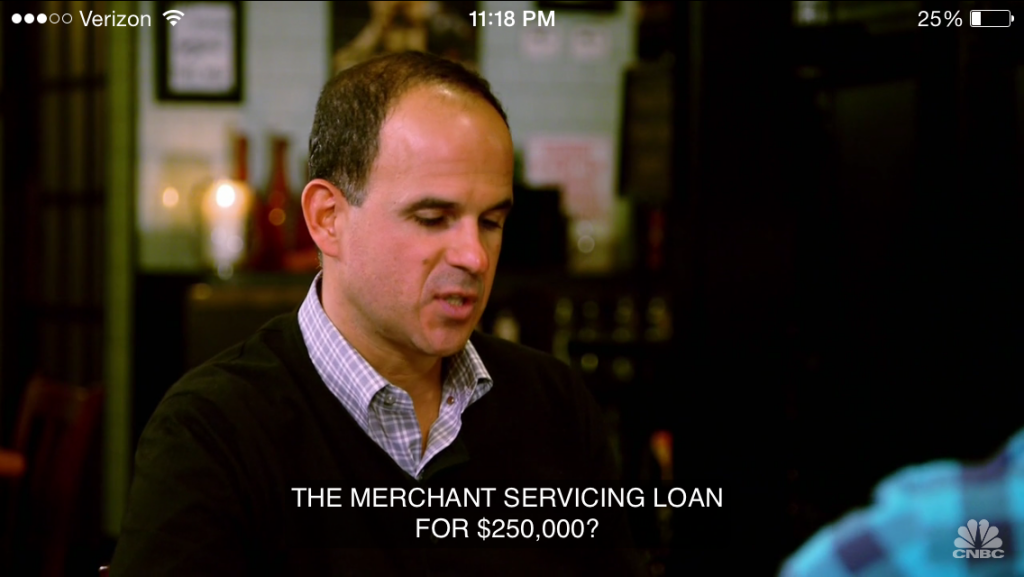
While the fintech community heralded Kabbage’s $250 million Series F round this morning, small business fixer and CNBC TV star Marcus Lemonis was not impressed.
On twitter, Lemonis wrote to Squawk Box host Carl Quintanilla, who was airing a segment about Kabbage, to say that Kabbage charged ridiculous rates. The short rant, which totaled 4 tweets, zinged Kabbage by calling them a lender of last resort and “not a friend of small business.”
Wouldn't call @KabbageInc #kabbage a lender. Ridiculous rates @carlquintanilla @SquawkAlley
— Marcus Lemonis (@marcuslemonis) August 3, 2017
Not a friend of small business. Lender of last resort with fees and rates
— Marcus Lemonis (@marcuslemonis) August 3, 2017
@SoftBank likes the high rate account sweep tactics
— Marcus Lemonis (@marcuslemonis) August 3, 2017
He should be glad I'm not there
— Marcus Lemonis (@marcuslemonis) August 3, 2017
Though Lemonis did not respond to my tweet that asked him if there were any online lenders he thought positively of, he likely is no stranger to the phenomenon. Last year, I pointed out that several small businesses that have appeared on his show, The Profit, have used nonbank alternatives.
In Season 3, Da Lobsta, a Chicago Sandwich shop, reported owing $140,000 to an internet lender and $40,000 to Square.
Square Capital, which has since traded merchant cash advances for actual loans, reported making 49,000 loans to small businesses last quarter alone for a total of $318 million. Kabbage, meanwhile, has lent $3.5 billion to more than 115,000 small businesses in their lifetime.
What Happened to Bizfi?
July 1, 2017
Update 9/22: Select assets of Bizfi including the brand and marketplace were acquired by rival World Business Lenders
Update 8/30: Credibly was selected to service Bizfi’s $250 million portfolio
This past week, Bizfi gave their remaining employees a 90-day warning notice, according to sources familiar with the matter. It was the latest wave of layoffs to hit the company over the last few months. At its peak, Bizfi, which provided capital to small businesses, employed more than 200 people. Some of those riding out their potentially last 90 days are anxiously awaiting the outcome of nonpublic negotiations to salvage parts of the company’s legacy, if it can be done at all.
It’s a bittersweet moment, according to newly former employees I spoke with, some of whom are so young they vaguely recall Bizfi’s past as both Merchant Cash and Capital (MCC) and Next Level Funding (NLF). They characterized their experience as having worked in fintech.
MCC was founded in 2005 as a buyer of future credit card sales, way before the rise of modern fintech. They later spawned affiliate company NLF, which was eventually consolidated into the newly minted Bizfi brand in 2015. In 2016, they were one of the top three largest originators of merchant cash advances. Today, they are no longer funding new business.
Overall, the company grew too fast and missed the window of opportunity to sell, observers maintain. In a CNBC interview in 2015, a Bizfi representative said that they believed securing a major equity investment would allow them to go public by 2017. Such an investment never came. And with the market cooling last year, institutional interest in the space waned and several of the industry’s better-known players were forced into a precarious position.
Bizfi held on, until recently.
I myself was the third employee of MCC, or fourth depending on who actually walked through the door first on my first day that I shared with another new hire back in 2006 (who by the way was Jared Feldman, the eventual co-founder and CEO of Fora Financial, which sold for millions to Palladium Equity Partners LLC). I was at MCC until 2008 and then worked at NLF until 2010. That means I had been gone for five years before the companies ever merged to become Bizfi and seven years before the current dilemma. Therefore I’m not able to personally comment on what exactly went wrong because the company was nowhere near the same as when I left it.
I will report new developments as they become public.
The ‘Loan’ Star State – Texas is an alternative finance nexus
June 15, 2017
We’re at Able Lending in Austin, Texas, a financial technology company occupying three floors deep in the heart of the Seaholm power plant overlooking Lady Bird Lake. The fortress-like building anchors an inner-city complex of offices and residences, chic restaurants, boutique shops, and a Trader Joe’s.
Once the main source of electricity for Texas’s capital city, the natural gas-fired boilers have given way to a warren of glassed-in offices and meeting rooms connected by angular metallic stairways and a carpeted mezzanine.
It is here, in a tiny conference room, that Will Davis, a slim man of 35 and an alumnus of Harvard Business School, is drawing a bell curve on a whiteboard. Dressed for the balmy Texas weather in tan Bermuda shorts, a black tee-shirt and Nike running shoes, the company’s chief executive and co-founder is explaining how Able’s friends-and-family lending formula “widens” the risk curve.
“We all compete here in this box on price,” Davis says, drawing a square at the topmost point of the bell curve, indicating where the near-prime borrowers abide and where lenders are crowded in pursuit. But when loans from friends and family form 10%-15% of the total loan, he says, drawing squiggly lines just to the left of the box, a cohort with less-than-stellar credits now becomes credit-worthy.
Because of the “peer pressure” and “behavioral change” exerted by the involvement of family and friends, the formula produces a “positive-selection effect on the loan portfolio” Davis says, declaring: “We can serve more of the market.”
It all sounds very business-schoolish. But here’s the bottom line: Able’s lending model sharply reduces both risk and borrowing costs, allowing it to go head-to-head with national rivals like Funding Circle, Bond Street, OnDeck and StreetShares. Thanks in large part to its reduced risk, asserts Able’s director of development, 30-year-old Matt Irving, the Austin fintech can lend twice as much money as its competitors at half the interest rate.
Since opening its doors and firing up its computers in the fourth quarter of 2014, Able’s average loan size has climbed to $231,200 from $100,000. Of that, an average of 3.2 “backers” have accounted for $40,691, or 17.6% of the average total loan amount. The average “blended” annual percentage rate is 16.41%.

Meanwhile, Able, which has made some $48 million in loans to entrepreneurs through the end of April, 2017, reports CEO Davis, is itself on sound financial footing. According to the data-services firm Crunchbase, Able has raised $12.5 million in three rounds of venture capital financing from 21 investors. Principal equity financiers are Peter Thiel’s Founders Fund, Peterson Ventures, RPM Ventures, and Blumberg Capital. On Sept. 27, 2016, moreover, Able added another $100 million to its arsenal in debt financing from Community Investment Management, a San Francisco investment firm. Borrowers include owners of food trucks and apparel shops; professionals including doctors, dentists, veterinarians, and accountants; “creatives” like public relations and advertising firms; and construction companies. Since its inception, Davis says, just one borrower has defaulted, resulting in an $85,000 charge-off.
So far in 2017, the company has lent out nearly $15 million in the first quarter, but it’s on track to make $80 million this year. “We’re ramping up,” Davis declares.
Welcome to fintech in the Lone Star State. While everything may be bigger in Texas, as the saying goes, that’s not quite true of financial technology. The geographic contours of fintech operations are roughly 60% in California (especially Silicon Valley/San Francisco), 30% New York, and 10% scattered about the rest of the country, says 40-year-old Mihir Korke, the San Francisco-based chief marketing officer at Able.
Nonetheless, Texas offers fertile ground for the burgeoning fintech industry. The vaunted Texas business climate promises a relaxed regulatory regime, the absence of either a personal or corporate income tax, and a lower cost of living. All of which were cited by Able Lending, as well as an additional pair of fintech companies that specialize in factoring and merchant cash advances: Jet Capital, located in North Richland Hills in the Dallas-Fort Worth “metroplex”; and Ironwood Finance in Corpus Christi, a port city on the Gulf of Mexico.
“What’s interesting about fintech companies is that they can choose to locate where they want to do business,” says Erin Fonte, an attorney at Dykema Cox Smith in Austin whose legal practice includes mobile payments, mobile wallets and financial technology. “They don’t necessarily get a regulatory advantage because much of what they do is based on their customers’ location,” says Fonte, who is currently serving as a member of the Federal Reserve’s Faster Payments Taskforce. “That said,” she adds, “some companies have chosen to locate in Texas because of the labor and talent pool, because it’s a good source of venture capital, and it’s more affordable.”

Jet Capital’s 42-year-old chief executive, Kenneth Wardle, confirms many of Fonte’s observations. “So far, Texas has been friendly to MCA companies,” he says, using the initials for “merchant cash advance.” Especially favorable to his industry is the fact that “Texas regulators do not define an MCA as a loan,” he adds.
Prior to co-founding Jet Capital with chief operating officer Allan Thompson, 49, Wardle served as a portfolio manager at Exeter Finance Corp, a $3 billion company in nearby Irving which specializes in subprime auto financing. Wardle has also held leadership positions at AmeriCredit Corp., now GM Financial, and Drive Financial, now Santander Consumer USA.
His 20-year background has included the gritty work of repossessing cars when owners fell into arrears on their auto loans. “Most of my career in auto finance was in risk management and I’ve driven a repo truck,” he says. “You take off with the car right away and then chain it down after you’ve gone a couple of blocks so you don’t lose it out on the highway.”
Backed by more than $5 million in equity financing from a family office in Puerto Rico, Jet Capital makes cash advances of $25,000-$30,000, on average, for working capital.
The sweet spot for Jet’s financings are retail establishments, trucking companies, hair-and-nail spas, and medical doctors. Doctors in particular are prime candidates for a Jet cash advance. “They have a pretty good gap between when they perform services and when they get paid by insurance companies” during which they have to cover payroll expenses and overhead, Wardle notes. Prospecting for customers is done largely through independent sales offices, direct mail, and pay-per-click services offered by Google, among additional online channels.
“Our defaults are relatively in line with expectations” and were largely confined to the first year of business, Wardle says. “We made some underwriting and verification changes last September and October,” he adds, “and we changed our minimum credit scores. Since then we’ve seen defaults migrate in the right direction.”
 Since Wardle and Thompson took occupancy of an empty office outside Fort Worth in October, 2015, Jet has grown to 12 employees who today have “a variety of roles” says Thompson, citing sales, underwriting, customer service, collections, analytics, and information technology. “They wear a lot of hats and there’s a lot of cross pollination,” he says.
Looking ahead, Wardle foresees Jet expanding its product line beyond merchant cash advances to offer lines of credit and installment loans. “Our goal is to be a one-stop, nonbank financing solution,” Wardle says.
Kevin Donahue, 37, owner of Ironwood bootstrapped the South Texas company, which opened in 2013 using personal savings of $1.5 million remaining from the sale of mobile home parks in South Dakota and Texas. He also plowed earnings into Ironwood from a subsequent job as a commercial loan broker.
Donahue, who grew up in a family of fishermen on the Oregon and California coasts and is a 2006 graduate of California Polytechnic State University at San Luis Obispo, says that he turn up in Corpus Christi somewhat by accident. While operating the mobile home park in nearby Kingsville, he got married, started a family, and put down roots.
With 20 employees, Ironwood focuses on providing merchants cash advances in the $5,000 – $50,000 range, Donahue says, “but we can go up to $1 million.” The average cash advance – usually $10,000-$15,000 – is put to use as working capital by what he dubs “Main Street” businesses: restaurants, boutiques, trucking and transportation companies, professionals, and contractors. Ironwood charges clients factoring fees that are collected via ACH.
“Many times (these businesses) don’t qualify for bank loans,” Donahue says. And even when they do qualify, he notes, “banks take forever – up to three months – while we’re using our own money and can do it in three days. We’re very low on requiring a lot of documents.”
For his part, Donahue wants to see a customer’s bank statements, a photo I.D., voided checks, and a financial report. But, he says: “Cash flow is much more important than financials.”
Clients typically find their way to Ironwood through the website, although they often arrive through referrals from brokers and real estate agents, attorneys, accountants and “anyone doing commercial lending,” he says. Donahue says he closed down a call center. “The way to get leads is more through relationships than marketing,” he says.
Trucking companies are important customers. “They work on thinner margins, the barriers to entry are lower, sometimes their customers don’t pay their bills,” Donahue says of the industry’s economics. “They have huge expenses for fuel, payroll, insurance – and they might not get paid (by their customers) for 30 days or more.”
Ironwood’s advance for a million dollars, cited earlier, was made to a trucking company in Midland, Texas, which hauled both general freight and oilfield equipment. The money was put to use both to smooth out cash flow and as growth capital. The trucking concern “used part of that for expansion, making down-payments with Volvo or Peterbilt,” Donahue recalls.

Backstopped by the titles for 18 trucks valued at roughly $1.5 million, the deal was structured as a three-year, sale-leaseback agreement with “no interest” but rather a fee, Donahue says. Payments were $32,000 monthly, he says, amounting to $152,000 above the advance.
Donahue has no trouble justifying the steep fee schedules. Not only does he release money quickly but in many instances Ironwood has stepped in to bail out businesses that could have gone belly-up. He cites a trucker in the Midwest who had a “very lucrative” business hauling Boeing jet engines worth $30 million to Seattle where they could be worked on and returned to the planes for installment. In order to fulfill the contracts – which earned the hauler $25,000 monthly — the trucking company’s owner needed to purchase pricey insurance.
The owner, however, “had horrible credit,” Donahue says, largely the result of cash flow problems after investing in a special trailer for the jet engines, compounded by a messy divorce. To secure the $10,000 for the special insurance, the trucker sold Ironwood $14,000 of their future receivables. “For his investment of $4,000 he’s making $25,000-a-month forever,” Donahue explains.
Back in Austin, Able is gearing up for another round of capital-raising to bulk up staff and, according to Korke, win licensing to do business in California. At the same time, its friends-and-family credit structure is winning kudos for reaching what researcher David O’Connell calls “the unloaned.”
 A senior analyst at Aite Group, a Boston-based consulting firm, O’Connell recently completed a study disclosing that 35% of small and medium-sized businesses in the U.S were unable to obtain credit over a recent two-year period. Able’s lending model is “a good example of using covenants to structure a deal that brings down borrowing risk,” the Bostonian says. “It’s terrific.”
Able’s staff doesn’t have to travel far to witness the fruits of their efforts. On Congress Avenue, in the heart of downtown Austin, is Jae Kim’s food truck offering Korean barbecue thanks to a $100,000-plus loan from the fintech lender. Kim, the founder and chief executive at food vendor Chi’lantro, enlisted his mother to pitch in $10,000. All told, family and friends ponied up 30% of the total loan.
In the three years since he hooked up with Able, Kim has gone on to bigger things, including a television appearance last November on Shark Tank that netted him $600,000 from celebrity investor Barbara Corcoran.
Chi’lantro is now operating five restaurants and four food trucks and as Kim disclosed on Shark Tank, annual sales topped $4.7 million last year.
Able Funds Chi'Lantro from Able Lending on Vimeo.
In an interview, he told AltFinanceDaily that he counts himself fortunate to have gotten the Able “micro-loan.” It played a key role in generating the cash flow that qualified his company for a $200,000 bank loan backed by the Small Business Administration. “It was one of many opportunities, and now we have good relationships with banks,” he says.
And then, a little farther south, there’s Stephanie Beard’s “esby apparel,” a women’s clothing boutique named for her initials. Beard, 35, came to Austin in 2013 after a decade in New York designing men’s clothing at Tommy Hilfiger and Converse. Originally from North Carolina and a graduate of Appalachian State University, she had zero connections in Texas and only a little money.
But she had a big vision: She would open a store and design and sell top-quality, flattering clothes for women that had “a menswear mentality.” Men, she had discovered, buy fewer clothes than women. But men tend to buy clothes that are durable, clothes that they can wear again-and-again over many years. After she sold $65,000 worth of her casual clothing line on the website Kickstarter, Beard developed a fan base and was put in touch with Able. “Actually, they contacted me,” she says.
To qualify as an Able borrower, Beard assembled $20,000 from friends and family, she reports, including $2,500 from her future mother-in-law, another $2,500 from the proprietor of a dress shop that “wholesaled” her collection, and the rest from aficionados of her wares. Once that money was gathered, Able lent her $100,000 at a 10% APR in October, 2014, which enabled her to open her shop. The combined interest rate was 9.8%. Monthly payments have automatically been withdrawn from her business’s checking account.
She’s scheduled to repay both Able and her backers in full by this October. Total sales for the shop have cleared $1 million and Beard expects annual revenues for 2017 to hit $900,000. “A lawyer friend who helped me out with the paperwork pro bono told me that Able was practically giving money away,” she says. “I definitely was lucky.”
Another NY Supreme Court Judge Casts Doubt On The MFS – Volunteer Pharmacy Case
June 10, 2017Just as an Orange County, NY judge found in Merchant Funding Services, LLC v. Micromanos Corporation d/b/a Micromanos and Astsumassa Tochisako that a uniquely structured merchant cash advance was not a criminally usurious loan, so too did the Honorable Maria S. Vazquez-Doles on June 8th, court records reveal. Vazquez-Doles, who also presides in Orange County, concurred that the attorney representing defendants in Yellowstone Capital LLC v M N B Waterford LLC d/b/a MAC N’ Brewz! Mac N.Cheez! LLC d/b/a Mac N’Cheez! Somerset and Gary E Sussman, misquoted the contract’s language in their motion papers to suit their argument that the agreement was in fact a loan. In her decision, she referred to defendants’ attempt to twist the words as “incomplete and palpably misleading.”
“The Agreement is not on its face and as a matter of law a criminally usurious loan,” she held.
This is the second judge to opine that the decision in Merchant Funding Services, LLC v. Volunteer Pharmacy Inc. was premised on the opposition palpably misquoting an addendum to the contract in their motion papers. The first was the Honorable Catherine M. Bartlett last month.
The weight of the Volunteer Pharmacy case to a cottage industry of attorneys hoping to argue that merchant cash advances are disguised loans, is rapidly declining. The actual language of the these particular contracts has now twice exonerated the merchant cash advance companies.
The Yellowstone case decided on June 8th is filed under Index Number: EF001264-2017.