SoFi Says it is Working With SMB Finance Companies
May 10, 2022 SoFi may not exactly be in the small business lending market per se, but a digital payments company it acquired in April 2020, Galileo, has been put to good use.
“Galileo continues to expand its client base to include B2B and enterprise clients as adoption of modern cloud-based digital payments and banking has opened up new verticals and client types, use cases and opportunities,” said SoFi CEO Anthony Noto during the company’s Q1 earnings call. “For example, we launched two new clients in the first quarter that offer innovative working capital models for B2B and small- to medium-sized businesses.”
Noto said that they were not naming specific names at this time. “We will announce those [names] in conjunction with our partners as opposed to during our earnings call, but that’s increasingly a big channel for us, and we have a product pipeline to better serve the enterprise and SMB space holistically based on the demand we are seeing.”
SoFi reported a Q1 net loss of $110M, which it said was an improvement over the $177.6M net loss it recorded during the same period last year.
Women Discuss Strategies to Grow Their Businesses
March 30, 2022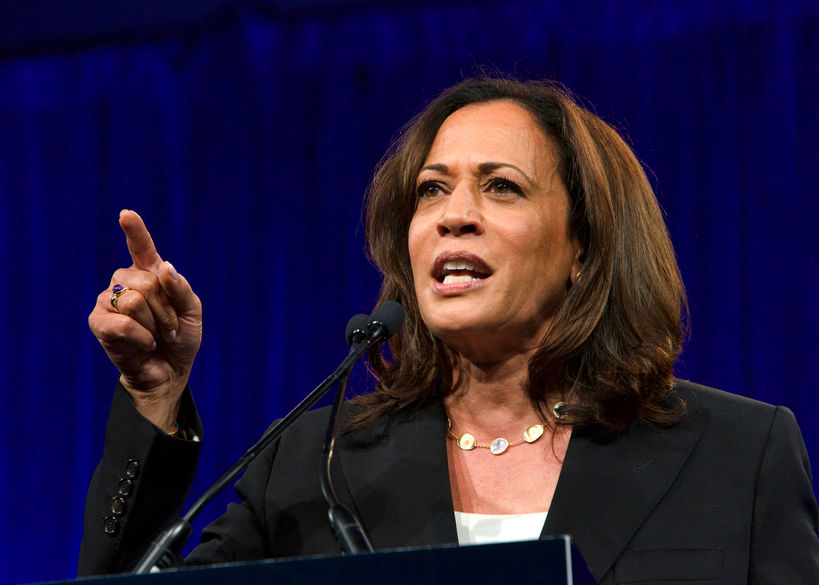 The U.S. Small Business Administration (SBA) held its 2022 Women’s Business Summit this week. The summit was a two-day event that consisted of virtual panels, workshops and fireside chats. The event was held in co-sponsorship with the Nasdaq Entrepreneurial Center.
Remarks were made by United States Vice President Kamala Harris, along with other notable panelists. Harris stated, “Women small business owners power the economy of our nation.”
“Women small business owners face many unique challenges, many lack access to paid leave, affordable child care and the capital to grow,” Harris made clear.
Harris noted, “Through SBA we have opened women business centers in every state of our country, 141 in total.” These centers connect women business owners with the tools and resources to succeed. Kamala later declared that the fight to pass legislation for women for affordable child care and paid leave will continue.
During the Innovation and Investment panel, Marianne Markowitz, CEO of First Women’s Bank, discussed how there is a gender gap in the lending market.
“We launched last year as the only women-founded, women-owned bank in the country that’s focused on closing the gender lending gap at a national level,” said Markowitz.
 Women only receive 2% of all the investments in America. Markowitz discussed that women are being introduced to the wrong loans and capital. Many women are relying on personal credit and sometimes lean on equity at the wrong stage of their business. Markowitz provides women with the proper education to make the right choice, fully understand and be prepared for when they apply for loans.
Mekaelia Davis, Director of Inclusive Economies, Surdna Foundation, explained how the consolidation of the banking industry has removed a great amount of financial institutions. This has had a negative impact on relationships with financial partners, leading to more predatory actions online taking the place of financial institutions.
“New York City Small Business Founder Collective estimated there is nearly annually $45 billion of unmet capital, most demand coming from Bronx, Eastern Brooklyn, Queens,” according to Davis.
Susan Au Allen, CEO and National President of the U.S. Pan Asian American Chamber of Commerce explained that even if women are educated they are not aware of all of the services that the SBA offers.
“For the Asian American community and the women community it is a structural problem, a systemic structural obstacle that we have faced,” Allen asserted.
The Associate Administrator of SBA’s Office of Investment and Innovation, Bailey DeVries, described what they have done for small business, “We have provided over $100 billion worth of small business through the SBIC program and currently manage over $34 billion worth of assets through those partnerships.”
The summit provided women with an opportunity to become further educated on how to succeed in their small businesses.
Five Takeaways from Q2’s Helix Launch Event
March 8, 2022Q2, a fintech that works to digitize large banks, hosted a launch event at the New York Stock Exchange last week for Helix, the company’s new [Banking as a Service] BaaS platform that intends to humanize fintech by tailoring products to specific user needs. Attended by Q2 clients and employees from across the fintech and crypto space, the event celebrated a legacy financial company making a push into the next dimension of finance.
Below are five initial takeaways from the event-
 Finance Needs a Face- Humanizing finance is the focus of Helix’s brand. By creating a human approach in their practices both internally and externally, the company is attempting to tailor financial services and products on an individual basis. The Helix employees AltFinanceDaily spoke to seemed genuinely invested in defining the line between the human touch and innovating redundancy. Even the innovators themselves believe that a personal touch needs to a part of the marketing, selling and maintaining a service-based financial product.
Big Changes to Banking are Coming- There is an underlying narrative that fintech is building the infrastructure to support different types of value propositions from large financial institutions. As banks can no longer promise interest rates to provide a benefit from holding money in their accounts, many are beginning to get into financial education, guidance, and leveraging data to create personalized budgets, analyze spending habits, and offer money-saving tips. Rather than just be a place where consumers keep their money, look for banks to leverage fintech and data to create different types of services for their customers.
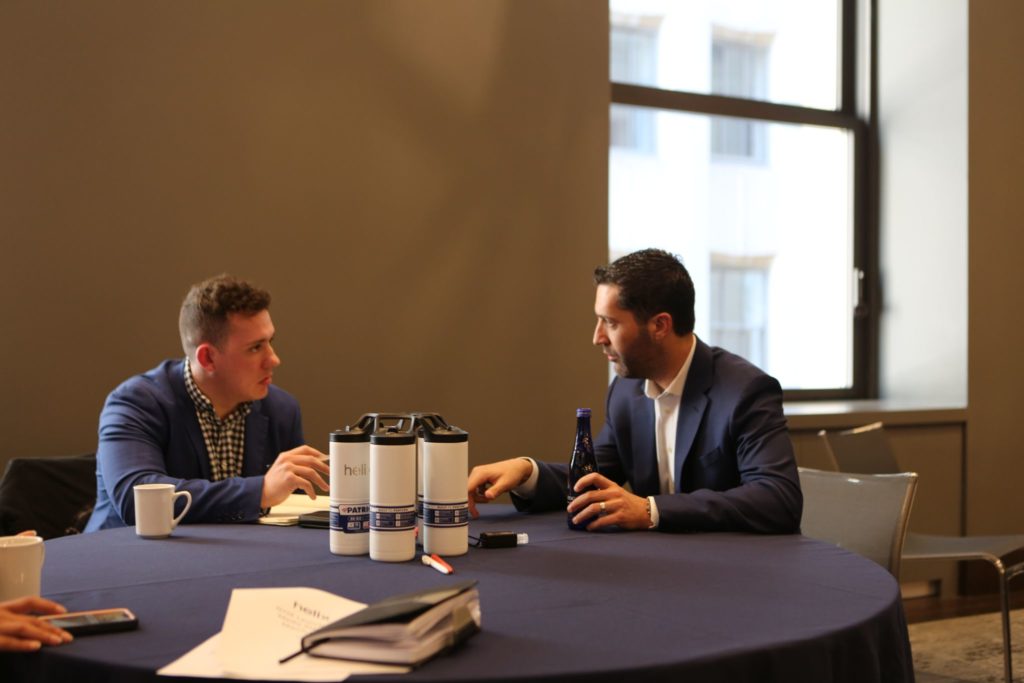 Above: AltFinanceDaily Reporter Adam Zaki speaks with Jonathan Price, Executive Vice President of Emerging Businesses, Corporate & Business Development at Q2
If You’re not Hybrid, You’re Doomed- Fintech companies as a whole, especially those attended by this event, always speak on the idea of creating a work environment that is as innovative as their products. By allowing employees to work fully remote, hybrid or in office at their own accord, all of the companies there have drastically improved company culture and employee retention. Not only does this open up the hiring pool outside of geographic restrictions, but these fintechs are able to hire experienced employees from around the industry who are leaving jobs they enjoy solely because they work for companies that demand work in the office to be full-time. According to executives of both Helix and Q2, they have seen production, communication, engagement and revenue increase as a result of giving employees a choice on where to work.
One executive actually laughed at the idea of employers demanding employees be in person for any type of job in fintech. “CEOs and executives that make employees show face for the sake of it will never survive in this industry,” said one executive from Helix.
New York Hasn’t Lost its Reputation- As many of the people who attended the event flew in from out of state, it appears that an out-of-towners’ look on New York City hasn’t changed much despite contrary belief since the pandemic. When asked about why the event was being held in Manhattan, those there believed that it was a no-brainer to have it in what they still believed to be the ‘main hub’ of finance. Even when discussing their individual excursion plans with whatever free-time they had left in the area after the event, attendees of the event seemed pumped to be able to checkout whatever spots they could around New York City.
Crypto Needs Regulation before Implementation- The biggest pushback attendees of the event expressed when it came to the crypto space was a lack direction when it comes to regulation. Banks and large financial institutions are aware, educated, and eager to begin widespread implementation of digital assets and financial products that use them, but are waiting for the government to show signs of life when it comes to regulation of the space. Until the government says how crypto will operate, no large scale financial institution will invest both time and money into creating new products around it.
With Latest Merger, Walmart is Set for its Launch into Financial Services
February 2, 2022 Walmart-backed fintech startup Hazel announced that it plans to acquire the fintechs Even and ONE, setting the stage for Walmart to open up financial services and products to its 1.6 million U.S. associates and 100 million plus customers. The company plans to bring on Omer Ismali as CEO of the merger under the ONE brand.
Ismali climbed the ladder at Goldman Sachs in both investment and consumer banking prior to becoming the CEO of a NewCo backed by Ribbit Capital, the leading investor in Hazel.
“Consumers everywhere are being left behind by the world of financial services,” said Ismail. “Our vision is clear, build on Even and ONE’s success to offer a product that offers consumers the best way to spend, the best way to access their wages, and helps millions save and grow their money. I’m looking forward to partnering with two stellar leaders in Brian and David to improve the financial lives of tens of millions of consumers.”
David Baga and Brian Hamilton are the former CEO and Co-founder of Even and ONE respectively. The two will remain in leadership roles at ONE according to a press release from Walmart.
The merger will form a company of over 200 employees whose CEOs and upper management will also remain in lateral positions. The release also says that ONE will get their balance sheet stuffed with $250M to “fund future growth.”
“Walmart is constantly looking for new ways to deliver on our core mission of helping our customers save money and live better,” said John Furner, President and CEO of Walmart U.S. and board member of the reemerged ONE. “Customers have made it clear that they want more from us in the financial services arena.”
“Creating a simple, personalized app that allows users to manage their money in ONE place is the natural next step toward fulfilling that,” Furner continued.
Judging by the release, it looks as if Walmart is planning to market this both internally and externally. As America’s largest employer, they could easily become a player in financial services if they hosted the technology to manage the accounts of their employees alone.
Furner spoke further on the intentions of Walmart to offer up financial services to the seemingly underbanked. “We couldn’t be more excited about what this will mean for Walmart customers, associates and consumers everywhere as we try to help empower millions to improve their financial lives.”
Codat’s Partnership with Moody’s Brings Real-Time Merchant Accounting Data to Lenders
January 10, 2022 Codat and Moody’s Analytics are partnering to bring the fintech’s API software into Moody’s CreditLens solution. The move will enable Moody users looking to fund small businesses the ability to access and manage all of the accounting data for the respective merchant looked to be funded.
Along with an effort to increase efficiency in the approval and funding processes, both companies seem to hope that the partnership will also improve access to capital for small businesses across the US.
“We find ourselves in a time of rapid change, where new approaches to financing and technology are becoming increasingly important to small businesses,” said Peter Lord, CEO & Co-Founder of Codat . “Moody’s Analytics has impressive global scale and reach, so this partnership holds the potential to meaningfully reverse the credit crunch facing SMEs while opening up new profitable lines of business for financial institutions.”
“Together we will be able to extend the benefits of Codat’s two-way flow of financial data to more lenders and financial institutions, allowing them easier access to a wider data set to make high-quality, data-driven credit decisions,” said Lord.
CreditLens is a “credit lifecycle management solution” with access to large amounts of data from across the lending space. Codat’s software will enhance data transferring in the CreditLens platform by offering real-time accounting data on merchants that is instantly accessible by Moody users.
“We are excited to welcome Codat as a new accounting data aggregation technology partner to boost the value of Moody’s Analytics lending solutions,” said Eric Grandeo, Product Head for Moody’s Analytics Lending Solutions.”Codat provides a seamless interchange of real-time data to enable valuable credit insights and predictive capabilities.”
“We are both dedicated to helping financial service businesses gain [a] deep understanding of their client’s risk and behavior, and make better decisions based on real-time accounting, banking, and commerce data,” Grandeo continued. “Ultimately, the partnership will afford small businesses across the U.K and U.S. access to more credit options, opportunity and growth.”
Study Finds Fintech Puts Customer Rentention on the Clock with Biometrics
October 21, 2021 Onfido and Okta, a verification authenticity company and an independent identity provider, respectively, found that consumer-based businesses —regardless of industry—need to earn their customer’s trust in no longer than ten minutes or risk losing their business altogether.
According to the report, 65% of customers who want to open a bank account want the process to be less than ten minutes, 69% when booking a car rental, 72% when opening a telemedicine account, and 77% when registering a gaming account, among other industries.
“From the moment a consumer visits a service provider’s website or downloads an app, they’re evaluating whether the business can deliver a trusted digital service, providing security and keeping their data private,” says Mike Tuchen, CEO of Onfido. “Businesses have just minutes to establish the confidence that consumers expect in the digital world. Those that can offer low or zero friction during verification and authentication will positively differentiate themselves in a market where digital services have become the norm and consumer trust breeds brand loyalty.”
After surveying 5,000 consumers from across the United States and Europe, the companies found that the moment the onboarding process begins in a virtual space, customers aren’t looking to spend much time putting information into a database to complete their transaction. The study found that customers felt that brands should know and trust them, while also having a strong desire for a seamless verification process rather than a fraud-preventing rigorous one.
Half of consumers expect that it should take less than three minutes to approve a banking transaction (49%) or place a bet (48%), and approximately 1 in 3 (35%) consumers believe it should take the same time to fill prescriptions.
Those consumers that were evaluated also desired to have companies recognize them on multiple devices, which just a third of responses claimed businesses currently do. 70% of customers claimed they “suffered” from a lack of an efficient digital process in a business transaction. Biometrics, according to the study, will be a way to solve these inefficiencies in the authentication and transactional software space.
In a blog post that accompanied the release, Onfido broke down the confidence that consumers have in Biometrics in the marketplace. According to them, 80% of customers have confidence in both the convenience and security of Biometrics.
“Let’s say you’ve verified an identity document. You need Onfido’s biometric technology to verify that the document truly belongs to the person making the transaction. So biometrics adds a layer of protection against stolen IDs and impersonation attacks,” the blog reads.
“Ensuring that digital account onboarding and access meets users’ expectations for speed, experience and security will require many businesses to reassess their identity platform requirements,” says Ben King, Regional Chief Security Officer, Okta. With biometric recognition putting identity at the heart of the authentication process to offer a robust yet seamless experience across any and every device, it is little surprise that consumers worldwide are increasingly opting for it in place of traditional passwords or in-branch verification checks.”
Facebook is Buying Invoices, But is it Factoring?
October 8, 2021 After Facebook announced Facebook Invoice Fastrack, a program that would allow the company to enter the invoice factoring business effective October 1st, few knew what to expect.
“My gut tells me here that Facebook is not all of the sudden getting into the lending business,” said James Cretella, Partner at Ottoburg LLC and guest speaker at the IFA conference last Spring. “Big tech is seeing the information symmetries, especially in small business lending. It’s very fragmented, and [tech] is trying to exploit that to bring down the cost, and to consolidate that industry,” he said.
Cretella expressed a positive outlook on Facebook’s entrance into the factoring sphere. “I think it’ll be a very good thing for small businesses when big tech gets involved.”
Others believe that big tech is doing pseudo-funding in an effort to break into the space and improve their public image. “There’s always a question when big tech or similar big anything’s get into factoring,” said Robert Zadek, Of Counsel for Buchalter and CEO of Lender’s Funding. “They might call that factoring, but it’s not. It’s a fake factoring product. Fake in the sense that it’s only part of what factoring is,” Zadek said.
Since then Facebook has revealed its program partners, Supplier Success and Crowdz.
The major component here is whether or not Facebook is doing the standard operating procedures of a factoring company, or just purchasing invoices owed. “They’re probably not filing a financing statement a UCC-1, because that takes a long time, and [tech] likes fast,” Zadek said. “Filing is slow and almost manual.”
Without going through the processes of a factoring company, Facebook may just be banking on the good faith of borrowers to pay and eating the costs of those who don’t. “[Facebook] is left with an earned 1% fee with no work, which would be profitable if they get back. If they don’t it’s like a write off,” said Zadek.
According to a Facebook announcement, the company has already practiced factoring with a handful of small businesses, claiming that the program has successfully helped these select businesses grow, even giving some businesses opportunities to just keep their doors open.
 We wanted to make a commitment to building tools that made information and inclusive funding partners easy to find and understand,” said Ronnie Cameron, Product Manager, Social Impact at Facebook. “We’ve been able to engage with some amazing [organizations]. The pandemic brought to light the gaps in access to funding that have always existed for underrepresented business owners.”
Facebook is positioning itself in a way that appears that the company is providing an exclusive service to a community who had already been underserved prior to the pandemic, and now, according to them, needs help more than ever before. As the company has had a tough time maintaining a positive image to the public, this could also just be a slightly profitable way to fix their public perception.
Zadek compared tech’s entrance into funding to when MCAs began competing with Factoring Companies. “Instead of whining about MCAs, why don’t you give the client more money?,” he asked his predominately factoring audience when they would complain to him about MCAs. “The MCAs don’t have a death wish,” he told his audience. “They are giving money because they believe they are going to be paid back.”
Sticking to the notion that Facebook’s take on factoring is different from what his industry does, Zadek summed up his take on Facebook’s announcement.“They’re not doing factoring, they’re doing something that has little pieces of factoring in it.”
Fintech Company Launching Money Managing App with Big Incentives
September 29, 2021 The fintech company Enzo is set to launch a money managing app within the end of the year and is handing out tremendous incentives to draw customers. The company is offering 10% cash back on Uber rides, 5% cashback on Doordash, 1.5% cashback on rent payments, and 1.25% cashback on everything else. Checking accounts offered by Enzo will also get a 0.50% interest rate.
Enzo’s cashback program has its limits. Annual cashback bonuses are capped at $500, and monthly cashback bonuses are capped at $65. According to their site, if a user spends $2,000 on rent, $150 on Uber, and $400 on DoorDash in one month, they would be credited $65 at the end of the month into their Enzo checking account. Once the monthly and/or annual cap has been triggered, an account will continue to earn 1.25% cashback on all other purchases.
“We started Enzo because we kept seeing our friends make the same money mistakes over and over,” said Jeremy Shoykhet, CEO of Enzo. “We saw people who excelled at every aspect of their lives struggling to get their finances in order [and] we felt there had to be a better way.”
Enzo will also be offering their first batch of account holders equity in the company.
“We feel very strongly about helping our members build and steward wealth,” said Shoykhet when asked about the company’s equity offer. “In connection with that mission, we are launching a first of its kind equity program where we will be giving equity to early evangelists of the Enzo brand, more information about the specific mechanics of the program will be available toward year-end,” he said. “The program does not require opening an Enzo account and is subject to terms and conditions.”
The company also has a stock trading interface within its mobile app, so customers can manage liquid cash and investments in the same place. According to Enzo’s website, customers can automatically track gains, dollar cost average over time, customize portfolios, and manage checking accounts all in the Enzo app.
“At our core, we want to help the millennial generation build the financial foundations that help them live the lives they desire,” Shoykhet said.
The company’s banking services will be FDIC insured through Blue Ridge Bank, who will hold all the money and process the transactions. They are also partnered with Unit for the backend technology in the software. Customers will have access to funds in their checking accounts with an Enzo debit card, which will be uniquely designed by artists for the first ten thousand account holders.
Enzo’s webpage claims that their inaugural staff is a “diverse team of veteran Wall Street investors, engineers, operations, and product folks.” They claim to have gathered top level employees from some of the top financial institutions around the globe.
Enzo’s accessibility and seemingly user-friendly software combined with their incentives for account holders portrays a very interesting notion in non-bank finance. Customers are looking for an easy to use, easy to understand, and easy to access multi-platform money management system with perks and incentives.
Enzo has a waiting list approaching 14,000 potential account holders as of Wednesday. As of now, according to Shoykhet, the program will launch as invite-only. They will add new customers into the program on a rolling basis.
This may not be the end of new financial services for Enzo, according to Shoykhet. He hinted to the company’s future plans in his explanation of the product. “We are also planning to launch innovative financial planning features through a mix of human advice [and] technology-powered advice.”