
Has PayPal Eclipsed OnDeck in Small Business Loans?
April 26, 2019
It’s been said that Kabbage is on pace to surpass OnDeck in small business loan originations, but PayPal has already done it.
When PayPal announced a working capital program in the Fall of 2013, few were predicting that the initiative would propel them to the top of the small business lending charts. Just two years later, however, the payment processing giant had already loaned more than $1 billion to small businesses.
Today, that number is over $10 billion, according to a comment made by PayPal CEO Dan Schulman on the company’s Q1 earnings call.
That figure would suggest that they had loaned approximately $9 billion from Fall 2015 to the end of Q1 2019. OnDeck, by comparison, loaned $7.5 billion since Fall 2015 through Q4 2018. Several other data sources, including previous statements from PayPal that they had surpassed more than a billion dollars in quarterly small business funding in 2018 (already more than OnDeck), indicate that PayPal has become #1 on the AltFinanceDaily small business funding leaderboard.
PayPal’s growth was helped in part by its acquisition of Swift Capital in 2017.
Two of the top four are payment processors:
| Company Name | 2018 Originations | 2017 | 2016 | 2015 | 2014 | |
| PayPal | $4,000,000,000* | $750,000,000* | ||||
| OnDeck | $2,484,000,000 | $2,114,663,000 | $2,400,000,000 | $1,900,000,000 | $1,200,000,000 | |
| Kabbage | $2,000,000,000 | $1,500,000,000 | $1,220,000,000 | $900,000,000 | $350,000,000 | |
| Square Capital | $1,600,000,000 | $1,177,000,000 | $798,000,000 | $400,000,000 | $100,000,000 | |
| Funding Circle (USA only) | $500,000,000 | |||||
| BlueVine | $500,000,000* | $200,000,000* | ||||
| National Funding | $427,000,000 | $350,000,000 | $293,000,000 | |||
| Kapitus | $393,000,000 | $375,000,000 | $375,000,000 | $280,000,000 | ||
| BFS Capital | $300,000,000 | $300,000,000 | ||||
| RapidFinance | $260,000,000 | $280,000,000 | $195,000,000 | |||
| Credibly | $180,000,000 | $150,000,000 | $95,000,000 | $55,000,000 | ||
| Shopify | $277,100,000 | $140,000,000 | ||||
| Forward Financing | $125,000,000 | |||||
| IOU Financial | $91,300,000 | $107,600,000 | $146,400,000 | $100,000,000 | ||
| Yalber | $65,000,000 |
*Asterisks signify that the figure is the editor’s estimate
Online Loans You Can Take To The Bank
April 16, 2019
OnDeck, the reigning king of small business lending among U.S. financial technology companies, is sharpening its business strategies. Among its new initiatives: the company is launching an equipment-finance product this year, targeting loans of $5,000 to $100,000 with two-to-five year maturities secured by “essential-use equipment.”
In touting the program to Wall Street analysts in February, OnDeck’s chief executive, Noah Breslow, declared that the $35 billion, equipment-finance market is “cumbersome” and he pronounced the sector “ripe for disruption.”
While those performance expectations may prove true – the first results of OnDeck’s product launch won’t be seen until 2020 – Breslow’s message seemed to conflict with OnDeck’s image as a public company. Rather than casting itself as a disruptor these days, OnDeck emphasizes the ways that its business is melding with mainstream commerce and finance.
 Consider that the New York-based company, which saw its year-over-year revenues rise 14% to $398.4 million in 2018, is collaborating with Visa and Ingo Money to launch an “Instant Funding” line-of-credit that funnels cash “in seconds” to business customers via their debit cards. With the acquisition of Evolocity Financial Group, it is also expanding its commercial lending business in Canada, a move that follows its foray into Australia where, the company reports, loan-origination grew by 80% in 2018.
Perhaps most significant was the 2018 deal that OnDeck inked with PNC Bank, the sixth-largest financial institution in the U.S. with $370.5 billion in assets. Under the agreement, the Pittsburgh-based bank will utilize OnDeck’s digital platform for its small business lending programs. Coming on top of a similar arrangement with megabank J.P. Morgan Chase, the country’s largest with $2.2 trillion in assets, the PNC deal “suggests a further validation of OnDeck’s underlying technology and innovation,” asserts Wall Street analyst Eric Wasserstrom, who follows specialty finance for investment bank UBS.
“It also reflects the fact that doing a partnership is a better business model for the big banks than building out their own platforms,” he says. “Both banks (PNC and J.P. Morgan) have chosen the middle ground: instead of building out their own technology or buying a fintech company, they’ll rent.
 “J.P. Morgan has a loan portfolio of $1 trillion,” Wasserstrom explains. “It can’t earn any money making loans of $15,000 or $20,000. Even if it charged 1,000 percent interest for those loans,” he went on, “do you know how much that will influence their balance sheet? How many dollars do think they are going to earn? A giant zero!”
Similarly, Wasserstrom says, spending the tens of millions of dollars required to develop the state-of-the art technology and expertise that would enable a behemoth like J.P. Morgan or a super-regional like PNC to match a fintech’s capability “would still not be a big needle-mover. You’d never earn that money back. But by partnering with a fintech like OnDeck,” he adds, “banks like J.P Morgan and PNC get incremental dollars they wouldn’t otherwise have.”
The alliance between OnDeck and old-line financial institutions is one more sign, if one more sign were needed, that commercial fintech lenders are increasingly blending into the established financial ecosystem.
Not so long ago companies like OnDeck, Kabbage, PayPal, Square, Fundation, Lending Club, and Credibly were viewed by traditional commercial banks and Wall Street as upstart arrivistes. Some may still bear the reputation as disruptors as they continue using their technological prowess to carve out niche funding areas that banks often neglect or disdain.
Yet many fintechs are forming alliances with the same financial institutions they once challenged, helping revitalize them with new product offerings. Other financial technology companies have bulked up in size and are becoming indistinguishable from any major corporation.
Big Fintechs are securitizing their loans with global investment banks, accessing capital from mainline financial institutions like J.P. Morgan, Goldman Sachs and Wells Fargo, and finding additional ways — including becoming publicly listed on the stock exchanges – to tap into the equity and debt markets.
 One example of the maturation process: through mid-2018, Atlanta-based Kabbage has securitized $1.5 billion in two bond issuances, 30% of its $5 billion in small business loan originations since 2008.
In addition, fintechs have been raising their industry’s profile with legislators and regulators in both state and federal government, as well as with customers and the public through such trade associations as the Internet Lending Platform Association and the U.S. Chamber of Commerce. Both individually and through the trade groups, these companies are building goodwill by supporting truth-in-lending laws in California and elsewhere, promoting best practices and codes of conduct, and engaging in corporate philanthropy.
Rather than challenging the established order, S&P Global Market Intelligence recently noted in a 2018 report, this cohort of Big Fintech is increasingly burrowing into it. This can especially be seen in the alliances between fintech commercial lenders and banks.
“Bank channel lenders arguably have the best of both worlds,” Nimayi Dixit, a research analyst at S&P Global Market Intelligence wrote approvingly in a 2018 report. “They can export credit risk to bank partners while avoiding the liquidity risks of most marketplace lending platforms. Instead of disrupting banks, bank channel lenders help (existing banks) compete with other digital lenders by providing a similar customer experience.”
It’s a trend that will only accelerate. “We expect more digital lenders to incorporate this funding model into their businesses via white-label or branded services to banking institutions,” the S&P report adds.
Forming partnerships with banks and diversifying into new product areas is not a luxury but a necessity for Fundation, says Sam Graziano, chief executive at the Reston (Va.)-based platform. “You can’t be a one-trick pony,” he says, promising more product launches this year.
Fundation has been steadily making a name for itself by collaborating with independent and regional banks that utilize its platform to make small business loans under $150,000. In January, the company announced formation of a partnership with Bank of California in which the West Coast bank will use Fundation’s platform to offer a digital line of credit for small businesses on its website.
 Fundation lists as many as 20 banks as partners, including most prominently a pair of tech-savvy financial institutions — Citizens Bank in Providence, R.I. and Provident Bank in Iselin, N.J. — which have been featured in the trade press for their enthusiastic embrace of Fundation.
John Kamin, executive vice president at $9.8 billion Provident reports that the bank’s “competency” is making commercial loans in the “millions of dollars” and that it had generally shunned making loans as meager as $150,000, never mind smaller ones. But using Fundation’s platform, which automates and streamlines the loan-approval process, the bank can lend cheaply and quickly to entrepreneurs. “We’re able to do it in a matter of days, not weeks,” he marvels.
Not only can a prospective commercial borrower upload tax returns, bank statements and other paperwork, Kamin says, “but with the advanced technology that’s built in, customers can provide a link to their bank account and we can look at cash flows and do other innovative things so you don’t have to wait around for the mail.”
Provident reserves the right to be selective about which loans it wants to maintain on its books. “We can take the cream of the crop” and leave the remainder with Fundation, the banker explains. “We have the ability to turn that dial.”
The partnership offers additional side benefits. “A lot of folks who have signed up (for loans) are non-customers and now we have the ability to market to them,” he says. “After we get a small business to take out a loan, we hope that we can get deposits and even personal accounts. It gives us someone else to market to.”
As a digital lender, Provident can now contend mano a mano with another well-known competitor: J.P. Morgan Chase. “This is the perfect model for us,” says Kamin, “it gives us scale. You can’t build a program like this from scratch. Now we can compete with the big guys. We can compete with J.P. Morgan.”
For Fundation, which booked a half-billion dollars in small business loans last year, doing business with heavily regulated banks puts its stamp on the company. It means, for example, that Fundation must take pains to conform to the industry’s rigid norms governing compliance and information security. But that also builds trust and can result in client referrals for loans that don’t fit a bank’s profile. “For a bank to outsource operations to us,” Graziano says, “we have to operate like a bank.”
Bankrolled with a $100 million line of credit from Goldman Sachs, Fundation’s interest rate charges are not as steep as many competitors’. “The average cost of our loans is in the mid-to-high teens and that’s one reason why banks are willing to work with us,” Graziano says. “Our loans,” he adds, “are attractively structured with low fees and coupon rates that are not too dramatically different from where banks are. We also don’t take as much risk as many in the (alternative funding) industry.”
Despite its establishment ties, Graziano says, Fundation will not become a public company anytime soon. “Going public is not in our near-term plans,” he told AltFinanceDaily. Doing business as a public company “provides liquidity to shareholders and the ability to use stock as an acquisition tool and for employees’ compensation,” he concedes. “But you’re subject to the relentlessly short-term focus of the market and you’re in the public eye, which can hurt long-term value creation.”
Graziano reports, however, that Fundation will be securitizing portions of its loan portfolio by yearend 2020.
 PayPal Working Capital, a division of PayPal Holdings based in San Jose, and Square Inc. of San Francisco, are two Big Fintechs that branched into commercial lending from the payments side of fintech. PayPal began making small business loans in 2013 while Square got into the game in 2014. In just the last half-decade, both companies have leveraged their technological expertise, massive data collections, data-mining skills, and catbird-seat positions in the marketplace to burst on the scene as powerhouse small business lenders.
With somewhat similar business models, the pair have also surfaced as head-to-head competitors, their stock prices and rivalry drawing regular commentary from investors, analysts and journalists. Both have direct access to millions of potential customers. Both have the ability to use “machine learning” to reckon the creditworthiness of business borrowers. Both use algorithms to decide the size and terms of a loan.
Loan approval — or denials — are largely based on a customer’s sales and payments history. Money can appear, sometimes almost magically in minutes, in a borrower’s bank account, debit card or e-wallet. PayPal and Square Capital also deduct repayments directly from a borrower’s credit or debit card sales in “financing structures similar to merchant cash advances,” notes S&P.
At its website, here is how PayPal explains its loan-making process. “The lender reviews your PayPal account history to determine your loan amount. If approved, your maximum loan amount can be up to 35% of the sales your business processed through PayPal in the past 12 months, and no more than $125,000 for your first two loans. After you’ve completed your first two loans, the maximum loan amount increases to $200,000.”
PayPal, which reports having 267 million global accounts, was adroitly positioned when it commenced making small business loans in 2013. But what has really given the Big Fintech a boost, notes Levi King, chief executive and co-founder at Utah-based Nav — an online, credit-data aggregator and financial matchmaker for small businesses – was PayPal’s 2017 acquisition of Swift Financial. The deal not only added 20,000 new business borrowers to its 120,000, reported TechCrunch, but provided PayPal with more sophisticated tools to evaluate borrowers and refine the size and terms of its loans.
“PayPal had already been incredibly successful using transactional data obtained through PayPal accounts,” King told AltFinanceDaily, “but they were limited by not having a broad view of risk.” It was upon the acquisition of Swift, however, that PayPal gained access to a “bigger financial envelope including personal credit, business credit, and checking account information,” King says, adding: “The additional data makes it way easier for PayPal to assess risk and offer not just bigger loans, but multiple types of loans with various payback terms.”
While PayPal used the Swift acquisition to spur growth and build market share, its rival Square — which is best known for its point-of-sale terminals, its smartphone “Cash App,” and its Square Card — has employed a different strategy.
OF A FREIGHT TRAIN
By selling off loans to third-party institutional investors, who snap them up on what Square calls a “forward-flow basis,” the Big Fintech barged into small business lending with the subtlety of a freight train. In just four years, Square originated 650,000 loans worth $4.0 billion, a stunning rise from the modest base of $13.6 million in 2014.
 Square’s third-party funding model, moreover, demonstrates the benefits afforded from being deeply immersed in the financial ecosystem. Off-loading the loans “significantly increases the speed with which we can scale services and allows us to mitigate our balance sheet and liquidity risk,” the company reported in its most recent 10K filing.
Square does not publicly disclose the entire roster of its third-party investors. But Kim Sampson, a media relations manager at Square, told AltFinanceDaily that the Canada Pension Plan Investment Board — “a global investment manager with more than CA$300 billion in assets under management and a focus on sustained, long term returns” – is one important loan-purchaser.
Square also offers loans on its “partnership platform” to businesses for whom it does not process payments. And late last year the company introduced an updated version of an old-fashioned department store loan. Known as “Square Installments,” the program allows a merchant to offer customers a monthly payment plan for big-ticket purchases costing between $250 and $10,000.
Which model is superior? PayPal’s — which retains small business loans on its balance sheet — or Square’s third-party investor program? “The short answer,” says UBS analyst Wasserstrom, “is that PayPal retains small business loans on its balance sheet, and therefore benefits from the interest income, but takes the associated credit and funding risk.”
Meanwhile, as PayPal and Square stake out territory in the marketplace, their rivalry poses a formidable challenge to other competitors.
Both are well capitalized and risk-averse. PayPal, which reported $4.23 billion in revenues in 2018, a 13% increase over the previous year, reports sitting on $3.8 billion in retained earnings. Square, whose 2018 revenues were up 51 percent to $3.3 billion, reported that — despite losses — it held cash and liquid investments of $1.638 billion at the end of December.
King, the Nav executive, observes that Able, Dealstruck, and Bond Street – three once-promising and innovative fintechs that focused on small business lending – were derailed when they could not overcome the double-whammy of high acquisition costs and pricey capital.
“None of them were able to scale up fast enough in the marketplace,” notes King. “The process of institutionalization is pushing out smaller players.”
Kabbage Could Be Neck and Neck with OnDeck for Originations This Year
April 8, 2019Kabbage funded $600 million in the first quarter of the year, putting it on pace to potentially overtake OnDeck in originations for 2019. OnDeck reported $658 million in originations just a quarter earlier to finish 2018.
The two companies have been among the top three funders by origination volume on AltFinanceDaily’s leaderboard since 2014. OnDeck has consistently been on top with Kabbage and Square solidly in the #2 and #3 slots.
In 2018, OnDeck funded $2.48 billion, while Kabbage CEO Robert Frohwein told AltFinanceDaily that the company originated “north of $2 billion.”
Both companies are expanding.
“We solidified our position as the leading online lender to small businesses in the US, launched ODX, our platform-as-a-service business, and announced plans to scale our international operations and enter the equipment finance market,” said OnDeck CEO Noah Breslow in a 2018 Q4 report statement.
Meanwhile, Kabbage announced in January of this year that it will be powering a program that offers financing to U.S. customers of the Chinese e-commerce giant Alibaba.
“Financing at the point of sale requires a fully automated solution that can handle the immense volume of daily transactions that occur on Alibaba.com,” said Kabbage CEO Rob Frohwein. “We are incredibly impressed with the service and value that Alibaba.com delivers to American businesses and want to do all we can to support their important mission.”
| Company Name | 2018 Originations | 2017 | 2016 | 2015 | 2014 |
| OnDeck | $2,484,000,000 | $2,114,663,000 | $2,400,000,000 | $1,900,000,000 | $1,200,000,000 |
| Kabbage | $2,000,000,000 | $1,500,000,000 | $1,220,000,000 | $900,000,000 | $350,000,000 |
| Square Capital | $1,600,000,000 | $1,177,000,000 | $798,000,000 | $400,000,000 | $100,000,000 |
AltFinanceDaily’s leaderboard omits companies that have not disclosed their small business origination volumes.
Kabbage’s $700 million securitization that was announced today will be used to pay down a previous securitization.
How Should a Funder Market?
February 20, 2019 Whether it’s marketing to ISOs or for direct leads, funders have different marketing techniques that suit their size and business philosophy.
Credibly, a New York-based company of 160 employees, works with LendingTree and uses Google and Facebook for leads. But Director of Marketing and Strategic Partnerships Jeffrey Bumbales said that advertising on large pay-per-click channels may not be the right move every funder.
“If you’re unsure as to whether [Google or Facebook] are worth pursuing, lead generators are a great benchmark. If your average cost per lead is more expensive than the market price, you’re better off allocating your spend towards the lead generators and other channels.”
Credibly has used LinkedIn for marketing, but Bumbales acknowledged that the platform can be very expensive. They have used Sponsored InMail, which sends direct messages to targeted business owners. Bumbales said this can be very effective, but it requires you to have at least one person managing the responses, which can be very time intensive.
Bumbales also emphasized the importance of diversifying lead sources such that you never have more than one-third of your marketing spend devoted to one source.
Heather Francis, CEO of Elevate Funding, never devotes more than one-third of her marketing in any one area. That’s because she doesn’t really do any marketing. Yup. Elevate, a funder of about 20 employees in Gainesville, FL, gets by just fine without marketing.
“It’s all word of mouth and networking,” Francis said.
Francis says she loves it when an ISO will say “I keep seeing your [company] name on merchant bank statements,” meaning that when files get circulated, the ISO keeps seeing that merchants are being debited by Elevate.
Francis has taken the approach of letting others approach her company. Kind of like dating.
“We want to work with people who want to work with us,” Francis said. “And in this business, everything is reputational based.”
If there’s anyone who knows anything about marketing, it’s Jennie Villano, Vice President Of Business Development at Kalamata Capital Group.
Villano uses LinkedIn to market to ISOs, posting friendly videos of herself speaking directly to the ISO community on an almost daily basis.
Last year, Villano started a cooking show video series on her LinkedIn page called “Cooking with Kalamata,” in reference to her company’s name. In each video, she invites a different guest to cook something with her in an informal home kitchen setting.
“Cooking has nothing to do with lending, but it doesn’t matter,” Villano told the audience on a marketing panel at last year’s Broker Fair.
The cooking shows allow potential clients to see her in a casual, non-business environment so that even if she hasn’t met many of her LinkedIn contacts, they feel like she’s a personal friend.
“And people want to do business with their friends,” she said.
Tips For Trade Show Success
February 14, 2019
Conference season will soon kick off, but many attendees are at a loss at how to score big at these events. Without a doubt, trade shows and conferences offer participants a prime opportunity to boost brand exposure, make professional connections and increase sales.
But there’s also a lot of behind-the-scenes work required to turn these events into successful business endeavors. While the playbook won’t be the same for every company, here are some tried-and-true tips to help attendees get the most out of conferences.
Start by determining which conferences to attend. With dozens to choose from, it’s not realistic from a budget, time or value perspective to hit every conference, says Jim Larkin, who manages events for OnDeck. Companies should select conferences based on which ones make the most sense for their goals and objectives. Not all conferences will offer the same benefits to every company or industry professional, frequent conference attendees say.
Ideally, management teams should meet early in the year to weigh the pros and cons of each conference, against the backdrop of the company’s budget. Some factors to consider include where and when the conference is being held, which of your competitors, prospects and customers are likely to attend and how many employees it makes sense to send, if any. “Budgets drive everything and you want to be smart with spending money,” says Janene Machado, Director of Events for AltFinanceDaily, whose flagship conference, Broker Fair, is scheduled for May 6 in New York. “You need to be strategic about why you are attending a particular conference,” she says.
It’s essential to plan ahead for each conference to make the most out of the event. This includes carefully combing through the agenda, scheduling meetings ahead of time and getting acquainted with the physical layout of the event space. If more than one company representative is attending, it’s also important to coordinate their activities in advance to avoid duplicating efforts and to maximize productivity.
“You have to make your own luck at these conferences,” Larkin says.
Most events have an online or mobile agenda and networking portal that are open to participants at least a few weeks beforehand. Bookmark the sessions you would like to attend, build your wish-list of people you would like to meet and start requesting meetings as soon as possible, says Peter Renton, co- founder and co-chairman of LendIt Fintech, which has an upcoming conference scheduled for April 8 and 9 in San Francisco. “Last year we helped to enable nearly 2,100 meetings at our USA event, and most of those meetings were organized through our networking portal,” Renton says.
Don’t delay when it comes to setting up advance appointments because schedules can fill up quickly, says Monique Ruff-Bell, event director for Money20/20 USA, which will take place in Las Vegas from Oct. 27 through Oct. 30. “Identifying the right contacts beforehand, reaching out and establishing what you’d like to achieve in a short meeting will make your time much more productive,” she says.
It’s fine for attendees to leave some time in their schedule for impromptu meetings as well; just be sure to fill those slots, says Ken Peng, head of business development and marketing at Elevate Funding. “No one should ever be asking, ‘what are we doing next?’ You should know,” he says.
It’s also a good idea to plan ahead for a dedicated meeting space so you’ll have a convenient, comfortable and quiet space to conduct meetings, seasoned conference attendees say. This can be especially important at big conferences where thousands congregate. For those who don’t want, or can’t afford, to pay for a meeting room, it’s a good idea to find a quiet restaurant or coffee shop outside the busy convention center area where you can have quiet, uninterrupted, productive conversations in a relaxed environment, says Larkin of OnDeck. Don’t choose the heavily frequented coffee shop next to the hotel where meetings are sure to be disrupted by heavy foot traffic, he says. “Get away from the noise, the hustle, the chaos. Quiet is king.”
Conferences can be expensive, so it’s important to make the right decisions with the available budget. For instance, companies don’t have to miss out on promotional opportunities just because the highest level of sponsorship is out of reach for their budget. Instead, look for creative ways to make an impact without breaking the bank, says Stephanie Schlesinger, director of marketing for LEND360.
Schlesinger suggests that would-be sponsors have an open conversation with conference organizers about what they can afford to spend and what they hope to reap in return for their marketing dollars. She offers the examples of companies that have sponsored popcorn breaks, pens and pads of paper, badges, lanyards and other marketing materials. “There could be opportunities to do something very unique. By brainstorming together we can think of outside-the-box opportunities to really make an impact for your brand,” she says.
Another cost consideration is where to stay. Though it can be tempting to save a few bucks by bunking off-site, that’s not always the most prudent decision, frequent conference attendees say.
“Time is really valuable at these shows and events. If you’re staying off-site you have to battle everybody for the cab line, and the increased expense of commuting can offset any cost savings,” says Sheri Chin, chief marketing officer at BFS Capital. Also, staying on-site “gives you more flexibility when unscheduled things come up,” she says.
If staying on premises isn’t an option, conference attendees should make extra efforts to spend considerable time in the bar or lobby of the conference site, says Jeffrey Bumbales, marketing director at Credibly. People will come in and go and it’s an easy way to start conversations, he says.

Conferences typically consume a lot of energy, so Eden Amirav, chief executive and co-founder of Lending Express, recommends participants try to catch people well before they are running on empty. As the conference goes on, it becomes harder to engage people because they also get drained, he says. Typically conference doors open a few hours before the first sessions begin, and this can be an especially effective time to network, Amirav says.
Arriving early also allows participants to find their way around. Ruff-Bell of Money20/20 USA recommends participants walk through the entire event space upon arrival to get their bearings. “Many of these large conferences can be overwhelming, and knowing where to go will help with your time management,” she says.
Bumbales of Credibly also recommends conference attendees pack their schedule tightly—even though it might mean activities extend late into the evening. Instead of calling it quits at 6 p.m. he recommends conference attendees plow through and host evening meetings over dinner or drinks. Even though a participant may be tired, it’s best not to miss these important networking opportunities, he says.
The proper conference mindset includes knowing there’s a good chance sleep won’t be plentiful. To accommodate, Bumbales tries to ensure he’s well-rested before a conference. He also makes sure to pack protein bars and non-perishable snacks for replacement meals as needed throughout the conference in case he needs to eat on the go. The goal is to hit the ground running and be able to focus entirely on conference-related business, he says.
Although numerous social opportunities abound at conferences, not everyone takes advantage. Certainly not everyone is as comfortable approaching strangers. But it’s important for conference- goers to try to break out of their shell whenever possible, industry professionals say. When he first started going to conferences, Gary Lockwood, vice president of business development at 6th Avenue Capital, says he found it difficult to strike up conversations with strangers because it took him out of his “comfort zone.” But he forced himself to make the extra effort, and it has served him well. He says that some of the best connections he’s made have come from these chance meetings at breakfast, lunch or during random breaks.
 Although attendees don’t always stay on-site for meals, Peng of Elevate Funding recommends people stick around during these times, if possible. He finds these meals a good opportunity to chat with others in a comfortable setting as opposed to the more strained conversations that can happen when someone approaches him at an exhibitor booth. These informal conversations offer a better chance to build a rapport with someone and learn—in a non- pressured environment—about what the other person does, he says.
Bumbales of Credibly says elevator time offers another opportunity for chance meetings that can turn into business opportunities. Most times, he prefers to take the stairs, but not at conferences. Elevators can be great for short, yet productive conversations. He likes to position himself next to the elevator buttons, which gives him an opening to break the ice. He says he’s had a few business opportunities arise as a result of elevator conversations.
 It’s also important not to monopolize anyone’s time says Machado of AltFinanceDaily. Everyone is there to meet as many people as possible, so she recommends keeping conversations quick, meaningful and relevant.
When he’s talking to someone for the first time, Lockwood of 6th Avenue Capital tries to listen more than he speaks. “I want to listen a little more than I talk in the beginning so I can tailor the conversation to what they need.”
While not every exchange will be fruitful, it’s important to recognize that any conversation could lead to future business; even a commercial real estate broker who has no present connection to merchant cash advance can be a potential partner or resource at some point, Lockwood says.
It’s also a good idea to keep your business cards handy at all times. Bumbales says he’s been in several situations when people don’t have them available, which makes exchanging information more awkward. “It’s a lot less awkward to exchange business cards then it is to ask for someone’s cell phone number,” Bumbales says.
Because each day is so jammed- packed with information, it’s a good idea to take notes so you don’t lose track of important details, says Ruff-Bell of Money20/20 USA. Each person will have his own system, but effective note-taking becomes important for recapping the event back in the office and for sending post-event follow-ups to new contacts. “At the end of each day, go through your notes and clean them up, ensuring you’ll understand the key points and important details weeks later,” she says.
Some conference participants fall short when it comes to following up with new connections they’ve made, but this can be a grave mistake. Follow-up emails are most effective when they are personal, says Peng of Elevate Funding. He recommends attendees jot down a few notes on the business card of each person they meet to jog their memory later on about their conversation. Then, weave details of the conversation into the follow-up email, so the correspondence won’t seem cold, generic or canned, he says.
Remember, conference-goers will be meeting hundreds of other people at the conference, Ruff- Bell says. “Ensure your follow-up is prompt, effective, and most importantly, memorable,” she says
Even though the setting is social, conference attendees need to be mindful about maintaining proper decorum at all times. This is a seemingly obvious rule of thumb that people sometimes forget, conference participants say.
“You’re there for work first, play second,” Peng says.
Professionalism also dictates that attendees and exhibitors should be where they are supposed to be at appropriate times. Peng recalls a conference he attended last year where one of the exhibitors left its booth unmanned for most of the conference. There’s no way to know where an interaction at these booths can lead in terms of new business or face-time with existing clients.
“It’s not doing the company any favors” by passing up the opportunity, he says.
Shopify is Quickly Climbing the Ranks of the Largest Small Business Funders
February 12, 2019Shopify originated $277 million in merchant cash advances in 2018, according to their quarterly earnings reports. That figure already places them among the largest small business funding providers nationwide.
Below is a look of how they stack up thus far:
| Company Name | 2018 Originations | 2017 | 2016 | 2015 | 2014 | |
| OnDeck | $2,484,000,000 | $2,114,663,000 | $2,400,000,000 | $1,900,000,000 | $1,200,000,000 | |
| Kabbage | $2,000,000,000 | $1,500,000,000 | $1,220,000,000 | $900,000,000 | $350,000,000 | |
| Square Capital | $1,600,000,000 | $1,177,000,000 | $798,000,000 | $400,000,000 | $100,000,000 | |
| Funding Circle (USA only) | $500,000,000 | |||||
| BlueVine | $500,000,000* | $200,000,000* | ||||
| National Funding | $427,000,000 | $350,000,000 | $293,000,000 | |||
| Kapitus | $393,000,000 | $375,000,000 | $375,000,000 | $280,000,000 | ||
| BFS Capital | $300,000,000 | $300,000,000 | ||||
| RapidFinance | $260,000,000 | $280,000,000 | $195,000,000 | |||
| Credibly | $180,000,000 | $150,000,000 | $95,000,000 | $55,000,000 | ||
| Shopify | $277,100,000 | $140,000,000 | ||||
| Forward Financing | $125,000,000 | |||||
| IOU Financial | $91,300,000 | $107,600,000 | $146,400,000 | $100,000,000 | ||
| Yalber | $65,000,000 |
*Asterisks signify that the figure is the editor’s estimate
BFS Capital Surpasses $2 Billion in Financing
January 22, 2019 BFS Capital announced this morning that it has exceeded $2 billion in financing to over 22,000 small businesses across the United States, Canada and the UK.
“This is a major originations milestone,” said Mark Ruddock, CEO of BFS Capital. “We’re incredibly proud to see these investments take root, as BFS Capital continues to solidify its position as a central source for financing small businesses and their everyday capital needs.”
BFS Capital provides business loans and MCA deals from $5,000 to $500,000 to a wide variety of merchants. In 2018, fourth quarter originations were the highest ever in the company’s 17-year history. And third quarter originations also represented the best third quarter in the company’s history.
“In 2018 we enhanced our sales and marketing programs and made significant advances in our underwriting models so that we could better serve small businesses,” Ruddock said.
Ruddock also said that they are constantly thinking of ways to be better partners to the ISOs. He said that they plan to speed up the process from lead to loan by 30% this year, so that, with continued improvements in technology, approvals can take a matter of minutes and eventually happen instantaneously. Currently, they make decisions within a matter of hours.
“We’re also trying to communicate more clearly with [our ISO partners] about what sorts of merchants we are more likely to fund than not, so that they can be more efficient themselves,” Ruddock said.
Apart from accelerating speed in approval time for certain financing, Ruddock said that BFS also excels in serving customers that he calls “diamonds in the rough,” or businesses that sometimes even other alternative lenders will reject because they don’t understand them.
“BFS will very often be in a position to look at a company that perhaps might look complicated to others, and be able to say ‘Yes, this is a deal that we will do,’” Ruddock said.
This process is a little less automated as it requires more creative thinking on the part of their underwriting team, Ruddock said. Founded in 2002 and headquartered in Coral Springs, FL, BFS also has offices in New York, California and the UK.
Coming Soon: The End of Confession of Judgments (COJs) in New York State
January 16, 2019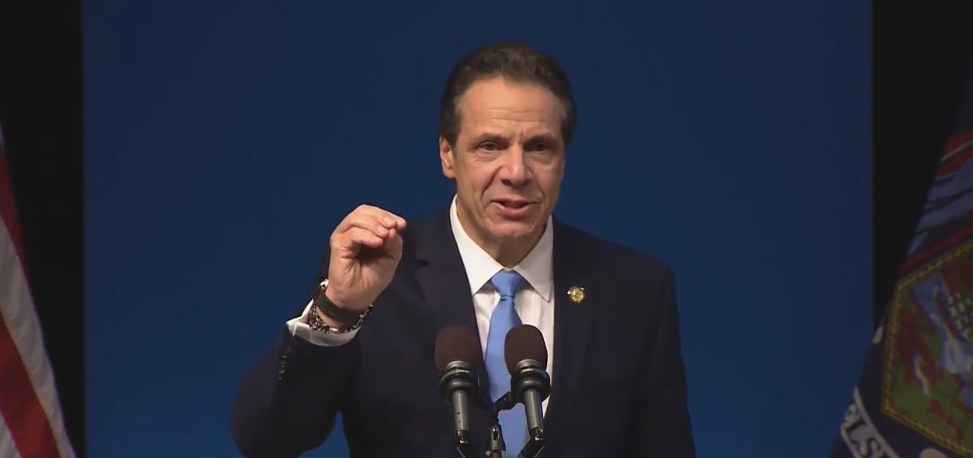 New York State plans to outlaw the use of Confession of Judgments (COJs) in small business loan contracts this year, according to details revealed in Governor Andrew Cuomo’s newly published Justice Agenda.
The proposal, dubbed “Stopping Predatory Merchant Cash-Advance Loans,” is a 3-part plan to:
- Codify an FTC rule that prohibits COJs in consumer loans
- Prohibit the use of COJs in small business loans under $250,000
- Stop lenders from exploiting New York courts for nationwide collections by requiring that any permissible confession of judgment enforced in New York courts have a nexus to business activity in New York
Cuomo’s proposal echoes calls from the State legislature in response to a series published in Bloomberg Businessweek late last year that speculated COJs were vulnerable to abuse.
Both the Assembly and Senate maintain a Democrat majority, the same party as Cuomo, increasing the likelihood that such a bill could become law.
 The proposal is separate from a bill that was recently introduced at the federal level. The Small Business Lending Fairness Act, a bipartisan bill co-sponsored by Senators Marco Rubio and Sherrod Brown, call for a nationwide ban on COJs. That bill has not progressed, perhaps due in part to the government shutdown. Like New York, that initiative was a response to the series published in Bloomberg.
A review of Bloomberg’s facts by AltFinanceDaily revealed highly questionable reporting. In one example, it’s claimed that a business owner had been so victimized by predatory lending that he’d been forced to sell his furniture just to feed himself. AltFinanceDaily later determined that the “victim” was actually a multimillionaire TV station owner whose account of any such engagement with merchant cash advance companies was incredibly unlikely. The reporters have not responded to AltFinanceDaily’s findings.
Zeke Faux, who co-authored the series with Zachary Mider, deleted his entire tweet history around the same time that AltFinanceDaily uncovered strange ties between his editor and the New York Attorney General’s office. The AG is reported to have sent subpoenas to several companies in response to the stories.

On Monday, Faux and Mider reported that clerks in three New York counties, whose job, among other roles, is to enter legally compliant COJs into the public record, were revolting by refusing to process COJs submitted by merchant cash advance companies. Though a clerk’s duties is largely an administrative one, two that spoke on the record with Bloomberg were former state legislators. Erie County Clerk Michael Kearns, for example, who told Bloomberg News that he felt that the use of COJs was criminal, had actually drafted a bill in 2017 when he was an assemblyman that sought to regulate cash advances of a different sort in the litigation financing industry. Although Kearns is a Democrat, he has historically enjoyed support from the Republican Party.
Orange County Clerk Annie Rabbitt and Richmond County Clerk Stephen Fiala, who are rebelling along with Kearns by refusing to enter COJs, are registered as Republicans, demonstrating that the movement is crossing party lines.
According to AltFinanceDaily, less than half of 1% of all MCA transactions have resulted in the filing of a COJ, despite Bloomberg’s insinuation that the outcome is common or typical.
Among the most prolific filers of merchant cash advance COJs, AltFinanceDaily found, is Itria Ventures, LLC, a company affiliated with Biz2Credit. Itria filed more than 50 in the last two months. Biz2Credit’s CEO, Rohit Arora, is a writer for both CNBC and Forbes.