
Can Amazon and Goldman Sachs Win With SMB Lending?
March 10, 2020 B2B e-commerce dwarfs the value of retail online transactions — by some estimates, those B2B transactions top some $1 trillion per year in the U.S., which compares to about a half billion dollars of revenue for the B2C side. And B2B e-commerce keeps on growing as more companies — especially small- and medium-sized operations — look to online marketplaces and other channels for daily suppliers, and otherwise shift toward fully digital and mobile operations instead of relying on paper invoicing and other analog supply chain processes.
That’s one of the important factors to keep in mind when considering the prospects of Amazon potentially working with Goldman Sachs to offer SMB lending options by adding the investment bank to the Amazon platform. The possibility of such a business offering — pairing up one of the world’s leading retail, delivery and one-button payment operations with the venerable investment bank — was floated early in 2020 and is already casting a shadow across the B2B and lending community. The backing and brand strength of Goldman Sachs could help unleash a new SMB lending force — one that is also fueled by Amazon’s treasure chest of consumer data and Goldman Sachs’ underwriting expertise. But let’s not get ahead of ourselves just yet.
Significant pitfalls come along with the anticipated opportunities. Not only that, but nothing has yet gotten off the ground, at least not officially. Here’s the idea, culled from previous reports and conversations with experts who know the lending space, along with keen observers of retail and Amazon: The e-commerce operator, eager to build a stronger ecosystem around its already robust B2B marketplace and related operations, would team on SMB lending with Goldman Sachs, itself eager to break into new product lines and add some new fat to its margins.
Amazon and Goldman Sachs aren’t saying too much about that idea and did not comment for this story. The rough outlines of the plan appeared in the financial press in February. But it’s no secret that the two companies are indeed looking for new financial products and new consumer segments.
Amazon has built its B2B business into a unit whose growth has recently outpaced its retail side and even its powerhouse Amazon Web Services. As well, Amazon was on track in 2019 to invest some $15 billion in new tools for small- and medium-sized business, according to company documents and officials.
Granted, much of that explosive growth comes about because B2B is relatively new for Amazon, but such growth demonstrates how well Amazon is gaining — and even keeping — new B2B customers. Many of them are attracted to the digital and mobile efficiency of the Amazon platform, to say nothing of the speed of Amazon deliveries as the Seattlebased company continues to pour massive investment into trucks, warehouses, fulfillment robotics and other logistical areas. Just consider this data point: SMB thirdparty sellers tend to make up more than 55 percent of sales in Amazon stores, according to company financial documents.
Loans offered by Amazon and Goldman Sachs would help those Amazon customers fund purchases of supplies without having to seek out another creditor — or leave the Amazon online and mobile ecosystem.
“If the SMB is already using Amazon to sell and distribute their product, it makes sense they would also accept a loan from them,” Julie Stitzel, the vice president, Center for Capital Markets Competitiveness, U.S. Chamber of Commerce, told AltFinanceDaily. “Amazon is already a trusted partner of their business operations and integrating the financial component is convenient—it saves time because you don’t have to deal with two separate entities.”
The move also would make sense, at least on paper, for Goldman Sachs, Joe Ganzelli, Sr., a Senior Director for Cornerstone Advisors, told AltFinanceDaily. “They are not in the small business space, and this is a space that, frankly, would be challenging for them to compete in without a partner,” he said. Additionally, this potential SMB lending partnership with Amazon could come as Goldman Sachs executives seek to meet their goals of diversifying their business in 2020 and beyond, according to Ganzelli, previous comments from those executives and other reports. “Small business is such a big driver of our economy,” he said.
Those are among the main opportunities. But just because Goldman Sachs and Amazon are involved doesn’t mean the SMB lending offering would succeed. For instance, both companies have had bouts of recent or high profile failure. Who, for instance, has forgotten the massive stumbles of Goldman Sachs leading up to the 2008 financial crash? And while Amazon has gained ground with fashion and apparel, the company has had a relatively hard slog selling trendy clothes to consumers. Could SMB lending become another pothole for those two companies?
Well, certain obstacles would have to be overcome. For Goldman, the learning curve to gain expertise on SMB lending would be severe, according to Ganzelli — even though all that Amazon customer data that’s already been acquired by the e-commerce giant would certainly help with that education. Still, “anytime you enter a new niche, it’s challenging,” he said. As for Amazon, the main — and perhaps only real downside visible at this point — comes from the commitment that comes with SMB lending. “Amazon will be contractually tied to this arrangement if it’s not a success or does not meet growth objectives,” he said.
All that said, this stands as an appealing time for these two heavyweights of the U.S. economy to see if they can make good money via SMB nonbank lending. “While the majority of small and medium size business lending comes from banks, alternative lending products are an increasingly popular option for SMBs,” said Stitzel. “Allowing you to work with one entity to streamline business operations and mitigate economic volatility in a cost effective way, frees a SMB owner to focus more on building their business and less on administration. Companies like Square and Intuit are already successfully doing this for SMBs using their platforms.”
That’s not the only wind behind the sales of this growing trend of alternative SMB lending, of course. Millennials still might take all kinds of scapegoating heat for various consumer, cultural or economic trends — unfairly or not — but the fact is that those younger people are growing up, and starting to take more responsibility for B2B operations, including supply chain and invoicing tasks. As that happens, millennials are playing a growing force in anchoring more B2B companies to mobile and digital platforms. In general, millennials prefer one-stop shopping with trusted outlets. That would certainly benefit Amazon and Goldman Sachs in any SMB lending offering they launch — as that is now helping such alternative lending offerings as Kabbage and some of the newer PayPal products.
“Millennials are the folks who grew up with the expectation of seamless digital experiences,” Ganzelli said. Those B2B consumers are willing to pay the often “hefty” premiums that come with such experiences, too, he said. “The delivery experience and the speed-to-close just blows banks out of the water.”
Kabbage Launches Kabbage Insights™, Allowing Small Businesses To Take Control of Their Cash Flow With Just a Few Clicks
March 4, 2020ATLANTA – March 4, 2020 – Kabbage, Inc. today launched Kabbage Insights, a fully automated tool that calculates and predicts cash-flow patterns to help small businesses identify cash surpluses and deficits. With the launch, Kabbage addresses one of the most vexing problems faced by small business owners. The new product comes just one month after the public launch of Kabbage Payments™, continuing the company’s rapid innovation to build a suite of integrated products that simplify cash-flow management for U.S. small businesses.
In less than 10 minutes, any small business can connect their real-time financial data to Kabbage Insights and access an analysis of their company’s historical, current and future cash-flow 24/7. The product continually evaluates the transaction activity of a customer over a 90-day period and organizes it in an easy-to-understand dashboard, allowing customers to quickly visualize their net growth without taking the time to calculate it themselves. Kabbage’s customer base of over 220,000 small businesses has immediate access.
As a leader in predictive analytics and artificial intelligence for small businesses, Kabbage Insights produces personalized forecasts to predict the future cash position of a business. Customers can then set a desired low-balance threshold and receive automated alerts if accounts are predicted to dip below it, empowering small businesses to identify, act upon and prevent cash deficits before they occur.
Paired with the Kabbage Small Business Revenue Index, Kabbage Insights is also the first product available that allows small businesses to compare their company’s performance to similarly-sized businesses operating in their state and industry. The result is an unparalleled cash-flow tool that’s free for small businesses, helping them to anticipate changes, benchmark their growth, plan ahead and make more confident business decisions like when to cut expenses, invest or borrow.
With Kabbage Insights, small businesses can:
- Review cash-flow on the go via the intuitive mobile dashboard.
- Analyze daily performance and review money movement at a glance.
- Borrow strategically with forecast data to inform funding decisions.
- Save time, as studies show 91 percent of small business owners spend as many as 20 hours per week manually calculating cash flow.
“As a small business owner for many years, I spent many sleepless nights trying to figure out whether I’d have the cash to pay my various expenses, including payroll at the end of the month and it’s been a mission of mine to solve this ubiquitous problem for all small business owners ever since,” said Kabbage CEO Rob Frohwein. “Kabbage is pleased to launch Insights, taking on this burden for small business owners and providing them with cash flow analyses that large enterprises have at their fingertips. We will continue to level the playing field for the small business owner.”
About Kabbage
Kabbage, Inc., headquartered in Atlanta, is a data and technology company providing
small businesses cash flow solutions. Its suite of products includes Kabbage Payments, helping small businesses get paid and access the money they earn faster, Kabbage Funding, providing access to flexible lines of credit in minutes, and Kabbage Insights, a powerful and predictive tool to calculate cash flow. To date, Kabbage has provided more than 220,000 U.S. small businesses access to over $9 billion of working capital. Kabbage is funded and backed by leading investors, including the SoftBank Vision Fund, BlueRun Ventures, WildCast Venture Partners, Thomvest Ventures and others. All Kabbage U.S.-based loans are issued by Celtic Bank, a Utah-Chartered Industrial Bank, Member FDIC. Kabbage Payments, LLC, a subsidiary of Kabbage, Inc., is a registered Payment Service Provider/Payment Facilitator sponsored by Fifth ThirdBank, N.A., Cincinnati, OH. For more information, please visit www.kabbage.com.
###
2020 and Beyond – A Look Ahead
March 3, 2020 With the doors to 2019 firmly closed, alternative financing industry executives are excited about the new decade and the prospects that lie ahead. There are new products to showcase, new competitors to contend with and new customers to pursue as alternative financing continues to gain traction.
Executives reading the tea leaves are overwhelming bullish on the alternative financing industry—and for good reasons. In 2019, merchant cash advances and daily payment small business loan products alone exceeded more than $20 billion a year in originations, AltFinanceDaily’s reporting shows.
Confidence in the industry is only slightly curtailed by certain regulatory, political competitive and economic unknowns lurking in the background—adding an element of intrigue to what could be an exciting new year.
Here, then, are a few things to look out for in 2020 and beyond.
Regulatory developments
There are a number of different items that could be on the regulatory agenda this year, both on the state and federal level. Major areas to watch include:
- Broker licensing. There’s a movement afoot to crack down on rogue brokers by instituting licensing requirements. New York, for example, has proposed legislation that would cover small business lenders, merchant cash advance companies, factors, and leasing companies for transactions under $500,000. California has a licensing law in place, but it only pertains to loans, says Steve Denis, executive director of the Small Business Finance Association. Many funders are generally in favor of broader licensing requirements, citing perceived benefits to brokers, funders, customers and the industry overall. The devil, of course, will be in the details.
- Interest rate caps. Congress is weighing legislation that would set a national interest rate cap of 36%, including fees, for most personal loans, in an effort to stamp out predatory lending practices. A fair number of states already have enacted interest rate caps for consumer loans, with California recently joining the pack, but thus far there has been no national standard. While it is too early to tell the bill’s fate, proponents say it will provide needed protections against gouging, while critics, such as Lend Academy’s Peter Renton, contend it will have the “opposite impact on the consumers it seeks to protect.”
- Loan information and rate disclosures. There continues to be ample debate around exactly what firms should be required to disclose to customers and what metrics are most appropriate for consumers and businesses to use when comparing offerings. This year could be the one in which multiple states move ahead with efforts to clamp down on disclosures so borrowers can more easily compare offerings, industry watchers say. Notably, a recent Federal Reserve study on non-bank small business finance providers indicates that the likelihood of approval and speed are more important than cost in motivating borrowers, though this may not defer policymakers from moving ahead with disclosure requirements.
“THIS WILL DRIVE COMMISSION DOWN FOR THE INDUSTRY”
If these types of requirements go forward, Jared Weitz, chief executive of United Capital generally expects to see commissions take a hit. “This will drive commission down for the industry, but some companies may not be as impacted, depending on their product mix, cost per lead and cost per acquisition and overall company structure,” he says.
- Madden aftermath. The FDIC and OCC recently proposed rules to counteract the negative effects of the 2015 Madden v. Midland Funding LLC case, which wreaked havoc in the consumer and business loan markets in New York, Connecticut, and Vermont. “These proposals would clarify that the loan continues to be ‘valid’ even after it is sold to a nonbank, meaning that the nonbank can collect the rates and fees as initially contracted by the bank,” says Catherine Brennan, partner in the Hanover, Maryland office of law firm Hudson Cook. With the comments due at the end of January, “2020 is going to be a very important year for bank and nonbank partnerships,” she says.
- Possible changes to the accredited investor definition. In December 2019, the Securities and Exchange Commission voted to propose amendments to the accredited investor definition. Some industry players see expanding the definition as a positive step, but are hesitant to crack open the champagne just yet since nothing’s been finalized. “I would like to see it broadened even further than they are proposed right now,” says Brett Crosby, co-founder and chief operating officer at PeerStreet, a platform for investing in real estate-backed loans. The proposals “are a step in the right direction, but I’m not sure they go far enough,” he says.
Precisely how various regulatory initiatives will play out in 2020 remains to be seen. Some states, for example, may decide to be more aggressive with respect to policy-making, while others might take more of a wait-and-see approach.
“I think states are still piecing together exactly what they want to accomplish. There are too many missing pieces to the puzzle,” says Chad Otar, founder and chief executive at Lending Valley Inc.
As different initiatives work their way through the legislative process, funders are hoping for consistency rather than a patchwork of metrics applied unevenly by different states. The latter could have significant repercussions for firms that do business in multiple states and could eventually cause some of them to pare back operations, industry watchers say.
“While we commend the state-level activity, we hope that there will be uniformity across the country when it comes to legislation to avoid confusion and create consistency” for borrowers, says Darren Schulman, president of 6th Avenue Capital.
Election uncertainty
The outcome of this year’s presidential election could have a profound effect on the regulatory climate for alternative lenders. Alternative financing and fintech charters could move higher on the docket if there’s a shift in the top brass (which, of course, could bring a new Treasury Secretary and/or CFPB head) or if the Senate flips to Democratic control.
If a White House changing of the guard does occur, the impact could be even more profound depending on which Democratic candidate secures the top spot. It’s all speculation now, but alternative financers will likely be sticking to the election polls like glue in an attempt to gain more clarity.
Election-year uncertainty also needs to be factored into underwriting risk. Some industries and companies may be more susceptible to this risk, and funders have to plan accordingly in their projections. It’s not a reason to make wholesale underwriting changes, but it’s something to be mindful of, says Heather Francis, chief executive of Elevate Funding in Gainesville, Florida.
“Any election year is going to be a little bit volatile in terms of how you operate your business,” she says.
Competition
The competitive landscape continues to shift for alternative lenders and funders, with technology giants such as PayPal, Amazon and Square now counted among the largest small business funders in the marketplace. This is a notable shift from several years ago when their footprint had not yet made a dent.
This growth is expected to continue driving competition in 2020. Larger companies with strong technology have a competitive advantage in making loans and cash advances because they already have the customer and information about the customer, says industry attorney Paul Rianda, who heads a law firm in Irvine, Calif.
It’s also harder for merchants to default because these companies are providing them payment processing services and paying them on a daily or monthly basis. This is in contrast to an MCA provider that’s using ACH to take payments out of the merchant’s bank account, which can be blocked by the merchant at any time. “Because of that lower risk factor, they’re able to give a better deal to merchants,” Rianda says.
Increased competition has been driving rates down, especially for merchants with strong credit, which means high-quality merchants are getting especially good deals—at much less expensive rates than a business credit card could offer, says Nathan Abadi, president of Excel Capital Management. “The prime market is expanding tremendously,” he says.
Certain funders are willing to go out two years now on first positions, he says, which was never done before.
Even for non-prime clients, funders are getting more creative in how they structure deals. For instance, funders are offering longer terms—12 to 15 months—on a second position or nine to 12 months on a third position, he says. “People would think you were out of your mind to do that a year ago,” he says.
Because there’s so much money funneling into the industry, competition is more fierce, but firms still have to be smart about how they do business, Abadi says.
Meanwhile, heightened competition means it’s a brokers market, says Weitz of United Capital. A lot of lenders and funders have similar rates and terms, so it comes down to which firms have the best relationship with brokers. “Brokers are going to send the deals to whoever is treating their files the best and giving them the best pricing,” he says.
Profitability, access to capital and business-related shifts
Executives are confident that despite increased competition from deep-pocket players, there’s enough business to go around. But for firms that want to excel in 2020, there’s work to be done.
Funders in 2020 should focus on profitability and access to capital—the most important factors for firms that want to grow, says David Goldin, principal at Lender Capital Partners and president and chief executive of Capify. This year could also be one in which funders more seriously consider consolidation. There hasn’t been a lot in the industry as of yet, but Goldin predicts it’s only a matter of time.
“A lot of MCA providers could benefit from economies of scale. I think the day is coming,” he says.
He also says 2020 should be a year when firms try new things to distinguish themselves. He contends there are too many copycats in the industry. Most firms acquire leads the same way and aren’t doing enough to differentiate. To stand out, funders should start specializing and become known for certain industries, “instead of trying to be all things to all businesses,” he says.
Some alternative financing companies might consider expanding their business models to become more of a one-stop shop—following in the footsteps of Intuit, Square and others that have shown the concept to be sound.
Sam Taussig, global head of policy at Kabbage, predicts that alternative funding platforms will increasingly shift toward providing more unified services so the customer doesn’t have to leave the environment to do banking and other types of financial transactions. It’s a direction Kabbage is going by expanding into payment processing as part of its new suite of cash-flow management solutions for small businesses.
“Customers have seen and experienced how seamless and simple and easy it is to work with some of the nontraditional funders,” he says. “Small businesses want holistic solutions—they prefer to work with one provider as opposed to multiple ones,” he says.
Open banking
This year could be a “pivotal” year for open banking in the U.S., says Taussig of Kabbage. “This issue will come to the forefront, and I think we will have more clarity about how customers can permission their data, to whom and when,” he says.
Open banking refers to the use of open APIs (application program interfaces) that enable third-party developers to build applications and services around a financial institution. The U.K. was a forerunner in implementing open banking, and the movement has been making inroads in other countries as well, which is helping U.S. regulators warm up to the idea. “Open banking is going to be a lively debate in Washington in 2020. It’ll be about finding the balance between policymakers and customers and banks,” Taussig says.
The funding environment
While there has been some chatter about a looming recession and there are various regulatory and competitive headwinds facing the industry, funding and lending executives are mostly optimistic for the year ahead.
“If December 2019 is an early indicator of 2020, we’re off to a good start. I think it’s going to be a great year for our industry,” says Abadi of Excel Capital.
Nav Co-founders Step Down From C-Level Positions
January 14, 2020 Levi King, a co-founder of Nav Inc., resigned as the company’s CEO on Tuesday. In a two-part explanation on LinkedIn, King wrote. “To be clear, I’m not burned out on Nav. I’m not aspiring to do something elsewhere, and I’m not leaving the company. I’m still dedicated and passionate about helping Nav succeed. And, I will – just in a different capacity moving forward.”
King will do that by serving as the executive chairman of the board of directors. President & COO Greg Ott will take over as CEO.
On LinkedIn, King further wrote that the company needs “a more qualified leader” to take Nav to the next level after he and co-founder Caton Hanson have successfully grown the company to the right point.
Hanson, who served as the company’s Chief Legal & Compliance Officer, also stepped down and updated his job role with Nav to that of being “Of Counsel” on a part-time basis. Unlike King’s message on LinkedIn, Hanson’s reads as a farewell.
“Thank you for believing in me and our dream,” he wrote. “Thank you for your part in helping Nav achieve what some have called ‘impossible’. I am grateful to know you, have had the opportunity to work alongside you and to call you friends (and for many of you — co-owners). I look forward to Nav’s next chapter – and mine.”
Greg Ott, the new leader of the company, is said in a Nav press announcement to have served as a strategic and organizational leader in both startups and Fortune 1000 corporations. Prior to joining Nav, Ott served as Vice President of Marketing for Intuit QuickBooks.
“Nav’s founders created a company that is truly unique in its ability to revolutionize how small business owners navigate and access capital to grow their business,” Ott commented. “I look forward to building upon Nav’s successes and furthering the company’s vision of aligning financing qualifications, predicting needs, and facilitating transactions between data providers, lenders, partners and small businesses.”
Kapitus Rolls Out Fully Automated Funding Process
April 2, 2019 New York, NY – Kapitus, a leading provider of alternative financing to small and midsize businesses, announces the roll-out of auto-checkout – a fully automated funding process for qualified deals. The new process allows for not only a faster, more streamlined experience for its partners; but it also provides more flexible financing options, by providing multiple offers at once. At the same time, the new process provides merchants with secure and quick access to funds for their business.
Unlike competing models where only an “option of approval” or “conditional approval” is provided at the time of checkout, Kapitus is able to determine approval eligibility with only an application and bank statements without the need for multiple upfront stipulations to confirm bank information, ownership and identity. Utilizing proprietary machine learning models – eligible deals can be closed without any additional documentation.
“This is a true turning-point for us from a technology perspective and we’re very excited about it,” said Andrew Reiser, Chief Executive Officer at Kapitus. “With this new automated process, we’re able to provide our partners an extremely simple process with an exceptionally quick time-to-funding. At the same time, merchants are provided with a more seamless experience with enhanced security”
Major features in the roll-out include:
- True auto-check functionality with full approval at time of checkout
- Progress tracking and customizable notifications to follow merchants through the checkout process
- Intuitive user interface with precise, easy-to-understand instructions for both merchants and partners
- Simple, seamless secure checkout functionality for merchants
“This is the first of many technology advancements we will be rolling out over the next year,” adds Arun Narayan, Chief Product Officer. “We are committed to creating exceptional experiences for both our partners and merchants. Incorporating the right technology is paramount in building out the right environment and the best experience for all of our audiences.”
ABOUT Kapitus
Founded in 2006 and headquartered in NYC, Kapitus is one of the most reliable and respected names in small business financing. As both a direct lender and a marketplace built with a trusted network of lending partners, Kapitus is able to provide small businesses the financing they need, when and how it is needed. With one application business owners can save time and money, while eliminating the stress that comes with applying to different lenders. At Kapitus, we believe that business owners should be able to focus on running their business, while we take care of the financing. Learn more at https://kapitus.com
CONTACT: Bernadette Abel
Kapitus
babel@kapitus.com
646-722-1484
Get The Affidavit or Waive It? Examining Confessions of Judgment
February 1, 2019 Caton Hanson, the chief legal officer and co-founder of the online credit-reporting and business-to-business matchmaker Nav, says that his Salt Lake City-based company would not associate with a small-business financier that included “confessions of judgment” in its credit contracts.
“If we understood that any of our merchant cash advance partners were using confessions of judgment as a means to enforce contracts,” Hanson told AltFinanceDaily, “we would view that as abusive and distance ourselves from those partners. As a venture-backed company,” Hanson adds, “we have some significant investors, including Goldman Sachs, and I’m sure they would support us.”
Steve Denis, executive director of the Small Business Finance Association, which represents companies in the merchant cash advance (MCA) industry, says that, as an organization, “We’ve taken a strong stance against confessions of judgment.”
He reports that his Washington, D.C.-based trade group is prepared to work with legislators and policy-makers of any political party, regulators, business groups and the news media “to ban that type of practice.
“We’re fighting against the image that we’re payday lenders for business,” Denis says of the merchant cash advance industry. “We’re trying to figure out internally what we can do to stop that from happening and we have been speaking to members of Congress and their staff.”
“Confessions of judgment,” says Cornelius Hurley, a law professor at Boston University and executive director of the Online Lending Policy Institute, “are to the merchant cash advance industry what mandatory arbitration is to banks. Neither enforcement device reflects well on the firms that use them.”
These are just some of the reactions from members of the alternative lending and financial technology community to a blistering series of articles published by Bloomberg News on the use—and alleged misuse—of confessions of judgment (COJs) by merchant cash advance companies. The series charges the MCA industry with gulling unwary small businesses by not only charging high interest rates for quick cash but of using confession-laden contracts to seize their assets without due process.
The Bloomberg articles also reported that it doesn’t matter in which state the small business debtors reside. By bringing legal action in New York State courts, MCA companies have been able to use enforcement powers granted by the confessions to collect an estimated $1.5 billion from some 25,000 businesses since 2012.
“I don’t think anyone can read that series of articles and honestly say what went on were good practices and in the best interest of small business,” says SBFA’s Denis, noting that none of the companies cited in the Bloomberg series belonged to his trade group. “It’s shocking to see some companies in our space doing things we’d classify as predatory,” he adds. “As an industry we’re becoming more sophisticated, but there are still some bad actors out there.”
 A confession of judgment is a hand-me-down to U.S. jurisprudence from old English law. The term’s quaint, almost religious phrasing evokes images of drafty buildings, bleak London fog, and dowdy barristers in powdered wigs and solemn black gowns. (And perhaps debtor prisons as well.)
Yet while the legal provision’s wings have been clipped—the Federal Trade Commission banned the use of confessions of judgment in consumer credit transactions in 1985 and many states prohibit their use outright or in such cases as residential real estate contracts—COJs remain alive and well in many U.S. jurisdictions for commercial credit transactions.
Even so, most states where COJs are in use, such as California and Pennsylvania, have adopted safeguards. Here’s how the San Francisco law firm Stimmel, Stimmel and Smith describes a COJ.
“A confession of judgment is a private admission by the defendant to liability for a debt without having a trial. It is essentially a contract—or a clause with such a provision—in which the defendant agrees to let the plaintiff enter a judgment against him or her. The courts have held that such a process constitutes the defendant’s waiving vital constitutional rights, such as the right to due process, thus (the courts) have imposed strict requirements in order to have the confession of judgment enforceable.”
In California, those “strict requirements” include not only that a written statement be “signed and verified by the defendant under oath,” but that it must be accompanied by an independent attorney’s “declaration.” If no independent attorney signs the declaration or—worse still—the plaintiff’s attorney signs the document, the confession is invalid.
But if the confession is “properly executed,” the plaintiff is entitled to use the full panoply of tools for collection of the judgment, including “writs of execution” and “attachment of wages and assets.”
 In Pennsylvania, confessions of judgment are nearly as commonplace as Philadelphia Eagles’ and Pittsburgh Steelers’ fans, particularly in commercial real estate transactions. Says attorney Michael G. Louis, a partner at Philadelphia-area law firm Macelree Harvey, “They may go back to old English law, but if you get a business loan or commercial lease in Pennsylvania, a confession of judgment will be in there. It’s illegal in Pennsylvania for a consumer loan or residential real estate. But unless it’s a national tenant with a ton of bargaining power—a big anchor store and the owner of the shopping center really wants them—95% of commercial leasing contracts have them.
“And any commercial bank in Pennsylvania worth its salt includes them in their commercial loan documents,” Louis adds.
Pennsylvania’s laws governing COJs contain a number of additional safeguards. For example, the confession of judgment is part of the note, guaranty or lease agreement—not a separate document—but must be written in capital letters and highlighted. One of the defenses that used to be raised against COJs, Louis says, was that a contractual document was written in fine print “but we haven’t seen fine print for years.”
Other reforms in Pennsylvania have come about, moreover, as a result of a 1994 case known as “Jordan v. Fox Rothschild.” Says Louis: “It used to be lot worse. You used to be able to file a confession of judgment and levy on a defendant’s bank account before he knew what happened. It was brutal. But after the Fox Rothschild case, they changed the law to prevent taking away a defendant’s right of notice and the opportunity to be heard.”
Because of that case, which takes its name from the Fox Rothschild law firm and involved a dispute between a Philadelphia landlord renting commercial space to Jordan, a tenant, the law governing COJs in Pennsylvania requires, among other things, a 30-day notice before a creditor or landlord can execute on the confession. During that period the defendant has the opportunity to stay the execution or re-open the case for trial.
 Defenses against the execution of a COJ can entail arguments that creditors failed to comply with the proper language or procedures in drafting the document. But the most successful argument, Louis says, is a “factual defense.” Louis cites the case of a retail clothing store renting space in a shopping center that has a leaky roof. In the 30-day notice period after the landlord invoked the confession of judgment, the tenant was able to demonstrate to the court that he had asked the landlord “ten times” to fix the roof before spending the rent money on roof repairs. In such a case, the courts will grant the defendant a new trial but, Louis says, the parties typically reach a settlement. “Banks generally will waive a jury trial,” he notes, “because they don’t want to take a chance of getting hammered by a jury.”
A number of states, including Florida and Massachusetts ban the use of confessions of judgment. That’s one big reason that Miami attorney Roger Slade, a partner at Haber Law, advises clients that “there’s no place like home.” In other words: commercial contracts should specify that any legal disputes will be adjudicated in Florida. “It’s like having home field advantage in the NFL playoffs,” Slade remarked to AltFinanceDaily. “You don’t want to play on someone else’s turf.”
He has also been warning Floridians for several years against the way that COJs were treated by New York courts. Writing in the blog, “The Florida Litigator,” Slade—a native New Yorker who is certified to practice law there as well as in Florida counseled in 2012: “If you live in New York, a creditor can have your client sign a confession of judgment and, in the event of a default on a loan, can march directly to the courthouse and have a final judgment entered by the clerk. That’s right—no complaint, no summons, no time to answer, no two-page motion to dismiss. The creditor gets to go right for the jugular.”
In addition, because of the “full faith and credit clause of the U.S. Constitution,” Slade notes in an interview, a contract that’s enforced by the New York courts must be honored in Florida. “Courts in Florida have no choice,” Slade says. “It’s a brutal system and it’s unfortunate.”
In December, two U.S. senators from opposing parties—Ohio Democrat Sherrod Brown and Florida Republican Marco Rubio—introduced bipartisan legislation to amend both the Federal Trade Commission Act and Truth in Lending Act to do away with COJs. Their legislative proposal reads:
“(N)o creditor may directly or indirectly take or receive from a borrower an obligation that constitutes or contains a congnovit or confession of judgment (for purposes other than executory process in the State of Louisiana), warrant of attorney, or other waiver of the right to notice and the opportunity to be heard in the event of suit or process theron.”
But with a dysfunctional and divided federal government, warring power factions in Washington, and an influential financial industry, there’s no telling how the legislation will fare. Meantime, the New York State attorney general’s office announced in December that it will investigate the use of COJs following the Bloomberg series. And New York Governor Andrew Cuomo has declared support for legislation that will, among other things, prohibit the use of confessions in judgment for small business credit contracts under $250,000 and restrict judgments by New York courts to in-state parties.
But if New York State or Congressional legislation are adopted it can have “unintended consequences” to merchant cash advance firms in the Empire State—and to their small business customers as well—asserts the general counsel for one MCA firm. “Losing the confession of judgment will be removing what little safety net there is in a risky industry,” the attorney says, noting that the industry has roughly a 15% default rate.
“It is not as powerful a tool as the Bloomberg news stories would have you believe,” this attorney, who spoke on the condition of anonymity, told AltFinanceDaily. “The suggestion seems to be that the MCAs can use the confession of judgment to get back the total amount of money due—and then some—while leaving a trail of dead bodies behind. But that’s not the case.
“What is much more likely to be the case,” he adds, “is that MCA companies try to get the defaulting merchant back on track. And—probably more than we should and only after we’ve tried to reach out to them and failed—do we then reluctantly use the COJ as a last resort. At which point we hope we can recover some part of our exposure. The numbers vary, but the losses are always in the thousands of dollars. These are not micro-transactions.
“What’s going to happen,” he concludes, “is that It will not make sense for us to work with those merchants most in need of working capital. The unfortunate reality is that businesses who don’t have collateral and can’t get a Small Business Administration product will be left out in the cold.”
All of which prompts BU professor Hurley to argue that the “Swiss cheese” system of financial regulation among the 50 states continues to be a root cause of regulatory confusion. Echoing Miami attorney Slade’s concern about New York courts’ dictating to Florida citizens, Hurley likens the situation governing COJs with the disorderly array of state laws governing usury regulations.
In the 1978 “Marquette” decision, the U.S. Supreme Court ruled that a Nebraska bank, First of Omaha, could issue credit cards in Minnesota and charge interest rates that exceeded the usury rate ceiling in the Gopher State. Since then, usury rates enacted by state legislatures have become virtually unenforceable.
“The problem we’re seeing with confessions of judgment is a subset of the usury situation,” Hurley says. “One state’s disharmony becomes a cancer on the whole system. It’s a throwback to Colonial times with 50 states each having their own jurisdictions—and it doesn’t work.”
 Hurley’s Online Lending Policy Institute has joined with the Electronic Transactions Association and recruited a phalanx of “academics, non-banks, law firms and other trade associations as members or affiliates” to form the Fintech Harmonization Task Force. It is monitoring the efforts by the 50 states to align their regulatory oversight of the booming financial technology industry which was recently recommended by a U.S. Treasury report.
Tom Ajamie, who practices law in New York and Houston and has won multimillion-dollar, blockbuster judgments against “dozens of financial institutions” including Wall Street investment firms, also argues for greater regulatory oversight. He urges greater funding and expansion of the powers of the Consumer Financial Protection Bureau to rein in “the anticipatory use” of confessions of judgment in commercial transactions.
However, notes Catherine Brennan, a partner at Hudson Cook in Baltimore, the job of protecting small businesses is outside the agency’s mandate. “The CFPB doesn’t have authority over commercial products as a general rule,” she explained in an interview. “Consumers are viewed as a vulnerable population in need of protections since the 1960’s.” As a society “we want protection for households because the consequences are high. A family could become homeless if they lose a house. Or (they) could lose employment if they lose a car and can’t drive. And there is also unequal bargaining power between lenders and consumers.
“Large institutions have lawyers to draft contracts and consumers have to agree on a take it or leave it basis. So there’s not a lot of negotiation and government has decided that consumers need protections, including a (Federal Trade Commission) ban on confessions of judgment.”
But Christopher Odinet, a law professor at the University of Oklahoma and a member of Hurley’s harmonization task force, sees the efforts of the federal government and the states to grapple with confessions of judgment as further recognition that small businesses have more in common with consumers than with big business. The COJ controversy follows on the recent passage of a commercial truth-in-lending bill by the State of California which, for the first time, stipulated that consumer-style disclosures should be included in business loans and financings under $500,000 made by non-bank financial organizations.
He cites the close-to-home example of an accomplished professional who got in over his head in financial dealings. “I recently observed a situation where a family member who is a very successful and affluent medical professional was relying on his own untrained business skills,” Odinet says. “He was about to enter into a sophisticated and complex business partnership relying on his intuition and general sense of confidence in the other party.”
Odinet says that he recommended that his relative hire a lawyer. Which, Odinet says, he did.
Wellen Makes the Inc.5000 List
August 15, 2018
Chicago — August 15, 2018 — Inc. magazine today listed Wellen Capital on its annual Inc. 5000, the most prestigious ranking of the nation’s fastest-growing private companies. The list represents a unique look at the most successful companies within the American economy’s most dynamic segment— its independent small and midsized businesses. Companies such as Microsoft, Timberland, Vizio, Intuit, Chobani, Oracle, Zappos.com, and many other well-known names gained their first national exposure as honorees of the Inc. 5000.
“We’re so pleased to be included in the Inc. 5000. This honor reflects the hard work our team has put in not just this past year, but over the last several years that has driven the revenue growth that earned us a spot on the list.” said Wellen President Jim Teppen. “We couldn’t have done it without our sales partners, key vendors, and financial backers” added Teppen. “Those relationships provided crucial support in our growth over these past few years.”
The Inc. 5000 is a list of the fastest-growing private companies in America. Started in 1982, this prestigious list of the nation’s most successful private companies has become the hallmark of entrepreneurial success. Complete results of the 2018 Inc. 5000, including company profiles and an interactive database that can be sorted by industry, region, and other criteria, can be found at www.inc.com/inc5000.
About Wellen Capital:
Since 2012, Wellen (f/k/a Gibraltar Capital Advance) has been providing working capital solutions to small and mid-sized businesses across America. Headquartered in Chicago, Wellen supports American business growth with its capital advance product – allowing customers to access between $10,000 and $250,000 in short-term working capital.
Contact:
Steven O’Connor
224.374.1519
soconnor@wellen.com
nCino Partners With Santander
July 24, 2018
nCino partnered with Santander Bank last week, its latest in a string of partnerships with major banks.
“Innovative institutions such as Santander Bank understand the importance of ensuring the customer experience is as fast, easy and intuitive as possible,” said Pierre Naudé, CEO of nCino. “[Santander] also recognizes that a shiny front end means nothing if the middle and back office doesn’t embrace at least the same degree of automation and intelligence.”
nCino is a cloud-based lending platform that grew out of Wilmington, North Carolina-based Live Oak Bank in 2012. Its founder, James Mahan III, then CEO of Live Oak Bank, along with his team, recognized a need to make the commercial lending process less time-consuming. So they created the nCino Bank Operating System internally for Live Oak Bank. But it soon attracted the interest of other financial institutions, in the US and beyond.
Last year, nCino told AltFinanceDaily in that in addition to working with Live Oak Bank, it was working with more than 150 other financial institutions in multiple countries, including nine of the top 30 US banks. Now, according to the nCino website, over 200 banks and credit unions of varying sizes use the company’s Bank Operating System. TD Bank and SunTrust are among their largest bank partners.
An nCino spokesperson told AltFinanceDaily that its Bank Operating System is sold on a subscription-basis that is driven by individual annual user licenses. This allows employees, executives and other stakeholders of a financial institution to access the benefits and functionality of nCino’s solution. nCino spun off from Live Oak Bank and became its own entity in 2014. Separately, Live Oak Bank (NASDAQ: LOB) went public in 2015.
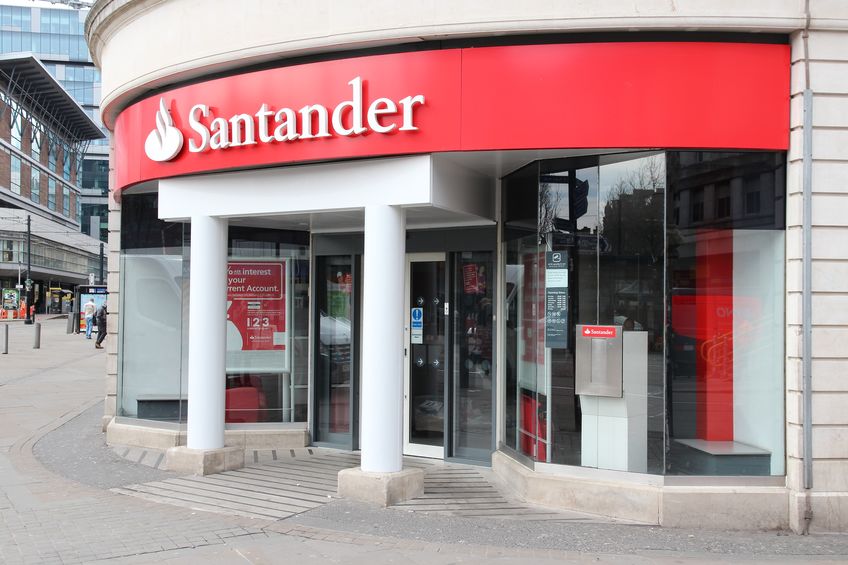 Santander will be using nCino’s platform for its business banking clients. Santander says that nCino’s cloud-based platform is accessible to customers from any device and will reduce the time it takes Santander to deliver loan decisions from start to finish by approximately 40 percent. In conjunction with a partnership with Accenture, Santander will be using nCino’s platform to help with customer relationship management, loan origination, account opening, workflow, enterprise content management, and instant reporting capabilities.
“Respecting our customers means giving them more insight into the loan process and getting them their money faster without any impediments so they can focus on running their businesses,” said Amir Madjlessi, Executive Vice President and Managing Director of Business Banking at Santander. “nCino’s platform automates the lending process from start to finish in a way that ensures a seamless, transparent experience for our customers that reduces delays and inefficiencies and securely connects our clients to our bankers whenever they need them with the touch of a button.”
nCino employs 500 people and is headquartered in Wilmington, North Carolina. The company recently opened an office in London and has plans to open additional offices in Australia and Canada later this year, according to a company spokesperson.