CFPB to Collect Data on Small Business Lending, Implement Section 1071 and Circulate RFI
May 10, 2017
Update: We are streaming the hearing LIVE on our home page.
Update: You can download the CFPB’s Request for Information here. A transcript of Cordray’s prepared remarks are at the bottom of the page.
Update: CFPB White paper estimates that merchant cash advances are less than 1% of the small business finance market on an aggregate dollar volume basis, factoring 7%, and equipment leasing 13%. They estimate that the small business financing market is roughly $1.4 trillion in size. They also estimate that there are less than 1.5 million merchant cash advance “accounts” in the US, more than 6 million term loan accounts, and more than 7 million factoring accounts.
Update: The CFPB is releasing a Request for Information (RFI), asking industry participants to define a small business, explain where small businesses seek financing and the kinds of products that are made available to them, reveal the categories of data that small business lenders are using and maintaining, and to provide input on privacy implications that may arise from disclosing information to the CFPB.
Update: The CFPB is indeed announcing their plans to implement Section 1071 of Dodd-Frank.
Beginning at 1:45PM EST on Wednesday, the CFPB will be holding a hearing in Los Angeles on small business lending. According to the agenda, “the hearing will feature remarks from Director Cordray, as well as testimony from consumer groups, members of the public, and industry representatives.”
Sources contend that the director will use the hearing as an opportunity to announce the agency’s plans for the implementation of Section 1071 of Dodd-Frank which grants the CFPB the authority to collect data from small business finance companies. Some critics have characterized the law as an attempt to push affirmative action into small business lending, while others worry the CFPB will attempt to exceed its statutory authority and exact penalties based on the data it collects.
Unless Trump fires Cordray for cause, the director’s term will continue until July 2018.
industry representatives making remarks at the hearing include:
- Todd Hollander, Managing Director, Union Bank
- Makini Howell, Executive Chef and Owner, Plum Restaurants, and Main Street Alliance Member
- Kate Larson, Director, U.S. Chamber of Commerce
- Elba Schildcrout, Director of Community Wealth, East Los Angeles Community Corporation
- Josh Silver, Senior Advisor, National Community Reinvestment Coalition
- Robert Villarreal, Senior Vice President, CDC Small Business Finance
If possible, we will attempt to embed the live stream on our site.
Full transcript of Cordray’s prepared remarks below
Thank you all for coming. It is good to be here again in Los Angeles. Today, the Consumer Financial Protection Bureau is announcing an inquiry into ways to collect and publish information about the financing and credit needs of small businesses, especially those owned by women and minorities. We are well aware of the key role they play in our lives. Small businesses help drive America’s economic engine by creating jobs and nurturing local communities. It is estimated that they have created two out of every three jobs since 1993 and now provide work for almost half of all employees in the private sector. Yet we perceive large gaps in the public’s understanding of how well the financing and credit needs of these entrepreneurs are being served.
As you probably know, Congress provided the Consumer Bureau with certain responsibilities in the area of small business lending. And there is a strong logic behind this. When I served as the Ohio Attorney General, we recognized the need to protect small businesses and nonprofit organizations by accepting and handling complaints on their behalf, just as we did for individual consumers – an approach that proved to be very productive. In addition, the line between consumer finance and small business finance is quite blurred. More than 22 million Americans are small business owners and have no employees. And, according to data from the Federal Reserve, almost two-thirds of them rely on their business as their primary source of income.
Congress specifically has charged the Consumer Bureau with the responsibility to administer and enforce various laws, including the Equal Credit Opportunity Act. Unlike other consumer financial laws, the ECOA governs not only personal lending, but some commercial lending as well. In fact, we have now conducted a number of ECOA supervisory examinations of small business lending programs. Through that work, we are learning about the challenges financial institutions face in identifying areas where fair lending risk may exist, and we are assisting them in developing the proper tools to manage that risk.
In the Dodd-Frank Wall Street Reform and Consumer Protection Act, Congress took a further step to learn more about how to encourage and promote small businesses. To help determine how well the market is functioning and to facilitate enforcement of the fair lending laws, Congress directed the Consumer Bureau to develop regulations for financial institutions that lend to small businesses to collect certain information and report it to the Bureau. The Request for Information we are releasing today asks for public feedback to help us better understand how to carry out this directive in a way that is careful, thoughtful, and cost-effective.
***
We have considerable enthusiasm for this project. In my own case, I have seen firsthand how small business financing can have a big economic impact. When I served as the Treasurer of Ohio, we had a reduced-interest loan program to support job creation and retention by small businesses. The way the program worked was that the state could put money on deposit with banks at a below-market rate of interest, and this deposit was then linked to a same-sized loan to a small business at a correspondingly below-market rate. This so-called “Linked Deposit” program had been authorized more than twenty years earlier, but had gradually fallen into disuse.
At its core, however, the program made good sense. Small businesses are often in desperate need of financing to update and expand their operations, and if they can get inexpensive financing, they often can fertilize their ideas for growth and be even more successful. So we diagnosed the program and found that after its initial success, it had become too bureaucratic. We heard from both banks and businesses that the program, which was still paper-based, was so slow and cumbersome that nobody wanted to use it.
So we changed all that. We put the process online, rebranded it as the “Grow Now” program, and made specific commitments to those who wanted to participate in it. We told them they could fill out a typical application in 30-60 minutes, and we promised them they would have a yes-or-no answer on their application within 72 hours. That was not easy, and it required very close coordination with the banks that took part in the program. But we did it, and the “Grow Now” program really took off. Only about $20 million had been allocated when we started, but in less than two years we deployed more than $350 million, helping about 1,500 small businesses create or retain approximately 15,000 jobs across the State.
It was also exciting and interesting to see how the businesses were able to use the loan funds. I can recall a construction business in northeast Ohio that needed a loan to buy a large piece of equipment so the company could compete for new and different jobs. They got the money, they got the equipment, and they thrived. I recall a manufacturer in northern Ohio that needed money to turn their factory sideways on their property so they could utilize more space and employ more people. We funded the build-out, they executed on it, and they met their goals for growth of output, revenue, and jobs. And I recall a company in western Ohio that started out as a caterer, began making their own tents for events, recognized that they might be able to succeed as tentmakers, and needed financing to be able to bid on a major project with the U.S. Department of Defense. We got them the loan, they got the bid, and Inc. magazine named them one of its 500 fastest-growing businesses of that year!
***
The moral of this story is that business opportunity – especially opportunities for small businesses – often hinges on the availability of financing. People have immense reserves of energy and imagination. Human ingenuity is the overwhelming power that allows human beings to reinvent the future and make it so. These forces unleash what Joseph Schumpeter called the “gales of creative destruction” that constantly mold and reshape the patterns of our economic life. Innovation has sharpened our nation’s economic edge for generation after generation, but when credit is unavailable, creativity is stifled.
To make the kind of meaningful contributions they are capable of making to the American economy, small businesses – particularly women-owned and minority-owned businesses – need access to credit. Without it, they cannot take advantage of opportunities to grow. And with small businesses so deeply woven into the nation’s economic fabric, it is essential that the public – along with small business owners themselves – can have a more complete picture of the financing available to this key sector.
Some things we do know. We are releasing a white paper today that lays out the limited information we currently have about key dimensions of the small business lending landscape. According to Census data, and depending on the definition used, there are an estimated 27.6 million small businesses in the United States. We estimate that together they access about $1.4 trillion in credit. Businesses owned by women and minorities play an especially important role in this space. Women-owned businesses account for over one-third (36 percent) of all non-farming, private sector firms. The 2012 Survey of Business Owners, the most recent such information available, indicates that women-owned firms employed more than 8.4 million people, and minority-owned firms employed more than 7 million people. Those are huge numbers: by comparison, in 2014 fewer than 8 million people were employed in the entire financial services sector.
When small businesses succeed, they send constant ripples of energy across the economy and throughout our communities. For example, a 2013 study by the Federal Reserve Bank of Atlanta found that counties with higher percentages of their workforce employed by small businesses showed higher local income, higher employment rates, and lower poverty rates. In order to succeed, businesses need access to financing to smooth their cash flows for current operations, meet unexpected contingencies, and invest in their enterprises to take advantage of opportunities as they arise. Another study found that the inability to obtain financing may have prompted one-in-three small businesses to trim their workforces and one-in-five to cut benefits.
Unfortunately, much of the available data on small business lending is too dated or too spotty to paint a full picture of the current state of access to credit for small businesses, especially those owned by women and minorities. For example, we do not know whether certain types of businesses, or those in particular places, may have more or less access to credit. We do not know the extent to which small business lending is shifting from banks to alternative lenders. Nor do we know the extent to which the credit constraints that resulted from the Great Recession persist and to what extent. The Beige Book produced by the Federal Reserve on a regular basis is a survey of economic conditions that contains a huge amount of anecdotal information about business activity around the country. But it has no systematic data on how small businesses are faring and whether or how much they are being held back by financing constraints.
Given the importance of small businesses to our economy and their critical need to access financing if they are to prosper and grow, it is vitally important to fill in the blanks on how small businesses are able to engage with the credit markets. That is why Congress required financial institutions to report information about their applications for credit from small businesses in accordance with regulations to be issued by the Consumer Bureau. And that is why we are here today for this field hearing.
***
The inquiry we are launching today is a first step toward crafting this mandated rule to collect and report on small business lending data. To prepare for the project, we have been building an outstanding team of experts in small business lending. We are enhancing our knowledge and understanding based on our Equal Credit Opportunity Act compliance work with small business lenders, which is helping us learn more about the credit application process; existing data collection processes; and the nature, extent, and management of fair lending risk. We also have learned much from our work on the reporting of home loans under the Home Mortgage Disclosure Act, which has evolved and improved considerably over the past forty years.
At the same time, we recognize that the small business lending market is much different from the mortgage market. It is even more diverse in its range of products and providers, which range from large banks and community banks to marketplace lenders and other emerging players in the fintech space. Community banks play an outsized role in making credit available to small businesses in their local communities. And unlike the mortgage market, many small business lenders have no standard underwriting criteria or widely accepted scoring models. For these reasons and more, we will proceed carefully as we work toward meeting our statutory responsibilities. And we will seek to do so in ways that minimize the burdens on industry. Our Request for Information released today focuses on several issues.
First, we want to determine how best to define “small business” for these purposes. Despite the great importance of these firms to our economy, there is surprisingly little consensus on what constitutes a small business. For example, the Small Business Administration, in overseeing federal contracting, sometimes looks at the number of employees, sometimes looks at the annual receipts, and applies different thresholds for different industries. For our part, the Consumer Bureau is thinking about how to develop a definition that is consistent with the Small Business Act, but can be tailored to the purposes of collecting business lending data. So we are looking at how the lending industry defines small businesses and how that affects their credit application processes. Having this information will help us develop a practical definition that advances our goals and aligns with the common practices of those who lend to small businesses.
Second, we want to learn more about where small businesses seek financing and the kinds of loan products that are made available to them. Our initial research tells us that term loans, lines of credit, and credit cards are the all-purpose products used most often by our small businesses. In fact, they make up an estimated three-fourths of the debt in the small business financing market, excluding the financing that merchants or service providers extend to their small business customers to finance purchases of the sellers’ own goods and services. But we want to find out if other important financing sources are also being tapped by small businesses. Currently, we have limited ability to measure accurately the prevalence of lenders and the products they offer. We also want to learn more about the roles that marketplace lenders, brokers, dealers, and other third parties may play in the application process for these loans. At the same time, we are exploring whether specific types of institutions should be exempted from the requirement to collect and submit data on small business lending.
Third, we are seeking comment about the categories of data on small business lending that are currently used, maintained, and reported by financial institutions. In the statute, Congress identified specific pieces of information that should be collected and reported. They include the amount and type of financing applied for; the size and location of the business; the action taken on the application; and the race, ethnicity, and gender of the principal owners. Congress determined that the reporting and disclosure of this information would provide a major boost in understanding small business lending. At the same time, we are sensitive to the fact that various financial institutions may not currently be collecting and reporting all of this information in the context of other regulatory requirements. And we understand that the changes imposed by this rule will create implementation and operational challenges.
So we will look into clarifying the precise meaning of some of these required data elements to make sure they are understood and consistently reported. We will be considering whether to add a small number of additional data points to reduce the possibility of misinterpretations or incorrect conclusions when working with more limited information. To this end, we are seeking input on the kinds of data different types of lenders are currently considering in their application processes, as well as any technical challenges posed by collecting and reporting this data. We will put all of this information to work in thinking carefully about how to fashion the regulation mandated by Congress under Section 1071 of the Dodd-Frank Act.
Finally, the Request for Information seeks input on the privacy implications that may arise from disclosure of the information that is reported on small business lending. The law requires the Consumer Bureau to provide the public with information that will enable communities, government entities, and creditors to identify community development needs and opportunities for small businesses, especially those owned by women and minorities. But we also are authorized to limit the data that is made public to advance privacy interests. So we will be exploring options that protect the privacy of applicants and borrowers, as well as the confidentiality interests of financial institutions that are engaged in the lending process.
***
The announcement we are making today, and the work we are doing here, reflect central tenets of the Consumer Financial Protection Bureau. We are committed to evidence-based decision-making. We aim to develop rules that meet our objectives without creating unintended consequences or undue burdens. We want to see a financial marketplace that offers fairness and opportunity not just to some, but to all. A marketplace that does so without regard to race, ethnicity, gender, or any of the other elements of our fabulous American mosaic. We all know that small businesses are powerful economic engines. They supply jobs that lift people out of poverty or dependence, teach essential skills, and serve as backbones of our communities. So we mean to meet our obligation to develop data that will shed light on their ability to access much-needed financing. It is essential to their future growth and prosperity, and therefore to the growth and prosperity of us all. Because what Cicero observed in ancient Rome still holds true today. He said, “Nothing so cements and holds together all the parts of a society as faith or credit.” Our communities depend on both of those precious things just as much today.
As we launch this inquiry, I want to remind all of you that we value the feedback we get. We take it seriously, consider it carefully, and integrate it into our thinking and our approach as we figure out how best to go forward with this work. So we ask you to share your thoughts and experiences to help us get there. And we thank you again for joining us today.
Two Small Biz Owners Talk Online Borrowing
May 5, 2017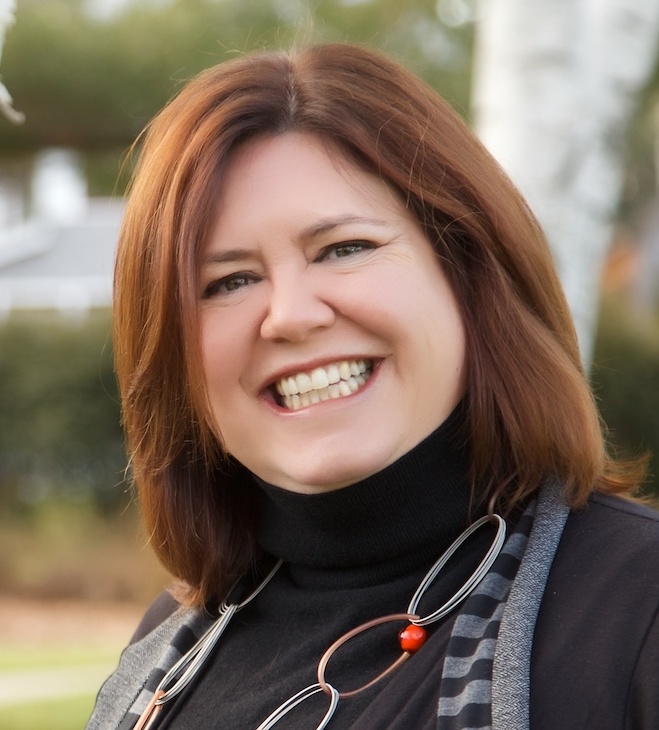 Katie Basson, President of Birch Tree Promotions
During National Small Business Week, we wanted to see what we can glean from a couple of small business owners who have taken to the Internet for their capital needs. Entrepreneurs Katie Basson of Birch Tree Promotions and Asha Waterstreet of Tasteful Additions document their experience as first-time online borrowers, and here’s a hint: Both of them would do it again.
And while their stories are unique, there are some parallels in Basson’s and Waterstreet’s online borrowing experience starting with the fact that both women got their capital needs met through SmartBiz Loans. Both raved about customer service. And for both, marketing and the media played a key role in their decision process.
Where their stories diverge, however, is in their response to the amount of financial products targeting women-owned small businesses. While Waterstreet does not give much thought to demo-tailored loans, Basson’s experience is that the number of programs geared toward women small business owners is lacking. This despite the fact that the United States is home to more than 11 million women-owned small businesses who employ millions and produce $1.6 trillion-plus in combined revenue.
Meanwhile SmartBiz Loans seems to buck the banking trend when it comes to extending capital to entrepreneurs like Basson and Waterstreet. “One third of loans [we process] are to women-owned businesses, which is higher than the average for traditional bank loans to small businesses,” Evan Singer, CEO of SmartBiz Loans, told AltFinanceDaily.
Katie’s Story
Birch Tree Promotions, whose name was inspired by a trip to Basson’s grandparents New England cottage where the moon-lit birch trees shined, was founded in 2006. The Newburyport, Mass.-based business, whose annual revenue hovers at about $1 million, specializes in selling premium promotional items. Similar to the birch tree at that vacation cottage, Basson seeks to make her brand stand out from the rest.
“It’s amazing to do this kind of volume for such a small place. I attribute that to technology, which is why I completely appreciate a company like SmartBiz that leverages that technology to be efficient,” said Basson, who counts among her clients Bain Capital, Philips and Amazon Robotics.
Her need for capital arose with a growth spurt during which time she hired a number of part-time employees.
“Up until [using SmartBiz Loans] we were sort of going along using lines of credit from local banks. I expressed my desire to have a long-term solution help with cash flow so it’s not boom and bust all the time. Instead there would be a significant amount of capital to use for managing the cash flow of the business where making payments each month made sense. None of them were interested. Somehow I didn’t fit their traditional model,” she explained.
The roots of Birch Tree Promotions reside in Basson’s quest to achieve a work/life balance, throughout which she observed financing needs for women-owned home-based business being overlooked.
“There was nothing I could see out there that was targeted to me. I didn’t have a storefront; I’m working out of my home office. That made it seem suspect to them. I wasn’t serious if I didn’t own office space,” she noted.
 But Basson, whose business is run 100 percent online, would not take no for an answer. “If I could pay a $20,000 line of credit, why wouldn’t they view me as a viable credit risk?” she quipped. So Basson set out on a journey to find a lender that was more open minded. She read about SmartBiz loans in an article published by a major financial publication, and then it was off to the races.
“I was amazed at how easy it was and how quickly everybody responded to me,” said Basson, adding that she even received a call on a Friday night from a SmartBiz representative to let her know where her loan stood and so that she wouldn’t have to worry over the weekend.
SmartBiz Loans matched her up with First Home Bank in Florida for an SBA-backed loan. Basson borrowed $200,000 over a 10-year term and her monthly payment is $2,274. The loan process took four weeks.
“Managing cash flow was the biggest, most important piece in addition to having funds available should I need them for big orders. We need some resources if we’ve just landed a huge order. We pay for the goods and then wait to get paid by the big company, and we needed more financial flexibility for that,” said Basson.
Perhaps the greatest testament to her online borrowing experience resides in whether or not she would return to the online lender for her capital needs in the future. The answer? “Indeed” she would.
Asha’s Story
Waterstreet launched Tasteful Additions about six years ago in Rochester, New York. The inspiration for her business came from a family vacation to North Carolina where she and her daughter visited a tasting store featuring flavored olive oils and balsamic vinegars. Ten bottles later coupled with frequent requests from her 12-year old for salads at dinner, Waterstreet knew there was something there.
So she opened up her own tasting store featuring flavored olive oils, balsamic vinegars and gourmet salts. And while in recent weeks she brought her small business entirely online doing away with the brick-and-mortar location, Waterstreet came across a need for capital about three years ago.
“I wanted to expand some of my products, and that was primarily the reason I decided to apply for a loan to get more capital. Credit cards were too high interest and I didn’t want to do that,” she said, adding that she initially went to her local banks only to be met with a process that she described as “tedious.”
In fact, after inquiring with a traditional bank for a loan, she was later greeted by her local banker with a pile of paperwork that she immediately rebuffed. “Being a small business and with me running things I didn’t have time, honestly. I’m trying to open the store, run the business and meet with customers, and I was like, ‘forget it,’” she said.
Instead she opted opting to complete an online application, a process she described as “simple.”
“They took care of everything. And when they had questions, they called me. It was so easy. Whenever you think something’s too easy you wonder, ‘What’s the catch?’ I was shocked there really wasn’t a catch,” said Waterstreet reflecting back.
It was while reading a food trade magazine that Waterstreet came across and ad for SmartBiz Loans. The rest is history. “I read about what they do. I called and the process was so easy and quick. And I got a very good interest rate as well. I was not getting raked over the coals or anything like that,” she said.
Waterstreet would not discuss the details surrounding her SBA loan but suffice to say that if she were to find the need to access more capital in the future, she would likely go to SmartBiz first.
Neither Basson nor Waterstreet considered any other online-lenders.
MCA Company Wins Case After Judge Actually Reads the Contract
May 5, 2017 An explosive New York Supreme Court decision in December against a merchant cash advance company just lost some of its bite, thanks to a decision handed down by the Honorable Catherine M. Bartlett in Orange County.
By all accounts, plaintiff Merchant Funding Services, LLC (“MFS”) had reason to be worried when Long Island attorney Amos Weinberg appeared on behalf of defendants Micromanos Corporation and Atsumassa Tochisako. MFS and Weinberg squared off last year in an almost identical case when Weinberg represented a company named Volunteer Pharmacy, Inc. There, a Westchester County judge decided the agreement in question to be criminally usurious on its face, leaving no question of fact for a trier of fact to resolve. According to court records, Weinberg has been relying on that decision to bolster his legal arguments against other MCA agreements ever since.
But up in Orange County, less than an hour northwest of Westchester, the court there sided in favor of MFS on Thursday, even after being briefed on the Volunteer Pharmacy decision.
Defendants, citing Merchant Funding Services, LLC v. Volunteer Pharmacy Inc., 44 NYS3d 876 (Sup. Ct. Westchester. 2016), assert that a plenary action is not required in the circumstances of this case because the Secured Merchant Agreement is, on its face and as a matter of law, a criminally usurious loan. However, Defendants’ position is grounded on a dubious misreading of the Agreement.
Micromanos, like Volunteer Pharmacy, was seeking to vacate the confession of judgment entered against them by way of a motion rather than by filing an entirely new lawsuit.
Here, the judge not only rejected that the confession of judgment be vacated but she also admonished Micromanos for misleading the court over the actual wording of the contract in order to serve their argument.
The agreement on its face provided for MFS’s purchase of 15% of Micromanos’ future receipts until such time as the sum of $224,250 has been paid. Paragraph 1.8 of the Agreement recited the parties’ understanding – directly contrary to Defendants’ claims herein – that (1) MFS’ purchase price was being tendered in exchange for the specified amount of Micromanos’ future receipts, (2) that such purchase price “is not intended to be, nor shall it be construed as a loan from MFS to Merchant”, and (3) that payment by Micromanos to MFS “shall be conditioned upon Merchant’s sale of products and services and the payment therefore by Merchant’s customers…”
These provisions not withstanding, Defendants contend that the Addendum altered the essential nature of the Agreement by requiring a Daily Payment of $2,995.00 on pain of default, thereby eliminating any element of risk or contingency in the amount or timing of payment to MFS, and converting the Agreement into a criminally usurious loan bearing interest at the rate of 167% per annum. Not so. The Addendum expressly provided that the $2,995.00 Daily Payment was only “a good-faith approximation of the Specified Percentage” of 15% of Micromanos’ receipts, and that Micromanos was entitled to request a month-end reconciliation to ensure that the cumulative monthly payment did not exceed 15% of Micromanos’ receipts. Defendants’ contention that MFS was entitled under the Addendum to the $2,995.00 Daily Payment without being obliged to offer Micromanos a month-end reconciliation is founded on an incomplete and palpably misleading quotation of paragraph “d” of the Addendum.
According to Defendants, paragraph “d” states:
“The Merchant specifically acknowledges that ***the potential reconciliation*** [is] being provided to the Merchant as a courtesy, and MFS is under no obligation to provide same”.
As noted above, paragraph “d” actually states:
“The Merchant specifically acknowledges that: (I) the Daily Payment and the potential reconciliation discussed above are being provided to the Merchant as a courtesy, and that MFS is under no obligation to provide same, and (ii) if the Merchant fails to furnish the requested documentation within five (5) business days following the end of a calendar month, then MFS shall not effectuate the reconciliation discussed above.”
The Defendants’ omission fundamentally alters the meaning of paragraph “d”. Contrary to Defendants’ assertion, the gist of paragraph “d” is that the institution of the fixed Daily Payment plus month-end reconciliation mechanism as a substitute for Micromanos’ daily payment of 15% of its actual receipts was a non-obligatory courtesy. Paragraph “d” plainly does not enable MFS to require a $2,995.00 Daily Payment while concomitantly refusing Micromanos’ request for a reconciliation.
Defendants further contention that the Agreement as a matter of law eliminated all risk of hazard of nonpayment by placing Micromanos in default upon any material adverse change in its financial condition is not borne out by the language of the Agreement. Under Paragraphs 2.1 and 3.1 of the Agreement, Micromanos’ failure to report a material adverse change in its financial condition, not the adverse change itself, was defined as an event of default.
Therefore, the Secured Merchant Agreement is not on its face and as a matter of law a criminally usurious loan. Consequently, Defendants have failed to establish an exception to the general requirement that relief from a judgment entered against them upon the filing of an affidavit of confession of judgment must be sought by way of a separate plenary action.
It is therefore ORDERED, that Defendants’ motion is denied.
Alarmingly, court documents show that Micromanos attorney Amos Weinberg is relying on the same “incomplete and palpably misleading quotation” in other cases involving other merchant cash advance contracts to serve his arguments. Fortunately, in this case, the Honorable Catherine M. Bartlett compared his quotation of the contract to the actual language of the contract and saw they didn’t match up. While a decision from the Supreme Court in Orange County doesn’t mean that the matter is settled for good in New York State, it does potentially put the decision that arose from Volunteer Pharmacy on very shaky ground.
Merchant Funding Services, LLC v. Micromanos Corporation d/b/a Micromanos and Astsumassa Tochisako can be found in the New York Supreme Court under index number: EF000598-2017
Square Lent $251 Million to Small Businesses in Q1
May 4, 2017It was another big quarter for Square Capital, who originated more than 40,000 business loans for a total of $251 million. That’s an increase of 64% year-over-year but only up 1.2% from the previous quarter. The company had $51 million in loans held for sale on their balance sheet as of March 31st.
Overall, Square, Inc. had a net loss of $15 million for the quarter compared to a $96.7 million loss over the same period last year. Investors took the news in stride, pushing the stock price up from under $18.50 to temporarily over $20.
Of notable interest in the fine print of their 10-Q, is acknowledgement that there have been and could be challenges to the chartered bank model on which they rely to make their loans, to the point where they say it’s possible they could one day have to revert back to the merchant cash advance model.
We have partnered with a Utah-chartered, member FDIC industrial bank to originate the loans. There has been, and may continue to be, regulatory interest in and/or litigation challenging partnered lending arrangements where a bank makes loans and then sells and assigns such loans to a non-bank entity that is engaged in assisting with the origination and servicing of the loan. If our bank partner ceases to partner with us, ceases to abide by the terms of our agreement with them, or cannot partner with us on commercially reasonable terms, and we are not able to find suitable alternatives and/or obtain licenses to make loans ourselves, Square Capital may need to enter into a new partnership with another qualified financial institution, revert to the merchant cash advance (MCA) model, or pursue an alternative model for originating loans, all of which may be time-consuming and costly and/or lead to a loss of institutional third party investors willing to purchase such loans or MCAs, and as a result Square Capital may be materially and adversely affected.
Square originally relied on the merchant cash advance model but switched to making loans after they found it challenging to package them up and sell them to investors.
System Error: Prosper Showed Incorrect Returns to Investors
May 3, 2017Investor returns weren’t what they claimed for at least seven quarters, according to a notice Prosper issued on Wednesday.
It recently came to our attention that the annualized net return numbers displayed on your account overview page were inaccurate due to a system error. This error affected the Annualized Net Return and Seasoned Net Annualized Return numbers and has now been fixed.
This error did not impact any other part of your account, including payments, deposits, monthly statements, tax documents and note and loan level information – including estimated returns.
We sincerely apologize for this error. If you have any questions, please email us at investorquestions@prosper.com.

And this was no small adjustment. On LendAcademy, Ryan Lichtenwald said his returns were adjusted from 13.55% down to 9.27%. One user on the LendAcademy forum said his returns were adjusted down from 10% to 8% and another from 14% to 7%. Yet another individual who interacted with me on twitter claims his return dropped from 10% to 1.2%. While we can’t confirm some of these accounts, Prosper’s admission and Lichtenwald’s post on LendAcademy are pretty alarming.
An old LendAcademy forum post shows users mulling over Prosper’s return calculation more than a year ago, but were unsure what to make of it.
In December 2016, the subject came up again.
That same month, Prosper hired a new CFO, Usama Ashraf.
Update: According to Bloomberg, “some of the investors that were affected saw their annual returns fall in half, but in most cases returns fell less than 2 percentage points.” A Prosper spokesperson said that the issue has been going on for several quarters.
Update 2: According to Financial Times, “The miscalculations affected a majority of Prosper’s customers and date back as far as seven quarters.”
Links to additional websites that show investors were growing suspicious of Prosper’s calculations:
Oct 2016: Prosper showing return of 8% – “What I don’t understand, is that when I look at my statements and compare account balances, I’m seeing a return of closer to 4%.”
Reactions from Prosper investors on the Internet:
“My displayed returns are now 1/2 of what they used to be.”
“I was at 16.81%. Today my account shows 9.42% – so not exactly half, but a lot.”
“Prior to the update I was somewhere close to 11%. After the correction…6.65% HAHA”
Fintech Sandbox? States, OCC Mull Regulatory Options
May 2, 2017It’s called the “New England Regulatory FinTech Sandbox.”
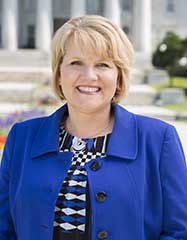
State banking regulators across the six New England states are exploring the creation of a regional compact that would allow financial technology companies to experiment with new and expanded products in “a safe, collaborative environment,” says Cynthia Stuart, deputy commissioner of the banking division at the Vermont Department of Financial Regulation.
Stuart asserts that she and her New England cohorts are adroitly positioned and uniquely qualified to oversee laboratories of finance. In Vermont, for example, she heads an agency that oversees regulation and examination of banks, trust companies, and credit unions as well as such nonbank financial providers as mortgage brokers, money transmitters, payday lenders and debt adjusters.
Financial watchdogs at the state level, Stuart observes, “are already witnesses to a wide breadth of financial services offerings and understand how they impact communities and consumers. As technology intersects with financial regulation,” she adds, “state regulators also appreciate the need to be open to technological innovation while balancing risk and return.”
The regional fintech sandbox is the brainchild of David Cotney, the former Massachusetts Commissioner of Banks, and Cornelius Hurley, director of Boston University’s Center for Finance, Law and Policy. The sandbox stitches together elements of Project Innovate, a development program for fintechs inaugurated by the U.K.’s banking regulator, and the European Union’s “passport” model for cross-border banking operations.
In the U.K., the Financial Conduct Authority is supporting both small and large businesses “that are developing products and services that could genuinely improve consumers’ experience and outcomes,” according to a 2015 report by the London agency. In harmonizing the regulatory regime for the sandbox across state lines of Maine, New Hampshire, Vermont, Massachusetts, Rhode Island and Connecticut, the program emulates the EU’s “passport.” Since 1989, a bank licensed in one EU country has been able to set up shop there while – thanks to the “passport” –operating seamlessly throughout the 28 states of the EU (soon to be 27 after “Brexit”).
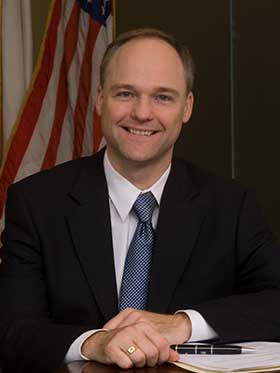
“It’s still preliminary,” Cotney says of the proposed New England sandbox-cum-passport, “but we’ve talked to the financial regulators in all six states and there’s universal openness. Nobody want to be seen as being a barrier to innovation.”
(Barred by law from lobbying in Massachusetts, Cotney hands off the Bay State duties to Hurley while he meets with regulators and other officials in the five remaining New England states. In March, Cotney was named a director at Cross River Bank, a Fort Lee, N.J.-based, $600 million-asset community bank known for its partnerships with peer-to-peer lenders including Lending Club, Rocket Loans and Loan Depot.)
This nascent effort of financial Transcendentalism in New England is, meanwhile, taking place against the backdrop of an increasingly acrimonious battle between the Office of the Comptroller of the Currency and state banking authorities over the licensing and regulation of fintech companies. At issue is the OCC’s plan announced in a December, 2016 “whitepaper” to issue a “special purpose national bank” charter to nonbank fintechs.
Siding with the OCC are the fintechs themselves, including Lending Club, Kabbage, Funding Circle, ParityPay, WingCash. “A special purpose national bank charter for fintechs creates an opportunity for greater access to banking products, empowers a diverse and often underserved customer base, promotes efficiency in financial services, and encourages industry competition,” Kabbage wrote to the OCC in a sample industry comment to its whitepaper (which is on the agency’s website).
Also on board for the OCC’s fintech charter are powerful Washington trade associations such as Financial Innovation Now, the membership of which comprises Amazon, Apple, Google, Intuit and PayPal, and industry research organizations like the Center for Financial Services Innovation. The U.S. banking establishment also appears largely supportive of the OCC. While qualifying its imprimatur somewhat, the American Bankers Association declared that it “views the OCC’s intent to issue charters as an opportunity to further bring financial technology into the banking system…”
But an irate army of detractors is condemning the fintech charter outright. Consumer groups, small-business organizations, community banks, and state attorneys general number among the furious opposition. No cohort, however, has been more hostile to the OCC’s fintech charter than state banking regulators.
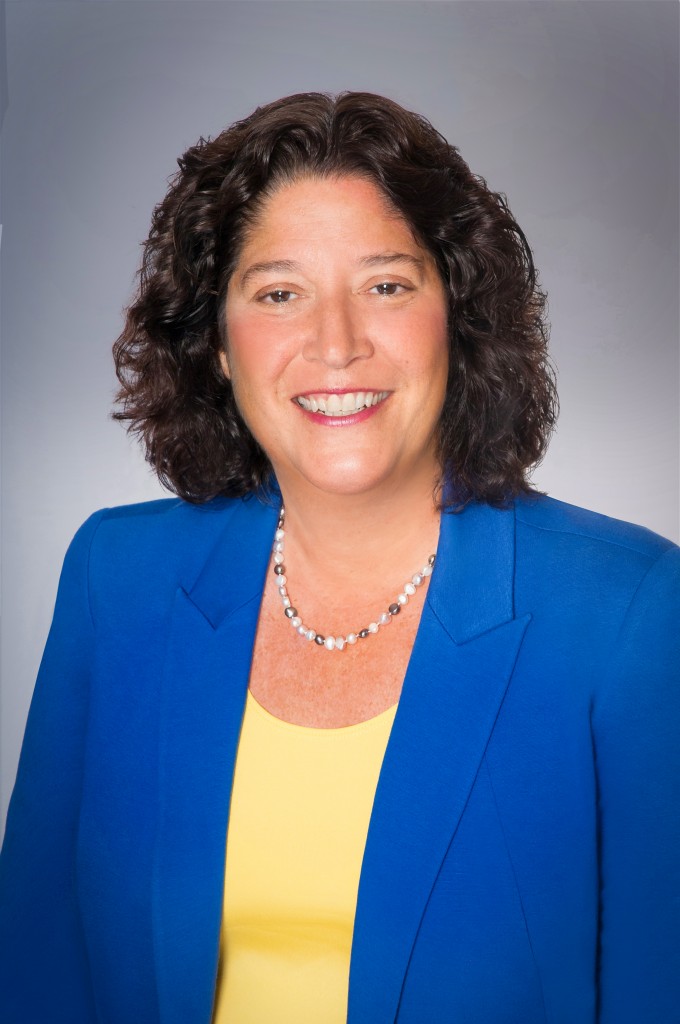
Maria T. Vullo, superintendent of New York State’s Department of Financial Services, has emerged as a firebrand. “The imposition of an entirely new federal regulatory scheme on an already fully functional and deeply rooted state regulatory landscape,” she wrote to the OCC earlier this year, “will invite serious risk of regulatory confusion and uncertainty, stifle small business innovation, create institutions that are too big to fail, imperil crucially important state-based consumer protection laws, and increase the risks presented by nonbank entities.”
Although big-state regulators from New York, California and Illinois have been in the vanguard of opposition, their unhappiness with the OCC is widely shared. Vermont regulator Stuart, who emphasizes the need for regulators “to embrace change,” nonetheless disparages the OCC’s endeavor.
“Of particular concern is the creation of an un-level playing field for traditional, full-service Vermont institutions to the advantage of the proposed nonbank charter,” she told AltFinanceDaily. “The special purpose national nonbank charter would not be subject to most federal banking laws and would be regulated with a confidential OCC agreement. The disparity in regulatory approaches is concerning.”
What had been confined to a war of words – rounds of angry denunciations packed into letters and press releases directed at the OCC — reached fever-pitch last week when, on April 26, the Conference of State Banking Supervisors filed suit against the OCC in federal court. The lawsuit seeks to prevent the agency “from moving forward with an unlawful attempt to create a national nonbank charter that will harm markets, innovation and consumers,” according to a CSBS statement.
Among other things, the conference’s complaint charges that by creating a national bank charter for nonbank companies, the OCC has “gone far beyond the limited authority granted to it by Congress under the National Bank Act and other federal banking laws. Those laws,” the conference’s statement continues, “authorize the OCC to only charter institutions that engage in the ‘business of banking.’”
Under the National Bank Act, the conference’s complaint asserts, a financial institution must “at a minimum” accept deposits to qualify as a bank. By “attempting to create a new special purpose charter for nonbank companies that do not take deposits,” the complaint adds, the OCC is acting outside its legal authority.
Christopher Cole, senior regulatory counsel at the Independent Community Bankers Association – a Washington, D.C. trade association of Main Street bankers known for punching above its weight — asserts that the state banking regulators are on solid ground. “The whole question comes down to what should a bank be for purposes of a national bank charter,” he says in a telephone interview. “The Bank Holding Company Act (of 1956), federal bankruptcy laws, and tax laws – all three – define banks as insured depository institutions. It’s right there in the statutes. So our recommendation,” he says, “is for the OCC to go back to Congress” and ask for the explicit authority to create a fintech charter.
Because the OCC has “short-circuited rule-making” protocol required by another law – known as the Administrative Procedures Act — “the process hasn’t been kosher,” Cole adds.
 Many members of Congress are also expressing outrage at the OCC. Not only have Democratic Senators Sherrod Brown of Ohio and Jeff Merkley of Oregon strenuously objected to the OCC’s fintech charter, but on March 10, 2017, Jeb Hensarling, the chairman of the House Financial Services Committee, fired off a “hold-your-horses” letter to Comptroller Thomas J. Curry. Signed by 34 House Republicans, the March 10 letter reminded Curry that his term of office would officially be up at the end of April, 2017, and urged him not to “rush this decision” regarding the fintech charters.
“If the OCC proceeds in haste to create a new policy for fintech charters without providing the details for additional comment, or rushing to finalize the charter prior to the confirmation of a new Comptroller,” the letter from Hensarling et alia declares, “please be aware that we will work with our colleagues to ensure that Congress will examine the OCC’s actions and, if appropriate, will overturn them.”
Never mind the stern letter from Chairman Hensarling, or the fact that an impressive array of Congressmembers on both sides of the aisle are bipartisanly unhappy, or that state banking regulators’ have filed suit, or that Curry’s replacement as Comptroller is overdue: the OCC is pushing ahead. The agency will play host to a bevy of financial technology companies and other financial institutions on May 16 for two days of get-acquainted sessions in its San Francisco office.
Billed as “office hours,” the West Coast meetings will consist of one-on-one, hour-long informational meetings “to discuss the OCC’s perspective on responsible innovation,” Beth Knickerbocker, the OCC’s acting chief innovation officer, says in a press release.
The office hours, Knickerbocker adds, “are an opportunity to have candid discussions with OCC staff regarding financial technology, new products or services, partnering with a bank or fintech company, or other matters related to financial innovation.”
Back in New England, Hurley, the Boston University law professor advocating the regional sandbox, says: “No one knows where fintech is going. But one place it’s not going is away.”
Managing Risk in Small Business Lending
March 16, 2017 Two years ago, I left a promising career at PayPal, a major technology giant, for what some considered a risky move: I joined BlueVine, a young fintech startup. My title: vice president of risk.
This year, I took on an even bigger role when I was named chief risk officer of the Silicon Valley company, which offers working capital financing to small and medium-sized businesses.
My promotion comes at a time when risk is becoming a bigger concern in fintech, which is ushering in big changes in banking and financial services.
Fintech revolutionizes financial services
Data science technology has dramatically improved access to financing and the way we manage our money. The fintech wave that began with my former company, PayPal, and the world of payments, has spread to other aspects of personal finance, from mortgages to student and auto loans to investing.
This expansion was accompanied by growing concern that the fintech boom is fraught with risks that, if left unchecked, could lead to a major bust in the financial services industry that could in turn cause harm to the broader economy.
In a speech in January, Mark Carney, the governor of the Bank of England, cited the need to “ensure that fintech develops in a way that maximises the opportunities and minimises the risks for society.” “After all, the history of financial innovation is littered with examples that led to early booms, growing unintended consequences, and eventual busts,” he said.
Risk management as key to success
Risk management certainly has been a focus area for BlueVine from the beginning.
BlueVine joined the revolution in small business financing in 2014 when it rolled out an innovative online invoice factoring platform.
Factoring is a 4,000-year old financing system that allows small businesses to get advances on their unpaid invoices by providing easy, convenient access to working capital. BlueVine transformed what had been a slow, clunky, paper-based solution into a flexible and convenient online financing system that enables entrepreneurs to plug cash flow gaps that often hamper business growth.
Because the BlueVine platform is based on cutting-edge data science technology that can process and analyze information to make quick funding decisions, managing risk inevitably became a major challenge in building our business. As Eyal Lifshiftz, our founder and CEO, recalled in a recent column, in BlueVine’s first month of operation, almost every other borrower defaulted.
In fact, that was partly the reason Eyal invited me to join his team. BlueVine serves small and medium-sized businesses seeking substantial working capital financing of up to $2 million. To succeed, we needed to build a robust data and risk infrastructure.
Small startup with big data needs
Joining BlueVine also posed a personal challenge.
At PayPal, where I started as a fraud analyst and then moved into the company’s data science division where I helped develop behavior-based risk models, I had enormous amounts of data to work with to do my job. Now, I was joining a young startup with very limited data history, but with big data needs.
This meant putting together exceptional and experienced teams of data scientists and underwriters and developing a technology that becomes progressively more precise and accurate as it draw lessons from our steadily expanding data and underwriting decisions. It was important for us to have a group of super smart, highly-motivated and technologically-strong people working closely with a team of experienced and sharp underwriters.
Here’s how the process works: Our underwriters develop a robust methodology which is then translated into detailed logic decision trees.
Each decision tree includes dozens, even hundreds of branches, made up of question sets on different underwriting situations.
For example, a decision tree could focus on approving new clients coming from a specific industry, such as transportation or construction, or on increasing the credit line for a client with a specific financial profile.
A typical decision tree would drill down on further financial questions: What’s the expected cash-flow of the business in three to six months? What’s the pace at which it has accumulated debt over the past year? Are the business sales seasonal in a material way?
The questions could also focus on non-financial areas: Does the company’s website look professional? How does it compare with major companies in its industry? Does the business actively maintain its Facebook and Twitter accounts?
The goal is to build a risk infrastructure that steadily becomes more efficient in answering questions in an automated, large-scale and highly accurate manner. Our data scientists leverage multiple external data sources and use dynamic advanced machine learning models to answer these questions pretty much in real-time and with a high degree of accuracy.
So it’s a combination of technology and human input. There will always be gray areas, questions and situations that cannot immediately be addressed by our computer models.
But as the models get better and more robust, the gray areas will shrink. Our models are constantly and automatically enhanced, re-trained and expanded by the most recent data and input from our underwriters.
Think of it as the fintech version of Deep Blue and AlphaGo, the powerful computer programs that famously outplayed topnotch chess grandmasters. Both programs were based on similar principles: the more they played, the more knowledge they absorbed and the more formidable they became at chess.
Technology and teamwork
An even better example is the self-driving car powered by Google’s artificial intelligence technology. Human input is still required, but the more driving the car does, the smarter and more autonomous it becomes.
Building our risk infrastructure is an ongoing process for BlueVine. But it already has helped us steadily expand our reach, making us stronger, smarter and even faster in financing small and medium-sized businesses.
In just a couple of years, the strides we’ve made in managing risk more effectively enabled us to increase our credit lines to $2 million for invoice factoring and $100,000 for business lines of credit, which means we’ve been able to serve bigger businesses with bigger financing needs.
While we initially focused mainly on small businesses with annual revenue of under $250,000, today we have an increasing number of clients with annual sales of more than $1 million and increasingly, we’ve been able to serve clients with revenue of more than $10 million a year.
By the end of 2016, BlueVine had funded roughly $200 million. We’re on track to fund half a billion dollars by the end of this year.
We’ve accomplished this in a time of heightened skepticism about fintech in general and alternative business lending in particular. But rather than scoff at this skepticism, I’d point out two things.
First, fear often accompanies the rise of a new technology. Second, in the wake of the 2009 financial crisis, it’s prudent to raise hard questions about the rapid emergence of new financial technologies.
While building technologies and companies that can provide financial services faster and easier is a laudable goal, It’s wise to move cautiously and with humility.
The BlueVine experience underscores this.
Risk is still a challenge we take on every day. But we have found ways to take it on confidently and effectively with a vigorous combination of technology and teamwork.
Ido Lustig is Chief Risk Officer of BlueVine.
Dear Fintech, The OCC Wants to Welcome You to The Family
March 16, 2017 Congratulations fintech, you did it. The OCC wants fintech companies who are interested and meet the criteria, to apply for a Special Purpose National Bank (SPNB) charter if they so choose, according to a licensing manual published by the agency.
“Providing a path for fintech companies to become national banks can make the financial system stronger by promoting growth, modernization, and competition,” is one of several arguments they make in their decision to move forward. And it would be optional, something a company could choose to pursue.
“The OCC will expect an SPNB applicant whose business plan includes lending or providing financial services to consumers or small businesses to demonstrate a commitment to financial inclusion,” they say and that commitment must be documented in an official plan which must be put up and submitted for public comment. Basically, the entire process will be very public so it’s unlikely that companies will slip through and become banks without anyone really knowing.
New York’s Department of Financial Services nonetheless issued a heated response to the proposal. “The imposition of an entirely new federal regulatory scheme on an already fully functional and deeply rooted state regulatory landscape will invite efforts to evade state usury laws and other consumer protections, stifle small business innovation, create institutions that are too big to fail, and increase the risks presented by nonbank entities,” they wrote. They see the move as an attack on their in-state regulatory powers. “The proposal threatens to create an entirely new federal regulatory program, creating serious regulatory uncertainty that threatens to invade state authority and sovereignty.”
Read the OCC’s charter licensing manual here
Read the NYDFS response here