Fintech Carries the Torch in Northern Delaware
June 14, 2017
Delaware’s history in financial services is rich. The Financial Center Development Act of 1981, for instance, which rolled back the limits on how much lenders could charge as interest on consumer credit, attracted some of the biggest names in banking to the state over the past several decades. Now fintech companies are carrying the torch, evidenced by alternative lender SoFi’s recent expansion into the region.
Glen Trudel, a partner at Ballard Spahr who specializes in fintech, described the view from the rooftop of his downtown Wilmington, DE office as evidence of Northern Delaware’s banking influence. “Many of the large buildings bear the name of a bank. Bank of America. Capital One. Citi. Chase. Barclays. They are all here. And it isn’t just the Financial Center Development Act that makes Delaware a financial services haven. In consumer lending and in certain other financial industry areas, Delaware law provides flexibility that the laws of other states do not. That has drawn a lot of companies from those industries here,” he said, adding that this includes fintech startups in some cases.
SoFi is among them, evidenced by its expansion plans in Claymont, Delaware, which is the home of its recent acquisition, Zenbanx. The alternative lender joins a fintech community that is already flourishing there. J.P.Morgan and Capital One, both of which are partners of Wilmington, Delaware-based non-profit school for coding, Zip Code Wilmington, similarly have an expanding presence in the region.
“That’s why we were created, as a result of that increasing demand for software developers. That increase is the genesis of Zip Code,” said Melanie Augustin, head of school at Zip Code Wilmington.
Rob Meck, SoFi’s senior vice president of operations, told AltFinanceDaily that Delaware is key to the company’s growth.
“[Delaware is] a great talent bed for financial services, and with the acquisition of Zenbanx we have a team in the state and executives with ties here,” said Meck. Among those executives is Arkadi Kuhlmann, SoFi’s head of banking products, Zenbanx president and former chief executive of ING Direct USA, which brings Kulhmann full circle and plays into SoFi’s recent hand of applying for a bank charter in Utah, another business friendly state.

“One bank that used to be here [in Delaware] that was bought by Capital One was ING Direct. Their European parent ran into some issues and needed to restructure, so they sold their U.S. online banking arm to Capital One. Guess who ran ING Direct here before?” said Ballard Spahr’s Trudel, pointing to SoFi’s Kulhmann.
In fact it is the presence of banking veterans like Kulhmann in addition to the placement of former Citi chief Vikram Pandit on Wilmington, Delaware-based fintech startup Fair Square Financial’s board that tie the fintech theme all together for Trudel, who spent more than a decade of his career as an in-house counsel at MBNA America, one of the banks that established themselves in Delaware as a result of the Financial Center Development Act.
“I don’t think it’s surprising that startups are getting into the fintech space or that SoFi is expanding here given the Kulhmann connection and given the management and people who are trained in various functions as a result of the history of banking here in Wilmington and other parts of Delaware,” said Trudel. “He has worked here. And there is a large labor pool of very experienced business and consumer lending people in all aspects – from marketing, to collections, to operations. This has been going on for many years,” he adds.
Fintech & The First State
SoFi is hiring across many different departments including engineering, business development and finance, with the bulk of the new jobs being in customer service and operations roles. “We’re hiring aggressively to be able to have 100 people in the office by the end of July and to scale from there over the next few quarters to several hundred,” Meck said.
Fortunately for SoFi and other fintech companies in the region, the talent pool from which they have to select is widening thanks to Zip Code. The coding school, which James Spadola, Zip Code’s director of business development describes as a nonprofit software development boot camp, trains people who might not have had the opportunity to learn to code before sending them out to the local workforce.
“We have 200-300 applications in each cohort and three cohorts per year. And our process is selective. We only accept 12 percent of applicants,” Spadola said.
The process seems to be working, evidenced by applicants from as far away as Wisconsin and Zip Code’s 93 percent job placement rate for students within three months of graduating.

Head of School, Zip Code Wilmington
Incorporate vs. Operate
Delaware is the leading state for registering corporations, LLCs and other structures, evidenced by more than 1 million businesses domiciled there. Nonetheless most entities that incorporate in Delaware don’t actually operate there. Still there are benefits, such as generous tax savings including no state income tax for Delaware companies not operating in the state, as Zip Code Wilmington’s Augustin points out.
Another feature is the non-jury Delaware Court of Chancery that focuses on corporate legal issues using judges who are well versed in corporate legal issues and the generally favorable laws for corporations.
“The state of Delaware’s corporate law is cutting edge. There is a sort of partnership between the Delaware State Bar Association and the legislature. The Delaware corporate attorney bar keeps an eye on what is going on nationally and every year a panel of them recommend amendments to the corporate code and other entity codes to the legislatures. And the legislatures will typically pass those,” said Trudel.
Of course there are also a host of reasons for businesses to not only incorporate but also operate in the state.
“We’re in close proximity to I-95, which runs from Maine to Florida, there’s no sales tax and the residents are a microcosm of America. We have beaches, deep country and cities as well, so you get a little bit of everything. There is a general appeal to any employer,” said Spadola, who is also a University of Delaware alum.

Zip Code’s Augustin points to Delaware’s lower cost of living versus New York or the West Coast as another reason why companies don’t only want to incorporate but also operate in the state.
Spadola came to Zip Code Wilmington following a stint in politics including a recent run for State Senator. “Zip Code from the launch has been neat to watch. I’ve always attended civic events, including the launch of Zip Code. They did a boot camp in 2015, and I’ve been following the success of it. Through relationships and community outreach, this opportunity arose at the right time,” he said.
Prior to her role at the nonprofit, Augustin was working as an employment attorney in Washington, D.C. “I was looking for work I was passionate about. Zip Code filled that need,” she said
Meanwhile, although SoFi is not currently a Zip Code partner, their paths have crossed albeit indirectly.
“Speakers from Zenbanx have talked with our students before. We’re connected with them and are impressed with what they’re doing. We’re excited that they’re growing here,” said Augustin.
Humans vs. Bank Statements – An Underwriting Journey
June 8, 2017 Automation hasn’t replaced humans yet when it comes to reading bank statements in the alternative small-business finance industry. ISOs, brokers, funders and underwriters still fend off drowsiness and ignore the risk of eye strain as they pore over months of paper or electronic documents.
Many consider the drudgery a necessary part of the business. A merchant’s bank statements can reveal negative balances and commitments to previous loans or previous cash advances – any of which can indicate a bad risk, observers say. Moreover, detecting altered statements can expose fraudulent attempts to obtain credit, they add.
So why not dispense with the tedium and possible tampering of reading paper statements and pdfs? Instead, interested parties could simply obtain the login credentials for a credit or advance applicant’s bank accounts and explore their banking records firsthand. But a mixture of fear, fraud and expense often prevents that direct and relatively simple approach, multiple sources contend.
“Merchants simply don’t want to give up their username and password to enable someone to log into their bank account,” says Sam Bobley, CEO of Ocrolus, a company that specializes in automating the reading of paper statements and statements that have been converted to PDFs. Fear of somehow falling victim to an electronic robbery may be at the root of that reluctance, many in the industry agree.
 Whatever the source of the hesitancy to share login information, the wariness usually seems more pronounced at the beginning of the underwriting process than toward the end, notes Arun Narayan, senior vice president of risk and analytics at Strategic Funding Source Inc., a New York City-based direct funder. “I don’t think that’s a problem after the commitment to fund,” he says, “but it is a problem before the commitment to fund.” Funders can try to leverage their market power to urge brokers to obtain a username and password from a merchant, Narayan suggests. But he admits that approach works only some of the time.
Merchants who have had a bad experience applying for loans or advances or are submitting their first application exhibit the most fear of surrendering login credentials, according to John Tucker, managing member at 1st Capital Loans, a broker with headquarters in Troy, Mich. “If they’ve been through the process before, they pretty much know what’s expected of them,” he says.
All too often, applicants balk at presenting their login information because they have something to hide, notes Cheryl Tibbs, owner of One Stop Commercial Capital, an Atlanta-based brokerage that handles deals for multiple ISOs. She says her detective work with bank statements uncovers an average of two fraudulent applications per week.
Attempts at fraud average more than five a day at Elevate Funding, a Gainesville, Fla.-based director funder, says CEO Heather Francis. Her company’s underwriters learn what to look for in bank statements that can indicate a merchant is trying to defraud a funder, she says.
First, an underwriter who’s manually checking bank statements knows that documents bearing the names of certain banks have a higher likelihood of being bogus, Francis says. Apparently, fraudsters find the statements from those banks easier to alter, or perhaps they have the templates for those banks and can plug in false information, sources speculate.
WHETHER PAPER OR PDF BANK STATEMENTS PROVIDE TO BE ON-THE-LEVEL OR NOT, READING THEM MANUALLY TAKES TIME
Besides, anyone hoping to bilk a funder can buy a customized “vanity statement” for $25 or $30 on craigslist, complete with whatever deposits, opening balances and closing balances they choose, Francis notes. That can tempt troubled merchants as well as outright criminals, observers agree.
And some of the more bizarre errors that appear in falsified statements can seem almost comical. Tibbs cites the example of a statement she saw that was supposedly for January but was populated with transactions dated in February. On altered statements the ending balance for one month might not match the beginning balance for the next month, several sources note.
Sometimes the fake numbers that wayward applicants choose to include in their fraudulent statements can send up red flags, Tibbs maintains. If a merchant is seeking $40,000 and presents account documents indicating $80,000 or $90,000 balances at the end of each month, something’s amiss “10 times out of 10,” she says.
Tibbs tells the story or a referral partner from a one-or two-person ISO calling her in a state of near-euphoria in the middle of the night, breathlessly describing a potential customer with monthly sales of $800,000 and a need for $500,000 in capital. Experience told her immediately that something wasn’t right. In the morning, she saw the statement’s ending balances of $300,000 to $400,000, which confirmed her suspicions.
Yet grafting such unlikely numbers to a forged bank statement isn’t as unsophisticated as some of the telltale signs that the industry sees when viewing bank statements manually, notes Francis. Some aspiring crooks doctor genuine statements with white-out correction fluid and then type in new numbers in a mismatched font, she says.
Anyone reading bank statements should also beware of applicants who “shotgun” applications to multiple ISOs, often on the same day, Tibbs warns. She often comes across that scam because numerous partners refer deals to her, she says.
Whether paper or pdf bank statements prove to be on-the-level or not, reading them manually takes time. An experienced underwriter who knows where to look for what he or she needs to find to verify a statement requires 15 to 20 minutes to approve one from a familiar financial institution, Francis says.
It seems that nearly every bank or credit union has its own way of designing statements, so the manual reading process slows down when an underwriter manually reads a document with an unfamiliar layout, Francis notes. Unfamiliar types of statements sometimes come from small, obscure credit unions or remote community banks, observers say.
Familiar or unfamiliar, statements represent a key part of the underwriting process, and some funders accept the time and expense of reading them manually as simply a cost of doing business, according to Francis. But that expense can become a significant portion of the cost of a credit evaluation, according to Narayan.
That’s why Narayan and his colleagues at Strategic Funding Source have been working with Ocrolus, a startup company that automates the reading of paper statements and pdf’s of statements. Ocrolus uses optical character recognition, or OCR, to automate the reading of those statements.
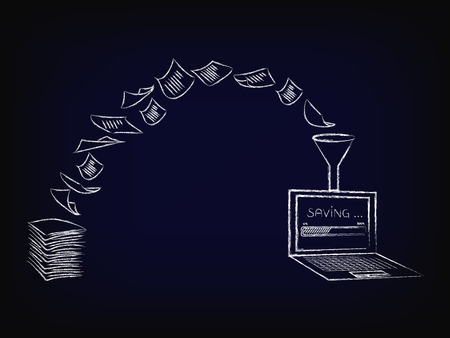 Simply stated, OCR enables a machine to make sense of the characters it perceives in an image, says Bobley, the Ocrolus executive quoted earlier. When the platform can’t make out certain data points, they’re snipped and verified by humans in crowdsourced mini CAPTCHA tests, which stands for Completely Automated Public Turing.
They’re those tests that ask computer users to type what they see to prove they’re not robots, Bobley notes. When two of three crowd workers agree on what an image says in the CAPTCHA test, the Ocrolus platform accepts their verdict as correct, he says.
Ocrolus envisions a large market for its new platform among the many funders still reading bank statements manually in the early stages of underwriting, Bobley says. However, in the later stages of underwriting many of those funders already use bank sync companies to verify statements.
Bank sync companies include DecisionLogic, MicroBilt, Yodlee, Plaid and Finicity. They connect directly with some financial institutions to verify statements. Funders often mention the expense when they talk about bank sync companies, and they also note that bank sync companies have not yet established connections with some lesser-known financial institutions.
But late in the funding process, Elevate Funding requires merchants to cooperate with the bank sync company it uses unless extenuating circumstance dictate otherwise, says Francis. The bank sync company can gain direct access to statements using encrypted login information that does not reveal the true username or password to Elevate Funding or the bank sync company, she maintains.
Some of Elevate Funding’s brokers maintain portals that merchants can use to provide their login credentials to get the bank sync process underway, Francis notes. The portal takes merchants to a page with Elevate Funding branding through a white-label program the bank sync company provides.
“IT HAS SAVED US FROM MERCHANTS THAT WOULD HAVE DEFAULTED…IT IS A NECESSARY TOOL – ONE THAT WE HAVE TO USE”
In about 85 percent of Elevate deals, the bank sync company is connected with the merchant’s financial institution and therefore theoretically capable of gaining access to the accounts in question, Francis notes.
Over the past 30 days the Elevate Funding bank sync results included 3 percent bank error and 17 percent merchant error, while 73 percent of the statements were verified, Francis says. Bank error occurs when the bank sync company is connected to the bank but still can’t obtain the account information. Merchant error sometimes happens when the potential client provides an incorrect user name or password, probably after forgetting the right one. Merchant error can also mean that the applicant was plotting fraud and abandoned the bank sync process upon realizing he or she was about to get caught.
The upshot? Some 73 percent of the bank statements submitted are verified, meaning that the information the merchants submitted matches the numbers at the bank, Francis reports. That also means that for whatever reason 7 percent don’t even start the process they’ve requested, she says.
Meanwhile, the bank sync connection also provides real time data that would indicate to the funder whether the merchant has had a decline in sales, an increase in negative activity or the recent addition of a credit provider, Francis says.
The service can pay off. In an average month, the bank sync service detects about 10 or 15 bad deals that Elevate Funding underwriters had accepted, Francis says. “It has saved us from merchants that would have defaulted,” she says. “It is a necessary tool – one that we have to use.”
But what about those cases where the bank sync company can’t connect with the financial institution and the merchant still won’t give up the login for the account? At 1st Capital Loans, Tucker can sometimes handle the situation by getting a bank activity sheet that lists transactions. If that type of sheet’s not available, he arranges a phone call to with a representative of the bank to verify that nothing’s amiss with the applicant’s bank account.
It’s another example of how – even with today’s rampant automation – the human touch sometimes remains indispensable in assuring that merchants deserve the loans or advances they seek.
District Court Offers Guidance on Merchant Cash Advances in Precedent-Setting Decision
June 6, 2017On May 9, in Colonial Funding Network, Inc. v. Epazz, Inc., the U.S. District Court for the Southern District of New York dismissed counterclaims alleging the overcharging of interest and the affirmative of usury. The decision is the first federal case to recognize that a contractual relationship establishing a bona fide merchant cash advance (MCA) does not create a loan. Beyond that, the decision offers helpful guidance on how to structure a legally enforceable MCA agreement.
In Colonial Funding, the parties’ MCA agreement required the subject cash advance to be repaid in daily payments equal to 15 percent of defendant Epazz’s daily collected receivables. To this end, the agreement authorized plaintiff TVT Capital to make daily withdrawals in agreed-upon, set amounts from a designated bank account into which Epazz was required to deposit sums it collected. In addition, TVT was required to reconcile its withdrawals on a monthly basis against the bank statement for the designated deposit account. If TVT’s withdrawal on a given day was higher or lower than 15 percent of the receivables Epazz had collected on that day, TVT was required to debit or credit the deposit account for the difference. If, however, Epazz failed to provide TVT with the bank statement needed to make reconciliations, “TVT [was] not required to reconcile future payments.” The parties’ dispute arose when Epazz stopped making deposits into the account. Colonial, as servicing provider for TVT, responded by filing a lawsuit in New York Supreme Court, which was removed to federal court.
Epazz counterclaimed, alleging that the parties’ MCA agreement actually created a usurious loan. In considering this argument, the district court noted that, under New York law, “there can be no usury unless the principal sum advanced is repayable absolutely.”
Applying this standard to the MCA agreement in question, one could argue that the nature of the parties’ relationship would convert to a loan if Epazz ceased delivering bank statements to TVT; i.e., from that point forward, TVT would be entitled to collect daily payments in specified uniform amounts, with no obligation to reconcile, until the advance was repaid in full. In the district court’s view, however, if this contingency were to occur, Epazz’s obligation to repay would remain tethered to 15 percent of its daily collected receivables, and, in the absence of reconciliation, TVT’s daily withdrawals would be presumed to have been made in appropriate amounts. In this regard, the district court’s opinion stressed that “Epazz, rather than [Colonial] controls whether daily payments will be reconciled.” Moreover, “[n]o allegation is made that TVT ever denied Epazz’s request to reconcile the daily payments.”
After reviewing the structure of the parties’ MCA relationship, the district court noted that Epazz’s argument that the relationship constituted a loan rested on three specific cases. With respect to the first of those cases, Merchant Cash & Capital LLC v. Edgewood Group, LLC, 2015 U.S. Dist. LEXIS 94018, 2015 WL 4451057 (S.D.N.Y. July 20, 2015), the district court stated that “[w]hether the arrangement was a loan was not briefed and was not determinative to the outcome [of the case.]” The Colonial Funding court then noted that the judge in Merchant Cash reviewed a supplemental filing made by the plaintiff MCA provider and concluded that the parties’ relationship “appear[ed] to be structured not as a loan but as the sale of accounts receivable” because the MCA agreement required weekly reconciliations of payments made against collected receivables.
In regard to the second case cited by Epazz (Clever Ideas, Inc. v. Rest. Corp., 2007 N.Y. Misc. LEXIS 9248 (N.Y. Sup. Ct. Oct. 12, 2007)), the district court noted that the contract at issue had “included neither a reconciliation provision, nor payment contingent on the amount of receipts generated.” Hence, the court opined that “the clear facts [of Clever Ideas] differ from those in this case.”
The district court next determined that Platinum Rapid Funding Group Ltd. v. VIP Limousine Services, Inc., 2016 N.Y. Misc. LEXIS 4131 (N.Y. Sup. Ct. Oct. 27 2016), the third case cited by Epazz, presented facts that more closely resembled the dispute at hand. In Platinum, the New York Supreme Court held that the respective repayment obligations of the merchant and its co-defendant principal owner were not unconditional and the “deposited receipts from future transactions” constituted the sole source of repayment of the subject MCA. In this regard, the court concluded that the personal guaranty of the merchant’s principal owner did not give rise to a loan because the “personal guaranty [was] no broader than the [merchant’s] obligations under the Agreement, and the requirement of payment by the Guarantor [was] no greater than that of the Merchant.”
Finally, in addition to the above cases, the Colonial Funding court considered the parties’ dispute in light of Merchant Cash & Capital, LLC v. Transfer International Inc., 2016 N.Y. Misc. LEXIS 4515 (N.Y. Sup. Ct. Nov. 2, 2016). In that case, the amount of the merchant’s daily payment “could be adjusted downward in the event that the average daily receipts were less than anticipated, and adjusted upward in the event that the average daily receipts were greater than anticipated.” According to the defendant, these adjustments made the subject MCA arrangement a usurious loan. The New York Supreme Court disagreed on the basis that the “plaintiff assumed the risk that, if the receipts were less than anticipated, the period of repayment would be correspondingly longer, and the investment would yield a correspondingly lower annual return.”
Based on its review of the parties’ relationship in Colonial Funding, the district court concluded that Epazz’s obligation to repay was not absolute and did not constitute a loan under applicable law. Rather, the court found that “[p]ayment depends upon a crucial contingency; the continued collection of receipts by Epazz from its customers.” That condition, the court noted, was stated explicitly in the parties’ agreement: “Payments made to FUNDER in respect to the full amount of the Receipts shall be conditioned upon Merchant’s sale of products and services and the payment therefore by Merchant’s customers in the manner provided in Section 1.1.”
Furthermore, Epazz’s contention that the agreement amounted to a loan because it required specified daily payments was “contradicted by the reconciliation provisions which provide that if daily payments are greater than 15% of Epazz’s daily receipts, TVT must credit the difference to Epazz, thus limiting Epazz’s obligation to 15% of daily receipts.” Accordingly, the court dismissed Epazz’s counterclaim for the overcharge of interest and affirmative defense of usury.
Takeaways
- Colonial Funding reinforces that, in order to avoid an MCA being deemed a usurious loan, (i) the provider’s acquired interest in the merchant’s accounts receivable must constitute the sole source of repayment and (ii) the contract must include a mechanism for reconciling required contract payments against the financial performance of the purchased receivables.
- Colonial Funding also illustrates that the line between an MCA and a loan may be a fine one. Without effective contract drafting, a court could consider a default provision requiring fixed payments with no reconciliation requirement as giving rise to a loan. In Colonial Funding, the court noted that the right to require reconciliations rested solely with the defendant merchant, and, if the merchant chose to forgo that right by failing to provide a bank statement to the MCA provider, the provider could presume that its daily withdrawals corresponded to 15 percent of the merchant’s daily collected receivables.
- Requiring the merchant’s principal owner(s) to give a personal guaranty will not render an otherwise bona fide MCA a usurious loan so long as the terms of the guaranty mirror the obligations of the merchant. For example, in Colonial Funding, the guarantor was obligated, along with the merchant, to deposit each day’s collected receivables into a designated account. The guarantor was not, however, obligated to make up any deficiencies in the amounts deposited out of his pocket, which would have constituted a loan.
New York State Assembly Proposes Online Lending Task Force
June 5, 2017On June 2nd, the New York Assembly drafted its answer to the recent joint-committee hearing on online lending. It’s called Bill A8260, an ACT to establish a task force on online lending institutions. As it’s proposed now, the task force would include individuals from the online lending community, the small business community, the financial services industry, and the consumer protection community that would be appointed by the Assembly, Senate and Governor.
The task force would be required to present a report on the following by April 15, 2018:
(a) an analysis of data received by the department of financial services on the prevalence of these institutions in the state, specifically, how many online lenders are lending to consumers and small businesses in this state;
(b) an analysis of data received by the attorney general and division of consumer affairs regarding the number of complaints, actions and investigations related to online lending institutions;
(c) an examination of the online lending industry and the key participants therein, and an investigation and understanding of the differences in small business and consumer borrowers, lenders and markets, such as the history, business models and practices of online lending institutions including identification of interest rates charged by online lenders;
(d) an examination of how consumers are utilizing online consumer credit to manage existing debt, potentially reduce borrowing costs or access needed funds;
(e) an examination of the existing small business credit gap and small business’ use of credit and credit needs;
(f) identification of alternatives for consumers and small businesses who are unable to access traditional financing and whether new technologies can enhance access to credit;
(g) an examination of whether existing federal and state laws already provide appropriate police powers and regulation of small business and consumer lending by online lending institutions;
(h) an evaluation of the impact of any contemplated or proposed law or regulation on the small business credit gap, including a quantitative analysis of the amount of increased or decreased credit available to small businesses as a result of such law or regulation, including the extent to which access to credit would be affected under the state’s current usury laws;
(i) an analysis of the potential interaction of federal law with any contemplated or proposed state regulation;
(j) an exploration of options for multi-state collaboration to harmonize the laws and regulations of various states related to small business and consumer lending across state borders;
(k) an assessment of best practices for small business and consumer loan disclosures, including current online lending industry efforts to advanced standardized and clear information for borrowers;
(l) an assessment of whether consumer loans and small business loans are treated differently by online lending institutions and if any level of oversight should take such differences into consideration;
(m) an identification of what consumer protections exist to protect consumers in this state from predatory practices of online lending institutions; and
(n) a determination of what new measures, if any, are needed to ensure consumers are protected from deceptive or predatory lending without unduly restricting access to credit.
Once the report is delivered, the task force would be disbanded. The bill is currently in committee.
SEC Reported To Be Looking Into CAN Capital and Prosper
May 27, 2017Bloomberg reporter Matt Scully reiterated on Friday that the SEC is looking into CAN Capital “after that firm failed to report to bondholders that some customers’ loans were in default.” That was referencing a previous December inquiry reported back in February. CAN’s $200 Million securitization suffered a rapid amortization event in the second half of 2016, compounding other problems including a reported breach with their Wells Fargo credit facility. The company never quite recovered despite CAN’s Acting CEO, Parris Sanz, telling the WSJ back in January that the problems were akin to changing a flat tire. The previous CEO along with the company’s chief risk officer, chief financial officer, and chief marketing officer have all left.
Bloomberg also reported that online consumer lender Prosper is being probed by the SEC after they disclosed that they had overstated investor returns. The inquiry was said to only be in a preliminary stage.
Update: The inquiry with CAN originated in December but it was not widely reported. The above has been edited to reflect the timing.
Goldman, Cohen Bet on Nav
May 19, 2017
Goldman Sachs. Steve Cohen. These are a couple of the high-profile investors that small business credit and finance startup Nav has attracted to line its coffers. Nav recently lifted the size of a Series B round by $13 million for lead investor Goldman Sachs Principal Strategic Investments as well as Cohen’s Point72 Ventures and others, bringing the tally for this round to $38 million.
Levi King, co-founder and CEO of Nav, told AltFinanceDaily that Goldman Sachs was drawn to the startup’s robust vision, which is to decrease the death rate of small businesses in the United States. He said doing so would have a trickle up effect on Goldman and the capital markets.
“Goldman Sachs invested as a bank investment, not other people’s money. They believe with scale we will change how small business owners make financial decisions, and that will impact the capital markets. We will have a fundamental impact on the entire ecosystem, if we’re successful.”
Goldman clearly believes it’s a good bet, and Cohen’s Point72 Ventures agrees.
“We have the ability at scale to change what can happen in the capital markets based on our data, and that’s something [Point 72] wants to be a part of. They are a smart advisor for us from a data perspective – a quant hedge fund that’s best in class on data. We get free advice along the way. That’s part of the deal,” King said.
In fact, it was another major player in the credit scene that gave the nod to other investors to follow.
“It all started with Experian. That investment was a bigger landmark than any of the other ones. Experian is the biggest credit agency in the world and they had never done a venture investment until us. This sent a signal to other investors,” said King, referring to a partnership that was inked less than a year ago.
The Vision
King points out that bringing the startup’s vision to reality is a gamble. For instance, Nav’s current customer count is 215,000 and they aspire to have 28 million. “That’s the path that we’re on,” he said. The path includes the startup’s most recent expansion into business checking account data.
“We launched a loan reality check app on Android. We’re only testing it. Nothing like it exists. You put in a username, password and banking information, and we model that data and determine how likely it is that you will qualify for a loan based on that data set,” said King.
For instance, if a business has a history of bouncing checks, that’s a negative for scoring. Depository trends also count toward scoring.
“We’re sitting on personal credit, business credit and checking – three data sets. Now we have enough data for lenders to make full decisions on products like business credit cards,” said King, who makes a clear distinction between the various channels involved in the credit equation.
“To be clear, the small business owner is our customer. Lenders are our partners. Business owners win every time,” he said, pointing to the example of one lender partner.
While King wouldn’t disclose the lender he acknowledged that they are a top-10 financial institution that wanted to pay for a top result for its business credit cards among Nav’s product recommendations. This would have been a sponsored result, but it didn’t sit well with Nav. “It would have been a sweet check, but our product would lose integrity for the customer. We said no,” he said.
Also part of the vision is international expansion. “We have those ambitions. That’s why we’ve taken capital from foreign investors, to see how our model can apply in their markets. But that’s way out there,” he said, pointing to investments by CreditEase Fintech Investment Fund in this most recent round and Tencent in a previous round, both of which are based in China.
Meanwhile King said the fresh capital will be prioritized across three buckets. “We’re pretty disciplined at how we deploy capital. I will tell you what I have repeated thousands of times internally to our business. We spend money on acquiring new customers, improving our technology and UX and compensating our employees. We don’t waste money on in-office massages. At this stage a lot more of that capital goes toward customer acquisition,” he said.
Clocktower Technology Ventures also invested in the most recent Round B. Point72 Ventures and Goldman Sachs did not immediately return calls seeking comment.
Transcript of CFPB Hearing on Small Business Lending
May 10, 2017Transcript of the CFPB hearing from earlier today courtesy of: https://www.captionedtext.com/client/ViewTranscript.aspx?EventId=3263140&ParticipantId=ad67099c-16c3-40cf-885a-7e0a1468a30f
Event ID: 3263140
Event Started: 5/10/2017 1:50:29 PM ET
Please stand by for real time captions.
We are delighted that you were here and we are delighted that you are in the city of Los Angeles. We are grateful to have the Honorable Mike fewer. City attorney for the city of Los Angeles. The Honorable Commissioner Jan Lynn , Commissioner of business oversight and California’s Attorney General. We are grateful to be representatives of the small business Association and the Federal Reserve.
That we tell you about what you can expect today. You will hear from city attorney Mike fewer and then Commissioner Jan Lynn and the attorney general. You will hear from the consumer bureaus director Richard Cordray. Following the remarks David Silberman the acting deputy director and associate director to four markets and regulations will frame the discussion with the panel of experts. There will be an opportunity to hear from members of the public. Today’s field hearing is being live streamed at Today’s field hearing is being live streamed@consumerfinance.gov.
Let’s get started. Los Angeles city attorney Mike Fuehrer has long been one of California’s lighting — leading lawmakers. As his chief since July 2013. He has brought an innovative problem-solving focus to the office that combines tough and effective execution with creative initiatives to improve public safety and the quality of life throughout the city. His efforts have also sparked change throughout the state and the nation. Under the city attorney’s broad authority Mister fewer has secretly — frequently secured. He announced in historic settlement against Wells Fargo for opening unauthorized customer accounts. He and the CFPB joined forces to get restitution for its customers, put protections and place and in penalties. Previously he served as majority policy leader and chair of the judiciary community worry — he authored the homeowners Bill of Rights. You may now have the floor. [ Applause ].
Thank you. The introduction was longer than remarks. That was generous. Thank you. I want to on behalf of all of us welcome our director Richard Cordray to our city. Just a word about the collaboration. I was extremely proud of the work of our office, some of whose lawyers are here with us today. In pursuing the Wells Fargo littered — litigation. That aesthetic evolution — catalytic affect. And want to underscore, there is no way that litigation could have had the profound impacted has had without the deep collaboration with the consumer financial protection Bureau under Mister Cordray’s leadership. We also worked with the leader of the office of currency. This collaboration was essential. In that regard, I must say while we’re here in Washington, their efforts underway to either diminish the authority of the CFP be or eradicated altogether. I have the opportunity to be in Washington including discussing how we should work together to ensure the continued viability and strength of the CFPB. Director Cordray leadership has been remarkable and it’s been instrumental in protecting consumers across the nation. I would say, anybody who cares about consumer protection should be standing up and loudly denouncing efforts to undermine the CFPB. I did a radio interview this morning cuppa I did get some applause. [ Applause ] that applause was for Richard and his team. I was interviewed this morning on the radio and I was asked, the purpose of which was not about this but the commentator shifted to what was happening here today and said to me, do you think in light of what’s happening in Washington, the attacks on the CFPB , is a Trump administration to business friendly? Given this is the focus on small business, I want to focus on that. We should all be business friendly. That is a key role for government to play. Being business friendly does not mean protecting businesses violate the rules, at the expense of consumers. Being business friendly does not mean protecting businesses who violate the rules who are in competition with those who play by the rules. That’s what being business friendly means, supporting businesses who are playing by the rules to do better. Which is why I am pleased to be here, as we focus on access to capital and other issues that focus on small businesses, especially those in disadvantaged areas of our nation. With this is my special assistant, Capri Bad Axe. — Mattox. Capri is in charge of my office outreach to the business community. We are working to connect businesses that are trying to improve and expand and hire more people, especially in disadvantaged areas to capital and training on how they could do better. I am eager to hear what more we need to know and what more we need to do, to assure that small businesses can succeed, especially in neighborhoods of our city and our nation, where we should be compelled to do better. Everybody who wants a job should have access to a job. Our small businesses are the way that we will assure that an America, we are a nation where the dignity of work is elevated to a place where it needs to be. Thank you Mister Cordray. You will be hearing from two other partners with who I am extremely proud to share this room today. I am eager to learn more today so we can do better. Thank you very much.
Map grant — [ Applause ]
Thank you for your remarks. Our next speaker is Jim Leonard 01. — Commissioner Jan Lynn . She was appointed in 2013 and previously’s served as the Commissioner as the Department of corporations appointed by the Governor in December 2011. Part two that Ms. Selin was that — Commissioner Owen was a manager at Apple ink from 2009 two 2010. Vice president at J.P. Morgan Chase, state director of government industry affairs at Washington Mutual from 2002 through 2008 and executive director of the California mortgage bankers Association from 2000 until 2002. She also has extensive experience in public service. She was acting commissioner of the Department of financial institutions from 1999 until 2000 after serving as deputy commissioner from 1996 to 1999. She also said as exactly director of California investment network program after serving several years as consultant to the Senate, state banking community. Commissioner Owen you have the floor. [ Applause ]
Every time I hear that introduction, I think holy moly I am really old. I will spend a few minutes to think my partners, Mr. Feuer, the attorney general and my partner in crime Director Cordray. I want to give you some data. We have done some data collecting. We get some information that I think is important for you to look at as we discussed this issue the Department of business oversight overseas over 360,000 licensees from banks, credit unions, mortgage lenders, pay day lenders, securities brokers, dealers and investment advisers. Also, we supervise franchisees and we approve proposed state securities permits. Our job is daunting, exciting and rewarding. With my partners, it is truly a challenge I wake up and want to do every morning. In 2015, California’s GDP surpassed $2.5 trillion. Hence, were the six largest economy in the world. That same year our non-bank licensees reported to us that they originated 400 that they originated 412 that they originated $412 billion in loans, in California. That’s more than the total of 35 states GDP. These non-bank lenders make more than 78% of their loans to commercial enterprises. Most of which are small businesses. California is home to more than 3.8 million small businesses. These firms employing 50% of California’s workforce and drive our economy. Our small businesses are respected globally for their innovation and their fortitude. The vast majority employee 500 or fewer workers and collectively make up 99% of all the businesses in California. Two years ago the U. S. small business administration reported California leads the country in several different categories. The number of small business employees, 6.5 million. The number of self-employed individuals, 2.5 million. The number of self-employed minorities, 1.1 million. The number of self-employed women, 900 973,000. According to the U.S. Census Bureau, California leads the nation with 1.6 million minority owned businesses. LA County leads the nation with 55% of local businesses, minority owned, more than half of those by Latinos. California is also proud to be the nation’s greatest number of women owned businesses, nearly 1.5 million. Women owned firms employing more than 1 million people and generate more than 200 222 $222 billion in annual revenue. Women-owned firms is larger than the number of employees, because many are one-woman ventures and many women owned more than one firm or multiple firms. To assist them, the governor created an office to service California’s single point of contact for economic development and job creation efforts, especially for small businesses. Affectionately, this department is called goby is. — Last week to Governor proclaimed May to be the small business month in California. California’s is the nation’s leading market for online landing. We are home to headquarters for several most prominent players in the sector. Lending club, Prosper, a firm, funding Circle and others. I bring up online lending because from 2010 until 2014 companies reported online consumer and small business financing activity increased over 900% to $2.3 billion. State regulators are getting a bad rap. The industry says that a state-by-state regulatory system is too costly and carries too much compliance risk and inhibits innovation. State regulators do not totally agree with these criticisms. I will tell you, we do acknowledge the companies have some legitimate concerns about the state system and we are moving to address them. As the state’s main financial regulator, let me tell you what I expect from the sector as it stands today. In many ways, we treat them no different than any other licensee we expect the same from all of our licensees, compliance transparency accountability, sound financial practices and most important, fair and honest treatment of our consumers. No one should think that they can gouge small business borrowers are any consumers, because they operate online. I know the CFPB agrees that regulators will work hard to keep up with technological innovations and consumer protections will be as sharp and clear as ever. As the bank regulator or financial services regulator, I am committed to serving the needs of California’s small business community and to being a partner to small business stakeholders in California. We welcome your feedback. Call us, call me. Let me know what you are thinking and what we can do to help. Thank you. I look forward to a fruitful day. [ Applause ]
Thank you, Commissioner Owen for the generous remarks. Our next speaker is Xavier Becerra. He is the 33rd attorney general of the state of California and is the first Latino to hold the office in the history of the state. The state’s chief law enforcement officer, Attorney General Xavier Becerra has decades of experience serving the people of California through appointed and elected office. He has fought for working families, the vitality of Social Security and Medicare programs, and issues to combat poverty among the working poor. He is also championed the states economy by promoting and addressing issues impacting job generating industries such as healthcare, clean energy, technology and entertainment. Attorney General Xavier Becerra previously served 12 terms in Congress as a member of the U. S. House of Representatives. While in Congress, Attorney General Xavier Becerra was the first Latino to serve as a member of the powerful committee on Ways and Means. He served as chairman of the house Democratic caucus and was ranking member of the Ways and Means subcommittee on Social Security. Prior to serving in Congress, Attorney General Xavier Becerra served one term in the California legislature as a representative of the 59th assembly District in Los Angeles County. He is a former Deputy Attorney General with the California Department of Justice. The attorney general began his legal career in 1984, working in the legal services offices representing the mentally ill. Attorney General Xavier Becerra, you have the floor. [ Applause ]
I have to make sure I take her wherever I go. I love the way she pronounces my name, Xavier Becerra. I don’t even say it that well. I know that Director Cordray hired her for more than the fact that she can pronounce my name . We are thrilled that you are here representing us on behalf of the consumer financial protection Bureau on the West Coast, the forward leaning movement of America. I want to say a few things, I have to cheer the man who is our quarterback when it comes to providing consumers, whether you are a small business person, an immigrant family trying to navigate your way through this country or you are a recent graduate from college, hoping to open up your rings. Richard Cordray is our quarterback. We should do everything we can to make sure he can take the team down the field and scored touchdowns all of the time for the men and women who want to make America work. If Richard Cordray succeeds as our director of June 20, he is keeping doors open and that’s all we need. You talk to almost anyone and all they want to know, is there some predictability behind what they will do whether it’s taxes, regulations, the business climate — if they have a way of knowing how to get there they will do it. It’s the uncertainty that causes the real difficulties for small businesses. Richard Cordray is a guy who make sure that that door remains open and we can all shoot for that point on the horizon. We have an obligation to help our quarterback comic he has been spectacular even under some of the most difficult circumstances. I am thrilled that Mike Feuer is my partner in crime. That word is used often, in this case it is really true. I love committing crime with Mike Feuer. He knows how to do it well. We are very fortunate in Los Angeles to call him our city attorney. He is served us in so many different places. He does it so well. Whenever I am with Mike Feuer, I feel like the marathon runner that just came in the top 10 and Mike is the Ironman contestant who does the triathlon like nothing and just passes me by. It’s hard to keep up with them, he is the best. Commissioner Owen, thank you for what you do for giving us the perspective so that we need to know why California is so important not just to us but to the nation. You have made it clear why the numbers count, but why the people make the numbers count. I just want to mention the micro, it is this, it’s you if you have a business, if you do spend — defend small businesses or people like my parents who started their own business, not knowing what they were getting into. My father had a sixth grade education my mother did not come until she was a teenager. They did it. They knew the micro of starting a business. They bought a small house and they rented it and then they bought another and rented it. Before you know it, they were making more in retirement than when they were both working. I consider myself a small businessperson. Island for my parents. I know this, I don’t have time to navigate everything going on in the business world. It’s like “Ghostbusters”, who are you going to call? When it comes time to making sure your business is doing okay, Consumer Financial Protection Bureau and Richard Cordray is who you call. We need them to be there for us every step of the way. The Attorney General’s office will do everything to partner with the consumer financial protection Bureau with our partners at the state level, Commissioner Owen and all those at the state who work on behalf of the people and with our city attorneys and district attorneys who try to protect does daily. We need your help. This is where these types of workshops and forums are so important. The get to connected to the people who are willing to help. My job is to enforce the laws for 40 million bill bill — people in the state of California. We have a very robust consumer protection division in the Attorney General’s office. One of the people who are just hired to be my special assistant, dealing with the issues involving consumers is Ellie Bloom, whom I stole from the Consumer Financial Protection Bureau. Yes. She is here. I also have Alyssa I had of the external affairs, so we can reach out to people and find out what you need us to know. Under the Constitution of the state, I have the authority to begin independent investigations of any activity where Californians are impacted and harmed. I intend to use that authority to the hilt. On behalf of the people of this country, who are like my parents, who worked very hard and were able to establish a business and now I’ve done so much to make it — in the past college was unknown to the family and to make it in the past, that forever we will only dream of being able to do things for our kids and make it something that’s in the past to believe like my father as a young man could not walk into a restaurant because of a sign that said no dogs or Mexicans allowed. That is all in the past. California’s forward leaning. One of the reasons we have succeeded is because we do not stop, we do not look back, we understand this is a tough place to do business. Our environment makes it difficult for businesses to establish her, our air and water are tough to keep clean. We must impose requirements on the gasoline we pump into our cars on how much we can put into this LA basin before gets a polluted your kids cannot go out and play or they get asthma. 40 million people, that is tough to organize. All of that we do, we’re high-cost state and we are high quality as well. That requires a lot of effort on the part of all those willing to work with quarterback Richard Cordray to make sure we keep those doors open. That’s our job. No that you got the Chiefs on form is — chief law enforcement officer of Los Angeles with you, the person the Governor has appointed to make sure businesses have the opportunity to have those doors open and Commissioner Owen with you. Know that the Attorney General is willing to work with them and with you but most importantly, I will do everything I can to make sure that regardless of Washington we don’t abandon our quarterback at the can — Consumer Financial Protection Bureau . We know what success means when you have Richard Cordray fighting for you. We won’t stop scoring and we will work with Richard Cordray to make sure everyone in America benefits the way California has by having a forward leaning policy in the way we do with consumer issues and help our people. Thank you, Director Cordray. They think all my colleagues and I thank you for knowing it was important to be here this morning. Have a great day. [ Applause ]
Thank you, Attorney General Xavier Becerra. I am now extremely pleased to introduce Richard Cordray. Prior to his current role he led the CFPB’s enforcement office, he served on the front lines of consumer protection as Ohio’s Attorney General. In this role he recovered more than $2 billion for Ohio’s retirees, investors and business owners and took major steps to protect its consumers from fraudulent foreclosures and financial predators. Before serving as Attorney General, he served as an Ohio State Representative, Ohio Treasurer and Franklin County Treasurer. Director Cordray . [ Applause ].
Thank you. My football career peak in the seventh grade, I do remember Vince Lombardi saying that when the going gets tough the tough get going. It’s great to be here with three of our closest and most productive and for me personally, our most dear partners anywhere in the country. I think them all for being here. I think them and their teams for the work they have done, are doing and will continue to do with us to stand up for Americans who expect and deserve the right kind of support and protection for their government officials. Thank you. Thank you all for coming it’s good to hear — be here today the Consumer Financial Protection Bureau is announcing an inquiry into ways to collect and publish information about the financing credit needs of small businesses. Especially those owned by women and minorities. We are aware of the role they play in the our lives. Small businesses dropped the — drive the economic engineering. It is estimated they’ve created two out of every three job since 1993 and they now provide work for almost half of all employees in the private sector. We perceive large gaps in the public’s understanding of how well the financing credit needs of these entrepreneurs are being served. As you probably know, the Congress provided the consumer bureau with certain responsibilities in the area of small business funding. There is a strong logic behind this. When I served as the Ohio Attorney General we recognize the need to protect small businesses in nonprofits by accepting and handling complaints on their behalf, just as we did for individual consumers. And approach that proved to be very productive. The line between consumer finance and small business finance is quite blurred. We heard that at a roundtable this morning with community and consumer advocates. Or than 22 million Americans are small business owners and have no employees. According to data from the Federal Reserve, almost 2/3 of them rely on their business as their primary source of income. This is embedded in many people’s lives. Congress has charged the consumer bureau with the responsibility to administer and enforce laws including the equal credit opportunity act. Unlike others, it governs not only personal learning but some commercial lending as well. We have now conducted a number of supervisor examinations and small business lending programs at financial institutions. Through that were learning about the challenges they face in identifying areas where risk may exist and were assisting them developing the property to manage that risk. In the Dodd Frank Wall Street Reform and consumer priest — protection act Congress took a further step to learn more about how to encourage and promote small businesses. To determine how well the market is functioning and facilitate enforcement of the fair lending laws, Congress directed the Bureau to develop regulations for financial institutions that went to small businesses, to collect information and report. The request for information will be released and asks for feedback to help us understand how to carry out this directive in a way that is careful, thoughtful and cost-effective. We have considerable enthusiasm for this project. In my own case, I’ve seen how small business financing can have a number — economic impact. I will tell you a story, when I served as a treasure of Ohio, we had a reduced interest loan program to support job creation and retention by small businesses. The way the program worked was that the state could put money on deposit with banks at a below market rate of interest in this deposit will send link to the same size loan to a small business and a correspondingly below-market rate. This link to posit has been authorized more than 20 years earlier but it had fallen into the disuse. At its core, the program maintenance. Small businesses are often in need of financing to update and expand. Often not at large amounts of money, if they can get an expensive financing they can fertilize their ideas for growth and be more successful. We diagnosed this program and found after its initial success it had become too bureaucratic. We heard from both banks and businesses that the program which was the paper-based was so slow and cumbersome, nobody wanted to bother to use it. We changed it. We put the process online, rebranded it and made specific commitments to those who wanted to participate. We told them they could fill out an application and less than 60 minutes and promised they would have a yes or no answer within 72 hours. That was not easy. It required very close coordination with the bank that took heart. We did it and the Grow no program took off. Only $20 million was advocated but in two years we deployed more than $350 million helping 1500 small businesses create and retain 15,000 jobs across the state. It was also exciting to see how the businesses were able to use the loan funds. I can recall a construction business that needed a loan to about — bike a piece of equipment. They got the money, the got the equipment and they thrived. I recall a manufacturer that needed money to turn their factory sideways to utilize more space and employ more people. We found the put, revenue and jobs. I recall a company in Western Ohio that started as a caterer and begin to make their own tents for events. They recognize they might succeed is tentmakers and needed financing to bid on a project with the U. S. Defense Department. We got them that loan, they got the bid and they were named as one of the 500 fastest growing businesses of the year. The moral of this story is business opportunity, especially those for small businesses often hinge on the availability of financing. People have immense reserves of energy and imagination. Nowhere is that more true than in the state of California. Human ingenuity is the overwhelming power that allows human beings to reinvent the future and make it so. These forces unleashed what Joseph Schumpeter called the gales of creative construction a constantly mold our economic life. Innovation has sharpened our nations edge for generation after generation. When credit is unavailable, creativity is stifled. To make the meaningful contributions that are capable of making to the economy, small businesses particularly women and minority owned need access to credit. Without it they cannot take it vantage of opportunities to grow. With small businesses so deeply woven into the nation’s economic fabric it is essential that the public along with small business owners themselves can have a more complete picture of the financing that is available to this Key Center — sector. We are releasing a white paper today that lays out the limited information we currently have about key dimensions of the small business lending landscape. According to census data and depending on the definition use, there an estimated 27,600,000 small businesses in the United dates. We estimate that together they access $1.4 trillion, that’s trillion not billion in credit. Businesses owned by women and minorities play an important role in the space. Women-owned businesses account for over one third, 36% of all non-farming private sector firms. The 2012 survey of business owners, the most recent indicates that women-owned firms employed more than 8.4 million people and minority owned firms employed more than 7 million people. Those are huge numbers by comparison in 2014 fewer than 8 million people were employed in the entire financial services sector. That was the big paragraph on the facts and figures, I was inspired to get through it by you Commissioner Owen. When small businesses succeed they send ripples of energy across the economy and throughout our communities. 2013 study by the Federal Reserve Bank of Atlanta found that counties with higher percentages of the workforce employed by small businesses showed higher local income, higher employment weights and lower poverty rates. In order to succeed they need access to financing to smooth the cash flows for current operations, meet contingencies and invest in their enterprises to take advantage of opportunities, as they arise. Another study found the inability to obtain financing may have prompted one in three small businesses to trim their workforces and one in five to cut benefits. Unfortunately, much of the available data on small business lending is to dated or two spotty to paint a full picture. Especially, those owned by women and minorities. We do not know whether certain types of businesses or those in particular places may have more or less access to credit. We do not know the extent to which mall business lending shifting from banks to alternative lenders. Nor do we know the extent to which the credit constraints that resulted from the great recession persist and to what extent. The beige book produced by the Federal Reserve is a survey of economic conditions that contains huge amount of anecdotal information about business activity around the country. It has no systematic data on how small businesses are fearing and whether they are being held back by financial constraints. Given the importance of small businesses to our economy and the critical need to access financing if there are to prosper and grow the Porton to fill in the blanks and the how-to’s on how they can engage. That is why Congress required institutions to report about applications in accordance with regulations to be issued to the consumer bureau. That is why we are here today. The inquiry we are launching is the first step towards crafting this mandated rule to collect and report on small business lending data. To prepare for the project we’ve been building an outstanding team of experts in small business lending. We are enhancing our knowledge and understand based on our equal credit opportunity act complaints work with small business lenders just helping us learn more about the credit application process, existing data collection processes and the nature and extent and management of fair lending risk. We have learned more work on the reporting of home loans under the home loans mortgage act which has evolved considerably. At the same time, we recognize a small business lending market is much different from the mortgage market. It’s more diverse in its range of products and providers which range from large banks and community banks to Marketplace lenders another emerging players and the Ventech space communities play an outsized role in making credit available. Unlike the mortgage market, many small business lenders have no standard underwriting criteria or widely accepted models for scoring. For these reasons and more we will proceed carefully as we work toward meeting our responsibilities. We will seek to do so in ways that minimize the burden’s on industry. I request for information released focuses on several issues, we wanted to determine how best to define small business for these purposes. Despite the importance of these firms to our economy, the surprisingly little consensus on what constitutes a small business. The small business administration and overseeing federal contracting sometimes looks at the number of employees, receipts and applies different thresholds for different industries. For our part the consumer bureau thinks about how to put — develop a definition that’s can this — consistent and can be tailored to the purposes of collecting data. We looking at how the lending industry define small businesses and how that affects the credit application process. Having this information will help us develop a practical definition that advances our goals and aligns with the common practices of those Inland to small businesses. Second, we want to learn more about where small businesses seek financing in the kind of loan products made available to them. Our research tells us term loans, lines of credit and credit cards of the all-purpose products used most often by her small businesses. They make up an estimated three fourths of the data in the small business finance a market, excluding the financing of merchants for service providers extend to their customers to finance purchases. We want to find out if other important financing sources are being tapped by small businesses. Currently we have limited ability to measure accurately of the prevalence of wonders in the products they offer. We also want to learn more about the roles that Marketplace lenders, brokers, dealers and other third parties may play in the application process. At the same time, we are exploring whether it’s specific types of institution should be exempt from the requirement to collect and submit data on small business funding. We are seeking comment about the categories of data on small business lending that are currently used, maintained and reported by financial institutions. In the statue, Congress identify specific uses of information that should be collected and reported. Include the amount and type of financing applied for, the size and location of the business, the action taken on the application and the race, ethnicity and generate — of the owners. The reporting of this information would provide a major boost in understanding small business funding. At the same time, were sensitive to the fact that various institutions may not currently be collecting and reporting all of this information. We understand that the changes imposed will create implementation and operational challenges. We will look into clarifying the precise meaning that some of these require dellavedova — data elements to make sure they are understand and reported. We will be considering whether to add a small number of additional data points to reduce the possibility of misinterpretations or incorrect conclusions working more limited information. To this and were seeking input on the kinds of data different types of lenders are currently considering in their application process as well as any technical challenges posed by collecting and reporting this data. We will put all of this information to work and think carefully about how to fashion the regulation mandated by Congress. Finally come of the request for information seeks input on the privacy implications that may arise from disclosure of the information that’s reported on small business funding. The law requires the consumer bureau to provide the public with information that will enable communities come a government entities and creditors to identify community development needs and opportunities for small businesses come especially those owned by women and minorities. We are also authorized to limit the data dismay public to advance privacy interest. We will explore options to protect the privacy of applicants and followers and the Compostela — confidentiality. The announcement we are making today and the work we are doing cure reflect central tenants of the consumer financial protection Bureau. Were committed to evidence-based decision-making. We aim to develop rules that need our objectives without creating unintended consequences or burdens. We went to see a financial marketplace that offers fairness an opportunity not just to some, but to all. The marketplace it does so without regard to race, ethnicity, gender or any other element of our fabulous American mosaic. Small businesses are powerful they supplied jobs, teach skills and service backbones of the community. We need to meet obligation to develop data that will shed light on their ability to access much-needed financing. It is essential to their growth and prosperity and therefore to the growth and prosperity of us all. What Cicero observed an agent Rome, still holds true today. He said, nothing so cements and holds together all the parts of our society is faith or credit. Our communities depend on both of these precious things just as much today. As we launch this inquiry want to remind you that we value the feedback we get. We take it seriously, consider carefully and integrated into our thinking and our approach as we figure how to go forward with his work. We ask you to share thoughts and experiences to help us get there. We thank you for joining us here today. Thank you. [ Applause ]
Thank you Director Cordray. I would now like to invite the panelists to take the stage. While they are doing so, I will introduce them. David Silberman is the bureaus act in director and associate director to her. Cheryl Parker Rose Sirs at the assistant director for the bureau’s office of intergovernmental affairs. Grady Hedgespeth serves as the assistant director for the bureau’s office of small business lending markets. Our guest panelist include Elba Schildcrout , East Los Angeles Community Corporation . Makin Howell , Main Street Alliance . Josh Silver, Kate Larson , U.S. Chamber of Commerce . Todd Hollander , Union Bank and Robert Villareal , CDC Small Business. David.
Thank you. I can still say good morning but just barely. I am David Silberman the acting deputy director and associate director for research marketing regulations. It’s a pleasure to be here and share this portion. As you’ve heard, we will hear from a number of respected panelist consumer advocates and industry participants. Each panel member will give us some background and provide perspective. We will then post questions to our panelist and engage in discussion. The panel discussion will be followed by public testimony. Before we begin, let me frame the issues we will talk about. Is Director Cordray noted, and as we discussed today in the white paper we released. Small businesses play a key role in fostering community development and fueling economic growth both nationally and in their local communities. To do so, these businesses and particularly women and minority owned be fair and equal access to credit to allow entrepreneurs to take advantage for the opportunities for growth. As the director explained in section set 10.7 one of the Dodd Frank act Congress amended the equal credit opportunity attack to require institutions to compile, maintain and report information concerning credit applications made by small businesses. Congress directed the bureau to it — issue a regulation to govern and report. The purpose is twofold, to facilitate enforcement of the fair lending laws and second to enable communities, governmental entities and creditors to identify needs and opportunities of women-owned, minority owned and small businesses. Is Director Cordray explained were in the early stages and were focused on outreach and research. Today’s hearing and the our five we issued our them Porton steps as we seek to enhance our understanding of the 1.4 train dollars small business financing to discharge our abilities. As context, I will provide — invite our panelist. They will each of 10 minutes for a statement and we will moderate a discussion with the panelists. We will start on my far left, Elba Schildcrout , East Los Angeles Community Corporation .
I am privileged to be here. I’m thinking of my mother on Mexican mothers today. I am privileged to be here and while we came here from Guadalajara. At East Los Angeles Community Corporation , we advocate for economic and social justice in the greater LA area by building grassroots leadership, developing affordable housing in providing access to economic development opportunities for low and moderate income families. In 2013 we began working with local businesses to preserve the vitality of the small business community. Our commercial corridor project is part of a strategic effort towards responsible community economic development by developing leadership connecting Rick and Morty businesses with technical assistance and hosting monthly meetings. We are empowering our business community to take ownership and be involved in their community. In 2015, we held a shared vision of economic stability and inclusive 50 for all residents including two brick-and-mortar businesses, street vendors and mariachi groups. To help them thrive, they need new resources such as micro-lending and lines of credit. Many rely on friends and families limited resources for loans. The also need case management to ensure they can make use of resources that already exist, such as technical assistance for writers and others doing business to support — business support services. It is through this relationship building with small business owners who are primarily Latino, immigrant, and women that we have learned of their needs and challenges. Some of these challenges have been difficult in getting credit from banks, especially small loans under $250,000, some of these owners need anywhere from $5000-$10,000 to get started. They also need data transparency to show which lenders are making loans and to which groups and where they are being made. We think things should partner and do joint outreach and address specific needs such as language access. The data should be segregated for Latino and other groups. Small business owners need greater protections to prevent discrimination. We’re excited and supportive of tran 20 ‘s efforts — tran 20 — we’re excited and we thank you.
Makini Howell , Main Street Alliance .
Hello. I am a member of the Main Street Alliance of Washington coalition of 2000 small business owners. I have been running my family’s business for 13 years. We have been in business for a total of 40 years, were a food service. I am six vegan restaurant concepts in Seattle. I employ over 40 people. I offer health coverage, I start my minimum wage at $15 an hour. I have grown our family business from grossing $200,000 in last year we close to $3 million. I did nothing without a bank loan. When I went into apply for a loan, I don’t know if it was because I was a woman or if it was because I was black. It could be any number of things that are risks for a banker. I understand when I speak to consultants that they had no concept of why it wasn’t doing stake and people would ask if I would ask fish. My menu is 100% plant-based. Anyone of these things I can understand would be a reach, not only did we succeed but I toured as Stevie Wonder’s personal chaff — chef in 2015. Nothing was possible without lending. We have to change our understanding around what can be successful. As opposed to framing it is let us collect data and let some well deserving minorities and women in, people of color and women are the majority of people that are providing jobs. They are the majority that are small business owners. Bankers and banks have to change their framing around who is deserving and who actually can provide jobs for the community. Small businesses are the engine of the economy. The engine of the economy currently is being run by people of color and by women. That Pinkie Master change. That lending will then change along with what is happening in Washington. Someone told me when you go into a bank they decide right away whether they will lend to you. That I dress well enough, Amite fallen off, — the change has to come from understanding who helps to run the economy. I would still love to get a small business loan. I haven’t tried because they don’t need money and I am 13 years in. I am attractive to a lender at this point that I don’t need money now. I needed money then. I won’t ask a bank for money now, in order to get to where I am, I had to use predatory lending, cash advances, my father gave me $10,000. I did get one from a community lender that took me months of rewriting my business plan to get that. It’s a challenge and I feel I would’ve been a $6 million company if I had gotten the lending necessary at the beginning. I had the education and the support necessary from the banks. That’s my story. Thank you.
Thank you. Josh Silver.
Good morning I’m senior advisor of the National Community Reinvestment Coalition. I thank you for this hearing today. There are some lending’s those lenders on the panel that may be encouraged to give you a loan after this. I think there are well-intentioned lenders. Last week USA Today reported a survey showing improved small business confidence. Things are looking up for small businesses after the great recession. Not so fast. The survey was sparse and on which businesses were surveyed. Research shows that women minority owned and very small-businessess experience difficulties growing because barriers accessing credit. Considered the following, women-owned firms are significant force but they remain small. 90% of women-owned small businesses have no employees other than the owner. Part of the difficulty women faces lack of credit. Just 5% of women-owned businesses use bank loans to start their businesses compared to 11% of mail and businesses. Minorities also faced difficulty starting and growing a small business. Nonminorities are twice as likely as minorities to own employer businesses. If minorities owned businesses at the same rate as nonminorities, our country would have 1 million additional employer businesses and more than 9.5 million additional jobs. Surveys have found that African American small businesses are more likely than a why don’t business to not apply for credit, due to fear of rejection. And CRC researchers from the smallest businesses, those with revenues below $1 million at the most trouble accessing credit. In 2010, 8% of these businesses received loans compared with 20% of all small businesses. Access to credit is critical yet inequalities in access contribute to overall inequality. NCRC found in a report that in 2010, the business funding let an economically distressed counties in Appalachia was 44% of national rates. The Woodstock Institute found that in Los Angeles and San Diego, businesses and minority census tracts were 31% of all businesses but they received only 21% of the loans under $100,000. A variety of reasons exist for these disparities, some due to the characteristics is also do two on — discrimination. In section 10.71 of the Dodd Frank act it will be on — they will draft a predecessor appearing in bills in the future. It requires data collection from lending institutions regarding demographic characteristic of small businesses including race and gender into report the data publicly. The active data collection and dissemination is a powerful motivator for lenders to increase responsible lending to underserved businesses. As Director Cordray says, former justice Louis Brandeis talks about sunlight and the electric light of data disclosure. No lender wants to be highlighted for shirking any part of the community and they want to get up to speed with the lenders that are doing a better job. Use data for a spur of competition. We have saying that data drives a movement for economic justice. In the arena, better data will respond — result in more employment and more wealth building in underserved communities. Isn’t that what we are about? Making capitalism work. Thank you.
Thank you. Kate Larson, U.S. Chamber of Commerce Good afternoon. As a proud Trojan I’m happy to be here today and LA. I would like to thank the Bureau for holding this hearing on this important issue and especially to Grady for their outreach over the past few months. They have been fantastic. We are excited to engage with them on the request for information. As previously mentioned, I’m the director at the U.S. Chamber of Commerce , the largest business Federation representing more than 3 million companies. We represent all small businesses and lenders. We have a unique perspective of seeing the entire picture of small business market and how it affects the end-users. More than 96% of business come when he said fewer than 100 employees. Small businesses are the lifeblood of our economy. Not only to produce goods and services we depend on but to create jobs, provide stability to millions of Americans. Remarkably, 28 million mainstream institutions account for over half of the sales of the United dates, 55% of all jobs in the country and are responsible for 65% of all new job creation. I’m sure you can all recite these data. It is hard to overstate the importance of credit for small businesses and support their inventory, open locations and hire more employees, manage downturns and otherwise push forward. We asked the Bureau to conduct a comprehensive sound report on potential barriers to small business lending in the United it’s including regulatory burdens that it may fully understand the credit products used by small businesses, inform forthcoming rulemaking to ensure it promotes, not inhibit small business funding and propose a tailored rule to include not only necessary business and products but also fulfilling the well-meaning purpose of statute. We hope the SPA will also lend their expertise in this area. Unfortunately, small business lending is not fully recovered from the great recession. The most recent small business credit survey that was mentioned jointly conducted by the Federal Reserve banks found cash flow remains a challenge for small firms, only half of applicants were seen — received financing and 18% received nothing. 32% had to delay expansion as a result of the shortfall. 21% had to reach into their personal finances. This is not okay. Much of this and I know we will all have differing opinions. We think it’s due to post crisis over regulatory overhaul and increasingly risk adverse financial institutions, that have to meet safety and soundness and know your customer requirements when issuing alone. Asked — as we begin the fact-finding process we hope to consider the true spirit of the statute and include in the definition to be tailored to only the most vulnerable populations, specifically the SBA definition of 500 employees does not seem small at this juncture. Every small business has different needs and approach credit differently. This market is different than the mortgage lending and data collection is not close to the home mortgage disclosure act. It’s a misnomer. The needs are different and small business lending is a complex market with many sources. Depending on the needs of the small business, owners may turn to friends and family, home equity lines of credit, credit cards, SBA loans,’s private loans or a combination of multiple sources. Larger and middle-market firms get more complicated. This is why the definition needs to be tailored. Employee training will be incredibly complicated, given the sources of business credit. Home-equity credit officers issuing a HELOC, flight attendants and a credit card, a trucking company offering leasing for trucks, retail clerks offering branded credit cards, they may not understand they will have to capture small business lending data. Without a firewall, — it will be difficult to create a firewall between the employee accepted credit application and the one making the underwriting decision. Without a firewall institutions will violate the equal credit opportunity act. That will be more difficult at smaller institutions. Business representatives applying for loan, if this applies to more than just the owner of the business, may not have the information to create confusion and prolonged credit application. They may not know how much they have for annual revenue or the other data points. It is unfeasible for lenders to know if the business changed in status. That is a hurdle. It will be impossible for institutions to report individual credit transactions. My wonderful mother who drove 2 1/2 hours to be here is a small business owner. If she’s buying something on a credit card for her business, is that also going to be the same thing as home goods? That is difficult way if you are going credit by credit transaction. In conclusion, we think the Bureau for soliciting information but stressed the importance of the Bureau conducting a sound, robust study on the roadblocks inhibiting small business lending, including potential regulatory considerations. To understand where small businesses are attaining credit and where they are not, ensure the rulemaking will not curtail the sources and an environment where access to small business credit is constrained, it’s imperative we energize that marketing encourage growth. I appreciate the opportunity to stuff I and thank the Bureau for its approach. Look forward to working together and I’m happy to answer any questions.
Thank you. Todd Hollander from Union Bank.
Hello. I am also currently serving as the chairman for the small business community for the consumer bankers Association and a serve on the California bankers Association. I’m proud to represent all the groups in this testimony. We wish to express our appreciation for the collaborative and transparent manner in which the CFPB — tran 20 is under Katy — undertaking these rules. The environment, private lending groups and lenders share a common goal. We want to provide loans to small businesses to help generate jobs, tax revenues and economic growth and prosperity. Lent to all market segments without bias or discrimination enable identification of business and community development needs, ensure regulatory has the ability to hold lenders comfortable and avoid saddling lenders with rules that are unnecessarily costly to implement and execute and that could generate misleading data or curtail access to needed capital. In terms of the current small business lending environment the CBA seen signs of improvement. Members say charge-offs and delinquencies have decreased from the great recession and are currently at all-time lows. SBA programs are still vital. In 2016 they had to record your exhausting their appropriation of $30 billion. From the peak in 2008, small business lending saw a steady decline until early 2011. Small business lending has seen sharp decline, while the Elba Schildcrout proved it is still significantly less than prior to the downturn as evidenced by utilization rates. Historically, 40%. I’ve been doing this for almost 30 years, I’ve worked for large banks and I’ve worked for community banks. Between those you could, usually when you loan to a large population you could set your watch by 40% utilization in that population. After 2008, we saw those rates come down and businesses weren’t borrowing what they had available. Postrecession we have more conservative population of business owners then we had going in, they felt the pain of firing people they felt the pain of downsizing and those things. Not only is the lending environment important, the optimism that businesses feel when they are confident, they feel economic growth and borrow and by and do all the things they need to do. Small business credit card utilization is also declined yearly since 2008 but one. New accounts have been well below levels in the past. FDIC numbers reported decline from 2008. In our view, there’s a miss conception that the decline and small business lending. If banks don’t lend money we don’t make money. Our job is to deploy capital and we want to continue to do that. We noted a decline in demand on such loans. The next her to will be the 10.71 action while the CBA supports the goals we believe they should keep in mind that although it mandates the role it is not a can to data collection on others — lending products such as mortgages. The CFPB needs to take great care in the creation of these regulations. We are pleased to see that they are pursuing formal information gathering processes to ensure it is well-informed which will enable it to put forth regulations that the mandated proffering requirements while avoiding costly and burdensome regulations that could be drier cost and less credit available. Specific to the challenges the notion that some old that business lending parallels nicely to residential mortgages is misplaced. Residential lending has the same collateral type and business collateral types can vary. Residential lending has with rare exceptions, consumers as applicants and businesses have all sorts of applicants limited liability sky missiles — sole proprietorship’s, all of these things run the gamut of borrowing and lending business owners have a much shorter and varied duration than mortgages. 3 to 5 years as opposed to 1530 years. — The address of the business had come up with have to unofficial owner the applicants to be debated and have no easy answer. Residential mortgages typically have wanted to borrowers. Small businesses have multiple borrowers, large partnerships, and that also runs the gamut. These challenges must be considered when constructing these loans and it’s daunting and twofold. Determining which data fields to collect that will yield meaningful conclusions from the small business lending community is likely to be more challenging. In light of these issues and current lending trends, to streamline credit processes in order to extend credit with greater speed to qualified applicants, the CBA and member institutions cannot stress enough the importance of a well-balanced to avoid overly extended data requirements. While the CFPB has discretion under 1071, in order to issue fair and achievable rules the result in these meaningful useful data, they may need to request from Congress changes to certain aspects of the rule. Examples of well-meaning definitions or requirements are outlined in the rule, but must be made optimum. First, primary address of the business whether it serves a business minority for the address of the borrowers regardless of the location. The definition of minority women, necessitates the determination of both ownership and earnings allocation. Access to this data including incidental access, unlike the mortgage-based is thickly prohibited for underwriters and in the event they do not those they do have access mandates disclosure to applicants. This is impractical and unnecessary. Thank you for the opportunity to testify and we look forward to continuing to work with you for a successful outcome.
Thank you. Robert Villareal . That’s what I said.
Thank you to all of you. We appreciate you coming to Southern California and Los Angeles. It’s important that you are here, in the city 50% of the businesses are minority owned and in the county it’s 55%. That’s five years old and we know those numbers have changed. It’s a greater amount. I am with CDC Small Business were headquartered in San Diego, that city that gave you that football team that you did not want. [ Laughter ] I am also the Executive Vice President there and the CEO of the bank or small business CDC of California that’s part of the CDC small business family. CDC Small Business finance is a 39-year-old company we are certified development company. We provide the SBA 504 product real estate lending product. We partner with banks such as Union Bank, we as an agent to 40% in the small business only puts 10% down. We’re NSBA community event is under. That is a program that allowed mission based lenders such as ourselves to do is seven a loans — the gentleman to my left created that when he was with the SBA and it’s had a wonderful impact on the small business and minority communities. SBA lenders do lesson 4% of their loans to African Americans across the country. Community advantage lenders to 13% of their loans to Latinos and African-Americans. It’s been a great program. We are the largest organization that does the both — we work in the states of California, Arizona, and Nevada. We are an economic development organization. While we’ve done $13 billion in lending, most of it is been through the commercial real estate area, $2 billion has gone to women, minority and veterans. To our non-504 program we are a micro-lender and at one point we had three different CD FIs and we have done $70 million in lending, particularly in Southern California. I am to the right of the banker. Might take will be different than that industry, I think it’s important that we are here. I think it’s important that those in the audience are here. I look forward to hearing from everyone in regards to why we’re here and why can 71 is important. Let me give you three reasons why I think it is important and why, as a state attorney Xavier Becerra said we need our quarterback and we need his support. Racial discrimination still exists. There was a study done by Utah State, BYU and Rutgers published in the Washington Post in June 2014, they took nine individuals, three African-Americans, three Latinos and three in close and gave them the exact same resume. Just them the same and went into banks. There was clear differentiation in the way the people of color were treated. It still exists in the world. More recently, I think Josh quoted the Woodstock Institute patterns of disparity that was done in January, they looked at Chicago, LA and San Diego and lumped in Los Angeles. He talked about the lack of lending in those census tracts. If there had been lending to the amount of small businesses in those census tracks that were of color, that was a 1.6 that was a $1.6 billion opportunity that was lost, for those census tracts in communities of color. Y 1071 is critical, all we have is that we can look at CRA, we don’t know who is getting or what individual’s are getting the loan. In 2015, there was $4.7 billion — this is reportable on the website. In the same year the SBA there were 750 loans for $136 million. In terms of units, the SBA was let’s then .5% — I’m looking at Michael and I was told him it was 4% and in dollars it was less than 3%. There was 99% of the loans going out in the County of Los Angeles, we don’t know who they went to. We can look at the census tracks and say they are praying all but — predominately minority, we can’t find out who they went to and with 1071, we will find out who applied and what happened to those individuals when they did not get the loan. I am for the folks here — I implore the folks here and my colleagues, this is important and it will take a lot of work. We must come to an agreement. It is very important that we take this mandated rule and implemented. We look forward to working with everyone here to get that done.
Thank you.
Thank you to all of the panelists. Might colleague Grady Hedgespeth and Cheryl Parker Rose will now ask the panelists some questions for further discussion. I get the first question Robert, talk about the challenges that financial institutions face when extending commercial credit to small businesses, particularly minority and women-owned.
I will try to be brief. There are lenders and there are a lot of reasons. I will base it on my 12 years of experience working at CDC small business, I had conversations with my colleagues and CDC Small Business finance just had a report done on Latino small businesses in the state of California . It was done for us by the national Association for Latino community asset builders and hopefully that will be public at the end of the month. While all small businesses face similar challenges, entrepreneurs that are women or are people of color have particular challenges. One is, record-keeping or financial documentation or it’s the lack there of. There could be a variety of reasons, maybe they are cash-based but it comes down to financial literacy. When I say that, I’m not saying that small businesses are financially illiterate. Far from that, with the challenge is that lenders whether you are a Union Bank or a small business finance have certain criteria and documentation that we require. We put people through some awful loops for a loan at the SBA. A lot of folks don’t have the background. Since mothers were used, I will use my father who came with a sixth grade education and ran two very successful businesses. He never received a loan from a bank. He never could have put together the documentation that I know my company asks for from someone. He was not financially literate, he just did not understand the way the system work. As lenders, it’s working with the small business and working around and educate and have the patience to get them through the process. Is a mission-based lender, we put money into paying business advisors to help individuals with that. The second one is also what’s known as a thin credit file or poor credit. Experience did a study that was released in September of last year that showed businesses, minority owned businesses, their business score was five points lower than a nonminority and their personal credit score was 15 points lower. A lot of lenders, one of the first questions asked will be what is your credit score? There is a threshold and if you are not at 680 and you are at 679, a lot will ask you to leave or they will not finance you. That is the challenge as lenders, how do we work with those that have a poor credit, that does not completely dictate their ability to pay and how do we look at other factors. The third and fourth are combined, I have learned from individuals and we have seen it, it takes just about as much money to underwrite and process and $50,000 loan than a $500,000 loan. If you are a profit driven organization, who are you lending to? As a mission-based lender we will work with those that want $5000 or $10,000, how do we build efficiencies with that and how do we deal with fintech? Those competitors are charging 94% and we of refined Tensed — refinance loans, how do we do that when they can answer someone in minutes and finance them within days. That’s difficult and that’s a challenge for reputable lenders who are trying to do right and treat people with respect.
Cheryl.
Josh, what are some of the current barriers to understanding the small business lending landscape?
Thank you Cheryl, current barriers lack of data. Longer answer, 1071 will mandate — I’m sorry it’s hard to swallow and talk at the same time.
Type of lender, large bank, small bank, non-bank, fintech, we need data on the mall because we need to know which ones are making responsible and sustainable loans. We need to know which needs more oversight. The literature talks about smaller banks being relationship lenders and getting to know the small business owner and having more flexibility in their underwriting. The bigger banks tend to use automated underwriting and some of the study suggest it’s a smaller banks that have an easier time reaching an underserved population. We haven’t had the data for the smaller banks for number of years. In the mid to thousands, the bank regulators exempted the smaller banks from community reinvestment act data reporting requirements. We need that to understand the market and to know who is making responsible loans to underserved businesses. I should say NCRC did a study for the Appalachian region and the smaller banks were 20% of the market in several states. It’s important to understand what they are doing. Loan type, this is huge, whether the loan is an origination, whether it’s a refinance, whether it’s a renewal, a line of credit, different credit needs are served by different loans. I talked about the community reinvestment act data which large banks report. This is the most systematic data that we have. There are significant limitations. You can’t — the reporting rules are strange, there is renewals be reported with originations, think it’s mostly originations but there are renewals in there as well and you can’t separate them and that clouds the understanding. Credit card lending is higher cost lending, it is needed. Term loans are also needed and basically there is a crude way to differentiate had a card lending from term lending in the CRA data. We need better data, there has been some SBA studies that have shown minorities rely upon credit card lending. If we had better data, we could use this spur of competition to encourage more term lending by traditional banks. Factoring, a form of high cost lending, the white paper and when you look at the number of transactions it looks like factoring was higher than term lending. We need more data on high cost lending, to make sure it’s not the new subprime lending that is actually stripping wealth instead of responsibly serving credit needs. Loan action, we need data on applications and denials, currently it’s only originations and to really know whether it’s unmet demand or is there low demand and what could be ways to increase the demand in some communities. Revenue size is huge, most small businesses have sales of less than $100,000 as shown in the white paper. The CRA data only tells you whether it’s above — whether it’s made above or below $1 million in revenue. I could go on. We need data on reasons for denial, insufficient collateral, credit history, inadequate documentation, is the business too new, the zip and mentioned. I am not asking for the sky. I am asking for well-defined — there are statutory requirements like race and gender of the owner, the CFPB has some discretion data elements to add and if we do it carefully we can understand weather controlling if there are still disparities that need further investigation. Through robust collection, hopefully we can make American capitalism work better. Isn’t that what we are about? Shouldn’t there be a bipartisan consensus, better data and more transparency increases lending and ultimately people who are working hard and playing by the rules can provide. This should be beyond question.
Grady.
Todd, CBA are always very thoughtful in your remarks. You have mentioned some but what are the unique aspects to consider when you extend credit for commercial purposes or credits, what’s unique about that?
There are a few things that are unique when you extend credit to any small business, first is a complicated ownership structures and how you assess each ownership structure and determine the ability. The next is the difficulty in separating the ability and willingness to repay. As mentioned, especially for smaller businesses, the interrelated nature of their personal credit and business credit make it hard to separate. You would need to consider how they repay their debt after as part of the picture. Very collateral, a lot of lending that we do is unsecured. We don’t put EU cc file on the company. Some is partially secured. We take direct collateral in real estate. There are multiple purposes for the loans, we went for anything from working capital to fixed access — assets, it’s relatively straightforward. As I mentioned, the closely interrelated nature between the personal and business finances are hard separate. The last couple things are relative agent up the balance sheets of small businesses tend to be less deep and with less reliable data than large businesses. It becomes an art and the quality information is less. And as Roberto mentioned, the cost at which we need to process these economically and still make money for the bank and protect our depositors makes it difficult but not impossible to do.
Makini Howell , can you talk about small business owners and their access to credit to grow businesses.
Yes. My name is Makini Howell . It’s like zucchini. Could you repeat the question?
To small business owners have credit?
In my experience, I did not have access to a traditional bank loan. I had access to credit. I had access to a fintech loan, merchant cash advances, which is basically predatory lending. You purchase funds and if you need a $30,000 loan, you can purchase it for $15,000 and pay back $45,000. One question was how do reputable lenders come — combat that and they have to reconsider their bottom line and what they need to make off of a $50,000 loan and a $500,000 loan. When we raised the minimum wage, all business owners said to have a different understanding of their profit margin. If you really want to help, the predatory lenders have gotten a hold of the market, you have to rethink your profit margin as illegitimate lender. There is always available capital. It could bankrupt to, if you take that. If you have to pay it back in two or three months and that’s generous. Some of the problems around it by that you get junk fees which are anywhere upwards of $800 weekly or they will take payments daily. You can get borrowers paid in average of [ Indiscernible ] 44% of small businesses rely on credit cards are financing. Stalled growth, if you’ve taken a cash advance and you hit a slow season and you aren’t making money and your fixed assets those costs have not changed. That could tank your business. You still have to pay back this exorbitant loan and it’s not considered alone, it’s considered purchasing funds. You have to pay that back in addition to your fixed expenses. There is money available, it’s not necessarily the money that will help you grow your business. More than likely it will bankrupt your business.
Thank you.
My question is for Kate, what should small businesses be aware of in terms of accessing credit from financial institutions?
Thank you Cheryl, I will mimic a lot of what Robert said earlier. Documentation, documentation, documentation. You must know your business plan inside and out. Understand that institutions, it’s not that they just don’t want to give it credit, it’s that they have various stringent safety and soundness requirements that are from the regulators. We don’t want to relive the Great Recession. A lot of that was ability to repay, suppose it requires is — regulators are more strict about repayment. That is why we are concerned about maintaining access to credit, while giving it out and is saved in some manner. To small businesses, as prepared as possible with any financials or projections to give institutions the cover to explain to the regulators that we know this person is going to be able to pay this loan back. They cannot just say they seems nice and they have a great idea. It won’t work like that. I would say any documentation that you have available. And really understand your business planned and what would be right for you, is it Marketplace lending, traditional lending or SBA loans, that would be a good avenue for the Bureau and I would be happy to work collaboratively to identify those types of different credit. A lot of people don’t know what is available. That’s also a financial literacy piece.
Albert, what type of credit is available to owners who cannot access loans from traditional lenders?
It’s similar to what Makini Howell mentioned , the predatory loans including cash advances. They are similar to payday lending’s, some of the small business owners use personal credit and credit cards. They get into high interest credit card debt. There’s also loans from family members or friends. Some things that we have worked that along with members of the California reinvestment coalition and others, is looking at how we can expand and help the business owner with technical assistance and helping them with their credit score. A lot of times there is no dissension between personal finance, credit score and their business score. A lot of people are talking about financial literacy and it’s more that they need options and know how they stand and how that can be utilized. A lot of the availability loans can be made, they cannot be made by as much as we would like a lot of them need more funding and there needs to be more education about what is available. With us at East Los Angeles Community Corporation , we have social lending loan, it is for social loans, people lend and borrow to and from each other. We have done in partnership with the Bay area [ Indiscernible ], we have done small loans for them to improve their credit. There is no interest and there are no fees. They are lending to each other and it’s being reported to the credit bureaus. We are starting with some of the micro vendors so they can work towards credit. This comes with financial education, coaching and technical assistance, to help them get to the documentation were talking about. A lot of our people are small business owners are business immigrants and bilingual Spanish speakers. They trust our organization and others like us. We have earned their trust and they are able to come to us and we can speak to them in regards to their options.
One last question which we will ask all panelists and give you all a chance for closing remarks. I will ask you to keep your answers brief. What are the benefits and challenges to conduct small business lending data and make it available to the public?
It’s a good way to distinguish who the good and bad players are and we can see who is doing the loans and who is not into his potentially discriminated against. I see it as an opportunity. It will be an opportunity not only for the traditional institutions, they will see opportunities in new markets. Los Angeles County, 55% of the small businesses are minority owned. We don’t approach this completely as a challenge but as an opportunity to see where you can grow your market, in the next phase of your financial institution.
Todd.
There are definitely benefits to this and challenges. We do a lot of data collection. Whatever we do with the 1071 action, I caution that we not double up on the were getting to the cost. We need to establish a minimum set of data standards to take into account, we did a survey among the 60 banks that belonged to the consumer bankers Association in any would be surprised on how it they matched, if any. I caution you to take all those things into consideration. The risk of inaccurate or drawing a wrong conclusion from the data that’s extract and remains high. If we’re not careful in the way we disseminate the information and the way we interpret it, it’s not completely objective and we run the risk of increasing legal costs leading to incorrect conclusions with the output of the data and how it can be manipulated. In conclusion, it’s necessary and banks want to put capital in the hands of the people who will use it. The better the business community does the better the banks do. We just reflect the community we represent. We look forward to working with you to establish the right rules and thank you for the collaborative nature and engaging in this.
I will be brief. As stated the challenges that we have been looking at. This is a common goal. I totally agree with Director Cordray statement in his opening, when that it is unavailable, creativity suffers. We’re all working together to ensure there are — there is credit for the small businesses that need it. I would like to underscore that we hope to minimize the regulatory hurdles and decrease the cost of underwriting. After Dodd-Frank, the cost of underwriting for any commercial loan has escalated to about $7000 per loan. As was indicated, for $100,000 loan or a $4 million loan. We want to make sure that the hurdles that institution have to go through are minimized to get credit to the people who will repay and so we can grow small businesses. In terms of privacy, there are concerns about the publication in the day of data breaches, governmental agencies are not immune. That is always a concern. Re-identification, in terms of the different loans and there could also be an anti-competitive nature if the loans are re-identified. I am very excited to work with you going forward.
My grandparents were grocery store owners and started shortly after the Great Depression. I wonder how they did it. Did they get loans? If we had more information then I think we would have more economic — it would’ve helped the Great Depression. We are now in the years after the great recession and I want to caution some statements that were made. Overregulation is stifled a retarded lending. In the years before the financial crisis, it was the reverse. It was a lack of regulation the Federal Reserve board had on the books in 1994, they have the ability to curb abusive lending and they didn’t do anything. We all know about the lending beyond people’s ability to repay. We know that not only caused the recession but a global recession. Small business funding — I think has been under regulated. We don’t have the same consumer protections. Yes, it’s a balancing act. It’s a balancing act but if anything there is not enough regulation and oversight in the small business lending arena. More data will not stifle lending, it will not delay loan processing. We have had 40 years of experience with the home or just disclosure act — Homewood — yes, there are costs but even for financial institutions, the benefits outweigh the cost’s. They want to know how competitive they are doing. When the new data becomes available in March and you requested, it’s not consumer groups that are the biggest request these, it’s banks asking other banks so they can see how other competing in all markets. Data, if it’s done well and you have good information on loan terms and conditions, it makes the lending marketplace more competitive. Also, if you do it carefully you won’t get wrong conclusions are unnecessary litigation. We have had 40 years of come to experience, there have been instances where there has been agree just behavior — egregious behavior and it has been stopped before it continued to do damage. We won’t know what the extent of the egregious behavior is if there is no data. If there is more data, there will be less harmful behavior. Lastly, we have a lot of CRA small business data reporting that we can build on to make this — I think we lost $14 trillion in the recession because of abusive lending. If we had better transparency in the marketplace we could gain trillions of dollars in wealth. Thank you.
Makini Howell .
I think it’s a great opportunity to not only collect data, whether it’s a black women or an Asian man Representative flying — applying for loan. It’s an opportunity to create an understanding that education comes before literacy. To change the culture of lending, if we work on the culture of lending and understanding the engine that the people of color and women create for small businesses and understand how much money is sitting there, sometimes lost on the table. We understand that it’s not an unwillingness to pay back, there — the literacy and education must come prior to and that way you can lend safely to a community, understanding that they understand how to pay that money back.
We think the benefits will outweigh the challenges. There will be a better understanding in the market to help the government decide how to allocate resources and identify discrimination. This data is very important. There will be better and more lending once we know where this lending is happening. The evaluation of products are rich in the communities in need and with the right loan products. That is important and we don’t know that right now. Make assessments and address issues and inform policy.
This concludes the panel portion of our program. Please join me in thanking all of our panelists for thoughtful discussion.
Crap crap — [ Applause ]
Panelists, please take your seats. I will note turn it over to Zixta Martinez who will moderate the next portion of the hearing.
Thank you, David. I will now turn to one of my favorite parts which is to hearing from you all. An important part of how the Bureau helps consumer finance markets work is to hear from consumers, state and local partners and community advocates. One way that we gather feedback is through that such as these we have had events across the U. S. events across the U. S. You can submit is consumer complaint through our website www.consumerfinance.gov. Our website will walk you through. We take complaints and we also have another feature called ask CFPB, you can find answers to over 1000 frequently asked questions as well as additional resources. We have Spanish-language website. It provides access to central consumer resources and answers to consumers frequently asked questions. I encourage you to visit our website to learn more about the resources and tools to help consumers make the best decisions. It’s time to hear from members of the public that are here today, a number of you have signed up to provide comments and observations about today’s discussions. The public comment is an important opportunity for the consumer Bureau to learn into your about what’s happening in consumer finance markets in your community. Each person that has signed up to provide testimony will have two minutes to do so and what we hear is invaluable. We want to hear from as many of you as signed up. I encourage you to stick to the two-minute limit, so that everyone who signed up to provide comment has the opportunity to do so. Our first commenters are members of the federal and state community. I would invite Arthur Zaino with the Federal Reserve 10 San Francisco. Our staff will bring a microphone to you.
Melanie winter.
Hello. I’m with the community development group here in Southern California with the Federal Reserve Bank of San Francisco. The subject of data collection, with small business funding is something that between the local reserve banks and the board of governors in Washington is a very important concern. We have extensive data on the subject and in particular we have data around small business ownership and the connection to auto loan financing. Some of our great concern was happening with discrimination in that market, with funders of all sizes large and small and independent auto lease agents or lenders. We are here to listen to what is happening with the CFPB and to provide support and advice, as we do in our responsibility with 1071. Thank you.
Thank you. We appreciate the outreach and we look forward to engaging in substantive efforts with you. Round foam — R Fong.
Good afternoon. My comments on the need to continue to improve the collection of more detailed data. As the nation continues and the population we recommend the nation adopt the national content test for proposed minimums. We recommend these categories be applied in three areas including the home mortgage, small business [ Indiscernible ] and small business administration loans. The data will result in a better assessment of our community’s needs, better targeting of solutions from both public and private sector, greater access to services and capital for our communities small businesses and healthier Asian-American and native Hawaiian Pacific Islander communities. Thank you.
[ Event has exceeded scheduled time. Captioner must proceed to next scheduled event. Disconnecting at 1:05EST. ]
[ Event Concluded ]
OnDeck Shares Drop Again
May 10, 2017The market continued to express their unhappiness with OnDeck on Tuesday by driving the stock down another 6% to $4.06. The stock had already fallen by 7% the previous day after OnDeck posted their quarterly report. Tuesday’s rout may have been caused by a profile published in the Wall Street Journal Monday evening that asserted that OnDeck was really a niche financial company rather than a revolutionary technology platform.
“At 1.2 times book value, it is now valued like a financial company and roughly in line with the average bank. This still looks a bit rich because it has no profits,” wrote WSJ’s Aaron Back.
The AltFinanceDaily Tracker currently pegs OnDeck’s all-time performance as the worst of their peer group, down 80% since they went public in 2014.