It’s Time to Check That ISO Agreement and Balance the Broker/Funder Relationship
November 8, 2021 The fine print of ISO Agreements, long a thorn in the side of brokers when it’s worked against them, is an area that is ripe for change. All too often the price of a referral relationship is a take-it-or-leave-it contract that is not up for negotiation. So says Jared Weitz, CEO of United Capital Source and Co-Chairman of the Broker Division at the SBFA. He told AltFinanceDaily that he’s gotten major pushback from some funders for redlining deals prior to inking them.
Aware that he is not alone in dealing with this, Weitz is looking to push out uniform agreements to the industry that would align both sides, creating a fair arrangement and providing for mutual indemnifications.
“I want to explain the importance of it on a broker’s side because I think that what is happening is that there are funders who solicit business [by saying] that they are broker and customer-centric, us being the customer, and [then] we get handed an agreement that literally signs [our] business away,” said Weitz.
“If you don’t know any better, you’re totally screwed.”
Weitz spoke in detail about how the concept of redlining an agreement is a part of doing business with large financial institutions, but when it comes to funders, it’s an entirely different situation.
“In most industries, it’s such a normal thing to redline an agreement. We were [working] with AMEX, a huge company, and it was understood like ‘hey, shoot this over to your lawyer, let us know,’ it was already understood that we were going to redline it. In [small business lending] if you want to redline something, it’s almost like the funder gets offended.”
When it comes to mutual indemnification, Weitz talked about how this is the biggest issue in these types of deals, especially as new laws are creeping into certain states that are going to change the way many funders do business. In response to some of these new laws, funders are not only trying to put all of the legal responsibility on the brokers, but forcing them to give up their book of business in order to get deals done.
“Now that there are new laws popping up in different states and being enforced differently, funders have come out with new agreements, and look, that’s okay to do right, any broker worth their salt is going to say ‘hey, we agree to not lie and mislead, we agree to follow the TCPA laws, to follow the CAN-SPAM email laws,’ that stuff is easy. What is with these agreements is that you have funders that say to a broker in the [contract], we want the right to come and fully audit your books.”
After the implementation of his own mutual agreement, Weitz claims that a quarter of the funders he worked with prior to his agreement no longer want to do business with him.
 “There is a large 25 percent, and were talking about big name funders that I have stopped working with over the last twelve to eighteen months because they have literally tried to hit me with the most onerous agreement you could ever see, and when I spoke to them about it, they said ‘you know what Jared, most people just sign this and send it back.’ And that made me afraid for the broker industry.”
Although a positive relationship with a funder is imperative to being a successful broker, Weitz believes that some type of mutual agreement will protect people like him from being taken advantage of when things don’t go as planned for the funder.
“The guy that doesn’t let you redline his agreement, you should run away from that guy, because I have been in that scenario, where I’ve hugged, I’ve eaten at a man’s house with his family, and I’ve had that same man when things are down do what he has to do.”
Weitz talked about how the relationship with a funder can start a business relationship, but stressed that a fair agreement keeps it going. “Everyone’s friends when they’re making an agreement. Everyone’s [all] smiles, everyone is handshakes and hugs, but when things are bad in the world, and those smiles turn into straight faces, people look to that agreement, and say ‘okay what can I do?’”
When asked about losing deals to brokers who are willing to sign their lives away to get a deal done, Weitz said that those types of brokers are the ones that even if they do make a quick deal, they will never survive long enough to make a legitimate impact on the industry.
“I think funders will say ‘listen, you sign this agreement we will give you XYZ,’ and let me tell you, that’s the funder that is going to take your lunch from you, and that’s real,” said Weitz.
“The guy that offers you everything to just sign without a redline, is the guy that will crush your business, mark my words.”
At Least One Firm is Leaving New York before Disclosure Law Lands
April 29, 2021 New York MCA firms are in the dark. In January, the governor delayed implementation of the APR disclosure bill until 2022. But the bill leaves it to the Department of Financial Services (DFS) to finalize how it will all work and not everyone is confident the outcome will be positive for business in New York State.
For example, Greenwich Capital, a small business funding company, has decided to move from Manhattan to Hoboken, NJ in preparation for the law. They anticipate that the cost of compliance will be high enough to warrant a trip on the PATH starting now rather than when it may be too late to contemplate later.
“There’s a lot of ambiguity, and our five-year lease was up,” Rich Gipstein, General Counsel at Greenwich Capital, said. “We’ll be moving to Hoboken for the time being and see what’s going on with this law. But in the meantime, it’s a lot cheaper for us.”
Based on vague wording language like double-dipping, Gipstein said there is no clear way to tell who or what the law aims to regulate. At least for his firm, it’s better to sit this one out.
“I think there’s quite a lot left open, and it’s intended to be broad,” Gipstein said. “There won’t necessarily be much time to know what the law means until it’s effective. I think there will probably be some lead time, but likely not quite enough for most businesses in the industry to adapt.”
 For example: when does a deal become a “specific offer” and come under the purview of the law? In an industry where deals are won through cold calling, social media blitzes, and emails, when would it become necessary to disclose an APR? In a DM on LinkedIn? Rich said it is unclear what a “provider” is, whether it be funders, brokers, or ISOs. In the bill, a provider is required to make commercial financing disclosure clear and let a recipient know at the time of the “specific offer” the all-inclusive rates of a product. Without clarity, it’s hard to predict what the cost of compliance will be.
“I think, from my reading of it and from my understanding of New York’s position, it would seem that they are trying to regulate both funders and brokers under the same regulation,” Gipstein said. “I think it’s possible that the legislature intentionally left some things vague for DFS to fill in. The law basically says, ‘there’ll be regulations that will make this make sense.'”
Gipstein said it’s common for politicians to leave it to the regulators to finish the job, after all, the DFS has its nose to the grindstone in the day-to-day. But when a law affects an entire industry like this, Gipstein said it is uncommon for changes to be left until the last moment.
“It’s more than just disclosure requirements; this is not similar to what California did,” Gipstein said. “The law also dictates how to calculate the projected sales volume. You’re required to either use the historical method, in which you must always use the same number of months leading up to the deal, or you can opt-out and use your own projection. But if you use your own projection, that opens you up to disclose the results of all your deals to the government… It’s almost like an annual audit.”
The historic method doesn’t really work, Rich said when the industry comprises atypical merchants who wouldn’t be looking for funding if traditional methods could predict their sales volume. When it comes to self-declaring and letting the government poke around: Gipstein said the way a funder evaluates deals is proprietary. It’s what sets them apart; it’s the value proposition.
 Greenwich Capital isn’t alone in their assessment. The Small Business Finance Association (SBFA), a trade group comprised of similar financial companies, has also been vocal about the law’s perceived shortcomings.
“You have a group of companies that are pushing these types of disclosures, for no reason other than their own self-interest,” said Steve Denis, executive director of the SBFA, back in October. “We’re fine with disclosure, we are all for transparency, but it needs to be done in a way that we believe is meaningful to small business owners.”
Denis had further said that those firms taking credit for writing the laws are the same companies that will end up suffering under the strict tolerance of an APR rule.
“The companies pushing this, the trade associations pushing it, they like to take credit for writing the bill in California and writing the bill in New York: I don’t even think they’ve read it,” Denis said at the time. “It’s going to subject their own members to potentially millions if not hundreds of millions of dollars in potential liability [fines.]”
When the DFS finalizes the terms, it will likely make dealing with disclosure too costly to remain in New York State, Gipstein said.
Gipstein said we’ll have to wait and see if NY-based brokers will have to go through extra compliance even if their funders or merchants are out of state. The worst-fear scenario is a possibility that after New Years’ 2022, out-of-state funders will stop working with NY brokers entirely, just because they live in NY. Merchants in the state, subject to the law, may find commercial finance a barren marketplace.
“We’ve got a lot of different things to manage as we grow, and one of the things we don’t want to do is create is a large compliance department,” Gipstein said. “It’s just cheaper for us, after doing a cost-benefit analysis, to move to a different state. We’re probably not going to be a New York funder by 2022.”
Industry Ponders: Broker Blacklisting, or Certification?
April 5, 2021 It’s a concept that’s been thrown around the industry for years- swapped like business cards at meetups, conventions, and chatrooms. Shouldn’t there be a broker certification, database, or even blacklist for known bad actors?
As AltFinanceDaily petitioned the question, the industry responded with its naturally diverse responses. The problem: bad actors can keep getting away with shenanigans. The solution? Well, no one size fits all approach could work in the alternative finance industry, but a certification source may do the trick.
CEO of FundFi, Efraim “Brian” G. Kandinov, recently brought up the idea of a “Datamerch for Brokers.” Like a DNC list, Kandinov said there has got to be a way to sort out the known bad actors, scam artists, and even the brokers that play the funding houses by training merchants.
“I think opposed to a blacklist: a list that notes bait and switches, where the merchant was coached by the broker,” Kandinov said. “This way can go around a lawsuit or any fear of that, and the funder is free to choose once reading others’ notes.”
Kandinov said that most of his “problem files” show signs of brokers coaching merchants to start protesting deals after the clawback period ends. Get paid, pass the smell test during a 30-60 day waiting period, and then tell the merchant to jump ship on the deal or argue to lower the payments.
“If they were not [suddenly going out of business], they were calling in like a schedule to lower their payments. No way it can be that uniform unless they were being coached. The broker comes off as the good guy that he played the funding houses,” Kandinov said. “I think harsh means are necessary to expel these guys from the industry.”
Other funding side members of the industry have voiced their support for some type of broker record database. Kristen Ferrara, Director of Underwriting at The LCF Group based in New York, said that LCF pays a high expense to select ISOs. A vetting platform could be a great resource.
 “I think it would be a good resource for funders,” Ferrara said. “We turn down about 50% of the ISOs who try to sign up with us. This resource could save funders millions of dollars in deals going bad from ISOs over-promising or committing fraud.”
On the other side of the country in San Diego, CEO David Leibowitz from Mulligan Funding said he is all for a way to help funders vet brokers. Mulligan is lucky to work with a trusted brokers network and drops a client like a broken elevator at the first sign of fraud or unethical behavior, he said.
“We are extremely careful about which brokers we do business with. If we see any kind of practice that we think is unethical, we’ll cut a broker loose in a heartbeat,” Leibowitz said. “Is there value in the sort of thing you’re talking about? I think there probably is because I think it makes vetting brokers for [funders] a lot easier, and it also allows brokers to differentiate themselves against their competition by their ethics.”
Leibowitz is a proponent of ethics as an indicator of value and said a certification could help members of the public tell the difference between good and bad funders and let funders spot good ISOs and bad ISOs.
A worry for some is that whatever company, organization, or site that hosts a broker ledger could face lawsuits for liability, could accept payments to make bad reviews go away, list competitors to hurt them, or be outright ignored by an industry always hungry for deals.
But industry lawyers seem to agree that a broker certification or blacklist would ultimately benefit the industry if provided from the right source. Patrick Siegfried, the Deputy General Counsel at Rapid Finance, said that whatever agency would be rating brokers would need its own trusted reputation.
“To have a legitimate background or rating system, it needs to be done by an independent third-party that has its own credentials,” Siegfried said. “I think that’s a big reason you don’t see many third-party or private rating systems.”
 Siegfried said one option that ensures a true third-party point of view is a government agency taking care of a broker tracking system. Another option would be an industry coalition, but then it’s a question of cost- Who is paying to staff and maintain a complaint system?
“At the end of the day, having a good industry regulator is a benefit for the industry,” Siegfried said. “It will allow a third-party, government entity to vet brokers in terms of licensing and then maintenance, looking into valid complaints.”
As conversations across the country point toward a licensing regime, Siegfried said it’s a sign the industry is maturing and that one day there will be a government agency to lodge complaints with and to actually vet brokers in the space.
Steve Denis from the Small Business Finance Association (SBFA) proposed a solution to the issue. He said that in the works right now is an SBFA-sponsored certification program.
“We started just looking at brokers and thinking about how to certify them,” Denis said. “We think that it’s the time, from the feedback we’ve gotten from regulators, that we launch a true industry-wide certification.”
In the coming months, brokers may be able to apply for certification when the program rolls out. Instead of a ‘blacklist,’ Denis said brokers could set themselves apart as trusted providers by going through a basic background test or industry knowledge checks.
“If you’re a broker and you can’t get certified, then there’s probably some issues,” He said. “So our hope is if you carry a certification, that’s sort of a message that you are a good broker.”
When it comes to government regulation, Denis said he is still cautious. While he 100% expects certification programs to crop up for state licenses, he thinks no government agency can achieve what an industry coalition can do.
Double Dipped: What’s Next For New York’s Small Business ‘Truth in Lending’ Act
January 11, 2021 Last year, when the Small Business ‘Truth in the Lending’ bill came through the New York State Senate Banking Committee, Senator George M. Borrello said he and other members went to work. Their job: to write a version everyone would like, which fell apart when the bill passed in July and it was signed into law just before Christmas.
“I’m a small business owner myself, but I also come from local government, and in local government, the committee is where the work gets done,” Borrello said. “We had the opportunity to fix this in committee. By the time it got to the floor, the governor basically reversed all the things I presented that were flaws, and he signed it.”
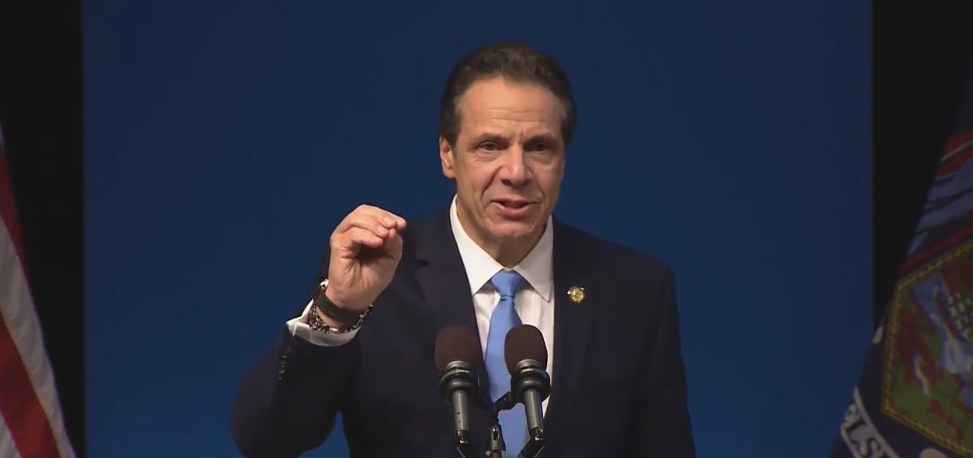
That’s the story of how S5470B came to be in Albany. Instead of ironing out the kinks in committee, Borrello said he watched as the bill with all its problems passed over the summer. There was a process to clean it up afterwards to make it suitable for Governor Andrew Cuomo’s signature, since it’s said that even he himself had expressed reservations about the language. But then he signed the original version and all the edits were discarded.
 Politics are suspected to have played a role in that.
“When the governor finds something is flawed, he usually vetoes and sends it back,” Borrello said. “It concerns me that there is an underlying political angle that has nothing to do with the Truth in Lending.”
Steve Denis, the executive director of the Small Business Finance Association, said that he doesn’t think that the signed bill that is up on the state senate website will be the final version.
“It is so poorly drafted that even companies that support the bill have liability and will be the first to get sued,” Denis said. “The SBFA will be a lot more aggressive; the legislature has a lot to work on in the next session. It has been a wake-up call, unifying the industry. We will be more aggressive to create a more favorable version.”
Denis has attested to the harm the bill will do to the SMB finance industry in New York, costing billions of dollars in fines and litigation. He pointed out that major companies like PayPal have fought against the bill, and the proponents “recognized it was not a good bill, but passed it to fix it.”
Borrello said that it is common in Albany to encounter legislation written by lawmakers who don’t understand small business owners who deal with regulation every day. Borrello and his wife worked in the hospitality business for years before going into public service. Borello said he feels business owners’ pain during the pandemic, especially in the restaurant and hotel industry.
He said the end result of this new bill when it comes into effect this July: funding and lending companies will stop providing services in New York State, directly harming the small businesses the bill claims to help.
“One of my frustrations, being on the banking committee, is that we do things that ultimately make it more difficult for people to access credit and financing in New York State,” Borrello said. “You’re talking about small businesses that are already hurting, having financial difficulties accessing lines of credit. This disclosure law passing during this pandemic is one more nail in the coffin for small business.”
 The Legislature, the Governor, and the Department of Financial Services (DFS) all reportedly had issues with the bill: yet it passed. Borrello said a problem with “nonsense lawmaking” comes from competition with other states. New York compares itself with California to “prove we’re the most progressive.” Borrello also pointed out that California passed its version of a lending disclosure bill more than two years ago, and their version of the DFS still cannot find a way to calculate an APR metric for factoring or MCA.
As the bill was argued on the legislative floor, Borrello brought up the controversial “double-dipping” term that had been inserted in the language. Borrello came to the same conclusion as Denis, that there is no double-dipping term: It was just conjured up for the bill to sound scary, negative, and damaging.
“Other than talking about potato chips, I’m not sure what you’re talking about,” Borrello said. “When you haven’t defined it, in the legislature, it comes down to a political talking point and dog whistle. You enshrine a rather vague piece of jargon in the legislation, and it shows how deeply flawed it is.”
Borrello now plans to work with the Governor, DFS, and legislature to amend and change the bill. He is also fighting for a Republican banking overhaul to provide further credit access to small businesses.
“The next step now is to go back and see what needs to be fixed,” Borrello said. “Hopefully, my role now as the ranking member of the banking committee, we can have a common-sense conversation about how to actually fix it.”
Ho Ho… Hold Up. NY Governor Signs Industry-Altering Small Business Lending Law
December 24, 2020 Merrrrry Christmas. New York Governor Andrew Cuomo reportedly signed SB 5470 into law late last night, a bill that forever changes and complicates nearly all forms of small business financing in the state.
The law gives regulatory enforcement authority to New York’s Department of Financial Services, requires APR disclosures on contracts where one can’t be mathematically calculated, and mandates that customers be told if there is any “double dipping” going on. And that’s just the beginning of what it contains.
A coalition of small business capital providers fiercely opposed the language of the bill. Steve Denis, executive director of the Small Business Finance Association, wrote in an op-ed that “the lack of cogency and lazy approach to this legislation is a disservice to the hard-working entrepreneurs who continue to open their businesses while facing daily economic uncertainty.”
The bill was also opposed by fintech lenders like PayPal.
Proponents of the bill celebrated the news on social media in the early morning hours of Christmas Eve.
Ryan Metcalf at Funding Circle, a company not even based in New York that moved all of its tech jobs out of the US to the UK this summer, wrote on LinkedIn that the bill will “save New York #smallbiz between $369 million and $1.75 billion annually.” Funding Circle, as a member of the Responsible Business Lending Coalition (RBLC), was heavily engaged in the advocacy process.
Several of RBLC’s members have already ceased small business lending in the US, some permanently.
Unique circumstances also exist at an ally of the RBLC, the Innovative Lending Platform Association (ILPA), which Funding Circle is also a member of. Two out of the 11 members were acquired before the bill could even be signed, Kabbage and OnDeck.
NY State Assemblyman Ken Zebrowski and State Senator Kevin Thomas, who sponsored the bill, cheered the signing of it.
“Thanks to Governor Cuomo for signing our Small Business Truth in Lending Act,” Zebrowski tweeted. “Extremely proud to have worked with many to establish the most comprehensive small business disclosure law in the nation. With the pandemic surging on, small biz owners need these critical protections now.”
“The signing of the New York State Small Business Truth in Lending Act is a victory for New York’s small business owners,” Thomas wrote on twitter. “Thank you for signing New York’s first-ever small business lending transparency bill into law.”
“I think that the companies and organizations that support this legislation don’t fully understand what’s actually in the bill,” SBFA’s Steve Denis said to AltFinanceDaily in August. “[…] They have no problem pounding the table and taking credit for its passage, but I guess they don’t realize it will subject them and the rest of the alternative finance industry to massive liability, massive fines—upwards of billions of dollars worth of fines.”
And yet Senator Thomas tweeted, “This will help a lot of small businesses trying to get back on their feet during this pandemic.”
It is unclear, of course, who they expect to provide such capital now to do this.
New York Commercial Finance Disclosure Bill Update
November 10, 2020 The controversial commercial finance disclosure bill that passed in New York in July, has still not been signed by Governor Cuomo.
Technically, the governor only had 10 days to sign it while the legislature was in session and only 30 days to sign it when the legislature closed out its session for the year, which it did in July. Both deadlines have passed. But as AltFinanceDaily learned in the case of the COJ bill, the clock does not actually begin to tick until the legislature has formally “delivered” the bill to the governor.
That puts the disclosure bill and other bills not yet signed in a state of suspended animation that can carry them through until December 31st. Doing this “is done to ensure that legislation is thoroughly vetted, with extra checks to guarantee that bills are not unconstitutional and that they’ll lead to no previously unforeseen consequences.”
It’s that latter part of that, that has created concern. Even dueling small business lending trade associations disagree on what the consequences will be. The Innovative Lending Platform Association (ILPA), for example, say the bill is almost exactly what they wanted, while the Small Business Finance Association (SBFA) suggests that advocates do not even understand the bill, much less the implications.
ILPA’s CEO, Scott Stewart, told AltFinanceDaily in July that “the implications are that small businesses, certainly in New York to begin with, but we think throughout the country, will have the opportunity to really see, understand, and compare various different sources and products for financing their small businesses in terms of their expansion and success.”
SBFA’s Executive Director, Steve Denis, meanwhile, responded very soon after by saying that they don’t realize that it will subject them to massive liability and hefty fines.
“We’re for disclosure, we think there should be standard disclosure,” Denis said. “Our message to the Governor’s office is ‘Let’s take a step back.’ The Department of Financial Services needs to look at our industry, they need to get to know our industry. They are the experts that understand the space, they understand disclosure, and they understand what they need to do to bring responsible lending to New Yorkers. And we would like to work with the NYDFS and a broader industry to put forward a bill that’s led by the Governor and the Governor’s office that brings meaningful disclosure and meaningful safeguards to this industry.”
The SBFA later published the results of a study that supports their arguments.
In qualitative testing of 24 small business owners and executives who have experience taking commercial loans, the study concluded participants did not understand what APR was.
APR disclosure, of course, is the centerpiece of the entire bill.
It is still possible the bill’s language could be amended before the governor signs it. It’s happened before.
In 2017, for example, the state legislature passed a bill that would establish a 7-person task force to analyze online lending activity in the state. The bill, dubbed the Online Lending Task Force bill, called for industry participants to serve on it. The final version signed by the governor, however, was completely rewritten to the point that the online lending task force bill had completely eliminated the task force portion of it and no one was allowed to participate in any analysis except for NYDFS.
Greenbox Capital® Advocates For Fair Lending to Women- and Minority-owned Businesses in CFPB Panel
October 19, 2020Miami, FL: Greenbox Capital® announced it is serving as a Small Entity Representative (SER) to the Consumer Financial Protection Bureau (CFPB) that is responsible for amending the Equal Credit Opportunity Act (ECOA) protecting women-owned, minority-owned, and small businesses looking for financial assistance. Section 1071 of the Dodd-Frank Act amends the ECOA by requiring certain data be collected and submitted to the Bureau to protect these types of businesses.
“It’s an honor to be selected to the industry panel providing feedback on section 1071 of the Dodd-Frank Act ensuring fair lending laws to women- and minority-owned businesses”, said Greenbox Capital CEO Jordan Fein. “Over 2 million businesses across the U.S. are either women or minority owned and it’s vital they can secure funding as easily as non-minority owned businesses.”
Greenbox Capital, an alternative lender, serves small businesses in all industries across the United States, Puerto Rico, and Canada with the working capital needed to grow. Greenbox Capital is committed to supporting clear, secure, and fair financing solutions and is an active member of the Small Business Financial Association (SBFA).
For more information visit, www.greenboxcapital.com.
What Stimulus is Next for SMBs?
September 4, 2020 Next week, lawmakers will finally be back from vacation, arguing over the next stimulus package. There are various proposals, and the two competing Republican and Democrat offerings are nearly a trillion dollars apart.
It’s the Senate GOP HEALs act vs. the House Democrats HEROs act. But in between, what may be getting the most support? Standalone bipartisan bills that focus on extending and forgiving PPP loans.
Ryan Metcalf, head of the office of Government affairs and Social Impact for Funding Circle, has been following conversations on The Hill closely.
“Up until Monday, Pelosi said they weren’t even going to even put a bill forward for a new stimulus,” Metcalf said. “But then yesterday [Tuesday] Secretary Mnuchin said he was open to doing a standalone PPP loan. It’s the one that has the most bipartisan support; they can’t meet anywhere else than PPP.”
Funding Circle is one of the world’s largest online lenders, with about $10 billion in global loans to date. Metcalf said Funding Circle mostly offers US loans in the $25,000 to $500,000 range, and as a funder for PPP, offered more loans in just eight days in August than half of their total business in July. His company had to cut off funding requests, locking out some customers that needed help, simply because the deadline had ended.
“When PPP ended on August 8th, the narrative was that PPP had died out, and there was no interest in it, but that is a complete fallacy,” Metcalf said. “We were processing loans for the smallest of small businesses- 10-15 employees- well under $50,000 loans, the people still needed help.”
Steve Denis, Executive Director of the Small Business Finance Associaton (SBFA), has also been engaged in the process. He has been petitioning members of Congress on behalf of what he calls truly small business, those under 10 employees or nonemployers that still need help.
“‘Real’ small businesses: ones with under ten employees that are really grinding, like small hair salons, retail stores, and mechanics don’t really have traditional banking relationships,” Denis said.
SBA data from July found that most of the loans made (66.8%) were in the $50k range and to very small businesses, but the largest amount of capital went towards firms that applied for a $350k-$1M sized loan.
Denis said that the higher dollar amount PPP loans were more profitable for banks to make, so disproportionate funding went toward bigger businesses with pre-established finance connections. This disparity is backed up by research. Studies, like one from the National Bureau of Economic Research (NBER), found that firms with stronger connections to banks were more likely to be approved for PPP funds.
“The way fees are structured: there’s an incentive for big banks to prioritize bigger deals at [commission] rates like 3% or 5%,” Denis Said. “They’d rather make that on a $500,000 deal than on a $40,000 deal.”
Denis said the SBFA was lobbying for Congress to create a prioritized amount of money authorized only for smaller loans, under $100,000-$150,000, to focus on those really small businesses with less than five employees.
Like Metcalf, Denis sees the most likely outcome is an extension of PPP- at least until the end of the federal fiscal year budget in September. If the Fed cannot agree on a budget, the government will go into shutdown- and this year would be the worst time to shut down.
“The only thing that motivates Congress to move big legislation like this are deadlines; there’s a big deadline coming up,” Denis said. “At the end of September, the fiscal year runs out and there needs to be a budget agreement.”
 Metcalf said that the next round of PPP programs need to make sure businesses can get their first loan if they haven’t already, and streamline the loan forgiveness process to keep the SBA from getting overwhelmed.
“We need a forgiveness bill that streamlines the process; lenders will not have the resources to process forgiveness, a first PPP and second PPP as it is,” Metcalf said. “In my call with the SBA two weeks ago, they said for processing new 7(a) lender applications and all the other business they do to resume their normal business we’re looking at six months.”
The PPP proposal that Metcalf likes the best is called the Paycheck Protection Small Business Forgiveness Act, which stipulates a one-page forgiveness form for all loans made under $150,000. Metcalf said he saw support from a bipartisan group of over 90 members of Congress.
Another opportunity is the Economic Injury Disaster Loan (EIDL) program- offering long term loans to businesses with less than 500 employees that need financial help. Both Denis and Metcalf encouraged business owners to check out the program, which offers loans directly from the government without the need to prove forgiveness.
In the end, Denis said he was interested in the Republican “Skinny Bill” that is a cheaper breakdown of the GOP HEALS Act, but he said it is all up in the air.
“This is just me guessing,” Denis said. “I have talked to these people every day, but even members of Congress on Capitol Hill have no clue what’s going to happen.”