
Kabbage CEO Rob Frohwein Pokes Fun at “Alternative Lending”
March 14, 2017 At LendIt, Kabbage CEO Rob Frohwein poked fun at alternative lending, suggesting that it should just be called lending. His presentation, titled “Alternative Lending is Dead Long Live Data,” put the last few years of irrational exuberance into perspective. Below are some of his one-liners:
“You don’t disrupt banks by focusing on the advantages that banks have over you.”
“Most online lenders thought by calling themselves a technology company, they are one.”
“However, the biggest piece of technology that most of them promote is an online application.”
“There’s nothing special about an online application.”
Frohwein also revealed some interesting facts about Kabbage during the presentation, including that their customers borrow from them on average 20-25 times over the course of 4 years, whereas their competitors only make only 2.2 loans to their customers on average.
Kabbage Prices $525 Million Securitization; Anticipates “A(sf)” Rating on Its Debt
March 8, 2017Kabbage®, a pioneering financial services, technology and data platform, today announced that on March 7, 2017, it priced $525 million of fixed-rate, asset-backed notes in a private securitization transaction. The facility is expandable to $1.5 billion. The notes will be issued in four classes by Kabbage Asset Securitization LLC, a newly formed, wholly owned subsidiary of Kabbage Inc. The senior class of notes is anticipated to be rated “A(sf)” on the closing date by Kroll Bond Rating Agency (KBRA). Guggenheim Securities is serving as sole structuring advisor and initial purchaser of the notes. The securitization is expected to close on or about March 20, 2017, and is subject to customary closing conditions.
The securitization was significantly oversubscribed with interest from top-tier institutional investors. This represents the largest asset-backed securitization of small business loans in the online lending industry, next to Kabbage’s prior, expandable, ABS note issuance in March 2014. This new facility will enable Kabbage to continue to broaden its product mix by offering larger credit lines and longer term loans.
“In a time when the FinTech industry has experienced challenges, our automated technology and data platform has demonstrated to investors Kabbage’s ability to deliver superior and predictable performance on small business loans as an asset class,” said Kevin Phillips, Head of Corporate Development for Kabbage. “Both the overwhelming investment interest and the anticipated strength of our bond rating are testaments to our proven approach to underwriting and managing small business loan performance through the Kabbage Platform.”
In March 2014, Kabbage was the first technology-enabled, financial services company to issue asset-backed notes secured by small business loans. This transaction was initially $270 million and was subsequently expanded to $545 million by the issuance of additional notes to multiple capital markets investors. This facility enabled Kabbage to dramatically scale its volume to extend over $2.7 billion through the platform.
The anticipated KBRA rating of “A(sf)” reflects an upgrade from the rating on Kabbage’s prior securitization. “Kabbage’s strong historical performance over the last three years played a key part in KBRA’s upgrade,” said Anthony Nocera, Managing Director at KBRA. “The upgrade is based on several structural improvements and the existence of more historical performance data relating to Kabbage’s collateral.”
About Kabbage
Kabbage Inc., headquartered in Atlanta, has pioneered a financial services data and technology platform to provide automated funding to small businesses in minutes. Kabbage leverages data generated through business activity such as accounting data, online sales, shipping and dozens of other sources to understand performance and deliver fast, flexible funding in real time. Kabbage is funded and backed by leading investors, including Reverence Capital Partners, SoftBank Capital, Thomvest Ventures, Mohr Davidow Ventures, BlueRun Ventures, the UPS Strategic Enterprise Fund, ING, Santander InnoVentures, Scotiabank and TCW/Craton. All Kabbage U.S.-based loans are issued by Celtic Bank, a Utah-Chartered Industrial Bank, Member FDIC. For more information, please visit http://www.kabbage.com.
The notes will not be registered under the United States Securities Act of 1933, as amended (the “Securities Act”), or any state securities laws, and may not be offered or sold in the United States absent registration or an applicable exemption from, or a transaction not subject to, registration requirements. The notes were offered only to qualified institutional buyers under Rule 144A and to persons outside the United States pursuant to Regulation S under the Securities Act. This press release shall not constitute an offer to sell, or the solicitation of an offer to sell the notes, nor shall it constitute an offer, solicitation or sale in any jurisdiction in which, or to any person to whom, such an offer or solicitation or sale is unlawful.
Kabbage Appoints Payments Industry Veterans as CTO and Data Officer
November 14, 2016
Small business lending marketplace Kabbage appointed a new CTO and chief data officer last week.
The Atlanta-based company that uses technology and data to underwrite loans hired Amala Duggirala as the new CTO. Duggirala is a two decade industry veteran and prior to this, was the executive vice president of global software development and implementations services at ACI Worldwide. There, she was responsible for developing end-to-end payment technology between consumers and retailers and accountable for the architecture, development and delivery of nearly 30 payments products. At Kabbage, she will lead the automation of the Kabbage platform and developing new products for growth.
The company also appointed the former head of analytics and insights at eBay, Rama Rao as the chief data officer. Rao also brings 20 years of experience in analytics, risk and payments. Rao holds a Ph.D. from MIT and built the risk analytics team at PayPal to manage its global risk policies. At Kabbage, he will lead the strategy for data, decision science, analytics and risk.
“We’re thrilled to have Amala and Rama join Kabbage to help us achieve our mission of sitting at the center of small business existence, both directly and through our partnerships globally,” said Rob Frohwein, co-founder and CEO of Kabbage.
Kabbage Boosts Platform Biz, Partners with Canadian Bank Nova Scotia
June 22, 2016Online lender Kabbage loans has partnered with Canada’s third-largest bank, Bank of Nova Scotia to offer online loans to small businesses.
Small businesses in Canada can apply for loans online and get a decision quickly. The program will be extended to businesses in Mexico later this year. Customers will have the flexibility to draw the funds as individual term loans, from as little as $1,000 in Canada and each loan can have its own repayment terms.
In an interview with AltFinanceDaily earlier this month, Kabbage co-founder Kathryn Petralia said that the company wants to grow its platform business with such partnerships. In April this year, Spanish bank Banco Santander said that it will use Kabbage’s technology to underwrite loans up to £100,000 the same day for loans that typically take 2-12 weeks to process.
Santander, Nova Scotia and ING together invested $135 million in Kabbage’s series E funding.
Transparent Pricing Creates a Level Playing Field, says Kabbage’s Kathryn Petralia
June 7, 2016 Loan matchmaking site Lending Tree has joined the Innovative Lending Platform Association (ILPA) to participate in developing a universal small business lending disclosure system to raise transparency with lenders. It will work closely with the association over a 90-day “national engagement period” to create and implement the SMART Box (Straightforward Metrics Around Rate and Total Cost).
AltFinanceDaily spoke to Kathryn Petralia, cofounder of Kabbage Loans, which is spearheading the association with OnDeck and CAN Capital. Below are the edited excerpts from the interview:
Tell us about how the ILPA came about?
We (OnDeck, CAN Capital and Kabbage) represent the largest non bank lenders. We have collectively lent $12 billion through the course of our businesses and so we thought it will be great for us to make a statement through ILPA. We came from a perspective that there are a lot of different products for small businesses on the market like merchant cash advance, equipment financing, invoice factoring and lines of credit. All of these serve different needs and are ambiguously priced. So we wanted to find some methodology which is transparent to borrowers so they can know the exact price and total cost of borrowing.
We want to keep it open and hope that everyone participates in the disclosure methodology so borrowers can have a clear understanding of the fees they are paying.
What is SMART Box. How does it work?
Different loan products have different fees — some have maintenance fees, some have broker fees, usage fees and so on and they are all structured very differently. It can get very confusing and so we came up with all the products to understand what disclosures would be necessary to know the total cost of borrowing. We’re working with OnDeck and CAN Capital to gather comments and disclose a series of methodologies that will create the ‘Straightforward Metrics Around Rate’ and Total Cost or SMART Box. Those who want to participate will have to disclose it on loan agreements to their customers.
What about disclosures by companies? Would you say the industry needs more regulation on that front?
Kabbage and other companies in the industry are all regulated and go through FDIC audits. We all follow KYC, CIP, FFIEC guidelines that refer to lenders. We all follow these regulations and I would argue vociferously that we are regulated businesses already. All companies are very different and there are a bunch of things happening — states like California, Illinois and New York and CFPB are all taking interest in small business lending and it’s a positive that they recognize the partnership between banks and tech companies. On the general lending side, we have Dodd-Frank and Madden vs Midland which look at lending issues. Some of the regulation is around how loans are sold and some of it is around how they are limited. And on the small business lending side, there is push for more transparency which is the reason we launched ILPA. We wanted to set the standard for what that would look like. And having it done comprehensively is beneficial for us as it gives us a level playing field.
On the consumer lending side, there is transparency but it’s still lacking a comprehensive system that encapsulates the total cost of borrowing. APR is a great metric but the total cost of borrowing must be included.
Give us a snapshot of what the industry looks like to you
All businesses serve different markets, are different in the way they fund their loans and operate in different geographies, so it’s hard to say but in general those who have done a good job at incorporating data and tech and streamlined operative process will have an advantage and will make it through economic turbulence.
What’s your short-term prediction?
Companies that are not well capitalized will have a tough time raising capital in 2016 and we have already been approached by a number of businesses that are looking to sell or find a partnership because they aren’t well capitalized.
Tell us what’s happening at Kabbage?
We have two businesses – the direct lending business which we are trying to grow and the second is the platform business where we have seen sustained growth, with existing partnerships with ING in Europe, Santander in the UK and Scotia Bank in Canada. More partnerships are in the offing – both domestically and in Latin America.
Santander Cuts Branches, Partners with Kabbage
April 4, 2016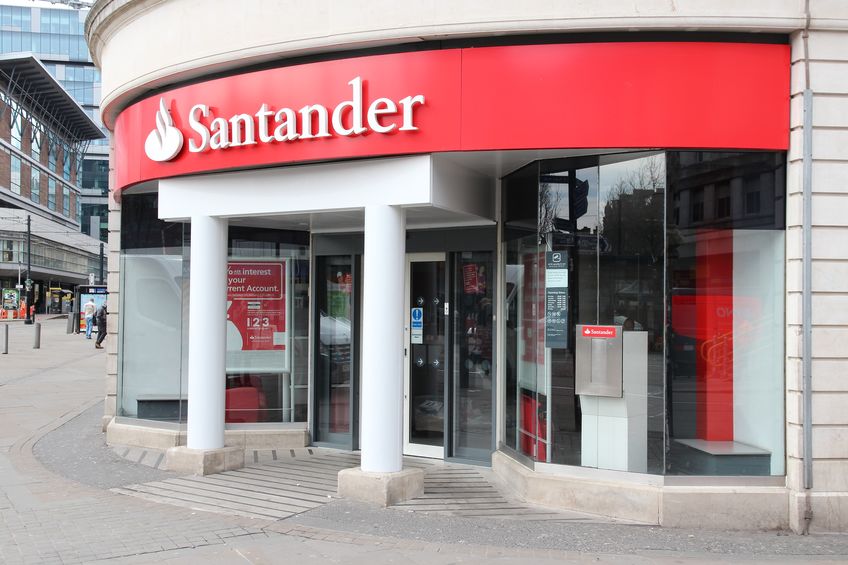
Santander is putting its money where its mouth is and launching Kabbage in UK.
The Spanish banking giant, an investor in Kabbage will use its technology to underwrite quick loans up to 100,000 pounds the same day for loans that typically take 2-12 weeks to process.
The service will roll out over the next two months and will be the bank’s second attempt at allying with an online partner. In 2014, it set up a referral program with UK-based Funding Circle for small business borrowers.
The announcement comes at a time when big banks are shedding weight and becoming leaner to adapt to the digital times. Last Friday (April 1st), Santander said that it will close up to 450 of its 3,467 (13 percent) branches to transition into “cheaper digital channels.”
The road to saving 3 billion euros by 2018 is paved in working with lean businesses like Kabbage. “The way we internalise and adapt to new technology in the coming years will determine our success,” Ana Botin, chairman of Santander said.
This isn’t a one off announcement by Santander. Through its venture arm, Innoventures set up in 2014, the bank dedicated $100 million to invest in fintech startups. The fund participated in Kabbage’s Series E funding last year along with Scotiabank, ING and Reverence Capital Partners.
The bank also set up what it called a “tech-focused international advisory board” led by former US Treasury Secretary Larry Summers with a panel consisting of Red Hat CEO Jim Whitehurst, former Oracle president Charles Phillips and Francisco D’Souza, CEO of software services company Cognizant.
As the alternative lending industry shapes itself into stability with regulation, reducing its dependency on Wall Street’s institutional money, there are doubts whether the industry will stand the test of time in tough credit markets. While venture dollars are increasing in these companies, investors demand more. Fintech upstarts raised $19 billion in 2015 and in the same time, bank staff has been slimming down as investors bet on automated finance to eventually overthrow banking. Already, 46 percent of private funding has gone to lending companies selling cheaper loans easily while the banks focus on the shift of a branch’s transactionary functions to a strategic, consultancy role.
Will we see more such debanking?
Small Businesses Say ‘Yes’ to Online Lending Through NFIB Partnership With Kabbage
March 31, 2016 The largest association of small and independent business owners in the country is embracing online lending.
The National Federation of Independent Business (NFIB) announced a strategic partnership with Kabbage yesterday. The NFIB has more than 325,000 members.
Speaking about Kabbage, NFIB SVP Mark Garzone said, “Access to working capital for an expansion, repairs or short-term cash flow needs is essential for small businesses to thrive. We know that our members will benefit from this valuable resource.”
While the partnership is clearly a sign of Kabbage’s prowess, it also serves to reinforce the value that online lenders can provide to small businesses in general. “Many of our members – like a number of small businesses – struggle with the standard loan process when they need access to working capital,” said Garzone.
Not all online lenders are created equal, but a few have stood out from the crowd, in this case, Kabbage.
Earlier this month in The Atlanta Journal-Constitution, NFIB representative Holly Wade said, “Our fear is that they will over-regulate [online lending] out of existence or to the point that it’s no longer a benefit.”
Kabbage, Fora Financial and Square Have a Roaring Wednesday
October 15, 2015 Wednesday, October 14th was packed with exciting industry news. Right after Congressman David Scott blessed online lenders, Kabbage announced a Series E round investment led by Reverence Capital Partners for $135 million. The Wall Street Journal said the deal valued the company at over $1 billion, a figure that elevates Kabbage to unicorn status.
At the same time, Fora Financial announced that a Palladium Equity Partners affiliate had made a significant investment in the company. In the official release, Palladium principal Justin Green said, “we believe Fora Financial has developed a highly attractive credit offering and technology platform that have made it a valued provider of financing to thousands of small businesses seeking capital.”
Palladium once held a stake in Wise Foods, the potato chip snack company, and currently counts PROMÉRICA Bank, a full-service commercial bank in its active portfolio. They have more than $2 billion in assets under management.
And then there’s Square, the payment processor and merchant cash advance company who publicly filed their S-1 for an IPO. Their registration form uses the term merchant cash advance 16 times so there is no doubt it’s a significant part of their business. “Square Capital provides merchant cash advances to prequalified sellers,” the document states. “We make it easy for sellers to use our service by proactively reaching out to them with an offer of an advance based on their payment processing history. The terms are straightforward, sellers get their funds quickly (often the next business day), and in return, they agree to make payments equal to a percentage of the payment volume we process for them up to a fixed amount.”
As of June 30th, Square had already racked up a net loss for the year of nearly $78 million. In 2014, the company lost $154 million. While the losses stem mainly from their payment processing operations, they had outstanding merchant cash advance receivables of $32 million as of mid-year which illustrates how much exposure they have with that product.
The three announcements ironically coincided with comments made by SoFi CEO Mike Cagney about the industry’s lack of ambition. “The problem with fintech is that it’s not ambitious enough in terms of its objectives. It’s not really transforming anything,” he’s quoted as saying in the San Francisco Business Times. Cagney went on to categorize Lending Club as just an electronic interface bolted onto a bank to originate loans for them. While his comments hold weight given that his lending company recently just raised $1 billion in a Series E round led by Softbank, it may be fair to say however that Wednesday proved there was anything but a lack of ambition in the space right now.