
Technology Drives Changes in CRE Lending Space
December 21, 2017 Online technology, which paved new paths for consumer and small business lending, is making similar inroads with the commercial real estate industry.
Over the last few years, several online marketplaces have been established to try and match commercial real estate borrowers with lenders quickly and efficiently using technology. In the past, commercial real estate lending depended heavily on having local connections, but online platforms are blurring these lines—making geographical borders less relevant and opening doors for new types of lenders to establish themselves.
While banks remain the largest source of commercial real estate mortgage financing, non–bank players—including credit unions, private capital lenders, accredited and non–accredited investors, hedge funds, insurance companies and lending arms of brokerage firms—have become more formidable opponents in recent years. Online platforms offer even more opportunity for these alternative players to gain a competitive edge.
At present, most of these commercial real estate marketplaces are purely intermediaries—they’re matching borrowers and investors, not actually doing the lending. Certainly, it’s an easier business model to develop than a direct lending one, but things could change over time, as borrowers become more comfortable with the online model and develop confidence that these platforms can perform, industry participants say.
 “You have to be viewed as credible with a certainty of funding for borrowers to come to you. You can’t just put up a flag and say ‘Hey we’re making loans’ because borrowers won’t trust you and they won’t have the confidence that the loan is going to close,” says Evan Gentry, founder and chief executive of Money360, one of the few online direct lenders in this space. “However, once you develop a reputation of strong performance, the tide turns very quickly and that confidence is established,” he says.
For now, however, many of the marketplaces say they are content to remain intermediaries and offer business opportunities to lenders instead of competing with them. The sheer size of the market— commercial/multifamily debt outstanding rose to $3.01 trillion at the end of the first quarter, according to data from the Mortgage Bankers Association—and the fact that is an enormously diverse industry with no plain vanilla product makes it more likely that several platforms can co–exist without completely cannibalizing each other’s business, observers say.
Each of the online marketplaces has a different business and pricing model. Some marketplaces focus on small loans, while some have larger minimums; some focus on just debt; some focus on a mixture of equity and debt. Some sites cater to institutional lenders and accredited investors to help fund loans. Other sites invite non–accredited investors who meet certain criteria to participate in loans, opening doors to a segment of the population which previously had minimal access to commercial real estate deals. While the sites differ in their approach, the upshot is clear: banks—while still formidable competitors in commercial real estate lending—are no longer the only game in town for funding these deals.
The struggle for lenders is how to work most effectively with these marketplaces. “If you can acquire customers through only your own channels, then of course you’re going to do that,” says David Snitkof, chief analytics officer at Orchard Platform, which provides data, technology and software to the online lending industry. Otherwise, these marketplaces present a viable opportunity to expand distribution, he says.
GROWTH OPPORTUNITIES ABOUND
The surge of new companies acting as marketplaces between borrowers and lenders of all kinds comes as the commercial real estate industry is finally coming up to speed with respect to technology. The commercial real estate business has been static for decades in terms of how loans are processed and originated, according to industry participants.
“The use of technology is going to be an enormous disrupting force in that space,” says Mitch Ginsberg, co–founder and chief executive of CommLoan, one of the newer marketplaces for commercial real estate lending. Commercial real estate lending is “probably one of the last industries that hasn’t been touched by technology, and it’s ripe for massive disruption,” he says.
CommLoan of Scottsdale, Ariz., was founded in 2014, but the marketplace has only been fully operational since 2016. The platform targets borrowers seeking $1 million to $25 million of capital for all types of commercial real estate loans. It works with more than 440 lenders—including banks, credit unions, commercial mortgage companies, private money lenders and Wall Street firms. Altogether, CommLoan says it has processed more than $680 million in commercial transactions.
Online marketplaces can help make the commercial real estate industry more efficient and transparent, says Yulia Yaani, co-founder and chief executive of RealAtom of Arlington, Va., another new online commercial real estate marketplace. “People are tired of paying huge fees as a result of the market being so opaque,” she says.
RealAtom began operating in 2016 and targets borrowers who are seeking commercial real estate loans from $1 million to $70 million. The lenders on the platform include banks, alternative lenders, insurance companies, pension funds, hedge funds and hard money lenders. The company processed $468 million in commercial loans in its first 11 months of operating, according to Yaani.
Another benefit of online marketplaces is that they “create a liquid, national marketplace where lenders all across the U.S. can bid on a borrower’s business,” says Ely Razin, chief executive of commercial real estate data company CrediFi, which operates the upstart CredifX marketplace. Historically people who own commercial real estate have only been able to get financing through a local relationship with a bank or broker. “For borrowers, this means more certainty of obtaining a loan and optimized capital not limited by the relationship with the local lender,” he says.
CredifX started operating earlier this year to match commercial real estate borrowers, brokers and lenders including banks, finance companies, mortgage companies, hard money and bridge lenders. The platform is for loans of $1 million to $20 million across all major property types in the commercial space. It matches borrowers with appropriate lenders using the information that parent company CrediFi collects and analyzes. The company declined to disclose how much it has processed in commercial transactions.
To be sure, it’s hard to say how the marketplace model will evolve over time and which players will withstand the test of time. Certainly a similar model has faced challenges on the consumer and small business lending side.
“I think the pure marketplace will become more rare as time goes on,” says Peter Renton, founder of Lend Academy, an educational resource for the P2P lending industry. “There are examples of successful companies with a pure marketplace, but they are rare and difficult to scale. The only well-established company that seems completely wedded to the pure marketplace is Funding Circle; pretty much all other companies have switched to a hybrid model of some sort,” he says.
Commercial vs Residential
While much of the recent growth has been within commercial real estate, there are also some marketplaces that cater to residential borrowers or offer a mix of commercial and residential opportunities.
 Magilla Loans, for instance, started out in 2016 as a solely commercial marketplace, but expanded outside this silo because customers were asking for residential and other types of loans, says Dean Sioukas, the company’s founder. The company now connects borrowers with lenders for a whole host of loan types—commercial, residential and others like franchise loans and equipment loans. Lenders on the platform include roughly 130 banks, mortgage loan originators, accredited investors, credit unions and online non-depository institutions. The average loan size is $1.4M for business loans and $500K for home loans. Nearly $4 billion in loans has been channeled through the platform since January 2016; of that 70 percent is tied to commercial real estate, according to the company.
While there are marketplaces that focus on residential mortgage lending, some industry participants say that side of the business isn’t as appealing to new online entrants in part because the cost to acquire customers is really high and there are more challenges to working on a national scale.

“It may not be that commercial is more attractive. It may just be easier. Going directly to borrowers in the residential space has proven harder than many companies expected,” says Brett Crosby, co-founder and chief operating officer of PeerStreet, a marketplace for accredited investors to invest in high-quality private real estate backed loans. Experience seems to suggest that for residential mortgage origination, “it’s much better to have a good ground game and know your local market,” he says.
To be sure, as the online market for real estate matures, it’s not so surprising that companies would shift business models to find their own sweet spot. RealtyMogul.com is one example of a company that has morphed over time. The online platform began operating in 2013 in both the residential and commercial space, but has since moved away from the residential business. Accredited investors, non-accredited investors and institutions can use the platform to find equity or debt-based commercial real estate investment opportunities, and borrowers can apply for private hard money loans, bridge loans and permanent loans.
Money360 is another example of a company that has shifted gears. It started out as a pure marketplace, but changed its business model to become a lending platform in 2014. Now the online direct lender in Ladera Ranch, Calif., provides small-to mid-balance commercial real estate loans ranging from $1 million to $20 million. It’s one of the only companies targeting the commercial real estate space in this way and has closed nearly $500 million in total loans since 2014.
Gentry, the company’s founder, says he would expect to see more industrywide changes as the online commercial real estate business continues to evolve. The key to success, he says, is executing well and “knowing when to pivot when you realize something’s not working just right.”
Ultimately, Gentry predicts more online lenders will target the commercial real estate space. He says technology-based alternative lenders have an advantage because they can operate more quickly and efficiently while still being very competitive from a pricing perspective.
“You put all those things together (speed, efficiency and competitive pricing) and that’s what borrowers are looking for,” Gentry says.
Ford, MCA Funders Take Pages from Tech-Based Underwriting
August 29, 2017 Alternative lending fever has spilled over into the auto sector, evidenced by the financing arm of automaker Ford’s decision to move beyond FICO and deeper into machine learning for credit decisions. Ford is moving toward alternative lending strategies in an attempt to capture a wider swath of borrowers, including those with “limited credit histories,” and bolster auto sales.
Ford’s decision comes on the heels of a study with fintech play ZestFinance, the results of which favor a machine-learning based approach to credit decisions.
Ford’s decision comes on the heels of a study between Ford Credit and fintech play ZestFinance, the results of which favor a machine-learning based approach to credit decisions.
“There is absolutely no change in Ford Credit’s risk appetite. Ford Credit is maintaining the consistent and prudent standards it has applied for years. This enhanced ability to look at data will help us more appropriately place applicants along the full spectrum of the risk scale. The result will be some that some people may appear on that scale who did not before, and some applications that are approved today might not be approved in the future. The risk appetite remains the same,” Ford Credit spokesperson Margaret Mellott told AltFinanceDaily.
Until now, there has been no aspect of machine learning in Ford Credit’s underwriting process.
“The study showed improved predictive power, which holds promise for more approvals … and even stronger business performance, including lower credit losses,” according to Joy Falotico, Ford Credit chairman and CEO, in a press release.
Ford is targeting consumers with a lack of credit history, especially the millennial generation.
Tech-Driven Underwriting
While Ford embraces tech-driven underwriting, this style is already knit into the fabric of the MCA and online lending communities.
To name a few, Upstart takes a machine learning approach. FundKite developed algorithmic-based underwriting. UpLyft’s underwriting process has an automated component to it.
 Alex Shvarts, CTO and director of business development at FundKite, a balance-sheet based funder, said the company has been writing algorithms since the early days. Now the tech- and algorithm-driven funder wants to expand into small business lending in Q1 2018.
“We’re building our technology to the point that by Q1 next year, we will get into automated loan products. Our technology will be able to underwrite loan products within seconds. We have a lot of data we put together, which allows us to price deals and make offers relatively quickly,” he said.
By a lot of data, Shvarts is referring to hundreds of data points that are used to measure merchant performance. FundKite, which has a default rate of far less than 10 percent, takes the data, reworks and combines it, leading to a fast result.
“Besides the data points we look at the merchant from a collections point of view. If this person or business runs into trouble, could they go out of business or would they be okay?” he said.
That’s where the human element to the underwriting process comes in.
Human Element
While FundKite relies on algorithm-driven underwriting, the funder is not running an online app yet. There is still a need for human participation surrounding data input, information that is then verified by machines.
“The human element is entering the information correctly, and the machine spits out predetermined pricing based on the business data points and industry,” said Shvarts, adding that FundKite views that information in the context of micro-trends in the industry as well as the overall market environment.
“We know that during certain seasons some merchants perform worse than others. The numbers say the merchant should get this, but we dig a little deeper and say no, this merchant can’t handle this much of an advance and repayment along those lines. The final touches are done by humans. Our technology is advanced so that we are able to get to that point a lot faster and more accurately,” Shvarts said.
Second Opinion
Michael Massa, CEO and founder of Uplyft Capital, points to a hybrid approach in the company’s credit underwriting, referring to the automated scoring portion of Uplyft’s underwriting model as a second opinion. “We believe there must be a hybrid of human and automated technology,” said Massa.
Uplyft relies on a proprietary scoring model. The model includes an automated function that attaches a unique rating to the small business based on certain features in the prospective borrower’s profile, such as a home-based versus business location and the number of years the company has been in business, to name a couple.
“It’s only as second opinion for our underwriters, really,” he said, adding that cash flow and affordability are major drivers of the credit decision. “In most cases we price at max affordability for the client while protecting them from overleveraging their accounts, allowing us to provide real help and establish merchant loyalty.”
 Second opinion or not the automated function is part of what makes Uplyft a fintech play, setting the funder apart from the banks. “They’re like the payphone and we’re the iPhone. They’re yellow cab and we’re Uber,” said Massa, adding better yet, “we’re Lyft.”
Uplyft is in the process of developing a trio of portals designed for merchants, sales partners and investors to be released shortly. “We are API-ing that now into our CRM,” said Massa.
Merchants can access the portal to apply for funding while sales partners use it to submit files and view a status. Investors can track their participation via the portal. The new portals will be available on the website and through a mobile app that Uplyft is in the final stages of developing.
Uplyft also recently inked an exclusive partnership with an undisclosed software company allowing merchants to link their bank account to the application, capturing six months of actual PDF bank statements in the process.
“It can help us with the initial credit decision and when we’re conducting final verifications. We get the actual bank statement. It’s a legitimate bank statement, not a rendition,” said Massa.
Fintech & Auto Finance
As for the auto industry, don’t be surprised to hear about further collaboration between the automakers and the fintech market. “Financial technology is key … as fintech can contribute to an even more seamless and better personalized vehicle financing experience for the consumer,” according to the Ford press release.
Tech Banks: Will Fintech Dethrone Traditional Banking?
August 20, 2017On Halloween, 2014, a largely unknown, Boston-based financial institution, First Trade Union Bank, embraced high-technology, went paperless, and officially adopted a new name: Radius Bank.
 In reinventing itself, Radius did more than dump its dowdy moniker. It shuttered five of its six branches, re-staffed its operations with a tech-savvy team, instituted “anytime/anywhere” banking services, and offered customers free access to cash via a nationwide ATM network. And it teamed up with a fistful of financial technology companies to offer an impressive array of online lending and investment products.
Today, the bank’s management boasts that, using their personal mobile phones, some 2,700 people per week are opening up checking accounts, funneling $3 million in consumer deposits into the bank’s virtual vault. That’s a stark contrast from a decade ago when the financial institution was being rocked by the financial crisis and “we couldn’t get anybody to walk into our branches,” says Radius’s chief executive, Mike Butler.
“We tried to leave that old bank behind,” he says. “We’re a virtual retail bank now, an efficiently run organization that offers high levels of customer service and Amazon-like solutions.”
Radius Bank is not alone. At a moment when there is much discussion — and hand-wringing — over the future of seemingly outmoded, highly regulated community banks, a coterie of small but nimble banks is exploiting technology and punching above its weight. Almost overnight, this cohort is combining the skill and hard-won experience of veteran bankers with the lightning-fast, extraordinary power afforded by the Internet and technological advances. As a result, these small and modest-sized institutions are redefining how banking is done.
In addition to Radius Bank, independent banks winning recognition for their bold, innovative – and profitable — exploitation of technology, include: Live Oak Bank in Wilmington, N.C., which adroitly parlays technology to become the No. 2 lender to business and agricultural borrowers backed by the U.S. Small Business Administration; Darien Rowayton Bank in Darien, Conn., which is making a name for itself with coast-to-coast, online refinancing of student loans; and Cross River Bank in Fort Lee, N.J., which does back-end work for a passel of fintech marketplace lenders.
Interestingly, there’s not much overlap. Each of the banks goes its own way. But what all the banks have in common is that each has struck out on its own, each hitting upon a technological formula for success, each experiencing superior growth.
“These are companies that understand the value of a bank charter,” says Charles Wendel, president of Financial Institutions Consulting in Miami. “They have to work under the watchful eyes of state and federal regulators. But their cost of funds is low and they can offer more attractive rates. Because they’re less likely (than nonbank fintechs) to disappear, run out of money, or get sold,” the bank expert adds, “they also have the image of stability with customers.”
These modest-sized banks are emerging as not only pacesetters for the banking industry. Along with making common cause with the fintechs — which had promised to disrupt the banking industry – they’re even beating the fintechs at their own game.

“Classically, community banks have looked to technology partners to provide technological innovation,” says Cary Whaley, first vice-president for payment and technology policy at the Independent Community Bankers of America, a Washington, D.C.-based trade group representing a broad swath of the country’s 5,800 Main Street banks. “They still do. You’re seeing more partnerships. But now you also see community banks building innovative products and services outside of that relationship. You see forward-thinking banks developing their own technology to support big ideas like marketplace lending, distributed ledger technology, and emerging payments technology.”
With its extraordinary skill at exploiting technology, Live Oak Bank – which trades on the Nasdaq and is the only public company encountered in the cohort — has become a Wall Street darling. “While several banks have adopted an online-only model, and nearly all banks are shifting more and more delivery through online channels, Live Oak was built from the ground up as a technology-based bank,” Aaron Deer, a San Francisco-based research analyst at Sandler O’Neill Partners, wrote in a recent investment note.
Driving the success of Live Oak, which operates out of a single branch in the North Carolina seacoast town and has only been in business for a decade, is the explosive growth in its SBA lending, the bank’s “core strategy,” Deer notes. Last year, Live Oak lent out $709.5 million in SBA loans in increments of up to $5 million, the federal agency reports, making it the country’s No. 2 SBA lender. It trailed only megabank Wells Fargo Bank, the third largest bank in the U.S. with $1.5 trillion in assets, which made $838.93 million in SBA-backed loans last year.
As its SBA lending has taken off, Live Oak, which qualifies as a “preferred lender” with the federal agency, boasts assets that have nearly tripled to $1.4 billion in 2016, up from $567 million two years earlier. Those are flabbergastingly fantastic growth numbers. But just as incongruously — by nipping at the heels of Wells Fargo — Live Oak has been challenging a bank more than a thousand times its asset size for dominance in SBA lending.
And, interestingly, the bank is able to book those outsized amounts of SBA loans while lending to only 15 industries out of 1,100 approved by the government agency, slightly more than 1% of the universe. That’s up from 13 industries in 2015, and Live Oak is adding two to four additional industries yearly for its SBA loan portfolio, Deer reports. Included among the industries to which the bank made an average SBA loan of $1.29 million last year: Agriculture and poultry, family entertainment, funeral services, medical and dental, self-storage, veterinary, and wine and craft-beverage.
The bank has a team of financing specialists dedicated to each of the designated industries. Among Live Oak’s current SBA borrowers are Martin Self Storage in Summerville, S.C.; Utah Turkey Farms in Circleville, Utah; Pinballz Arcade, Austin, Tex.; and Council Brewery Company in San Diego. Steve Smits, chief credit officer at the bank, told NerdWallet: “When you specialize in something, you become efficient. Because we do it every day and we have professionals and specialists, we tend to be more responsive and quicker.”
The heady combination of technological sophistication and banking expertise has allowed the lender to slash its loan-origination time to 45 days, about half the three-month industry average for SBA loans. To speed up loan sourcing and generation, the bank developed its own in-house technology, which led to the formation of the Wilmington-based technology company nCino, which was spun off to shareholders in 2014.
Live Oak did not return calls to discuss its lending strategies, but in SEC filings bank management declared: “The technology-based platform that is pivotal to our success is dependent on the use of the nCino bank operating system” which relies on Force.com’s cloud-computing infrastructure platform, a product of Salesforce.com.
Natalia Moose, a public relations manager at nCino told AltFinanceDaily in an e-mail interview: “We work with Live Oak Bank, in addition to more than 150 other financial institutions in multiple countries with assets ranging from $200 million to $2 trillion, including nine of the top 30 U.S. banks. nCino was started by bankers at Live Oak Bank who found the logistics of shuffling paperwork among loan stakeholders to be unwieldy, inefficient and time-consuming.
“nCino’s bank operating system,” Moose adds, “leverages the power and security of the Salesforce platform to deliver an end-to-end banking solution. The bank operating system empowers bank employees and leaders with true insight into the bank, combining CRM (customer relationship management), deposit account opening, loan origination, workflow, enterprise content management, digital engagement portal, and instant, real-time reporting on a single secure, cloud-based platform.”
Live Oak, meanwhile, is not resting on its technological laurels. According to Deer’s report, the bank’s parent company, Live Oak Bancshares, has formed a subsidiary to inject venture capital into fintech companies. It’s already taken a small equity stake in Payrails and Finxact, “the latter of which is developing a completely new core processor to compete against the old legacy systems used by most banks,” the Sandler O’Neill analyst writes. “Quite simply,” he asserts elsewhere in his report, “the company is far beyond any other bank we cover in its technical capabilities and the growth outlook remains outstanding.”
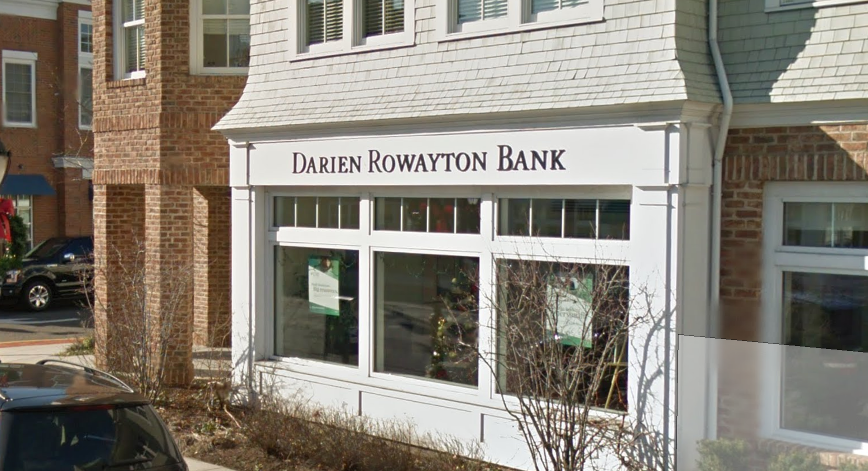 Five hundred and thirty-three miles due north along the Atlantic coast in southeastern Connecticut, Darien Rowayton Bank is also experiencing tremendous success as a lender using a home-grown technology platform. State-chartered by the Connecticut Department of Banking and regulated as well by the Federal Deposit Insurance Corp., the $600 million-asset bank is winning attention in banking circles for its online student-loan refinancing.
A few years ago, DRB, as it is known, was looking to go beyond mortgage and commercial lending — “the bread and butter for most community banks,” bank president Robert Kettenmann explained to AltFinanceDaily in a telephone interview – and was somewhat at a loss. The bank considered but then rejected the credit card business. Finally, DRB struck paydirt refinancing student loans. “Our chairman really seized on the opportunity,” Kettenmann says, adding: “It’s a $35 billion market.”
Thanks to the National Bank Act, it’s able to operate in all 50 states. As a regulated commercial bank with a strong deposit base, DRB can also offer low rates well below any state’s usury prohibitions.
What is most striking about DRB’s program is its nationwide targeting of upwardly mobile, affluent young professionals. According to a PowerPoint presentation obtained by AltFinanceDaily, all of the bank’s super-prime borrowers, who are mainly in the 28-34 age bracket, have a college degree and a whopping 93% have graduate degrees. Average income is $194,000.
 Forty-eight percent of those refinancing student loans with DRB are doctors or dentists and another 22 percent are pharmacists, nurses or medical employees; only about 20% are paying off their law degrees or MBAs. The heavy concentration of refinancing in the medical field reduces economic risk in an economic downturn. Forty-three percent of the borrowers are home-owners, the rest are renters – and prime candidates for an online, DRB-financed mortgage.
(Once known as “yuppies” today this cohort is “known by the acronym ‘HENRY,’” remarks Cornelius Hurley, a Boston University banking professor and executive director of the Online Lending Institute, explaining the initials stand for “High Earners Not Rich Yet.”)
The Connecticut bank partnered with a third-party on-line vendor, Campus Door, when it commenced making student loans in 2013. In the fall of 2016, however, DRB built out its own, proprietary loan-origination system, Kettenmann reports, emphasizing that CampusDoor had been an excellent partner but that the bank wanted to exercise end-to-end control over the process. DRB employs a seven-pronged, “omni-channel” marketing approach that includes interactive marketing, affinity partnerships, digital/online advertising, direct mail, mass-media advertising, and public relations/brand awareness campaigns.
DRB’s online enrollment provides “pre-approved rates” in less than two minutes with final approval on rates in 24-48 hours. Refinancers can complete the online application at their own speed. Through May, 2017, DRB had made $2.48 billion in refinancing to 20,000 student-loan borrowers, with only ten defaults, five of which were attributed to deaths or “terminal illness.”
On Yelp! the bank has received a batch of reviews ranging from very favorable, five-star (“I had a truly wonderful experience”) to one-star (“awful” and “truly a nightmare”). Many fault the application process as laborious, describing it as “time-consuming.” But for those who have succeeded, like the reviewer who counseled “patience,” the result can be “the lowest rate with DRB…my loan payments went down $100 a month.”
 Just about an hour’s drive south and taking its name from its proximity to New York city just over the George Washington Bridge is New Jersey-based, state-chartered Cross River Bank, which has a reputation as a partner-in-arms to fintech companies. “We’re both users and producers of technology,” declares Gilles Gade, the bank’s chief executive.
The bank provides “back-end” and infrastructure support to 17 marketplace lenders that offer a suite of lending products including personal loans, mortgages and home-equity loans. Following loan origination by a fintech company – Marlette Funding, Affirm, Upstart, loanDepot, SoFi, and Quicken Loan, among other partners — Cross River does the actual underwriting. Last year, Gade reports, the bank underwrote 1.9 million loans valued at $4-4.5 billion, about 10% of which Cross River kept on its books. The bulk of the loans are sold “back to the marketplace lenders” or to a third party. “We’ve created a high-velocity automated system,” he says.
Gade is manifestly unapologetic about the bank’s role in assisting fintechs in their competition with the banking establishment. “We’re a banking infrastructure services provider for those who want to disrupt the banking system,” he says. “Consumers expect a lot better than they’ve been getting from traditional banking services.”
 Back in Boston, Radius Bank’s chief executive reports that forging partnerships with fintechs to provide the full panoply of online banking services was no easy proposition. In its mating ritual, Radius not only had to determine that a fintech company’s offerings were sound and that it had the right characteristics – most especially “a long-term, sustainable business model” – but that its corporate culture meshed comfortably with Radius’s.
After meeting with as many as 500 fintechs and after a fair amount of trial and error, Radius formed partnerships with LevelUp, which enables customers to make mobile payments; with online lender Prosper, for refinancing consumer debt and “credit rehabilitation”; with SmarterBucks, for refinancing student loans; and with online investment firm Aspiration Partners – which allows investors to name their own fees and markets itself to a predominately middle-class audience as the firm “with a conscience.”
Radius employs advertising on social media websites and employs “psychographics” to appeal to “anyone who is zealous about using technology, not necessarily millennials,” Butler says. The data show that 65% of adults in the U.S. would prefer to use a traditional bank and have face-to-face interactions with a teller, he notes, leaving the remaining 35% as Radius’s target audience.
Christopher Tremont, executive vice-president for virtual banking, told AltFinanceDaily that a typical Radius customer is 42 years old, lives in Boston, New York, Chicago “or one of the bigger cities in the West,” is a “technophile,” earns $75,000 a year, and has $100,000 in personal assets.
Radius’s performance since it went paperless has been stellar. The bank has seen a rapid rise in deposits, spurting to $782 million through the first quarter of 2017, up from $565 million at year-end 2014. With little fee income but ample deposits and low-cost funds, Radius realizes the bulk of its revenues – and profits — on the interest-rate spread generated from its loan portfolio.
The bank booked $43.5 million in SBA loans last year, ranking it in the top 50 banks on the SBA’s league tables, while carrying another $105 million in its commercial leasing business at the end of the first quarter this year. Loan generation is driving asset growth, which are currently at $973 billion, up more a third from $726 million in 2014, and Butler expects the bank’s assets to top $1 billion sometime this year.
“Community banks love that part of the business—lending money,” Butler says.
PayPal Scoops Up Swift Financial
August 10, 2017
Online lending M&A is under way. PayPal is bolstering its merchant lending capabilities with the addition of Swift Financial. While the deal was kept under wraps, some industry participants heard some buzz about a possible combination.
PayPal has been investing in its lending arm of late, evidenced by the addition of former Amazon executive Mark Britto as senior vice president and general manager of global credit in July.
Noah Grayson, South End Capital managing director and founder, weighed in on the deal.
“A merger of two industry leaders like this is not surprising. As the economy continues to improve and small business owners have access to more financing options, alternative business lenders are going to continue to consolidate to stave off competition, retain deal flow and secure profitability,” said Grayson.
Dave Girouard, founder and CEO at Upstart, a consumer lending platform that uses machine learning, reacted to the deal:
“I expect to see more consolidation in online lending across both consumer and small business in the next year. Platforms with either giant balance sheets or proprietary technology will likely stick around, but others will struggle to compete,” Girouard told AltFinanceDaily.
Alternative lender LendUp was a recent recipient of a PayPal investment. Sasha Orloff, LendUp’s CEO, had this to say about the deal:
“I’m not surprised to see an acquisition in the fintech credit space and expect this will kick off a wave of acquisitions. PayPal is a force to be reckoned with and we have seen them lead the industry again and again. Whether it is the partner model like with Synchrony, the acquisition model like Swift, Braintree/Venmo, Xoom, or the investment model like LendUp, they are proving again and again why they are leading innovation in financial services decade after decade,” said Orloff.
Meanwhile don’t expect to see a PayPal/LendUp pairing anytime soon.
“For our part, we’re going after a very different market and we’re focused on driving consumer financial inclusion — and we’re very focused on remaining an independent company and helping companies like PayPal and banks offer better products for millennials and the emerging middle class,” Orloff added.
PayPal was already working with Swift on a white-label basis for one of its products, PayPal Business Loan, which is a term loan with structured repayments.
“Swift Financial offers complementary business financing solutions and advanced underwriting capabilities that accelerate our ability to acquire new merchant partners with business financing solutions and to deepen our relationships with existing merchants and channel distribution partners,” said Darrell Esch, VP and Commercial officer, Global Credit, PayPal, pointing to Swift’s advanced underwriting and product capabilities and seasoned management team.
Swift was launched just over a decade ago and has extended loans to 20,000-plus merchants.
Fintech Remains Loyal to Prosper & Suber
July 10, 2017
When AltFinanceDaily reached out to fintech market participants for comment on Ron Suber’s sudden departure as Prosper’s president, the responses were the same — ‘anything for Ron.’ Dubbed the Godfather of fintech, Suber might deserve superhero status given the recapitalization that he and the Vermuts led half a decade ago to save Prosper Marketplace. That type of rescue inspires the kind of loyalty that investors and other fintech participants are displaying not only for Suber but also the Prosper brand.
“Ron is an incredible business partner. His word is always good. He doesn’t overpromise, and he always follows through. We were honored to work with a guy like that,” said Matt O’Malley, co-founder and president of Looking Glass Investments, which has been investing on the Prosper platform since 2008.
Perhaps he has never seen him overpromise but in recent weeks he and many other investors on the Prosper platform did observe an overstatement of returns. O’Malley calls it a forgivable mistake.
“In my view, it is our responsibility to track our returns. Prosper provides an extremely robust data set. We have the ability to calculate our returns daily,” said O’Malley, pointing to a nascent fintech market that is still evolving. “This asset class is new. If you compare it to investing in stocks and bonds, it’s in its infancy. When preparing returns, it’s very challenging to determine what they are,” he said.
Looking Glass has been investing in individual loans on the Prosper platform since before Suber’s time and has watched as the former Wells Fargo executive has transformed the peer-to-peer lender to welcome institutional investors.
“He didn’t have to let us stay on the platform. They could have chosen to replace the little guy. But that isn’t how he does business. He knew the investment banks and [other] banks would get involved, however he knew there was enough room for everyone,” said O’Malley.
That day is here, evidenced by Prosper’s previously announced deal with a consortium of institutional investors to purchase $5 billion worth of loans via the Prosper platform over the next couple of years.
FT Partners was the lead advisor on that deal.
“When they needed capital they could have chosen anybody to help. We were excited to be the chosen one to help them on the deal. It was one of fintech’s largest deals and certainly the largest of its kind,” said Steve McLaughlin, founder of FT Partners.
McLaughlin went on to explain the unique circumstances surrounding the transaction, including a lack of diversification tied to Prosper’s capital sources, which he added was a learning experience not only for the peer-to-peer lender but for all of fintech.
“They were focused on getting capital from hedge funds in a steady stream. When the capital markets had a blip, lots of that capital backed away. It was an unprecedented thing to go out and get a $5 billion forward agreement from a series of investors. “There was nothing cookie cutter about it,” said McLaughlin.
Since then the rest of fintech seems to be catching on.
“FT Partners is getting a lot of attention and a lot of calls for all of the other activity we are doing in the space as well. We raised capital for Prosper and a bunch of other companies, including Earnest, GreenSky, Upstart, Kabbage and others. We get a lot of calls, and we’re doing a lot of deals in the space. It’s a lot of fun,” McLaughlin said.
Much of the success of the multi-billion dollar Prosper deal was thanks to Suber.
“A lot of people are very familiar with Ron and the Prosper story and view Prosper as a high-end institution that while having some issues on financing had a very big and long-term future. Lots of Ron’s connections from before came into play in the round,” said McLaughlin.
Now that Suber is out of the picture in an official capacity, investors have every right to be disappointed. But as McLaughlin pointed out, Suber remains a big shareholder in Prosper and the peer-to-peer lender’s greatest supporter, two things that the FT Partners founder does not expect to change.
“This is not a major blow for Prosper. They maintain Ron as a friend of the firm and as an advisor. He has great friends and colleagues at Prosper. He is not going to work for anybody else. He won’t be doing anything with any other lending companies, I don’t think. He may be able to do more good from the outside than the inside at Prosper. I think Ron will always be part of the Prosper family,” McLaughlin said.
Why Now?
If things were going so well for Suber ushering Prosper into its chapter that included expanding the role of institutions on the platform then why is he leaving now? While Suber himself was not available to answer that question, the answer seems to be that it is personal. The fintech community knows Suber for his role in advancing this new asset class but what people might not know is that he is also a husband and a father.
“I think he just feels like this is more of a personal shift,” McLaughlin said.
O’Malley’s impression was similar. Upon joining the fintech startup, Suber made it a point to get to know the Looking Glass team.
“Ron invited us to breakfast. We did this three times. I remember meeting him and thinking this guy is exactly what we need – extra bright, charismatic and he talked lovingly about his children and his wife. He even joked that marriage is like yoga – it’s harder than it looks,” O’Malley said. “My guess is they are going to spend some time together as a family. And he is going to come back bigger and better than ever.”
Meanwhile Both O’Malley and McLaughlin were familiar with Prosper before Suber came on board, and both will remain engaged with Prosper even after Suber’s departure.
“They’re terrific and we have a great relationship. If they do something, we’re definitely the banker for it,” said McLaughlin.
O’Malley’s commitment is steadfast “We will remain loyal,” he said.
The Tesla of Alternative Lending
May 16, 2017 Tesla has autopilot. Apple has Siri. And Upstart has its own high-tech software model that places the startup in a category of its own for online lending. All three of these companies may be very different but what they have in common is a reliance on artificial intelligence and machine learning for their proprietary technology.
“You hear so much about how Tesla cars will drive themselves, how Google or Amazon home assistants talk to you to as if you’re human. In lending we are the first company to apply these types of technologies to lending,” Dave Girouard, Upstart co-founder and CEO told AltFinanceDaily.
So what is machine learning exactly, particularly as it relates to finance? One of the main components that goes into machine learning is not looking at the same data everybody else does. “We are known for looking beyond FICO and the credit report. We look at who the employer is, what industry you work in, where you went to college, what you studied, several hundred variables affect how we price credit,” he said.
Upstart, a direct-to-consumer lending platform, uses artificial intelligence and machine learning for everything from verifying a potential borrower’s identity, to making a credit decision, to pricing credit. Today 25 percent of the company’s loans are 100% automated.
“This is a radical departure from the industry,” said Girouard. “It’s a function of being able to build more automation to verify information about the borrower.”
Indeed the differences between machine learning and traditional credit models is kind of like comparing a self-driving vehicle to walking.
“The whole term machine learning implies that software gets smarter and better on its own with no human intervention. Every day thousands of repayments are made to Upstart along with delinquencies, and defaults. As this happens the software is adjusting its pricing on the next loan, learning in real time every day,” Girouard said, without even the slightest concern of tipping his hand.
“We have a several year head start and a data science team that are math and statistics PhDs. These are the types of people hired by Google or Tesla or Amazon. Traditional consumer credit doesn’t tend to have machine learning skills,” he added.
Nevertheless his vision for artificial intelligence and machine learning in the lending community is far greater than as it applies to Upstart alone. “We think virtually all flavors of lending will depend on AI/ML within 10 years. We’re at the very early stages, but it’s hard to imagine a successful lender anywhere who doesn’t use similar technology over time,” Girouard said.
Inside Upstart
Upstart is a hybrid lender that funds 20% of loans from their balance sheet. Two months ago they began licensing software as a service (SaaS). The software is managed by Upstart but it appears on the partner’s website. “A bank could use our technology to originate loans,” said Girouard, adding that the company is in conversations with two-to-three dozen banks about future partnerships.
The machine learning approach seems to lend itself to favoring certain demographics. In the case of Upstart, this happens to be millennials, evidenced by the lender’s average customer age of 28, almost all of whom have college degrees.
“Obviously we understood early that the millennial generation doesn’t have 20 years of credit history and they have a hard time getting loans. It struck us, tell me you wouldn’t give a loan to a 25 year old just because they have a thin credit file? It doesn’t make sense. What if they studied at Stanford and work at Google? There is more to be known about an individual than a FICO score,” said Girouard.
Perhaps the greatest evidence of whether or not Upstart’s approach is working is to catch a glimpse of the company’s balance sheet. Upstart expects to reach the $1 billion milestone for loan originations in calendar 2017. And perhaps even more telling is they anticipate being profitable by the summer. “An IPO for us would be a couple of years out,” Girouard said.
That timing could be perfect, particularly considering Wall Street’s apparent love/hate relationship with some players in the alternative lending space.
“People tend to paint the whole industry with one brush and it’s not a very pretty brush at the moment. But soon they will begin to appreciate there is a significant difference between these companies. Upstart really does have a very differentiated and unique product,” said Girouard.
Re-Banked
April 23, 2017
Just a few years ago, the financial services community was fixing for a battle of David and Goliath proportions—with scrappy, upstart online lenders threatening to rise up and vanquish the fearful and mighty brick and mortar banks. Instead, the unexpected happened: a number of well-respected online lenders and banks set aside their battle arms and began looking for ways to collaborate with their rivals—offloading loans, making referral agreements and establishing more formal partnerships, for example.
“In the real world, sometimes David wins. Sometimes Goliath wins. Just as plausibly, sometimes both sides carve up a market and they often have different offerings that target unique customers,” says Brayden McCarthy, vice president of strategy at Fundera, a New York-based marketplace for small business lending that works with a variety of lenders, including traditional banks.

Certainly, the change didn’t happen overnight. But over time, both online lenders and banks have been forced to tailor their expectations more closely to market realities. Despite their fast growth trajectory, several online lenders have come to realize that they lack several things many banks have, namely a strong, time-tested brand, a solid customer base and ample capital. Banks, meanwhile, have realized that their slow start out of the gate with respect to technology is a severe competitive disadvantage, and that they need more nimble, savvy partners to stay in the game.
Given these shifts, more and more online lenders and banks are taking the approach that if you can’t beat ‘em, join ‘em. Although some industry leaders are actively pursuing strategies that put them in direct competition with banks, partnerships of varying degrees between traditional banks and alternative players are increasingly common. As a result, the lines separating the two are getting increasingly blurry.
“Market forces are acting as a shotgun at the wedding. Whether the two sides are entirely comfortable with the marriage is irrelevant, they need one another,” says Patricia Hewitt, chief executive of PG Research & Advisory Services LLC in Savannah, Georgia. “They’re stronger together than they are alone.”
The evolution of Square is a prime example. The San Francisco-based company really packed a punch in the merchant services world with its mobile card reader designed for small businesses. From there, the payments company sought additional ways to diversify, eventually turning to merchant cash advance as a way to help small business customers obtain funds quickly. Then, in March of last year, Square moved into online lending, teaming up with Celtic Bank of Utah to offer small business loans online. The partnership got off to a running start. In its most recent earnings report, Square said it facilitated 40,000 business loans totaling $248 million in the fourth quarter of 2016—up 68 percent year over year—while maintaining loan default rates at roughly 4 percent.
Even SoFi, the San Francisco-based online lender that has been pointedly outspoken in its anti-bank rhetoric, now has bank-like aspirations. In February, the lender acquired mobile banking startup Zenbanx, giving it the ability to offer checking accounts and credit cards in 2017. Also in February, SoFi teamed up with Promontory Interfinancial Network to enable community banks to purchase super-prime student loans originated by the online lender. Large banks have been buying SoFi loans for several years.
COLLABORATION IS THE WAVE OF THE FUTURE
Many see collaboration between banks and online lenders as a logical step in the industry’s evolution. Online disrupters have forever changed the face of lending—in the same way that online brokerage shaped the financial advisor industry, according to Bill Ullman, chief commercial officer of Orchard Platform.
“There’s a tendency to want to view things as either black or white, online lenders vs. banks. The reality is that the entire financial services industry is undergoing a transformation with technology as the core driver,” he says. “I am of the view that both traditional financial services companies and fintech players can survive and thrive,” Ullman says.
For its part, Orchard recently inked a deal with Sandler O’Neill that provides access to the Orchard platform for the investment bank and brokerage firm’s bank and specialty finance clients. The deal is expected to help small banks better evaluate their options with respect to online lending opportunities.
Partnerships between online lenders and banks take many forms. Some of them are behind the scenes, where marketplaces sell loans to banks or banks informally refer customers. Others are more public. For example, in September 2015, Prosper and Radius Bank of Boston teamed up to offer personal loans to certain customers through the bank’s website using the Prosper platform. Customers can borrow from $2,000 to $35,000 in this manner.
Then in December 2015, JPMorgan Chase and OnDeck joined forces in order to dramatically speed up the process of providing loans to some of the banking giant’s small business customers. In April 2016, Regions Bank and Avant announced a partnership to better serve customers who don’t meet Regions’ credit criteria.
Avant’s customers typically have a credit score between 600 and 700, while Regions sets the bar higher. “The benefit for banks is that they do not need to worry about a platform taking away customers that meet their own credit criteria,” according to Carolyn Blackman Gasbarra, head of public relation at Avant.
She notes that Avant expects to replicate this model with more banks in 2017. “Lately many platforms and banks have come to realize their counterparts are more friend than foe,” she says.
Given the changing tides, industry watchers expect to see more relationships develop between online lenders and banks over time. These could include referral agreements, technology licensing arrangements, formalized revenue-sharing partnerships and perhaps even outright acquisitions.
PARTNERSHIP ADVANTAGES
Certainly, working together can be mutually beneficial for both online lenders and banks. For new online lenders and other fintech players, partnering with an established bank allows them to bypass significant regulatory and compliance hurdles because the necessary requirements are already in place.
“Why jump through all the hoops when you can just have a buddy system with an existing lender?” says Kerri Moriarty, head of company development at Cinch Financial, a Boston-based company dedicated to helping people make smarter investment decisions.
Fintechs that license their technology to banks still have to meet the high standards of third-party vendors determined by bank regulators, notes Stan Orszula, co-head of the fintech team at the Chicago law firm Barack Ferrazzano Kirschbaum & Nagelberg LLP.
“But it’s still less onerous than being a direct lender,” says Orszula, who works closely with banks and fintech providers on legal, regulatory and corporate issues. “They are learning that they need banks. They really do.”
Even seasoned online lenders that have a regulatory framework in place can benefit from bank relationships by using banks’ established brands as leverage. “Everyone knows Chase, Bank of America and American Express,” says McCarthy of Fundera. “They have a solid name and a solid in-built customer base to be able to offer product to them,” he says.
Teaming up with a bank gives added credibility to an online lender, at a time when the public’s confidence has faltered due to highly publicized troubles at certain firms. “Partnering has a very important signaling effect that these online players are here to stay,” McCarthy says.
Banks, meanwhile, need the nimbleness and innovation that online lenders provide. “Banks realize they have to catch up with the fintech disrupters,” says Mark E. Curry, president and chief executive of SOL Partners, which provides strategic management and information technology consulting services to financial services companies.
DIFFERENT TYPES OF PARTNERSHIP OPPORTUNITIES ABOUND

When it comes to partnerships between banks and online players, there are numerous options. In the small business lending space, for example, McCarthy of Fundera says he expects banks to continue buying loans from online lenders, as they have been for many years. He also expects more banks will route declined applicants to online lenders or online loan brokers. “This is a partnership that will allow them to make up some incremental revenue by referring business,” he says.
In addition, McCarthy says he expects banks to make products available through online marketplaces and use an online lender’s technology for online loan applications. He also expects banks will use online lenders’ technology for underwriting and servicing loans.
Years ago, before John Donovan joined Bizfi, he recalls talking to a salesman for a large national bank. The bank didn’t offer a lending product that he could give to small businesses and the salesman was losing customers as a result. “That’s where we see a lot of those opportunities,” says Donovan, chief executive of the online marketplace for small business loans.
For instance in March 2016, Bizfi partnered with Western Independent Bankers, a trade association, for over about 600 community and regional banks, to link small business clients to financing options through Bizfi. Many banks don’t offer small business loans below $150,000, whereas the average loan Bizfi does is $40,000, Donovan says, adding that the company would like to develop additional relationships similar to its agreement with Western Independent Bankers.
In the future, he predicts fintechs will continue to be more receptive to the idea of working with banks and vice versa, as the industry digests the impact of deals that are still in their early days.
FINDING STRATEGIC GROWTH OPPORTUNITIES
As banks and online lenders become increasingly accustomed to working together, there may be more opportunities for strategic acquisitions. For instance, Sandeep Kumar, managing director of Synechron, a global consulting and technology firm, expects to see banks—especially mid-tier players that don’t have the resources to innovate like big banks buying lending-related start-ups. He says banks will likely be most interested in companies that can help them with AI and other techniques to pinpoint where they should spend more efforts on cross-selling and customer profiling, for example. “There are many start-ups in this area that have very compelling technology,” he says.
On the other hand, Chris Skinner, an independent commentator at The Finanser Ltd., a research and consulting firm in London, points out that the two cultures don’t always mesh. “Quite a few startups have young, entrepreneurial founders that would loath the idea being acquired by a bank. So it really depends on the circumstances,” he says.
Valuation differences between large banks and leading online lenders may also be a sticking point for some deals, Ullman of Orchard points out. Banks’ concern over their valuation “will place a certain amount of restraint and discipline on the tech M&A activities they pursue,” he says.
ANTICIPATING TROUBLE IN PARADISE
While increased collaboration between online lenders and banks sounds good on the surface, John Zepecki, group head of product management for lending at D+H in San Francisco, urges both sides to proceed with caution. “You have to find an arrangement where you don’t have conflict,” he says. “If your innovation partner also is a competitor, it’s a challenge. If you have an inherent conflict, it doesn’t get better over time.”
That’s one reason why companies like Chicago-based Akouba have come on the scene. In Akouba’s case, its goal is to provide banks with the technology such that they don’t have to partner with an online lender that has the potential to compete for business. “We don’t compete with the bank in any way whatsoever,” says Chris Rentner, the company’s founder and chief executive.
Akouba’s business lending platform—which the American Bankers Association endorsed in February—provides banks with leading edge technology that integrates the bank’s own unique credit policies into a convenient, online process—from application to documentation— all the way to closing and funding. The bank uses its own credit policies, originates its own loans and owns the entire brand and customer relationship.
Rentner says he started the business with the idea in mind that the online lending model wouldn’t be sustainable long-term and that working alongside banks—as opposed to competing head to head— was the direction to go. “The idea that they could somehow get all of the consumers out of the banking world and onto their platforms was never going to happen. That’s why we exist today,” he says.
Catching Up With Marketplace Lending – A Timeline
April 20, 20172/17
- Prospa, an online small business lender based in Australia, was valued at $235M (AUD) in a $25M capital raise
- Square announced funding $248 million worth of business loans in Q4 2016
2/21 A Massachusetts state court vacated a merchant cash advance COJ
2/24 SoFi raised $500M in a financing round led by Silver Lake Partners that reportedly gave SoFi a $4.3B valuation
2/27 Prosper Marketplace closed a loan purchase agreement with a consortium of lenders for up to $5 billion of loans that has a provision that also enables the lenders to buy up to 35% of the company
2/28 BlueVine secured a warehouse line of up to $75M from Fortress
3/1 Lendio launched a new franchise program, allowing local offices around the country to become Lendio franchisees
3/3 Citing Madden v Midland, Colorado regulator brought a federal lawsuit against Marlette Funding for violating the state’s usury cap
3/5 Two trade associations, the Innovative Lending Platform Association (ILPA) and the Coalition for Responsible Business Finance (CRBF), joined forces. The merged company will continue to be known as ILPA
3/6 Upstart raised $32.5M
3/7
- It’s reported that former CAN Capital CFO Aman Verjee is now the COO of 500 Startups
- Kabbage priced a $525M securitization. It was oversubscribed
3/9 Citing Madden v Midland, Colorado regulator brought a federal lawsuit against Avant for violating the state’s usury cap
3/13
- Melvin Chasen, the founder of Rewards Network (originally Transmedia Network, Inc.) passed away. He was 88.
- The New York State Assembly rejected the Governor’s proposal to grant the Department of Financial Services (DFS) regulatory authority over any online lender doing business in the state
3/15
- The New York State Senate also rejected the proposal to further regulate lending
- The OCC published a manual on how it will evaluate charter applications from fintech companies
- The New York DFS published a statement rejecting the OCC’s plans
- The WSJ reported that Marlette Funding was cutting nearly 1/5th of its workforce
3/16 WebBank announced that it had a net income of $29.2M for 2016 and that it had a market valuation of $319.4M
3/20 Prosper Marketplace announced that it had originated $2.2B in loans in 2016, down from $3.7B in 2015, and had a net loss of $119M.
3/21 It’s reported that Kabbage will set up its European headquarters in Ireland
3/22 OnDeck expanded its credit facility with Deutsche Bank by $52M to a total of up to $214M
3/27 IOU Financial wins Gold Stevie Award for Best Use of Technology in Customer Service
3/30 In Advance Capital announced that they had secured access to an additional $50M
4/5
- Budget passes in New York. Proposed lending legislation was not included in it.
- Kabbage surpasses $3 billion funded to small businesses
See previous timelines:
12/16/16 – 2/16/17
9/27/16 – 12/16/16