
Remember “Thinking Out of the Box?”
August 10, 2012 Remember when “thinking out of the box” was all the craze when it came to finding solutions and building business? Today most of us disregard thinking out of the box and much prefer being “creative” and “innovative.” We’re much more sophisticated in our approach. Thinking out of the box appears to be a metaphor that has outlived its use. In today’s business environment if you want to succeed you’re better off concentrating on coming up with creative, innovative solutions and products.
Not so fast say American and Chinese researchers who conducted some pretty interesting research into the psychology of creativity.
Here are a few examples of what they found out:
- An experiment was conducted where people were placed either in a five foot by five foot “box” or seated outside the box. The people outside the box were found to perform at higher levels when taking tests that required creative thinking.
- In another experiment it was found that being able to walk freely about stimulated more creative and effective thinking and problem solving than those who were instructed to walk in a straight line.
- In a particularly interesting experiment people were asked to put two things together. The group who received instructions to act out the metaphor of putting “two and two together” were more successful in developing different ways to approach the problem successfully.
Taking the Research Out of the Lab and into the Real World
It might appear that this research has very little, even nothing, to contribute to the growth and development of your small business. So let’s take a second look at the findings as they relate to your business and the workplace:
The first experiment found that most people work better in an open environment. How many of us and those who work for us do that work in square offices or cubicles? Not everyone would be comfortable working in a completely open space, but doing our best to provide work spaces that evoke creativity and innovative thinking would likely be good for business.
In the second experiment people were found to be better able to solve problems as well as think creatively when not required to walk in a straight line. Most small businesses owners see productive workers as workers sitting at their desk or station. For example, it could be that an employee might think better when solving a problem when speaking to a client or customer on the phone if standing and allowed to move about. This increase in innovative thinking may not apply to just physically walking in a straight line. Small business owners might want to consider examining policies and procedures to see if allowing employees to “walk more freely” might mean more effective and productive employees.
The last experiment where people were asked to put things together poses more of a challenge to apply in the real world your small business operates in. Perhaps the best way to look at this finding is to view to approaching what needs to be done in different ways to be an effective means to find the best way to do things. After all, what better metaphor is there for solving a problem correctly other than “put two and two together?”
The last thing these experiments demonstrate is that perhaps we’re wrong to believe “thinking out of the box” is a method to improve business that’s seen better days. As a matter-of-fact, thinking out of the box appears to be another term for creativity and innovation.
Guest Authored by Annie:
– Merchant Processing Resource
../../
It Might Be You
August 8, 2012You are innocently eating your bologna sandwich in the lunchroom when some of your fellow elementary school friends start to giggle. You giggle a little too just because you usually all laugh at things together, even though you’re not exactly sure what the joke was. “Damn,” you think to yourself. “I got all caught up in my bologna sandwich and I missed something.” Soon others begin to laugh. You laugh nervously with them, but take a couple quick glances around the room to try and locate the source of the humor. You spot nothing, but realize the chuckles are spreading like wildfire. Some people are looking at you as if they are suspicious that you might be the only one that doesn’t GET it. So instead you double down on your laughter as if to prove you’re enjoying the joke more than they are. “I’m enjoying whatever it is we’re all laughing at more than you are!,” you say under your breath. This only makes the crowd more raucous and by now everyone is starting to point in your direction.
“Ohhhhh crapppp…”
And then you find out it is you. There you are, sitting in the cafeteria, munching on a bologna sandwich with a grade school level obscenity drawn on the back of your shirt. You don’t know who drew it or when it happened, but you quickly learn it was done in red marker, particularly the kind from the 1980s that smelled like cherry, caused dizziness, and made your nose bleed after 15 seconds. There’s always somebody getting picked on, you just never thought it would be you.

Smells Sooooo Gooddddd
“Ohhhhh crapppp…”
 It might be you. Every year or so, the MCA industry welcomes in a couple new big players. There’s always one that funds more, pays more, bends more, and brags more as they quickly cut into the marketshare that established funders have had for years. Suddenly they’re the hottest thing in town, that is until about 6 months later when they start telling their “loyal” broker shops to stop sending in new deals for a while. As the newbie’s joyride comes to an end, the established funders roll their eyes and continue on the way they always have, responsibly.
We’re not here to point anyone out or to suggest that brokers purposely send bad paper to an inexperienced funder. It’s just easy to spot the amateurs. Sadly, most people laugh at them behind the scenes until the funder calls it quits, completely unaware that they’ve been wearing a “kick me” sign on their back for months.
This could be an uncomfortable topic for some, but this rapid rise and fall scenario plays out across many industries. If your business is less than two years old, ask yourself this: Is your success a result of awesomeness or do you smell a tinge of red cherry marker?
—————
Does anyone know what the truth is anymore? These contradictory articles were both published yesterday by reputable news media outlets:
Banks Keep Lending Standards Tight For Small Firms
Fed Says Banks Ease Standards On Business, Consumer Loans
Is affirmative action coming to a funder near you?
Dodd-Frank’s small business lending time bomb
Growth in the usage of MCAs (selling future sales for cash upfront) is taking a huge chunk of market share away from traditional lenders.
Some crusty old reporters remain clueless as to why fewer and fewer businesses are turning to their banks for loans. Professor Scott Shane in BusinessWeek fumbled through his recent 700 word article in which he makes several unconvincing arguments for credit cards as being the new holy grail for business owners. Ultimately, he concedes that the decrease in small loans to businesses might simply be a benign statistical anomaly. This guy is a professor??!! Borrow, Borrow, Loan, Loan, Loan. Some people still can’t imagine a world where leveraging can happen without a borrower and a lender.
—————
Have you ever tried to peg down what exactly is happening in the credit markets? The National Federation of Independent Business has already done a lot of the work for you. A few clues:
- Small-business owners are increasingly employing personal rather than business cards for business purposes
- Fifty-seven (57) percent of small employers attempted to obtain credit from a financial institution in the last 12 months, a nine percentage point increase from 2010 with the demand for lines and cards each rising more than one-third. The demand for line renewals and loans were flat. More attempts resulted in more rejections rather than more small-business owners obtaining credit
- Poorer credit risks were more likely to try to borrow in 2011 than better credit risks, other factors equal. A number of financial factors, such as credit score, differentiate the two groups. Men and owners of larger small businesses were also more likely than their counter-parts to try to borrow
Download the full 76 page NFIB January 2012 report
—————
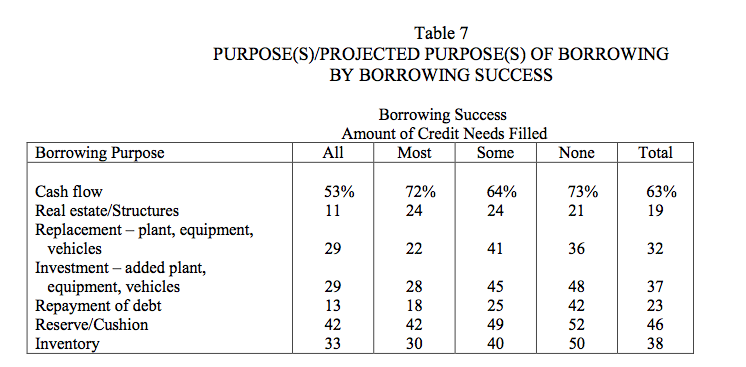
Some MCA underwriters hate when merchants state they aim to use the funding proceeds for “cash flow” as if its unspecific nature was code for betting on the horses. In the traditional lending world, businesses have been offering that up as a purpose for decades. From the NFIB Report:
– Merchant Processing Resource
../../
Strategic Funding Secures $12 Million Equity Round and $15 Million Senior Credit Facility
June 27, 2012For Release on MPR / New York (June 26, 2012) – New York City based Strategic Funding (www.sfscapital.com) has announced it has completed a $12 million equity round with an investor group led by Three Layer Capital of Los Angeles, California and simultaneously closed on a new $15 million revolving Senior Credit Facility with Capital One Bank. The new equity and credit facility will be used for ongoing capital needs and to fund the future growth of company.
Strategic Funding is recognized as one of the most innovative companies in the alternative finance industry, providing unique working capital solutions such as merchant cash advance, revenue based factoring (ACH programs) and commercial loans for small businesses. The company’s business model combines sophisticated underwriting incorporating qualitative and quantitative risk analysis with the most advanced enterprise technology available.
“Strategic Funding finances the small to mid-sized businesses of Main Street America” said Andrew Reiser, Chairman and CEO of Strategic Funding. “Since 2006, we have provided thousands of small businesses with the working capital they need to grow and sustain themselves through challenging times. Today’s entrepreneurs have very limited access to bank financing, a void filled by our company and the alternative finance industry – so one might say that we are stimulating the economy, one small business at a time.”
In seeking high yield investment opportunities, Thomas Scoville, a partner at Three Layer Capital stated that, “We were looking for best-of-breed players in the alternative finance space. A lot of companies are currently operating in this arena but few have the disciplines and technology of Strategic. A number of these companies are also beginning to venture into big-data risk analytics, but Strategic has been quietly doing this for years – they’ve got a big head start.” Dan Scholefield, partner in Three Layer Capital added, “Their business model demonstrates remarkably high yields and low default rates while providing financing to traditionally under-banked entrepreneurs. Strategic is very responsive to the needs of the market and economic conditions and provided an outstanding investment opportunity.”
Reiser continued, “We pride ourselves on integrity and responsiveness to the ever changing market and are pleased to welcome our new investors at Three Layer Capital and the team at Capital One Bank.
The Capital One Bank Senior Credit facility replaces the facility provided by Paul Frontier Holdings, which has been a shareholder in Strategic since 2007. Rahul Vaid a managing director of Frontier Capital Advisors, which manages the Paul Frontier Holdings portfolio. He will remain a member of the Board of Directors and his firm will continue their support as a major shareholder of Strategic.
About Strategic Funding
Strategic Funding ( www.sfscapital.com ) is a leading provider of specialty financing to small businesses throughout the United States. Strategic is recognized as the technology leader in servicing the factoring and loan transactions of thousands of merchant accounts for themselves and over one hundred funding partners. The Strategic enterprise technology is at the backbone of the “Strategic Partner” program which promotes syndication among numerous cash advance companies and private investors. Established in 2006, Strategic has its headquarters in New York City and maintains regional offices in Williamsburg, Virginia; Chicago, Illinois and Seattle, Washington, serving thousands of active small business clients in all 50 states.
About Capital One
Capital One Financial Corporation ( www.capitalone.com ) is a financial holding company whose subsidiaries, which include Capital One, N.A., Capital One Bank (USA), N. A., and ING Bank, fsb, had $216.5 billion in deposits and $294.5 billion in total assets outstanding as of March 31, 2012. Headquartered in McLean, Virginia, Capital One and ING Direct offer a broad spectrum of financial products and services to consumers, small businesses and commercial clients through a variety of channels. Capital One, N.A. has approximately 1,000 branch locations primarily in New York, New Jersey, Texas, Louisiana, Maryland, Virginia and the District of Columbia. A Fortune 500 company, Capital One trades on the New York Stock Exchange under the symbol “COF” and is included in the S&P 100 index.
About Three Layer Capital
Three Layer Capital ( www.threelayercapital.com ) is a privately held multidisciplinary fund with focused interests in biotechnology, energy and alternative finance, located in Los Angeles, California.
Contact:
David C. Sederholt, Chief Operating Officer
Strategic Funding
Phone: 212-354-1400
DSederholt@sfscapital.com
Job Losses Possible Threat to MCA Industry / Google Penguin Kills Survivors / No Debit Card Savings
May 6, 2012How sure is this recovery?
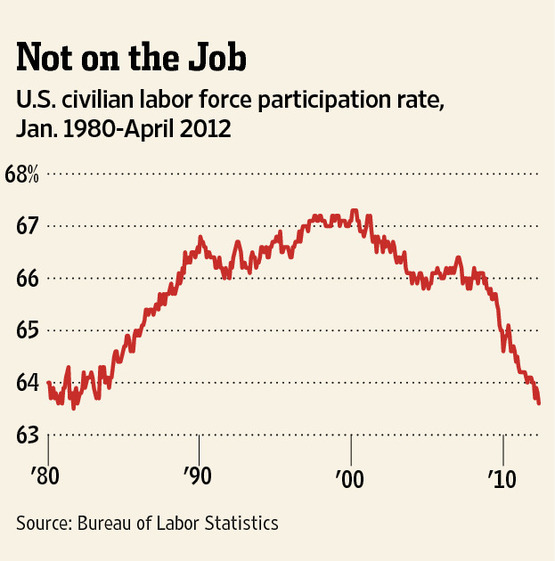
A few months ago, all signs pointed to a roaring recovery. As the data comes in each month, it’s looking less and less like a definitive thing. Sure the unemployment rate is going down, but mainly because hundreds of thousands of people are giving up on searching for jobs. The Wall Street Journal recently analyzed a less popular statistic, the civilian labor participation rate. At present, the percentage of Americans working is at its lowest point since 1981.
At the same time, the nation’s largest banks are cutting back on loans to businesses yet again. It makes one wonder if the explosive growth being experienced in the Merchant Cash Advance industry will start to fizzle out in the 2nd half of this year.
Google Penguin wipes out the survivors
 If you used blog networks like BuildMyRank to game Google into ranking your site higher, you probably noticed your website got whacked in late March. After years of spending precious money on marketing, 2012 brought upon the realization that leads generated from organic searches are not only possible, but free. This is of course before you factor in the thousands and tens of thousands that MCA funders and ISOs are spending a month on SEO. But since many SEO tactics are doomed to fail and because Google’s algorithm can change at any time, investing in organic rankings is incredibly risky.
For example, one mid-sized MCA provider secretly shared that they had spent two years and nearly a hundred thousand dollars to get the rankings for the keywords they wanted on Google. Leads were just finally starting to come in on a daily basis when out of nowhere, they got thrown back to page 25. Blog networks were a big part of their strategy and when Google cracked down on them, the MCA provider’s presence on the Internet went down with the ship.
Some MCA companies survived the blog network armageddon only to become extinct on April 24th when Google made a key algorithm change to help defeat web spam. This major update has become notoriously known as Penguin. If you were a victim, you may need an SEO crisis management plan.
In any case, the changes at Google immediately affected unemployment in India, the country that most U.S. companies turn to for SEO services. As their clients sites disappeared from search results, so too did their contracts. At least that is the gag story surrounding a photoshopped image that has been going viral around the Internet.

Read our previous coverage on Merchant Cash Advance and SEO:
The SEO War for Merchant Cash Advance
The SEO War Continues
Debit card savings not being passed along
Remember when all those small business owners got their swipe rates reduced? Oh wait, that didn’t happen. The Durbin Amendment limited the interchange rates, which are the fees that acquiring banks pay to card issuing banks. The rates and fees charged to the small business are still left to the discretion of Merchant Service providers. Sure they can lower the cost if they so choose, but there’s no law that dictates they have to. It seems the Durbin Amendment victory was all one big misunderstanding for America’s retailers. We’ve been following this law since December, 2010. ISO&Agent Magazine just published an article titled, Unintended Results Plague Durbin Amendment. Are they seriously just figuring this out now?
Published by: Merchant Processing Resource
../../
Subprime Lending and The ETA Expo in Vegas!
April 12, 2012Are we really still saying “banks aren’t lending”? We are, and apparently everybody else is too, because it’s still true. Time Magazine just published a piece that promotes the idea that bank lending is so dead that people wouldn’t even lend money to themselves. Could this be more evidence that banks are no longer necessary to a recovery or economic growth?
We recently scolded the Huffington Post over an article casually claiming that businesses had no financing options other than to pawn off their jewelry. That led us to create a mini-petition in which many players within the Merchant Cash Advance industry could politely inform them of their omission. We are happy to report that individuals from more than 40 MCA companies have participated in the petition so far. “40?! Only 40?!!” If you think 40 is small, you should keep in mind that there are only so many MCA companies in the country. We encourage anyone who has not participated to do so HERE.
Huffington Post hasn’t responded yet but we expect they will be forced to as the emails keeping rolling in!
————————
Woo-hoo! Vegas!! YEAHH!!! (April 17th – April 19th)
As the Merchant Cash Advance industry has evolved, we find it kind of interesting that the we have adopted the Electronic Transactions Association Expo has our own official trade show. Split-processing or ACH collection are both electronic payments, but we believe piggybacking on other industries could potentially be keeping MCA in the shadows. Whenever there’s a trade show, whether it be payment processing, restaurant associations, or other, the Merchant Cash Advance guys seem to show up but they’re never hosting the event.
 Now that the volume of MCA transactions per year is in the billions of dollars, it may be time to starting pulling ourselves out of the booths and onto the big stage. Don’t get us wrong. The ETA Expo is the most valuable place for the MCA space to meet, greet, close deals, learn, partner up, promote yourself, and party, and it’s important that we maintain a big presence there. We can’t help but imagine what could be if wholesalers, equipment vendors, distributors, and retail business owners were coming to the Annual Merchant Cash Advance Industry Expo. Attendees would get pez dispensers shaped like credit card terminals and the candy would be green and shaped like money. As long as we had pez, we wouldn’t need a big fancy dance show:
Thoughts on this anyone? Are you going to be at the ETA Expo? Comment below.
Banks Conclude Dismal Loan Demand is a Result of Business Wariness
March 23, 2012 Banks are lending again but businesses aren’t taking the money… Surprised? We’re not. According to an article in the Wall Street Journal, “much of [last year’s] loan growth comes from lines of credit, not traditional loans. And instead of tapping available credit to power up plants, open factories and hire people, businesses are waiting.”
All of the statistics used to conclude about what businesses are or aren’t doing relied on data provided by the nation’s largest banks.
- Bank loans to businesses grew 10 percent last year after dropping 19 percent in 2009 and 9 percent in 2010, according to the Federal Reserve.
- Analysts are watching bank loan growth closely because it provides clues about whether companies are preparing to hire.
With the blind assumption that banks are the only institutions that provide financing to small businesses, experts are inferring faulty conclusions.
- Wells Fargo assumes businesses are uneasy about the future.
- JPMorgan reports that businesses just don’t want to use the money.
- Chase Bank believes that small businesses have enough money of their own and don’t need loans.
It seems that yet another one of our predictions is coming to fruition. What the banks conclude is wariness, is a direct contradiction to what is being experienced in the Merchant Cash Advance industry: an incredible, insatiable, all consuming demand for for working capital.
Dear Banks,
Small businesses are more confident than they’ve been in a long time.
Sincerely,
The Merchant Cash Advance Industry and Micro-Loan Providers
Why just yesterday, Yellowstone Capital announced the closing of a $1 million deal for a health care service provider. This is right after they financed a trucking business for $751,000. Millions of dollars are literally being poured into small businesses DAILY. United Capital Source recently finalized $1.25 million for a mid-sized business and these are just a few of the deals we’ve caught wind of. If we ran a story every time a large Merchant Cash Advance deal funded, well there would be so many stories that our web servers would crash. And because these deals are not being closed by Chase, Bank of America, or any other national financial institution, the Federal Reserve, major banks, and Wall Street Journal analysts assume that (a) businesses must not be getting financing and (b) businesses must not want capital.
Both are absolutely false. Prediction: The Wall Street Journal will run the following headline two years from now:
Economy and Small Businesses Experience Phenomenal Growth While Bank Lending is at an All Time Low. Experts Stumped.
Other News: President Obama Proposes New Legislation to Allow Him to Run for a Third Term in Office.
Everybody will know the reason for this except the big banks who will conclude that some kind of miracle has happened.
– AltFinanceDaily
../../
What Ever Happened to Gradual Change?
March 13, 2012 Did we really go from one extreme to the other?
CNN 8/25/10: Credit Card Debt at 8 Year Low
NY Post 2/26/12: U.S. Credit Card Debt Nearing Toxic Levels (U.S. Consumer Debt at highest point in a decade)
In 18 months, we managed to go from barely using our credit cards to TOXIC LEVELS! So much for gradual change. On August 25, 2010, the Dow Jones reached an intraday trading low of 9,925. As we write this article, it’s currently priced at 13,177.
The unemployment rate in August 2010 was 9.6%. Many believed that figure to be understated. In February 2012, it was 8.3%.
The headlines change so quickly that we’re starting to wonder what the heck is actually happening in this country. Every story announces that something is either the best thing in history, the worst thing in the world, on the verge of destruction, or never seen before. Many people are not even sure how to interpret these fluctuations. Does it mean that we’re in the middle of a full blown recovery or are we experiencing pre-storm volatility as we near the cliff of a catastrophic depression?
In August 2010, the average price of a gallon of gas was under $2.81. Today it’s over $3.71. And consumer spending is increasing but only because Americans are going deeper into debt. Meanwhile the the demand for business loans is increasing, signaling that the private sector is optimistic and preparing for growth.
Don’t take our word for it but the stock market is probably the best indicator of what all this data means. Using the efficient markets hypothesis as a basis, we believe that the recent surge in stock prices indicates that we are on the path to recovery. When the experts realized that the economy was on track to perform well, the market immediately priced stocks as if things were already great. That’s why you can’t beat the market. By the time you’re ready to make a trade, the price has already changed. Today’s Dow means tomorrows success.
It’s time to jump on the recovery bandwagon!
Right?
– AltFinanceDaily
../../