
MPR Advises MCA Companies to Perform Penetration Tests
November 20, 2012The Merchant Cash Advance (MCA) industry is riding high from a stream of recent publicity and investor interest. Billions of dollars are pouring into the market and some companies are desperately trying to upgrade their software platforms to keep up with the growth. With more exposure comes new curiosity, and not all of it is positive.
There is no widely used software platform in the MCA industry, which is a good thing and a bad thing. It’s bad in the sense that each company has more or less created their own database system, increasing the odds that some companies will have security flaws. It’s good in the sense that if one company suffers some kind of breach, the method used should not be applicable across the entire industry.
Don’t worry, we’re not posting this to scare merchants. In fact, we don’t recall a single MCA firm ever having suffered a public data breach, a statistic unheard of in other industries. So why bring it up? As MCA firms collect more data and handle more money, the more likely they will become attack targets by hackers. The more valuable the stash, the more sophisticated the attacks. Major players like Heartland, TJX, and Global Payments have had sensitive information compromised on hundreds of millions of customers. The moral of the story? Prepare yourself as much as you can.
 If you think it can’t happen to you because your system was developed by a third party, you’re wrong. It’s time to get tested. A Penetration Test, as defined by wikipedia is:
a method of evaluating the security of a computer system or network by simulating an attack from malicious outsiders (who do not have an authorized means of accessing the organization’s systems) and malicious insiders (who have some level of authorized access).
Some may be inclined to compare a Pen Test to sitting in the waiting room of Student Health Services. You’re scared of what they might find and maybe you’d rather not know, but not getting tested at all is the worst thing you can do.
One such Pen Test was performed by an MCA firm months ago that had just purchased a customized software system from a third party. We will not name the firm or the software provider.
After a year of designing, testing, and writing fat checks to a prestigious group of software developers, the MCA firm had finally implemented a state of the art system that would propel them to the next level. After a month of using it, they asked a new hire to do some tests to make sure all of the basic features were working. The bells and whistles were decked out to the nines but no one had tested the easy things like going through the motions of resetting their password if they forgot it.
The new hire noticed something slightly off with the basics and reported his findings to the executives. Interested, but not really worried, they gave him permission to act as if he were a disgruntled employee. Turnover was high in the telemarketing department and there was occasionally a person that would shoot off a couple of dumb e-mails on their way out. But now with a system in place, could they do real damage?
The disgruntled employee test was really a simple Pen Test and this firm is eternally thankful that it performed one. Within 7 minutes, the new hire was able to access and modify every piece of data in the system. He was able to exert administrative power without having administrative level access. The worst part of what he did? There was no way to prevent against this mess because of how the software was coded. The best part of what he did? It was only a test and all modifications were immediately reversed.
It took a long time for the MCA firm to take a corrective course of action. Whether they ended up patching the software or tossing it altogether, we won’t say. What’s important is that they were able to identify these flaws on their own and early on. Many companies in this industry have long-term funding projections that exceed $1 billion. At that size, there will be much more to worry about than disgruntled employees. The bad guys will be lined up around the block in cyberspace trying to get in. SQL injections, buffer overflow attacks, DDoS Attacks, and much more will be lighting up those systems on a daily basis. Most MCA account reps advise their merchants about PCI compliance, but today we’re reminding you to take your own advice.
Resources:
In-house Penetration Testing for PCI DSS
Penetration Testing Guide and Samples
Security Assessment-Penetration Testing and Vulnerability Analysis
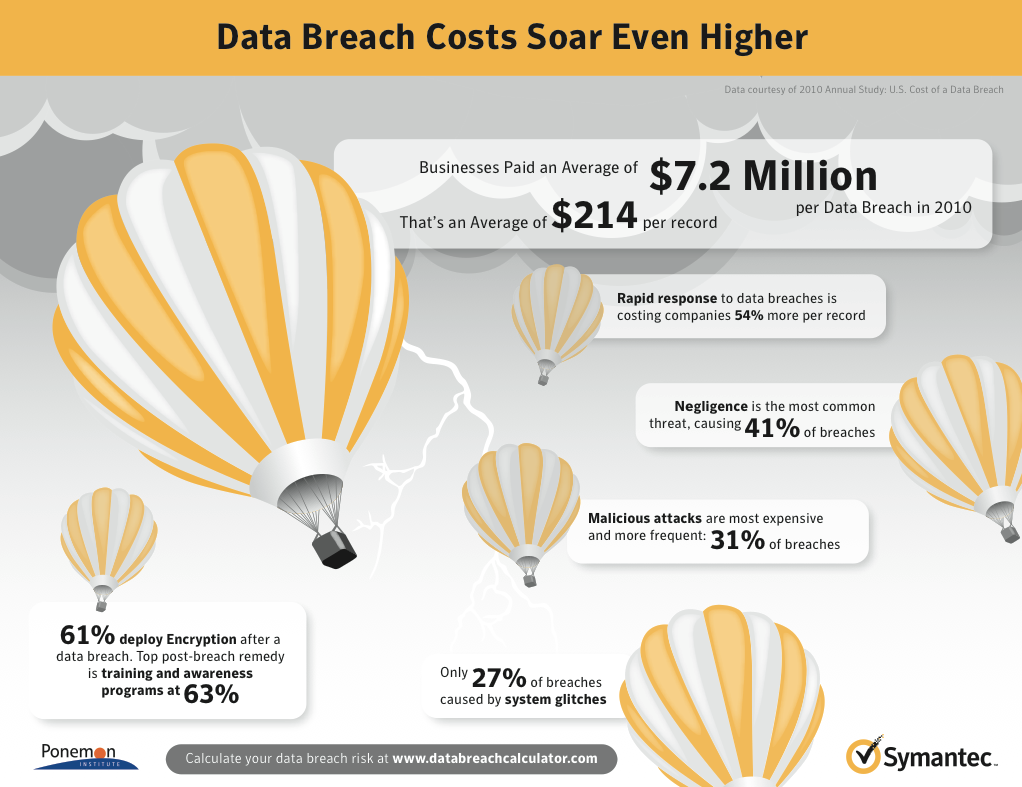
Cost of a Data Breach
Estimate Your Risk Exposure
Global Payments Breached
Pass it on.
– Merchant Processing Resource
../../
Forward?
November 8, 2012The election is over and now it seems we will be “Moving forward, not back.” The republicans that have already come to accept Romney’s defeat are sounding a lot like Sookie Stackhouse:

Onwards we go to help the little guy, a process many feel can’t happen until we end trickle-down economics. It’s the trickle part that doesn’t sound good. Money should flow freely gosh darn it, not trickle! We couldn’t agree more. Here’s a broad diagram of the economy at work:
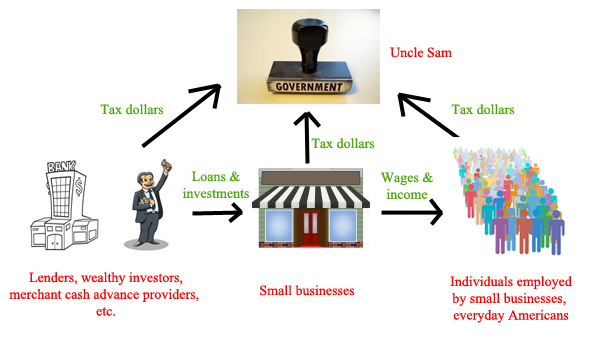
It’s popular to hate Wall Street, but Wall Street provides small businesses with financing to expand, who in turn employ more people in the process. Wall Street is not just banks and Merchant Cash Advance companies. It is any party that has enough money to invest in others while being able to absorb potential losses. A private investor is Wall Street. Wealthy friends or family members are Wall Street.
Tax these parties more and there is less money to invest in small businesses which means fewer businesses will receive capital to expand and hire. Wall Street will make less money as a result of less money being invested and therefore tax revenue will decrease. With fewer businesses hiring, less people will be employed and therefore less people will be paying taxes. Taxing Wall Street more does not necessarily mean more net tax dollars.
This Darn Trickle
One can dislike the economic chain since the flow of money between parties may not happen perfectly or because it allows Wall Street to get richer. There is nothing wrong with the rich getting richer, so long as the middle class and poor get richer too. If small businesses use the money invested by Wall Street wisely, they too will eventually become Wall Street. The amount of new jobs created as a result of a small business’s success means more wage earners will have a shot at becoming small businesses. In economics, a wide divide between rich and poor can be positive, for it creates a ladder that anyone can climb with no cap.
Empower the Little Guy
There is a competing theory and that is to believe that the economic chain starts with middle class wage earners. One could argue to significantly lower taxes on the middle class and the poor and impose much higher taxes on the rich. By doing so, consumers would have more money to spend at small businesses, prompting those small businesses to draw up plans to expand. That expansion capital still needs to come from somewhere and less of it will be there if Wall Street has been further taxed. Perhaps a small business could save money for a few years and use their savings to self-finance their own expansion. Under this theory, everyone becomes part of a very broad middle class. The extremes disappear.
Whoops
When the extremes disappear, there will be few investors with the capability to make large investments or investments that are particularly risky. A small business owner could save up for several years and open a 2nd location without an investment, but could he open 200 nationwide? Not without Wall Street. How many jobs will be created by the opening of 1 store? How many would be created by the opening of 200?
Now calculate how much new tax revenue is generated in each scenario, as well as the number of people that move up from being poor and unemployed to middle class and employed.
When the rich aren’t getting richer, the other classes can’t really move up either. Everyone stays in a broad middle class and innovation and advancements decline. The consumer or small business owner with a potential $100 million innovative idea won’t be able to raise the capital to see it through. How can they when the rich have been prevented from becoming really rich? What if they had a $10 billion idea?
One could argue as a single class society, that a $100 million idea or $10 billion idea could be financed by the government. This is true. It is also textbook state socialism. A one class society is also the premise of Marxism, where everyone is getting their needs met through cooperative work.
Marxism ignores the realities of a global economy. Ultimately, Americans need to obtain resources from other nations, and stay ahead technologically so as not to be conquered by outside forces. A classless society is a stale society, with no economic movement, social movement, or technological advancements.
How will the Merchant Cash Advance Market be Affected?
Merchant Cash Advance companies typically invest in businesses with less than 50 employees. Under Obamacare, any business with less than 50 employees does NOT HAVE to provide health insurance. This program may not affect the business as a whole, but the law mandates that all individuals purchase health insurance for themselves if they don’t have coverage already. Small business owners in the MCA market may be incrementally stressed by having to purchase health insurance. Their employees will be further stressed by having to buy it as well. As a result, wages may need to go up to help workers pay for their own insurance and less money will be available to grow and hire.
The total public debt outstanding has exceeded $16 trillion. That debt has to be paid for somehow and it is more likely than ever that Wall Street is going to have to pay up. This will not stimulate growth and as such, the economy is not likely to pick up any time soon.
Traditional lenders are going to remain quiet while the alternative lenders are going to power through it. A business could save up for three years and open a 2nd location or it could open it today with a Merchant Cash Advance. In three years, the location they want may no longer be available and that individual looking for a job will have run out of unemployment benefits long ago.
A Merchant Cash Advance helps small businesses expand today, hire today, generate more tax revenue for the government today, and helps everyone move up the economic ladder. Baby steps are better than none at all. What starts with a 2nd location may lead to a dream of owning 200 locations nationwide. They’ll need a bigger fish than MCA to get there. Let’s make sure we don’t tax those fish to death.

What do you think Michael?

Forward!
– Merchant Processing Resource
../../
Can a Broken Window Be a Good Thing?
November 2, 2012 There’s a ton of controversy right now as to whether or not the devastation caused by Hurricane Sandy will, or will not, serve to stimulate the economy.
Obviously there are two camps: one says Sandy is stimulating and the other days it isn’t. It would appear that the only thing we can be sure Sandy is stimulating is controversy over whether or not it will serve as a boon to what many see as our nation’s less-than stellar economic recovery (at least in the areas devastated by the storm.)
But this debate isn’t limited to people duking it out on Facebook using terms such as “jerk” and “idiot” to prove their point (otherwise known as an ad hominem, or “against the man” argument that confuses name calling with intelligent debate.) We’ve got some serious academic economic theory out on the table.
On one hand you’ve got your Keynesians (20th century economist John Maynard Keynes gave us the theory.) Keynesians were/are considered “revolutionary” in that they deny the ability of a free economy to “fix” or stabilize itself and instead feel that, in order for an economy to consistently support full employment and stable prices government must implement policies that stabilize prices and create full employment scenarios.
On the other hand you’ve got economists who support a “laissez-faire” economy. (18th century economist Adam Smith provided us with this theory.) Adams and his adherents felt that since human beings are guided by self-interest as long as you leave the economy alone (i.e. no government intervention) the result will be a balanced, self-regulating economy because that is the state of economy that best serves self interest.
And then we’ve got Frédéric Bastiat. Ironically he happens to be a great defender of laissez-faire economics. We say ironic as it is his “Parable of the Broken Window” that tells us that, in fact, destruction, whether it be caused by natural forces (such as Hurricane Sandy) or man (such as wars) do not stimulate the economy by creating more business (and therefore more jobs.) Bastiat included the story in an essay entitled “The Seen and the Unseen.” Here’s the short version of the parable:
The Seen: A boy breaks a store window. The owner now pays for a new window, which creates income for the glazier.
The Unseen: Because the store owner has to fix his (or her) window, he (or she) now doesn’t have money to invest in the growth of their business – or for anything else they might have spent it on.
In other words, Bastiat’s theory is that destruction doesn’t create more income, it simply reallocates income. Obviously, if this is true, disasters that cause mass destruction don’t stimulate the economy.
As far as the battle between laissez-faire and Keynesian economists are concerned, for our purposes let’s just say the jury is still out, especially after suffering through this last (or current depending on who you listen to) economic debacle. On the one hand, Keynesians can gloat over seemingly infinite corporate greed that resulted in lost homes as well as lost jobs – on the other hand, those who live on the laissez-faire side of the street can gleefully cite how President Obama’s stimulus package perhaps did nothing more than (as Bastiat might say) help us see that the economy was “worse than we realized.”

Back to Bastiat
Whether or not laissez-faire or Keynesian policy should be pursued in the effort to cure the economy really isn’t the point as related to the impact of Hurricane Sandy – at least for the purpose of this article. What is at hand is whether or not Bastiat was right. However, perhaps we’ve left out an important economic theory. And that would be Darwinian, or “evolutionary economics.”
There is no getting around the fact that evolutionary economics is pretty darn complex. Evolutionary economists like to use a lot of math – especially something called game theory which uses math to explain/describe what might appear to be “irrational” economic choices or events.
However, one thing we can all understand is that evolutionary economics uses methods and ideas similar to those used to study biological evolution. And most of us are very familiar with the evolutionary concept of “survival of the fittest.”
Just for a minute let’s suppose that two store owners find that someone broke their window (destruction.)
The Seen: Both hire a glazier to fix their window (and we see the glazier benefit.)
The Unseen Store Owner #1: Poor guy (or gal) is forced to use money previously identified to be used to pay for an ad in the local newspaper to promote an upcoming sale. Now that the cash is gone, the store owner responds by throwing up their hands in despair.
The Unseen Store Owner #2: Decides to take President Theodore “Teddy” Roosevelt’s advice and “Do the best I can, with what I’ve got, where I’m at.” Knowing the ad is now out of the question, and without any funds left to promote the upcoming sale, she (or he) decides to use the new window to showcase the sale.
The store owner pulls out every old decoration from every holiday or special event sale from the back room and decorates the new, clear as a bell storefront window. She (or he) then gets on Facebook and Twitter and announces a contest to come up with a name for a sale that encompasses every holiday and special event known to man. The contest winner will receive $200 to donate to their favorite community charity. She (or he) contacts every existing customer via email to inform them of the upcoming sale and contest and asks them to spread the word.
The local community newspaper (ironically the one that the paid ad would have run in) picks up the story. The sale is a huge success. Too many people assume that “fittest” always means strongest. Wrong. “Fit” means the organism that is best able to adapt when the environment changes.
Obviously Store Owner #2 fits that bill. The moral is that, no matter what the “disaster”, be it hurricane or recession, crossing your fingers and hoping for the best or hoping the government will save you are not your only two choices. One choice will always be yours to make, and that is choosing to do the best you can, with what you’ve got, where you’re at.
Guest Author
– Merchant Processing Resource
../../
Traditional MCA Gets a Speed Makeover
October 24, 2012 “How about you fund me first and then you change my merchant account?”
Some account reps will testify that closing a traditional split-funding or lockbox deal can be a bumpy road. The pay-as-you-grow system sounds fantastic over fixed payments until they learn that they have to change their merchant service provider, process sales for two full days, and then wait an extra day for the ACH to arrive in their bank account. The switch could take a few days to several weeks. Have you ever tried to convert MICROS?! A good account rep can keep the customer patient, but that job gets a lot tougher when the fixed daily ACH guys interject right before the contract is signed. We’ll fund you in two days with no processing change required! The customer would have to settle for a fixed daily payment, but that may be secondary to their stress about switching processing before receiving funds. Many things could cross their mind:
- What happens if the download fails?
- What if they say I need a new credit card machine?
- What if my current processor locked my machine with a password? How long will this delay everything?
- What if I don’t process sales every day? Will I need to wait until I have two full days of activity?
- What if there are additional underwriting steps after I switch?
- Are they going to withhold a percentage from my processing before I even get the money?
- How long is this really going to take? I would prefer if I just had the money now and then I’d feel a lot more comfortable doing the rest.
- I kind of need the money by tomorrow, I really can’t risk this taking longer than they expect.
So when RapidAdvance announced their new Rapid Funding Program, we thought, “is this really what we think it is?” We had Sean Murray reach out to Mark Cerminaro, the SVP of RapidAdvance and we learned the program is real. They can and will fund merchants prior to changing the merchant account or setting up the lockbox. In the interim, they set up a temporary daily ACH repayment to protect themselves should the conversion experience any hiccups. Murray asked if this was perhaps a response to the fixed ACH payment phenomenon that has exploded in the last year. Cerminaro responded (We paraphrased some of his words in this story), “Variable payments offer benefits. Many merchants would prefer to set up their financing this way. Some of our biggest resellers still focus heavily on split-funding as opposed to the alternatives. We believe this program will help both them and the merchant.”
With the slew of new players in the merchant financing market, is speed just window dressing for an old product? An article in Upstart Business Journal called MCAs old! The fixed payment merchant loan seems to be all the rage these days, leaving some to wonder if traditional MCA is on the decline. Cerminaro says that assertion is false. “We’ve experienced substantial growth this year on our traditional MCA product, on all of our products actually. When big companies like American Express and Amazon came in offering their own Merchant Cash Advance or loan program, it made merchants more comfortable that our product and similar ones to it are mainstream. The New York Times even ran an article that listed Merchant Cash Advance as an acceptable form of financing for small businesses. This is all making Merchant Cash Advance more attractive than it ever was before.”
On 7/28/11, we penned an article that said the Merchant Cash Advance industry was waiting for its big moment. At that time, we believed the merchants weren’t using Merchant Cash Advance financing simply because they just hadn’t heard of it. It was the hottest thing that no one was talking about. Of course the era of anonymity is gone and businesses are rushing to get funding hand over fist. The only question now is whether or not this will continue to drive rates down. Cerminaro alluded that some funders are undercutting so much that they’re forgetting to price in the risk. Other industry insiders feel the same way and the debate over it has become the most active thread on the recently founded, DailyFunder.com forum.
Contact Mark Cerminaro for any questions or clarifications regarding RapidAdvance’s Rapid Funding Program at mcerminaro[at]rapidadvance[dot]com.
– Merchant Processing Resource
../../
Ten Days
September 28, 2012 It’s been ten days since Kabbage announced they had raised $30 million to fuel the growth of their Merchant Cash Advance (MCA) operations at home and abroad. MCA is changing faster than we can report it:
Former Yahoo CEO joins Kabbage. Hello Silicon Valley takeover! Quotes from the story:
Kabbage is providing an old service, merchant cash advances, with a new twist
Did they just call merchant cash advances old?
Kabbage is rapidly reshaping the small business financing space in the same way that PayPal reshaped the payments space over the last decade
Start believing this…
Amazon enters the MCA industry with a new division called Amazon Lending. Quotes:
Amazon is lending up to $800,000 to some merchants, Wingo said, adding that this is a pretty aggressive entrance into merchant financing.
Merchant financing…quite possibly the term that will replace “merchant cash advance” in the next couple years. Notice AMEX’s advance program is called the same thing. Trend anyone?
Amazon is competing against a start-up called Kabbage, which extends cash advances ranging from $500 to $50,000
They apparently don’t feel anyone else is a threat in the online space.
“We’re flattered that Amazon is building a business modeled on ours,” said Kabbage co-founder Marc Gorlin. “It’s validating that big companies are getting into the small business financing space.”
Dear Kabbage, you did not invent this model.
The kicker to Amazon’s new program? They charge up to 13% interest annually, on pace with what a little company in California named Opportunity Fund claimed was flat out unprofitable. Does that make them yet another new company walking around with a giant Kick-Me sign on their back? Some industry insiders would argue that offering these low rate programs are like swallowing dynamite.
We did a little bit of digging on this new program to see exactly what Amazon was up to. One of their prospective merchants posted this excerpt of the fine print:
Subject to applicable law, you will be in default under this Loan Agreement if any of the following events occur: ……..
(iii) your gross merchandise sales on Amazon.com as reported in your Seller Account (“GMS”) in any month is less than 50% of your lowest GMS on Amazon.com in any of the prior 12 months,(iv) the collective value of your units stored in Amazon fulfillment centers in the US, based on your list price of those units on Amazon.com, (“FBA Inventory Value”) in any month is less than 50% of your lowest FBA Inventory Value in any of the prior 12 months,
Except as otherwise required by applicable law, if you are in default, subject to any right you may have under applicable law to receive notice of and to cure such default, you agree that we may in our sole discretion exercise any remedy available to us at law or equity or take any or all of the following actions: (I) declare the unpaid balance of your Loan to be immediately due and payable, (II) enforce our rights as a secured party by directing Amazon Services LLC to reserve, hold, and pay to us an amount up to the unpaid balance of your Loan from your Seller Account disbursements until the unpaid balance of your debt under this Loan Agreement is paid in full, (III) enforce our rights as a secured party, by taking possession of your units stored in Amazon fulfillment centers and disposing of them in accordance with the Uniform Commercial Code,……………..
If this Loan Agreement is referred to an attorney (who is not our salaried employee) to collect the amount you owe or otherwise enforce the terms of this Loan Agreement, you agree to pay our reasonable attorneys’ fees, court costs and other costs of collection to the fullest extent not prohibited by applicable law.
6. Financing Statements. You authorize us to file and, as we may deem necessary or desirable, to sign your name on any documents and take any other actions that we deem necessary or desirable to ensure that our security interest in any item of inventory or your Seller Account is properly attached and perfected.
There’s some language in there that would make a lot of MCA companies jealous, particularly the section that states a 50% drop in sales is an automatic default!
Thoughts? Share them on DailyFunder.
– Merchant Processing Resource
../../
The End of an Era
September 19, 2012It’s the end of an era. Sound ominous for a blog that reports on the Merchant Cash Advance (MCA) industry? It shouldn’t. In the last 10 years, MCA firms played in the minor leagues. No one was really paying attention to them and truthfully, a lot of critics didn’t think this business model would still be around. But today it still stands, funders are still funding, and this blog is practically struggling to keep up with the incredible amount of action that is taking place. Coincidentally, 2012 marks the end of the Mayan Calendar. Yes, it’s the end of an era.
MCA Goes From 0 to 60
There were a few big firms in the Mid-2000s (RapidAdvance, Merchant Cash and Capital, Strategic Funding Source, AdvanceMe, etc.) and they’ve all experienced modest success. It was “modest” in the sense that it is nothing compared to today’s standards. The level of play is changing. Wining and dining an Independent Sales Office (ISO) that could bring in $300,000 a month in deal flow used to be all the rage. 300k for one company was 300k less for a competitor. An extra point of commission here or a freebie approval there was enough to make you the big dog in town, at least for awhile. Despite all the supposed innovation and growth, the talent pool remained the same. Lead generators became agents, agents became ISOs, ISOs became syndication partners, syndication partners became funders, and funders became technology companies that were basically clearing houses for groups of funders. If the industry was Sally, Joe, and Tom in 2005, it was still Sally, Joe, and Tom in early 2011, just with new company names or titles. Then everything changed…
Money poured in:
Merchant Cash and Capital Announces $25 Million in new financing 10/4/11
Snap Advances raises $3 Million from TAB bank 11/21/11
Capital Access Network raises $30 Million 2/7/12
RapidAdvance Receives new financing facility through Wells Fargo 4/2/12
1st Merchant Funding | $5 Million re-discount line of credit from TAB bank 6/12
Strategic Funding Source secures $27 million 6/27/12
On Deck Capital raises $100 Million 8/23/12
Kabbage raises $30 Million 9/17/12
Industry insiders loosely redefined what a Merchant Cash Advance was:
Merchant Cash Advance Redefined Merchant Processing Resource 3/25/12
Big companies entered the market:
American Express Announces Their Own Merchant Cash Advance Program 9/22/11
PayPal Pilots Merchant Cash Advance Program in the U.K. 7/13/12
Some funders became licensed lenders in major states such as California:
A New Chapter Opens for Merchant Cash Advance The Green Sheet 6/25/12
Search the California licensed lender registry
New products formed:
FundersCloud creates platform to raise capital and find syndicate partners faster 8/29/12
A charity announces a new way to make subsidized business loans using the split-funding method 9/6/12
These barely scratch the surface of industry events. What used to be a competition to score the local neighborhood ISO has morphed into a race to be the first to partner up with Facebook, twitter, Groupon, and Square. Anyone not moving full speed ahead to integrate technology and social media will be gone in the next 24 months.
May 18, 2012 was the first time we noticed and commented on what was happening. In How The Facebook IPO Affects the Merchant Cash Advance Industry, venture capitalists and Silicon Valley had finally found MCA and there’s no hiding from them. Now it seems all of our far-fetched predictions are not only coming true, they’re happening moments after we predict them. In our last article we instructed everyone to keep their eyes on Kabbage. Six days later they announced they had raised $30 million in new financing and would be expanding overseas. For a company that makes wild claims about the correlation of facebook fans with account performance, all while humorously being named after a boring vegetable, they sure seem perfectly able to threaten the status quo. Nobody dared touch Ebay or Amazon businesses until they came around.
Price
On the cost basis front, the middle ground is eroding even further. We first discussed this phenomenon on April 25, 2011 in The Fork in the Merchant Cash Advance Road. In it, we explained that the combination of competition and defaults were placing downward pressure and upward pressure on price at the same time. Today, there is surging demand for “starter deals” at 1.49 factors that are payable over 3 months at the same time that more and more new lenders are offering 1 year loans at 10%. The low rate, 12-18 month term deals are nothing new. A few funders tried them in the past and most suffered irrecoverable consequences. This is history that the new players didn’t witness.
Some outsiders view the MCA industry as a bunch of Wall Street guys that got fat, happy, and disincentivized to lower costs. On the contrary, one only needs to take a single look at this chart to realize that undercutting the entire market isn’t so genius after all. How can a funder survive with extremely low margins when 15% – 71% of their target market is likely to experience problems repaying their loans? These aren’t our stats, these are FICO’s:

Veteran industry insiders know this and acknowledge that the coming tide of low rate financing is a bubble that has burst before. On the DailyFunder, a few folks have offered this insight:
The mca/unsecured loan biz is very risky. It’s all fun and games till deals start going south. My guess is they either adjust rates to match defaults or go out of business. I know first hand that this is not a get rich quick business. It may look like it is from the outside but once you are inside you see the world differently pretty quickly.
[these new low rate deals are] just like On Deck did. When they first came out, they offered 12 month 1.09’s. Then it dropped to 6 month 1.12’s, then 1.18’s. Now you see 1.25’s to 1.35’s offered by them
Governance
On the other side of the cost war is potential federal regulation. At least one D.C. consulting firm is prodding the leaders of the MCA industry to take a proactive approach on self-governance. According to Magnolia Strategic Partners, MCA is on the radar of regulators and members of congress, especially in light of the Dodd-Frank Wall Street Reform and Consumer Protection Act. The new MCA playing field has invited media attention, and not all of it is positive.
The North American Merchant Advance Association is the only organization for industry cooperation but their ability to dictate policies and standards is weak. They receive very little press and their website has been down for weeks. Many argue that they have been effective in minimizing defaults by sharing data on fraudsters. While this does stand to serve the community, it is but a footnote in their orignal intended purpose.
New Barriers to Entry
For the first time ever, potential resellers are facing barriers to entry. Becoming an ISO has long been as simple as owning a phone and purchasing a list of businesses that have used MCA financing before. Today, it’s not that easy. These lists have been sold literally hundreds of times over and called tens of thousands of times over. Pay-Per-Click marketing is dominated by the million and billion dollar firms with money to burn. If John Doe ISO wants to advertise on Google, he better be prepared to compete with the likes of American Express and Wells Fargo. Good luck! Putting skin in the game has also become more of a prerequisite for ISOs to succeed. Funders want to know if a sales agent would put his or her own money into a deal… and then actually commit them to doing just that. The odds are becoming stacked against the undercapitalized and it isn’t likely to change.
In 2009, the most prevalent pitch used by sales agents was to inform prospects that they themselves were “a direct lender” and that anyone else the prospect might be talking to was a broker. “Cut out the middleman and go direct with us,” they’d convincingly argue. This line became less effective when prospects heard this from all five agents they spoke to. Name dropping strategic partnerships will be the new way to build credibility. “We’re partnered with Facebook, twitter, Groupon, and Square,” a sales agent will soon be saying. “Can our competitors make the same claims? Go with us.”
 See You On the Other Side
2013 will kick off a single elimination tournament. Funders that didn’t realize 2012 was the end of an era will begin to fade. 2014 will eliminate the weaker firms that remain and by 2015, Merchant Cash Advance will no longer be a term that anyone uses. Big banks and billion dollar technology companies will go on to rebrand all that which the funding warriors of the last decade have worked so hard to establish. MCA will simply assimilate into other financial products. The metaphorical Sally, Joe, and Tom will probably still be in the business, but be working for companies like Capital One, Wells Fargo, and American Express. And as for us…well… we’re going to need something else to talk about. But we’ll keep you posted until that day. 🙂
– Merchant Processing Resource
../../
Follow The Money – MCA
September 8, 2012John Tozzi of BusinessWeek is just about the only journalist that follows the Merchant Cash Advance (MCA) industry. We use the verb “follows” loosely since he manages to write maybe one article per year on the subject. Rarely flattering, he does at least provide something that other writers do not: Substance. In his lastest piece, Wells Fargo Plays Both Sides of the Cash Advance Debate, Tozzi reminded us of something we’ve failed to address in this blog: big banks aren’t just becoming interested in MCA, they’ve already been involved in it for a long time. It also made painfully clear a message we’ve been trying to communicate for years, that ultra low interest rates are simply not feasible in small business lending.
Tozzi accuses Wells Fargo of sponsoring a small business lender that is directly attacking MCA companies while at the same time financing the companies being attacked. California based Opportunity Fund recently began offering a loan program that is…wait for it…repaid by withholding a percentage of credit card sales. They call it EasyPay and they’ve made no effort to hide their belief that they’ve achieved some kind of higher moral ground by charging only 12% APR. In their press release yesterday, they pounced on the competition:
While similar card-based payment systems exist in the private sector in the form of merchant advance loans, they routinely carry exorbitant interest rates that range from 104-177 percent. By contrast, EasyPay loans carry an annual interest rate of just 12 percent.
-Opportunity Fund
Wells Fargo awarded them cash and their “hypocrisy” is apparently history. Why? Wells Fargo has also backed prominent MCA providers RapidAdvance and Capital Access Network. This might come as news to some people, but not to us. What Tozzi may not realize is the main driver of the MCA industry has been and continues to be…banks. Sorry to break it to the small minority of people that suspect MCAs are part of some shadow banking system. Most small businesses are unaware that their funds may indirectly be coming from Capital One, Community National Bank, or even Wells Fargo!

And let’s come to terms with another hard fact about small business lending. Opportunity Fund is proof that you can charge 12% a year and be guaranteed to lose money. In the BusinessWeek interview: “At that rate, the nonprofit is not covering its costs, says Marco Lucioni, the lending director who created the product. Opportunity Fund subsidizes the loans to keep them cheap.”
Subsidies? Whhaaaaa??? Oh you didn’t know? Opportunity Fund is a registered 501(c)(3), a charity. Don’t get us wrong, we love charity and we think it’s wonderful that small businesses in California may be eligible for an EasyPay loan. We can’t help but be bothered though that a charity is attacking the private sector for charging “too much” when they acknowledge that their own rate of 12% (more than double the allowable interest rate on an SBA loan) is entirely unprofitable. We’ve made this charge over and over and over again. The world we lived in where business loans regularly came in at 5% annually was really just an artificial market caused by the SBA’s agreement to reimburse banks for all defaulted loans. But in the real private sector where there is no tax payer default guarantee, or charitable donors to put downward pressure on cost, it becomes clear that the MCA industry is the free market as it should be.
We also reject the characterization that MCAs are “expensive” since there are literally hundreds of funding companies and a thousand ways to structure a deal. That’s the problem with journalists that only drop in once a year or so, Tozzi has no idea how much has changed. Merchant Cash Advance simply means short-term business financing. The costs may be the equivalent of 1% APR or 200%. It could be a purchase of future sales or a fixed daily repayment loan. It might have everything to do with credit card sales or nothing to do with them at all.
The use of the split-funding method by a charitable business lender definitely highlights just how mainstream the ideas of the MCA industry have become. Hopefully they are prepared to deal with the rapidly evolving technology environment. They just might learn there’s a reason that Wells Fargo is also playing the other side. Companies like RapidAdvance and Capital Access Network are well-oiled machines and are respected by the small businesses that fund them. Tozzi calls this awkward. We think the banks in the diagram would beg to differ…
Follow the money and you’ll see why the MCA industry is a bet anyone would make.
– Merchant Processing Resource
../../
Notice: the diagram may illustrate relationships that are out of date and omits that nature of the financing arrangement.
The Bubble That Wasn’t
August 17, 2012“The smaller the loan, the more likely a lender will deny it. The denial rate for applications for small loans (less than $100,000) was more than twice as high as it was for bigger loans.”
– CNNMoney 8/16/12
In early 2009, a very wise friend of mine gave me a bit of advice. As an ex-stock broker who made his fortune in the 80s, he’d seen his fair share of bubbles. And so he bestowed upon me his wisdom that the Merchant Cash Advance (MCA) industry’s days were numbered. “It’s got 6-8 months left of life in it and then it’ll go away. Everyone’s in freakout mode right now but things will go right back to the way they were and banks will push you right out of a job,” he lectured me. My expression didn’t change, for he wasn’t the first one to sing me this cautionary tale. He continued on, “You’re a nice guy so I suggest in the next few months, you go out and get into another line of work. You can always look at this experience as a wild ride but MCA is a fringe industry borne out of the financial crisis.” I thanked him for looking out for me and went home that night to mull over what he and a few others had been saying.
 No one wants to believe their thriving business is part of a bubble that will inevitably burst. But at the same time, no one wants to later on be perceived as that naive fool that couldn’t see an obvious end coming either. And while the career itself seemed honorable and sustainable (helping small businesses get financing), there were a lot of pivotal moments along the way that made me think for a second that at any day I could be told to pack up my stuff and go home because there was suddenly no more demand for MCA.
I am reminded of the time when a Craigslist Ad was answered by over 500 recently laid off mortgage brokers and underwriters. Some had literally been hired to underwrite mortgages, only to be told days later that their division was closing down. Similarly, there were hot shots from the payday loan industry who stopped by to learn what our business was all about. These people looked like they had been punched in the gut and told stories of major success followed by unforeseen ruin as states legislated them out of business overnight. And still others had the mentality that MCA was a get rich quick scheme and went on to run their own funding companies or brokerage offices into the ground within a matter of months. They cursed the MCA gods and the bubble they believed they were a victim of, ignoring the reality that they had poorly managed themselves into oblivion.
As the 6 to 8 month timeline for destruction expired and the light shone on those still standing, I realized I had made the right choice by sticking it out. MCA was not a progeny of the financial meltdown. Heck, the product itself had already been around since the late 1990s and had gained significant popularity around 2005 when other players began entering the market. It also had none of the trademark signs of a bubble. If financing businesses was a bubble, there would be no such thing as banks today. Business financing has been around for literally thousands of years. MCA firms just catered to the ones that banks ignored and by 2008 that included nearly every small business in the country. One could argue that the growth rate of MCA would eventually slow down, supporting the claim with the same wisdom I had heard nearly a year before, that everything would return to “normal.”
Today’s world is anything but the world of yesterday. The unemployment rate in July was 8.3% and according to a survey reported by CNN, “[Today], the option most often sought by businesses — opening a new credit line — face[s] the lowest approval rate at 13%” Banks never did return to their old ways, nor does it seem likely that they will any time soon. Those that doubted MCA’s longevity in 2009, including those who left the industry altogether back then in fear, did not foresee the many roads of evolution that would allow it to thrive.
Years ago, an MCA was easily defined as a purchase of future sales that would ideally be completed in 6 to 9 months. Virtually every provider offered identical terms and costs, which stymied competition and eventually created stereotypes that would come to haunt the image of MCA for quite some time. For a while, America had a hard time envisioning MCA as anything but a 1.38 factor rate that was available to those that fit a certain credit criteria and processed a minimum amount of credit card sales monthly. So imagine the shock some small business owners felt when approved by RapidAdvance, a veteran MCA firm, for a ::gasp:: small business loan. A loan?! could it be? Yes, MCA has been semantically broadened to include many forms of short term lending. And then there’s Florida based Merchant Cash Group that became famous with their Fast Funding program, a financing option for businesses that fell outside the box for traditional MCAs. Some companies don’t even require businesses to accept credit cards as a form of payment. “Credit card sales? Who cares how much they’re doing in credit card sales?!” Would you ever imagine an MCA rep making such a statement in 2009?
MCA is still widely considered to be tied to credit card processing and it doesn’t ever need to officially evolve away from that. Withholding a percentage of sales directly from a payment processor is what initially allowed the many business owners that were horrible at making monthly payments suddenly eligible to receive capital. But for all the changes that have been applied to the financing product itself, something has changed with the companies offering it as well.
Competitors used to be ultra secretive about their practices. An MCA firm could be underwriting an application that another MCA firm funded the day before. Sure, the merchant wasn’t supposed to hop around and do this with more than one company at a time, but the other firm wouldn’t even confirm if they funded them if you asked. One of the great failures of the past was the lack of cooperation amongst the players in the industry. An ‘every man for himself’ mentality hurt more than it helped in a business that was struggling to create its identity in the mainstream world of finance. The North American Merchant Advance Association (NAMAA) sought to correct that through data sharing and the promotion of common standards. Some of the major members have years of experience under their belt including Merchant Cash and Capital, Strategic Funding Source, RapidAdvance, and Merchant Cash Group. These firms have been around the block and back. “MCA bubble? What bubble?,” they’ll say with 100% confidence in their tone.
 So why a boring history lesson on MCA today? It’s only fitting on the day that CNN declared the bursting of the social media bubble, that I re-visit a decision I made 3 years ago. “I’m just looking out for you kid,” a mentor once told me. Bad advice for sure. This year, I am noticing many people that left MCA years ago are coming back. After so much time has passed, they are STILL getting in early on something that’s going to be huge, rather than coming back to ‘manage the decay’ (did I just take a swipe at Obama?!). VCs are having a field day trying to get in on it. Accel Partners recently forged an equity deal with Capital Access Network with the ultimate goal of what I’m guessing is to one day go public.
The only things bubbly in MCA these days are the excited account reps, underwriters, and support staff that are working to get America’s small businesses humming again. Some have taken to wearing their FUNDED pants 7 days a week. I know I have practically worn mine out.
I’m always struck now by the college grads that ask me if this business is sustainable. Their anxious parents are worried sick that their babies are going to be caught up in some bubble and be out of a job 6 to 8 months from now. To this I offer a few words of wisdom. “Providing small businesses with capital isn’t going away anytime soon. Sure, the product might evolve and the economy will change, but the fundamental demand for short term financing is here to stay. You seem like nice parents so I’d hate to see your kid get involved in some other industry at the end of its life cycle. He or She is getting in early on something big, something long lasting, something that has become a permanent staple of the American financial system.” Good advice for sure.
By: Sean Murray
Founder of Merchant Processing Resource (../../)
Began career in the MCA industry in August, 2006
P.S.
The FUNDED pants do exist and were created by Next Level Funding in early 2010.