New York’s Fourth Department: Revenue Purchase Agreements Are Not Loans
August 25, 2023A lawsuit brought by Samson MCA LLC against Joseph A. Russo M.D. P.C./IV Therapeutics PLLC, DBA Aspire Med Spa & Joseph Russo & Marco V Beatrice has brought revenue purchase agreements back in to the legal spotlight in New York State. Once again its been affirmed that they’re not loans.
In May 2021, plaintiff Samson MCA sued defendants for breach of contract and won on summary judgment despite defendants’ contentions that the revenue purchase agreements at issue were actually “criminally usurious loans.” Defendant Marco V Beatrice appealed. After a very careful analysis of the agreements, a final decision was issued by the Appellate Division, Fourth Department on August 11, 2023.
“On appeal, [defendant] contends that the agreements are void because they are criminally usurious loans and that the court therefore erred in granting plaintiff’s motion and denying defendants’ cross-motion with respect to him,” the Court stated. “Thus, the central question before us is whether the two agreements were, in fact, revenue purchase agreements or whether they were, instead, loans.”
The Court said that when determining whether a transaction constitutes a loan, courts must determine whether the amount is repayable absolutely or under all circumstances:
“Usually, courts weigh three factors when determining whether repayment is absolute or contingent:
(1) whether there is a reconciliation provision in the agreement;
(2) whether the agreement has a finite term; and
(3) whether there is any recourse should the merchant declare bankruptcy”
Final decision:
Contrary to [defendant’s] contention, plaintiff established as a matter of law that the agreements were revenue purchase agreements rather than loans, and [defendant] failed to raise a triable issue of fact with respect thereto (see Principis Capital, LLC, 201 AD3d at 754). Here, the agreements submitted by plaintiff contained reconciliation provisions requiring the adjustment of the remittance amount upon request based on changes to the entity defendants’ revenues, and had no finite term and no payment schedule. Additionally, as noted, each agreement contained an acknowledgment “that [plaintiff] may never receive the purchased amount in the event that [the entity defendants’ business] does not generate sufficient revenue” and, for the most part, plaintiff did not have recourse in the event that the entity defendants declared bankruptcy (see Streamlined Consultants, Inc. v EBF Holdings LLC, 2022 WL 4368114, *5 [SD NY, Sept. 20, 2022, No. 21-CV-9528 (KMK)]).
We have reviewed [defendant’s] remaining contention and conclude that it does not warrant reversal or modification of the judgment.
The original lawsuit can be found under Index No. 129401/2021 in the New York Supreme Court.
Full decision by the Appellate Division, Fourth Judicial Department can be found here.
Protecting Your Syndicated MCA Investments
August 24, 2023David Roitblat is the founder and CEO of Better Accounting Solutions, an accounting firm based in New York City, and a leading authority in specialized accounting for merchant cash advance companies.
To connect with David or schedule a call about working with Better Accounting Solutions, email david@betteraccountingsolutions.com.
An increasingly popular way for merchant cash advances businesses to raise capital is by offering syndicated deals. In theory, this structure is simple to understand and fulfill the terms of: in these scenarios, investors put a percentage of the funded deal and get a percentage of the returns. But, as we all know, our industry is dynamic and has inherent risks, and safeguarding one’s hard-earned investments takes on paramount importance.
We saw the pitfalls in the cases of MJ Capital Funding, LLC and 1 Global Capital, along with more recent cases earlier this year, where investors were fleeced of hundreds of millions of dollars that they invested into what they thought were legitimate MCA funding companies.
What happened there is unfortunately investors did not see or understand the importance of having a third party reporting back to the investors and syndicators about how their investment was going, and were misled until it was too late.
So how can investors protect their investments in syndicated MCA deals?
 Know Where Your Money Is Going
Let’s start with the first thing you can do.
The landscape of MCAs is marred by tales of deceitful entities posing as legitimate funding companies, leaving investors and syndicators in dire financial straits when they are left to hold the bag.
From the outset, it is essential to ensure that the funds committed find their way into the intended bank account- one that is owned by the same entity as the MCA actually funding the merchants. The need for this is underscored by the unfortunate prevalence of fraudulent actors diverting funds to different accounts under deceptive entities. This manipulation obscures the money trail, making it harder to track and detect financial malfeasance, and leave investor funds vulnerable to exploitation.
Vigilance through Allocation Monitoring
To protect your investment against malicious machinations, it is crucial to exercise stringent vigilance and monitor your funds.
If one’s investment is tied to a specific percentage of MCA deals, a diligent verification process is necessary to confirm that the funds contributed align precisely with these deals. Ensuring the MCA business has a quality and comprehensive reporting and CRM system will provide a transparent window into the balance and distribution of funds across each deal. This transparency not only empowers investors but also safeguards their interests against any misallocation.
Additionally, investors should ask about and pay attention to when their portion of the syndication was added to a deal, to make sure you haven’t been added to a bad deal only once they have already started bouncing payments.
Finally, suppose the CRM system shows an available balance on your syndication for a certain amount. In that case, you can talk to the MCA funder about ensuring they always have that amount or more available in their bank account. If the available balance in the MCA’s bank account is less than your available liquid balance then essentially the funder is borrowing (and risking) your funds to fund deals without you benefitting.
Navigating Default Deception
Another way scammers try to fleece syndicators is by telling them deals that they have invested in have defaulted. Through shrewd tactics such as rerouting default payments to alternative accounts or manipulating reporting mechanisms, deceptive entities can evade investor scrutiny and keep their money.
To counteract these tactics, a collaborative partnership with a transparent and independent accounting firm is indispensable. This partnership acts as a source of clarity for both parties: unraveling intricate payment webs and ensuring that defaults are tracked while investors receive accurate insights into their investments’ actual performance that cannot be manipulated by the unscrupulous funder.
A Solution…
The scale of risks are glaringly evident. So what can you do about it?
The message is clear: vigilance is paramount. Minor inconsistencies can snowball into severe financial pitfalls, making it imperative to maintain an unwavering, watchful eye.
But it’s difficult for syndicators to do that, both because they have limited insights as syndicators and because they have their own jobs to worry about without the added stress.
That’s why Better Accounting Solutions encourages all our clients in the merchant cash advance industry to employ this protective framework:
When we come onboard to do accounting for business or investors, we encourage both parties to obtain explicit consent from MCA entities to share all information with the syndicator. Without formal authorization, firms like Better Accounting Solutions are legally bound from sharing crucial information. Trust and transparency rests upon this explicit approval, serving as the conduit for open dialogues and proactive measures. With this permission granted, the accountants can regularly produce independent and up-to-date reports ensuring both parties are on the same page and share a mutual trust. That’s the benefit of third party oversight: nothing is happening in the dark, without anyone’s knowledge.
Encouraging and working towards an honest merchant cash advance industry is a virtue that safeguards investments, draws more investors, and bolsters the credibility of our entire industry.
Small Business Funding Companies Showcase Phenomenal Growth
August 15, 2023The annual Inc 5000 list is out again and with it some big reveals about who in the industry is taking off like a rocket. We’ve pulled out some of the relevant names for you below!
#30 – B2 Capital Solution Provider – Miami, FL – 10,446% growth over 3 years
#38 – Novo – Miami, FL – 9,906%
#76 – Byzfunder – New York, NY – 6,228%
#89 – Valiant Capital – Houston, TX – 5,223%
#157 – Ampla – New York, NY – 3,404%
#180 – LeasePoint Funding Group – Austin, TX – 2920%
#192 – Backd – Austin, TX – 2,819%
#269 – Percent – New York, NY – 2,087%
#1383 – eCapital – Aventura, FL – 422%
#1617 – North Mill Equipment Finance – Norwalk, CT- 354%
#1622 – Oakmont Capital Services – Westchester, PA – 346%
#1837 – Nav Technologies – Draper, UT – 305%
#1942 – Crestmont Capital – Irvine, CA – 289%
#2026 – 7 Figures Funding – American Fork, UT – 277%
#2593 – SBG Funding – New York, NY – 210%
#2929 – 1West – New York, NY – 179%
#2947 – ApplePie Capital – San Francisco, CA – 178%
#3145 – Channel – Minnetonka, MN – 164%
#3737 – Direct Funding Now, Irvine, CA – 128%
#4085 – Smarter Equipment Finance – Las Vegas, NV – 111%
#4094 – iAdvance Now. – Uniondale, NY – 111%
#4651 – Expansion Capital Group – Sioux Falls, SD – 87%
If we missed you, let us know, email info@debanked.com.
Federal Legislators Jump on Commercial Financing Disclosure Bandwagon, Renew Push to Give CFPB Authority Over Industry
June 16, 2023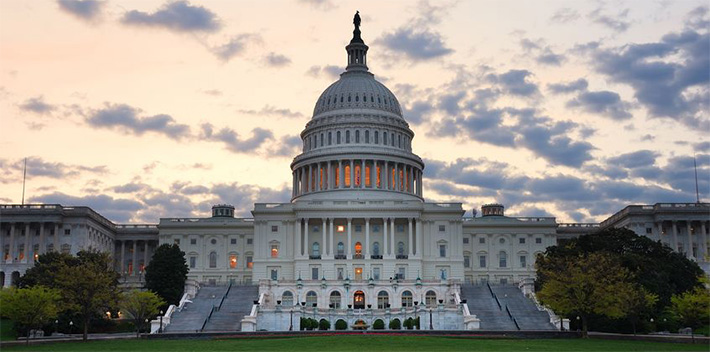 Feel like there’s a lot of state-level disclosure going around lately? Well now some members of Congress believe another layer is needed at the federal level. In a bill titled the “Small Business Financing Disclosure Act of 2023,” the language looks awfully familiar. There’s a Double Dipping clause in it, for example, which was a term first seen in a New York State law.
The federal bill, which was introduced by US Senator Robert Menendez and Congresswoman Nydia M. Velázquez, seeks to place the small business finance industry under the authority of the Consumer Financial Protection Bureau (CFPB). As part of that, the Director (currently Rohit Chopra) would be responsible for devising all the rules and formulas, according to the bill. Furthermore, with regards to sales-based financing, the bill specifically states:
1. The provider must disclose an APR.
2. The estimated term of repayment and periodic payments based on projected sales volume must be disclosed.
“Small businesses are the lifeblood of the American economy,” said Congresswoman Velázquez. “But for too long, predatory lenders have taken advantage of businesses in need of capital by offering loans and similar products with unclear terms and exorbitant interest rates.”
Supporters of the bill, including Senator Sherrod Brown and Senator Ron Wyden, also stated that the bill is aimed at “predatory lenders.”
In Senator Menendez’s press statement for the bill, it cites Funding Circle, a small business lending company, as a supporter.
“We believe a free and fair market operates most efficiently when there is transparency in pricing, terms and conditions,” said Ryan Metcalf, Head of U.S. Public Affairs at Funding Circle U.S. When a small business has all of the necessary information up front including the annual percentage rate (APR), they can comparison shop and make informed decisions that are best for their business. Funding Circle supports one national uniform small business financing disclosure law because it is in the best interests of small businesses and interstate commerce.”
The push for a small business financing bill is not new. A similar bill introduced by Velázquez last year did not move forward, nor did the one from 2021, nor the one from 2019. The difference is that previous versions focused on Confessions of Judgment and fairness in small business lending. The latest version takes on the air of disclosure while attempting to subjugate the whole industry to CFPB regulatory authority.
How Raising The Debt Limit Affects MCA
May 22, 2023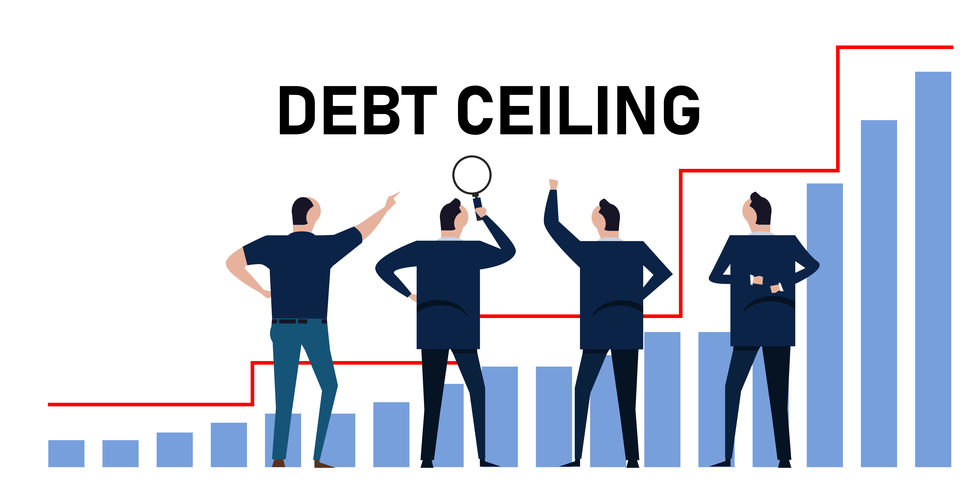 Every few years, particularly during the administration of a divided government, the threat of a default on raising the debt limit of the United States rears up in the political and economic spheres. While both sides tend to play chicken before ultimately settling on a negotiated outcome that they can sell to their bases, the current debt limit crisis feels more serious as the X date of June 1 looms with no settlement in site.
This crisis has a significant effect on various industries, and amongst them is the merchant cash advance business. MCA companies are heavily relied upon by small businesses for immediate financial needs, and understanding what this crisis means for the industry is crucial for getting through it unscathed.
Let’s compare the current landscape to running a business:
When a company opts to increase its debt limit, it essentially seeks to borrow more money, trading liability for an asset. For example, if the company’s equity is worth 100 billion dollars, borrowing doesn’t change this figure as long as the borrowed amount is an idle asset in their account.
The U.S. government should theoretically operate similarly to a regular company, borrowing only what it can pay back, but with the only growing expenses, when the government borrows money and raises the debt ceiling, it doesn’t always have enough funds for repayment.
In addressing its fiscal shortfall, the government operates distinctly from a conventional business. Unlike a company compelled to confront its financial mismanagement head-on, the government possesses the ability to print additional U.S. dollars. However, this course of action inherently devalues the currency.
For the sake of illustration, consider the worth of the dollar as a fixed entity. Suppose every thousand dollars equates to one bar of gold. If we slice this bar of gold into a thousand pieces, each piece represents $1. When the government initiates the printing of more money, it is essentially the government carving that same bar of gold into tinier segments. Meaning, if sliced in 2,000 pieces, the same bar of that once held the value of $1,000 is now $2,000. The total quantity of gold remains constant, regardless of whether it’s divided into 1,000 or 2,000 slices. However, with increased currency in circulation, each dollar—like every slice—holds less value, thereby shrinking everyone’s piece of the proverbial gold bar.
Now that we’ve explained the dangers of wantonly raising the debt limit, how does this affect MCA companies?
The debt limit crisis’s impact on MCAs is pronounced due to the time-value factor of money.
Suppose a mortgage of $100,000, repaid with interest over 30 years, amounts to $300,000. If the value of the dollar reduces significantly over this period – say by 50% – the bank, despite appearing to make a profit, loses money. That’s because the money they receive later has less purchasing power than the same amount ten years prior.
This reality can be acutely felt in periods of high inflation, such as in 2021 and 2022, where inflation neared 9%, and many felt it was closer to 20%. We all feel it during our grocery shops, the prices of experiences, and in other areas of our lives. Here, $100 can only buy what $80 could a couple of years ago, eroding the value of the interest charged.
At Better Accounting Solutions, a number of the MCA businesses we’re working with are concerned with this rapid devaluation of the money they’re funding.
The key factor to consider is the duration for which the capital will be deployed and how it will be recouped. For instance, if you advance $1 million at a 24% factor rate over 24 months and the debt ceiling is raised causing the dollar value to drop, your returns in the second year might be significantly less valuable despite the factor rate. This depreciation means that even though you’re receiving the agreed-upon returns, the funds’ purchasing power is considerably less, translating into a net loss of what would have been 13.5% over the past two years.
However, if you’re giving out (after careful consideration) riskier short-term advances with higher factor rates, daily repayments, and shorter durations, the situation would be different. Here, you’re receiving your return within, say, six months. Even if the dollar’s value decreases by 20% over a year, you’re less affected because your returns are realized in a shorter time and at higher rates, leaving you with a net gain.
Therefore, the debt limit affects MCA providers significantly, whether it’s being covered in the news or not. The devaluation of the dollar, high inflation rates, and other economic consequences of a debt limit crisis can dramatically impact the returns on cash advance businesses, especially those with longer repayment periods. As a player in the finance industry, it’s crucial to consider these elements when making advances or lending money. By factoring in these variables, providers can better protect their interests, minimize risks, and ensure the stability of their operations even during times of economic uncertainty.
Percentage of Merchants Seeking MCAs in 2022 Waned But Approval Rate Went Up
April 19, 2023 Only 7% of small businesses that applied for financing in 2022 applied for a merchant cash advance, according to the most recent report published by the Federal Reserve. Of those, 90% reported being approved for some amount of capital. That’s up from the 84% in 2020 and up from the 87% reported in 2019 prior to the pandemic. Approvals, it appears, were quite generous in 2022.
Overall, the percentage of merchants seeking MCAs has dipped, however. In 2019 for example, 9% of businesses said that they were seeking an MCA. In 2021 it was 8%. In 2022 it was 7% as mentioned above. The decrease could be explained by the pandemic which introduced an abundance of free and low interest government business aid. Also, the proliferation of low-cost online lenders created by the 0% interest rate environment may have weakened demand for alternatives like MCAs. Given that much has changed in the last 4 months, the Fed’s next report (scheduled for release in approximately March 2024) stands to be much more informative.
Don’t Run To The Big Banks Because of SVB!
April 6, 2023 The weekend of March 10 saw the largest and most significant banking failure in the United States since 2008 until the Federal Government announced its (don’t-call-it-a-bailout) deposit guarantee on March 13.
Silicon Valley Bank and Signature Bank were thought to be niche and regional banks whose actions wouldn’t affect the broader banking industry, but when they had to sell some of the long-term US treasury bonds that they over-invested in at a loss as their worth plummeted when interest rates ballooned, panic quickly spread and launched the first social media run on the banks. To stop this, the Government guaranteed that all accounts in both banks would be guaranteed their full sums, even if they were over the FDIC-insured amounts of $250,000.
So with the benefit of two weeks of hindsight, how did this collapse affect the cash advance industry?
While Silicon Valley Bank catered primarily to the venture capital and tech industries, Signature Bank in New York was known for its welcome embrace of crypto and alt-finance businesses, and many MCA companies had accounts there.
When Signature Bank failed, some of the MCA companies we work with at Better Accounting Solutions started considering transferring their accounts to the “Big Four” banks: JPMorgan Chase, Bank of America, Citigroup, and Wells Fargo.
Their reasoning made sense: Amid criticism of their decisions in the aftermath of this collapse, representatives of the Government and financial regulatory agencies suggested they wouldn’t follow the approach they employed this time round if another bank failed, and instead would weigh up the specific bank’s size and significance in each specific instance to decide whether or not to guarantee depositor’s accounts.
Understanding that their funds would not be protected if there was another crisis in the banks they worked with, several cash advance companies wanted to move their funds to banks that would be considered “too big to fail”, and their money would be guaranteed by the Government in the case of a calamitous collapse. They also wanted to start spreading out their funds across multiple banks to not surpass $250,000 in any of them, to ensure their money was always insured.
There are two issues with this response to these legitimate concerns:
- When a merchant cash advance company starts working and relying on the services of a big bank, they do that without understanding the rules and regulations these banks impose on their clients and how they may be affected, particularly a cash advance company.
Even if you try to hide what your business does, once the bank finds out that you’re in the MCA space-and count on them finding out sooner rather than later-, you’re business will likely be subjected to a thorough, extensive and painful review process to determine whether you’ve broken any of their rules. During this time, they may freeze your accounts (on average for 3 months) and cripple your business’s ability to operate during this time.
- Additionally, when trying to stick the FDIC-insured sum of $250,000 in each bank, you’re limiting yourself to an extremely inefficient and unsustainable way of doing business. It affects your ability to cover your operating costs, fund deals and have money available on hand when you need it.
To responsibly manage these risks while balancing your ability to do business, this is what we’ve been advising our clients:
Before beginning to work with any bank, speak to people involved in the MCA space (brokers, funders and even accountants) to get a list of which banks are friendly to the industry. Ensure that they understand the business and don’t have onerous regulations and practices that will not allow you to run your business without their constant intervention.
Once you know which banks to work with, we advise our clients to open accounts with two of these banks and split their funds equally between them. This ensures they have somewhere to send their money in case one collapses, and if they can’t get it out in time, they still have access to half of their capital while waiting to see how the Government responds. This 50/50 approach allows MCA companies to run and grow their merchant cash advance businesses efficiently during ‘times of peace’ while anticipating and preparing for the consequences of another collapse.
As the Government proved during this crisis, in the age of rapid communication a massive run of the banks can be mobilized within minutes, which forced the Government to (“not”) bail out a small bank to stop a larger collapse. I-and other experts- remain convinced that in the event of another collapse, they’ll be forced to follow this same policy and guarantee all deposits of all sizes at all banks, which is why I confidently advocate for this 50/50 approach.
An important disclaimer: This is an opinion article analyzing the specific collapse of Silicon Valley Bank and Signature Bank, and the response MCA companies should have to it broadly speaking. Every case and merchant cash advance company is different, and for specific advice and guidance, they should contact the author directly.
All Registered Sales-based Financing Providers in Virginia (As of 3-29-23)
April 2, 2023Is the revenue-based financing provider you do business with registered to operate in Virginia? On July 1, 2022, Virginia’s commercial financing disclosure law went into effect and with that the necessity to register one’s business. As of March 29, 2023, 101 companies had registered. This is the official list of registered sales-based financing providers as of that date (yellow means it has been added since our last update):
- Advance Servicing Inc.
- Accredited Business Solutions LLC dba The Accredited Group
- Advance Funds Network LLC dba Advance Funds Network
- AdvancePoint Capital LLC dba advancepoint
- Ally Merchant Services LLC
- Alpine Funding Partners, LLC
- Business Capital LLC
- Byzfunder NY LLC dba Tandem dba Nano-FI
- Bridge Capital Services, LLC
- CFG Merchant Solutions, LLC
- Clarify Capital II LLC dba Clarify Capital
- Cloudfund VA LLC dba Cloudfund LLC
- Capflow Funding Group Managers LLC
- Clear Finance Technology (U.S.) Corp. dba Clearco
- Coast Premier LLC dba Coast Funding
- Commercial Servicing Company, LLC
- Corporate Lodging Consultants, Inc.
- Crown Funding Source LLC dba Crown Funding Source
- Diesel Funding LLC
- Direct Capital Source Inc.
- Dealstruck Capital LLC
- EBF Holdings, LLC
- Essential Funding Group Inc
- Errant Ventures LLC
- FC Capital Holdings, LLC FundCanna
- Fidelity Funding Group LLC
- Front Capital LLC
- Finova Capital, LLC
- Fintegra, LLC
- First Data Merchant Services LLC
- First Path Capital Ventures LLC dba First Path Capital
- FleetCor Technologies Operating Company, LLC
- Flexibility Capital Inc.
- Fora Financial East LLC
- Forward Financing LLC
- Fox Capital Group Inc.
- Fundamental Capital LLC
- Funding Metrics, LLC dba Quick Fix Capital
- Good Funding, LLC
- Granite Merchant Funding, LLC
- Invision Funding LLC
- Itria Ventures LLC
- Jaydee Ventures, LLC dba 1 West Capital dba 1 West Commercial
- Kapitus LLC
- Knight Capital Funding III, LLC
- Lexington Capital Holdings Ltd
- LG Funding LLC
- Legend Advance Funding II, LLC dba Legend Funding
- Liberis US Inc.
- Libertas Funding, LLC
- Liquidibee 1 LLC dba Liquidibee LLC dba Altfunding.com
- Loanability, Inc.
- Millstone Funding Inc.
- National Funding, Inc.
- Nav Technologies, Inc.
- Orange Advance LLC
- Pearl Alpha Funding, LLC
- Pearl Beta Funding, LLC
- Pearl Delta Funding, LLC
- Proto Financial Corp.
- PWCC Marketplace, LLC
- Parafin, Inc.
- PayPal, Inc.
- Payability Commercial Factors, LLC
- Pinnacle Business Funding LLC dba Custom Capital USA dba EnN OD Capital
- Platform Funding LLC
- Prosperum Capital Partners LLC dba Arsenal Funding
- QFS Capital LLC
- RFG USA Inc.
- Rival Funding, LLC
- Riverpoint Financial Group Inc.
- Rocket Capital NY LLC
- ROKFI LLC
- Ruby Capital Group LLC
- Rapid Financial Services, LLC
- Reliant Services Group, LLC
- Retail Capital LLC dba Credibly
- Revenued LLC
- Rewards Network Establishment Services Inc.
- Secure Capital Solutions Inc.
- Sky Bridge Business Funding, LLC
- SMB Compass LLC dba SMB Compass
- Sunrise Funding LLC
- Santa Barbara Tax Products Group, LLC
- SellersFunding Corp.
- Sharpe Capital, LLC
- Shine Capital Group LLC
- Shopify Capital Inc.
- Shore Funding Solutions Inc.
- Streamline Funding, LLC
- Stripe Brokering, Inc.
- The LCF Group, Inc.
- Unique Funding Solutions LLC
- United Capital Source Inc.
- Upfront Rent Holdings LLC
- Upper Line Capital LLC
- Vader Servicing, LLC
- Velocity Capital Group LLC
- Vivian Capital Group LLC
- Vox Funding, LLC
- ZING Funding I, LLC