
Canada’s Alternative Financing Market Is Taking Off
May 20, 2019

Canadians have been slow out of the gate when it comes to mass adoption of alternative financing, but times are changing, presenting opportunities and challenges for those who focus on this growing market.
Historically, the Canadian credit market has traditionally been dominated by a few main banks; consumers or businesses that weren’t approved for funding through them didn’t have a multitude of options. The door, however, is starting to unlock, as awareness increases about financing alternatives and speed and convenience become more important, especially to younger Canadians.
Indeed, the Canada alternative finance market experienced considerable growth in 2017—the latest period for which data is available. Market volume reached $867.6 million, up 159 percent from $334.5 million in 2016, according to a report by the Cambridge Centre for Alternative Finance and the Ivey Business School at Western University. Balance sheet business lending makes up the largest proportion of Canadian alternative finance, accounting for 57 percent of the market; overall, this model grew 378 percent to $494 million in 2017, according to the report.
Industry participants say the growth trajectory in Canada is continuing. It’s being driven by a number of factors, including tightening credit standards by banks, growing market demand for quick and easy funding and broader awareness of alternative financing products.
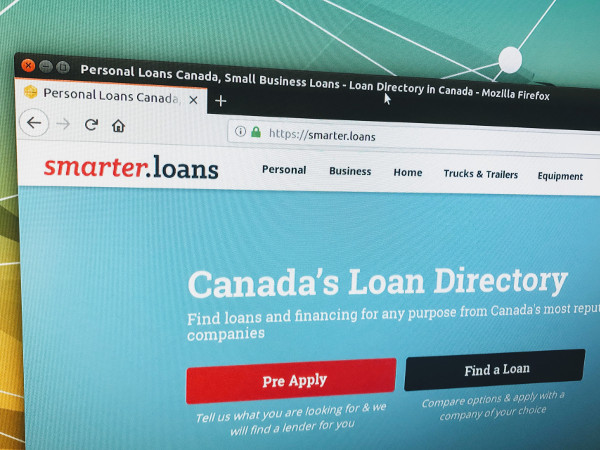 To meet this growing demand, new alternative financing companies are coming to the market all the time, says Vlad Sherbatov, president and co-founder of Smarter Loans, which works with about three dozen of Canada’s top financing companies. He predicts that over time more players will enter the market—from within Canada and also from the U.S.—and that product types will continue to grow as demand and understanding of the benefits of alternative finance become more well-known. Notably, 42 percent of firms that reported volumes in Canada were primarily headquartered in the U.S., according to the Cambridge report.
To be sure, the Canadian market is much smaller than the U.S. and alternative finance isn’t ever expected to overtake it in size or scope. That’s because while the country is huge from a geographic standpoint, it’s not as densely populated as the U.S., and businesses are clustered primarily in a few key regions.
To put things in perspective, Canada has an estimated population of around 37 million compared with the U.S.’s roughly 327 million. On the business front, Canada is similar to California in terms of the size and scope of its small business market, estimates Paul Pitcher, managing partner at SharpShooter, a Toronto-based funder, who also operates First Down Funding in Annapolis, Md.
Nonetheless, alternative lenders and funders in Canada are becoming more of a force to be reckoned with by a number of measures. Indeed, a majority of Canadians now look to online lenders as a viable alternative to traditional financial institutions, according to the 2018 State of Alternative Lending in Canada, a study conducted by online comparison service Smarter Loans.
Of the 1,160 Canadians surveyed about the loan products they have recently received, only 29 percent sought funding from a traditional financial institution, such as a bank, the study found. At the same time, interest in alternative loans has been on an upward trajectory since 2013. Twenty-four percent of respondents indicated they sought their first loan with an alternative lender in 2018. Overall, nearly 54 percent of respondents submitted their first application with a non-traditional lender within the past three years, according to the report.
Like in the U.S., there’s a mix of alternative financing companies in Canada. A number of companies offer factoring and invoicing and payday loans. But there’s a growing number focused on consumer and business lending as well as merchant cash advance.

Some major players in the Canadian alternative lending or funding landscape include Fairstone Financial (formerly CitiFinancial Canada), an established non-bank lender that recently began offering online personal loans in select provinces; Lendified, an online small business lender; Thinking Capital, an online small business lender and funder; easyfinancial, the business arm of alternative financial company goeasy Ltd. that focuses on lending to non-prime consumers; OnDeck, which offers small business financing loans and lines of credit; and Progressa, which provides consolidation loans to consumers.
By comparison, the merchant cash advance space has fewer players; it is primarily dominated by Thinking Capital and less than a dozen smaller companies, although momentum in the space is increasing, industry participants say.
“The U.S. got there 10 years ago, we’re still catching up,” says Avi Bernstein, chief executive and co-founder of 2M7 Financial Solutions, a Toronto-based merchant cash advance company.
OPPORTUNITIES ABOUND
In terms of opportunities, Canada has a population that is very used to dealing with major banks and who are actively looking for alternative solutions that are faster and more convenient, says Sherbatov of Smarter Loans. This is especially true for the younger population, which is more tech-savvy and prefers to deal with finances on the go, he says.
Because the alternative financing landscape is not as developed in Canada, new and innovative products can really make a significant impact and capture market share. “We think this is one of the key reasons why there’s been such an influx of international companies, from the U.S. and U.K. for example, that are looking to enter the Canadian market,” he says.
Just recently, for example, Funding Circle announced it would establish operations in Canada during the second half of 2019. “Canada’s stable, growing economy coupled with good access to credit data and progressive regulatory environment made it the obvious choice,” said Tom Eilon, managing director of Funding Circle Canada, in a March press release announcing the expansion. “The most important factor [in coming to Canada] though was the clear need for additional funding options among Canadian SMEs,” he said.
OnDeck, meanwhile, recently solidified its existing business in Canada through the purchase of Evolocity Financial Group, a Montreal-based small business funder. The combined firm represents a significantly expanded Canadian footprint for both companies. OnDeck began doing business in Canada in 2014 and has originated more than CAD$200 million in online small business loans there since entering the market. For its part, Evolocity has provided over CAD$240 million of financing to Canadian small businesses since 2010.
“There is an enormous need among underserved Canadian small businesses to access capital quickly and easily online, supported by trusted and knowledgeable customer service experts,” Noah Breslow, OnDeck’s chairman and chief executive, said in a December 2018 press release announcing the firms’ nuptials.
There are also a number of home grown Canadian companies that are benefiting from the growth in the alternative financing market.
2M7 Financial Solutions, which focuses on merchant cash advances, is one of these companies. It was founded in 2008 to meet the growing credit needs within the small and medium-sized business market at a time when businesses were having trouble in this regard.
But only in the past few years has MCA in Canada really started picking up to the point where Bernstein, the chief executive, says the company now receives applications from about 200 to 300 companies a month, which represents more than 50 percent growth from last year.
“We’re seeing more quality businesses, more quality merchants applying and the average funding size has gone up as well,” he says.
NAVIGATING THROUGH CHALLENGES
Despite heightened growth possibilities, there are also significant headwinds facing companies that are seeking to crack the Canadian alternative financing market. For various reasons, some companies have even chosen to pull back or out of Canada and focus their efforts elsewhere. Avant, for example, which offers personal loans in the U.S., is no longer accepting new loan applications in Canada at this time, according to its website. Capify also recently exited the Canadian business it entered in 2007, even as it continues to bulk up in the U.K. and Australia.
One of the challenges alternative lenders face in Canada is distrust of change. Since Canadians are so used to dealing with only a few major financial institutions to handle all their finances, they are skeptical to change this behavior, especially when the customer experience shifts from physical branches to online apps and mobile devices, says Sherbatov of Smarter Loans. He notes that adoption of fintech products in Canada has lagged in recent years, partially because there has been a lack of awareness and trust in new financial products available.
One way Smarter Loans has been working to strengthen this trust is by launching a “Smarter Loans Quality Badge,” which acts as a certification for alternative financing companies on its platform. It is issued to select companies that meet specified quality standards, including transparency in fees, responsible lending practices, customer support and more, he says.
 The Canadian Lenders Association, whose members include lenders and merchant cash advance companies, has also been working to promote the growing industry and foster safe and ethical lending practices. For example, it recently began rolling out the SMART Box pricing disclosure model and comparison tool that was introduced to small businesses in the U.S. in 2016.
Another challenge that impacts alternative lenders in the consumer space is having restricted access to alternative data sources. Because of especially strict consumer privacy laws, access is “substantially more limited” than it is in any other geography,” says Jason Mullins, president and chief executive of goeasy, a lending company based in Mississauga, Ontario, that provides consumer leasing, unsecured and secured personal loans and merchant point-of-sale financing.
From a lending perspective, goeasy focuses on the non-prime consumer—generally those with credit scores of under 700. Mullins says the market consists of roughly 7 million Canadians, about a quarter of the population of Canadians with credit scores. The non-prime consumer market is huge and has tremendous potential, he says, but it’s not for the faint of heart.
Another issue facing alternative lenders is the relative difficulty of raising loan capital from institutional lenders, says Ali Pourdad, co-founder and chief executive of Progressa, which recently reached the $100 million milestone in funded loans for underserved Canadian consumers. “The onus is on the alternative lenders to ensure they have good lending practices and are underwriting responsibly,” he says.
What’s more, household debt to income ratios in Canada are getting progressively worse, with Canadians taking on too much debt relative to what they can afford, Pourdad says. As the situation has been deteriorating over time, there is inherently more risk to originators as well as the capital that backs them. “Originators, now more than ever, have to be cautious about their lending practices and ensure their underwriting is sound and that they are being responsible,” he says.
On the small business side of alternative lending, getting the message out to would-be customers can be a challenge in Canada. In U.S. there are thousands of ISOs reaching out to businesses, whereas in Canada, most funders have a direct sales force, with a much smaller portion of their revenue coming from referral partners, says Adam Benaroch, president of CanaCap, a small business funder based in Montreal.
He predicts this will change over time as the business matures and more funders enter the space, giving ISOs the ability to offer a broader array of financing products at competitive rates. “I think we’re going to see pricing go down and more opportunities develop, and as this happens, the business is going to grow, which is exactly what has happened in the U.S,” he says.
Generally speaking, Canadian businesses are still somewhat skeptical of merchant cash advance and require considerable hand-holding to become comfortable with the idea.
“You can’t wait for them to come to you, you have to go to them and explain what the products are,” says Pitcher of SharpShooter, the MCA funding company.
While Pitcher predicts more companies will continue to enter the Canadian alternative financing market, he doesn’t think it will be completely overrun by new entrants—the market simply isn’t big enough, he says. “It’s not for everyone,” he says.
So God Made a Farmer, But Who’s Financing The Farms?
May 1, 2019 Most mornings, farmers and ranchers wake up worrying about uncooperative weather and volatile commodity prices. Just the same, they pull themselves out of bed to spend the morning tinkering with crotchety machinery or wrangling uncooperative livestock. When they break for lunch, the kitchen radio alerts them to trade wars with distant countries and the unintended results of federal regulation. As they make their way back outdoors for the afternoon’s work, they can’t help but notice another new house taking shape in the distance as suburban sprawl encroaches on the fields and pastures. By evening, their thoughts have turned to their need for short-term capital and how the local banker seems increasingly wary of providing funds.
It’s that last challenge where the alternative small-business funding industry might be able to help, says Peter Martin, a principal at K-Coe Isom, an accounting and consulting firm focused on the ag industry. “If you as a farmer need operating funds and you can’t get them from a bank, you don’t have a lot of options,” he says. “Historically, nobody outside of banks has had much interest in lending operating money to a farmer.”
The result of that reluctance to provide funding? “I can’t tell you the number of calls I get to say, ‘Hey, I need $100,000 and I need it in a couple of days because of X, Y, Z that’s come up,’” says Martin. “We don’t have a place that we can send those people to. You could make a lot of quick turnaround loans in rural America.” What’s more, it’s a potential clientele that makes a lot of money and prides itself on paying back what they owe.
Martin’s not alone in that assessment. While farmers enjoy abundant long-term credit to buy big-ticket assets, such as land and heavy machinery, they’re struggling to find sources of short-term credit for operating expenses like labor, repairs, fuel, seed, feed, fertilizer, herbicides and pesticides, notes Mike Gunderson, Purdue University professor of agricultural economics.
 But remember that nobody’s saying it would be easy for alt funders to break into the agricultural sector. City folks accustomed to the fast-paced rhythms of New York or San Diego would have to learn a whole new seasonal business cycle. Grain farmers, for example, plant corn and soybeans in April, harvest their crops September or October, and may not sell the grain until the following January, says Nick Stokes, managing director of Conterra Asset Management, an alternative-funding company that places and services rural real estate loans.
That seasonality results in revenue droughts punctuated by floods of revenue – a circumstance far-removed from the more-consistent credit card receipt split that launched the alternative small-business funding industry. Alternative funders seeking customers with consistent monthly cash flow won’t find them in the agricultural sector, Stokes cautions.
And while the unfamiliarity of farm life might begin with wild swings in cash flow, it doesn’t end there. Operating in the agricultural sector would require urbanites to learn the somewhat alien culture of The Heartland – a way of life based on hard physical labor, the fickle whims of the weather, and friendly unhurried conversations, even with strangers.
Even so, the task of mastering the agricultural funding market isn’t hopeless, and help’s available. Experts in agricultural economics profess a willingness to help outsiders learn what they need to know to get involved. “Selfishly, the first place I’d love to have them reach out to is me,” Martin says of alternative funders. “I’ve been writing and thinking for years about the importance of getting some non-traditional lenders into agriculture.” He would have “no qualms” about featuring specific prospective funders in a column he writes for one of the nation’s largest farm publications.
 It also requires meet-and-greets. During the winter, when farmers aren’t in the fields, funders could make connections at trade shows, Martin advises. “Word would get around rural America really quick,” he predicts. Networking with advisers such as crop insurance agents, agronomists and ag CPS’s – all of whom deal with farmers daily – would also help funders find their way in agriculture, he contends.
Investors who are curious about extending credit in the agricultural sector could rely upon Conterra to help them locate customers and help them service the loans, says Stokes. He can even help acclimate them to the world of agriculture. “If they’re interested in investing in agricultural assets – whether that be equipment, real estate or providing operating capital – we would enjoy the opportunity to visit with them,” he says.
GETTING STARTED
Alt funders could begin their introduction to the agrarian lifestyle by taking to heart a quotation attributed to President John F. Kennedy: “The farmer is the only man in our economy who buys everything at retail, sells everything at wholesale and pays the freight both ways.”
“Agriculture is a very different animal,” Martin notes. He sometimes presents a slide show to compare the difference between a typical farm and a typical manufacturer of the same size. At the factory, revenue ratchets up a bit each year and margins remain about the same over time. On the farm, revenue and margins both fluctuate wildly in huge peaks and valleys from one year to the next.
The volatility makes it difficult to manage the risk of lending, Martin admits, while noting that agriculturally oriented banks still have higher returns than non-ag banks, according to FDIC records. “You have to go back to 2006 to find a time when ag banks didn’t outperform their peers on return on assets,” he says. “What this tells us is that, generally speaking, ag borrowers are better at repaying their loans,” he asserts. Charge-offs and delinquencies in ag portfolios are lower than in other industries, he says.
Many of the nation’s farms have remained in the same family for more than a century – a stretch of time that’s seldom seen in just about any other type of business. Besides making potential creditors comfortable that a particular operation will stay in business, the longevity of farms provides lots of documents to examine – not just tax records but also production history that’s tracked by government agencies. A particular farmer’s crop yields, for example, can be compared with county averages to calculate how good the borrower is at farming.
Debt to asset ratio on the nation’s farms stands at about 14 percent, which Martin views as “insanely low.” But that’s not the case on every farm. Highly leveraged farms have ratios of 60 percent or even 80 percent when farmers have grown their businesses quickly or encountered debt to buy land from their parents, he says. Commodity prices are low now, but farms with 14 percent debt to asset ratios still don’t have a problem, even in hard times. Farmers deeply in debt, however, have little ability to climb out of the hole. The latter are using operating capital to fund losses.
 Farmers with debt to asset ratios of 10 percent have little trouble finding credit and aren’t going to pay anything other than bank rates, Martin says. The target audience for non-traditional funding are farmers who are having trouble but will be fine when commodity prices rebound. Another potential client for alternative finance would be farmers who are quickly increasing the size of their operations when opportunities arise to acquire land. Both groups need funders willing to contemplate the future instead of demanding a perfect track record, he maintains.
Farmers generally need loans for operating capital for about 18 months, according to Martin. “Let’s say I borrow that money, get my crop in the ground, harvest that and I may not sell my grain right after harvest,” he says. The whole cycle can easily take 18 months, he says. Shorter-term bridge lending opportunities also arise in situations like needing a little extra cash quickly at harvest time. Farmers usually have something to put up as collateral – like producing 50 titles to vehicles or offering up some real estate, he says.
An unsecured loan – even one with high double-digit interest – could succeed in agriculture because no one is offering that type of funding, Martin says. Small and medium-sized farms would probably benefit from funding of $100,000 or less, while larger farms might sign up for that amount but often require more, he notes.
LAY OF THE LAND
The Farm Credit System, a nationwide quasi-governmental network of borrower-owned lending institutions, provides more than a third of the credit granted in rural America. That comes to more than $304 billion annually in loans, leases and related services to farmers, ranchers, rural homeowners, aquatic producers, timber harvesters, agribusinesses, and agricultural and rural utility cooperatives, according to published reports.
Congress established the Farm Credit System in 1916, and the Farm Credit Administration was established in 1933 to provide regulatory oversight. “All they’re doing is lending money to agriculture,” says Martin.

However, the system can go astray in the eyes of some observers. An arm of the Farm Credit System called CoBank lends to co-operatives and other rural entities. At one point Verizon Wireless became a borrower from CoBank, which angered some observers because the system was supposed to be helping rural America, not corporate America, Martin says.
That anger arises partly because the federal government doesn’t require Farm Credit to pay income tax, which enables it to lend at lower rates, Martin says. “Part of the allure of borrowing from Farm Credit is you can typically borrow cheaper,” he notes. “You’d be very hard pressed to find a farmer who over the years hasn’t had some interaction with Farm Credit.”
Observers sometimes fault the system for what they perceive as a tendency to extend credit only to those who don’t really need it, notes Purdue’s Gunderson. People working for the system believe they’re doing a good job of supporting agriculture, he says, noting that the system is charged with the responsibility of helping new and young farmers.
Another entity, the Federal Agricultural Mortgage Corp., also known as Famer Mac, works with lending institutions to provide credit to the agricultural sector. It’s a publicly traded company that serves as a secondary market in agricultural loans, including mortgages. It purchases loans and sells instruments backed by those loans and was chartered in 1988. Conterra, the alternative-funding company mentioned earlier in this article, -works with Farmer Mac and financial institutions to make real estate loans to farmers and ranchers in financial distress. The loans are designed to help borrowers get back on their feet in three to five years so that they would then qualify for regular bank loans.
Then there are the ag lending divisions at the large banks such as Wells Fargo, Chase and the Bank of the West, Martin says. “Lots of these big national banks are doing at least some ag lending,” he says. “Some, obviously, have bigger ag portfolios than others.”
Some regional banks focus on agriculture, Martin continues. “When you get into the middle of the corn belt, there are going to be some regional banks where traditional ag lending’s a huge part of what they do,” he says. Local banks in small towns get involved, too. “Most small community banks are going to have some kind of ag lending portfolio,” Martin notes. Hometown bankers can provide operating capital to some farmers, but only to those who haven’t experienced recent hiccups in revenue or expenses.
THE NON-BANKS
 “Then you get into the non-bank lenders,” Martin observes. “A really good example of this is John Deere,” the tractor and equipment manufacturer. The company provides a tremendous amount of capital to rural America through equipment lending and also through other credit facilities, he says. In fact some observers estimate that John Deere is the largest lender to agriculture. Even so, the company usually doesn’t provide enough non-equipment credit to become the only lender a farmer would use, he says.
The same holds true with other lenders to agriculture, Martin says. Co-operatives, for example, lend money to agriculture even though they’re not banks. Typically, they begin by extending credit for products like seed, fertilizer or pesticides and then start making additional credit available to farms and ranches. In recent years, a large co-operative called CHS loaned hundreds of millions of dollars in addition to selling products on credit. Some large CHS loans went bad caused a ripple effect throughout the cooperative structure, Martin maintains. Other co-ops have looked at CHS and wondered if they’re moving too far outside their core competency. So now many co-ops are tying funding to products they’re selling.
Some other non-bank lenders have shown up in agriculture, and they fall into two categories, Martin says. One group is making real estate loans in agriculture, so their loan programs are geared to farmers looking to buy land or anything that can be secured by land. Conterra and Ag America are examples. Farmer Mac lends a lot of money against farmland, as well. So farmers who have agricultural land have a lot of access to capital and a lot of lenders who want to provide it, he says.
The second group of non-bank lenders is providing operating capital. “That is a very, very small club,” Martin says. “There’s really not anybody doing this on a regular basis – with just one or two exceptions.” Probably the biggest name among the exceptions is Ag Resource Management, usually known as ARM, he continues. ARM places a value on the potential productivity of a famer’s land. Then it looks at the crop insurance the farmer’s able to buy to protect the investment in that crop. ARM then lends part of the value of that crop insurance.
Let’s say a farmer can grow $10 million worth of crops, according to ARM’s projection,” Martin says. “You can get crop insurance to cover 80 percent,” he continues. “For a total crop failure, you will get $8 million for that crop.” Using a formula based on type of crop, location and type of crop insurance, ARM will lend some amount less than $8 million. “Their collateral is pretty rock solid,” Martin observes.
ARM uses a system to make sure farmers use the funds only for expenses related to growing the crop they’re using as collateral. “Their risk of not getting a crop in the ground that qualifies for the insurance is next to nothing,” Martin says. ARM offers differing interest rates, depending upon risk, in at least the high single digits or double digits, and they also charge fees. “So you’re going to be paying a lot, but they are the lender of last resort in agriculture right now,” he says, adding that ARM operates multiple offices has grown quickly.
Through lenders like ARM, the agricultural sector’s becoming familiar with alternative finance. But much remains to be done if alt fin pioneers want to venture into the sector. Those who do will encounter a complicated credit landscape, but one that offers opportunities for anyone willing to learn about unfamiliar business cycles and lifestyles.
College Students Abandon Student Loans, Offer Share Of Their Future Income Instead
April 29, 2019 At Purdue University, home of the Boilermakers, there’s a brick bell tower that stands high above everything else on this handsome campus of stately college buildings and green lawns. Paul Laurora, a senior Chemical Engineering student, said the bell rings on the hour and at 20 minute intervals throughout the day, as that’s when classes begin and end. And at 5 p.m., the bell rings out the melody of Purdue’s school song, “Hail Purdue.” That’s a lot of bell ringing. Laurora is a fraternity member, he lives with seven other roommates in a house on campus and he really likes film. He’s also a part of Purdue’s “Back a Boiler” Income Share Agreement (ISA) program, which is an alternative to a student loan. An ISA is an arrangement where college students pay a percentage of their future earnings to the college and other investors.
 Laurora was introduced to the ISA program by Purdue. It launched in 2016 and was the first of its kind. He said he signed up for it because he was denied student loans by banks and because he said the ISA is more transparent and easier to obtain.
“If I hadn’t gotten the ‘Back a Boiler’ ISA, I would have had to take a semester off to work to contribute to my tuition,” Laurora said.
Purdue’s ISA program works such that the percentage of a student’s future earnings that go to repaying the advance is based on the amount of money they are likely to make given their major. But the math works out such that all graduates are expected to pay roughly the same minimum amount. The graduates are given six months to find employment and then the clock starts ticking, like the one inside the campus bell tower.
As a senior, Laurora has been on an active job search. Earlier last week, he said he wasn’t too concerned about paying off his ISA, but he said it was definitely a factor when considering different jobs and their salaries. Last Friday, Laurora got a job offer from a Washington, D.C. firm to be an Engineering Technology Analyst, and he feels comfortable that he’ll earn enough money for himself while still being able to give a percentage of his salary to the ISA.
For Laurora, he is required to give 2.57% of his income for a little more than 7 years. What Laurora and other students find attractive about Purdue’s ISA Program is that, like all ISA programs, there is a time cap (usually 10 years) after which the graduate no longer owes money. The program simply concludes.
 Florin Handelman is a junior at Purdue who wanted to go there because of its prestigious engineering program. He ended up switching his intended major to Industrial Design, which he’s very passionate about. He’s even part of a student club where upperclassmen mentor underclassmen in industrial design.
Handelman also has an ISA, which he said he really likes because of the time cap. But he noted a potential downside – which is that if you end up making far more than what Purdue anticipated, you still pay the same percentage on your income, which could end up being a lot more than a fixed-rate student loan. He conceded, though, that earning far more than expected is “an ok problem to have.” For extremely high earners, Purdue has a cap so that no one pays more than 2.5 times the principal amount they were given.
Handelman said that none of his friends have an ISA and that, unless you’re applying for financial aid, “no one really knows about it.”
 Since 2016, Purdue’s “Back a Boiler” program has served over 500 students with 820 contracts for a total amount of almost $10 million, according to Tim Doty, Director of Public Information and Issues Management at Purdue. Last year’s freshman undergraduate class had more than 8,000 students, so 500 in the ISA program altogether is still a very small number. But the program has been growing steadily. And in the time since Purdue launched the first ISA program, there are now about 25 other ISA programs at institutions of higher education in the U.S., according to Charles Trafton, co-founder of Edly, a new online marketplace that connects ISA investors.
Purdue is a public school, so tuition is less expensive in general, particularly for in-state students. For the 2018-19 academic year, tuition for in-state students was $9,992 a year and $28,794 a year for out-of-state students.
“College is ridiculously priced in general,” said Laurora, who is an out-of-state student from New Jersey. “I have a friend who’s paying $80,000 a year at NYU.”
Savanna Williams is an in-state junior and an Elementary Education major at Purdue. She’s also a member of a sorority and is an officer in a student run dance club. One thing Williams said she likes about the ISA program is that if she wants to start a family and not work for a few years, she wouldn’t owe money then. With Purdue’s program, a graduate can take off time and not pay for up to five years. But the ISA payment term is then extended for however long a period that the graduate stopped working.
Given their shared experience and future commitments, students in Purdue’s ISA program are kind of like members of a club. When Laurora was at Harry’s Chocolate Shop, a popular bar near campus, he ran into someone he knew who was in the program.
“We said hi and both agreed it was helpful.”
Does Your Merchant Cash Advance Company Pass The Scrutiny Test?
April 29, 2019
The merchant cash advance business has come under repeated fire of late from regulators, legislators and customers. “Every aspect of the industry is under scrutiny right now. Syndication agreements, underwriting, and collections are the subject of bills in Congress and across multiple states,” says Steven Zakharyayev, managing attorney for Empire Recovery Services in Manhattan, which offers debt recovery services to financial companies. So how should funders respond amid these obstacles? Here are a few pointers to help funders succeed despite ongoing challenges from a legal, regulatory, business and public relations perspective:
DIFFERENTIATE BETWEEN CASH ADVANCES AND LOANS AND MODEL BUSINESS DEALINGS ACCORDINGLY

In the eyes of the law, merchant cash advances and loans are very different. With a cash advance, a funder advances the merchant cash in exchange for a percentage of future sales, plus a fee. A loan, on the other hand, is a lump sum of cash in exchange for monthly payments over a set time period at an interest rate that can be fixed or variable. While the two types of funding options have certain similarities, funders have to be extremely careful to make appropriate distinctions in their business practices; otherwise legal trouble can easily ensue, experts say.
Most funders know that they are supposed to draw a bright line between merchant cash advance and lending, but it’s critical they put this knowledge into practice. Funders have to ensure the distinction is evident in their business lexicon, says Gregory J. Nowak, a partner in the Philadelphia office of law firm Pepper Hamilton LLP who focuses on securities law.
 For example, it’s extraordinarily important that funders don’t refer to merchant cash advances as loans in their business dealings. Business records, emails and other documents can be requested in litigation for discovery purposes. If the funder’s internal documentation refers to cash advances as loans, it’s going to be hard for the company to argue that they aren’t, in reality, loans.
“Most judges want to see consistency of treatment and that includes your vocabulary,” Nowak says. “The word ‘loan’ should be banned from their email and Word files.”
There’s a fair amount of litigation surrounding what is and what isn’t a cash advance. This can be helpful guidance for funders in setting out the criteria they need to follow to be able to defend their activities as cash advances. Even so, the line is somewhat of a moving target and funders need to be stalwart in these efforts given heightened regulatory scrutiny, experts say.
“If it looks like a loan, the law will treat it as a loan—and all the consequences that follow such a determination,” says Christopher K. Odinet, an associate professor of law at the University of Oklahoma College of Law.
BE CAREFUL ABOUT YOUR COLLECTION POLICIES
Obviously companies want to collect their payments. But some funders are too quick to file lawsuits, which could lead to unwanted trouble, says Paul A. Rianda, who heads a law firm in Irvine, Calif.
“The business model of sue first, ask questions later can be a problem,” says Rianda, whose clients include merchant cash advance companies.
The concern is that when funders sue, merchants start talking to attorneys and that could open the MCA firm to other types of lawsuits. The more a funder sues, the more it increases media attention and invites examination by state regulators and others. “You invite class action lawsuits and regulatory scrutiny that you really don’t want. It’s a boomerang thing,” he says.
The issue is especially pertinent now as legislators grapple with how to handle the thorny issue of confessions of judgement, more popularly known as COJs. For instance, since the start of the year, New York courts and county clerks have become much more rigid in processing confessions of judgments.
Certainly, not all funders use COJs. Just recently, for instance, Greenbox Capital suspended the use of COJs indefinitely, in response to the heightened industrywide debate over their use. While there’s no all-encompassing directive to stop using COJs, experts say it is incumbent upon funders to ensure they are used in a responsible and proper manner, especially amid political and regulatory uncertainty.

For instance, it would be irresponsible and potentially actionable to execute on a COJ simply because the merchant doesn’t remit receivables the merchant cash advance company purchased because he didn’t generate receivables, says Catherine M. Brennan, a partner at the law firm Hudson Cook LLP in Hanover, Maryland.
To be lawful, the COJ has to be based on a breach of performance under the agreement. Fraud, for instance, is actionable. But simple failure to remit receivables because the business has failed is not, she says.
“Conflating those two things—breaches of repayment versus performance—leads to a world of hurt,” she says. “MCA transactions do not have repayment as a concept.”
In places like New York, where COJs are more controversial, funders have to be especially careful about using them properly, experts say. Even though COJs are still enforceable under New York law for the time being, funders should understand every county processes them a bit differently, says Zakharyayev of Empire Recovery Services. “If they have a preferred county for filing, they should ensure their COJs are not only compliant with state law, but also complies with local rules,” he says.
What’s more, funders should ensure their COJs are properly notarized under New York law, ensure party names and the amount confessed is accurate, and avoid blanket statements such as naming each and every county in New York as a possible venue for filing, he says.
While some funders have suggested changing their venue provisions to a COJ-friendly state if New York outlaws COJs, Zakharyayev says he recommend New York funders keep their venue in New York regardless since it would still be one of the most efficient states to enforce a judgment. “I’ve filed COJs outside of New York and, even without a COJ, New York is much more efficient in judgment enforcement as New York courts are less restrictive in allowing the judgment creditor to pursue the debtor’s assets,” he says.
BE CAREFUL WHEN RAISING THIRD-PARTY MONEY
Aside from their dealings with merchants, funders also have to be cautious when it comes to interactions with potential investors.
Some companies have ample balance sheets and don’t need money from third parties to fund their operations. But funders that decide for business purposes to solicit money from investors, have to be careful not to run afoul of SEC rules, says Nowak, the attorney with Pepper Hamilton.
He recommends funders treat these fundraising efforts as if they are issuing securities and follow the rules accordingly. Otherwise they risk being the subject of an enforcement action where the SEC alleges they are raising money using unregulated securities. “You need to be very careful here because these rules are unforgiving. You can’t ignore them,” Nowak says.
TACKLE ACCOUNTING CHALLENGES
Accounting is another business challenge many funders face. Some have fancy customer relationship management systems, but the systems aren’t always set up to provide the detailed information the accounting department’s needs to effectively reconcile the firm’s books, says Yoel Wagschal, a certified public accountant in Monroe, New York, who represents a number of funders and serves as chief financial officer at Last Chance Funding, a merchant cash advance provider.
Ideally, a funder’s CRM and accounting systems should be integrated so both sales and accounting receive the relevant data without the need for either department to input duplicate data. The two systems need a way to get information from each other, without someone manually entering the data in both systems, which is inefficient and prone to error, Wagschal says.
DON’T SKIMP ON LEGAL SERVICES

There’s no set standard for funders to follow when it comes to legal advice. Some funders have in-house counsel, some contract with external law firms and some don’t have attorneys at all, which, of course, can be a risky proposition.
Some funders use contracts they’ve poached from a reputable funder online or from a friend in the industry, says Kimberly M. Raphaeli, vice president of legal operations at Accord Business Funding in Houston, Texas. The trouble is what flies in one state may not be legal in another, she says.
Many contracts include things such as jury waivers and class-action waivers or COJs and depending on the state, the rules surrounding the enforcement of these types of clauses may be different. So it’s really important to know the nuances of the state you’re doing business in and even potentially the states where your merchants are located, she says.
Having dedicated legal staff is arguably better. But at the very least, funders should have an attorney on speed dial who can provide advice on contracts, compliance and other areas of their business. Even when a funder has in-house attorneys, Raphaeli says it’s a good idea to tap external counsel to review documents in situations where potential liability exists. Not only does this offer a second set of eyes, it can provide added peace of mind. “A funder should never shy away from paying a little bit of money for long-term business security,” Raphaeli says.
FOLLOW BEST PRACTICES
 The Small Business Finance Association, an advocacy group for the non-bank alternative financing industry, has developed a list of best practices for industry participants to follow. These encompass principles of transparency, responsibility, fairness and security.
“It’s a very competitive market and companies are trying to differentiate themselves. I think it’s important to make sure you’re following industry standards,” says Steve Denis, executive director of the association whose members include funders and lenders.
Funders also need to be mindful that best practices can change based on business and competitive realities, so it’s important for funders to review procedures periodically, says Raphaeli, of Accord Business Funding. Because the industry is fast-moving, a good rule of thumb might be for a funder to review the entire set of policies and procedures every 18 months. But more frequent review could be necessary if outside factors such as new case law or regulation demand it, she says.
“Periodically taking a look at your collections techniques, your default procedures, even your funding process down to your funding call – these are all critical components of having a successful MCA funder,” she says.
TAKE PAINS TO AVOID INDUCTION INTO THE PUBLIC HALL OF SHAME
While there is no shortage of unseemly news stories involving MCA, funders need to do their best to avoid negative press. This means being extra careful about the way they present themselves to businesses, at public speaking engagements, at conferences, industry trade shows, brokers and others, says Denis of the Small Business Finance Association.

Denis, a long-time Washington, D.C., resident, recommends funders invoke what he calls the “The Washington Post test,” though it applies broadly to any news outlet. Before sending an email, leaving a voicemail or saying anything publicly, funding company employees need to ask themselves: Am I comfortable with that information being on the front page of the paper? “I think our industry has a big problem with public relations right now,” he says. “The stigma is only as true as our industry allows it to be.”
Online Loans You Can Take To The Bank
April 16, 2019
OnDeck, the reigning king of small business lending among U.S. financial technology companies, is sharpening its business strategies. Among its new initiatives: the company is launching an equipment-finance product this year, targeting loans of $5,000 to $100,000 with two-to-five year maturities secured by “essential-use equipment.”
In touting the program to Wall Street analysts in February, OnDeck’s chief executive, Noah Breslow, declared that the $35 billion, equipment-finance market is “cumbersome” and he pronounced the sector “ripe for disruption.”
While those performance expectations may prove true – the first results of OnDeck’s product launch won’t be seen until 2020 – Breslow’s message seemed to conflict with OnDeck’s image as a public company. Rather than casting itself as a disruptor these days, OnDeck emphasizes the ways that its business is melding with mainstream commerce and finance.
 Consider that the New York-based company, which saw its year-over-year revenues rise 14% to $398.4 million in 2018, is collaborating with Visa and Ingo Money to launch an “Instant Funding” line-of-credit that funnels cash “in seconds” to business customers via their debit cards. With the acquisition of Evolocity Financial Group, it is also expanding its commercial lending business in Canada, a move that follows its foray into Australia where, the company reports, loan-origination grew by 80% in 2018.
Perhaps most significant was the 2018 deal that OnDeck inked with PNC Bank, the sixth-largest financial institution in the U.S. with $370.5 billion in assets. Under the agreement, the Pittsburgh-based bank will utilize OnDeck’s digital platform for its small business lending programs. Coming on top of a similar arrangement with megabank J.P. Morgan Chase, the country’s largest with $2.2 trillion in assets, the PNC deal “suggests a further validation of OnDeck’s underlying technology and innovation,” asserts Wall Street analyst Eric Wasserstrom, who follows specialty finance for investment bank UBS.
“It also reflects the fact that doing a partnership is a better business model for the big banks than building out their own platforms,” he says. “Both banks (PNC and J.P. Morgan) have chosen the middle ground: instead of building out their own technology or buying a fintech company, they’ll rent.
 “J.P. Morgan has a loan portfolio of $1 trillion,” Wasserstrom explains. “It can’t earn any money making loans of $15,000 or $20,000. Even if it charged 1,000 percent interest for those loans,” he went on, “do you know how much that will influence their balance sheet? How many dollars do think they are going to earn? A giant zero!”
Similarly, Wasserstrom says, spending the tens of millions of dollars required to develop the state-of-the art technology and expertise that would enable a behemoth like J.P. Morgan or a super-regional like PNC to match a fintech’s capability “would still not be a big needle-mover. You’d never earn that money back. But by partnering with a fintech like OnDeck,” he adds, “banks like J.P Morgan and PNC get incremental dollars they wouldn’t otherwise have.”
The alliance between OnDeck and old-line financial institutions is one more sign, if one more sign were needed, that commercial fintech lenders are increasingly blending into the established financial ecosystem.
Not so long ago companies like OnDeck, Kabbage, PayPal, Square, Fundation, Lending Club, and Credibly were viewed by traditional commercial banks and Wall Street as upstart arrivistes. Some may still bear the reputation as disruptors as they continue using their technological prowess to carve out niche funding areas that banks often neglect or disdain.
Yet many fintechs are forming alliances with the same financial institutions they once challenged, helping revitalize them with new product offerings. Other financial technology companies have bulked up in size and are becoming indistinguishable from any major corporation.
Big Fintechs are securitizing their loans with global investment banks, accessing capital from mainline financial institutions like J.P. Morgan, Goldman Sachs and Wells Fargo, and finding additional ways — including becoming publicly listed on the stock exchanges – to tap into the equity and debt markets.
 One example of the maturation process: through mid-2018, Atlanta-based Kabbage has securitized $1.5 billion in two bond issuances, 30% of its $5 billion in small business loan originations since 2008.
In addition, fintechs have been raising their industry’s profile with legislators and regulators in both state and federal government, as well as with customers and the public through such trade associations as the Internet Lending Platform Association and the U.S. Chamber of Commerce. Both individually and through the trade groups, these companies are building goodwill by supporting truth-in-lending laws in California and elsewhere, promoting best practices and codes of conduct, and engaging in corporate philanthropy.
Rather than challenging the established order, S&P Global Market Intelligence recently noted in a 2018 report, this cohort of Big Fintech is increasingly burrowing into it. This can especially be seen in the alliances between fintech commercial lenders and banks.
“Bank channel lenders arguably have the best of both worlds,” Nimayi Dixit, a research analyst at S&P Global Market Intelligence wrote approvingly in a 2018 report. “They can export credit risk to bank partners while avoiding the liquidity risks of most marketplace lending platforms. Instead of disrupting banks, bank channel lenders help (existing banks) compete with other digital lenders by providing a similar customer experience.”
It’s a trend that will only accelerate. “We expect more digital lenders to incorporate this funding model into their businesses via white-label or branded services to banking institutions,” the S&P report adds.
Forming partnerships with banks and diversifying into new product areas is not a luxury but a necessity for Fundation, says Sam Graziano, chief executive at the Reston (Va.)-based platform. “You can’t be a one-trick pony,” he says, promising more product launches this year.
Fundation has been steadily making a name for itself by collaborating with independent and regional banks that utilize its platform to make small business loans under $150,000. In January, the company announced formation of a partnership with Bank of California in which the West Coast bank will use Fundation’s platform to offer a digital line of credit for small businesses on its website.
 Fundation lists as many as 20 banks as partners, including most prominently a pair of tech-savvy financial institutions — Citizens Bank in Providence, R.I. and Provident Bank in Iselin, N.J. — which have been featured in the trade press for their enthusiastic embrace of Fundation.
John Kamin, executive vice president at $9.8 billion Provident reports that the bank’s “competency” is making commercial loans in the “millions of dollars” and that it had generally shunned making loans as meager as $150,000, never mind smaller ones. But using Fundation’s platform, which automates and streamlines the loan-approval process, the bank can lend cheaply and quickly to entrepreneurs. “We’re able to do it in a matter of days, not weeks,” he marvels.
Not only can a prospective commercial borrower upload tax returns, bank statements and other paperwork, Kamin says, “but with the advanced technology that’s built in, customers can provide a link to their bank account and we can look at cash flows and do other innovative things so you don’t have to wait around for the mail.”
Provident reserves the right to be selective about which loans it wants to maintain on its books. “We can take the cream of the crop” and leave the remainder with Fundation, the banker explains. “We have the ability to turn that dial.”
The partnership offers additional side benefits. “A lot of folks who have signed up (for loans) are non-customers and now we have the ability to market to them,” he says. “After we get a small business to take out a loan, we hope that we can get deposits and even personal accounts. It gives us someone else to market to.”
As a digital lender, Provident can now contend mano a mano with another well-known competitor: J.P. Morgan Chase. “This is the perfect model for us,” says Kamin, “it gives us scale. You can’t build a program like this from scratch. Now we can compete with the big guys. We can compete with J.P. Morgan.”
For Fundation, which booked a half-billion dollars in small business loans last year, doing business with heavily regulated banks puts its stamp on the company. It means, for example, that Fundation must take pains to conform to the industry’s rigid norms governing compliance and information security. But that also builds trust and can result in client referrals for loans that don’t fit a bank’s profile. “For a bank to outsource operations to us,” Graziano says, “we have to operate like a bank.”
Bankrolled with a $100 million line of credit from Goldman Sachs, Fundation’s interest rate charges are not as steep as many competitors’. “The average cost of our loans is in the mid-to-high teens and that’s one reason why banks are willing to work with us,” Graziano says. “Our loans,” he adds, “are attractively structured with low fees and coupon rates that are not too dramatically different from where banks are. We also don’t take as much risk as many in the (alternative funding) industry.”
Despite its establishment ties, Graziano says, Fundation will not become a public company anytime soon. “Going public is not in our near-term plans,” he told AltFinanceDaily. Doing business as a public company “provides liquidity to shareholders and the ability to use stock as an acquisition tool and for employees’ compensation,” he concedes. “But you’re subject to the relentlessly short-term focus of the market and you’re in the public eye, which can hurt long-term value creation.”
Graziano reports, however, that Fundation will be securitizing portions of its loan portfolio by yearend 2020.
 PayPal Working Capital, a division of PayPal Holdings based in San Jose, and Square Inc. of San Francisco, are two Big Fintechs that branched into commercial lending from the payments side of fintech. PayPal began making small business loans in 2013 while Square got into the game in 2014. In just the last half-decade, both companies have leveraged their technological expertise, massive data collections, data-mining skills, and catbird-seat positions in the marketplace to burst on the scene as powerhouse small business lenders.
With somewhat similar business models, the pair have also surfaced as head-to-head competitors, their stock prices and rivalry drawing regular commentary from investors, analysts and journalists. Both have direct access to millions of potential customers. Both have the ability to use “machine learning” to reckon the creditworthiness of business borrowers. Both use algorithms to decide the size and terms of a loan.
Loan approval — or denials — are largely based on a customer’s sales and payments history. Money can appear, sometimes almost magically in minutes, in a borrower’s bank account, debit card or e-wallet. PayPal and Square Capital also deduct repayments directly from a borrower’s credit or debit card sales in “financing structures similar to merchant cash advances,” notes S&P.
At its website, here is how PayPal explains its loan-making process. “The lender reviews your PayPal account history to determine your loan amount. If approved, your maximum loan amount can be up to 35% of the sales your business processed through PayPal in the past 12 months, and no more than $125,000 for your first two loans. After you’ve completed your first two loans, the maximum loan amount increases to $200,000.”
PayPal, which reports having 267 million global accounts, was adroitly positioned when it commenced making small business loans in 2013. But what has really given the Big Fintech a boost, notes Levi King, chief executive and co-founder at Utah-based Nav — an online, credit-data aggregator and financial matchmaker for small businesses – was PayPal’s 2017 acquisition of Swift Financial. The deal not only added 20,000 new business borrowers to its 120,000, reported TechCrunch, but provided PayPal with more sophisticated tools to evaluate borrowers and refine the size and terms of its loans.
“PayPal had already been incredibly successful using transactional data obtained through PayPal accounts,” King told AltFinanceDaily, “but they were limited by not having a broad view of risk.” It was upon the acquisition of Swift, however, that PayPal gained access to a “bigger financial envelope including personal credit, business credit, and checking account information,” King says, adding: “The additional data makes it way easier for PayPal to assess risk and offer not just bigger loans, but multiple types of loans with various payback terms.”
While PayPal used the Swift acquisition to spur growth and build market share, its rival Square — which is best known for its point-of-sale terminals, its smartphone “Cash App,” and its Square Card — has employed a different strategy.
OF A FREIGHT TRAIN
By selling off loans to third-party institutional investors, who snap them up on what Square calls a “forward-flow basis,” the Big Fintech barged into small business lending with the subtlety of a freight train. In just four years, Square originated 650,000 loans worth $4.0 billion, a stunning rise from the modest base of $13.6 million in 2014.
 Square’s third-party funding model, moreover, demonstrates the benefits afforded from being deeply immersed in the financial ecosystem. Off-loading the loans “significantly increases the speed with which we can scale services and allows us to mitigate our balance sheet and liquidity risk,” the company reported in its most recent 10K filing.
Square does not publicly disclose the entire roster of its third-party investors. But Kim Sampson, a media relations manager at Square, told AltFinanceDaily that the Canada Pension Plan Investment Board — “a global investment manager with more than CA$300 billion in assets under management and a focus on sustained, long term returns” – is one important loan-purchaser.
Square also offers loans on its “partnership platform” to businesses for whom it does not process payments. And late last year the company introduced an updated version of an old-fashioned department store loan. Known as “Square Installments,” the program allows a merchant to offer customers a monthly payment plan for big-ticket purchases costing between $250 and $10,000.
Which model is superior? PayPal’s — which retains small business loans on its balance sheet — or Square’s third-party investor program? “The short answer,” says UBS analyst Wasserstrom, “is that PayPal retains small business loans on its balance sheet, and therefore benefits from the interest income, but takes the associated credit and funding risk.”
Meanwhile, as PayPal and Square stake out territory in the marketplace, their rivalry poses a formidable challenge to other competitors.
Both are well capitalized and risk-averse. PayPal, which reported $4.23 billion in revenues in 2018, a 13% increase over the previous year, reports sitting on $3.8 billion in retained earnings. Square, whose 2018 revenues were up 51 percent to $3.3 billion, reported that — despite losses — it held cash and liquid investments of $1.638 billion at the end of December.
King, the Nav executive, observes that Able, Dealstruck, and Bond Street – three once-promising and innovative fintechs that focused on small business lending – were derailed when they could not overcome the double-whammy of high acquisition costs and pricey capital.
“None of them were able to scale up fast enough in the marketplace,” notes King. “The process of institutionalization is pushing out smaller players.”
OnDeck Takes Advantage of New Same-Day ACH Technology
April 12, 2019 Same-day ACH is here, thanks to NACHA’s planned upgrade, and OnDeck, a small business lender, has already incorporated it into its platform.
Shaleen Prakash, OnDeck’s Vice-President of Product Management, told AltFinanceDaily:
“We are hyper-focused to get customers faster access to funding that’s already been
approved for them.”
Small business owners can now access up to $25,000 in funding on the same day they book a loan or make a withdrawal.
“As long as the request is made before the cutoff, funds reach the account by 5 p.m. It doesn’t matter if you are in New York or California,” Prakash said. The same-day cuttoff time and the $25,000 limit are also set by NACHA. OnDeck can lend larger amounts, obviously, up to $500,000, but not through same-day ACH.
OnDeck has already processed “millions of dollars over the new rails,” said Prakash. “Anybody who cares about when they get money and when it gets debited back from their account will benefit from this service. If there’s a cash crunch, the predictability and certainty from same day funding are fundamental to managing a business,” he added.
OnDeck’s same-day funding model is two-pronged, working both for accessing capital or processing payments to the online lender. On the cash management side, entrepreneurs gain access to the funds when they need it, even if they forget about a payment due on a Friday morning.
“A small business owner has to pay suppliers on time or meet payroll. Now they can be certain that the funds will reach the account and they will be able to manage cash flow better,” said Prakash.
OnDeck’s same-day transfers are equally important for making payments back to the lender.
“Think about the small business owner dealing with the challenges of managing cash already and how some have cash sitting in their account for three days,” he said.
Meanwhile, if OnDeck says an account is debited on a Wednesday, they really mean the funds are debited from the account on Wednesday.
NACHA, the National Automated Clearing House Association, created same-day ACH transfers in three phases. Phase one and two were limited to credit and debit transactions, which left out some of the small business population. It didn’t make sense for OnDeck to integrate the technology until now.
“Through the process of providing a loan to customers, we collect their account information, so we already have it. Now we can meet their needs of getting funding faster without introducing any new friction to the customers,” he added.
OnDeck, which boasted origination volume of $658 million in Q4 2018, is scheduled to report Q1 2019 financial results on May 2.
Online Lender Offering “Incredible” Returns to Investors is Recording Massive Losses
March 29, 2019 StreetShares continues to rack up astronomical losses, according to the company’s recently filed unaudited financial statements. The company recorded a $6.4 million loss for the second half of 2018 on only $1.88 million in operating revenue. As in previous periods, payroll continues to be the largest expense.
StreetShares’ funding comes in part from mom & pop investors that are offered a fixed annual return of 5% regardless of how the company’s underlying loans perform. Advertisements on the website call it “incredible” and trumpet that you can “grow your money like a 2x World War champ” and that “your balance will grow every day.” The offering is called a veteran business bond but it has no government backing and can suffer a total risk of loss, all while the underlying loans may not even be made to veteran-owned businesses.
A simple explanation on the site for how it works is that you just open an account, transfer funds from your bank and then just “watch the interest start piling up.” You can withdraw your money anytime but large withdrawals over $50,000 can take up to 30 days to process, the company states. The attractive terms have allowed StreetShares to take in millions of dollars from everyday people with amounts as small as $25.
Institutional investors can earn even higher returns. Lendit Co-founder Peter Renton recently called StreetShares his “top performing investment by a long way,” beating his investments in Lending Club, Prosper, P2Binvestor, Peerstreet, Yieldstreet, Money360, Fundrise, and even the returns previously and erroneously reported by Direct Lending Investments.
AltFinanceDaily previously reported that on January 1st, Jesse Cushman, the company’s Chief Business Officer and Principal Financial & Accounting Officer, resigned. However, his name continues to remain on the website’s Leadership page a full 3 months later. The company still has not named a permanent successor. AltFinanceDaily emailed StreetShares earlier in the week about Cushman’s departure and was told that he left to pursue another opportunity. “Steve Vickrey, has been in place since before he left,” President Mickey Konson responded. Konson has been filling in as acting Principal Accounting Officer in the meantime.
In a press release published by StreetShares on Tuesday about a new credit card offering, StreetShares CEO/co-Founder & Iraq War Veteran Mark L. Rockefeller, said, “Veterans love to help other veterans. StreetShares is a veteran-run company, and the goal of the card is not only to provide a veteran focused payments tool, but also to benefit the veteran community as a whole by funding programs that benefit veteran entrepreneurship.”
Competition Steps Up in Canadian Small Business Lending Market
March 11, 2019 Last week’s announcement by Funding Circle that it will establish an operation in Canada later this year is part of a trend of large non-Canadian funders entering or expanding into the Canadian market, according to Adam Benaroch, President of CanaCap, a small business funder based in Montreal.
Funding Circle started in the UK and expanded outwards to the US, Germany, and The Netherlands, but the UK still comprises of more than 60% of their global origination volume. Their foray into Canada is a good thing for small business owners and lenders, according to Paul Pitcher, founder and CEO of SharpShooter, a funder based in Toronto.
“I see it as win-win,” Pitcher said.
He said that a win for Canadian small business owners is a win for SharpShooter because it means more potential merchant clients. Pitcher said that he loves OnDeck, a rival, is in Canada, in part because OnDeck’s marketing has helped educate Canadian merchants about alternative lending products.
Similarly, Benaroch said he thinks that big companies entering the Canadian market will affect CanaCap positively. For instance, Benaroch said that CanaCap hopes to capture companies that get turned down from OnDeck. And perhaps CanaCap can also capture merchants that are declined by Funding Circle.
 Funding Circle’s loan originations by country by year
Benaroch noted that not all outside funding companies have succeeded in Canada, often because they never established a physical presence there. But Funding Circle will be opening a physical office in Toronto.
“We have been evaluating options for expansion over the last year,” said Tom Eilon, who will be Managing Director of Funding Circle Canada. “Canada’s stable, growing economy coupled with good access to credit data and a progressive regulatory environment, made it the obvious choice. The most important factor [in coming to Canada] though was the clear need for additional funding options among Canadian SMEs.”
Funding Circle’s announcement comes on the heels of OnDeck’s December 2018 acquisition of Evolocity Financial Group, a small business funder based in Montreal. While OnDeck started operating in Canada as early as 2015, CanaCap’s Adam Benaroch said that the acquisition of Evolocity is a significant step for OnDeck because Evolocity has an ISO channel in Canada. That runs counter to Funding Circle’s model of mainly going direct to merchant, at least in the US.