
The Top Small Business Funders Now Vs. Then
January 11, 2024Top Small Business Funders By Year
| 2008 | 2014 | 2023 |
| AdvanceMe (CAN Capital) | OnDeck | Square |
| First Funds | CAN Capital | Enova (OnDeck / Headway) |
| Merchant Cash and Capital (BizFi) | Kabbage | Shopify |
| BFS | Kapitus | PayPal |
| AmeriMerchant | Rapid Finance | Amazon |
| GBR Funding | National Funding | Intuit |
Many people look at 2023 vs 2008 and arrive at the conclusion that the fintechs rose to the top, but if one were to narrow down the definition of those players a little further, they’d notice that PayPal and Square are payment companies, Shopify and Amazon are e-commerce companies, and Intuit owns the Quickbooks accounting software. These are actually older companies that took an old idea (split-funding) and made it new again with some key changes. Although in the present moment it may feel like some of them cannot be beat (which is how the industry felt about the top funders in 2008), much can change over the course of this decade.
Keep your eye on:
- AI
- Blockchain (as payment rails, record-keeping)
- Regulation
Small Businesses More Understanding, Looking for LOCs
December 4, 2023 “The ISO channel is an important part of our business and we remain committed to it,” said Jay Shaw, Head of Sales at Enova SMB. Enova, which operates OnDeck and Headway Capital, is one of the largest small business lenders in the United States. The company has originated more than $2.2B in loans in the first three quarters of this year, a lot of which comes through “highly compliant ISOs.” The relationship works, especially in times like these when banks are reducing their exposure to small business lending.
But officially we’re not in a recession. The S&P 500 is up 20% YTD, for example, unemployment is low, and inflation has backed off from its previous peak. Shaw says that a positive sentiment among small businesses is something they’re seeing along with this, that when they actually talk to small business owners one-on-one, many of them are feeling pretty good right now.
While most observers would point out that elevated interest rates have shaken up the game, there’s actually been a silver lining to how it’s played out.
“There’s a lot more education and understanding of cost of capital,” said Shaw.
Business owners, for example, who were used to a perpetual low interest rate environment, have watched banks dramatically increase interest rates over the last year or so and it’s actually brought attention and awareness to the fact that lenders have a cost of a capital to contend with as well, that rates come from somewhere. It’s made them more understanding, according to Shaw, when they’re presented with terms now from online lenders. That understanding is compounded by a greater openness to doing it all online in the first place, which businesses are now more accustomed with after having to do so much online during the covid years. In essence it’s a strong environment to be working in right now. Still, many businesses are coming in with a certain expectation of how online lending should work especially if they worked with a bank previously.
 “More and more businesses are looking for a line of credit product,” Shaw said, which Enova offers in addition to term loans. Businesses tend to appreciate this product not only because of the control it gives them but also because “they have continuous access to capital after every payment they’ve made,” Shaw said.
According to the Intuit Small Business Index Annual Report, 22% of small businesses applied for a loan or line of credit last year. Although this didn’t distinguish term loans from lines of credit, the demand for a revolving product is evident by an even more sought after type of financing, credit cards, which 30% of small business owners applied for. MCAs, by comparison, were a distant fifth, with only 6% of businesses applying for one.
Perhaps an all important measure is not only what businesses want but how they’re using it in the end.
“A lot of [our customer’s] borrowing is growth borrowing with a significant ROI,” Shaw said.
A Fun QSR Chain or “Big Sandwich”?
November 27, 2023 As the small business financing space contemplates competition from merchant-integrated platforms like Square, Shopify, and Intuit, one behemoth is taking over the franchises themselves. The company is Roark Capital, an Atlanta-based PE firm with $37B in assets under management, and they taste delicious.
Roark Capital already owns Arby’s, Auntie Anne’s, Baskin-Robbins, Buffalo Wild Wings, Carvel, Cinnabon, Carl’s Jr., Hardees, Culver’s, Dunkin Donuts, Jamba, McAlister’s, Moe’s Southwest Grill, Schlotzky’s, Seattle’s Best Coffee, Jimmy John’s, SONIC, Jim’n Nick’s Bar-B-Q, Miller’s Ale House, North Italia, Nothing Bundt Cakes, and the Cheesecake Factory. Three of those are among the top fast-food sandwich chains in America (Arby’s, Jimmy John’s, and McAlister’s Deli). Roark is also presently in the process of acquiring Subway, the leading company in that category by nationwide sales. The deal was announced in August.
But now the FTC is saying not so fast on the basis that it might create a monopoly. According to Politico, “the government is focused in part on whether the addition of Subway gives Roark too much control of a lucrative segment of the fast food industry.”
“We don’t need another private equity deal that could lead to higher food prices for consumers,” railed Senator Elizabeth Warren on social media. “The FTC is right to investigate whether the purchase of Subway by the same firm that owns Jimmy Johns and McAlister’s Deli creates a sandwich shop monopoly.”
While many comments on social media made fun of this regulatory effort, perhaps such consolidation is a wakeup call for the small business finance industry. Once upon a time the textbook definition of a non-bank funding merchant was a restaurant or QSR sandwich shop. Although the target customer has broadened considerably since then, it may be worth keeping in mind that a large diversified portfolio of QSR funding customers might not be so diversified at all. Behind the scenes, it may actually all be a single counterparty. A small business might not be so small. You could be dealing with Big Sandwich.
The Customer’s Past Due, What Do You Do?
December 12, 2022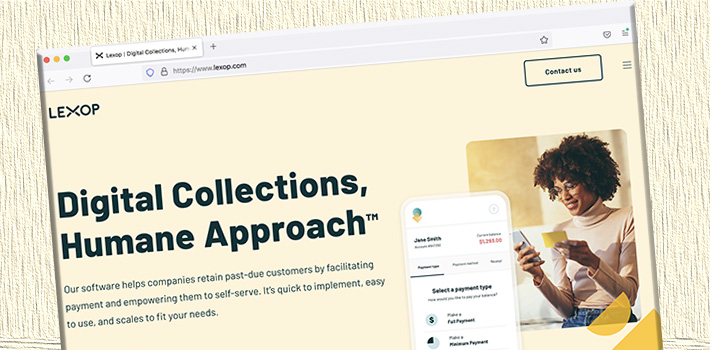 There’s an old saying about it being easy to lend money, the hard part is getting it back. The implied lesson is that lenders need to be selective with who they lend money to, lest they be overrun with defaults. But perhaps the hard part is not entirely about whether or not the lender lends to the right borrowers but also about implementing a system that makes getting the money back from the people they believe are good candidates in a frictionless manner. Because more often than not, failing to make a payment is not actually caused by a shortage of funds.
“Two thirds [of the time it’s] non-monetary related reasons,” said Michael Pupil, VP of Sales at Lexop, to AltFinanceDaily, “So like credit cards expiring, accounts switching over or they haven’t switched it into the right account, or the PAP [Pre-authorized Payment] expires, a wrong email address or a wrong mailing address, because they move; A ton of different reasons.”
For a company founded in 2016 and doing business throughout the US and Canada, this statistic was an ‘ah-ha’ moment to Lexop. Lexop’s goal is to improve the past-due payment process for lenders or any business that bills its customers. To do this, it communicates with customers by email and text message and provides a frictionless pathway to payment.
“We are payment gateway agnostic,” said Pupil, “and I think that’s the first place to start. Because how an organization collects those funds today doesn’t change. And I think that’s important from a stability and an ease of use standpoint for each customer that we work with.”
It’s also a white-label system so customers would never know that Lexop was involved in the process. There’s no phone call from a collections department or scary letter in the mail.
“The most important mission for Lexop, when we work with our customers, is to never make a customer’s customer feel like they are delinquent or late or ostracized like that, that emotional feeling of being late on a bill, if we can reduce that by a discreet easy tool to just kind of let it flow the way that they want when they want on the device that they want, I think they will appreciate that offer from their lender,” Pupil said.
It might seem intuitive, fine tuning the process for past-due customers to make payments, but Pupil shared that he’s seen a lot of tech and fintech players over the last decade focus the bulk of their efforts on the frontend of the user experience, to improve the application process or to make a loan in the most efficient way possible.
“That gap is again, is on the backend,” he said. “And when you say you’re investing all this money on developing security for an app or 3d technology or meeting customers in the metaverse and then you send a piece of paper to collect on the money, like it just doesn’t make sense. And there’s a gap there.”
Presumably, Lexop’s customers would already have some kind of process in place for borrowers that are past-due and so Lexop focuses on improving the outcomes for them in a manner consistent with their existing brand experiences.
“There is an easier, better way of just coordinating the technology stack as a whole to align the experience that you’re setting at the beginning of the customer journey to also include the backend and the continued management of that journey for the client,” Pupil said.
Finance Isn’t the Only Thing Being Embedded, This ‘Embedded Insurance Technology’ Company is Genius
September 22, 2022 Ever notice the check box to protect a flight? That’s Cover Genius! The New York-headquartered insurtech company is embedding insurance by providing protection directly to the user of a platform. This can be done at sign-up, checkout, or wherever the offer seems relevant to the user. Alex Sklar, VP of Strategic Partnerships, describes the process in numerous examples such as adding rental protection at the moment you’re paying a security deposit, adding car insurance at the time you’re buying your car, or adding any type of commercial insurance lines at the moments when you’re scaling up your business.
“And so, the new way of doing things when we think about embedded insurance, is customers get customized protection directly from their favorite apps, platforms and brands, at the same time that the major life events or transaction is happening,” said Sklar.
Their direct customers range from many well-known digital companies in the BNPL market as well as retail, travel, and bank partners. They work in a B2B2C and B2B2B fashion, internationally, not just in the U.S.
“So, we’re protecting the end use customers of our partners,” said Sklar. “You know, some of those partners are the Buy Now Pay Later, Zip, into Intuit QuickBooks, eBay Wayfair, Ryanair for booking holdings. So really, for us, we take an insurance agnostic approach. And it’s really a question of being able to pair that protection at the right moment when it’s relevant.”
With many events or natural disasters that could potentially put businesses out of business, Cover Genius ensures customers that they are protected. And for retail customers they offer product protection and product warranty.
 “That’s where that being able to have that protection at that moment removes the trepidation from the customer making the purchase knowing that the product will be protected,” said Sklar. “So, there’s all different types of ways that we actually work with our partners to protect their end customers.”
Like any company, there’s always challenges to be faced, especially when introducing new ways to do things. And in the insurance industry there are rules and regulations to be complied with even when attempting to deliver it in a more efficient way.
“I think that there’s also, just in general, anytime you’re taking on a large legacy industry, you’re always going to have a little bit of challenges you know, of showing people that there are new ways to do things,” said Sklar. “But I think the size and breadth of the partners we work with show that we’re able to overcome these challenges.”
Finding more ways for their end users to add protection to purchases, Cover Genius recently launched a collaboration with Zip to allow customers to protect their purchase at checkout. They will also provide transaction monitoring that monitors the transactions recently made for the items post-purchase.
“So overall, the future will give Zip Pay and Zip Money customers the ability to add protection to their Zip purchases, either during checkout or after checkout on select purchases, making it an affordable and timely alternative,” said Sklar.
Nuula, Still in the Business Lending Game, Lays Groundwork for Larger Ecosystem
December 29, 2021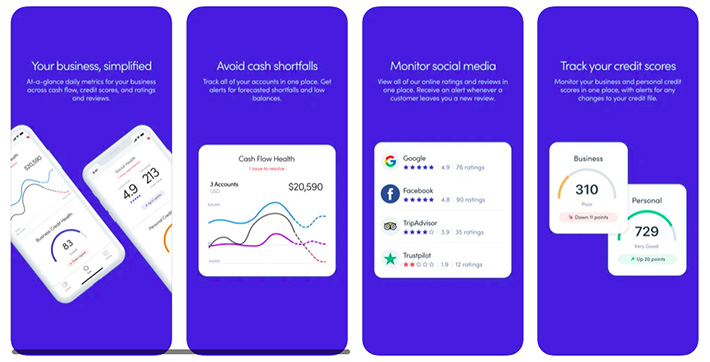 Nuula, formerly known as BFS Capital, has 5,000 merchants on a waitlist to access a line of credit after just four months of its application process being made available.
But there’s more.
“Nuula is built to not only deliver our own financial products, but it’s developed to help us provision and deploy third party financial products that come from our ecosystem,” said Mark Ruddock, Nuula’s CEO. “So what we’re trying to do here is not really be a broker, but we will carefully curate products.”
“That could be larger, longer loans from one partner, it could be insurance from another partner, it could be entrepreneur wealth management from a third partner,” he continued.
“So we bring those partners onto the platform, and then we expose their functionality within the app, in a way that’s consistent with all the other tools in the app. So yes, there is room for third party lenders.”
Ruddock spoke about how as of now, Nuula’s infrastructure only offers opportunities to those interested in directly funding businesses. The company profits via revenue sharing when businesses are provided with capital from a third party funder on the platform.
Despite not being available yet, he hinted at possibly incorporating broker-esque products as the app’s financial product suite grows.
“Today, we don’t see a near term role for brokers on the app, because we’re not really trying to create a marketplace of a multitude of products, we’re really trying to curate things very, very carefully,” said Ruddock. “However that’s not to say say that we will not over time provide the ability for the more digital brokers or intermediaries to play a role as we seek to broaden the portfolio of tools that we offer.”
“I would say no to brokers in the sense that we really don’t have a compelling offer for them at the moment, but yes to other financial services providers.”
Ruddock described how Nuula is serving a niche customer base, a tech-centric merchant who is looking for an easy-to-use mobile software that can manage their businesses’ X’s and O’s. Not only is this type of merchant underserved and beginning to substantiate in numbers according to Ruddock, but they are extremely eager for access to capital.
“It’s a fundamental change in the way underwriting has been done, away from kind of a rearward looking model, towards a real-time forward looking model, and that’s what we believe is going to be required to unlock capital to this new generation of businesses.”
“[Nuula] reimagines underwriting in a way that says ‘don’t just look at the last six months of bank statements’,” Ruddock said. “[We] look on not only of the day of lending, but the lifetime of your relationship, and how those businesses are recovering, growing, and thriving.”
He spoke about how with real-time data being accessible through Nuula, businesses that are building their creditworthiness can have a mobile reference point for the data that they need to see their real-time financial state, while simultaneously giving lenders a live picture of the businesses’ books.
“So even if a business is not strong enough for credit today, it might be in three months, and we can go watch your progression through this period and unlock the capital when the time is right, and then if that business grows out of the pandemic and recovers and is stronger, we’re going to be able to a broader and richer portfolio of credit.”
Although their target customer seems to be a digitally native merchant, Ruddock says that Nuula’s onboarding process is designed to be simple enough for a merchant who may not be as familiar with fintech.
“I’m a fifty-plus year-old CEO of a fintech company, and I would say I’m as digitally savvy as a twenty year-old, so it isn’t really about age anymore,” said Ruddock. “It’s by the way which [merchants] have embraced technology.”
“What we’ve done with Nuula is we’ve tried to make this product intuitive and simple for a first time app user and we’ve tried to help these folks get access to the data that now is sitting in a multitude of systems. While we believe people who have grown up in an app-centric world are going to be amongst the first adopters, we’re trying to make this product accessible for the fifty year-old restaurant owner too.”
Nuula plans on expanding their data harnessing tools with other fintechs early next year. “Over the next two weeks, we will actually unlock the ability for [merchant] sales data from Shopify or Square,” said Ruddock.
QuickBooks Capital’s Small Business Lending Originations Surge
December 13, 2021 QuickBooks Capital, part of Intuit, originated $125M worth of small business loans in the fiscal quarter ending October 31, 2021.
For context, the company originated $232M across the entire fiscal year of 2021 ending on July 31st and $243M for the entire fiscal year of 2020. The company’s best fiscal year so far was 2019 when it originated $316M.
The company is now on track to surpass all previous years.
During the earnings call, CEO Sasan Goodarzi said that one of the company’s big bets is “to become the center of small business growth by helping our customers get customers, get paid fast, manage capital, pay employees with confidence and grow in an omnichannel world.”
“60% of small businesses struggle with cash flow and we are continuing to innovate to create solutions for customers to overcome this challenge,” Goodarzi said.
Intuit recently acquired Mailchimp and acquired Credit Karma last year.
Robinhood Posts Rough Q3
October 26, 2021 Robinhood revealed a steep $1.3B loss on Tuesday. Thought it was highly attributable to share-based compensation, several areas of their growth went into reverse. Transaction-based revenues, for example, were only $267M in Q3, a sharp drop from the $451M in Q2.
That’s not all. Assets Under Custody, Average Revenue Per User, and Monthly Active Users all shrank as well.
“This quarter was about developing more products and services for our customers, including crypto wallets,” said Vlad Tenev, CEO and Co-Founder of Robinhood Markets, in the company’s official statement. “More than one million people have joined our crypto wallets waitlist to date. With 24/7 live phone support, we believe that Robinhood is becoming the most trusted and intuitive platform for retail and crypto investors. And looking ahead, we’re committed to delivering tax-advantaged retirement accounts to help everyone invest for the long term.”