
Palladium Equity Partners Announces Investment in Fora Financial, a Provider of Working Capital Financing to Small- and Medium-Sized Businesses
October 14, 2015 Palladium Equity Partners, LLC (along with its affiliates, “Palladium”), a private investment firm with over $2.0 billion in assets under management, today announced that one of its affiliates has made a significant investment in partnership with the co-founders and management of Fora Financial LLC (together with its affiliates, “Fora Financial” or the “Company”), a technology-enabled provider of financing to small- and medium-sized businesses nationwide.
Founded in 2008, Fora Financial offers loans and merchant cash advances of between $5,000 and $500,000 to small businesses throughout the country. Since inception, the Company has provided total funding of nearly $400 million to more than 8,000 businesses. It has experienced rapid growth and recently was ranked among the fastest-growing companies in America in the Inc. 5000 list. Fora Financial recently expanded its New York City offices to accommodate its growing roster of over 100 employees as it bolsters key capabilities in analytics and technology and aims to continue to execute on its strategy of delivering capital in a timely and cost effective way.
Fora Financial will continue to be led by its two founders, CEO Jared Feldman and President Dan Smith.
“We believe Fora Financial has developed a highly attractive credit offering and technology platform that have made it a valued provider of financing to thousands of small businesses seeking capital,” said Justin Green, a Principal of Palladium. “My partners and I look forward to supporting Jared, Dan and the Fora Financial management team to continue the strong growth trajectory of the Company, including through new partnerships, expanded product offerings and increased lending capabilities.”
Feldman said, “We are excited to partner with Palladium, a firm with extensive financial services expertise and many years of experience supporting founder-owned businesses.”
Smith added, “With this partnership in place, we are well-capitalized to continue offering the small business community the custom, innovative funding solutions that have enabled us to build this Company into a market leader.”
Terms of the investment were not disclosed. Fora Financial was advised by Raymond James & Associates.
About Fora Financial
Fora Financial offers flexible, working capital solutions to small businesses in need of financing to sustain or grow their enterprise. The Manhattan-based company places a high value on trust and transparency and provides businesses with quick, customized financial solutions utilizing its state-of-the-art technology platforms. Founded in June 2008, Fora Financial has more than 100 employees who have provided nearly $400 million to over 8,000 customers. For additional information, please visit www.forafinancial.com, call (855) 515-2413 or follow Fora Financial on Facebook at facebook.com/Fora.Financial.
About Palladium Equity Partners, LLC
Palladium is a middle market private equity firm with over $2.0 billion in assets under management. The firm seeks to acquire and grow companies in partnership with founders and experienced management teams by providing capital, strategic guidance and operational oversight. Since its founding in 1997, Palladium has invested over $1.5 billion of capital in more than 25 platform investments and over 50 add-on acquisitions. The firm focuses primarily on buyout equity investments in the range of $50 million to $150 million. The principals of the firm have significant experience in financial services, business services, food, healthcare, industrial and media businesses, with a special focus on companies they believe will benefit from the growth in the U.S. Hispanic population. Palladium is based in New York City. For more information, visit www.palladiumequity.com.
For media inquiries, please contact:
Todd Fogarty or Peter Hill of Kekst and Company
212-521-4800
todd-fogarty@kekst.com or peter-hill@kekst.com
Federal Reserve Governor Lael Brainard Speaks About Alternative Lenders
October 4, 2015Federal Reserve Governor Lael Brainard gave the September 30th closing keynote address at the Community Banking in the 21st Century 2015 Conference and here are some of the highlights of what she had to say about online lenders and merchant cash advances:
The data that are available suggest that the various types of online alternative lenders have captured a small but rapidly growing share of lending since the financial crisis. In aggregate, the outstanding portfolio balances of these lenders have doubled every year since the mid-2000s. It is estimated that online alternative lenders originated $12 billion in 2014, with unsecured consumer loans representing $7 billion and small business loans accounting for approximately $5 billion.13 While this amount represents only a small fraction of U.S. unsecured consumer and small business lending overall, the rate of growth is notable.
Although rates vary by platform and borrower characteristics, when taking into account origination fees and repayment periods, the average annual cost of borrowing, or APR, associated with loans and credit products offered by online alternative small business lenders tend to be higher than those associated with traditional bank products. Reports suggest that some borrowers are willing to pay a higher price in exchange for an easy application process, a quick decision, and rapid availability of funds.
While some see online alternative lenders as a disruptive threat to traditional lenders, banks increasingly are finding ways to partner with online alternative lenders, including through loan purchases and referral agreements. Loan purchases by community banks of loans originated by online alternative lenders have been focused on unsecured consumer debt. As the percentage of unsecured consumer debt outstanding held by community banks has been declining in recent years, several banks have partnered with online alternative lenders to grow and diversify their portfolios of unsecured consumer debt.
In contrast to the consumer loan activity, the small business partnerships that have developed so far are largely fee-based referral partnerships. In these partnerships, banks refer to online alternative lenders some of their small business customers who are usually seeking loan amounts that the referring banks may see as too costly to underwrite and service, particularly in the size range below $100,000.
Across the Federal Reserve System, we are actively following developments in the alternative online lending space and have engaged with several alternative online lenders over the past few years to learn more about the industry, the technology, and the business models as well as engaging with bankers to understand how these developments are affecting their markets.Most recently, several alternative lenders have participated in events where we have joined with community development finance experts to discuss ways to adopt platform lending technology to better serve low- and moderate-income borrowers and small business owners.
We want to better understand the opportunities presented by technological advances that may bring new data to bear and help lenders make available credit to a more diverse set of small business borrowers. In some cases, partnerships between community banks and online platforms may help expand access to credit for consumers and small businesses, and help banks retain and grow their customer base.
As regulators, we also want to help the various stakeholders anticipate and carefully manage the associated risks. Of course, third-party and vendor risks are factors that banks should always take into account when introducing new products and services. Taking the time to identify and mitigate risks is a prudent step that banks can take to avoid unintended consequences when entering into partnership agreements with alternative online lenders. In addition, banks should consider whether the partnerships provide new opportunities to diversify their portfolios if they are purchasing loans, and whether the partnerships provide opportunities to offer new products that are a good strategic fit for their bank and their customers.
It is also important for banks to carefully consider regulatory compliance. When purchasing consumer loans originated by online alternative lenders, banks should examine whether fair lending or unfair or deceptive acts or practices issues result from the origination and underwriting methods used by online alternative lenders. To the extent that the underlying algorithms used for credit decisionmaking use nontraditional data sources, it will be important to ensure that this does not lead to disparate treatment or have a disparate impact on a prohibited basis.
Aside from these risks, banks should consider a variety of others, including the implications of credit risk stemming from the purchase of loans and reputational risk if referrals to online alternative lending platforms end badly.
The risks I have described so far have primarily been from the perspective of banks considering partnerships with online alternative lenders. Another important set of concerns are focused on the small business borrowers who may be considering online alternative loans. Some have raised concerns about the high APRs associated with some online alternative lending products. Others have raised concerns about the risk that some small business borrowers may have difficulty fully understanding the terms of the various loan products or the risk of becoming trapped in layered debt that poses risks to the survival of their businesses. Some industry participants have recently proposed that online lenders follow a voluntary set of guidelines designed to standardize best practices and mitigate these risks. It is too soon to determine whether such efforts of industry participants to self-police will be sufficient. Even with these efforts, some have suggested a need for regulators to take a more active role in defining and enforcing standards that apply more broadly in this sector.
Yellowstone Capital and Green Capital Join Family of Companies Under New Brand, Fundry
October 1, 2015AltFinanceDaily has confirmed that Yellowstone Capital has restructured through the formation of a new parent company, Fundry. Green Capital is also another subsidiary under the Fundry umbrella.
With Yellow and Green together, the business financing industry just got a little bit more colorful.
Yellowstone’s CEO Isaac Stern and President Jeff Reece have become Fundry’s CEO and President respectively.

“We have a solid foundation and a very successful business model,” Stern said. “But to maintain a position of leadership in this industry, we need to grow and we are evolving.”
Yellowstone Capital has been the subject of several news stories lately, most recently by being approved for up to $3.3 million in tax credits to move their business from New York to New Jersey.
In April, it was revealed that Stern had led a management buyout backed by a private family office that made Stern the only remaining co-founder to retain an equity stake. And in June, the industry learned that the company had originated more than $1.1 billion in deal flow since inception, ranking them high above many of their more well-known peers.
The funding leaderboard which debuted in AltFinanceDaily’s May/June magazine issue and was broadcast to attendees at the 2nd Annual AltLend conference in New York City, was in many ways a turning point for the industry.
“I would think there are many more branded funders that would have made the list but didn’t,” said Arty Bujan, Managing Member of Cardinal Equity. “Most shocking is Paypal’s $500 million.”
Richard Battista, Vice president of Business Development at theLendster commented on the eye-opening figures of the industry’s largest players in general. “This is a reflection of the explosive growth that the industry is experiencing at the present time,” Battista said. There is a huge demand for funding from small businesses, who have consistently expressed interest in trying out new funding options.”
Perhaps the story of Yellowstone Capital’s rise can best be explained by Grant McCracken’s Five Stages of Disruption Denial. McCracken, who is a Canadian anthropologist and author, known for his books about culture and commerce, explained the theory behind these five stages in the Harvard Business Review in April, 2013. They are Confusion, Repudiation, Shaming, Acceptance, and Forgetting.
Yellowstone Capital confused their competitors when they were first founded in 2009 by substituting split-processing payments for ACH to high-risk merchants. Very few people within the industry understood why they were using the ACH network over relationships with credit card processors that everyone else relied on.
That of course led to the repudiation stage where people thought they were crazy and that their model wouldn’t work and segued into shaming where the concept of providing working capital to high-risk businesses was perceived to be something that no one should do.
Through it all, Stern and his team believed many of America’s small businesses were still being overlooked and underserved despite non-bank financing and online lending growing by leaps and bounds.
“At what point do we stop helping small business?” Stern said to AltFinanceDaily in response to an inquiry about whether or not some businesses are simply unfundable.
Today, we are in between the Acceptance and Forgetting stages. The ACH debit methodology has almost entirely replaced split-processing and dozens of funding providers claim to specialize in high-risk deals, the very same kind that the industry years ago didn’t understand and resisted.
Yellowstone Capital will serve as Fundry’s ISO relationship arm while Green Capital will serve merchants directly.
“2015 is our biggest year yet, but we really see it as a year of block and tackle work to set up for what needs to be done in 2016 and beyond,” said company president Jeff Reece.
“Yellowstone’s success will simply become the baseline for what Fundry is about to do.”
Coalition for Responsible Business Finance Submitted RFI on Behalf of Both Funders and Small Businesses
October 1, 2015 If you haven’t heard of the Coalition for Responsible Business Finance (not to be confused with the Responsible Business Lending Coalition), I recommend paying attention to it.
“The CRBF is a group of businesses and service providers that advocate for the value of alternative financing opportunities for small businesses,” they said in their response to the Treasury RFI. “We created the coalition to help educate Congress, Treasury, and other federal departments and agencies on how technology and innovation are providing small businesses access to capital that is necessary for growth.” Simply put, this coalition allows lenders, funders, and small businesses to have a unified voice to educate policymakers.
And yes, merchant cash advance companies are welcome, though representation is very diverse.
“Small business owners value choice and speed when looking at alternative finance and lending options,” the CRBF says in their response. “Any federal approach needs to balance new regulatory requirements with the impact on the alternative finance and lending sector and on the sector’s small business customers.”
The overall message in the submission is that regulators need not feel shy about opening a dialogue with those most likely to be affected by any change in policy.
For those reasons, CRBF recommends that Treasury create an alternative finance and lending interagency working group that will meet on a quarterly basis. We suggest that twice a year the working group meet as a group comprised solely of governmental personnel, with officials from SEC, SBA, FTC, Federal Reserve, OCC, and other relevant agencies. And, we suggest that twice a year the working group meet with business leaders from across the alternative finance and business lending spectrum including representatives from lead generators, aggregators, merchant cash advance professionals, peer-to-peer lenders, risk analytics services, direct lenders, marketplace lenders, and others. Meeting with different groups of businesses throughout the life span of an interagency working group will allow Treasury to keep up with a rapidly evolving business sector and will help ensure that any federal approach is sensitive to its impact on the sector and on its small business customers.
CRBF is committed to educate federal authorities on how alternative lending and finance benefits small business and the economy. We would certainly help Treasury establish any working group that serves the same purpose.
As I am currently an advisory board member of this coalition, I encourage you to consider the organization’s mission and purpose by visiting the website at http://www.responsiblefinance.com. If you’d like to learn more or consider support for it, email me at sean@debanked.com.
What The BFS Capital IPO Announcement Means for the Industry
September 29, 2015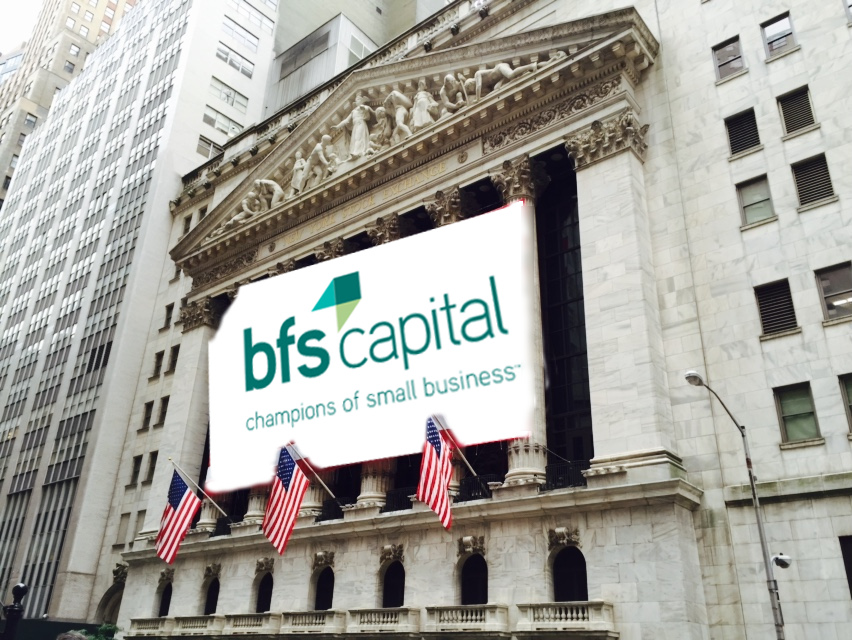 Under the Jumpstart Our Business Startups (JOBS) Act, “an emerging growth company may confidentially submit to the Commission a draft registration statement for confidential, non-public review by the Commission staff prior to public filing.”
According to the New Yorker, this process “allows companies that are thinking about going public to test the waters—they can gauge investor reaction, get feedback from the S.E.C. on their filings, and so on—before deciding if they want to go ahead with an I.P.O. If a company goes through that process publicly, and then decides to abandon the offering, its reputation gets damaged, even though it often makes sense for a company not to go public. Do it privately, and no one gets hurt.”
That’s what makes BFS Capital’s announcement (formerly Business Financial Services) that they had filed a confidential draft registration so bold. Companies normally choose this method if they don’t want anyone to know what they’re up to. But BFS is a different funder than the ones that came before them. OnDeck submitted their original draft registration confidentially for example and actually tried to keep it a secret.
“The initial public offering is expected to commence after the SEC completes its review process, subject to market and other conditions,” states BFS’s September 25th release.
The intent to go public follows a recent rebrand and the announcement that they had crossed $1 billion in funding since inception.
The most shocking part about a BFS IPO is that it’s not a CAN Capital IPO. While CAN is both older and larger, the industry has heard no word about a CAN Capital IPO since rumors leaked in Bloomberg almost an entire year ago. Back on November 20th, 2014, it was reported that the “New York-based company could be worth as much as $2 billion in the share sale.”
There was kind of a universal expectation that CAN Capital would go public immediately after OnDeck and Lending Club. Some insiders have pointed to OnDeck’s disappointing reception and performance as the reason CAN has delayed moving forward. OnDeck is currently trading at less than 50% of its IPO price and is facing a lawsuit from its own shareholders over it.
Others have said that CAN Capital isn’t waiting for anything because the company doesn’t actually need to go public. Long reported to be profitable and self-sustaining, opening themselves up to the volatility and fickleness of the public markets may not be worth the additional capital.
And still more have pondered if CAN Capital has what it takes to excite investors. Unlike some of the brand new tech startups that dominate the headlines, CAN has been operating since 1998, a time when only 42.1% of American households had computers and only 26.2% had Internet access. Of course the company has evolved and these days is as tech-equipped as their young brethren but a 17-year old lender may not be as easy to sell in a market obsessed with companies such as Uber, Snapchat and Airbnb.
BFS Capital was founded 13 years ago in 2002 so they’re not exactly new either. And their CEO, Marc Glazer, has led the company since its beginning.
BFS has been expanding however both here in the U.S. and abroad. In the U.K., they operate under the name Boost Capital. Meanwhile, independent financial brokerage firms such as Entrust Merchant Solutions are being acquired and rolled up into their organization.
What makes BFS different from OnDeck and Lending Club is that BFS also does merchant cash advances, not just loans. The only other publicly traded company that is significantly involved in merchant cash advances is Enova International and that’s only due to their recent acquisition of The Business Backer. The investor uncertainty surrounding lenders and marketplace platforms might not carry over to a company that got its start by purchasing future credit card processing receivables 13 years ago.
It would be safe to say that there’s a whole group of industry insiders who feel that Lending Club is a poor representative sample of the tech-enabled business financing space and that OnDeck’s unique model prejudices investors into thinking all lenders are like them. A BFS Capital IPO could in effect set the record straight for the industry and revive the IPO plans of their peers and competitors.
It might actually take a BFS IPO for us to finally see a CAN IPO, not that there aren’t plenty of other quality candidates right behind them.
What would a BFS Capital IPO mean for the industry? Perhaps a chance at redemption. There’s a lot of great things happening in this industry and investors ought to know about them.
PSC Board of Directors Appoints New CEO
September 29, 2015 PSC, a technology leader in providing front, middle and back office software platforms for the Merchant Cash Advance Industry, announced today that their Board of Directors has appointed H. Russell Heiser Jr. to the position of CEO. Mr. Heiser has extensive experience advising family offices in venture and private equity investments in companies across a variety of sectors. In many cases, he ended up in operational roles within these companies. In addition, Mr. Heiser was an investment banker at both UBS Investment Bank and Bear Stearns after receiving his MBA from Columbia Business School.
In the second quarter of 2015, Mr. Heiser led an investment group that obtained a stake in PSC. In tandem with
the equity investment, PSC received a significant debt commitment to provide funding to the MCA companies
utilizing the PSC platform.
“The PSC platform, with its seamless deal management software and in-depth reporting, was already an effective vehicle for our members to launch and grow a Merchant Cash Advance business,” Heiser said. “By layering in additional functionality and access to growth capital for its members, the PSC platform provides even more value to its members.”
“PSC conducted an exhaustive search to find the right individual to deliver our new products and manage our growth,” PSC’s Vice President of Operations Andrew Ragavanis stated. “Russ has the full support of the executive management team, as well as, the Board of Directors and I am excited to see PSC continue to grow under his leadership.”
PSC is a full-service solutions provider specializing in the Merchant Cash Advance Industry. The Company provides the support staff and MCA software to facilitate direct funding from start to finish via a secure platform, a syndication platform across its membership, impartial deal provisioning of opportunities directed to the PSC platform and growth financing. Our staff of seasoned professionals has significant experience throughout the alternative financing sector. The Company’s information is available on its website: http://www.pscny.us or through salessupport@pscny.us.
Business Financial Services Rebrands as BFS Capital
September 21, 2015 CORAL SPRINGS, FL, September 21, 2015 – Business Financial Services, Inc., a leading technology-enabled small business financing platform, announced today that it has rebranded as BFS Capital and launched a new website, www.bfscapital.com. As part of this rebranding, the company has also unified its North American business affiliates.
A champion of small business, BFS Capital provides flexible, timely solutions for customers without access to traditional financing. The new BFS brand conveys a sustained commitment to empowering the growth and success of these businesses. Today, BFS Capital offers loans and merchant cash advances – up to $2 million – to small businesses across 400 industries in all 50 states, the United Kingdom and Canada through its extensive network of independent sales organizations, as well as its direct sales and online channels.
The rebranding reflects the company’s deep experience serving the diverse financing needs of small businesses, its commitment to innovative products and technology, and its expanded market opportunities. “As we have grown and acquired new partners over the years, we saw the need to unify our businesses under a single brand representative of our rich history and bright future,” said Marc Glazer, CEO and co-founder.
BFS’s affiliates, Entrust Merchant Solutions, GBR Funding and Premium Capital Group, are also known as BFS Capital, which now has more than 275 employees. The former Entrust team has become the BFS direct sales group, led by Ilya Fridman as Senior Vice President. UK affiliate, Boost Capital, will retain its name.
About BFS Capital
BFS Capital champions the long-term growth and prosperity of small businesses by providing timely, flexible financing solutions. BFS’s leading small business financing platform leverages customized underwriting and proprietary algorithms to fund up to $2 million for businesses in all 50 states and Canada, and through its affiliate, Boost Capital, in the United Kingdom. Since 2002, BFS has provided more than $1 billion in total financing to small businesses across more than 400 industries. Headquartered in South Florida with additional offices in New York, California and Georgia, BFS is an accredited BBB company with an A+ rating. For more information, please visit www.bfscapital.com.
Contact
Abby Trexler, Peppercomm
bfs@peppercomm.com
Business Financial Services Joins The Billion Dollar Club
July 29, 2015 Yet another small business financing company has surpassed a historic milestone. Representatives for Coral Springs, FL-based Business Financial Services, Inc. confirmed that they have funded $1 Billion since inception. BFS, as they’re known in the industry, was founded in 2002, though nearly half of their volume was funded in just the past two years.
AltFinanceDaily had recently speculated that BFS had funded somewhere between $700 million and $1.2 billion in their lifetime. They are now one of seven companies confirmed to have reached the billion dollar threshold.
New York City-based Merchant Cash and Capital announced hitting the billion dollar mark only four months ago.
“This milestone is indicative of how much demand there is for working capital among small businesses, the backbone of the U.S. economy,” said Marc Glazer, CEO and co-founder of BFS.
BFS/Boost Capital CEO Marc Glazer on Bloomberg London in 2013Much like Capify, a newly-formed lending conglomerate with operations in multiple countries, BFS has a presence in Canada and the United Kingdom. In the U.K., where they operate as Boost Capital, they’ve got an active relationship with the press.
Norman Carson, director of business development for Boost Capital, recently told The Telegraph, “Smaller companies in Britain have been told for too long that they’re inadequate in some way, operating in too risky a field, lacking in assets, or trading in the wrong way.”
Several commercial finance brokers put BFS in the same league as OnDeck and CAN Capital competitively. Referring to BFS, Arty Bujan of New York City-based Cardinal Equity told AltFinanceDaily, “I think they’re great and serve a specific sector of our industry for merchants that need more money and are willing to prove they’re worthy of it.” He added that the documentation requirements at least in his experience can be a little bit more stringent than for competing companies that promise to fund almost immediately.
And Chad Otar, a Managing Partner of Excel Capital Management, also of New York City, said, “Business Financial Services is a great addition to have in your pocket for the longer deals.”
 In April of this year, BFS extended its credit line with its bank group led by Wells Fargo Bank, N.A. “We are excited to reach this milestone, as it is fueled by our ability to meet the financing needs of so many businesses of different sizes across more than 400 industries,” said Glazer.
BFS is the only billion-dollar-plus funder on the AltFinanceDaily leaderboard to be based outside of New York City or Silicon Valley. South Florida is widely considered to be one of the top three hubs for tech-based lending. This milestone for BFS is a validation of that.
“With a high percentage of our customers renewing with us, and doing so at higher amounts, we are well-positioned for continued growth,” Glazer said.