
LendItFintech In Photos and Sound Bites
April 10, 2018
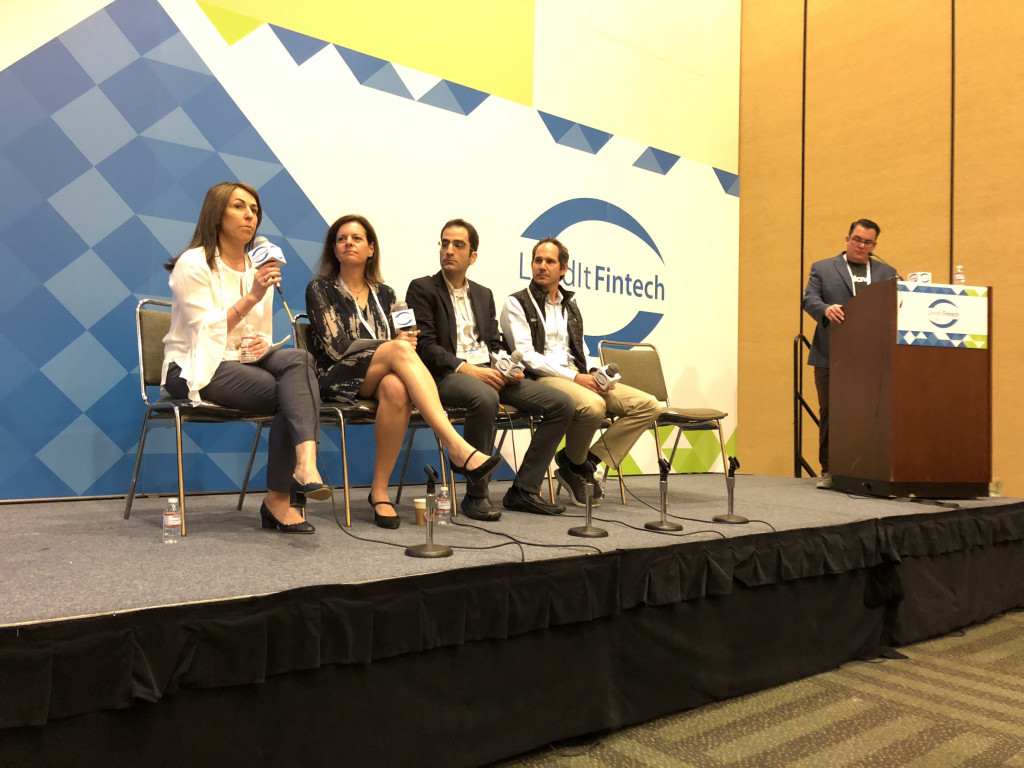
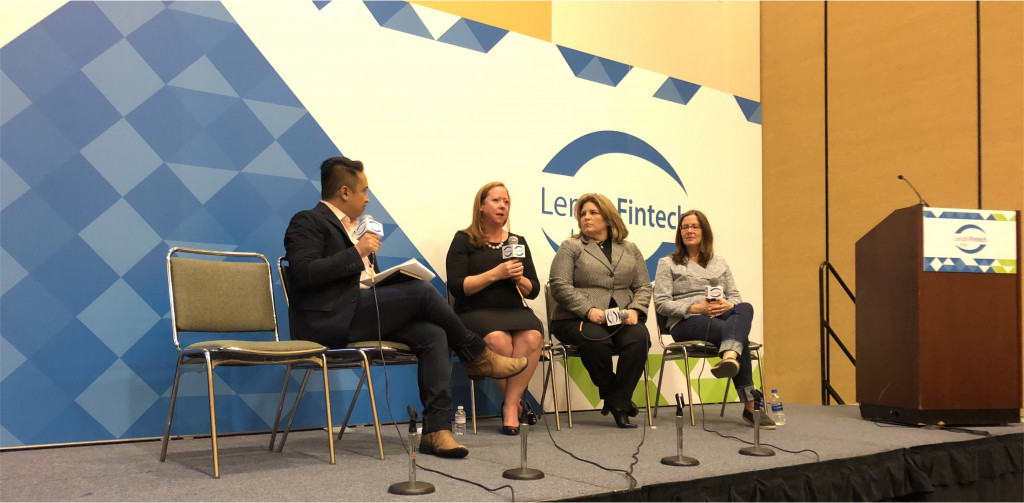
when speaking about the increase in mortality rate for people who have faced major financial distress

when interviewed on stage by Bloomberg’s Selina Wang

when interviewed by Jo Ann Barefoot

When asked by Bloomberg Technology reporter Emily Chang if Goldman Sachs would be considered a competitor

when interviewed by Lendio’s Brock Blake

When asked who will win the race for marketshare
When asked if it’s harder to underwrite loans above $50,000
talks business at the company booth

Below: Ocrolus account executive John Lowenthal stands in front of the company booth





The Top Small Business Funders By Revenue
October 23, 2017The below chart ranks several companies in the non-bank small business financing space by revenue over the last 5 years. The data is primarily drawn from reports submitted to the Inc. 5000 list, public earnings statements, or published media reports. It is not comprehensive. Companies for which no data is publicly available are excluded.
| Company | 2016 | 2015 | 2014 | 2013 | 2012 |
| Square1 | $1,708,721,000 | $1,267,118,000 | $850,192,000 | $552,433,000 | $203,449,000 |
| OnDeck2 | $291,300,000 | $254,700,000 | $158,100,000 | $65,200,000 | $25,600,000 |
| Kabbage3 | $171,784,000 | $97,461,712 | $40,193,000 | ||
| Swift Capital4 | $88,600,000 | $51,400,000 | $27,540,900 | $11,703,500 | |
| National Funding | $75,693,096 | $59,075,878 | $39,048,959 | $26,707,000 | $18,643,813 |
| Reliant Funding5 | $51,946,472 | $11,294,044 | $9,723,924 | $5,968,009 | $2,096,324 |
| Fora Financial6 | $41,590,720 | $33,974,000 | $26,932,581 | $18,418,300 | |
| Forward Financing | $28,305,078 | ||||
| Gibraltar Business Capital | $15,984,688 | ||||
| Tax Guard | $9,886,365 | $8,197,755 | $5,142,739 | $4,354,787 | |
| United Capital Source | $8,465,260 | $3,917,193 | |||
| Blue Bridge Financial | $6,569,714 | $5,470,564 | |||
| Lighter Capital | $6,364,417 | $4,364,907 | |||
| Fast Capital 360 | $6,264,924 | ||||
| US Business Funding | $5,794,936 | ||||
| Cashbloom | $5,404,123 | $4,804,112 | $3,941,819 | $3,823,893 | $2,555,140 |
| Fund&Grow | $4,082,130 | ||||
| Nav | $2,663,344 | ||||
| Priority Funding Solutions | $2,599,931 | ||||
| StreetShares | $647,119 | $239,593 | |||
| CAN Capital7 | $213,402,616 | $269,852,762 | $215,503,978 | $151,606,959 | |
| Bizfi8 | $79,886,000 | $51,475,000 | $38,715,312 | ||
| Quick Bridge Funding | $48,856,909 | $44,603,626 | |||
| Funding Circle Holdings9 | $39,411,279 | $20,100,000 | $8,100,000 | ||
| Capify10 | $37,860,596 | $41,119,291 | |||
| Credibly11 | $26,265,198 | $14,603,213 | $7,013,359 | ||
| Envision Capital Group | $21,034,113 | $19,432,205 | $12,071,976 | $11,173,853 | |
| Capital Advance Solutions | $4,856,377 | ||||
| Channel Partners Capital | $2,207,927 | $4,013,608 | $3,673,990 | $2,208,488 | |
| Bankers Healthcare Group | $93,825,129 | $61,332,289 | |||
| Strada Capital | $8,765,600 | ||||
| Direct Capital | $432,780,164 | $329,350,716 | |||
| Snap Advances | $21,946,000 | ||||
| American Finance Solutions12 | $5,871,832 | $6,359,078 | |||
| The Business Backer13 | $19,593,171 | $11,205,755 | $9,615,062 |
1Square (SQ) went public in 2015
2OnDeck (ONDK) went public in 2014
3Kabbage received a $1.25B+ private market valuation in August 2017
4Swift Capital was acquired by PayPal (PYPL) in August 2017
5Reliant Funding was acquired by a PE firm in 2014
6Fora Financial was acquired by a PE firm in 2015
7CAN Capital ceased funding operations in December 2016 but resumed in July 2017
8Bizfi wound down in 2017. Credibly secured the servicing rights of their portfolio
9Funding Circle’s primary market is the UK
10Capify’s US operations were wound down in early 2017 and their operations were integrated with Strategic Funding Source. Capify’s international companies are still operating
11Credibly received a significant equity investment from a PE firm in 2015
12American Finance Solutions was acquired by Rapid Capital Funding in 2014, who was then immediately acquired by North American Bancard
13The Business Backer was acquired by Enova (ENVA) in 2015
Déjà Vu: Some Small Business Funders are Fading Away
June 20, 2017 Apparently I’m old enough to see this happening all over again. A handful of big names in the alternative small business space are faltering and many of you have asked what this means for the industry. It really doesn’t mean anything other than those who do not learn history are doomed to repeat it.
We already went through this in 2008-2009 when at least half of the funders in the merchant cash advance industry were wiped out over the course of several months. Merit Capital Advance, Fast Capital, First Funds, Summit, and Global Swift Funding were the Goliaths of their time. Those companies going out of business seemed unthinkable in principle and for what that would mean for the industry as a whole. Smaller players disappeared too, names like iFunds, Infinicap, and others for those of you who might remember.
Those companies failed. The industry continued.
While it’s easy to finger the financial crisis as the culprit for their demise, the truth, or at least the truth through the fog of war and days gone by, is a lot more relatable. Funders were undone by their dependence on a single source of capital, sloppy underwriting, defaults, rogue ISOs, a race to hit origination targets, overpaying commissions, misplaced predictions, and even stacking. If any of those things remind you of what’s happening today, well then of course there are companies failing.
One lesson from the past is that you won’t necessarily get a year or two to adjust and figure things out. It will seem like everything is great and then suddenly it’s not. No company is going to sit you down and tell you their 1-2 year going-out-of-business plan to prepare you for change. They probably don’t have any such plan, will fight to avoid it and their end may be just as much a shock to themselves as it is to everyone else.
What we’re learning again this time is that some business models just won’t pan out long term. And some business models that used to work no longer work so much today. Things like stacking are not going away. It’s not illegal and no legal precedent has been established against it. If you’re an ISO though, you may be risking a relationship or breaching your own ISO contract by helping a merchant engage in it. So it’s a slippery slope but one that has permanently disrupted the landscape.
I have heard a lot of complaints from ISOs about the supposed decay of funder loyalty, as in they feel their deals are getting swiped. Another lesson from 2008 is that in times of strain, parties are more likely to look to their contracts for guidance and if the contract says they can take your deal after a certain amount of time and they very much financially need to, they probably will do it. The whole hey, we’re friends, we wouldn’t do that kind of thing goes out the window if survival is at stake and the contract allows for certain actions. That also means that if you’re an ISO who has violated an ISO agreement before and got nothing but a shrug in the past, don’t be surprised if suddenly one day you’re put on notice of a breach and are forced to reckon with the consequences of it.
What failures in the industry may also mean is a return to a semblance of order, a return to a code. 2010-2011 was a refreshing time to be in the business with so much unhealthy competition out of the way even though approval terms were less flexible and there were fewer options to shop around for. By 2013 however, a flood of participants discovering the industry for the first time, believed that they had stumbled upon something brand new and lost were the lessons of yore. Some of them introduced lasting change, like ACH debits over merchant accounts splits. Others just replicated the cavalier tactics that had proved fatal in the previous generation, distorting a happy market equilibrium in the process.
Ultimately, the market will prevail, albeit with some new names and new faces at the top. This is the way of things. It has happened before. It will happen again. Look at the companies rising rather than those that are falling. Whatever they are doing may be the future, whether you agree with how they do business or not.
The New Normal
January 24, 2017 In March 2014, I wrote the following for DailyFunder.com: I think we are either currently in, or are fast approaching a “market bubble” in MCA. Bubbles never end well…When I see some of the business practices, offers, terms and other aspects of our business today, I am worried…assets are being overpaid for through higher than economically justified commissions …and [funders are] stretch[ing] the repayment term of the MCA or loan even further. I went on to say that this felt to me an awful lot like the subprime mortgage meltdown of 2008.
Like all good bear market prognosticators, I was a touch early in my forecast. 2014 and 2015 were continued boom years for small business alternative lenders (or “small business Alt Lender.” I don’t agree with applying the moniker “online lender” for our industry. It might be sexy, but it’s not accurate.) Loan and MCA terms got longer, loan pricing to the client dropped further, companies grew 100% year over year. And then 2016 happened.
The most shocking event for me in 2016 was the disruption at CAN Capital. They had the most data, the most experience, market dominance, and the most in-depth institutional knowledge. The granddaddy of all of us. Not far behind is the fiasco that is On Deck, the only publicly traded small business Alt Lender. In the past 12 months alone, the stock price has declined by over 40%. And that is after a roughly 50% drop in stock price in 2015. The first 9 months of 2016, driven in part because of market required changes to their business model when they could no longer profitably sell a sufficient volume of loan originations, they have a GAAP net loss of almost $50 million. There have also been a number of other lesser but still high profile failures, shutdowns, and exits from the industry in the past several months alone.
So what is driving this abnormally high rate of failure in the Alt Lending industry? Is it the “New Normal?” And what do I think lies ahead in 2017 and beyond? Before revealing my personal crystal ball again, I will share an anecdote from earlier in my business career.
I was the CFO (and eventually CEO) of a profitable, long-tenured family owned construction company. We had a working capital credit line from a major bank secured by a first position lien on our accounts receivable. The credit line was also personally guaranteed. We borrowed from the credit line for three reasons. For cash flow, when our receivables paid more slowly than expected; we had tax payments due; or we purchased a large piece of equipment. We always paid back the draw on the credit line as quickly as we could, to keep interests costs low, to impose cash management discipline, and to create future availability on the line once repaid.
 The credit line was for one year. It was always renewed. But I was frustrated to have to go through an annual underwrite process with our bank, despite the personal guarantee, consistent profitability, and that we always paid back our draw on the credit line. Our banker (patiently) explained to me that economic cycles changed, and medium sized businesses – we had about 200 employees – suffered ups and downs and sometimes became financially distressed and even went out of business. The bank wanted to protect their position and not overextend the term of the credit line.
When I started RapidAdvance in 2005, I drew on my personal knowledge and previous experience as a borrower. The products we offered made sense based on our customer profile which was main street small business. We needed to protect against economic cycles and the high rate of small business failure. The maximum term offered by any company in 2005 was 8 months, at that time only for an advance product (future purchase and sale of credit card receivables), not a loan. Payment was received daily through a credit card split, thus allowing for a future capital advance (renewal) within about five or six months as the open advance was paid down. Cash advances could be used for taxes, equipment purchases, or business expansion. The price of the product reflected the risk of the credit offered.
What many in the small business Alt Lending industry seem to have forgotten, or never learned, is that our business is fundamentally a subprime credit industry. We are either lending to subprime borrowers, because of either the personal credit of the owner or the balance sheet of the borrower, or if the credit is strong and the business is more substantial, the loan itself is a subprime risk because we are at the bottom of the capital stack – behind the bank loan, the business property mortgage loan, the other personal guarantees of the owner, the factoring company, etc. We are taking the most risk. To offer two and three year terms and to try to pretend to get to “bank like” rates is, in my opinion, committing lending suicide.
At Rapid, we were dragged kicking and screaming into slightly longer term and lower cost products in order to stay competitive with certain customers. But we have kept that pool of customers as a very small percentage of our overall receivables.
Going into 2017 and beyond, I see five major trends. First, terms will get shorter, prices will increase, and offers will become more rational. That is already happening. Second, capital to this industry will become less available. The best companies with proven data driven models, consistent underwriting, a strong balance sheet and predictable loss rates will get financed. The days of easy money chasing this space are over. Equity will be particularly hard to come by.
Third, there will be continued disruption of funding companies. Companies will consolidate and some will disappear. On Deck may be in for a big challenge. They had a tremendous cash burn converting their business model to more balance sheet financed instead of originating and selling loans. Their market cap today is approximately book value, i.e. if you could buy up all the shares of the company at today’s trading price that would be roughly equal to their cash on the balance sheet and the value of their net receivables. The next two quarters are crucial for them to show the market they have turned the corner to become a self-sustaining lender. I am not optimistic, but I am rooting for them to succeed as it is in the best interests of the industry.
 Fourth, stacking will continue to be an issue. I believe that the legal system over the next few years will bring some semblance of order to this industry scourge. At Rapid we have taken an aggressive legal stance against stacking, with some success in the courts. The challenge is that each situation is fact specific, and to prevail in a claim of tortious interference, the first position lender has to prove damages. I think that an unrelated decision at the end of 2016, Merchant Funding Services, LLC vs. Volunteer Pharmacy in New York State, could be a game changer. Because of the form of contract and the business practices in Volunteer, the judge ruled that the transaction constituted criminal usury. Knowing the business practices of the stackers, specifically the practice of writing an agreement that pretends to be a sale and purchase of future receivables but is in fact a loan, which is the basis for the judge’s ruling in Volunteer, I can see lawyers seizing on this precedent to help overstressed small business owners attempt to void their stacked loan agreements. The small business would first block the stacker’s ACH, claim the contract is void because of criminal usury, and then sue the stacking company. There could also be class action lawsuits like we saw a few years ago in California – bundle together a number of these claimants and go after the deep pocketed investors and banks that finance the stacking companies. The State’s Attorney General in New York may take a public policy interest in these types of loans. Once the dominoes start to fall, the costs of stacking – litigation and unpaid loans, in addition to proactive claims for damages – could be enormous for both the stacking companies and their owners and investors.
 Lastly, and to my great pleasure, I think we will stop hearing small business Alt Lenders calling themselves “Fintech.” I think we will see the beginning of the demise of fully automated, no manual touch funding. At Rapid we have data and risk and pricing algorithms but we have always had an underwriter at a minimum review every file. At conferences when I have presented or participated in Fintech panels I always referred to Rapid as a technology enabled, non-bank small business lender. Now even On Deck describes themselves in similar terms.
I titled this post “The New Normal.” In the classic Mel Brooks movie Young Frankenstein, Dr. Frankenstein sends his assistant Igor to steal a brain from a cadaver to implant into his monster. But Igor accidentally drops the genius brain he was supposed to steal, and brings the doctor a different brain without telling him. When the monster awakes and has the personality of a psychotic five year old, Igor tells him he brought him a brain that was labeled “normal” instead of the one he was supposed to steal. It was, as Igor read it, “Abby Normal.” Abnormal, I believe, is the “New Normal” we will be dealing with in 2017.
IT’S A BROKER’S WORLD
August 31, 2016
From east to west, small businesses are getting funded. But how they’re found and who they work with depends on where they are. In the US, where brokers tend to have a love/hate relationship with the funding companies they work with, they are no doubt a driving force in the market. In other countries, they might not even exist, are just starting to bloom or they add balance to a mature market. Is the world built for brokers? AltFinanceDaily traveled far and wide to find the answers.
Down under in Australia where American-based merchant cash advance and lending companies have expanded, the ISO (which stands for Independent Sales Office and is synonymous with broker) model has not really followed. David Goldin, CEO of Capify, an international company headquartered in New York, told AltFinanceDaily that there’s very few ISOs in Australia.
 He believes that’s because there’s next to no payment processing ISO market there, a foundation that was a major precursor in the US towards the development of ISOs reselling merchant cash advances and business loans.
Luke Schmille, President of CapRock Services, echoed same. The Dallas-based company founded Sprout Funding in Australia earlier this summer as part of a joint venture with Sydney-based family office Huntwick Holdings. “Direct marketing is the primary method [of acquiring deal flow],” he said. “The credit card processing space is controlled by several large banks, so you don’t see ISO efforts in the acquiring space either.”
Big bank dominance was only one reason why another country’s emerging alternative small business funding market developed slowly. In Hong Kong, non-bank alternatives like merchant cash advances faced legal uncertainty for a long time. For example, Global Merchant Funding (GMF), once the only merchant cash advance company in the Chinese special administrative region, had been relentlessly pursued for years by the Secretary for Justice for conducting business as a money lender without a license. GMF fought it. And won.
In May of this year, the legality of merchant cash advances ultimately prevailed after the highest court ruled the agreements were not loans. Emboldened, several companies have stepped up their marketing of the product. But whether they’re doing daily debit loans or split-processing merchant cash advances (both of which exist there), marketing tends to be directed at merchants, not a middle market of brokers.
 Gabriel Chung of Hong Kong-based Advanced Express Capital said that there are a handful of large brokers typically comprised of former bankers, but the rest of the broker market is highly fragmented, mostly made up of individual freelancers.
Adrian Cook, the Founder and CEO of Hong Kong-based Asia Capital Advance, agreed that marketing is usually aimed at merchants directly but that it’s changing. “Since the market is still very new and MCA is only beginning to gain popularity, brokers on the market are only starting to recognize MCA,” he said. “There is a lot of room for the brokerage market to grow.”
In the UK, where Capify also operates, CEO David Goldin explained that the UK doesn’t have a lot of credit card processing ISOs so there wasn’t a major migration from that business to MCA like there was in the US. But that doesn’t mean there is no middleman market at all.
 Paul Mildenstein, executive director of London-based Liberis, said that brokers are an important channel, but not as dominant as they are in the US. “Our brokers are usually members of the NACFB, an organisation in the UK that actively supports and provides operating principles to the furtherance of the commercial finance broker community,” he wrote. The National Association of Commercial Finance Brokers claims to have 1600 members, one among them is Liberis.
“Many clients want the support of an experienced professional who can discuss the financial options available to them in their specific circumstances,” said Liberis’ CEO, Rob Straathof. “Given relatively low awareness of the Business Cash Advance product in the UK, this means that brokers have a key role to play in educating potential customers on when this is the right option for them,” he added.
Straathof stressed a robust criteria for the brokers they work with and explained that brokers are their eyes and ears in the market. “The relationships we have with them are not transactional, but transformational for our business,” he said.
The NACFB was also praised by Alexander Littner, Managing Director of Chelmsford, Essex-based Boost Capital. The company, which is actually a subsidiary of Coral Springs, FL-based BFS Capital in the US, sees a balance between their use of brokers and their efforts to acquire customers directly.
“As the alternative finance market is still relatively new here in the UK these brokers are important for this independent advice, and to help educate the market and establish trust,” Littner said. “At Boost Capital we work very closely with brokers across the UK, they are a critical part of our growth and fundamental to our ongoing success.”
In the US, brokers play such a dominant role in customer acquisition that some MCA funding companies rely on them to source the entirety of their business. Back in February, Jordan Feinstein of NY-based Nulook Capital told AltFinanceDaily, “We decided that the best way to grow is to build relationships to avoid the overhead, compliance, training and manpower that a sales team would require.” Nulook markets its broker-only approach as a strength.
Others take a more blended approach, like Justin Bakes, CEO of Forward Financing, for example. “While our priority is to self originate, it is essential to create and maintain partnerships in this business,” he said earlier this year.
Notably, no such guiding authority like the UK’s NACFB exists for brokers in the US so it’s not easy to track exactly how many there are or how they operate, but their role in the industry cannot be understated. AltFinanceDaily actually labeled 2015 The Year Of The Broker, when it published an article in its March/April 2015 issue that tried to capture the essence of the industry at the time. Tom McGovern, who was then a VP at Cypress Associates LLC, said of brokers, “They’re like the missionaries of the industry going out to untapped areas of the market.”
But preaching the gospel of alternative funding exists at different stages across the world. And Goldin, whose company Capify operates in four countries including the US, thinks that many middlemen here at home may not ultimately survive. In an interview, he predicted that the stronger ones over time will be acquired by funding companies and that direct marketing will only increase. “I think more and more companies are going to start building their own internal sales forces,” he said.
Other brokers are not convinced that acquisition costs will lead to the death of their businesses, especially if they’ve already found ways to reduce overhead costs. Several brokers have discreetly mentioned running operations from Costa Rica, Nicaragua or elsewhere as a way to keep things profitable. Still more, like Excel Capital Management based in Manhattan, have found that offering a suite of products allows them to monetize more customers. Chad Otar, a managing partner for Excel, said that they recently brokered a $4.9 million SBA loan. MCA is just one of their options these days. “As long as there’s small businesses, there’s always going to be opportunity,” he said.
 In the US, the brokers have certainly seized it, but that’s because most funding companies offer big bucks and quick payment to those that are capable of sourcing customers. In other countries, compensation for services rendered might be the responsibility of the broker to arrange with the merchant since it may not be customary for funding providers to pay commissions. That would mean more work and more risk for the broker.
Ironically, some brokers in the US will tap into both sides, earning a commission from the funder and charging a fee to the merchant for services rendered. And if the broker has payment processing roots, they can go a step further and earn merchant account residuals as well.
Brokers can’t exist without funding companies willing to support their endeavors, of course. While their prevalence around the world varies, most of the funding companies AltFinanceDaily spoke to, appear eager to nurture the middleman’s role, so long as they act responsibly.
“Brokers in the UK are incredibly important as independent advisors to small businesses on the various sources of finance to suit their needs,” said Littner.
And as long as those customers, wherever they may be, are getting the value they want from a broker, that role, so long as it can continue to be done profitably, will likely have a place in the world for the foreseeable future.
Alt Finance Companies Secure Place on Inc. 5000
August 29, 2016If the story of alternative finance has been major growth, Inc. has quantified the latest statistics through its Inc. 5000 2016 list. Here’s a handful that you might recognize:
| Rank | Company | Growth Rate (3 years) |
| 155 | Capital Advance Solutions | 2328% |
| 176 | Channel Partners Capital | 2074% |
| 183 | Kabbage | 2027% |
| 335 | Lighter Capital | 1144% |
| 346 | Quick Bridge Funding | 1114% |
| 368 | Swift Capital | 1047% |
| 705 | Credibly | 558% |
| 763 | Square | 523% |
| 912 | Reliant Funding | 439% |
| 1259 | Blue Bridge Financial | 307% |
| 1260 | loandepot | 307% |
| 1392 | InterMerchant Services | 276% |
| 1576 | Fora Financial | 240% |
| 1726 | National Funding | 215% |
| 1928 | Tax Guard | 193% |
| 2096 | Bankers Healthcare Group | 177% |
| 2227 | Bizfi | 164% |
| 3113 | Envision Capital Group | 109% |
| 3569 | Cashbloom | 88% |
| 4217 | CAN Capital | 65% |
| 4691 | Capify | 50% |
Revenue Based Financing Continues to Spread at Global Pace
September 30, 2025 Earlier this month, Uber Eats joined the revenue-based financing movement by partnering with Pipe Capital.
Karl Hebert, Vice President of Global Commerce and Financial Services at Uber, said of it, “We are happy to team up with Pipe to bring working capital to Uber Eats. Restaurants are our partners at Uber, and the backbone of our communities, yet many struggle with access to capital.”
It’s an unsurprising step considering rival DoorDash rolled out a merchant cash advance program nearly four years ago, though Uber arguably began experimenting with MCAs nearly ten years ago. And Uber is hardly doing it just to do it. Uber, for example, rolled out Uber Eats Financing, a revenue based financing product in Mexico through a partnership with R2 this past January, which went so well that they also rolled it out in Chile months later.
📢 Announcing a big milestone for R2 & @Uber!
Following a successful launch in Mexico, we’ve expanded our partnership with Uber Eats to Chile — bringing frictionless access to capital to thousands of merchants across the region. https://t.co/61WgP1ZtHy
— Roger Larach (@rogerlarach) April 30, 2025
In Chile with R2, the service is described as taking place entirely within the Uber Eats Manager App with a 5-minute application process and payments made automatically and deducted by a fixed percentage from sales made using the platform.
In the US with Pipe, it says that the Uber Eats App Manager will show capital offers from Pipe that are customized based on restaurant revenue, cash flow, and business performance.
Uber joins Amazon, Walmart, Shopify, Intuit, Stripe, DoorDash, PayPal, Square, GoDaddy, Wix, Squarespace and others in offering a revenue-based financing product.
Revenue-based financing as a product type is available in but not limited to the US, Canada, Mexico, Chile, UK, Germany, Ireland, Spain, South Africa, Nigeria, India, Hong Kong, Netherlands, Australia, Japan, Brazil, Singapore, and more.