The Scoop on iPayment’s MCA Renaissance
August 18, 2017
iPayment, a small business payment processing company, is placing a bet that it could be better the second time around in the MCA industry. iPayment Capital, which is scheduled to launch in the fall, is iPayment’s second foray into the merchant cash advance market. In conjunction with this expansion iPayment tapped Tomo Matsuo as senior vice president to spearhead iPayment Capital.
iPayment’s announcement comes on the heels of industry peers Square Capital’s Q2 loan origination of $318 million and PayPal’s acquisition of Swift Financial. Rather than remain on the sidelines, especially with access to data on some 137,000 small businesses, iPayment is making its move.
“Before Daily ACH loans and MCAs, we all started with the split payment MCA, and it’s exciting to see the recent renaissance of that mechanism with companies like Square and PayPal making it a key product feature. Transaction-based underwriting and variable payback schedules have become much more mainstream thanks to companies like Square and Amazon,” said Matsuo.
iPayment’s timing for getting back into MCAs is apparent but also coincides with the industry being held under a microscope for some questionable practices, not the least of which involves stacking, which can get small businesses in over their heads. Matsuo said the industry has a shared responsibility to fix this.
“I think there’s an opportunity for the industry to clean up some of the stacking and other practices. We all need to do more to better align ourselves with the needs and long-term health of the customers,” said Matsuo.
Meanwhile David O’Connell, senior analyst at Aite Group, offered his thoughts on the future role of MCA in small business funding: “Although we will always have merchant card advances in large volumes and these will be important to SMBs seeking funding, some of this volume will be replaced as the practices of alternative lenders become more entrenched: the provision of capital to an SMB based on a variety of data sets that achieve a fuller view of an SMB’s ability to repay only some of which is related to credit card volume.”
Balance Sheet Funder
Similar to its predecessor product iFunds, iPayment Capital will be a balance sheet MCA origination business. The company has the benefit of hindsight with iFunds, which was before Matsuo’s time there, as well as any missteps by the industry from which to pull.
“My job is to launch and build our own balance sheet MCA product, and we have a management team committed to the initiative,” said Matsuo. “iPayment is in a unique position because of our long history with the product — as a funder, split payment technology provider, and referral partner — and have a lot of experiences to build upon. There’s a great team at iPayment with a ton of institutional knowledge.”
iPayment’s access to customer data and insights certainly gives the company an edge. “It’s a crowded market going after a finite universe of customers. From a customer acquisition standpoint, iPayment has the benefit of having 137,000 customers,” said Matsuo.
iPayment also has solid industry partners including the likes of RapidAdvance with whom the company serves merchant customers. iPayment will continue to work with RapidAdvance and others on MCA. “We recently had the opportunity to strengthen our balance sheet, and we believe investing in iPayment Capital makes great business sense,” said Matsuo.
Matsuo pointed to opportunities within the smaller merchant segment for MCAs. iPayment Capital’s average funding size will be somewhere between Square Capital’s range of $6,000 – $7,000 and that of ACH alternative lenders at about $40,000. “We’ll be right in the middle,” he said.
Matsuo, a Bizfi alum, officially started in his new role on July 1, and he has no interest in looking in the rearview mirror. “At the end of the day, it comes down to pricing risk appropriately and maintaining proper controls,” said Matsuo, adding: “We all want to grow, but there are responsible ways of doing so.”
Catching Up With Marketplace Lending – A Timeline
August 13, 20175/17 – Funding Circle surpassed Zopa in cumulative lending to become the UK’s biggest marketplace lender
5/18 – Breakout Capital announced appointment of Douglas J. Lanzo as EVP and General Counsel
5/22 – The New York State legislature held a joint hearing on online lending
5/25
- OnDeck had the maturity date of its $100M credit facility extended
- China Rapid Finance reported Q1 net revenue of $10.5M
- Prosper Marketplace closed $495 securitization transaction
- SoFi co-founder Dan Macklin announced his departure from the company
5/31 – IOU Financial reported Q1 results, had $1M loss on $4.3M in revenue and lent (CAD) $22.1M
6/2 – Zopa began allowing investors to sell loans that have previously been in arrears
New York State legislators proposed the formation of an online lending task force
6/6 – AltFinanceDaily and Bryant Park Capital published their Q1 confidence index in which industry CEOs scored their confidence in the continued success of the MCA and small business lending industry at 73.8%, the lowest level since the survey started in Q4 2015. It peaked at 91.7% in Q1 2016.
6/8 – Amazon surpassed $3 billion in loans made to small businesses since their lending program launched
6/9 – RealtyMogul announced that they had exited the residential fix-and-flip market
6/12 – The US Treasury published a report that called for the repeal of Section 1071 of Dodd Frank
6/13
- SoFi applied for a bank charter, specifically an Industrial Loan Company charter
- Lendio announced a pilot agreement with Comcast business
6/14 – Patch of Land expanded its debt facility from $10M to $30M
6/19 – Goldman Sachs’ online lender Marcus surpassed $1 billion in loans made since inception
6/20 – Former Lending Club CFO Carrie Dolan joined Metromile, an insurance company, as CFO LendingTree acquired MagnifyMoney
6/21 – Pearl Capital secured $15M in financing from Chatham Capital Management
6/27
- Square Capital announced that it will pilot a consumer loan program
- Former RapidAdvance CFO Rajesh Rao became the CFO at Beyond Finance, Inc.
6/29
- Funding Circle hired Joanna Karger as US Head of Capital Markets and Richard Stephenson as US Chief Compliance Officer
- Pave suspended lending operations
- Ron Suber, president of Prosper Marketplace, announced that he was stepping down from the company
- The SEC announced that all companies will now be able to submit draft IPO registrations confidentially, a perk previously only reserved for businesses designated as “emerging growth companies” under the JOBS Act.
6/30
- PayPal Holdings Inc announced that it had invested in LendUp
- Yellowstone Capital announced that they had funded $47 million to small businesses in the month of June
7/3 – Funding Circle announced that Sean Glithero had joined the company as its new global CFO
7/5 – Lending Club appointed Ken Denman to its Board of Directors
7/6
- CAN Capital announced that they had been recapitalized and were resuming funding operations
- Orchard Platform and Experian announced a strategic collaboration on data
7/7
- CFPB announced that it was extending the deadline of its small business lending RFI from July 14th to September 14th
7/10
- China Rapid Finance announced that they had made 20 million cumulative loans since inception
- CFPB announced new arbitration rule that effectively bans class action waivers from consumer finance contracts
- Former OnDeck VP of External Affairs and Associate General Counsel Daniel Gorfine, was appointed by the Consumer Future Trading Commission to be Director of LabCFTC and Chief and Innovation Officer
7/11
- dv01 and Upgrade (Former Lending Club CEO Renaud Laplanche’s new company) announced a strategic reporting partnership
- PayPal hired former Amazon executive Mark Britto to lead its lending business
- Fora Financial expanded its credit facility led by AloStar
See previous timelines:
4/6/17 – 5/16/17
2/17/17 – 4/5/17
12/16/16 – 2/16/17
9/27/16 – 12/16/16
Marcus Lemonis Rebuked Kabbage on Twitter
August 3, 2017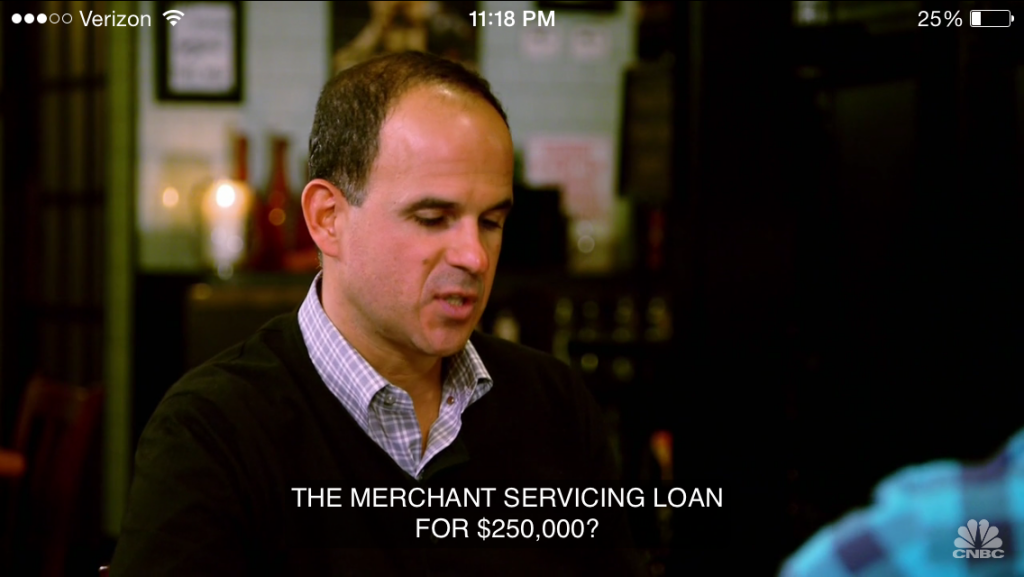
While the fintech community heralded Kabbage’s $250 million Series F round this morning, small business fixer and CNBC TV star Marcus Lemonis was not impressed.
On twitter, Lemonis wrote to Squawk Box host Carl Quintanilla, who was airing a segment about Kabbage, to say that Kabbage charged ridiculous rates. The short rant, which totaled 4 tweets, zinged Kabbage by calling them a lender of last resort and “not a friend of small business.”
Wouldn't call @KabbageInc #kabbage a lender. Ridiculous rates @carlquintanilla @SquawkAlley
— Marcus Lemonis (@marcuslemonis) August 3, 2017
Not a friend of small business. Lender of last resort with fees and rates
— Marcus Lemonis (@marcuslemonis) August 3, 2017
@SoftBank likes the high rate account sweep tactics
— Marcus Lemonis (@marcuslemonis) August 3, 2017
He should be glad I'm not there
— Marcus Lemonis (@marcuslemonis) August 3, 2017
Though Lemonis did not respond to my tweet that asked him if there were any online lenders he thought positively of, he likely is no stranger to the phenomenon. Last year, I pointed out that several small businesses that have appeared on his show, The Profit, have used nonbank alternatives.
In Season 3, Da Lobsta, a Chicago Sandwich shop, reported owing $140,000 to an internet lender and $40,000 to Square.
Square Capital, which has since traded merchant cash advances for actual loans, reported making 49,000 loans to small businesses last quarter alone for a total of $318 million. Kabbage, meanwhile, has lent $3.5 billion to more than 115,000 small businesses in their lifetime.
Tips From the Source: Small Businesses Told AltFinanceDaily How They Wanted Loans to be Marketed to Them
July 31, 2017
Small business owner Jim Moseley is inundated with calls from online funders—and he hates it. They frequently use unscrupulous tactics to try and get his attention. More than one has claimed to be a close friend so his assistant transfers their call. Then they try to reel him in with stories they’ve concocted about past personal connections. The unprofessional-sounding calls also irk him—where a salesman insists he’s local, but his voice sounds muffled and distant. In these instances, Moseley usually hangs up within a few seconds.
“The layer of sleaze is as thick as lard in the calls that I get,” he says.
Like many small business owners, Moseley, the chief executive of TransGuardian Inc., a shipping solutions company based in Petersham, Massachusetts, finds these types of calls extremely off-putting. In fact, it’s what made him hesitant to do online funding to begin with—until it became absolutely necessary since he couldn’t get a bank loan.
He’s not alone. As online financing proliferates, several small business owners say they are increasingly being bombarded with stacks of snail mail, multiple cold calls a day and numerous unsolicited emails offers—many of which they don’t understand and therefore won’t accept. Rather, small business owners say they prefer to work with companies that are forthcoming, provide sound advice and have taken steps to prove their credibility. They offer several tips on how funders can win more of their business.
Tip No. 1: Can the cold-calls
Several small business owners say they don’t mind when lenders follow up with them after a legitimate interaction. But they could do without the boiler-room tactics.
“It feels like a loan shark situation,” says Sean Riley, co-founder of DUDE Wipes, a Chicago-based company that makes flushable wipes for men. Riley, who has several good experience obtaining loans through Kabbage, finds the constant phone calls from firms he doesn’t know particularly vexing. He suggests lenders drop the high-pressure routines and find more effective ways to promote their services to small businesses. “These companies could be very credible. I don’t know. But I don’t perceive them as credible—and perception is reality,” he says.
Tip No. 2: Step up legitimate marketing efforts
Donna Cravotta chief executive and founder of Social Pivot PR, a Bedford, New York social media and marketing communications firm, says online funders should seek out simple, cost-effective ways to get their name in front of small businesses. For relatively little money they can sponsor local small business events. She also suggests that online lenders volunteer to speak at small business events and teach small businesses how to leverage online lending opportunities. They could also appear as guests on financial podcasts or broadcast Webinars to the small business community, says Cravotta, who has taken a few loans to fund her business, two of which were with Lending Club.
R.T. Custer, co-founder and chief executive of Vortic Watch Company in Fort Collins, Colorado, offers some additional advice: Customers don’t believe when you self-publish your testimonials. When he sees a review on a website, he wants to know how much a company has paid for that review. Instead, he relies on third party confirmations of a company’s worth. “When it’s clearly something that is not paid for, that is the best kind of advertising,” says Custer, an OnDeck customer whose business turns antique pocket watchers into wrist watches.
Tip No. 3: Deliver personal attention
As much as they hate aggressive salespeople, small businesses love personal attention from their lenders. Dana Donofree, founder and chief executive of AnaOno Intimates, a Philadelphia-based company that designs and sells apparel for breast cancer survivors, appreciates the stellar customer service she gets with OnDeck. The sales rep follows up appropriately to make sure everything is going well, but doesn’t bombard her constantly. She gets an occasional email asking if she needs more funds—but the communications aren’t overly aggressive. “Some institutions can really be sales pushy and call you several times a day. I’ve blocked more numbers than I would like to admit,” she says.
Tip No. 4: Be a resource for small business owners
Online lenders can also gain traction by helping customers better understand the financing process; many small business owners often don’t know much about financing and would appreciate getting sound advice from lenders, according to Sandy Lieberman, who co-owns Artemis Defense Institute in Lake Forest, California.
She and her husband started the business a few years ago to offer reality-based training to law enforcement, military personnel and civilians. When the business needed cash, Lieberman began searching online for a bank loan, but wound up taking a merchant cash advance instead. After a few rounds, she started getting bombarded with solicitations. “I think the stacks of mailings from companies must have been four-inches thick,” she recalls.
After additional research, she reached out to Lendio to broker an $85,000 term loan; she later took another loan for $204,000 through Lendio. While these funds have brought her business to a better place—and she has learned a lot in the process—she feels online lenders are missing out on a prime teaching opportunity.
“Some lenders think business owners know more than they already do. Some really don’t know a lot and could use more hand-holding,” she says.
In hindsight, Lieberman—who nearly destroyed her personal credit while trying to run her business—wishes a funding company had offered her a short class on financing; she would have attended, even for a small cost. Access to a finance coach—someone at the lending company who could help business owners plan proactively without ruining their personal credit—would also be a boon, she says.
“Small business owners are wearing many hats—customer service, payroll, financing, strategic planning. In the midst of all that they don’t know necessarily know how to make wise funding decisions,” she says.
Tip No. 5: Advertise
There are plenty of small businesses that need funds, but many simply don’t know where to turn. Consider a TD Bank survey of 553 small business owners in late March that found 21 percent have or will seek a loan or line of credit in the next 12 months. While the majority of these businesses plan to try their bank first, a sizeable number—11 percent—don’t know how to seek credit when they are ready. While many small businesses have found lending partners by Googling for information, others simply feel stymied by the process.
Take the case of Scott Deuty, who is having trouble obtains funds for Coolbular Inc. in Cheyenne, Wyoming, which serves as an umbrella for his kiddie ride business and his writing and publishing services. He wants to raise funds but has bad credit and doesn’t meet the revenue requirements for certain lenders. There are so many lenders; he doesn’t know how to find the right one—or one that might be willing to take a chance on him. “It’s very difficult,” he says.
Deuty’s case is an example of the paralysis that can happen when small businesses don’t know where to turn. It’s an opportunity for alternative funders to gain a leg up by marketing more appropriately to small businesses that may not know they exist—or how to find them.
Custer, of Vortic Watch, reached out to OnDeck for a bridge loan after seeing a television ad that ran during an episode of Shark Tank. He also suggests funders use online advertising to gain broader exposure. “If a business owner is trying to find a loan, they are going to Google, ‘I need a loan,’” he says.
 Tip No. 6: Ramp up business referrals
Another way small businesses hear about lending opportunities is through business referrals. Azhar Mirza, founder of SomaStream Interactive, an e-learning solutions provider in Berkeley, California, says funders should actively seek out more referral partnerships. In 2015, his company couldn’t afford its online marketing costs. Then a lifeline came its way. Mirza received an offer from Google telling him his company was eligible for a loan to help finance the online advertising it was doing through the Google AdWords program. The offer was part of a new pilot program between Google and Lending Club to extend credit to smaller companies that use Google’s business services. SomaStream got access to the funds it needed, but in lieu of cash, the company received advertising credits with Google.
The pilot program between Google and Lending Club ended in the first quarter of 2016, but Mirza believes similar partnerships would be a great tool for online lenders. Certainly for Mirza, the timing was precipitous, he says.
Push notifications from trusted business partners can also be an effective marketing tool, when used in moderation. When Yvonne Denman-Johnson, co-founder of HootBooth Photo Booth, a Lago Vista, Texas, manufacturer of photo booth kiosks, needed money, she happened to receive a notice from Shopify, the company’s e-commerce software and hosting provider, talking about its merchant cash advance services. She has one outstanding advance through Shopify, which she is working to pay off.
Tip No. 7: Be transparent
Denman-Johnson got the funds she needed, but she feels MCA providers need to be more transparent about the effective interest rate—at the advertising stage, not at the approval stage—so small businesses can make more informed decisions without having to do all the calculations themselves. Otherwise, some small businesses might decide not to pursue this form of funding because of the unknowns. Her company almost walked away, but decided to go through the full application process. At this point, Shopify provided the effective interest rate, which was in the 12 percent range. Other funders she researched were in the 30 percent range—which she describes as “outrageously” expensive.
 Indeed, small business owners want to work with funders that outline the terms clearly and offer comparisons. Lisa Ayotte, founder of Soul’y Raw, a specialty pet food provider in San Marcos, California, has had good experiences with Kabbage, On Deck and Fundbox.
She wishes, however, that all online lenders offer more detailed information about the loan programs they offer on their website—so small businesses can weigh their options before they go through the actual application process. Small businesses want to know, for instance, whether a lender offers debt consolidation. They also want funds to spell out clearly on their websites the various types of loans offered and the underwriting criteria. Ayotte also suggests lenders provide links to online loan calculators so small businesses can understand what the terms mean to them.
Small business owners want to be told like it is. That’s one major appeal of online lending—if you’re going to be turned down, you typically know right away says Ricardo Picon, the co-owner of The Sandwich Shop, a restaurant and catering business in Williamsburg, New York.
He took an $88,000 loan in February issued by Excelsior Growth Fund, a U.S. Treasury-certified Community Development Financial Institution, but in the future, he says he would consider using a different type of online lender. It would depend on the rates, the economic times, monthly payments and closing fees, among other things. “I want transparency. I want to know if they are going to give me the money or not so I can move on. This way there are no false hopes,” he says.
Tip No. 8: Make the process as easy as possible
Small business owners also prefer to work with online lenders that make the process seamless. AJ Saleem, founder of Suprex Learning, a Houston-based private tutoring and test prep company, was proactive about searching for online lending options. He chose a loan with Lending Club in part because the process was so easy. Some applications he started, but never finished because the process was too onerous. With Lending Club, the process was quick, there were fewer questions asked and the funder asked for less documentation than some competitors, Saleem says.
To be sure, rates are really important to small businesses, but they also want to work with funders they feel are on the up-and-up. “We want a square deal,” says Moseley, the chief executive of TransGuardian. “Tell us what the deal is in an honest and professional way and if we like it we’ll do business.”
Beneficiary of NAB/TMS Deal Could Be Rapid Capital Funding
July 14, 2017 Square is not alone in offering working capital to their payment processing customers. Troy,MI-based North American Bancard (NAB) has been offering their customers merchant cash advances through a Troy-based subsidiary known as Capital For Merchants (CFM) for more than 10 years. And after seeing the growth of that segment, NAB went out and acquired Miami,FL-based Rapid Capital Funding (RCF) in late 2014.
Now, NAB has become even bigger by acquiring Total Merchant Services to make them the seventh largest payment processor in North America. The new combined company, which will operate under the NAB name, will rival Square in annual processing volume.
One beneficiary of the deal could be RCF, who merged with CFM earlier this year. RCF has historically had a sizable direct sales operation that facilitated financing for all merchants, regardless of whether or not they processed payments with NAB. That continued until recently when they reportedly pivoted towards focusing more of their new origination efforts on NAB’s (and now combined with TMS’s) 350,000+ merchants.
RCF was founded nearly 10 years ago. They acquired Anaheim,CA-based rival American Finance Solutions in the fall of 2014, right before joining the NAB family.
The ‘Loan’ Star State – Texas is an alternative finance nexus
June 15, 2017
We’re at Able Lending in Austin, Texas, a financial technology company occupying three floors deep in the heart of the Seaholm power plant overlooking Lady Bird Lake. The fortress-like building anchors an inner-city complex of offices and residences, chic restaurants, boutique shops, and a Trader Joe’s.
Once the main source of electricity for Texas’s capital city, the natural gas-fired boilers have given way to a warren of glassed-in offices and meeting rooms connected by angular metallic stairways and a carpeted mezzanine.
It is here, in a tiny conference room, that Will Davis, a slim man of 35 and an alumnus of Harvard Business School, is drawing a bell curve on a whiteboard. Dressed for the balmy Texas weather in tan Bermuda shorts, a black tee-shirt and Nike running shoes, the company’s chief executive and co-founder is explaining how Able’s friends-and-family lending formula “widens” the risk curve.
“We all compete here in this box on price,” Davis says, drawing a square at the topmost point of the bell curve, indicating where the near-prime borrowers abide and where lenders are crowded in pursuit. But when loans from friends and family form 10%-15% of the total loan, he says, drawing squiggly lines just to the left of the box, a cohort with less-than-stellar credits now becomes credit-worthy.
Because of the “peer pressure” and “behavioral change” exerted by the involvement of family and friends, the formula produces a “positive-selection effect on the loan portfolio” Davis says, declaring: “We can serve more of the market.”
It all sounds very business-schoolish. But here’s the bottom line: Able’s lending model sharply reduces both risk and borrowing costs, allowing it to go head-to-head with national rivals like Funding Circle, Bond Street, OnDeck and StreetShares. Thanks in large part to its reduced risk, asserts Able’s director of development, 30-year-old Matt Irving, the Austin fintech can lend twice as much money as its competitors at half the interest rate.
Since opening its doors and firing up its computers in the fourth quarter of 2014, Able’s average loan size has climbed to $231,200 from $100,000. Of that, an average of 3.2 “backers” have accounted for $40,691, or 17.6% of the average total loan amount. The average “blended” annual percentage rate is 16.41%.

Meanwhile, Able, which has made some $48 million in loans to entrepreneurs through the end of April, 2017, reports CEO Davis, is itself on sound financial footing. According to the data-services firm Crunchbase, Able has raised $12.5 million in three rounds of venture capital financing from 21 investors. Principal equity financiers are Peter Thiel’s Founders Fund, Peterson Ventures, RPM Ventures, and Blumberg Capital. On Sept. 27, 2016, moreover, Able added another $100 million to its arsenal in debt financing from Community Investment Management, a San Francisco investment firm. Borrowers include owners of food trucks and apparel shops; professionals including doctors, dentists, veterinarians, and accountants; “creatives” like public relations and advertising firms; and construction companies. Since its inception, Davis says, just one borrower has defaulted, resulting in an $85,000 charge-off.
So far in 2017, the company has lent out nearly $15 million in the first quarter, but it’s on track to make $80 million this year. “We’re ramping up,” Davis declares.
Welcome to fintech in the Lone Star State. While everything may be bigger in Texas, as the saying goes, that’s not quite true of financial technology. The geographic contours of fintech operations are roughly 60% in California (especially Silicon Valley/San Francisco), 30% New York, and 10% scattered about the rest of the country, says 40-year-old Mihir Korke, the San Francisco-based chief marketing officer at Able.
Nonetheless, Texas offers fertile ground for the burgeoning fintech industry. The vaunted Texas business climate promises a relaxed regulatory regime, the absence of either a personal or corporate income tax, and a lower cost of living. All of which were cited by Able Lending, as well as an additional pair of fintech companies that specialize in factoring and merchant cash advances: Jet Capital, located in North Richland Hills in the Dallas-Fort Worth “metroplex”; and Ironwood Finance in Corpus Christi, a port city on the Gulf of Mexico.
“What’s interesting about fintech companies is that they can choose to locate where they want to do business,” says Erin Fonte, an attorney at Dykema Cox Smith in Austin whose legal practice includes mobile payments, mobile wallets and financial technology. “They don’t necessarily get a regulatory advantage because much of what they do is based on their customers’ location,” says Fonte, who is currently serving as a member of the Federal Reserve’s Faster Payments Taskforce. “That said,” she adds, “some companies have chosen to locate in Texas because of the labor and talent pool, because it’s a good source of venture capital, and it’s more affordable.”

Jet Capital’s 42-year-old chief executive, Kenneth Wardle, confirms many of Fonte’s observations. “So far, Texas has been friendly to MCA companies,” he says, using the initials for “merchant cash advance.” Especially favorable to his industry is the fact that “Texas regulators do not define an MCA as a loan,” he adds.
Prior to co-founding Jet Capital with chief operating officer Allan Thompson, 49, Wardle served as a portfolio manager at Exeter Finance Corp, a $3 billion company in nearby Irving which specializes in subprime auto financing. Wardle has also held leadership positions at AmeriCredit Corp., now GM Financial, and Drive Financial, now Santander Consumer USA.
His 20-year background has included the gritty work of repossessing cars when owners fell into arrears on their auto loans. “Most of my career in auto finance was in risk management and I’ve driven a repo truck,” he says. “You take off with the car right away and then chain it down after you’ve gone a couple of blocks so you don’t lose it out on the highway.”
Backed by more than $5 million in equity financing from a family office in Puerto Rico, Jet Capital makes cash advances of $25,000-$30,000, on average, for working capital.
The sweet spot for Jet’s financings are retail establishments, trucking companies, hair-and-nail spas, and medical doctors. Doctors in particular are prime candidates for a Jet cash advance. “They have a pretty good gap between when they perform services and when they get paid by insurance companies” during which they have to cover payroll expenses and overhead, Wardle notes. Prospecting for customers is done largely through independent sales offices, direct mail, and pay-per-click services offered by Google, among additional online channels.
“Our defaults are relatively in line with expectations” and were largely confined to the first year of business, Wardle says. “We made some underwriting and verification changes last September and October,” he adds, “and we changed our minimum credit scores. Since then we’ve seen defaults migrate in the right direction.”
 Since Wardle and Thompson took occupancy of an empty office outside Fort Worth in October, 2015, Jet has grown to 12 employees who today have “a variety of roles” says Thompson, citing sales, underwriting, customer service, collections, analytics, and information technology. “They wear a lot of hats and there’s a lot of cross pollination,” he says.
Looking ahead, Wardle foresees Jet expanding its product line beyond merchant cash advances to offer lines of credit and installment loans. “Our goal is to be a one-stop, nonbank financing solution,” Wardle says.
Kevin Donahue, 37, owner of Ironwood bootstrapped the South Texas company, which opened in 2013 using personal savings of $1.5 million remaining from the sale of mobile home parks in South Dakota and Texas. He also plowed earnings into Ironwood from a subsequent job as a commercial loan broker.
Donahue, who grew up in a family of fishermen on the Oregon and California coasts and is a 2006 graduate of California Polytechnic State University at San Luis Obispo, says that he turn up in Corpus Christi somewhat by accident. While operating the mobile home park in nearby Kingsville, he got married, started a family, and put down roots.
With 20 employees, Ironwood focuses on providing merchants cash advances in the $5,000 – $50,000 range, Donahue says, “but we can go up to $1 million.” The average cash advance – usually $10,000-$15,000 – is put to use as working capital by what he dubs “Main Street” businesses: restaurants, boutiques, trucking and transportation companies, professionals, and contractors. Ironwood charges clients factoring fees that are collected via ACH.
“Many times (these businesses) don’t qualify for bank loans,” Donahue says. And even when they do qualify, he notes, “banks take forever – up to three months – while we’re using our own money and can do it in three days. We’re very low on requiring a lot of documents.”
For his part, Donahue wants to see a customer’s bank statements, a photo I.D., voided checks, and a financial report. But, he says: “Cash flow is much more important than financials.”
Clients typically find their way to Ironwood through the website, although they often arrive through referrals from brokers and real estate agents, attorneys, accountants and “anyone doing commercial lending,” he says. Donahue says he closed down a call center. “The way to get leads is more through relationships than marketing,” he says.
Trucking companies are important customers. “They work on thinner margins, the barriers to entry are lower, sometimes their customers don’t pay their bills,” Donahue says of the industry’s economics. “They have huge expenses for fuel, payroll, insurance – and they might not get paid (by their customers) for 30 days or more.”
Ironwood’s advance for a million dollars, cited earlier, was made to a trucking company in Midland, Texas, which hauled both general freight and oilfield equipment. The money was put to use both to smooth out cash flow and as growth capital. The trucking concern “used part of that for expansion, making down-payments with Volvo or Peterbilt,” Donahue recalls.

Backstopped by the titles for 18 trucks valued at roughly $1.5 million, the deal was structured as a three-year, sale-leaseback agreement with “no interest” but rather a fee, Donahue says. Payments were $32,000 monthly, he says, amounting to $152,000 above the advance.
Donahue has no trouble justifying the steep fee schedules. Not only does he release money quickly but in many instances Ironwood has stepped in to bail out businesses that could have gone belly-up. He cites a trucker in the Midwest who had a “very lucrative” business hauling Boeing jet engines worth $30 million to Seattle where they could be worked on and returned to the planes for installment. In order to fulfill the contracts – which earned the hauler $25,000 monthly — the trucking company’s owner needed to purchase pricey insurance.
The owner, however, “had horrible credit,” Donahue says, largely the result of cash flow problems after investing in a special trailer for the jet engines, compounded by a messy divorce. To secure the $10,000 for the special insurance, the trucker sold Ironwood $14,000 of their future receivables. “For his investment of $4,000 he’s making $25,000-a-month forever,” Donahue explains.
Back in Austin, Able is gearing up for another round of capital-raising to bulk up staff and, according to Korke, win licensing to do business in California. At the same time, its friends-and-family credit structure is winning kudos for reaching what researcher David O’Connell calls “the unloaned.”
 A senior analyst at Aite Group, a Boston-based consulting firm, O’Connell recently completed a study disclosing that 35% of small and medium-sized businesses in the U.S were unable to obtain credit over a recent two-year period. Able’s lending model is “a good example of using covenants to structure a deal that brings down borrowing risk,” the Bostonian says. “It’s terrific.”
Able’s staff doesn’t have to travel far to witness the fruits of their efforts. On Congress Avenue, in the heart of downtown Austin, is Jae Kim’s food truck offering Korean barbecue thanks to a $100,000-plus loan from the fintech lender. Kim, the founder and chief executive at food vendor Chi’lantro, enlisted his mother to pitch in $10,000. All told, family and friends ponied up 30% of the total loan.
In the three years since he hooked up with Able, Kim has gone on to bigger things, including a television appearance last November on Shark Tank that netted him $600,000 from celebrity investor Barbara Corcoran.
Chi’lantro is now operating five restaurants and four food trucks and as Kim disclosed on Shark Tank, annual sales topped $4.7 million last year.
Able Funds Chi'Lantro from Able Lending on Vimeo.
In an interview, he told AltFinanceDaily that he counts himself fortunate to have gotten the Able “micro-loan.” It played a key role in generating the cash flow that qualified his company for a $200,000 bank loan backed by the Small Business Administration. “It was one of many opportunities, and now we have good relationships with banks,” he says.
And then, a little farther south, there’s Stephanie Beard’s “esby apparel,” a women’s clothing boutique named for her initials. Beard, 35, came to Austin in 2013 after a decade in New York designing men’s clothing at Tommy Hilfiger and Converse. Originally from North Carolina and a graduate of Appalachian State University, she had zero connections in Texas and only a little money.
But she had a big vision: She would open a store and design and sell top-quality, flattering clothes for women that had “a menswear mentality.” Men, she had discovered, buy fewer clothes than women. But men tend to buy clothes that are durable, clothes that they can wear again-and-again over many years. After she sold $65,000 worth of her casual clothing line on the website Kickstarter, Beard developed a fan base and was put in touch with Able. “Actually, they contacted me,” she says.
To qualify as an Able borrower, Beard assembled $20,000 from friends and family, she reports, including $2,500 from her future mother-in-law, another $2,500 from the proprietor of a dress shop that “wholesaled” her collection, and the rest from aficionados of her wares. Once that money was gathered, Able lent her $100,000 at a 10% APR in October, 2014, which enabled her to open her shop. The combined interest rate was 9.8%. Monthly payments have automatically been withdrawn from her business’s checking account.
She’s scheduled to repay both Able and her backers in full by this October. Total sales for the shop have cleared $1 million and Beard expects annual revenues for 2017 to hit $900,000. “A lawyer friend who helped me out with the paperwork pro bono told me that Able was practically giving money away,” she says. “I definitely was lucky.”
Fintech Carries the Torch in Northern Delaware
June 14, 2017
Delaware’s history in financial services is rich. The Financial Center Development Act of 1981, for instance, which rolled back the limits on how much lenders could charge as interest on consumer credit, attracted some of the biggest names in banking to the state over the past several decades. Now fintech companies are carrying the torch, evidenced by alternative lender SoFi’s recent expansion into the region.
Glen Trudel, a partner at Ballard Spahr who specializes in fintech, described the view from the rooftop of his downtown Wilmington, DE office as evidence of Northern Delaware’s banking influence. “Many of the large buildings bear the name of a bank. Bank of America. Capital One. Citi. Chase. Barclays. They are all here. And it isn’t just the Financial Center Development Act that makes Delaware a financial services haven. In consumer lending and in certain other financial industry areas, Delaware law provides flexibility that the laws of other states do not. That has drawn a lot of companies from those industries here,” he said, adding that this includes fintech startups in some cases.
SoFi is among them, evidenced by its expansion plans in Claymont, Delaware, which is the home of its recent acquisition, Zenbanx. The alternative lender joins a fintech community that is already flourishing there. J.P.Morgan and Capital One, both of which are partners of Wilmington, Delaware-based non-profit school for coding, Zip Code Wilmington, similarly have an expanding presence in the region.
“That’s why we were created, as a result of that increasing demand for software developers. That increase is the genesis of Zip Code,” said Melanie Augustin, head of school at Zip Code Wilmington.
Rob Meck, SoFi’s senior vice president of operations, told AltFinanceDaily that Delaware is key to the company’s growth.
“[Delaware is] a great talent bed for financial services, and with the acquisition of Zenbanx we have a team in the state and executives with ties here,” said Meck. Among those executives is Arkadi Kuhlmann, SoFi’s head of banking products, Zenbanx president and former chief executive of ING Direct USA, which brings Kulhmann full circle and plays into SoFi’s recent hand of applying for a bank charter in Utah, another business friendly state.

“One bank that used to be here [in Delaware] that was bought by Capital One was ING Direct. Their European parent ran into some issues and needed to restructure, so they sold their U.S. online banking arm to Capital One. Guess who ran ING Direct here before?” said Ballard Spahr’s Trudel, pointing to SoFi’s Kulhmann.
In fact it is the presence of banking veterans like Kulhmann in addition to the placement of former Citi chief Vikram Pandit on Wilmington, Delaware-based fintech startup Fair Square Financial’s board that tie the fintech theme all together for Trudel, who spent more than a decade of his career as an in-house counsel at MBNA America, one of the banks that established themselves in Delaware as a result of the Financial Center Development Act.
“I don’t think it’s surprising that startups are getting into the fintech space or that SoFi is expanding here given the Kulhmann connection and given the management and people who are trained in various functions as a result of the history of banking here in Wilmington and other parts of Delaware,” said Trudel. “He has worked here. And there is a large labor pool of very experienced business and consumer lending people in all aspects – from marketing, to collections, to operations. This has been going on for many years,” he adds.
Fintech & The First State
SoFi is hiring across many different departments including engineering, business development and finance, with the bulk of the new jobs being in customer service and operations roles. “We’re hiring aggressively to be able to have 100 people in the office by the end of July and to scale from there over the next few quarters to several hundred,” Meck said.
Fortunately for SoFi and other fintech companies in the region, the talent pool from which they have to select is widening thanks to Zip Code. The coding school, which James Spadola, Zip Code’s director of business development describes as a nonprofit software development boot camp, trains people who might not have had the opportunity to learn to code before sending them out to the local workforce.
“We have 200-300 applications in each cohort and three cohorts per year. And our process is selective. We only accept 12 percent of applicants,” Spadola said.
The process seems to be working, evidenced by applicants from as far away as Wisconsin and Zip Code’s 93 percent job placement rate for students within three months of graduating.

Head of School, Zip Code Wilmington
Incorporate vs. Operate
Delaware is the leading state for registering corporations, LLCs and other structures, evidenced by more than 1 million businesses domiciled there. Nonetheless most entities that incorporate in Delaware don’t actually operate there. Still there are benefits, such as generous tax savings including no state income tax for Delaware companies not operating in the state, as Zip Code Wilmington’s Augustin points out.
Another feature is the non-jury Delaware Court of Chancery that focuses on corporate legal issues using judges who are well versed in corporate legal issues and the generally favorable laws for corporations.
“The state of Delaware’s corporate law is cutting edge. There is a sort of partnership between the Delaware State Bar Association and the legislature. The Delaware corporate attorney bar keeps an eye on what is going on nationally and every year a panel of them recommend amendments to the corporate code and other entity codes to the legislatures. And the legislatures will typically pass those,” said Trudel.
Of course there are also a host of reasons for businesses to not only incorporate but also operate in the state.
“We’re in close proximity to I-95, which runs from Maine to Florida, there’s no sales tax and the residents are a microcosm of America. We have beaches, deep country and cities as well, so you get a little bit of everything. There is a general appeal to any employer,” said Spadola, who is also a University of Delaware alum.

Zip Code’s Augustin points to Delaware’s lower cost of living versus New York or the West Coast as another reason why companies don’t only want to incorporate but also operate in the state.
Spadola came to Zip Code Wilmington following a stint in politics including a recent run for State Senator. “Zip Code from the launch has been neat to watch. I’ve always attended civic events, including the launch of Zip Code. They did a boot camp in 2015, and I’ve been following the success of it. Through relationships and community outreach, this opportunity arose at the right time,” he said.
Prior to her role at the nonprofit, Augustin was working as an employment attorney in Washington, D.C. “I was looking for work I was passionate about. Zip Code filled that need,” she said
Meanwhile, although SoFi is not currently a Zip Code partner, their paths have crossed albeit indirectly.
“Speakers from Zenbanx have talked with our students before. We’re connected with them and are impressed with what they’re doing. We’re excited that they’re growing here,” said Augustin.
Catching Up With Marketplace Lending – A Timeline
June 13, 20174/11 Regions Bank recruited Kabbage’s chief technology officer, Amala Duggirala, to become its chief information officer
4/12 Federal Reserve Published their 2016 Small Business Credit Survey
4/13
- Marathon Partners, a minority shareholder of OnDeck, publicly called on the company to make changes
- Fifth Third Bank partnered with Accion to support lending to underserved small businesses
4/17 Affirm surpassed the mark of making more than 1 million loans since inception
4/20 YieldStreet surpassed $100M in loans funded since inception
4/21 Glenn Goldman stepped down as Credibly’s CEO
4/25
- SmartBiz Loans announced partnership with Sacramento-based Five Star Bank
- CommonBond begins offering loans to undergrads directly
4/26 State regulators sued OCC over fintech charter proposal
4/28
- IOU Financial announced that they loaned $107.6M to small businesses in Q1
- China Rapid Finance announced their IPO
5/2
- Funding Circle closed their online forum
- Elevate’s Debt facility with Victory Park Capital increased from $150M to $250M
5/3
- Prosper Marketplace disclosed that it miscalculated returns shown to retail investors
- Square announced that they loaned $251M to small businesses in Q1
- Nav raised $13M from investors that include Goldman Sachs and Steve Cohen’s Point72 Ventures
5/4
- Vermont governor signed into law new licensing requirements for anyone soliciting loans to Vermont borrowers.
- Lending Club announced that they loaned $1.96B in Q1
5/5 Thomas Curry steps down as OCC head, replaced by Acting Head Keith Noreika
5/8
- OnDeck announced it was substantially reducing its workforce as part of its plan to achieve profitability. The stock price proceeded to hit record lows.
- Dv01 announced reporting partnership with SoFi
- With no IPO on the horizon, SoFi revealed that they began letting their employees sell some of their stock
5/9
- In the United States District Court, The Southern District of New York ruled that a purchase of future receivables was not a loan largely because it was not absolutely payable. Colonial Funding Network, Inc. as servicing provider for TVT Capital, LLC v. Epazz, Inc. CynergyCorporation, and Shaun Passley a/k/a Shaun A. Passley
- The value of 1 Bitcoin surpassed $1,700.
5/10
- CFPB announces that it will begin work on small business loan data collection pursuant to Section 1071 of Dodd-Frank.
- CFPB publishes a white paper on small business lending
- SoFi revealed that they will apply for an industrial bank charter
5/12 NY’s banking regulator sued the OCC over its proposed fintech charters
5/15
Prosper announced that they lent $585M in Q1 and had a net loss of $23.9M
5/16
- Media outlets reported that SoFi is expanding into wealth management
- Lending Club named PayPal’s former head of Global Credit Steve Allocca as President
- OnDeck’s share price hit a new all-time low
See previous timelines:
2/17/17 – 4/5/17
12/16/16 – 2/16/17
9/27/16 – 12/16/16