Amazon vs. Banks
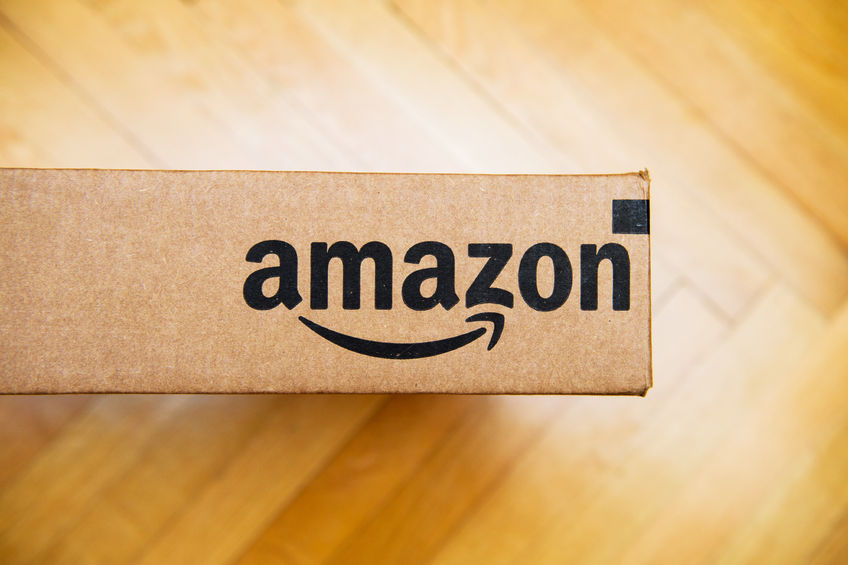
June 23, 2017Amazon made headlines most recently for its blockbuster acquisition of Whole Foods, but the online behemoth already disrupted another sector – fintech — including banks and online lenders when in 2011 it started lending to small businesses. So far Amazon Lending has extended $3 billion-plus in capital to the small business community, a cool billion of which was lent in the past year alone.
Amazon has dealt a one-two punch to the lending market, filling a gap that was left by banks following the financial crisis and leveraging the massive data that the online retailer has access to through its Amazon Marketplace platform.

Matt O’Malley, co-founder and president of Looking Glass Investments, a fixed-income alternative investment firm focused on marketplace lending, said small business lending was a very natural evolution of Amazon’s business.
“Large levels of data give you the ability to increase your predictive power. Amazon has a great deal of information on how a company is doing and an ability to assess credit risk that is very likely unmatched as it relates to businesses selling on their platform,” O’Malley said.
This is not to suggest that Amazon’s future market share in the small business lending segment is a lock.
“In the long run, this entire fintech revolution is about the movement of capital and having to do it faster. So even Amazon is going to have competition. And the reason is there are fewer barriers to entry than before. From Milwaukee to Wisconsin, there is competition for building bank products. I’d put our math up against anybody in New York City thanks to technology,” said O’Malley of Looking Glass Investments’ own lending platform.
Nonetheless a lack of transparency surrounding interest rates for Amazon loans could interfere with repeat business. “Amazon should be careful about being respectful to business owners. Assuming the business does succeed, imagine that the borrower is either going to have a positive reaction or a negative reaction to the initial loan with Amazon. It won’t be good for long-term business if they have a negative reaction. If I were Amazon, I would be cautious on rates,” O’Malley said.
Something else that could throw a wrench into Amazon’s plans as a small business lender is banks, if and when they open the spigots to loan to this segment. While small businesses businesses have already proven a willingness and even a preference for turning to alternative lenders, the tables could turn at some point.
“That’s an unsettled question we think about every day. When do banks make the decision to get in the game? And we would like that to happen sooner rather than later because it would be good for our company LendSight, Inc. But at the same time, we don’t see that tipping point in the near term,” said O’Malley.
AltFinanceDaily spoke with a pair of business owners that sell on the Amazon Marketplace platform, both of which Amazon has lent to.
LonoLife Living the Life
San Diego-based food and beverage maker LonoLife, the Hawaiian translation for which is peace and prosperity, was offered a line of credit with Amazon without having to ask for it. Jesse Koltes, one of LonoLife’s co-founders, spent some time with AltFinanceDaily to talk about the offer, which came over the phone.
“It was super quick, super easy, as opposed to what you get with a banking relationship even if you get a better rate,” said Koltes. “Bank loans take more time and paper work, and with Amazon there was none of that.”
LonoLife never approached a bank for a loan. And given an exclusive agreement with Amazon for its top selling bone broth, they didn’t have to. “I 100 percent agree that access to capital for businesses without a lot of revenue is problematic. We’re not a capital intensive business so there are not a lot of assets to put behind as collateral for a loan with a bank,” Koltes said.
And while he declined to disclose the size of the credit line, Koltes characterized the amount as “meaningful” adding that Amazon adjusts it higher and lower, mostly to the upside.
“They have 100 percent transparency to one of the biggest parts of our business. That is something other lenders don’t have,” he said, referring to the sale of the bone broth product. “One reason they are able to move first and with more confidence is they have confidence you can pay something off. They are literally seeing how much money you make every month.”
LonoLife’s Koltes compared the rate at which Amazon lent to them as comparable to other non-bank lenders but probably not best in class and not equivalent to an asset-backed small business loan. “But it’s not as high as you get from venture debt,” he quipped.
LonoLife has been selling on Amazon since 2016 and was offered the line of credit about a year later. “It’s a virtuous cycle. We’re growing on Amazon and they’re funding the growth,” Koltes said.
Mini Bezos
Stephan Aarstol, founder of direct-to-consumer brand Tower, is best known for pitching his Stand Up Paddle Boards, in response to which he received a $150,000 backing from billionaire investor Mark Cuban. Little did Aarstol know that this would be the excuse banks would use not to lend.
“After Shark Tank banks no longer looked at us as a startup. They told us we don’t technically qualify for an SBA loan because they’re not in the business of giving billionaire loans,” said Aarstol referring to the company’s silent partner Cuban. Before the show banks pointed to the company’s lack of a two-year financial history. Meanwhile Tower’s revenue has climbed higher every single year since the company was founded, reaching $7.5 million last year.
Amazon, which offered its first loan to Aarstol in the amount of about $35,000 at about the same time PayPal offered him a $25,000 loan for working capital. He took them both. “We needed the capital for inventory,” he said of the Paddle Boards, which can take up to three months to produce. A couple of months later in 2013 Amazon followed up with another offer for a $145,000 loan. Tower accepted that loan too.
The first time Tower got a loan of any kind from a traditional bank was September 2014, more than four years from inception for a company that was profitable from day one. That fall the banks started lining up after Tower was named the fastest growing company in San Diego by the San Diego Business Journal.
Since then Aarstol has been straddling the fence of alternative lenders and traditional banks, having borrowed more than $1 million from Amazon alone. He feels loyalty to Amazon because they were one of the first lenders to offer him a loan. That plus the ease and speed at which he can access capital.
Meanwhile Aarstol has since widened the beach lifestyle brand, almost like a mini-Bezos would, to include sunglasses, surf boards, snorkeling, bikes, skateboards and even a magazine through which Tower can do its own advertising.
“We’ve expanded the brand and every new product class we open up requires additional inventory and additional capital,” he noted.
The Future Amazon
Perhaps the greatest sign for just how massive Amazon can become as a small business lender is in their ability to capture repeat business. If it’s any indication, both Koltes and Aarstol would return.
“We’ve been really pleasantly surprised with access to capital Amazon has given us,” said Koltes. “It has helped us grow our business. We’re growing at a fast rate. Without Amazon we would have had to pick and choose what we did.”
For Aarstol, it’s a combination of both allegiance and fear that fuels his relationship with Amazon as a borrower.
“What if banks all of a sudden are no longer willing to lend to small businesses again? What’s my fallback? This is a hedge for me to keep establishing credit. I’ll keep borrowing from and paying back Amazon loans,” he said, despite the interest rates of 11 percent to 13 percent.
Amazon Sure is Making a Lot of Small Business Loans
March 26, 2017 Amazon had $661 million in seller receivables at the end of 2016, according to their earnings report, nearly double from the year before. These receivables are from loans made to small businesses (primarily to purchase inventory) who are sellers on their platform.
Apparently the lending business is going well for them too, since they claim the allowance for loan losses is so small that it’s not even material enough to report. And similar to Square Capital, Amazon incurs virtually no cost to acquire these borrowers.
One year ago, company CEO Jeff Bezos said in a letter to shareholders that “there are over 70,000 entrepreneurs with sales of more than $100,000 a year selling on Amazon.” By then the company had already lent more than $1.5 billion to small businesses across the US, UK and Japan.
“We wanted to bring the same shopping experience that you have on amazon, which is the one-click shopping experience, to the lending program,” a spokesperson says in a 2014 video about the program. “Instead of going to a bank, having interviews, audited financial statements, a 3 week process and then only a small fraction of people getting approved, our process is literally 3 fields and 3 clicks.”
Caution! Politics Ahead: Amazon Breaks Student Loan Ties With Wells Fargo
September 7, 2016Was it easy come and easy go for the Amazon-Wells Fargo partnership?
Not long after the two companies signed a multiyear contract to market private student loans to Amazon Prime Student subscribers, the ecommerce giant retreated after finding itself in a political soup.
Caught in the crossfire between the two bastions of private and federal student loans, the partnership ended rather abruptly after The Institute for College Access & Success, or Ticas, a nonprofit focused on higher education and student-loan issues called the partnership an attempt to dupe students.
“This is the kind of misleading private loan marketing that was rampant before the financial crisis. It is a cynical attempt to dupe current students who are eligible for federal students loans with a record low 3.76% fixed interest rate into taking out costly private loans with interest rates currently as high as 13.74%,” said TICAS in a statement issued last week, “Amazon and Wells Fargo are trumpeting a 0.5% discount while burying the sky-high rates on these private loans and without noting that they lack the consumer protections and flexible repayment options that come with federal student loans.”
This was exacerbated by the CFPB’s allegations that the bank engaged in illegal student loan practices — by misleading borrowers on partial payments, charging certain consumers late fees for payments made on the last day of the grace period and failing to correct inaccurate information on credit reports of borrowers. Wells Fargo, the second-largest private student lender neither denied nor admitted to the charges but however, settled the matter for $4.1 million.
The partnership was an one up for private student lending especially against growing private entrants like SoFi and CommonBond. With it being undone, what’s next?
Amazon and Wells Fargo Shake Hands on Student Loans. Who is Surprised?
July 22, 2016Some might have seen this coming eventually but Amazon is dipping its feet into student loans with Wells Fargo.
Through Amazon Prime Student, the online retailer will offer discounts on student loans when they apply for a Wells Fargo private student loan. The bank will shave half a percentage point off the interest rate for referrals from Amazon.
“We are focused on innovation and meeting our customers where they are – and increasingly that is in the digital space,” said John Rasmussen, Wells Fargo’s head of Personal Lending Group.
Wells Fargo is banking on this multiyear agreement to reach millions of potential borrowers. Five of the largest private student lenders, including Sallie Mae, Wells Fargo and Discover Financial Services Inc., distributed $6.46 billion in loans between July 2015 and March 2016, up 7% from the same period a year earlier, the Wall Street Journal reported.
While the federal government is still the primary student loan lender, banks and other private lenders are steadily increasing their market share. Earlier this week, New York-based private student loan lender CommonBond raised $30 million in equity and $300 million in debt and acquired a startup that opens the gate to employers. San Francisco-based lender SoFi also has similar partnerships with employers for their student loan refinancing product.
“Over 99.99 percent of the student loan market is driven by the federal government and private banks and the tiny piece of the market is made up by CommonBond and SoFi,” said David Klein, CEO of CommonBond to AltFinanceDaily earlier. “And as big as that sounds, relative to the largesse of the market, we don’t even make up a percent of that.” The ilk of alternative lenders are tilling away at establishing such partnerships to widen their net but will the banks let them?
Amazon Wants to Add Fintech Companies to its Shopping Cart
April 5, 2016
It’s Amazon’s turn to go shopping and it wants to buy fintech companies.
The e-commerce giant just turned the heat up on fintech and said that it will look to acquire startups as the dust around valuations settles. It made its foray into payments in 2013 with ‘Pay with Amazon’ a payment tool integrated on other websites for Amazon customers. Now, the service has 23 million users worldwide.
On Monday, (April 4th), at the Money 2020 Summit in Copenhagen, it announced that it will extend the service to third party merchants hosted on its marketplace.
“The Amazon Payments Partner Program provides Partners with the tools and resources needed to extend the trust and convenience of the Amazon experience to their merchant customers,” Patrick Gauthier, vice president of Amazon Payments, said in a press release. Which is another way of saying that wherever merchants go, Amazon will follow.
This announcement comes after Square released a similar service last week (March 30th) with APIs of its payment integration tool for merchants to use on their sites. Amazon is simultaneously stepping into the turfs of PayPal and Visa while threatening smaller but strong rivals like Square and Stripe. As far as customer acquisition goes, the company doesn’t have to look beyond its own marketplace and what seems like a small step for Amazon could be a giant leap for the industry. The company coincidentally also makes loans to its own customers, just like both Square and PayPal.
Startups in payments and lending are making hay while the sun shines bright. And in this case, that’s nearly half of all the fintech dollars invested. If Amazon is hunting for a good deal, it might be a bit longer in what still seems to be a seller’s market — there are over 152 fintech startups deemed ‘unicorns’ or having valuations of at least $1 billion.
But maybe Amazon is the corrector the market needs?
Is Amazon Already a Top 10 Funder?
June 29, 201518 months ago I mentioned Amazon’s quiet entry into business lending but nobody’s really talked about it. But earlier today in a story that was supposed to highlight the company’s push into China, they revealed some interesting details that the rest of the alternative lending industry deserves to know about.
1. Amazon offers three to six-month loans of $1,000 to $600,000 to help merchants buy inventory.
2. Amazon has already funded hundreds of millions of dollars.
3. Sellers are reporting interest rates of 6% to 14% but it’s unclear if these are APRs or dollar for dollar costs since the loans are for much less than a year. I suspect the effective APRs are higher.
While Amazon is obviously doing these to grow Amazon merchants, the short maturities and stunning loan volume definitely earns them a spot on the list of the biggest funders in the industry.
Another fact worth repeating is this tidbit from PayNet:
“The default rate for small businesses with credit under a $1 million stood at 1 percent in 2014 but is seen rising to 1.6 percent in 2015, as new lenders with varying ability to assess risk increase lending, according to small business credit ratings provider PayNet.”
Amazon Quietly Funding Small Businesses
December 30, 2013Ever since Amazon announced their exclusive business loan program last year, they’ve been quietly booking deals. I say quietly because no one really talked about it much ever since. Though the loan program is available only to qualified Amazon.com merchants, it’s very similar to how Kabbage started off with eBay. Amazon’s Business Loan program has all the bells and whistles of merchant cash advance financing and their clients tend to have huge daily sales volumes.
So are they really doing deals? You betcha they are. Secured Party Name: Amazon Capital Services. I wonder if any of their merchants would do a fixed ACH deal.
Enjoy.
Revenue Based Financing Continues to Spread at Global Pace
September 30, 2025 Earlier this month, Uber Eats joined the revenue-based financing movement by partnering with Pipe Capital.
Karl Hebert, Vice President of Global Commerce and Financial Services at Uber, said of it, “We are happy to team up with Pipe to bring working capital to Uber Eats. Restaurants are our partners at Uber, and the backbone of our communities, yet many struggle with access to capital.”
It’s an unsurprising step considering rival DoorDash rolled out a merchant cash advance program nearly four years ago, though Uber arguably began experimenting with MCAs nearly ten years ago. And Uber is hardly doing it just to do it. Uber, for example, rolled out Uber Eats Financing, a revenue based financing product in Mexico through a partnership with R2 this past January, which went so well that they also rolled it out in Chile months later.
📢 Announcing a big milestone for R2 & @Uber!
Following a successful launch in Mexico, we’ve expanded our partnership with Uber Eats to Chile — bringing frictionless access to capital to thousands of merchants across the region. https://t.co/61WgP1ZtHy
— Roger Larach (@rogerlarach) April 30, 2025
In Chile with R2, the service is described as taking place entirely within the Uber Eats Manager App with a 5-minute application process and payments made automatically and deducted by a fixed percentage from sales made using the platform.
In the US with Pipe, it says that the Uber Eats App Manager will show capital offers from Pipe that are customized based on restaurant revenue, cash flow, and business performance.
Uber joins Amazon, Walmart, Shopify, Intuit, Stripe, DoorDash, PayPal, Square, GoDaddy, Wix, Squarespace and others in offering a revenue-based financing product.
Revenue-based financing as a product type is available in but not limited to the US, Canada, Mexico, Chile, UK, Germany, Ireland, Spain, South Africa, Nigeria, India, Hong Kong, Netherlands, Australia, Japan, Brazil, Singapore, and more.