
2M7 Financial Solutions and the State of Alternative Funding in Canada
July 1, 2019 “What’s a cash advance?”
This is how Avi Bernstein, CEO of 2M7 Financial Solutions, recalled a typical conversation in 2008, when his company was founded in the Canadian market. According to him, customer knowledge of alternative financing methods was dismal, partly due to a handful of homogenous banks dominating the scene as well as a void of funders in the country.
Flash forward to 2019 and 2M7 is operating within a Canadian market that is much more trusting and knowledgeable of merchant cash advances, although it is not yet at the levels witnessed in the U.S.
“Low hanging fruit,” is how Bernstein describes the industry now, as small and medium-sized businesses are flocking to 2M7 and its contemporaries, which offer higher approval ratings and faster confirmation of funding than their more traditional counterparts. In fact, according to a 2018 study conducted by Smarter Loans, 24% of those Canadians surveyed stated that they sought their first loan with an alternative lender that year. As well as this, only 29% reported that they pursued funding from more established, traditional financial institutions and 85% of those that received financing confirmed their satisfaction.
Figures like these help to explain why the Canadian market has seen a rise in interest from foreign businesses in the previous five years. Greenbox Capital, First Down Funding, and Funding Circle are examples of those companies who have successfully implanted themselves within the market, a feat that Bernstein claims isn’t easy.
 “It’s a different business,” he notes when comparing the market to that of the U.S. Listing the dissimilarities in market maturity levels, sales tactics, processing channels, and collection styles, as well as the currency exchange rate that’s to be considered, Bernstein says that he’s found those American funders who come to Canada unprepared never stay long enough to become a fixture of the industry.
Warning against half measures, Bernstein explains that “You’ve gotta put boots on the ground” if you want to succeed in Canada. Giving the impression that unless you’re willing to learn the rules applied in the market, hire people, and house them in an office north of the American border, Bernstein is keen to highlight what’s required of foreign companies looking with interest at Canada.
But it’s a risk-reward situation. The market is opening up as more funders enter it, and with the arrival of larger companies, such as OnDeck Capital, more resources are being devoted to raising awareness of alternative financing amongst Canadians.
Meanwhile, homogenous firms like 2M7 are continuing to grow in this developing market. Receiving an average of 200-300 applications for funds per month, 2M7 is capitalizing off opportunities by proving themselves to be open to a wider range of applications. Bernstein asserts that “we try to fund everything,” and that they keep an “open mind to every opportunity” that lands on their desk. Perhaps this is a mindset not shared by more conservative of funders in the industry, but, as Bernstein says, “we’re here, we’re funding, and we’re ready to rock n’ roll.”
You can meet Avi Bernstein and 2M7 at deBanked CONNECT Toronto on July 25th.
Does Your Merchant Cash Advance Company Pass The Scrutiny Test?
April 29, 2019
The merchant cash advance business has come under repeated fire of late from regulators, legislators and customers. “Every aspect of the industry is under scrutiny right now. Syndication agreements, underwriting, and collections are the subject of bills in Congress and across multiple states,” says Steven Zakharyayev, managing attorney for Empire Recovery Services in Manhattan, which offers debt recovery services to financial companies. So how should funders respond amid these obstacles? Here are a few pointers to help funders succeed despite ongoing challenges from a legal, regulatory, business and public relations perspective:
DIFFERENTIATE BETWEEN CASH ADVANCES AND LOANS AND MODEL BUSINESS DEALINGS ACCORDINGLY

In the eyes of the law, merchant cash advances and loans are very different. With a cash advance, a funder advances the merchant cash in exchange for a percentage of future sales, plus a fee. A loan, on the other hand, is a lump sum of cash in exchange for monthly payments over a set time period at an interest rate that can be fixed or variable. While the two types of funding options have certain similarities, funders have to be extremely careful to make appropriate distinctions in their business practices; otherwise legal trouble can easily ensue, experts say.
Most funders know that they are supposed to draw a bright line between merchant cash advance and lending, but it’s critical they put this knowledge into practice. Funders have to ensure the distinction is evident in their business lexicon, says Gregory J. Nowak, a partner in the Philadelphia office of law firm Pepper Hamilton LLP who focuses on securities law.
 For example, it’s extraordinarily important that funders don’t refer to merchant cash advances as loans in their business dealings. Business records, emails and other documents can be requested in litigation for discovery purposes. If the funder’s internal documentation refers to cash advances as loans, it’s going to be hard for the company to argue that they aren’t, in reality, loans.
“Most judges want to see consistency of treatment and that includes your vocabulary,” Nowak says. “The word ‘loan’ should be banned from their email and Word files.”
There’s a fair amount of litigation surrounding what is and what isn’t a cash advance. This can be helpful guidance for funders in setting out the criteria they need to follow to be able to defend their activities as cash advances. Even so, the line is somewhat of a moving target and funders need to be stalwart in these efforts given heightened regulatory scrutiny, experts say.
“If it looks like a loan, the law will treat it as a loan—and all the consequences that follow such a determination,” says Christopher K. Odinet, an associate professor of law at the University of Oklahoma College of Law.
BE CAREFUL ABOUT YOUR COLLECTION POLICIES
Obviously companies want to collect their payments. But some funders are too quick to file lawsuits, which could lead to unwanted trouble, says Paul A. Rianda, who heads a law firm in Irvine, Calif.
“The business model of sue first, ask questions later can be a problem,” says Rianda, whose clients include merchant cash advance companies.
The concern is that when funders sue, merchants start talking to attorneys and that could open the MCA firm to other types of lawsuits. The more a funder sues, the more it increases media attention and invites examination by state regulators and others. “You invite class action lawsuits and regulatory scrutiny that you really don’t want. It’s a boomerang thing,” he says.
The issue is especially pertinent now as legislators grapple with how to handle the thorny issue of confessions of judgement, more popularly known as COJs. For instance, since the start of the year, New York courts and county clerks have become much more rigid in processing confessions of judgments.
Certainly, not all funders use COJs. Just recently, for instance, Greenbox Capital suspended the use of COJs indefinitely, in response to the heightened industrywide debate over their use. While there’s no all-encompassing directive to stop using COJs, experts say it is incumbent upon funders to ensure they are used in a responsible and proper manner, especially amid political and regulatory uncertainty.

For instance, it would be irresponsible and potentially actionable to execute on a COJ simply because the merchant doesn’t remit receivables the merchant cash advance company purchased because he didn’t generate receivables, says Catherine M. Brennan, a partner at the law firm Hudson Cook LLP in Hanover, Maryland.
To be lawful, the COJ has to be based on a breach of performance under the agreement. Fraud, for instance, is actionable. But simple failure to remit receivables because the business has failed is not, she says.
“Conflating those two things—breaches of repayment versus performance—leads to a world of hurt,” she says. “MCA transactions do not have repayment as a concept.”
In places like New York, where COJs are more controversial, funders have to be especially careful about using them properly, experts say. Even though COJs are still enforceable under New York law for the time being, funders should understand every county processes them a bit differently, says Zakharyayev of Empire Recovery Services. “If they have a preferred county for filing, they should ensure their COJs are not only compliant with state law, but also complies with local rules,” he says.
What’s more, funders should ensure their COJs are properly notarized under New York law, ensure party names and the amount confessed is accurate, and avoid blanket statements such as naming each and every county in New York as a possible venue for filing, he says.
While some funders have suggested changing their venue provisions to a COJ-friendly state if New York outlaws COJs, Zakharyayev says he recommend New York funders keep their venue in New York regardless since it would still be one of the most efficient states to enforce a judgment. “I’ve filed COJs outside of New York and, even without a COJ, New York is much more efficient in judgment enforcement as New York courts are less restrictive in allowing the judgment creditor to pursue the debtor’s assets,” he says.
BE CAREFUL WHEN RAISING THIRD-PARTY MONEY
Aside from their dealings with merchants, funders also have to be cautious when it comes to interactions with potential investors.
Some companies have ample balance sheets and don’t need money from third parties to fund their operations. But funders that decide for business purposes to solicit money from investors, have to be careful not to run afoul of SEC rules, says Nowak, the attorney with Pepper Hamilton.
He recommends funders treat these fundraising efforts as if they are issuing securities and follow the rules accordingly. Otherwise they risk being the subject of an enforcement action where the SEC alleges they are raising money using unregulated securities. “You need to be very careful here because these rules are unforgiving. You can’t ignore them,” Nowak says.
TACKLE ACCOUNTING CHALLENGES
Accounting is another business challenge many funders face. Some have fancy customer relationship management systems, but the systems aren’t always set up to provide the detailed information the accounting department’s needs to effectively reconcile the firm’s books, says Yoel Wagschal, a certified public accountant in Monroe, New York, who represents a number of funders and serves as chief financial officer at Last Chance Funding, a merchant cash advance provider.
Ideally, a funder’s CRM and accounting systems should be integrated so both sales and accounting receive the relevant data without the need for either department to input duplicate data. The two systems need a way to get information from each other, without someone manually entering the data in both systems, which is inefficient and prone to error, Wagschal says.
DON’T SKIMP ON LEGAL SERVICES

There’s no set standard for funders to follow when it comes to legal advice. Some funders have in-house counsel, some contract with external law firms and some don’t have attorneys at all, which, of course, can be a risky proposition.
Some funders use contracts they’ve poached from a reputable funder online or from a friend in the industry, says Kimberly M. Raphaeli, vice president of legal operations at Accord Business Funding in Houston, Texas. The trouble is what flies in one state may not be legal in another, she says.
Many contracts include things such as jury waivers and class-action waivers or COJs and depending on the state, the rules surrounding the enforcement of these types of clauses may be different. So it’s really important to know the nuances of the state you’re doing business in and even potentially the states where your merchants are located, she says.
Having dedicated legal staff is arguably better. But at the very least, funders should have an attorney on speed dial who can provide advice on contracts, compliance and other areas of their business. Even when a funder has in-house attorneys, Raphaeli says it’s a good idea to tap external counsel to review documents in situations where potential liability exists. Not only does this offer a second set of eyes, it can provide added peace of mind. “A funder should never shy away from paying a little bit of money for long-term business security,” Raphaeli says.
FOLLOW BEST PRACTICES
 The Small Business Finance Association, an advocacy group for the non-bank alternative financing industry, has developed a list of best practices for industry participants to follow. These encompass principles of transparency, responsibility, fairness and security.
“It’s a very competitive market and companies are trying to differentiate themselves. I think it’s important to make sure you’re following industry standards,” says Steve Denis, executive director of the association whose members include funders and lenders.
Funders also need to be mindful that best practices can change based on business and competitive realities, so it’s important for funders to review procedures periodically, says Raphaeli, of Accord Business Funding. Because the industry is fast-moving, a good rule of thumb might be for a funder to review the entire set of policies and procedures every 18 months. But more frequent review could be necessary if outside factors such as new case law or regulation demand it, she says.
“Periodically taking a look at your collections techniques, your default procedures, even your funding process down to your funding call – these are all critical components of having a successful MCA funder,” she says.
TAKE PAINS TO AVOID INDUCTION INTO THE PUBLIC HALL OF SHAME
While there is no shortage of unseemly news stories involving MCA, funders need to do their best to avoid negative press. This means being extra careful about the way they present themselves to businesses, at public speaking engagements, at conferences, industry trade shows, brokers and others, says Denis of the Small Business Finance Association.

Denis, a long-time Washington, D.C., resident, recommends funders invoke what he calls the “The Washington Post test,” though it applies broadly to any news outlet. Before sending an email, leaving a voicemail or saying anything publicly, funding company employees need to ask themselves: Am I comfortable with that information being on the front page of the paper? “I think our industry has a big problem with public relations right now,” he says. “The stigma is only as true as our industry allows it to be.”
Elevate Funding Strengthens Compliance and Monitor Abilities
November 21, 2018Yesterday, Elevate Funding announced that it would be using the PerformLine Platform to enhance its compliance and email monitoring abilities.
“Terminology is very important in this industry,” said Elevate Funding CEO Heather Francis.
Francis said that much of Elevate’s decision to use PerformLine is to make sure that the correct terms are being used so that the company is consistent in how it presents its MCA product, both to merchants and to referral partners.
“We’ve always been very in tuned to our image, both with our referral partners and with our merchants, and we like to make sure it’s a consistent image,” Francis said.
Together with PerformLine, Elevate Funding created a list of 500 problematic words or phrases. If these terms are used in an email – written by an Elevate Funding employee, a merchant or a referral partner – the email will get flagged and brought to the attention of Francis. Some red flag key terms include “loan,” “term,” “payback” and “free.” Regardless of who wrote the word, the Elevate Funding employee will be asked to send a clarifying follow-up email.
For example, Francis said that if a merchant sends an email that reads “What is my loan balance?” this email would be flagged and the company employee would respond, clarifying that the MCA deal is not a loan. In addition to being clear with customers and referral partners, the PerformLine service is beneficial for compliance reasons.
“In today’s regulatory environment, Elevate must stay on top of its compliance procedures not only to satisfy industry requirements but to ensure the security of sensitive data,” Francis said. “This includes all levels of interactions with our referral partners and the small business owners we service. PerformLine has provided the opportunity to review this information with speed and accuracy, so our compliance team can address any issues as they occur.”
Other funders, like GreenBox Capital, have employed monitoring capabilities not just to protect themselves from legal liability, but to protect merchant data.
Based in Gainesville, FL, Elevate Funding employs about 20 people.
Underwriting 101—Veteran Funders Share Tools of the Trade
August 12, 2018For brokers, funding partnerships are critical to success. But making the most of these connections can be elusive.
“Transparency, efficiency and a thorough scrubbing on the front end can help the whole process,” says William Gallagher, president of CFG Merchant Solutions, an alternative funder with offices in Rutherford, N.J. and Manhattan.
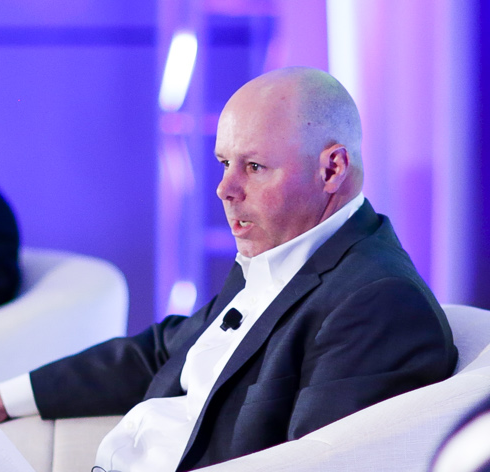
Gallagher recently moderated an “Underwriting 101” panel at Broker Fair 2018, which AltFinanceDaily hosted in May. The panel featured a handful of representatives from different funding companies discussing various hot-button items including striking the proper balance between technology and human underwriting, trade secrets of the submission process and stacking. Here are some major takeaways from that discussion and from follow-up conversations AltFinanceDaily had with panel participants.
Each funder has slightly different processes and requirements. Brokers need to understand the different nuances of each firm so they know how to properly prepare merchants and send relevant information, funders say.
Many brokers sign up with funders without delving deeper into what the different funders are really looking for, says Jordan Fein, chief executive of Greenbox Capital in Miami Gardens, Fla., that provides funding to small businesses.

For example, there are a growing number of companies that rely more heavily on advanced technology for their underwriting, while others have more human intervention. Brokers need to know from the start what the funder’s underwriting process is like—the nitty gritty of what each funder is looking for—so they can more effectively send files to the appropriate funder.
“They will look poor in front of the merchant if they don’t really know the process,” Fein says.
Certainly, it’s a different ballgame for brokers when dealing with funders that are more human based versus more automated, says Taariq Lewis, chief executive and co-founder of Aquila Services Inc., a San Francisco-based company that offers merchants bank account cash flow analysis as well as funding that ranges from 70 days to 100 business days.

At Aquila, the process is meant to be totally automated so that brokers spend more time winning deals faster, with better data to do so. This means, however, that some of the underwriting requirements differ from some other industry players. Aquila’s most important requirement is that a merchant’s business is generally healthy and shows a positive history of sales deposits. Other funders require documents and background explanations, whereas Aquila strives to be completely data-driven, Lewis says. These types of distinctions can be important when submitting deals, funders say.
Stacking is another example of a key difference among funders that brokers need to understand. It’s a controversial practice; some funders are open to stacking, while others will only take up to a second or third position; a number of funders shy away from the practice completely. Brokers shouldn’t waste their time sending deals if there’s no chance a funder will take it; they have to do their research upfront, funders say.
Most times, brokers “don’t invest enough time to understand the process,” Fein says.
Some brokers may feel competitive pressure to sign up with as many funders as possible, but it can easily become unwieldy if the list is too long, funders say. Better, they say, to deal with only a handful of funders and truly understand what each of them is looking for.

“There are brokers that deal with 20 [funders], but I don’t think it’s a good, efficient practice,” says Rory Marks, co-founder and managing partner of Central Diligence Group, a New York funder that provides working capital for small businesses.
He suggests brokers select funders that are easy to work with and responsive to their phone calls and emails. Not all funders will pick up the phone to speak with brokers who have questions, but he believes his type of service is paramount, he says. “It’s something we do all the time,” he says.
He also recommends brokers consider a funder’s speed and efficiency of funding as well as document requirements and their individual specialties. There are plenty of funders to choose from, so brokers shouldn’t feel they have to work with those that are more difficult, he says.
To prevent a broker’s list from becoming too unwieldy, Gallagher of CFG Merchant Solutions suggests brokers have two to three go-to funders in each category of paper from the highest quality down to the lowest. Having a few options in each bucket allows greater flexibility in case one funder changes its parameters for deals, he says.
Brokers “sometimes just shotgun things and throw things against the wall and hope they stick,” Gallagher says. Instead, he and other funders advocate a more precise approach –proactively deciding where to send files based on what they know about the merchant and research they’ve done on prospective funders.
It used to be that when sending files to funders, brokers would provide some background on the company in the body of the email. This was helpful because even a few sentences can help funders gain some perspective about the company and better understand their funding needs, says Fein of Greenbox Capital.
These days, however, Fein says he’s getting more emails from brokers that simply request the maximum funding offer, without providing important details about the business. The financials on ABC importing company aren’t necessarily going to tell the whole story because funders won’t know what products they import and why the business is so successful and needs money to grow. Providing these types of details could help sway the underwriting process in a merchant’s favor. Brokers don’t have to say a lot, but funders appreciate having some meaty details. “A few sentences go a long way,” Fein says.
Many brokers make the mistake of overpromising what they can get for merchants and how long the process could take, funders say. Both can cause significant angst between merchants and brokers and between brokers and funders.
If a company is doing $15k in sales volume and asking for $50k in funding, the broker should know off the bat, the merchant is not going to get what he wants, says Marks of Central Diligence Group. By managing merchant’s expectations, brokers are doing their clients—and themselves—a favor. Why waste time on deals that won’t fund because they are fighting an uphill battle? Brokers shouldn’t knowingly put themselves in the position of having to backtrack later, Marks says.
Instead, explain to the merchant ahead of time he’s likely to receive a smaller amount than he’d hoped for. To show him why, walk the merchant through a general cash flow analysis using data from the past three to four months, says Gallagher of CFG Merchant Solutions. This will help merchants understand the process better, and it can help raise a broker’s conversion rate, he says.
“It’s about setting realistic expectations,” Marks says.
Sometimes brokers take only a cursory look at a merchant’s financials, and because of this, they overlook important details that can delay, significantly alter, or sink the underwriting process, funders say.
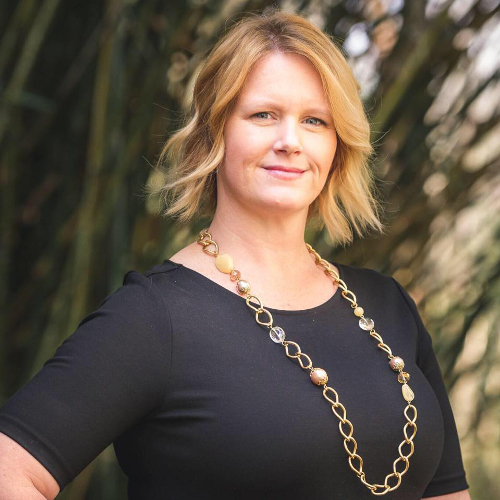
Heather Francis, founder and chief executive of Elevate Funding in Gainesville, Fla., offers the hypothetical example of a merchant who has total deposits of $80k in his bank account. On its face, it may look like a solid deal and the broker may make certain assurances to the merchant. But if it comes out during underwriting that most of the deposits are transfers from a personal savings account as opposed to sales, there can be trouble. Based on the situation, the merchant may only be eligible for $30k, but yet the owner is expecting to receive $80k based on his discussions with the broker. Now you have an unhappy merchant, a frustrated broker and a funder who may be blamed by the merchant, even though it’s really the broker who should have dug deeper in the first place and then managed the merchant’s expectations accordingly. “We see that a lot,” says Francis.
To get the most favorable deals for merchants, some brokers only present the rosiest of information in the hopes that the funder won’t discover anything’s amiss. Several panelists expressed frustration with brokers who purposely withhold information, saying it puts deals at risk and makes the process much less efficient for everyone.
Marks of Central Diligence Group offers the hypothetical example of a merchant whose sales volume dipped in two of the past six months. To push the deal through, a broker might submit only four months of data, hoping the funder doesn’t ask about the other two months. Some funders might accept only four statements, but other shops will want to see six. If a funder then asks for six, the broker’s omission creates unnecessary friction, he says.
Funders say it’s better to be upfront and disclose relevant information such as sales dips or some other type of temporary setback that weighs a merchant’s financials. Kept hidden, even small details could easily become game-changers—or deal-breakers—a losing proposition for merchants, brokers and funders alike.
“If we have the full story upfront and we’re going in eyes wide open, we can look at the file in a little bit of a different way,” says Gallagher of CFG Merchant Solutions.
It’s Back to Business For Alternative Funding in Puerto Rico
June 15, 2018
Last year, alternative funding in Puerto Rico ground to a halt after the island was ravaged by two devastating hurricanes in close proximity. Now, however, the alternative funding business in Puerto Rico is getting its second wind, after a several-month hiatus.
Puerto Rico got lashed by high winds and rain from Hurricane Irma in early September 2017, causing large-scale power outages and damage. Then, about two weeks later, Hurricane Maria hit the island square on, causing even more catastrophic destruction. Millions were without power for months (thousands still are), homes were destroyed, multiple lives were lost, businesses were decimated and the island’s already shaky economy teetered on the brink of disaster.
More than half a year later, residents are still trying to pick up the pieces of the epic humanitarian crisis. Hurricane Maria caused an estimated $90 billion in damage, according to the National Hurricane Center, making it the costliest hurricane on record to strike Puerto Rico and the U.S. Virgin Islands. The hurricane knocked out 80 percent of Puerto Rico’s power lines and destroyed its generators. Even months later, the lives of many residents are still in disarray as they wait desperately for insurance payments to materialize and get back to a semblance of their former lives. The island faces additional challenge—and uncertainty— with another hurricane season just around the corner.
In the midst of this turmoil, however, there’s a glimmer of hope for the budding alternative funding sector. Some businesses are once again seeking funds to rebuild or expand, and alternative funders are once again dipping their toes into the Puerto Rican market—albeit somewhat slowly. While some funders have exited the Puerto Rican alternative lending market, other new entrants are starting to stake a claim, citing an expected uptick in economic development that tends to follow natural disasters. Some funders also see Puerto Rico as a sweet spot because the market isn’t as mature as the U.S. and competition from other alternative funders is scant. Banks on the island aren’t always willing to provide businesses there with much- needed funds, so opportunities for non-bank funders are considered plentiful.
Businesses struggling to rebuild from the storms need more help than ever before, says Sonia Alvelo, president of Latin Financial LLC, an ISO that has been arranging funding for business owners in Puerto Rico for three years. “There is no doubt that Puerto Rico has a long, hard road ahead,” she says. But “I can assure you the entrepreneurial spirit is alive and well,” she says.
Latin Financial and other ISOs and funders are back to business—courting merchants and trying to help them get back on their feet. In December, Latin Financial processed its first renewal since Maria; in January it funded its first new client since September. Latin Financial continues to arrange funding of between $500k and $1 million per month on average in Puerto Rico, after some hurricane-related downtime.
“The storm destroyed a lot, but it didn’t set the small business drive back. They’re still pushing hard and really trying to maintain and grow business,” says Brendan P. Lynch, business partner and fiancé to Latin Financial’s Alvelo.
 Greenbox Capital in Miami Gardens, Fla., an early entrant to the Puerto Rican alternative funding market, has also returned to funding small businesses on the island after a few-month hiatus. The company put off new deals right before Maria hit, and as a goodwill measure suspended the payments of existing customers for 90 days. Given the extension, almost all customers were able to stay on track and the firm suffered very few losses, says Jordan Fein, the company’s chief executive. Greenbox began funding again in January, he says.
To be sure, it’s not exactly business as usual, since many businesses in Puerto Rico are still struggling, Fein says. While the situation should continue to improve, it will take time for the economy and businesses to fully recover, he says.
“They’ve come a long way since September, but they still aren’t fully back. We’re not seeing the same type of submissions that we saw before,” Fein says. Nonetheless, Fein remains positive about the market’s long-term prospects. “I think they are going to come back stronger, I really do,” he says.
To be sure, not all funders are interested the Puerto Rican market. Ripe with political uncertainty and economic instability, Puerto Rico already posed challenges that made many funders hesitant to do business there. The devastation wrought by Irma and Maria complicated matters further, and some funders pulled out of the market completely.
For others, however, the market’s still an opportune one, albeit not as stable as the U.S. market. Certainly, there are reasons for alternative funders to be optimistic. Despite its recent troubles, Puerto Rico is still considered a growth market. What’s more, with new businesses popping up in the wake of the storms, new infrastructure being instituted and businesses anxious to bounce back even bigger and better than before, some funders are striking while the iron is hot.
“This is the right time, as the island is growing,” says Paul Boxer, chief marketing officer and vice president of business development at Quicksilver Capital, a New York-based small business funder. Quicksilver funded its first deal in Puerto Rico in late April.
The company had been mulling over the possibility of doing business in Puerto Rico when an actual funding prospect arose. The company decided to give it a shot, sensing a potentially viable business opportunity. Existing businesses are rebuilding after the hurricane, there’s plenty of new business development and there’s a pressing need for new infrastructure as Puerto Rico continues to recover from the devastation, Boxer says.
Accordingly, Boxer says his company is in the process of vetting additional funding opportunities in Puerto Rico and hopes to continue growing this business in what he says is a largely untapped market. “I see it as a positive addition to what we offer, and I see a lot more opportunity in the future,” Boxer predicts.
You’re Under Arrest: Funder Takes Extreme Measures to Counter Data Theft
September 4, 2017
An employee of Yellowstone Capital was arrested last month, according to a source who witnessed the events. At the company’s behest, local police entered Yellowstone’s Jersey City office and handcuffed a female employee who was believed to be engaged in the theft and misappropriation of financial data.
A spokesperson for Yellowstone would not comment on the events nor release the name of the accused. AltFinanceDaily nevertheless obtained a photo of the individual being escorted out by police. We’ve blurred out her face to protect her identity. Several of those present, who spoke on the condition of anonymity, said that she had been employed by the company for several years.
When asked more generally about the risks of data leakage in the industry, Yellowstone Capital CEO Isaac Stern said that his company is operating on the edge of hyper vigilance. “Yellowstone is investing tons of time, money, and effort to prevent data theft,” Stern said. “We are doing everything in our power, everything, to address it, and we have even enlisted the assistance of an outside security firm.”
The incident does not stand alone. Last year, a man on Long Island pled guilty to attempted criminal possession of computer related material after being implicated in a merchant cash advance backdooring scheme.
Backdooring is industry jargon for when a broker submits a potential deal to a funder and that file ultimately leaks out to third parties whom the broker did not authorize to handle the information. Often times brokers will point their fingers at the funder for mismanaging data they suspect is escaping out the back door. Such accusations can be detrimental to a funder’s reputation not only with the broker community but also with customers they advance funds to. That’s why some funders are taking data security to new levels.
Greenbox Capital, for example, a funder in Miami, FL told AltFinanceDaily back in March that their company designed proprietary software to monitor the actions of all users on their system, which allows them to know who clicked on what when, and for how long. They also developed algorithms to detect suspicious behavior and their security team receives an alert whenever it gets triggered. Greenbox had initially conducted a 90-day probe and discovered that two employees were stealing data. They don’t want that to ever repeat itself.
Using a cell phone to take pictures of confidential data may not help rogue employees evade detection, according to several funders who have said there are methodologies to spot this behavior but declined to explain what they are. And the risk of getting caught may not merely be termination, as evidenced by arrests that have taken place thus far. These funders say there have been other arrests over the last few years but that the companies did not want to draw attention to them.
Indeed, of the two backdooring-related arrests AltFinanceDaily has reported on now, neither would officially confirm them.
“We take ISO information extremely serious,” Yellowstone’s Stern explained, lamenting that the value of deal data can inevitably foster rogue behavior, which they are constantly monitoring for.
Put another way, the personal information of a single performing client could be worth as much as $10,000 or more if it gets into the wrong hands. That’s because it could be used to offer that client a loan, advance or other service. The profit could come in the form of a commission, interest, RTR, a closing fee, or even something more nefarious like stealing their identity.
“We know about the pressure people face to illegally transmit data,” Stern said. “They think we don’t know, but we know the industry. Ultimately we will catch you.”
Stolen Deals? How One Funder Used Technology to Say ‘No More’
March 14, 2017 It’s another chapter in the saga of stolen deals, a problem that shops all over the country seem to be grappling with. For Miami-based Greenbox Capital, company CEO Jordan Fein hoped it was something that they didn’t have to worry about. But believing it was better to be safe than sorry, Greenbox launched a 90-day probe to review all controls and personnel to see if theft existed in their organization and how it was being done. They weren’t too happy with the results, which determined that there was indeed employee theft taking place.
Sources across the industry have told AltFinanceDaily that some employees will do things that make it easy to catch them, while others say that their tactics are constantly evolving. Disabling the USB ports isn’t enough, they say, since personal smart phones can be used to covertly steal data by simply taking pictures of a computer screen. Some say that apps like Snapchat are even making it increasingly easy for them to erase the evidence trail.
For Greenbox Capital, the probe convinced them that being a funding company meant they also needed to become a top-notch security company, especially since they are being entrusted with sensitive information. It’s their ISOs’ deals they have to protect, they say. Understanding how important that is, the company designed proprietary software to monitor the actions of all users on their system, which allows them to know who clicked on what when, and for how long. But that wasn’t enough, they insist. They also developed algorithms to detect suspicious behavior and their security team receives an alert whenever it gets triggered.

And it’s not just what someone clicked on or downloaded, they say, since their system also analyzes phone call activity, texting activity, wifi activity and the number of absences from one’s desk. The implication from that, of course, is that they must be incorporating video surveillance, which they confirmed they are.
They’re not alone. Chad Otar, CEO of Excel Capital Management, an ISO based in New York City, says that when it comes to their office, they have “eyes and ears everywhere.” Otar explains that because commission payouts can be so high, even experienced salespeople can feel tempted to risk their jobs to get their hands on good leads. Some will try to use different emails accounts on the office computer, using their private ones to transact information they’re not supposed to. To prevent that, they’re using Google Vault. “It allows us to monitor all emails going out and coming in from everyone’s account that is linked to the server,” he explains. “And if they try to access another email account, it blocks them.”
But even while threats like Snapchat exist, Otar says some employees will take a low-tech approach and hide valuable information in the trash bin and then offer or attempt to “take out the trash.”
For Greenbox, thanks to their new platform, they were actually able to catch two employees who were stealing data and actually selling deals on the black market.
 A black market?
To put such behavior in perspective, 3 years ago, the name and phone number for someone qualified and interested in working capital could fetch $200 through normal lead channels. These days, sources say it can cost several thousand dollars in marketing just to fund a single deal and that a good lead is worth more than gold.
Greenbox believes that all companies should stop and take a close look at the controls they have in place to catch internal theft. Determined to prevent what they found from ever happening again, they say they now have the tightest internal controls in the industry and advise all businesses to rethink their approach to data security. “As it stands today there is no safer place to send your deals,” company CEO Jordan Fein says.
Of note, readers should stand to realize that getting caught might not just mean embarrassment or termination. Last year, a former MCA sales rep pled guilty to attempted criminal possession of computer related material for being on the receiving end of stolen deal information and using it. Since then, other companies have privately suggested that this was not the only deal-stealing situation that has involved law enforcement and that data theft is a serious offense.
Excel Capital Management‘s Otar says that if you create a sense of pride and loyalty in your workplace, your own employees will report any bad behavior they witness to you.
For Greenbox Capital, they believe their cloud-based system and advanced algorithm is not just about funding more deals, it’s about protecting the integrity of the entire process and maintaining trust.
Stealing deals? it’s not worth the risk.
AltFinanceDaily CONNECT Miami Travel Advisory
January 20, 2019 |
|
Please allow yourself ample amount of time to get through airport security. There has been reports of extended security wait times following the partial government shutdown. Eden Roc has limited amount of parking spots. The hotel will accommodate as many as they can in their parking garage. We encourage you to use Uber, Lyft or cab when possible. Join Our Event Community to Connect With Other Attendees Now To maximize your experience, we invite you to join our event networking community. It’s available from your computer, tablet, iOS and Android devices. USE IT TO: It’s so easy! All you’ll need to do is enter the email address you’ve used during the registration and you’re in! |
 |
|
|

|
 |
 |
 |
 |
 |
 |
 |
 |
 |
 |
 |
 |
 |
 |
 |
 |
 |
 |
 |
 |
 |
 |