
2017 Small Business Financing Leaderboard
March 14, 2018Thanks to several companies filing their annual earnings statements and Funding Circle disclosing their USA origination figures for 2017, we’ve been able to put together a leaderboard in the small business financing space. This list is not comprehensive and omits key players like PayPal Working Capital and Amazon Lending.
| Company Name | 2017 Originations | 2016 | 2015 | 2014 |
| OnDeck | $2,114,663,000 | $2,400,000,000 | $1,900,000,000 | $1,200,000,000 |
| Kabbage | $1,500,000,000 | $1,220,000,000 | $900,000,000 | $350,000,000 |
| Square Capital | $1,177,000,000 | $798,000,000 | $400,000,000 | $100,000,000 |
| Yellowstone Capital | $553,000,000 | $460,000,000 | $422,000,000 | $290,000,000 |
| Funding Circle (USA only) | $500,000,000 | |||
| BlueVine | $500,000,000* | $200,000,000* | ||
| National Funding | $427,000,000 | $350,000,000 | $293,000,000 | |
| Strategic Funding | $393,000,000 | $375,000,000 | $375,000,000 | $280,000,000 |
| BFS Capital | $300,000,000 | $300,000,000 | ||
| RapidAdvance | $260,000,000 | $280,000,000 | $195,000,000 | |
| Credibly | $180,000,000 | $150,000,000 | $95,000,000 | $55,000,000 |
| Shopify | $140,000,000 | |||
| Forward Financing | $125,000,000 | |||
| IOU Financial | $91,300,000 | $107,600,000 | $146,400,000 | $100,000,000 |
*Asterisks signify that the figure is the editor’s estimate
I Got Funded, Again
March 1, 2018 One year after I received a 12-month loan from Square on fixed monthly ACH, I logged onto my dashboard to renew. I was pre-approved to do it all over again, the screen indicated, but the monthly ACH payment option had disappeared. In its place, Square offered to withhold a fixed percentage of my credit card sales going forward until the balance was paid in full.
Known as a “split,” diverting a percentage of the card payment proceeds to a financial company is straight out of the merchant cash advance playbook. Square, however, structures their transactions as loans. That means that regardless of how my sales ebb and flow, I must pay off my balance in full in 18 months.
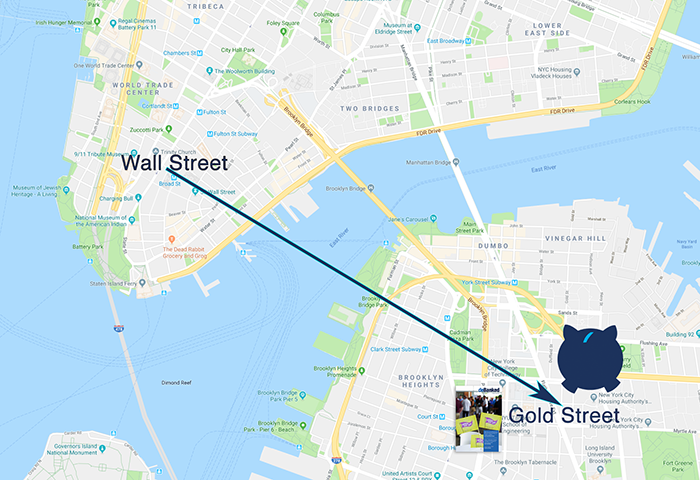
I was okay with that. I had to be. It was that time of year when working capital is very important, the holidays. Not to mention, AltFinanceDaily was in the process of moving, again. If you recall in December of 2016, we moved to a slightly larger office in the same building on Wall Street. In December of 2017, however, we moved from Manhattan to Brooklyn, a process that was a little more involved.
But this loan had no monthly payment, just a 15.75% split. Others may refer to this as the holdback, withhold, or specified percentage. Square’s application process this time around was slightly more rigorous than a year ago, a few more buttons, a couple more disclosures, and even a notice that a review could take between 1-3 days. I was still approved the same day, however, and had funds the next. There were no hidden fees or closing costs.
Six days after being funded, I ran a charge, Square took their split, and I netted the different minus the interchange fees. I noticed, but in a way I didn’t. I didn’t have to worry about how much the monthly payment would be and when. The loan was being repaid all by itself. That was how I processed it psychologically anyway, as I imagine many other small business owners have as well.
And the feeling of relief from impending monthly payments is not entirely mental. Seven weeks later, I was already 17% paid off. That’s real progress, especially with a 65-week window remaining to pay off in full.
Had the same transaction been structured as a merchant cash advance, the timeframe would’ve been unlimited. But hey, I guess sometimes you can’t have it all. It was a 1.10 factor rate, decent by industry standards, certainly not the most expensive, but not the least expensive either. It was fast, it was helpful, and best of all, it was free from the burden of fixed monthly payments.
I got funded again and loved it. What are you still waiting for?
Editors Note: AltFinanceDaily did not collaborate with Square in the writing of this editorial. Square did not even contact us after I published my first experience with their product one year ago. It is unclear if they are even aware that I wrote anything at all. Square is not an advertiser nor have they sponsored any of our events. I did not attempt to interview them for this write-up or tip them off that I would be writing anything. To my knowledge, we did not receive any special benefit or pricing. AltFinanceDaily chose Square for funding in part to avoid the conflict of writing a review about a paying advertiser or sponsor.

The Madden Decision, Three Years Later
February 18, 2018
At first, reversing the 2015 Madden v. Midland Funding court decision, which continues to vex the country’s financial system and which is having a negative impact on the financial technology industry, seemed like a fairly reasonable expectation.
The controversial ruling by the Second Circuit Court of Appeals in New York, which also covers the states of Connecticut and Vermont, had humble roots. Saliha Madden, a New Yorker, had contracted for a credit card offered by Bank of America that charged a 27% interest rate, which was both allowable under Delaware law and in force in her home state.
But when Madden defaulted on her payments and the debt was eventually transferred to Midland Funding, one of the country’s largest purchasers of unpaid debts, she sued on behalf of herself and others. Madden’s claim under the Fair Debt Collection Practices Act was that the debt was illegal for two reasons: the 27% interest rate was in violation of New York State’s 16% civil usury rate and 25% criminal usury rate; and Midland, a debt-collection agency, did not have the same rights as a bank to override New York’s state usury laws.
In 2013, Madden lost at the district court level but, two years later, she won on appeal. Extension of the National Bank Act’s usury-rate preemption to third party debt-buyers like Midland, the Second Circuit Court ruled, would be an “overly broad” interpretation of the statute.
For the banking industry, the Madden decision – which after all involved the Bank of America — meant that they would be constrained from selling off their debt to non-bank second parties in just three states. But for the financial technology industry, says Todd Baker, a senior fellow Harvard’s Kennedy School of Government and a principal at Broadmoor Consulting, it was especially troubling.
“The ability to ‘export’ interest rates is critical to the current securitization market and to the practice that some banks have embraced as lenders of record for fintechs that want to operate in all 50 states,” Baker told AltFinanceDaily in an e-mail interview.

A 2016 study by a trio of law professors at Columbia, Stanford and Fordham found other consequences of Madden. They determined that “hundreds of loans (were) issued to borrowers with FICO scores below 640 in Connecticut and New York in the first half of 2015, but no such loans after July 2015.” In another finding, they reported: “Not only did lenders make smaller loans in these states post-Madden, but they also declined to issue loans to the higher-risk borrowers most likely to borrow above usury rates.”
With only three states observing the “Madden Rule,” the general assumption in business, financial and legal circles was that the Supreme Court would likely overturn Madden and harmonize the law. Brightening prospects for a Madden reversal by the Supremes: not only were all segments of the powerful financial industry behind that effort but the Obama Administration’s Solicitor General supported the anti-Madden petitioners (but complicating matters, the SG recommended against the High Court’s hearing the case until it was fully resolved in lower courts).
Despite all the heavyweight backing, however, the High Court announced in June, 2016, that it would decline to hear Madden.
That decision was especially disheartening for members of the financial technology community. “The Supreme Court has upheld the doctrine of ‘valid when made’ for a long time,” a glum Scott Stewart, chief executive of the Innovative Lending Platform Association – a Washington, D.C.-based trade group representing small-business lenders including Kabbbage, OnDeck, and CAN Capital — told AltFinanceDaily.
Even so, the setback was not regarded as fatal. Congress appeared poised to ride to the lending industry’s rescue. Indeed, there was rare bipartisan support on Capitol Hill for the Protecting Consumers’ Access to Credit Act of 2017 — better known as the “Madden fix.”

Introduced in the House by Patrick McHenry, a North Carolina Republican, and in the Senate by Mark Warner, Democrat of Virginia, the proposed legislation would add the following language to the National Bank Act. “A loan that is valid when made as to its maximum rate of interest…shall remain valid with respect to such rate regardless of whether the loan is subsequently sold, assigned, or otherwise transferred to a third party, and may be enforced by such third party notwithstanding any State law to the contrary.”
Just before Thanksgiving, the House Financial Services Committee approved the Madden fix by 42-17, with nine Democrats joining the Republican majority, including some members of the Congressional Black Caucus. Notes ILPA’s Stewart: “We were seeing broad-based support.”
But the optimism has been short-lived. The Madden fix was not included in a package of financial legislation recently approved by the Senate Banking Committee, headed by Sen. Mike Crapo, Republican of Idaho. Moreover, observes Stewart: “Senator Warner appears to have gotten cold feet.”
What happened? Last fall, a coast-to-coast alliance of 202 consumer groups and community organizations came out squarely against the McHenry-Warner bill. Denouncing the bill in a strongly worded public letter, the groups — ranging from grassroots councils like the West Virginia Citizen Action Group and the Indiana Institute for Working Families to Washington fixtures like Consumer Action and Consumer Federation of America – declared: “Reversing the Second Circuit’s decision, as this bill seeks to do, would make it easier for payday lenders, debt buyers, online lenders, fintech companies, and other companies to use ‘rent-a-bank’ arrangements to charge high rates on loans.”
The letter also charged that, if enacted, the McHenry-Warner bill “could open the floodgates to a wide range of predatory actors to make loans at 300% annual interest or higher.” And the group’s letter asserted that “the bill is a massive attack on state consumer protection laws.”
Lauren Saunders, an attorney with the National Consumer Law Center in Washington, a signatory to the letter and spokesperson for the alliance, told AltFinanceDaily that “our main concern is that interest-rate caps are the No. 1 protection against predatory lending and, for the most part, they only exist at the state level.”
But in their study on Madden, the Stanford-Columbia-Fordham legal scholars report that the strength of state usury laws has largely been sapped since the 1970s. “Despite their pervasiveness,” write law professors Colleen Honigsberg, Robert J. Jackson, Jr., and Richard Squire, “usury laws have very little effect on modern American lending markets. The reason is that federal law preempts state usury limits, rendering these caps inoperable for most loans.”
While the battle over the Madden fix has all the earmarks of a classic consumers-versus-industry kerfuffle, the fintechs and their allies are making the argument that they are being unfairly lumped in with payday lenders. “Online lending, generally at interest rates below 36%, is a far cry from predatory lending at rates in the hundreds of percent that use observable rent-a-charter techniques and that result in debt-traps for borrowers,” insists Cornelius Hurley, a Boston University law professor and executive director of the Online Lending Policy Institute. Because of fintechs, he adds: “A lot of people who wouldn’t otherwise qualify in the existing system are getting credit.”
A 2016 Philadelphia Federal Reserve Bank study reports that traditional sources of funding for small businesses are gradually exiting that market. In 1997, small banks under $1 billion in assets –which are “the traditional go-to source of small business credit,” Fed researchers note — had 14 percent of their assets in small business loans. By 2016, that figure had dipped to about 11 percent.
The Joint Small Business Credit Survey Report conducted by the Federal Reserve in 2015 determined that the inability to gain access to credit “has been an important obstacle for smaller, younger, less profitable, and minority-owned businesses.” It looked at credit applications from very small businesses that depend on contractors — not employees – and discovered that only 29 percent of applicants received the full amount of their requested loan while 30 percent received only partial funding. The borrowers who “were not fully funded through the traditional channel have increasingly turned to online alternative lenders,” the Fed study reported.
The ILPA’s Stewart gives this example: A woman who owns a two-person hair-braiding shop in St. Louis and wants to borrow $20,000 to expand but has “a terrible credit score of 640 because she’s had cancer in the family,” will find the odds stacked against when seeking a loan from a traditional financial institution.
But a fintech lender like Kabbage or CAN Capital will not only make the loan, but often deliver the money in just a few days, compared with the weeks or even months of delivery time taken by a typical bank. “She’ll pay 40% APR or $2,100 (in interest) over six months,” Steward explains. “She’s saying, ‘I’ll make that bet on myself’ and add two additional chairs, which will give her $40,000-$50,000 or more in new revenues.”
In yet another analysis by the Philadelphia Fed published in 2017, researchers concluded that one prominent financial technology platform “played a role in filling the credit gap” for consumer loans. In examining data supplied by Lending Club, the researchers reported that, save for the first few years of its existence, the fintech’s “activities have been mainly in the areas in which there has been a decline in bank branches….More than 75 percent of newly originated loans in 2014 and 2015 were in the areas where bank branches declined in the local market.”
Meanwhile, there is palpable fear in the fintech world that, without a Madden fix, their business model is vulnerable. Those worries were exacerbated last year when the attorney general of Colorado cited Madden in alleging violations of Colorado’s Uniform Consumer Credit Code in separate complaints against Marlette Funding LLC and Avant of Colorado LLC. According to an analysis by Pepper Hamilton, a Philadelphia-headquartered law firm, “the respective complaints filed against Marlette and Avant allege facts that are clearly distinguishable from the facts considered by the Second Circuit in Madden.
“Yet those differences did not prevent the Colorado attorney general from citing Madden for the broad-based proposition that a non-bank that receives the assignment of a loan from a bank can never rely on federal preemption of state usury laws ‘because banks cannot validly assign such rights to non-banks.’”
Should the Federal court accept the reasoning of Madden, Pepper Hamilton’s analysis declares, such a ruling “could have severe adverse consequences for the marketplace and the online lending industry and for the banking industry generally….”
Industry Stock Performance Update
January 21, 2018 Square is the big winner thus far according to the AltFinanceDaily Online Lender Tracker. The company’s stock price is up 373% since its IPO and already up 22.76% YTD.
OnDeck and Lending Club by contrast are down by more than 70% from their IPOs and down 17.6% and 2.66% YTD respectively.
But the real loser so far in 2018 is Bitcoin. As of this writing, the Coinbase price of BTC is around $11,310, down more than 18% from its 2017 year-end price of $13,860. Bitcoin had previously reached an all-time high of nearly $20,000.
Meanwhile, the S&P 500 is already up 5.11% YTD. That’s about 59x more than what a Marcus Savings account returned over the same period. Marcus is Goldman Sachs’ online lending and retail online banking arm.
Will 2018 Be a Special Year?
December 29, 2017 2018 is going to be different, in a good way. That’s word on the street in the alternative finance industry, many of whom have told me that it’s just something they feel.
I feel it too. The S&P 500 is at an all-time high, Bitcoin is up more than 1,400% for the year, lenders are lending in full force, and on top of it all, Donald Trump is president. The world is changing and from a one thousand foot view, it’s an exciting time for finance.
2018 will welcome Broker Fair, the inaugural conference for MCA and business loan brokers.
2018 will transform alternative finance into just finance. For example, a mailer I received from PayPal advertising a small business loan up to $500,000 in as quick as 1 business day, included a letter signed by a top manager of Swift Capital. PayPal acquired Swift in 2017. Yesterday’s alternative loan is simply today’s loan. The one-day small business loan is becoming normalized and being offered by widely recognized financial companies.
Ripple surpassed Ethereum this morning to become the 2nd largest cryptocurrency by market cap. Cryptocurrency, once the domain of Bitcoin-obsessed internet anarchists, is quickly being adopted by the world’s largest banks.
It’s one thing to just talk about innovations in finance and another to realize that you now rely on those innovations. My company got a loan from Square, I got insurance through CoverWallet, I have funds in Lending Club, Prosper, Bitcoin, Ethereum, and Bitcoin Cash. Coinbase is the new etrade. MCA and online business loans are the new community banks. Payments can be made instantly and cost effectively.
2018 will be special because the world that we predicted would come, has come. That means it will be time to think about what will come even next. Online lending has come, instant payments has come, cryptocurrency is fast approaching. What will be the cool edgy hip thing in the ’20s that we may once again refer to as alternative? Mull that one over for a bit and consider that in the next decade the sexy fintech companies of the 20-teens will be stodgy financial institutions in the 2020s. This decade’s innovation will become part of the boring normal manner in which finance is transacted. That’s a fact.
Enjoy 2018. I know I will.
Happy new year,
– Sean
Letter From The Editor
December 23, 2017 It was a year to remember, our sources declare
‘Twas the Jan/Feb issue I wrote about my loan from Square
 Through March into April salespeople closed deals via text
As banks looked to fintech as their plan for what’s next
 We went to Texas a nexus for finance and lending
It was May, maybe June when Bizfi’s final days were pending
 Merchants talked, banks adjusted, it was a summer of learnings
For the pressure was on to produce solid quarterly earnings
 September, October, liens and judgements were removed
But the world hardly noticed and deals still got approved
 Winter coats and furry hats meant the year would end soon
But by golly 10k, no 19k! Bitcoin went straight to the moon!
 And so boys and girls the story of ‘17 has been told
What a time for finance, for money, and a world to behold
See you in ‘18, in ‘19, and the roaring twenties my friend
We’ll be right there, whether you deal in receivables or lend

– Sean Murray
Institutions Like American Express Are Mainstreaming Daily ACH Payments
November 30, 2017A takeover-style ad on CNN’s website rang very familiar earlier today. The ad, paid for by American Express, preached merchant financing with a fixed fee.

The ad brought me to a page that offered a fixed fee business loan between $5,000 and $2 million with daily ACH repayment and no interest rate. Terms were 6 months, 12 months, or 24 months.

While this is more similar to an OnDeck loan, than say perhaps, a merchant cash advance, the concept of fixed fee business financing is becoming a standard even among institutional finance providers.
Square, as I experienced firsthand, is another company mainstreaming the fixed fee model. The difference there is that the payments are monthly rather than daily.
The good news for many online lenders and MCA companies of course, is that merchants that may not qualify with some major financial companies, are at least being introduced to the concept of fixed-fee short-term capital and even daily payments.
View From The C-Suite: Alternative Funding Execs Talk Shop, The Landscape, And The Future
October 30, 2017 Alternative funders have had a roller coaster 2017 with highs and lows that will likely be remembered as a high-stakes time for the industry, one in which the rubber met the road for many and the market landscape shifted for everyone from funders, to merchants to brokers.
Three C-Suite executives in the alternative funding space — Christine Chang, CEO of 6th Avenue Capital, Heather Francis, CEO of Elevate Funding and Torrie Inouye, National Funding president — spoke with AltFinanceDaily, offering their take on some of the industry shakeups, direction of the alt lending space and upcoming developments at their respective companies.
All three execs are embracing what appears to be shaping up as a bigger and better 2018 with plans on the horizon for new products, relationships and deals but also where there could be further shakeout as the shift in the industry landscape takes hold.
Industry Landscape
6th Avenue Capital, provides short-term funding to merchants that Chang describes as “high touch, high tech and fast.” The company is building an SEC RIA compliant infrastructure as Chang believes that MCA regulation will take place over the next several years. Chang said she is sympathetic to the banks and the onerous rules that they must follow, and whatever form the industry regulation eventually takes on, the company will be ready for.

A recent story in The Wall Street Journal points to community banks comprised of those with less than $10 billion in assets historically funding local merchants in what’s dubbed character-based lending. As the name suggests, the underwriting standard for the loans was tied to the character of the business owner, which the lender knew based on personal relationships in their own communities.
The financial crisis gave rise to greater regulation, driving a spike in that model and the rest is history. Small banks were forced to direct their resources toward risk management and compliance instead of adding more personnel to service loans. The WSJ quotes a small business lender that bears repeating: “When they created too big to fail, they also created too small to succeed.”
When that door closed, however, another one opened, creating the opportunity for alt lenders to service a niche that was getting left out in the cold.
“The alternative funding industry is here to stay. That’s good news for MCA and fintech in general. There’s a need for fast funding and there will continue to be a trend toward that,” said Chang.
Banks, meanwhile, have started coming to the fintech table to compete for deals. “We’re in the process of speaking to a number of banks, some quite large and some regional, that have expressed an interest. We think this is a great opportunity for them. The idea is that we’d help them to serve a population of clients that they would not otherwise be able to serve,” said Chang.
6th Avenue has had discussions about white labeling and customizing the platform for institutions. “We would run everything for them,” said Chang.
In addition to possible new banking relationships, 6th Avenue Capital, backed by a private family and institutional investors, will expand the business model to include more investors on its platform. “We are in discussions with a number of significant international investors. It’s in the works. We’re building an institutional infrastructure, so it was always contemplated,” she said.
Elevate Funding, whose is 100% referral-based and whose product suite is comprised of a trio of MCA solutions, is coming up on its three-year anniversary in December.
“When I created Elevate, I did it with the purpose of providing a product to high-risk merchants. That’s who we deal with. We’re not dealing with credit scores. There is a level of risk to who we work with. Elevate was created to provide a product that is going to fit their needs and also provide a product that doesn’t treat them like they’re high risk. That’s who we are,” said Francis.

Gainesville, FL-based Elevate recently hired Michael Gaura to spearhead a new MCA product that the company is rolling out in 2018. Francis held the details of the new funding product close to the vest, but she did offer her views on the direction of the MCA and alternative lending space.
“I see difficulty in the coming years, especially in 2018, for qualified lead flow. You have a lot of big banks that are getting into this industry. And that’s a lot of marketing dollars that you’re competing against.”
She points to JPMorgan Chase, American Express, Square and PayPal, saying they are “huge marketing dollar companies” with tremendous access to customers on their respective platforms.
“There’s going to be a shakeout of what can you reach, who can you reach, can you get them the first time? How do you engage them to where they only want to work with you and they’re not submitting 20 applications for every website they come across?”, Francis said.
San Diego, Calif.-based National Funding is a balance sheet lender whose primary product is loans, not MCAs. The broker factor has changed significantly for the lender in a very positive way this year. “We’re really seeing sizeable growth in our broker channel in 2017 and have designed a strong and consistent process for our broker clients” Inouye said. The leads have been driven by a variety of factors, not the least of which comes down to CAN Capital and Bizfi’s loss being National Funding’s gain.

“That’s a factor we can’t ignore. The broker community has rewarded us for being consistent and building those relationships and being a partner to them,” Inouye said. “We definitely saw an uptick in business when they left the space. I can say we’ve continually experienced sizeable growth in our broker channel year over year but 2017 was beyond what we had expected. It surpassed other years.”
Incidentally, National Funding was one of the earliest alt funders on the scene along with CAN Capital in the 1990s. CAN’s fate started unraveling about this time a year ago.
“It’s not positive when you see that happen in the industry. However, we are really focused on what we’re doing and the decisions we’re making internally. I think that’s why we’ve consistently had profitable growth over the years. We’ve stayed true to our underwriting principles and the market seems to have rewarded us. We were consistent and not erratic. Brokers know they can rely on us and feel confident that we would quickly fund their deal once we issued an approval,” said Inouye.
The Broker Effect
Elevate, a balance sheet funder, relies on outside brokers and referrals for deals. “I don’t find it a disadvantage for us not having an internal sales team. A lot of companies in this space have the ability for a chief marketing officer who focuses entirely on leads. Elevate isn’t there yet. Will we be there in five years? Maybe. Marketing can change by that time,” Francis said.
6th Avenue Capital welcomes relationships with brokers as well. “We have an in-house business development team that works with brokers. 6th Avenue Capital is also considering direct sales in niche strategies in its future,” said Chang.
6th Avenue Capital has a starter program in which there are no guarantees but considers businesses that have been in existence for less than a year and businesses with credit scores of 500 or more. Plus, they’re willing to do consolidations up to two advances.
In addition, 6th Avenue Capital is open to offering financing to brokers. “It’s really good in that there is an alignment of interests and allows brokers to participate in the deals they put forth. If they think the merchant is credit worthy and a terrific opportunity, they participate. Everyone has skin in the game and interests are aligned,” Chang said.
Technology
While technology is at the core of fintech, all three of the companies take a hybrid approach when it comes to credit underwriting comprised of a tech platform and the human touch, which perhaps keeps character-based lending alive in some form.
With respect to fintech, “6th Avenue Capital’s philosophy is that technology is a tool to supplement human underwriting. We use technology to detect fraud, manage workload processes and manage risk. We do not use technology to make our final decisions,” said Chang.
Specifically, 6th Avenue Capital benefits from research, artificial intelligence and predictive technology of its sister company Nexlend Capital. 6th Avenue Capital has customized Nexlend’s consumer lending algorithmic intellectual property, which uses machine learning and credit analysis with high speed execution to make better and faster decisions.
Elevate also takes a dual-approach to its underwriting process. “I believe in a hybrid method. You have to have someone looking at it, to have eyes on the paper at some point in the process. This doesn’t mean a computer system can’t help to weed out what might not meet the criteria, but I do believe there needs to be a person reviewing the files,” Francis said.
National Funding was started as an equipment leasing company. “We apply some principles we learned as a leasing company and take into account all of the attributes that go into that business in addition to FICO and cash flow,” Inouye said.
Automation is an area of technology that they continue to look to for innovation and process efficiencies. “We do serve our customers online, but we also provide a human contact as well. We deliver a loan experience that builds trust and confidence with customers. We try to deliver on what our customers want in the most efficient way,” said National Funding’s Inouye.
National Funding continues to look at construction deals and accepts them as a niche in their portfolio, which Inouye said differentiates the company. “It allows us to be more flexible and comfortable with certain industries that other lenders might stay away from.”
Corporate Culture
2017 has been a roller coaster year for fintech including alt funders. While there have been plenty of bright spots, there was also some fallout that left veteran players scrambling to salvage either their reputation, status as a funder or both.
SoFi has been at the center of controversies that resulted in the Mike Cagney leaving his chairman post with plans to step down as CEO. Most recently, the lender has removed its application for a bank charter, according to reports.
We asked Elevate’s Francis about it. “SoFi is a very big company. They’re to the level where the CEO has people to answer to. They have a checks and balances system they need to go through,” said Francis. “It worked, and they removed him.”
Francis maintains an open-door policy with her employees, and she says all you can do is focus on your house and keep your house in order. “My door is always open. That’s our office policy. They use that quite frequently; it’s a catch 22,” she said with a laugh.
Fintech and Diversity
Something else that all three executives have in common is that they are all women in top roles in fintech, an industry that isn’t known for its diversity.
6th Avenue’s Chang’s career includes working at a large institutional bank for six years. Out of 200 professionals, only four of them in her group were women. “At the end of the day, performance is the best differentiator. If you perform well, it presents unique opportunities. At 6th Avenue Capital, diversity is embraced. Our underlying merchants aren’t just one gender or color. Diversity helps us understand the needs of small businesses better, so we can provide fast and customized funding quickly,” she said.