Can Fintech Startups Become Banks? OCC Opens The Gates
August 1, 2018 Yesterday, the U.S. Treasury Department released a report that prompted the Office of the Comptroller of the Currency (OCC) to say that it would start accepting applications from fintech for special purpose national bank charters.
This is boon for fintech companies that, until now, have mostly been prevented from applying for national bank charters because of protest from banks and others that they will not be subject to adequate regulations. But now the OCC, a significant regulator, is opening the door for non-depository fintech companies – like OnDeck and Kabbage – to become banks.
“Over the past 150 years banks and the federal banking system have been the source of tremendous innovation that has improved banking services and made them more accessible to millions,” said head of the OCC, Comptroller of the Currency, Joseph M. Otting, in a statement. “The federal banking system must continue to evolve and embrace innovation to meet the changing customer needs and serve as a source of strength for the nation’s economy…Companies that provide banking services in innovative ways deserve the opportunity to pursue that business on a national scale as a federally chartered, regulated bank.”
The main advantage for fintech companies of having the opportunity to get their own bank charter is that they would now be able to operate nationwide under a single licensing and regulatory system, instead of a myriad of state licenses. Currently, fintech companies must adhere to the regulations in each state where they do business, which can be expensive. And some states have regulations that are stricter than others. That is why this news is bad news for states that feel that this development will allow fintech companies to bypass and undermine their regulation designed to protect consumers.
The OCC’s decision is the latest development in a years long, sustained effort by fintechs to become banks. In fact, for the last several years, Fintech companies have tried attaining bank status by getting the Utah Department of Financial Institutions to allow them to become Industrial Loan Company (ILC) banks. So far, Square, SoFi and NelNet have tried, in some capacity, to become an ILC bank.
The New York Department of Financial Service and the Conference of State Bank Supervisors (CSBS) was angered by the OCC’s decision.
“An OCC fintech charter is a regulatory train wreck in the making,” said CSBS President John W. Ryan in a statement. “Such a move exceeds the current authority granted by Congress to the OCC. Fintech charter decisions would place the federal government in the business of picking winners and losers in the marketplace. And taxpayers would be exposed to a new risk: failed fintechs.”
He said that his organization is keeping all options open to stop what he says is regulatory overreach.
The OCC indicated in its announcement that fintech companies that become special purpose national banks will be subject to heightened supervision initially, similar to other banks. But these special purpose banks would not have to abide by the stricter regulations of deposit-taking banks and they would not have to be insured by the Federal Deposit Insurance Corporation (FDIC) either.
“It is hard to conceive that insured national banks will allow the OCC to allow a fintech entity a national bank charter without insisting that all national bank obligations apply—which is what fintech companies want to avoid,” said Joseph Lynyak, partner and regulatory reform specialist at the law firm Dorsey & Whitney.
Snapchat to Terminate Payment Service Snapcash (And its x-rated subculture?)
July 24, 2018 Snapchat will be terminating its payment service platform, Snapcash, on August 30. Launched in 2014, Snapcash allows users to send money to each other (via a cash app) in a fast and free way. Money goes to users’ bank accounts that are linked to their debit cards and the payment processing is handled by Square.
“Snapcash was our first product created in partnership with another company – Square,” a Snapchat spokesperson told Techcrunch in a statement. “We’re thankful for all the Snapchatters who used Snapcash for the last four years and for Square’s partnership!”
Snapchat’s decision to discontinue the payment service may come because of steep competition from Venmo, PayPal, Zelle and Square Cash, which all specialize in payments. But Snapcash may also be a liability for the company since it’s reportedly been used for X-rated activities. When Snapcash was first introduced, a story on Motherboard suggested that it would enhance Snapchat’s lingering subculture of amateur pornography. By the following year The New York Times reported that although the payment activity attributed to such pursuits was small, both strippers and adult video stars (male & female) were indeed using the service to charge users for personalized photos.
Although Square’s partnership with Snapchat will be coming to an end, Square made it clear in a statement to Techcrunch that its peer to peer Square Cash product is still alive and well with more than 7 million monthly customers.
It is unclear if the phase-out of Snapcash will result in job cuts at the company. But Snap Inc., which owns Snapchat, already laid off about 200 employees in March of this year. The company went public last year on the New York Stock Exchange as SNAP. Snap Inc. also has a hardware division called Spectacles, which sells sunglasses with a camera in it. According to a Cheddar story today, the chief of Spectacles, Mark Randall, has left Snap Inc. to start his own company.
Snap Inc. was founded by in 2011 by CEO Evan Spiegal, Bobby Murphy and Reggie Brown. The company is headquartered in Los Angeles.
The Past, Present and Future of the ILC Bank
July 9, 2018 Last Thursday, Square confirmed that it withdrew its application to the FDIC for depository insurance, which would allow it to take deposits from customers in all 50 states. The company said it plans to refile.
This is not the first time that a fintech company has withdrawn a bank application from the FDIC. Last October, SoFi withdrew its application in the wake of sexual harassment allegations against its then CEO Mike Cagney. SoFi has not explicitly stated that it plans to refile.
Regardless of the reason for withdrawing the application, this news revives the debate over whether fintech companies should be allowed to become banks in the first place – at least in the manner that Square and SoFi have sought to attain bank status. Both companies have submitted applications to the Utah Department of Financial Institutions to become Industrial Loan Company (ILC) banks.
This is controversial because ILC banks are not subject to the same regulations that other banks are. For instance, an ILC bank can engage in commercial activity outside of banking which could jeopardize the bank, critics contend. Under the 2010 Dodd-Frank Act, which came in response to the Great Recession, there was a moratorium on establishing ILC banks because they were deemed to be a risk to the U.S. banking system. The moratorium was lifted in 2013.
Chris Cole, Senior Regulatory Counsel at Independent Community Bankers of America (ICBA), a trade group, is a big opponent of ILC banks. He maintains that companies seeking to become ILC banks are simply taking advantage of an old policy that is no longer relevant. He explained that ILCs were created as banks for industrial workers in the early 1900s.

“They were meant to serve a certain type of industrial worker that had trouble finding a commercial bank they could bank with,” Cole said. “Now we don’t have that problem anymore. Industrial [or other lower paid] workers have plenty of opportunities to bank. This charter is completely outdated [and is] a loophole that should be closed so that the owners of these bank-like institutions are restricted in the same way that commercial banks are restricted.”
Last year, AltFinanceDaily spoke to Richard Hunt, president and CEO of the Consumer Bankers Association, who echoed Cole with the regard to the initial purpose of ILC banks.
“No one envisioned when they wrote the ILC charter that we would have fintech companies that finance mortgages and student loans from private equity capital and not deposits. It’s a new world. Like with all rules and regulations, federal regulators should periodically review longstanding policy,” Hunt said.

Cole said that in addition to Square and SoFi, another fintech company recently applied to become an ILC bank. That company is NelNet, which services students loans, and it submitted an application to the FDIC less than two weeks ago.
So far, the FDIC has not approved of any ILC banks since Dodd-Frank. (There are only about 30 of them right now.) But that may soon change under the leadership of the agency’s new Chairman, Jelena McWilliams.
“I am hopeful that Jelena McWilliams will follow the same course as her predecessors have [and not issue ILC charters],” Cole said. “Issuing a moratorium is what I’d like to see.”
But McWilliams, who assumed the new role on June 5, may be more open to approving these applications than her predecessors. She said during a recent conference:
“The agency has a duty to the public to actually proceed [with the applications.] Now, that doesn’t mean that we will approve every application. That doesn’t mean that we will deny every application.”
It’s Back to Business For Alternative Funding in Puerto Rico
June 15, 2018
Last year, alternative funding in Puerto Rico ground to a halt after the island was ravaged by two devastating hurricanes in close proximity. Now, however, the alternative funding business in Puerto Rico is getting its second wind, after a several-month hiatus.
Puerto Rico got lashed by high winds and rain from Hurricane Irma in early September 2017, causing large-scale power outages and damage. Then, about two weeks later, Hurricane Maria hit the island square on, causing even more catastrophic destruction. Millions were without power for months (thousands still are), homes were destroyed, multiple lives were lost, businesses were decimated and the island’s already shaky economy teetered on the brink of disaster.
More than half a year later, residents are still trying to pick up the pieces of the epic humanitarian crisis. Hurricane Maria caused an estimated $90 billion in damage, according to the National Hurricane Center, making it the costliest hurricane on record to strike Puerto Rico and the U.S. Virgin Islands. The hurricane knocked out 80 percent of Puerto Rico’s power lines and destroyed its generators. Even months later, the lives of many residents are still in disarray as they wait desperately for insurance payments to materialize and get back to a semblance of their former lives. The island faces additional challenge—and uncertainty— with another hurricane season just around the corner.
In the midst of this turmoil, however, there’s a glimmer of hope for the budding alternative funding sector. Some businesses are once again seeking funds to rebuild or expand, and alternative funders are once again dipping their toes into the Puerto Rican market—albeit somewhat slowly. While some funders have exited the Puerto Rican alternative lending market, other new entrants are starting to stake a claim, citing an expected uptick in economic development that tends to follow natural disasters. Some funders also see Puerto Rico as a sweet spot because the market isn’t as mature as the U.S. and competition from other alternative funders is scant. Banks on the island aren’t always willing to provide businesses there with much- needed funds, so opportunities for non-bank funders are considered plentiful.
Businesses struggling to rebuild from the storms need more help than ever before, says Sonia Alvelo, president of Latin Financial LLC, an ISO that has been arranging funding for business owners in Puerto Rico for three years. “There is no doubt that Puerto Rico has a long, hard road ahead,” she says. But “I can assure you the entrepreneurial spirit is alive and well,” she says.
Latin Financial and other ISOs and funders are back to business—courting merchants and trying to help them get back on their feet. In December, Latin Financial processed its first renewal since Maria; in January it funded its first new client since September. Latin Financial continues to arrange funding of between $500k and $1 million per month on average in Puerto Rico, after some hurricane-related downtime.
“The storm destroyed a lot, but it didn’t set the small business drive back. They’re still pushing hard and really trying to maintain and grow business,” says Brendan P. Lynch, business partner and fiancé to Latin Financial’s Alvelo.
 Greenbox Capital in Miami Gardens, Fla., an early entrant to the Puerto Rican alternative funding market, has also returned to funding small businesses on the island after a few-month hiatus. The company put off new deals right before Maria hit, and as a goodwill measure suspended the payments of existing customers for 90 days. Given the extension, almost all customers were able to stay on track and the firm suffered very few losses, says Jordan Fein, the company’s chief executive. Greenbox began funding again in January, he says.
To be sure, it’s not exactly business as usual, since many businesses in Puerto Rico are still struggling, Fein says. While the situation should continue to improve, it will take time for the economy and businesses to fully recover, he says.
“They’ve come a long way since September, but they still aren’t fully back. We’re not seeing the same type of submissions that we saw before,” Fein says. Nonetheless, Fein remains positive about the market’s long-term prospects. “I think they are going to come back stronger, I really do,” he says.
To be sure, not all funders are interested the Puerto Rican market. Ripe with political uncertainty and economic instability, Puerto Rico already posed challenges that made many funders hesitant to do business there. The devastation wrought by Irma and Maria complicated matters further, and some funders pulled out of the market completely.
For others, however, the market’s still an opportune one, albeit not as stable as the U.S. market. Certainly, there are reasons for alternative funders to be optimistic. Despite its recent troubles, Puerto Rico is still considered a growth market. What’s more, with new businesses popping up in the wake of the storms, new infrastructure being instituted and businesses anxious to bounce back even bigger and better than before, some funders are striking while the iron is hot.
“This is the right time, as the island is growing,” says Paul Boxer, chief marketing officer and vice president of business development at Quicksilver Capital, a New York-based small business funder. Quicksilver funded its first deal in Puerto Rico in late April.
The company had been mulling over the possibility of doing business in Puerto Rico when an actual funding prospect arose. The company decided to give it a shot, sensing a potentially viable business opportunity. Existing businesses are rebuilding after the hurricane, there’s plenty of new business development and there’s a pressing need for new infrastructure as Puerto Rico continues to recover from the devastation, Boxer says.
Accordingly, Boxer says his company is in the process of vetting additional funding opportunities in Puerto Rico and hopes to continue growing this business in what he says is a largely untapped market. “I see it as a positive addition to what we offer, and I see a lot more opportunity in the future,” Boxer predicts.
Kabbage Reveals Plans for a ‘Reverse Play’
May 22, 2018 When it comes to lending, the business models of Square and PayPal may be too good to ignore.
According to Reuters, Kabbage plans to launch its own payment processing service by year-end. “The monoline businesses have a hard time succeeding long term,” Kabbage co-founder Kathryn Petralia is quoted as saying.
While Square and PayPal started off in payments and added lending, Kabbage sees the value proposition of the reverse play, to start off in lending and add payments.
But another Square and PayPal rival may not. Back in October, AltFinanceDaily questioned OnDeck CEO Noah Breslow during an interview about this very thing. At the time, Breslow responded that they were not going to sell merchant processing. “Never say never,” he said, “but not in the near future.”
Square and PayPal’s lending businesses differ from other online lenders in that they can solicit their existing payments customer base at virtually no cost. OnDeck, meanwhile, spent $53 million last year alone on sales and marketing to acquire loan customers.
Square’s acquisition of payments customers is not cheap, however. The company spent $253 million in sales and marketing last year. The advantage is in not needing to shell out additional cost to convert them into loan customers.
OnDeck still held the lead over both Kabbage and Square last year in loan originations at $2.1B vs $1.5B and $1.17B respectively. PayPal was not ranked.
Wayward Merchants
April 19, 2018
Wayward merchants and outright criminals are continuing to bilk the alternative small-business funding industry out of cash at a dizzying pace. In fact, an estimated 23 percent of the problematic clients that funders reported to an industry database in 2017 appeared to have committed fraud, up from approximately 17 percent in the previous year. That’s according to Scott Williams, managing member of Florida-based Financial Advantage Group LLC, who along with Cody Burgess founded the DataMerch database in 2015. Some 11,000 small businesses now appear in the database because they’ve allegedly failed to honor their commitments to funders, Williams says.
Whether fraudulent or not, defaults remain plentiful enough to keep attorneys busy in funders’ legal departments and at outside law firms funders hire. “I do a lot of collections work on behalf of my cash-advance clients, sending out letters to try to get people to pay,” says Paul Rianda, a California-based attorney. When letters and phone calls don’t succeed, it’s time to file a lawsuit, he says.
Lawsuits become necessary more often than not by the time a funder hires an outside attorney, according to Jamie Polon, a partner at the Great Neck, N.Y.- based law firm of Mavrides Moyal Packman Sadkin LLP and manager of its Creditors’ Rights Group. “Typically, my clients have tried everything to resolve the situation amicably before coming to me,” he observes.
That pursuit of debtors isn’t getting any easier. These days, it’s not just the debtor and the debtor’s attorney that funders and their attorneys must confront. Collections have become more difficult with the recent rise of so-called debt settlement companies that promise to help merchants avoid satisfying their obligations in full, notes Katherine Fisher, who’s a partner in the Maryland office of the law firm of Hudson Cook LLP.
 Meanwhile, a consensus among attorneys, consultants and the funders themselves holds that the nature of the fraudulent attacks is changing. On one side of the equation, crooks are hatching increasingly sophisticated schemes to defraud funders, notes Catherine Brennan, who’s also a partner in the Maryland office of Hudson Cook LLP. On the other side, underwriters and software developers are becoming more skilled at detecting and thwarting fraud, she maintains.
Digitalization is fueling those changes, says Jeremy Brown, chairman of Bethesda, Md.-based RapidAdvance. “As the business overall becomes more and more automated and moves more online – with less personal contact with merchants – you have to develop different tools to deal with fraud,” he says.
A few years ago, the industry was buzzing about fake bank statements available on craigslist, Brown recalls. Criminals who didn’t even own businesses used the phony statements to borrow against nonexistent bank accounts, and merchants used the fake documents to inflate their numbers.
Altered or invented bank statements remain one of the industry’s biggest challenges, but now they’ve gone digital. About 85 percent of the cases of fraud submitted to the DataMerch database involve falsified bank documents, nearly all of them manipulated digitally, Williams notes.
Merchants alter their statements to overstate their balances, increase the amount of their monthly deposits, erase overdrafts, or hide automatic payments they’re already making on loans or advances, Williams says. Most use software that helps them reformat and tamper with PDF files that begin as legitimate bank statements, he observes.
To combat false statements, alt funders are demanding online access to applicants’ actual bank accounts. Some funders ask for prospective clients’ usernames and passwords to examine bank records, but applicants often consider such requests an invasion of their privacy, sources agree.
That’s why RapidAdvance has joined the ranks of companies that use electronic tools like DecisionLogic, GIACT or Yodlee to verify a bank balance or the owner of the account and perform test ACH transfers – all without needing to persuade anyone to surrender personally identifiable information, Brown says.
Other third-party systems can use an IP address to view the computing device and computer network that a prospective customer is using to apply for credit, Brown says. RapidAdvance has received applications that those tools have traced to known criminal networks. The systems even know when crooks are masking the identity of the networks they’re using to attempt fraud, he observes.
RapidAdvance has also developed its own software to head off fraud. One program developed in-house cross references every customer who’s contacted the company, even those who haven’t taken out a loan or merchant cash advance. “People who want to defraud you will come back with a different business name on the same bank account,” Brown says. “It’s a quick way to see if this is somebody we don’t want to do business with.”
Sometimes businesses use differing federal tax ID numbers to pull off a hoax, according to Williams at DataMerch. That’s why his company’s database lists all of the ID numbers for a business.
All of those electronic safeguards have come into play only recently, Brown maintains. “We didn’t think about any of this five years ago – certainly not 10 years ago,” he says. In those days, funders were satisfied with just an application and a copy of a driver’s license, he remembers.
Since then, some sage advice has been proven true. When RapidAdvance was founded in 2005, the company had a mentor with experience at Capital One, Brown says. One piece of wisdom the company guru imparted was this: “Watch out when the criminals figure out your business model.” That’s when an industry becomes a target of organized fraud.
As that prediction of fraud has become reality, it hasn’t necessarily gotten any easier to pinpoint the percentage of deals proposed with bad intent. That’s because underwriters and electronic aids prevent most fraudulent potential deals from coming to fruition, Brown notes. The company looks at the loss rates for the deals that it funds, not the deals it turns down.
Brown guesses that as many as 10 percent of applications are tainted by fraudulent intention. “It’s meaningful enough that if you miss a couple of accounts with significant dollar amounts,” he says, “then it can have a pretty negative impact on your bottom line.”
Some perpetrators of fraud merely pretend to operate a small business, and funders can discover their scams if there’s time to make site visits, Rianda notes. Other clients begin as genuine entrepreneurs who then run into hard times and want to keep their doors open at all costs, sources agree.
 Applicants sometimes provide false landlord information, something that RapidAdvance checks out on larger loans, Brown notes. Underwriters who call to verify the tenant-landlord relationship have to rely upon common sense to ferret out anything “fishy,” he advises.
Underwriters should ask enough questions in those phone calls to determine whether the supposed landlord really knows the property and the tenant, which could include queries concerning rent per square foot, length of time in business and when the lease terminates, Brown suggests. All of that should match what the applicant has indicated previously.
Lack of a telephone landline may or may not provide a clue that an imposter is posing as a landlord, Brown continues. Be aware of a supposed landlord’s verbal stumbles, realize something’s possibly amiss if a dubious landlord lacks of an online presence, note whether too many calls to the alleged landlord go into voicemail and be suspicious if a phone exchange with a purported landlord simply “feels” residential instead of commercial, he cautions.
Reasonable explanations could exist for any of those concerns, but when in doubt about the validity of a tenant-landlord relationship it pays to request a copy of the lease or other type of verifications, according to Brown. Then there are the cases when the underwriter is talking to the actual landlord, but the applicant has convinced the landlord to lie. It could happen because the landlord might hope to recoup some back rent from a merchant who’s obviously on the verge of closing up shop.
Occasionally, formerly legitimate merchants turn rogue. They take out a loan, immediately withdraw the funds from the bank, stop repaying the loan, close the business and then walk or run away, notes Williams. “We view that as a fraudulent merchant because their mindset all along was qualifying for this loan and not paying it back,” he says.
Collecting on a delinquent account becomes problematic once a business closes its doors, Rianda notes. As long as the merchant remains in business, funders can still hope to collect reduced payments and thus eventually get back most or all of what’s owed, he maintains.
In another scam sometimes merchants whose bank accounts are set up to make automatic transfers to creditors simply change banks to halt the payments, Brown says. That move could either signal desperation or indicate the intent to defraud was there from the start, he says.
Merchants with cash advances that split card revenue could change transaction processors, install an additional card terminal that’s not programmed for the split or offer discounts for paying with cash, but those scams are becoming less prevalent as the industry shifts to ACH, Brown says. Industrywide, only 5 percent to 10 percent of payments are collected through card splits these days, but about 20 percent of RapidAdvance’s payments are made that way.
Merchants occasionally blame their refusal to pay on partners who have absconded with the funds or on spouses who weren’t authorized to apply for a loan or advance, Brown reports. Although that claim might be bogus, such cases do occur, notes Williams of DataMerch. People who own a minority share of a business sometimes manipulate K-1 records to present themselves as majority owners who are empowered to take out a loan, Williams says.
In a phenomenon called “stacking,” merchants take out multiple loans or advances and thus burden themselves with more obligations than they can meet. Whether or not that constitutes fraud remains debatable, Rianda observes. Stacking has increased with greater availability of capital and because some funders purposely pursue such deals, he contends.
Some contracts now contain covenants that bar stacking, notes Brennan of Hudson Cook. As companies come of age in the alt-funding business, they are beginning to employ staff members to detect and guard against practices like stacking, she says.
Moreover, underwriting is improving in general, according to Polon “The vetting is getting better because the industry is getting more mature,” he says. “The underwriting teams have gotten very good at looking at certain data points to see something is wrong with the application – they know when something doesn’t smell right.” They’re better at checking with references, investigating landlords, examining financials and requesting backup documentation, he contends.
Despite more-systematic approaches to foiling the criminal element and protecting against misfortunate merchants, one-of-a-kind attempts at fraud also still drive funders crazy, Brown says. His company found that a merchant once conspired with the broker who brought RapidAdvance the deal. The merchant and the broker set up a dummy business, transferred the funds to it and then withdrew the cash. “The guy came back to us and said, ‘I lost all the money because the broker took it,’” he recounts. “Why is that our problem?” was the RapidAdvance response.
Although such schemes appear rare, some funders are developing methods of auditing their ISOs to prevent problems, notes Brennan. They can search for patterns of irregularities as an early-warning system, she says. It’s also important to terminate relationships with errant brokers and share information about them, she advises, adding that competition has sometimes made funders reluctant to sever ties with brokers.
 Although fraud’s clearly a crime, the police rarely choose to involve themselves with it, Brown says. His company has had cases where it lost what it considered large dollar amounts – say $50,000 – and had evidence he felt clearly indicated fraud but the company couldn’t attract the attention of law enforcement, he notes.
Rianda finds working with law enforcement “hit or miss,” whether it’s a matter of defaulting on loans or committing other crimes. In one of his cases an employee forged invoices to steal $100,000 and the police didn’t care. In another, someone collected $3,000 in credit card refunds and went to jail. If the authorities do intervene, they may seek jail time and sometimes compel crooks to make restitution, he notes.
“Engaging law enforcement is generally not appropriate for collections,” according to Fisher from Hudson Cook. However, notifying police agencies of fraud that occurs at the inception of a deal can sometimes be appropriate, says Fisher’s colleague Brennan, particularly when organized gangs of fraudsters are at work.
At the same time, sheriffs and marshals can help collect judgments, Polon says. He works with attorneys, sheriffs and marshals all over the country to enforce judgments he has obtained in New York State, he says. That can include garnishing wages, levying a bank account or clearing a lien before a debtor can sell or refinance property, he notes.
When Rianda files a lawsuit against an individual or company in default, the defendant fails to appear in court about 90 percent of the time, he says. A court judgment against a delinquent debtor serves as a more effective tool for collections than does a letter an attorney sends before litigation begins, Rianda notes.
But even with a judgment in hand, attorneys and their clients have to pursue the debtor, often in another state and sometimes over a long period of time, Rianda continues. “The good news is that in California a judgment is good for 10 years and renewable for 10,” he adds.
So guarding against fraud comes down to matching wits with criminals across the country and around the world. “It makes it hard to do business, but that’s the reality,” Brown concludes. Still, there’s always hope. To combat fraud, funders should work together, Brennan advises. “It’s an industrywide problem … so the industry as a whole has a collective interest in rooting out fraud.”
LendItFintech In Photos and Sound Bites
April 10, 2018
when speaking about the increase in mortality rate for people who have faced major financial distress
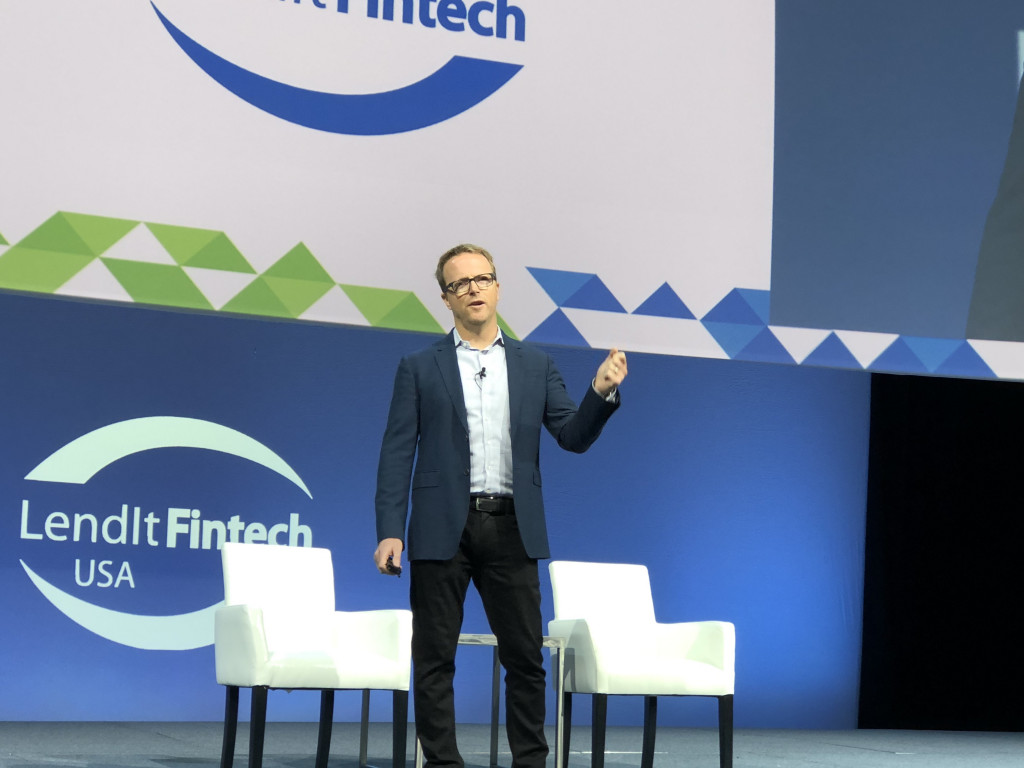
when interviewed on stage by Bloomberg’s Selina Wang

when interviewed by Jo Ann Barefoot

When asked by Bloomberg Technology reporter Emily Chang if Goldman Sachs would be considered a competitor

when interviewed by Lendio’s Brock Blake

When asked who will win the race for marketshare
When asked if it’s harder to underwrite loans above $50,000
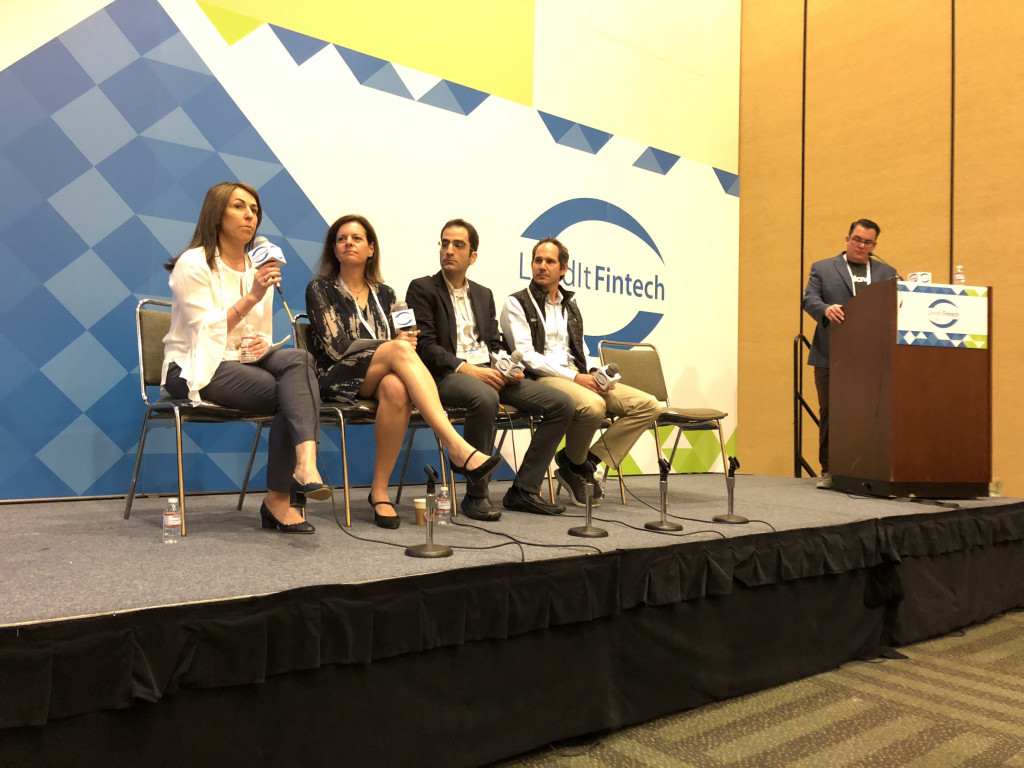
talks business at the company booth
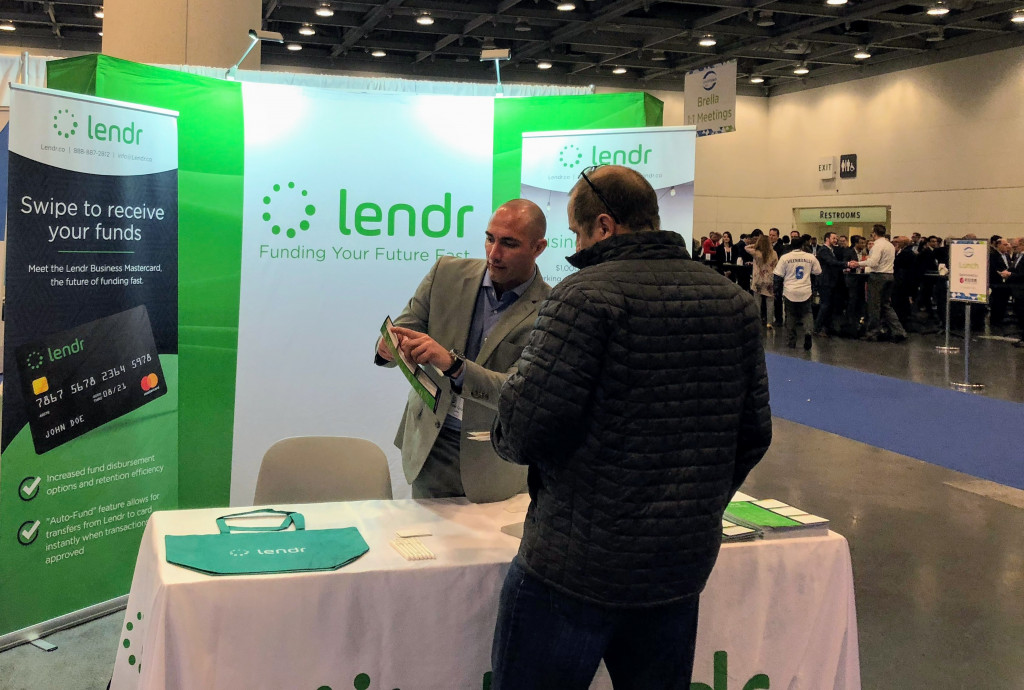
Below: Ocrolus account executive John Lowenthal stands in front of the company booth





How A New Hampshire Teen Launched A Lending Company And Climbed Into The Inc. 500
March 17, 2018Josh Feinberg was not a complete newbie when he started in the lending business in 2009, but he also had a long way to go to find success. His dad had been in the business for 15 years and shortly after graduating high school, Josh started to work in equipment financing and leasing at Direct Capital in New Hampshire, his home state. He then had a brief stint working remotely for Balboa Capital, but he wasn’t sure that finance was for him.
He was 19, with a three year old daughter, and he took a low paying job working at a New Hampshire pawn shop owned by his brother and a guy named Will Murphy.
“I was making $267 a week at the pawn shop and I was having to ask friends to help me pay my rent for a room,” Feinberg said. “So at that point, I realized that something needed to change.”
One day, while working at the pawn shop, Feinberg saw a Facebook post from a restaurant owner in search of financing for equipment. With a background in financing, he said to himself: “I wonder if I could take an application and bring it to one of the sources I know and they could pay me a commission?’”
That question prompted Feinberg to present to his brother and Murphy the idea to start a finance company. Feinberg said he drew up a business plan in a day and a half and his brother and Murphy agreed to give him $3,000 to start the company. That was November of 2012.
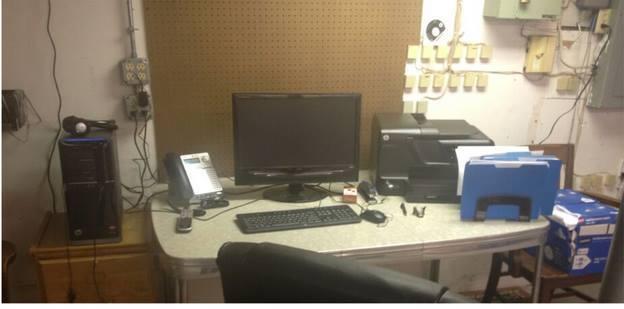
“They gave me a spot down in the basement of their shop, which was anywhere from 47 to 52 degrees,” Feinberg said. “I had my jacket, my computer and I was making 400 calls a day.”
After three months of not funding any deals, Feinberg said he almost gave up. He was also focused mainly on the equipment finance market because that’s all he really knew.
“Then come to find out that I talked to somebody that had a need for working capital and I realized that I could find sources [for] capital,” Feinberg said.
So he worked with a few different sources to find capital for this client. The deal went through in 24 hours and it paid about $7,000 in commission.
“I didn’t have any money and I was like, ‘this is awesome,’” Feinberg said. “So I [kept] making 400 calls a day, knowing that this could potentially change my life.”
And it did. After a year, Feinberg’s company, Everlasting Capital, made $110,000 in commissions and $3.5 million in volume. Within that first year, he also hired three people and moved from the basement of the pawn shop in Rochester, NH to a 600 square foot office in the same town. (The current office is also in Rochester, but in a larger space.)

This lightning fast trajectory is by no means common. That’s why Everlasting Capital made it onto 2017’s Inc. 500 list, the iconic list of America’s fastest growing private companies. By year two, Everlasting Capital earned $640,000 in commissions, generating $14 million in volume, and by year three it earned $1.6 million in commissions with $18 million in volume. Ultimately, over a three year period ending in 2016, Everlasting Capital experienced 1,361 percent growth, placing them at No. 323 on the Inc. 500 list.
How did they do it? Feinberg said that creating a company and an office environment that employees enjoy is really critical, as is recognizing employees for their hard work.
“As long as we hit our goals which we have every year,” Feinberg said, “we take our company on a trip at the end of each year.” (Trips have included Las Vegas and Puerto Rico.)
More specifically, Feinberg said that the company’s success had a lot to do with building relationships with senior level people at top funding companies like Pearl Capital and BFS Capital. These relationships gave them higher [approved] volume, better buy rates and the ability to pay out good commissions to ISOs.
“This opened up a whole new aspect of our company,” Feinberg said. “Now, in addition to working with direct clients, we had an ISO division as well.”
But Feinberg said he wanted to create a reputable company to ensure that ISOs could feel comfortable working with them, knowing that Everlasting Capital was not backdooring their deals. So they created a portal for ISOs, called EverHub, which allows them to track their deals at every step along the way.
“We had to think outside the box to come up with a platform that was completely transparent and made it viable to work with another broker to get deals done,” Feinberg said.
There have definitely been hurdles along the way – most notably, employee retention.

“We hired and fired about 20 people in the second year,” Feinberg said. “We wanted to see if quantity would increase sales. Come to find out, it’s more quality than quantity.”
Partnership has been another challenge. The leadership team at Everlasting Capital is now Feinberg and Murphy. Feinberg’s brother, who was Murphy’s initial partner at the pawn shop (which has since been sold), is no longer involved in it.
Feinberg said that what makes for a good partnership is communication, early and often. And being able to hold partners accountable for different responsibilities.
“Partnerships are tough in business – they tend to get a little hairy, a little crazy at times,” Murphy said.
“Like myself and Josh, we have some different views on a lot of different things, but we take our different views and we meld them together to provide the best outcome for our employees and all the people we work with. Some may see that as a downside, but it’s actually a real strength.”