
Nine Organizations Submit Joint Response to Bizarre Illinois Small Business Lending Bill
April 16, 2016
A bill introduced in the Illinois State Senate to “protect” small businesses from lenders is causing small businesses themselves to scratch their heads. The bill would effectively outlaw nonbank business lending, which would render those declined by a bank, restricted from accessing capital through other means.
“As we all recall what happened in 2007-2008 in the housing market, so many people went under due to these predatory lending practices. So I’m happy we’re being proactive instead of reactive with this issue,” said Illinois State Senator Emil Jones.
That proactive approach is to scorch the earth, which is creating staunch pushback from within the small business community. A letter co-signed by the following nine organizations was submitted last week to Jacqueline Collins, the Senator who introduced the bill:
- Coalition of Responsible Business Finance
- Electronic Transactions Association
- Illinois NFIB
- Illinois Retail Merchants Association
- Equipment Leasing and Finance Association
- Small Business & Entrepreneurship Council
- Small Business Investors Alliance
- National Small Business Association
- Illinois Chamber of Commerce
Dear Chair. Collins:
The undersigned organizations, companies, and coalitions who have business in Illinois and throughout the country are writing to express our concerns with SB 2865, the Small Business Lending Act.
We all share your goal of helping small businesses. However, we believe that the prescriptive underwriting standards, complex regulatory mandates, and expansion of civil and criminal liability will prevent small businesses from getting the capital they need to grow and benefit their communities and the state of Illinois.
We respectfully ask the Committee to study the issue of access to capital for small business in Illinois through a transparent process that involves the direct input from small businesses prior to moving forward with SB 2865.
We are hopeful that a deliberative, inclusive, and public process could produce a report that will assist your Committee and the Illinois legislature. Among the questions a study committee could try and answer are: what methods of transparency and disclosure by alternative lenders and finance companies would make it easier for responsible small business borrowing; should non-profit lenders be exempt from alternative lending and finance requirements; and how does the securitization and sale of alternative loans benefit small business lending?
Of course, there are many additional issues that small business stakeholders will identify through a study committee in an effort to assist your Committee prior to any legislative action on SB 2865. We stand ready to assist you in that effort and we appreciate the consideration of our views.
Conflicting information has come out of the Senate since a hearing was held about it on the morning of April 12th. Fox reports that it is heading to the Senate floor for discussion with the expectation of some modifications, while those that were there say that it has been put on hold until early 2017 since it’s a presidential election year.
Square Capital’s Jackie Reses Reveals Why They Really Gave Up Merchant Cash Advances
April 14, 2016 At Lendit, Bloomberg Reporter Emily Chang asked Square Capital head Jacqueline Reses to explain the real reason behind Square’s shift from merchant cash advances to loans.
Reses said that it was not a customer issue, but an investor one. “This industry and this conference more than anyone understands the nuance between MCAs and loans,” she said. “From an investor side, that’s really where the savings are between the form of an MCA and the form of a loan, in that there’s an actual repayment date.”
Reading between the lines, she seemed to be saying that investors like certainty and exact terms whereas the traditional merchant cash advance product was harder to sell off or securitize because they lack a defined element of time.
Fast loan approvals shouldn’t be criminalized
Referring to the criticism that online lenders have been getting recently for their fast approvals, Chang specifically asked if companies like OnDeck were approving loans too quickly.
Reses responded, “I don’t think the ability to execute something quickly, smoothly, transparently, should be criminalized as something that requires oversight, and so I think being good at something should be well regarded.” She later added, “I think the notion that credit decisions being swift is a problem is just misguided.”
Transparency
Reses used the word “transparency” several times but in explaining such did not reference the disclosure of Annual Percentage Rates even once. Instead she mentioned the importance of spelling out the total dollar cost to the merchants, subtly reconfirming the findings that are coming from many other alternative lenders.
Was the move from MCA just about investors though?
Read our initial assessment and expanded theory.
Watch the full “fireside chat” video below:
Small Business Finance Association Releases Best Practices Just in Time
April 13, 2016
The Small Business Finance Association (SBFA) has finally released their long awaited best practices guide. The four overarching principles are transparency, responsibility, fairness and security.
Unlike other organizations that have called for APR disclosures, the SBFA believes that the total dollar cost of the transaction is the most important way to achieve that goal. It’s also because the organization’s core members are engaged in a form of factoring most often referred to as merchant cash advances. Those transactions don’t have interest or interest rates and thus no way to ascribe an APR.
As part of the announcement, SBFA VP and RapidAdvance Chairman Jeremy Brown said, “Small business owners are a powerful constituency and we want to give them the utmost confidence in the alternative finance industry. These best practices are our way to prove to small businesses that our industry will consistently offer transparent, fair, and responsible choices to meet their needs.”
The timing could not be better. Earlier this morning, Stephen Denis, the executive director of the SBFA, testified in an Illinois State Senate hearing to protest a controversial bill that would effectively outlaw nonbank business lending under $250,000.
Among the bill’s strangest rules, is the restriction on monthly loan payments to being no more than 50% of a business’s net income, which would cause all businesses breaking even or reporting a loss to be prohibited from obtaining a loan from a nonbank or nonprofit source by law.
Marketplace Lending Association Formed to Defend Investor Marketplaces
April 6, 2016
Funding Circle, Lending Club and Prosper have joined forces to create a collaborative non-profit body, i.e. a trade association. Its mission is “to promote a more transparent, efficient, and customer-friendly financial system by supporting the responsible growth of marketplace lending, fostering innovation in financial technology, and encouraging sound public policy.”
Among the already available resources on the association’s website is a white paper dictating “operating standards.”
The standards are broken down into five broad categories:
- Investor Transparency and Fairness
- Responsible Lending
- Safety and Soundness
- Governance and Controls
- Risk Management
The group’s initial members are notable because Prosper only does consumer loans and Funding Circle only does business loans. Lending Club bridges the gap by doing a combination of both. That means that the group’s prospective membership will be fantastically broad. After all, what does a commercial lender providing capital to a $10 million/year business have in common with a personal lender helping a single mother refinance a credit card? The answer is their investor base.
 All 3 companies allow investors to invest in loans on their respective marketplaces and lo and behold “investor transparency and fairness” is the first, foremost and most detailed category of their white paper.
Indeed, one requirement to join the association is to be matching 75% of loans, by dollar, with commitments for funding from investors before the loans are issued.
The Marketplace Lending Association therefore probably seeks above all else, permanent acceptance of the ability for investors to buy loans or securities backed by loans in online marketplaces.
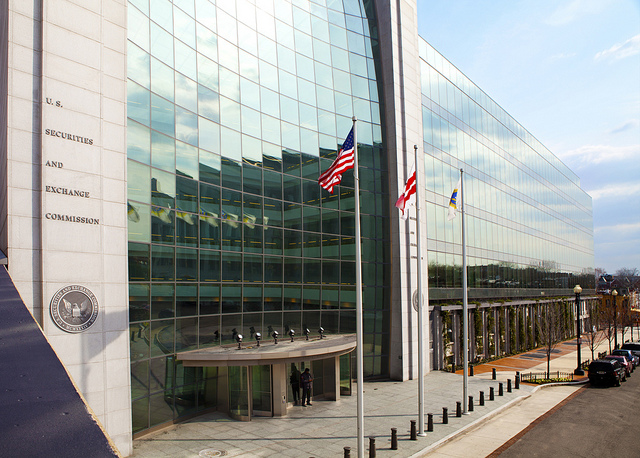
And it’s no wonder, just last week SEC Chairman Mary Jo White questioned these marketplaces during a keynote speech at Stanford University. “We expect that investors will receive disclosures about the loans underlying their investments, including information about the borrowers as well as the platform’s proprietary risk and lending models, that will enable them to make informed investment decisions – both at the time of investment and on an ongoing basis,” she said.
The SEC is not alone in their interest, hence the need for and now the emergence of, a Marketplace Lending Association.
The APR Enigma Confuses Everyone – Even Lenders
April 3, 2016
A study published by Lendio last week confirmed the results found in recent government studies, that small businesses are confused by Annual Percentage Rates. But they’re not alone…
It might be time to reconsider the calls for APR standards in small business lending. In a recent survey of 1,000 small business owners, only 17.4% of respondents chose APR as the easiest method to understand the cost. The vast majority selected the total net dollar cost of the loan as being the easiest.
The data matches the results found in a study conducted by the Federal Reserve Bank of Cleveland last year, in which small business owners generally responded that there was nothing confusing about a loan when cost was presented as a total dollar value. It was interest rates that tripped them up, the Fed determined.
When attempting to answer questions about the total amount owed and interest rates, participants became notably less confident in their ability to make an informed borrowing decision, with many qualifying their answers or indicating they were “not sure.”
– Federal Reserve Conclusion from Alternative Lending through the Eyes of “Mom-and-Pop” Small-Business Owners 8/25/15
Additionally in the Fed study, small business owners guessed the interest rate of a presented hypothetical loan to be anywhere from 5% to 50%, with some saying they just didn’t know. All of them were wrong. An analyst for the Federal Reserve Bank later acknowledged that it was a trick question. “The correct answer is that ‘it depends on how long it takes to pay back,'” said Ellyn Terry, an economic policy analysis specialist. The Fed report itself had to be amended more than a month later because this question and the answers produced in the study were confusing to even the sophisticated parties trying to make sense of it. That amendment reads as follows:
*Note: In practice, for a credit product structured like Product A, the effective interest rate varies depending on how long it takes a borrower to repay which, in turn, depends on the volume and timing of credit card sales receipts. Simply put, the interest owed on Product A is 30% of the principal value, but assuming consistent monthly sales and daily payments, the effective interest rate is on the order of 60%, and higher if funds are repaid sooner than one year. (Added 9.29.2015)
Does that clear it up for you??? Even the added note intended to make the interest rate question more clear is confusing. Small business owners never stood a chance…
But it seems those on the lending side of things are confused too.
Lendio CEO Brock Blake followed up his study with a blog post on LendAcademy to try and articulate the implications of the findings. Titled, Communicating the Cost of Capital in Alternative Lending, Blake was roasted in the comments for comparing a 6-month loan to a 5-year loan by those presumably involved in lending themselves.
Apparently, math is very subjective
In an example Blake used to illustrate a point, he gave a 6-month loan an Effective APR of 83% and a 5-year loan an Effective APR of 19%. Critics eager to point out holes in his argument challenged the fundamental numbers used to construct it.
“By the way, I tried to verify the APR of that #1 loan, and I get 137.03%, not 83%. Has anyone else tried to verify this calculation?”
“I ran the numbers on #1 but came up with a different number altogether. I think the error is in total cost of capital, which should be $4,500 vs. $4,016. With 22% simple interest, interest paid would be $3,960 plus the $540 origination fee.”
One set of facts, 4 different opinions on APR. How can this be?
In sparking this debate, Blake may not have fully convinced readers that a 6-month high-APR loan can be better than a 5-year low-APR loan, but he did unintentionally demonstrate support for his study’s findings, that APR as a universal measurement is flawed since even those that believe they understand it came up with different percentages than their peers.
Consider that the Federal Reserve study referenced above implied to business owners that APR is simply an abbreviation for interest rate, which isn’t true. “When it comes to borrowing for the short term, are you more comfortable knowing the interest rate (APR) or total cost of repayment?” it asked those polled.
 Bad form
The Truth in Lending Act (TILA) makes a clear distinction between an APR and an interest rate. “Since an APR measures the total cost of credit, including costs such as transaction charges or premiums for credit guarantee insurance, it is not an ‘interest’ rate, as that term is generally used.” Well then why are they presented as the same thing in a Fed study measuring comprehension of loan costs?
Note also that only one of the Fed study’s mock products mentioned an APR and only in the context of an Effective APR, something that the Fed has long known to be confusing. In April 2006, Macro International (now ICF International) was hired by the Fed to examine the comprehensibility of these very formulas.
One of the most consistent findings was that very few participants understood the meaning of an Effective APR (At that time known as the Fee-Inclusive APR). “Participants had a wide variety of incorrect interpretation of these percentages, including that they were the interest rates that would be paid on fees, penalty rates that would be charged if late payments were made, or the percentages of total transactions that were made of each type.”
It got worse though, because “in addition to a general lack of understanding of the [Effective APR], qualitative testing also found several instances when participants confused this term with their nominal APR for a given transaction.”
But it’s gotten better right?
For all of the studies conducted and regulations implemented, one might expect that banks, which bear the brunt of disclosure requirements in the financial world, would receive the highest marks on transparency. But that’s not the case. Another study, one jointly published by seven Federal Reserve banks, found that dissatisfied business borrowers were slightly more likely to encounter transparency issues with large banks than they were with online lenders.
Bankers probably aren’t surprised by that
Last Fall, B. Doyle Mitchell Jr, who spoke on behalf of the Independent Community Bankers of America during a House subcommittee hearing, said that new loan disclosures [required by Dodd-Frank] was not making it easier for borrowers to understand, to the point that they don’t even know what they are signing anymore. “In fact it is even more cumbersome for them now,” he said.
Non-bank lending critic Ami Kassar has publicly claimed that lenders are simply afraid of disclosing APRs because they don’t want their borrowers to know the real cost.
The data indicates however that borrowers don’t know what to make of APRs. Worse, the issue seems to be a universal one, one that confounds consumers, business owners, government surveyors and those within the lending industry itself.
APRs also struggle to remain relevant as a measure for short term loans. For example, OnDeck CEO Noah Breslow has said that a six month loan with a 60% APR may actually only cost 15 cents on the dollar. “The APR overstates the actual cost of the loan to the borrower,” he previously told Forbes.
“Asked which method was easiest to understand, two-thirds of respondents chose total payback amount,” Lendio’s survey concluded.
That seems to be the trend indeed.
Online Lender Avant Hires Ex-FDIC Chief to Board
April 1, 2016 Soon, non banking lending will be made up of ex bankers.
The latest announcement comes from Chicago-based online lender Avant which hired the former head of Federal Deposit Insurance Corporation Sheila Bair to its board. Avant sells unsecured personal loans from $1,000 to $35,000 and has issued loans worth $3 billion.
Bair joins Avant after months of due diligence and said she was impressed Avant’s lending standards are similar to big banks where it retains half the loans on its balance sheet. At the FDIC where she spent five years between 2006 to 2011, she pushed for stricter lending standards with capital and risk. In 2014, she joined the board of Spanish bank Santander for a brief stint.
In the recent months, the new crop of fintech upstarts, backed by venture dollars and fiery ambition have clocked fast growth to justify the impressive hires. Stealth P2P insurance startup Lemonade brought on famous behavioral economist Dan Ariely to design risk models. Student lender SoFi hired Deustche Bank chief Anshu Jain to its board, Funding Circle appointed ex ECB chief Jorg Asmussen and last year Prosper hired former CFPB chief Raj Date.
The alternative lending space is garnering a lot of regulatory attention. SEC Chairwoman Mary Jo White called for more disclosure to investors as well as proprietary risk and lending models adopted by companies. The Small Business Finance Association is working on building a guide for industry best practices.
SEC Chair to Marketplace Lenders, Disclose Material Information to Investors
April 1, 2016 Stanford University
For marketplace lenders, less is not more when it comes to disclosure.
At an event held at Stanford University yesterday titled, The Silicon Valley Initiative: Protecting Investments in Pre-IPO Issuers, SEC Chairman Mary Jo White gave a keynote speech that mentioned marketplace lending. “As investors are attracted by potentially higher yielding but riskier marketplace loans as an investment strategy, information about the borrower’s ability to repay the loan underlying the investment is critical,” she said.
The message? The SEC is indeed watching.
“We are also concerned about the adequacy of the information received by investors in registered offerings,” she added. “We expect that investors will receive disclosures about the loans underlying their investments, including information about the borrowers as well as the platform’s proprietary risk and lending models, that will enable them to make informed investment decisions – both at the time of investment and on an ongoing basis.”
Her warning comes at a time when the industry has considered reducing disclosures instead of increasing them. Last year, Lending Club announced that investors on their platform would only have access to 56 data points, down from 100, a decrease of almost half. At that time, investors and industry advocates balked at the news.
Lend Academy’s Peter Renton shared what he thought on his blog, “It is pretty obvious by now that I don’t like these changes. For quite some time now Lending Club has been reducing the amount of transparency for investors. Now, some changes I completely understood such as removing the Q&A with borrowers and even the removal of loan descriptions. But removing data that investors have been using to make investment decisions is a step too far in my opinion.”
Some speculated that Lending Club was being forced to do this as a way to prevent investors from trying to reverse engineer their models and beat their grading system for above average yields. For reasons unknown, but potentially due to negative feedback from investors over disclosure, Lending Club changed course and instead added 15 new fields.
To be fair, many marketplaces find that investors simply don’t make use of certain data points and thus they are deemed immaterial. Marketplace lenders also have to balance the privacy of their borrowers with transparency to their investors.
The SEC Chair also spoke about crowdfunding, robo-advisors, the blockchain, and the illusions that subjective private market valuations can create.
Small Business Finance Association To Unveil White Paper
March 29, 2016 The Small Business Finance Association (“SBFA”) will soon publicly unveil a set of guiding industry principles, AltFinanceDaily has learned, and they’ll fall under four broad categories that espouse transparency, responsibility, fair dealings and security.
Transparency will not just be about the disclosure of fees but also likely about the disclosure of process, methodology, and application rejection, among others.
The principles of fair dealings are unlikely to touch on pricing or costs. Instead they will be about a commitment to being truthful and fair in dealings with small businesses. That is sure to include marketing materials that are clear and understandable, an area that will undoubtedly extend out to the brokers they work with, if any.
While responsibility will speak to the notion of being a legally compliant good citizen when it comes to dealing with customers, security will be more than just the use of an SSL Certificate to access the website. Verifying the business’s legitimacy and confirming the owner’s identity are high on the list of a secure process, AltFinanceDaily has learned.
SBFA members already adhere to a set of standards and have since the group was formed eight years ago. Their new white paper will serve to codify them in a way that others can adopt and conduct themselves to accordingly.
The white paper will be the first major achievement of the organization since Stephen Denis came on as the executive director in mid-December. Denis is the former deputy staff director of the U.S. House Committee on Small Business.
“The goal is to start from scratch and take a look at everything the association is doing,” Denis said in AltFinanceDaily’s previous magazine issue, “and to really build this out to a robust group that represents the interests of small businesses.”
In another interview conducted for that story, SBFA president and founder David Goldin explained that he had been troubled by misconceptions over the industry’s prices. “Most people don’t understand the economics of our business,” he said.
The SBFA also plans to revamp their website in the near future.