
The Unofficial Origin of Merchant Cash Advance (In Honor of St. Patrick’s Day)
March 16, 2015 In the late 1790s, two brave pioneers trekked across the North American continent in search of a bank loan alternative. A particularly harsh winter almost managed to dash their dreams, but they pressed on. “For the free market! For funding!” they cheered. Their optimism stood in stark contrast to the cold rugged landscape through which they traveled.
They weren’t the only two who sought change, but they were the catalyst. One of them was Sam Smith, an owner of Ye Olde Bar and Restaurant. His partner was John Stacker. John was the more wild and unpredictable of the two. They had always brewed their own ale but their customers had grown tired of the taste and were turning to local moonshiners.
Eager to win back their customers, Sam reached out to the distributor of a major lager but was told he could only make purchases in bulk. It would cost them $10, nearly the amount his bar would earn in a month. He was confident that if he raised the cash, he could sell it to their customers for far more than they paid for it and come out ahead. Sam knew there was only one place in town to borrow a hefty sum of $10, First American Bank and Trust. It wasn’t a national chain, but rather quite literally the first national bank and the only one that anyone could trust.
“A business loan for $10?” the bankers laughed. “Absolutely not!”
And so Sam realized that if it was capital they sought, they’d have to get it from someone out in the great beyond. John agreed, kind of. He didn’t want to settle for someone. He hoped to enlist the help of everyone.
After packing their bags and saying their farewells, the two partners set off on a 900-mile journey.
 Their wagon fell apart about halfway there. When it could no longer be patched up, they continued on horseback. When the horses died, they walked. When their legs gave out, they crawled and when their knees gave out they did the worm.
With barely any energy left and ready to give up, they came upon a charming red brick building in the middle of a desert. A sign was posted outside that said “Ye Olde Barter Shop. Trade Inside.” If for no other reason than to rest, they made their way toward the door.
Behind the counter of the establishment was a dapper old man with silver hair. He spoke with a brogue and was quite possibly of Irish heritage. “Come to trade have ya lads?” He had a warm inviting smile and it caused the two friends to feign an interest, even though they had nothing to trade.
 After some pleasant small talk, the Irishman asked what they were looking for. “We need money for our small business,” Sam responded. “Aye lad, well I’m not a banker ya know, but I might be able to work out a trade.”
Uninterested in anything other than money, they felt their time was being wasted and they turned to say their goodbyes. But the Irishman’s infectious voice called to them with an interesting offer. “I’ll trade ya lads. I will give you this $10 you seek, but in return you will give me $12 of your future sales. Tis’ a barter I just came up with.”
Sam was immediately interested, but had questions. “When do you need the $12 back by?” he asked. Before the Irishman could respond, Sam began to pick up on something he hadn’t before. What was a beautiful building doing in the middle of the desert? Why would an Irishman be bartering out here and wouldn’t the fact that his FICO score was below 680 be a deal breaker?
The entire experience almost seemed…magic, which made him even more receptive to the response he was about to get.
“The $12 is not due by any time. For every ten pennies you earn from your customers, take one and put it in a jar. When the amount in the jar reaches $12, you can bring it to me. As long as your bar is as consistent as you say and there’s no reason for me to believe that your business will close, I would like to invest this $10 for you to buy this fine lager. However lad, no lager is as fine as the true lager itself. I do hope this lager is Guinness.”
The Irishman continued but Sam was already sold. The stars had aligned. It was unsecured, it was fast, it was magic. As long as Sam could prove that they had no real problems with the tax man, they would receive $10.
 “We should do this with every barter shop in the country at the same time!” John exclaimed. Sam just glared at him.
After the Irishman pulled their credit, ran a UCC search, and examined their bank statements, they got funded. It was just that simple.
And so the end of the story is different depending on who you ask, though every version of it has a few common elements. Sam and John’s bar thrived and the townspeople loved them for it. John Stacker opened a separate bar that was all his own and he bartered his future sales all the way up to 12th position.
Other merchants began to tap into this kind of financing by trading their future sales in exchange for cash upfront. First American Bank and Trust was unperturbed and instead focused on how to charge people for holding their money, withdrawing their money, breathing and existing. Their goal was to one day become too big to fail, blow up, and then never lend to small businesses ever again.
And as for the barter shop run by the Irishman? Legend has it that they’re currently paying 14 points to brokers and gearing up for an IPO. They’ve also rebranded themselves in the public eye as a tech company. Private Equity is now all over them.
Happy St. Patrick’s Day. It’s okay to have some fun every now and then. 🙂
Mayor Rahm Emanuel Declares War on Merchant Cash Advance
January 16, 2015 FOX 32 in Chicago is reporting that Mayor Rahm Emanuel is going on the offensive against merchant cash advance companies. Specifically it says,
Mayor Rahm Emanuel will call on state and federal agencies to regulate business to business lenders. Emanuel said cash advance companies have accelerated their marketing efforts in recent months, resulting in small businesses taking loans they cannot afford.
The article states that business owners have turned to the City of Chicago for help in paying back loans with high rates of interest.
While the mention of APRs reaching into the ranges of triple digits is supposed to shock you, one business lender that charges such rates recently went public and had been backed by Google Ventures, Fortress Investment Group, Goldman Sachs, and Peter Thiel.
Less than 30 days ago we were celebrating these companies as the solution to a problem that has plagued small businesses for all time, access to capital.
While Emanuel is obviously famous for being the 23rd White House Chief of Staff and Obama’s right hand man for a period in his first term, he is not the first mayor to consider the role merchant cash advance companies and high interest business lenders have in cities across America.
All the way back in 2008, the U.S. Conference of Mayors (USCM) adopted a resolution titled, Protecting Main Street Small Business Owners from Predatory Lenders, from which some of the excerpts below are from:
WHEREAS, merchant cash advance companies have already lent approximately $2 billion at egregious rates and have been quoted in leading main stream media publications such as Forbes, Business Week, Dallas Morning News, and American Banker claiming that their new originations have increased 75% in the first half of 2008
WHEREAS, as with payday lenders and predatory lenders in the home mortgage community, Mayors need to take a leadership role to scrutinize predatory merchant cash advance companies, educate small business owners of the dangers posed by these firms, and increase awareness and promotion of alternative, more affordable funding sources to support this vital segment of our economy
BE IT FURTHER RESOLVED, that to protect the general health and viability of their small business communities, cities should investigate whether they can effectively regulate or ban merchant cash advances.
3 months after this resolution was passed, Lehman Brother’s collapsed and the economic crisis was in full swing.
 According to a few industry leaders familiar with the 2008 mayoral resolution, UCSM privately retreated from their stance when all other types of commercial lending had dried up. Their seeming reversal, though not publicly stated invited merchant cash advance companies into their communities at the moment when Main Street was arguably at its weakest.
Who do they think rolled up their sleeves and kept local economies alive when things were at their worst?
While non-bank funding can obviously be expensive, countless business owners have praised merchant cash advances in particular as a solution that came through when none other were available.
Emanuel will learn that companies such as Square and PayPal are part of the crowd that provides merchant cash advances. This is not a shadow industry. Non-bank business-to-business financing is already becoming less expensive nationwide.
According to Fox, the Commissioner of the Chicago Department of Business Affairs and Consumer Protection said the goal is to offer small business owners loans at affordable rates with full disclosure.
Merchant cash advance companies would undoubtedly feel the same way. The dilemma is that advocates of affordable rates tend to really mean single digit rates. When single digit rates are not possible given the risk, they seem to argue that no financing should be given at all, leaving the business to fail or miss out on an opportunity. That’s the exact type of flawed thinking alternative financing companies address…
Ironically, a report from the Federal Reserve Bank of Cleveland last week concludes that small business job creation is lagging with a possible culprit being a lack of access to credit.
Coming out of the most recent recession, however, job creation by small businesses has lagged, and the new business formation rate continues to fall. While it is not clear that these trends are driven by weaker borrowing or limited access to loans, it is evident that businesses need adequate credit to succeed and grow. As such, policy makers should not lose sight of the trends related to small business credit, even with the recent positive reports showing improvements.
And of course in a supposed exposé on merchant cash advances that aired on Chicago Public Radio in November, clips of an interview I did with them were aired to fit the narrative of merchant cash advance as predatory. When asked by the interviewer what a small business owner should do if they didn’t understand a contract, I advised that they hire an attorney or an accountant, and if they couldn’t afford those then to find somebody they felt qualified to offer an opinion. “They should always get a 2nd set of eyes to review a contract if they don’t understand,” I said.
My advice did not air, nor did my explanation that there were two separate types of products that they were confusing as one, one being loans and the other being purchases of future receivables. I suppose it didn’t fit the characterization they were going for.
As quoted in Fox, Financial Advisor Kent Travis advised business owners to “read the documents, don’t sign anything on the spot, make sure you read it thoroughly and if you have trouble understanding it seek the advice of an advisor, CPA, an attorney or a financial planner.”
I couldn’t have said it better myself because I already did.
And in an interview I had with former Congressman Barney Frank, a chief architect of the Dodd-Frank Wall Street Reform and Consumer Protection Act, Frank voiced his opposition to regulations on business-to-business lending in early 2014.
There’s one thing the Fox story does mention that’s hard to argue with and that’s the need for greater transparency. I am all in favor of that.
—————–
For those that haven’t already signed up, this is a reminder that the Law Office of Pepper Hamilton LP is hosting a lunch at their office in New York on January 27th to specifically discuss the merchant cash advance industry’s future.
Interested in discussing legal issues, best practices, and the path forward for alternative business financing? Are you an ISO or funder interested in sharing your thoughts? Send me an email to let me you know if you’d like to attend. sean@debanked.com.
—-
Watch the Fox news report about merchant cash advances:
Merchant Cash Advance Accounting – A How To Guide
January 13, 2015This is the introduction and first question in an interview between AltFinanceDaily’s Sean Murray and accountants Yoel Wagschal, CPA and Christina Joy Tharp.
- 2. Do I Need a Special MCA Accountant?
- 3. and 4. Recording Merchant Cash Advance Transactions on the Books
- 5. Merchant Cash Advance Accounting Pitfalls
- 6. Revenue recognition for Merchant Cash Advance
- 7. Q&A – Real questions that MCA companies or syndicators have
Funding small businesses is the easy part of merchant cash advance. Anyone can fund. It’s what comes after that’s tricky and I don’t just mean capturing those receivables you’ve purchased, but also recording everything in such a way that you’re not scrambling around tax time.
I have a B.S. in Accounting but I asked the experts Yoel Wagschal, CPA and Christina Tharp his staff accountant for their insight on managing the books for a merchant cash advance company. We’re still a ways off from April 15th so now is your opportunity to fix whatever you might not have done in 2014 and start off on the right foot for this year. Thanks again to Yoel and Christina for answering these questions.
Q: As a funder, what systems should I have in place to make sure I can:
a. Prepare business tax filing
b. Be ready for an audit to raise capital
c. Know whether or not I am making money
A: First of all you have to understand that every type of business has this exact same question. The answer is that you need to have proper accounting entries and records which will then aid you in creating the financial statements (ie: balance sheet, income statement, statement of retained earnings, and statement of cash flows).
Whether it is a tax filing, a bank audit, or an internal inquiry, the solution is identical because all of those situations require the same financial material in order to answer them. In order to prepare a business tax filing a company must provide its profits and losses. That is the same information provided in an audit to raise capital and it is the same information a business owner needs to see how much money they are making (or losing!).
The exact system is obviously custom fit to your individual business model but it should follow these very basic steps:
i) Think the entire process through from cradle to grave
ii) Be sure to codify where funds are coming in from:
a. Investments from syndicators
b. Payments from merchants
c. Commissions
iii) Be sure to codify where funds are being sent to:
a. Funds to merchants
b. Funds to syndicators
c. Commissions
iv) Be sure there is a system of checks and balances which will alert you to the following common errors:
a. Funds not received from/sent to syndicator
b. Funds not received from/sent to merchant
c. Commissions not received
v) The bank account is the authority while the system is only a representation:
a. Your system balance should reconcile with your bank account
b. It is advisable to have a separate bank account for funding transactions
You will also want to pull up trial balances and earnings reports, which must be input correctly from the very beginning in order for these reports to be accurate and effectual.
What makes this industry different is that an accounting system can make or break an MCA company. For example, a supermarket usually has good POS software for inventory control. If an employee drops a “box of tomatoes” it’s not the end of the world. The loss is either immaterial or if it is material the accounting system will pick up the big monetary discrepancy.
In the MCA industry a “box of tomatoes” could be anything from a $0.05 loss to a $500,000 loss. Because the MCA industry deals with money as its product and is often processing transactions at breakneck speed, there needs to be safeguards in the system to catch any and all mistakes in real time.
Our accounting firm has seen where people built attractive systems which seemed good to the funder. However, if the funder lacks accounting knowledge when this “box of tomatoes” falls out they may not be able to place exactly where the loss occurred. Or even worse, they may not realize a loss has taken place until it is too late. For example, if you wait until the end of the tax year and then discover that merchant payments have been missed how do you recoup those funds? It’s the same situation if incorrect amounts are funded to merchants, if incorrect commissions are paid out, or if syndicators have not invested the funds they were expected to.
Phone (845) 875-6030
Fax (845) 678-3574
Email: cjt@ywcpa.com
http://ywcpa.com
Please consult with an accountant to assess your particular situation and needs.
Through OnDeck Capital, An Industry Wins
December 16, 2014 Call it merchant cash advance, non-bank business lending, or financial disintermediation. Whatever floats your boat. On December 17th an entire financial methodology will be validated, the daily repayment method. Daily payments don’t exist anywhere else in lending but ’round these parts it’s the standard. It’s what makes unbankable businesses bankable.
OnDeck is a lender. They target small businesses. The costs are high. Anyone could feasibly do those things and plenty are doing them, but only a certain segment of fintech companies utilize daily payments and most of those are merchant cash advance companies. OnDeck is a lender but like it or not their core repayment mechanism overlaps with an industry well known for being even more expensive.
Daily payments are so unique and so revolutionary that it hasn’t sunk in to the masses yet. Even the press glosses over this fine detail to instead dwell on things like APRs and social media’s role in approvals. Daily payment and daily repayment look like tech jargon, some kind of code for a backend computer process to hotwire an anomalous rate algorithm.
Daily payments mean borrowers have to make payments every single business day. It’s daily, get it? If the sun rises and it’s not Saturday or Sunday, it’s time to make a payment. I’m not saying there’s something wrong with this. I’m a proponent of this mechanism. It works for business owners that struggle to make a single lump sum payment each month and it works for lenders who need to mitigate and monitor their risk as much as possible.
 I feel it’s better to know there was a problem that started yesterday than to learn there was a problem that started 29 days ago. That’s how OnDeck thinks too. And business owners can incorporate the daily deduction into their normal business operations instead of fretting to cover the balance for a big debit the day before a monthly payment is due.
This isn’t just a theoretical design that can’t function in practice. It’s been working for lenders and factors since AdvanceMe (Now CAN Capital) started doing it in 1998. The daily payment methodology has survived the Dot Com Bust and the Great Recession. It’s grown to a $3 – $5 billion a year industry. By some measures, it’s taken a hell of a long time to go this mainstream.
But it’s here. The press will call OnDeck a lender, a tech company, or a combination of both. They’re a sign of the times but they are unique in that they will show the world that daily payments have a place in the modern economy. With OnDeck leading the way, traditional lenders may consider leveraging their methodology to serve categories of risk they usually shy away from.
I’ve never heard of a business credit card that required payments to be made every day. Some might think that defeats the purpose of credit. OnDeck proves it doesn’t. And 100+ merchant cash advance companies serve as a secondary validation. Perhaps there are lenders that have considered a daily payment system previously and feared the political or legal environment was too risky. But OnDeck is making no apology about what they’re doing or how they’re doing it. They’re putting themselves on the open market, surrendering themselves to total scrutiny.
 CAN Capital is gearing up to follow them, the pioneers who first experimented with daily payments 16 years ago. And while OnDeck bemoans their loan program being compared to merchant cash advance, CAN is made up of two departments, one of which is undoubtedly a merchant cash advance service provider.
And there you have it. It’s not all about algorithms or tech or using facebook activity to judge a borrower. Those are old ideas now. OnDeck smashes down the door with something completely different, something that nobody is even talking about, daily payments.
December 17th is Wednesday and just about all of OnDeck’s borrowers will be making a payment. A good many of them won’t even notice. That’s the great part about layering it in as a daily cash flow expense. There’s no worrying about it at the end of the month. If they underwrite the borrower financials well enough, it should be completely painless. That’s not always the case, but it’s the goal.
You can’t possibly understand OnDeck until you understand daily payments. With this IPO, an entire industry wins.
Merchant Cash Advance Underwriting For Humans
December 11, 2014 There is no doubt that the merchant cash advance industry has undergone significant expansionary changes within the past decade. The first-mover advantage is past its prime in this industry and no longer proves to be as profitable as it once was for some of the earlier entrants to the market.
Although the alternative lending industry still has not garnered enough attention for change and reform from policymakers, it has attracted attention from Wall Street and wealthy Main Street investors alike. As today’s merchant cash advance providers continue to grow their capital bases, these larger players have the option and arguably an incentive to explore new products that will help them capture a larger market share of small businesses financing needs and ultimately will help them improve their bottom line.
Several of the more established companies have continued to grow either organically through strategic leadership and good timing, while others have been able to grow and cover new markets through mergers and acquisitions. Of all changes that have been affecting this space, one of the more interesting ones is the introduction of proprietary software used by some of these companies that will allow them to pre-qualify a merchant based on an online application, rate their credit risk, briefly scan submitted bank statements, merchant account statements and financial statements.
Several companies in this industry have invested extensively into making this process a reality, believing it will help them excel against their competitors by creating an economies of scope situation.
Not so fast though…
While automation can help make a company more efficient by converting applications into funded accounts, it can also create a gap in a company’s risk management policies if the company does not have steps in the process to reduce two important risks in any financial services business:
a) Information Asymmetry
b) fraud detection.
For those companies that still use human underwriters, I have compiled some pointers on my experiences relating to things I pay tremendous attention to when underwriting new accounts that help me spot fraudulent documents.
 The starting point in the fraud detection process begins with the application and a thorough review of the information provided. Google everything. Make sure the business is not reported as being closed, that the merchant is not going through extensive litigation that could result in jail time or in the business being sold off to another individual. Information on the internet is bountiful, and most of it is completely free. Unlike traditional financial services companies, he who pays the piper calls the tune does not apply in the alternative finance industry. Merchants are almost completely unbound with how to spend their advance, and sometimes engage in reckless borrowing to achieve their means, oftentimes altering documents in the process.
Credit Reports
In my experience with underwriting, many of the fraudulent accounts that I view have owners with either bad credit, limited credit history or no credit history. Furthermore, pay close attention to any fraud alerts on the 1st page of the report, and especially the date of the alert if it is fairly recent. Lastly, pay close attention to the number of recent inquiries on the credit inquiries. Today’s small businesses receive dozens of inquiries from cash advance companies and ISOs. While the inquiries themselves do not outright indicate any fraud and may even be encouraged by ISOs looking to get their merchant the best deal, the combination of a fraud alert and say 20 inquiries from competitive cash advance companies could signify that the other competitors found something that may not add up on the file and will warrant a close eye on the other submitted documents.
Bank Statements
Through community websites, fraudulent bank statements, merchant account statements, or any other type of statement are made easily accessible to purchase. The number of submitted fraudulent bank statements that I have seen within the past year has dramatically increased. Some statements can take as little as 5 seconds to determine if they are fraudulent and there are others that are so clever that they can take close to an hour of close scrutiny to find.
I personally use Adobe Acrobat to read and navigate through bank statements. Some of these statements are doctored so well that you may have to zoom in upwards of 300% to find a comma that should actually be a period to separate dollars from cents to put as a simple example. Be sure to quickly glance over all the statements, checking to see that you have a complete page sequence and the page count is correct.
One of the more common amateur mistakes is to use a prior year’s bank statement and simply change the year to read current year. Fortunately for underwriters, that process is not as simple as it seems on the surface. Not only do they have to make changes on the header of every page, but many times banks and credit unions make announcements throughout the statement for the current year. Other statements include full dates (month, day, year) on some line items usually in the withdrawals section but sometimes in deposits, subtotals and totals. This is more work for merchants to alter, and leaves them more prone to forgetting to change one of the dates.
 Just one inconsistency that happens to somehow conveniently flow with the rest of the statement can be the only evidence that you need. Some of the other common amateur mistakes include poor spelling throughout the statement, whiting out of numerical figures, inconsistent margin changes, font changes, and repetitive use of the same check numbers paid month after month (excluding those with default 0’s or 1’s issued by bank tellers directly).
Some of the more well hidden fraud can usually be found by comparing the summary page and last page of the bank statement to other statements. Typically, most banks and some credit unions offer you a snapshot of the starting balance, which should generally match up with the ending balance of the previous month. If it doesn’t, you should look for any transactions from the previous month that did not settle until the current month. If there is none, this is usually a red flag indicating that the merchant forgot that statements are continual time series financial data whose totals carry on to the following month.
Also, be sure to check that the summary data at the beginning of each statement matches the counts for deposits, withdrawals, and checks written each month. I’m also particularly skeptical when I see unusual consistency in the number and value of summary data with very little bank activity. Such an example would be a bank statement that consistently shows only 3-4 deposits each for over $100,000 and miniscule withdrawals such as a few small checks or a handful of fast food POS debits comprising all withdrawals for example. The business could be legitimate and the merchant simply submitted the wrong bank statement, which does not allow you to see the better cash flow picture from first glance, or the merchant could have simply taken the easy way out in creating a basic bank statement. Again, it is helpful to reference the type of business that you are underwriting in order to see if these transactions make sense. I am much more willing to acknowledge and accept this type of statement from a construction company per se than a brick-and-mortar retail shop.
 Final Tips
Don’t let analysis paralysis stop you from sticking to your conviction on an account. Underwriting is not directly focused on generating revenue for a firm, but rather minimizing bad debt expenses at the end of the day. If you feel like something is off on the statements that you are looking at but you just cannot find what is wrong, step away from your computer for a few minutes and focus on something else. When you return to your computer, you’ll better be able to scrutinize the statements and more likely to catch something miniscule that you may have missed from closely going over the statements again and again.
You can also ask fellow colleagues to look at the statements. Try experimenting and let at least one know that you have suspicions on a particular account and if they could take a close look at the statements; it also helps if you have someone else simultaneously looking at the same account but do not tell them about your suspicions on the account. If they also have a strange feeling about the statements, chances are that there is something off that warrants even closer examination. Lastly, when in doubt try to confirm the statements with the source of the statement. It may be beneficial to request that your merchants provide you with a bank representative’s contact information so that you can verify the legitimacy with the bank yourself.
Another source of action would be to have a merchant provide your company with a view only access of the account. This would also allow you to directly confirm the legitimacy of the statements eliminating any left over suspicions. The only downsides to these last two approaches is that they make take some time to complete, oftentimes a merchant is not willing to wait a few more days and will willingly go to a competitor who can promise to have them funded within 24 hours. In these cases, your last line of defense comes down to the merchant interview part of the process.
Merchant Cash Advance Risks and Myths
October 24, 2014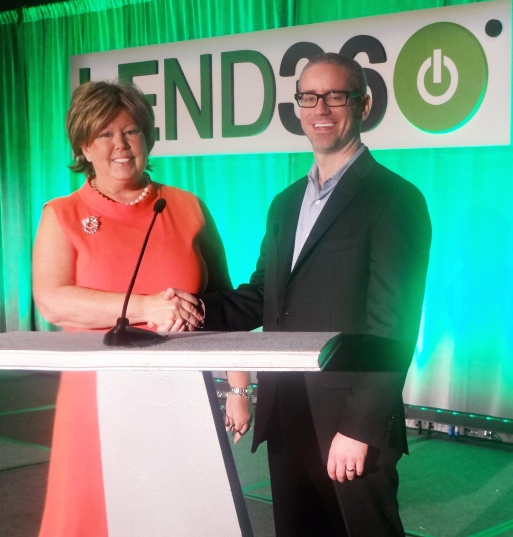 The Lend360 Conference in New Orleans last week had a different vibe from the five other conferences I’ve attended this year. For one, I was a partner in it through DailyFunder. And further, there was a huge focus on best practices, ethics, and regulations. Expert speakers and panelists aired it out to dispel myths and disclose risks.
Most telling about the future was a response from Victory Park Capital’s Brendan Carroll about whether or not he feared looming regulations could hurt the merchant cash advance and alternative business lending industry. As someone who has invested heavily in Kabbage and more recently in Square Capital, he expressed concern about regulations in general but clearly was not convinced they were on the immediate horizon for the industry.
Lisa McGreevy, president of the Online Lenders Alliance moderated the two-man panel which also consisted of John Hecht of Jefferies and she did a great job of digging out the true thoughts from one of the room’s most powerful investors. It’s unlikely a company like Victory Park Capital would invest hundreds of millions of dollars in an industry they believed faced imminent regulatory upheaval.
Merchant Cash Advance regulation is not on any regulator’s immediate agenda but they are doing their homework. At Lend360, it was revealed that several members of the North American Merchant Advance Association met with the Federal Reserve in Washington D.C. months ago for a Q&A. There’s communication occurring now on some levels. Even I’ve been contacted by the Federal Reserve to comment as a part of a broad research assessment.
Eventually I believe the CFPB will try to play a role in the industry through Section 1071 of the Dodd-Frank Act. We’re a long way from there though and it doesn’t mean they’ll be successful. Even internal operatives have expressed doubt on business-to-business jurisdiction.
In the meantime, it’s not all blue seas and sunny skies. Robert Cook, an attorney at Hudson Cook, LLP explained at the conference that the industry is already in many ways supervised by the FTC. And with the FTC, it’s not a question of how high the costs are, it’s about how transparent those costs are. If they’re high, fine, but do the customers understand them and are they marketed accordingly?
Terms like guaranteed, 99% approval rate, and lowest rates can be deemed deceptive if not true.
 Transparency, ethics, customer experience, that’s what people in the business need to be focused on right now. Stacking, while a polarizing topic, seems to be a matter of contract law. Everybody’s caught up in the stacking debate believing it’s the lightning rod that will attract regulation. If left unchecked, it might draw interest, but it’s the fundamentals that get overlooked that could draw the ire of an agency like the FTC.
If your marketing says “rates from 1.10 and up”, while actually contracting 99% of your customers with 1.49s, that’s something you’ll probably want to address now. Think about the net cost your customer is likely to be charged. If a 1.10 is a buy rate and there’s a 10 point upsell, a 10% closing fee, and 10% origination fee that makes the end cost closer to a 1.40, you probably don’t want to market the cost as 1.10.
Right now it all basically comes down to doing good business in a transparent manner. Costs may be high but explain those costs, make sure the customers understand them. Don’t be deceptive. There will always be critics of high costs, but rational people are being exposed to the sober reality that you can lose money even at a 50% interest rate.
As a word of advice for new ISOs and brokers, stay away from funding companies that don’t even have a paid email account. If a funder is too financially strapped to afford a web domain, they probably are going to cut corners in other places too. The story about working off a gmail or hotmail account in the interim while they try to get their website set up is indicative that they’re getting ahead of themselves. There are way too many solid funding companies to choose from for you to entertain doing business with hotFunding4ISOsNow@hotmail.com. Even middlemen are accountable in the grand scheme of best practices and the customer experience.
Fund intelligently…
– AltFinanceDaily
Also read:
4/11/14 Regulatory Paranoia and the Industry Civil War
8/13/14 Should Licensing and Accreditation come to Merchant Cash Advance?
Rapid Capital Funding Acquires American Finance Solutions
October 8, 2014 Miami, Florida-based Rapid Capital Funding will acquire Anaheim, California-based American Finance Solutions today in perhaps one of the most significant deals in merchant cash advance history.
Rapid Capital Funding, not to be confused with RapidAdvance, is led by the company’s founder Craig Hecker. Hecker and AFS’s CEO Scott Griest broke the news to me on a call together. “It’s a roll-up,” Griest said. AFS will continue to operate under their brand name for the time being and Griest will remain a leader in the company.
Meanwhile, the operations of the two companies will begin to merge, with Hecker confirming already that their head underwriter, Andrew Hernandez, was in California getting up to speed on AFS’s operations.
The news comes less than five months after American Finance Solutions struck an equity deal with CapFin partners. I am unsure if CapFin is still involved in the company.
 Griest and Hecker were both excited about working together. “Griest has done a great job managing the sales partner channel,” Hecker said. Griest will continue to develop those relationships for the company.
This is the first major merger in the industry. Historically, just about all of the equity deals in merchant cash advance have been acquisitions by institutional investment groups. This is a consolidation.
RCF, while based in Miami, has an office in New York City. The AFS deal puts them on the ground in the 3rd major industry hub.
The two executives hinted that this deal was just the beginning.
On Deck Capital IPO, An Insider’s Perspective
August 16, 2014It was August 23, 2011, the day the Virginia Earthquake could be felt all the way up in New York City. The four of us were enjoying outdoor seating at a restaurant on the Upper East Side. The ground shook, my drink spilled and Ace looked at each one of us and said, “Okay so I’m putting you down for five deals this month.” OnDeck Capital’s relationship managers were aggressive. If you were a small Independent Sales Organization (ISO), they didn’t expect to get all of your dealflow so they roped you in little by little. It was hard to say no. If five deals was too much, Ace would say three and if three was too much, then he’d put you down for three anyway. Zero was not in the cards. OnDeck owned a specific niche and if you didn’t send your premium credit clients to them, then any ISOs you were competing against would. That was a death knell in those days. Just a few years earlier I would’ve shrugged them off, but public sentiment was changing. Merchants were embracing the fixed daily payment methodology and the merchant cash advance industry would never be the same.
OnDeck Capital is now going public. Will you buy stock?
 I’m in a unique position to discuss OnDeck. I started my career in this industry before they even existed. I’ve competed against them as an underwriter at a rival firm, worked with them as a referral partner when I was in sales, and covered them in my capacity as Chief Editor of an industry trade publication.
I left my post as Merchant Cash & Capital’s Director of Underwriting in late 2008. I was 25, about a year or two older than the average employee in the industry. Several of MCC’s rivals got demolished in the financial crisis but OnDeck wasn’t one of them. They also weren’t much of a competitor either. Struggling to define themselves as the anti-merchant cash advance, their product ran counter to the spirit of the industry’s rise. The single biggest allure of a merchant cash advance wasn’t that it was easy to obtain but that there was no fixed repayment term. The funds came with a pre-determined net cost but no specific date on when the delivery of future sales would be due.
Outsiders like the news media aren’t exactly sure what separates merchant cash advance from OnDeck except for maybe the cost of funds. Cash advance just sounds expensive, doesn’t it?
Outsiders identify the company by three characteristics.
1. They’re a non-bank business lender
2. They’re more expensive than a bank
3. They’re a tech company
These bullet points gloss over the fact that OnDeck’s loans require payments to be made every day. Can you imagine a credit card company forcing you to send a payment every day of the month? Or your landlord asking for rent on the 1st of the month, the 2nd, the 3rd, 4th, 5th, and so on every day until your lease is up?
This is not to say that this system is necessarily bad for borrowers, but that it is quite possibly the most unique and important part of what makes OnDeck different. It’s their secret sauce. It is why OnDeck gets lumped in with merchant cash advance companies in many conversations. OnDeck and the legion of copycats they have spawned are part of a broader industry that includes merchant cash advance companies. I call them daily funders. Daily funders provide financing on the condition that payments are made daily. I don’t call them daily lenders because traditional merchant cash advance products are not made by lenders, but by a unique group of investors that purchase future revenue streams.
Transition
Under company founder Mitch Jacobs, OnDeck had established themselves as the de facto loan option.
The merchant’s not biting on merchant cash advance? Send it to OnDeck. The merchant doesn’t accept credit cards? Send it to OnDeck.
They were every merchant cash advance ISO’s frenemy. They’d solicit you for your deals and then throw you under the bus to journalists as evil purveyors of expensive financing. They needed us to source dealflow and we needed them to maximize closing ratios but neither was quite satisfied with the arrangement.
When the company’s first employee took over as CEO in June 2012, the rhetoric changed. While still happy to be portrayed as the anti-merchant cash advance, OnDeck transformed their image from a niche Wall Street lender to a Silicon Valley-esque tech company. Noah Breslow was a curious choice. He has a BS from MIT and an MBA from Harvard Business School. He’s tall, charismatic, and he introduced vocabulary words such as algorithm to an industry that relied entirely on manual human underwriting.
At a recent lending conference, the younger crowd characterized Breslow as the Steve Jobs of business loans. He commands a cult-like following inside and outside the company, and in 2013 was embraced by New York City’s Mayor Bloomberg.
Breslow fast tracked OnDeck. With only $43 million raised in the first 5 years, the company went on to raise more than $300 million in the first 24 months under Breslow’s leadership.
This was their plan all along
In November 2012, OnDeck entertained a buyout offer from UK-based payday lender Wonga in which they reportedly received a $250 million valuation. The deal fell apart in the late stages but at the time I believed the negotiations were all a ploy for OnDeck to get a true market valuation. With a solid offer on the table, they knew both where they stood and where they needed to go. Last week the WSJ reported that preliminary IPO discussions valued them at $1.5 billion, six times higher than where they were two years ago.
With stock options being offered to new employees at least as far back as 2012, the plan to go public should come as no surprise. Later this year, those employees may actually get to do something very few startup workers ever get to do, convert those options into real shares.
So will OnDeck ride off into the sunset of billion dollar bliss? Not so fast say several industry insiders, some of whom are itching to short the stock on the first day they can.
 Smoke and mirrors?
As OnDeck took advantage of the swing in public consensus (that fixed terms were better and lower costs increased the attactiveness ), insiders began to ask an important question. Why weren’t merchant cash advance companies collectively countering with lower prices to remain competitive? Greed was fingered by journalists especially in the wake of the financial crisis. But greed is a weak prerogative if you consider that merchant cash advance companies were filing for bankruptcy left and right in 2009.
And oddly or perhaps even ominously, an entire segment of merchant cash advance companies began to raise their prices just as OnDeck was lowering theirs. When I wrote The Fork in the Merchant Cash Advance Road in April 2011, I said:
While the margins earned on high credit accounts shrank, funding providers were dealing with another challenge simultaneously, defaults. Whether the business owner intentionally interfered with their credit card processing or the store went out of business altogether, bad debt in the MCA world was mounting…FAST!
Risk was and still is the number one reason that merchant cash advances cost so much. While it’s true that OnDeck serviced higher credit businesses, insiders speculated that the spreads were too thin. For years, OnDeck’s merchant cash advance competitors have doubted the soundness of their model.
 It’s a debate that continues even to this day and yet OnDeck has secured hundreds of millions in investments from companies like Google Ventures, Goldman Sachs, Peter Thiel, and Fortress Investment Group. Their notes got an investment grade rating from DBRS. And as far as volume is concerned, they have likely eclipsed the industry’s all time reigning giant CAN Capital. If they had reached none of these milestones, OnDeck would have little credibility to convince critics of their sanity.
With a mountain of circumstantial evidence through big name backing in OnDeck’s favor, it seems to be indicative that the skeptics are wrong. But maybe they’re not. Could their model be both seriously flawed and superior at the same time?
It’s all about eyeballs
Going back to the 1990s, Internet companies have been judged, valued, and made famous by the price of eyeballs and the number of site visits. It’s a measure that’s never disappeared and according to USA Today is making a comeback. And while OnDeck Capital has always been based in New York City, true to their Silicon Valley form, their model has been to conquer market share first  and take on profitability second. In their case, it’s not eyeballs or site visits, it’s loan origination volume.
Five months ago Breslow was quoted in the WSJ as saying OnDeck is “imminently profitable“. With seven years in business, it’s proof that their critics have been right all along, that their model doesn’t make money.
What scares their competitors though, is that this strategy has been intentional. Very few if any players in the industry have had the luxury, guts, or the purse to lose money for seven years as part of a coup to conquer the market. Disbelievers in this long term wildly risky strategy are salivating at the opportunity to inspect the company’s financial statements in the IPO.
In When Will the Bubble Burst?, RapidAdvance CEO Jeremy Brown, whose company became part of the Quicken Loans family last winter, fired shots at OnDeck, “To accomplish high growth rates, which may be driven by a desire or need for an IPO or to raise investment or to sell to private equity, assets are being overpaid for through higher than economically justified commissions (I’ve heard 12-15 points upfront from the more aggressive companies) and stretch the repayment term of the MCA or loan even further (On Deck24, I am talking about you).”
Insiders testify that OnDeck’s strategy has not so much been about lower costs but about growth at all costs. Among the evidence is the sudden removal of an industry-wide practice of verifying the business owner is current on their rent. Repayment terms are getting stretched out, commissions have shot up, and for a while they ran a program that allowed applicants to get funding with the submission of just a single bank statement.
Merchant cash advance companies look at their own default figures and scoff at the notion that OnDeck’s aggressive practices could produce low single digit defaults as they’ve publicly claimed.
Imminent
 Through it all, there remains the fact that OnDeck has never claimed their methodologies to be profitable, at least not yet. Red ink at IPO time might reward their detractors with a certain delicious satisfaction, but what will they say if and when they become profitable?
I’m reminded of The 20 Smartest Things Amazon Founder Jeff Bezos ever said. Below is a few of them.
- “There are two kinds of companies: Those that work to try to charge more and those that work to charge less. We will be the second.”
- “Your margin is my opportunity.”
- “We’ve done price elasticity studies, and the answer is always that we should raise prices. We don’t do that, because we believe — and we have to take this as an article of faith — that by keeping our prices very, very low, we earn trust with customers over time, and that that actually does maximize free cash flow over the long term.”
- “If you never want to be criticized, for goodness’ sake don’t do anything new.”
- “Invention requires a long-term willingness to be misunderstood. You do something that you genuinely believe in, that you have conviction about, but for a long period of time, well-meaning people may criticize that effort. When you receive criticism from well-meaning people, it pays to ask, ‘Are they right?’ And if they are, you need to adapt what they’re doing. If they’re not right, if you really have conviction that they’re not right, you need to have that long-term willingness to be misunderstood. It’s a key part of invention.”
I wonder if the executive team at OnDeck would share these philosophies.
They’ve always claimed themselves to be a tech company, much to the bewilderment of their competitors. Will technology come through for them?
The data available on businesses has changed. Bank statements and a credit report might’ve been all there was to go on when the company first started, but in Automated Intelligence Breslow said, “the fact is most businesses operating today, in 2014, are already technology focused to one degree or another. They have computers, they have online banking, they use credit card processors, their customers are reviewing them online, there are public records, etc. All this electronic data helps paint a deeper and more accurate picture of the health of a business.”
With such easy access to important data, it might be possible that through the use of 2,000 data points, OnDeck doesn’t need to do all the manual investigations that their competitors still place high values on. The available data might be able to predict loan repayment success just as well as a human analyst.
And if that’s true, then they can reduce the cost of overhead as they scale. As their predictive algorithms get fed more data, they might be able to eliminate humans altogether. At the May 2014 LendIt conference, Breslow admitted that 30% of their loans were still manually underwritten but said that “if customers want full automation, we are prepared to deliver it.”
By that charge, a sustainable model should not be that far out of reach. Through advanced data analysis and decreasing fixed costs, profitability may indeed be imminent.
Winner
If the story of the merchant cash advance industry has been a race to the top, then OnDeck might be declared the winner in a successful IPO. It would be an ironic achievement for the company that positioned itself as the anti-merchant cash advance. In their wake today are hundreds of daily funders offering fixed payment products.
 OnDeck’s critics are in a paradoxical position because a successful IPO is good for them too. They want to believe OnDeck’s model never worked, can’t work, and have it be proven a failure. But if it goes the other way, the legitimacy of the daily funder universe will be solidified in the mainstream. What’s good for the goose is good for the gander.
As AmeriMerchant CEO David Goldin said to Inc, “the OnDeck IPO shows that Wall Street is now taking this industry seriously.”
So does that mean he’d buy stock? Somewhere out there at a restaurant in New York City, an OnDeck relationship manager is probably putting Goldin down for five shares.
Cue the earthquake, the industry will never be the same.
Curious how it will change it exactly? Read my magazine published prediction, The Retail Investor.