The Real Impact on Small Business
May 22, 2014 It’s not easy being in the lending business. Just talking about money can make people uncomfortable. Bringing up how much money you have, don’t have, or wish you had is like bringing up politics at Thanksgiving dinner. It’s taboo in this society. It’s even rude to ask somebody how much they make a year. That’s one of two reasons why being a lender or loan broker is so difficult, you’re forced to dive head first into emotionally charged waters.
The second reason is telling an applicant ‘no’. It feels personal even if it’s not. “It’s just business,” the bearer of bad news will say, but it never feels that way. I know that firsthand through my experience as both a broker and an underwriter. Rejection is a painful experience for an applicant no matter how professional they are.
But sometimes you get to tell an applicant ‘yes’ and that can be an emotionally moving experience as well. Looking back, the only applicants I ever heard cry were the ones that got approved. Some of those approvals were expensive but they were given an opportunity in a world where up until that point, no one was willing to give them any opportunity at all. They were the forgotten businesses of America.
PayPal’s VP of SMB Lending recently said that he feels “blessed to be serving this higher need.” Blessed was an interesting word choice. Being able to support small businesses doesn’t just make him feel happy or hopeful or satisfied, it makes him feel blessed.
What is the real impact that alternative financing companies have on small businesses? Thanks to the funding companies who took the time to find out. Today, we can see for ourselves:
Above is just a small handful of the testimonials you can find on the websites of CAN Capital, Kabbage, RapidAdvance, Fora Financial, and Merchant Cash and Capital. Real businesses, real stories, real impact.
And there you have it…
Alternative Lending: Big Government and Big Data
May 7, 2014– Professor Michael Barr at LendIt 2014
 One of the clear themes of the LendIt 2014 conference was that borrowers are willing to pay extra for speed and convenience. Regulators have taken note of this trend but they’re still supportive of the alternative lending phenomenon anyway. Truth be told, the government is acting like a weight has been lifted off its shoulders. Ever since the 2008 financial crisis, the feds have prodded banks to lend more, but they’ve barely budged, especially with small businesses. Non-bank lenders have relieved them of the stress and all they need do now is make sure everybody plays nice.
Professor Michael Barr, a former US Treasury official, key architect of the Dodd-Frank Act, and Rhodes Scholar, believes the best way forward is to empower consumers. That’s something lenders can accomplish through education and transparency. On transparency, he cited many of the commendable practices that credit card companies and mortgage companies have implemented, but did not fail to note that these were forcibly instituted through regulation (Hint hint…).
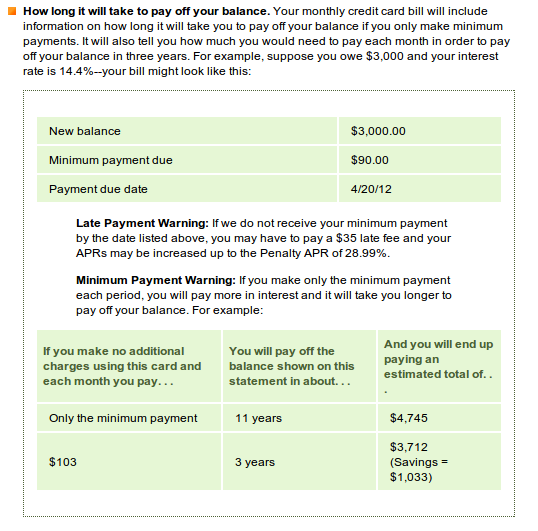
When a LendIt attendee asked Barr to name someone in the alternative lending industry that is a great role model for transparency, Barr answered by saying, “I haven’t seen anyone in the industry doing things the way I would do them in regards to education and disclosure.” On the path towards transparency, “the potential is not yet realized,” he added.
While it sounded as if he favored eventual regulation of alternative lending, he offered all in attendance advice to prevent it. “Take the high road to prevent regulatory interest,” he said.
Barr’s sobering presentation also covered the Consumer Financial Protection Bureau (CFPB) and the role they might play in alternative lending, if any. Payday lenders and debt collectors were their primary supervisory targets he said, but added the “the CFPB has the flexibility in the marketplace to address problems before they occur.” That flexibility essentially gives them jurisdiction over whatever they decide they want to be in their jurisdiction.
Sophie Raseman, the Director of Smart Disclosure in the U.S. Treasury Department’s Office of Consumer Policy appealed to the industry in a different manner. “Small businesses are at the heart of the economy. We want to serve you [alternative lenders] better so that we can better serve them,” Raseman pleaded. As part of that, she came bearing gifts, a reminder that the federal government had loads of data available via APIs at http://finance.data.gov. The government wants to make sure we have access to as many tools as possible, most likely to help drive borrowing costs down. If you need to verify someone’s income, Raseman recommended the IRS’s Income Verification Express Service.
The Income Verification Express Service program is used by mortgage lenders and others within the financial community to confirm the income of a borrower during the processing of a loan application. The IRS provides return transcript, W-2 transcript and 1099 transcript information generally within 2 business days (business day equals 6 a.m. to 2 p.m. local IVES site time) to a third party with the consent of the taxpayer.
The irony with this service is the two business day timeline, though I haven’t confirmed if that’s still the case. Delays and archaic data aggregation methods are the exact things alternative lenders are trying to overcome. Kabbage comes to mind as the length of time it takes for them to go from application to funding can be as quick as 7 minutes, a time frame I found to be reality after watching the demonstration by Kabbage’s COO, Kathryn Petralia.
Kababge’s blazing speed is made possible by access to big data, which made Petralia an excellent choice to have on the Big Data Credit Decisioning Panel. She was joined by Noah Breslow of OnDeck Capital, Jeff Stewart of Lenddo, and Paul Gu of Upstart.
Stewart, whose company lends internationally presented the idea of mining not just data on social networks, but the photographs on them. One possibility was measuring whether or not borrowers appeared in photographs with other borrowers known to be bad, or whether or not they hung out with undesirables such as ex-convicts. He was a big believer in association risk, speculating that friends of bad borrowers also made them more likely to be bad borrowers themselves.
 Breslow of course said you have to be careful with the noise of social media as there can be a lot of false signals. Does that mean there are big data problems then? Upstart’s Paul Gu said, “we have small data problems” in reference to why there seems to be so much trouble evaluating applicants that have little to no credit history. Gu believes that basic information such as where a borrower went to college, their major, and their grades can be used as an accurate predictor of payment performance and his company has acquired the data to back that up.
Somewhere along in the discussion though the meaning of automation got twisted. OnDeck for instance has an automated process, yet humans play a role in 30% of the loan decision making. Does that mean they are not actually automated? Breslow clarified that aggregating data from many different sources using APIs and computers was automation and that there was still a role for humans. The goal is to make sure that humans aren’t doing the same things that the computers are doing.
 “The world’s greatest chess human can beat the world’s greatest chess algorithm,” said Lenddo’s Stewart. “Humans should be pulling what the algorithms can’t think of,” added Breslow. He presented an example of an applicant satisfying all of an algorithm’s criteria but sending up a red flag at the human level. “Why would the owner of a New York restaurant live in California?” Breslow asked. That’s something an algorithm might get confused about. It might mean nothing or it might mean something.
“Algorithms are probabilistic,” Stewart reminded the audience. They spell out the likelihood of repayment, they don’t guarantee it.
For Kabbage, algorithms and automation have been instrumental in allowing them to scale. “I don’t need to hire a lot more people to serve a lot more customers,” Petralia explained.
“Let the data speak for itself,” Breslow proclaimed. And there is a lot of statistically interesting data. “People with middle names perform better than people without them,” added Breslow.
For Gu, borrowers with degrees in Science, Technology, Engineering, and Mathematics fare better than their academic peers, though he wouldn’t reveal which major is #1. That information, while probably available to OnDeck, likely plays little or no role. “There is a lot more data to analyze on the business side than the consumer side which is why [things like] the social graph is a little less relevant,” Breslow said.
In the end, lenders don’t need to go on a wild data goose chase to learn all about their prospective clients. Kabbage applicants for instance are asked to provide their online banking credentials in the very first step of the applications. “A lot of people would be surprised as to the amount of data borrowers are willing to share,” Petralia proclaimed. Indeed, many alternative business lenders and merchant cash advance companies are analyzing historical cash flow activity using third party aggregating services like Yodlee, something that requires the client’s credentials.
During Kabbage’s earlier demonstration, some members in the audience worried that factors such as deposit activity could be gamed. Petralia assured them that their algorithm was sophisticated enough to detect manipulation and at the same time explained that they analyzed far more than just deposit and balance history.
Perhaps all this technology though has gone overboard. Is it possible to predict performance just based on what the applicant says? Believe it or not, “the language someone uses is an indicator of default probability,” Stewart said. But even that kind of detection has become automated. “Lenddo uses semantic analysis. People tend to use different words when they’re desperate.”
Who knows, a year from now getting a loan might be as easy as picking up your phone and saying, “Siri, send money.” Just make sure to delete all the photos of you hanging out with criminals off your phone first. A lender might use them against you.
LendIt Conference: The State of Alternative Business Lending
May 6, 2014 Have you heard? Banks aren’t lending. Nobody at LendIt seems to mind though. Ron Suber, the President of Prosper Marketplace, said earlier today that banks are not the competition. That’s an interesting theory to digest when contemplating the future of alternative lending. If banks are not the competition, then who is everyone at LendIt competing against? I think the obvious answer is each other, but much deeper than that, the competition is the traditional mindset of borrowers.
The biggest challenge the wider alternative lending industry faces is awareness and understanding. Those happen to also be two of Suber’s three edicts for growth. The third is education. Just because alternatives are available today doesn’t mean that potential borrowers know about them or feel comfortable enough to use them. Today we are competing against the old way of thinking.
Revolution?
Other products in the new “share economy” have encountered a similar struggle. Several presenters today cited Uber as having revolutionized the way people use taxis. “A long time ago, people used to stand on corners and hold out their hand to get a cab, but that’s all changed,” was the oft-paraphrased proof that age-old industries were falling like dominoes. But as a New York City resident, I hadn’t quite noticed a change at all. Hailing cabs off the street is still very much the norm. It is only by sheer coincidence that I used Uber for the very first time to travel to JFK airport on my way to this conference.
I first encountered Uber a year ago when an acquaintance dazzled me with his ability to summon a car using an app on his phone. It was then that I became aware, but I did not understand how it worked. It took me 12 months to get comfortable enough to try it myself, and the experience was okay I guess if you discount the fact that my driver went through the E-ZPass lane without actually having an E-ZPass. Needless to say, that led to a major holdup that caused me to almost miss my flight.
If it took me a year to get past the confusion of hailing a cab from my phone, I can only imagine what potential borrowers must think when told they can raise money from their peers, the crowd, or a lender that requires payments to be made every single day.
Perhaps most telling about the awareness challenge, is that many people I’ve spoken to at LendIt had never heard of a 16 year old product known as merchant cash advance. That speaks volumes about how much more work merchant cash companies still have to do in order to gain mainstream awareness.
Even those fully aware were not entirely certain about how to define the product. In the Online Lending Institutional Investors Panel, merchant cash advance was briefly discussed as a topic but it was almost entirely spoken in the context of being something that OnDeck Capital does. That would come as disheartening news to OnDeck since they have spent considerable resources in positioning themselves as anything but a merchant cash advance company. Confusion over what somebody is or isn’t will probably increase especially as alternative lenders from different industries start to compete for the same clients.
Funding businesses instead of people
Brendan Ross, the President of Direct Lending Investments, and the moderator of the Short Term Business Lending panel pointed out that a dentist could pursue two different loan options and get completely different results. With excellent credit a dentist could expect to land a 3-5 year personal loan at 7-8% APR on a P2P platform. If he were to apply for the loan using his dental practice though, he could expect to incur costs over 25% and get nothing longer than 2 years.
Ross, who was a very active moderator, subscribes to the belief that businesses are overpaying for credit. Unlike the consumer loan space, there hasn’t been price compression. The cost of business capital remains high, perhaps higher than what is necessary to turn a reasonable profit. Ross argued that the padded cost serves as a hedge against defaults and economic downturns. “The asset class works even when the collection process doesn’t,” Ross said. “The model works with no legal recovery.”
Building on that premise, Ross asked the panelists if an increase in defaults were simply the cost of doing business towards automating the underwriting process.
Stephen Sheinbaum, the CEO of Merchant Cash and Capital argued that just the opposite had occurred, that automation had led to a decrease in defaults. Others on the panel confirmed a similar outcome, though Rob Frohwein of Kabbage admitted they could potentially weather higher defaults through automation by offsetting it against decreased infrastructure costs.
Noah Breslow of OnDeck echoed something similar to Frohwein in the Small Business Term Lending Panel. He asked this question, “Do underwriters add value or not?” and followed up by saying that 30% of their deals were still manually underwritten, usually the deals that are larger.

Is full automation right around the corner?
The debate between humans and computers in risk analysis is a featured segment in the third issue of DailyFunder that is being mailed out this week, but there is another angle that is seldom discussed, whether or not customers want automation. Breslow said today that, “if customers want full automation, we are prepared to deliver it.” They’ve learned over time that “many customers want someone to talk to at some point in the transaction.” Rohit Arora, the CEO of biz2credit expressed much of the same in a recent interview with DailyFunder’s Managing Editor Michael Giusti.
The only dissenting voice was Gary Chodes, the CEO of Raiseworks who seemed to be of the belief that human involvement in underwriting was nothing short of ridiculous. He stated that, “if you look back over the last 20 years, the loss rates on business loans under 24 months has been really low.” To him, that data seemed to be proof enough that complete automation could and should be achieved, though he admitted to performing back-end checks such as landlord verifications. They currently have no physical underwriters however.
Is there a transparency problem?
Tom Green, a VP of LendingClub shared an interesting tale. While trying to convince potential borrowers to ditch a merchant cash advance in favor of a LendingClub business loan, they get pushback on the cost of their money. The reason being? Some borrowers think they’ve already got a great deal or at least a better deal than what LendingClub is offering. The problem stems from the borrower’s belief that the holdback percentage set up in their future revenue sale (the most common way a merchant cash advance is set up) is the APR.
 Merchant Cash Advance Companies pay cash upfront in return for a specified amount of a businesses’s future sales. They collect these sales by withholding a percentage of each credit card transaction or bank account deposit until the agreement is satisfied in full. On a dollar for dollar basis, the cost of these programs typically range from 20%-49%, but on an APR basis, substantially higher. The holdback % is not even a factor in the APR. Green said they’ve learned that some small business owners are not sophisticated when it comes to finance.
Ethan Senturia, the co-founder of Dealstruck would probably agree. Earlier today he said, “you need to speak the borrower’s language.” Some understand APR, some don’t. “Dealstruck offers more than just APR comparisons to borrowers,” Senturia said. “Whatever helps them understand.”
When the OnDeck Capital model and merchant cash advance model were questioned as possibly being bad for borrowers, Tom Green was quick to clarify. “There are different capital needs that small businesses have,” he said. And “there is a trade-off between the length of the term and the risk.”
OnDeck Capital’s clients are not entrepreneurs born yesterday. “The typical customer has been in business for 10 years,” Breslow said. Their deals are “structured to protect through daily and weekly payments in addition to the interest rates we charge,” something he reminded everyone was “not single digits.”
Still, transparency issues remain in business lending. Sam Hodges, the Managing Director of Funding Circle explained that when he was previously a small business owner, there were hardly any lenders willing to provide him with an amortization schedule. Ashees Jain, a managing partner of Blue Elephant Capital Management admitted he would find it hard to justify the high rates of merchant cash advance if asked by a regulator, so he’d rather not invest in that market. When it comes to those types of transactions, they “don’t want to have to explain themselves” at some point in the future.
Scott Ryles, the managing member of Echelon Capital Strategies, LLC commented on OnDeck capital’s model as unbelievable. “The arbitrage is huge,” Ryles said. And Eric Thurber the managing director of Three Bridge Wealth Advisors believes that alternative business lenders are at odds with themselves. “They always talk about their risk management,” Thurber said, but he feels that players in that industry are concerned with how much market share they have. That conflicts with risk management in his opinion.
They pay or they don’t
At the end of the day Ashees Jain said as far as unsecured loans go, “borrowers pay or they don’t.” The recovery process on secured loans can be 12-18 months Jain said, a statistic cited by Brendan Ross earlier in the day.
It’s clear at LendIt that there are a lot of products available, but Ryles summed it up nicely. In the consumer space, all the volume is in the 36 month installment loans, he reckoned. For businesses it’s merchant cash advance. “It’s an awareness thing,” Ethan Senturia said in regards to getting businesses to use alternative lending sources.
It is indeed. Awareness, education, and understanding…
Regulatory Paranoia and the Industry Civil War
April 11, 2014Stacking is on everyone’s minds in the merchant cash advance (MCA) industry but that war is little more than smoke compared to the fire burning in our own backyard. One of the major topics of debate at Transact 14 has been Operation Choke Point, a federal campaign against banks and payment processors to kill off the payday lending industry and protect consumer bank accounts. Caught in the mix are law abiding financial institutions, some of which if affected, could potentially disrupt the merchant cash advance and alternative lending industries. Both have become heavily dependent on ACH processing. Could their strength become their Achilles heel?
Indeed, there was a rumor circulating around the conference that a popular ACH processor in the MCA industry is no longer accepting new funding companies. I know the name but was not able to confirm it as fact. There is a two-fold threat on the horizon:
1. The probability that ACH processors in this industry are also processing payments for payday lenders or other high risk businesses.
2. The likelihood that a bank or ACH processor would take preemptive action and terminate relationships with merchant cash advance companies and alternative business lenders, not because it’s illegal but as a way to make their books squeaky clean.
The sentiment at the conference however was that MCA providers and alternative business lenders had little need to worry. While Operation Choke Point specifies online lenders, they are narrowly defined as businesses making loans to consumers. MCA and their counterparts do not fall under that scope, even if they themselves lend exclusively online.

Is regulation coming?
There seems to be both a call for and paranoia about regulation, especially in the context of stacking merchant cash advances and daily repayment business loans. On the popular online forum DailyFunder, several opponents of stacking are under the impression that regulators will be busting down doors any day now to put an end to businesses utilizing multiple sources of expensive capital simultaneously. Many insiders who have had their merchants stacked on view the issue as both a legal and a moral one. Opponents get worked up about it for many reasons. They believe any one or multiple of the following:
- The merchant can’t sell something which has already been contractually sold to another party.
- That the merchant ends up borrowing and selling their future revenues at their own peril, endangering their cash flow and their business.
- That the stackers endanger the first lender or funder’s ability to collect.
- That the merchant taking on stacks won’t be eligible for additional funds with the first company, hurting the retention rate.
Stacking is not illegal, but it may be tortious interference. That allegation is the one that gets thrown around the most, but it’s important to recognize that actual damages are an integral part of any such case. If I stack on your merchant and the deal performs as expected for you, then what damages would you have suffered? But if I stack on your deal and it defaults 3 weeks later, you might be able to allege that I was the cause of it.
Insiders on DailyFunder’s forum that wonder how they might be able to get stacking to stop, only need to follow the example of what a few select funders are already doing, going on the offensive. The first thing one west coast MCA company does when they have a merchant default is find out if there was a stack that came on top of them. If they find out who it was, they send the offending funder a bill for the outstanding balance. That may sound cheesy, but given their industry prowess and litigious nature, they said that some stackers quietly mail them a check, rather than risk things escalating to the next level. The threats only hold weight of course if you’re actually prepared to bring the case to court.
I’ve spoken with dozens of proponents for stacking, many of sound character, high intelligence, and business acumen. They buck the stereotype of stackers as sleazy wall street guys with pinky rings. Few of these proponents believe that future revenue is a precise asset. It’s been said that, “future revenues are unknowable and possibly infinite. A business should be able to sell infinite amounts of these future revenues if there are investors out there that will buy them.” The general consensus on this side of the aisle is that a 2nd position stack, or “seconds” are here to stay. There’s a sense of calm and conviction, as if seconds were a boring subject of little contention. Many are okay with thirds “if the math works” but discomfort sets in on fourths, fifths and beyond. If they believe it’ll be a good investment, they’ll do the deal. They scoff at the notion that they’d willingly chance putting a merchant out of business since that would jeopardize their own investment.
To date, I’ve seen no data to support that stacking causes merchants to go out of business. I would not be surprised if there was a correlation between defaults and stacks, but that would not imply causation. A business that is on its way towards bankruptcy regardless may be able to obtain a few stacks in the process as a last ditch effort to stave it off. When the business finally fails, it may appear to look like the stacks caused it, even if they didn’t.
For those that don’t want to play cat and mouse with threats and lawsuits, there’s a growing call for regulation, both self-regulation and federal. That call feeds off the paranoia that regulators are knocking at the industry’s door already anyway.
NAMAA
In regards to self-regulation, insiders have been looking to the North American Merchant Advance Association (NAMAA) to create rules and become an enforcer. It’s no secret that their members are opponents of stacking, but as a powerful body of industry leaders, they’re up against a threat of their own, antitrust laws. Creating rules and enforcing them could be construed as anti-competitive. In truth, a lot of the MCA industry’s growth over the last 2 years can be attributed to stacking. A private association of the largest players actively working to establish rules to squash the fast growing segment of new entrants could indeed be perceived as anti-competitive.
But that doesn’t mean NAMAA is powerless to promote their views. Following in the footsteps of the Electronic Transactions Association, they could create a set of best practices, host workshops, and offer courses and sessions to train newcomers on these best practices. Such benefits and opportunities are a standard in the payments industry, but nothing like it is available in MCA or alternative business lending.
But is it too late for self regulation?
With all the government enforcement occurring in the rest of the financial sphere, fears of imminent federal involvement in MCA and alternative business lending are not unfounded… or are they?
In the wake of the financial crisis, the Consumer Financial Protection Bureau (CFPB) was formed to protect consumers in financial markets. The CFPB was instrumental in Operation Choke Point and they would be the most likely federal agency to field complaints about stacking. Unlike the Office of the Comptroller of the Currency which has jurisdiction over banks, the CFPB’s oversight extends to non-bank financial institutions. They’re the wild card agency that has financial companies across the nation on their heels.
I had the opportunity to speak with a former lead attorney of the CFPB off the record today about the definition of consumer. Could a small business be construed as a consumer? The short answer was no. The long answer was that there is no specific definition of consumer at the CFPB but it was meant to represent individuals. Although businesses at the end of the day are run by individuals, I got a pretty confident response that the CFPB would not have jurisdiction over a business lending money to a business, even if it was a very small 1 or 2 man operation. If they were acting in a commercial capacity, then they’re no longer consumers.
The other side of her argument was that it would take up too much resources to take on a case where the victim class was basically outside of their scope. The CFPB already has enough on their plate.
Is the government busy?
I also spoke with a few lobbyists and payments industry attorneys off the record and the unilateral response was that MCA and alternative business lending were not on any agenda, nor does the government have the resources to juggle something that is basically…insignificant in their eyes.
In the grand scheme of financial issues, a few billion year in small business-to-business financing transactions isn’t worth anyone’s breath. “A business acting in a business capacity was unhappy with a business contract they entered into? Take it up in civil court,” I imagine a regulator might say.
Regulators aren’t completely in the dark about MCA. Just a month or two ago, several industry captains and myself included were contacted by the Federal Reserve as part of a research mission to basically find out what this industry even was. The feds appear to have stumbled upon the MCA industry as part of their research into peer-to-peer lending. Who would’ve thought a 16 year old industry could be so stealthy?
If the big PR machines like Kabbage, Lending Club, and OnDeck Capital didn’t exist, I’m inclined to believe no one in the government would’ve heard of MCA for at least another 10 years. In 2014, they’re just now discovering it.
My gut tells me we’re a long way from any kind of regulatory enforcement. In a session I attended at Transact 14 today, a former member of the Department of Justice and a current member of the Office of the Comptroller of the Currency both offered examples of cases that took 3-8 years before there was an enforcement action. In each scenario, they alerted the parties there was a problem and they were given time to correct it. They had to show progress along the way and eventually when no such progress was made after years of warnings, they acted.
In the conversation of regulation, alternative business lending and MCA are relatively tiny. Lending Club does more in loan volume each year than the entire MCA industry combined. So long as there’s no fraud involved, small business-to-business financing transactions are not likely to make it on the agenda for federal regulators for a long time. That doesn’t mean it won’t be there some day in the future.
I think it was Brian Mooney, the CEO of Bank America Merchant Services that said in the Transact 14 roundtable discussion that if something feels wrong in your gut, don’t do it. Debra Rossi, the head of Wells Fargo Merchant Services added that you can’t tell a regulator, “I didn’t know.” Keep those suggestions in the front of your mind.
No police
For the foreseeable future it’s on us as an industry to find a resolution to stacking. There’s no such thing as the cash advance police. On one side is tort law. On the other is creating best practices and actively educating newcomers. That’s where the blood boiling debates need to turn to. After all, there’s already a large crowd that yawns over seconds, a group that wholeheartedly believes a stack is just as legitimate as a first position deal.
Instead of waiting for a referee to call foul on somebody, I think 2014 is the year to realize that you might be stuck in the room with the person you hate. Could you bring yourself to tolerate them for years to come?
Blind spot
We should consider that the greatest threat to the industry may not come from within, but from outside. More than 50% of MCA/alternative business lending transactions are repaid via ACH. Government action on ACH providers or the banks that sponsor them could end up hitting this industry as collateral damage.
One metric that banks and regulators consider is the return rate of ACHs, namely the percentage of ACHs rejected for insufficient funds or rejected because the transactions weren’t authorized. Daily fixed debits run the risk of rejects and boost the return rate. Could the frequency of your rejects eventually scare the processor into terminating the relationship? With the pressure they’re getting from the Department of Justice, there’s always the possibility.
Data security is another sleeping giant to consider. Do you keep merchant data safe? Are you protected from hackers?
Know your merchant. The push towards automated underwriting seems dead set on eliminating humans from the analysis. But what if the algorithm misses something and loans get approved to facilitate a money laundering scheme? Or what if it approves a known terrorist?
Paranoia
If you’re paranoid you’re doing something wrong, then maybe you are doing something wrong even if there’s no current law against it. Follow your gut, create value, and work together. Who knows, maybe one day there will be an ETA-like organization for MCA and alternative business lending. Now is a good time to be proactive.
Is Alternative Lending a Game of Thrones?
April 8, 2014 It was the best of times, it was the worst of times, it was the age of wisdom, it was the age of foolishness, it was the epoch of belief, it was the epoch of incredulity, it was the season of Light, it was the season of Darkness, it was the spring of hope, it was the winter of despair, we had everything before us, we had nothing before us…
This blog has been many things over the years, all of it relative to who the reader was. It has encouraged and deterred, informed and confused, made people laugh or stoked their anger. The merchant cash advance industry it spoke of had been small. Annual funding volume was a billion or two or three, a blip of a blip on nobody’s radar. There was a sense of unity, a shared objective amongst competitors. They were guided by one dictum, “grow, but don’t rock the boat.”
But opportunity enticed everyone, the good, the bad, and the unexpected, and it brought a relatively peaceful chapter to an end. Winter is coming, Eddard Stark would likely say of the uncertainty that hangs in the air. Merchant cash advance has become a spoke in the alternative lending wheel that is spinning forward uncontrollably. Non-bank financing has become a worldwide phenomenon virtually overnight, setting the stage for the lords of funding to play a game of thrones. Investors with bottomless pockets are emptying them, government agencies are assessing the landscape or crafting responses, and journalists stand ready to shape public opinion.
This is a transformational moment in human history, perhaps bigger than what Facebook did for social media. Individuals are taking control of the monetary supply. Strangers pay each other in bitcoins, neighbors are bypassing banks for loans and lending to each other instead, and businesses are rising and falling with the funding they get from other private businesses. Winter is coming for traditional banking. The realm calls for a new king.
Wonga’s epic rise is being countered by both regulatory and religious resistance, and the man who dared the world to lend algorithmically has admitted defeat. Peer-to-peer lenders have encountered massive regulatory setbacks on their road to stardom and merchant cash advance companies are currently engaged in a civil war over best practices. Winter is coming indeed.
The Kings
 Lending Club
In what is perhaps their first step towards an IPO this year, Lending Club is reducing transparency over its loan volume. Up until April 3rd, anyone could see how many loans they issued on a daily basis. Now this information will only be available quarterly. Peter Renton in his Lend Academy blog shared his belief that the move was entirely tied to the impending IPO. “Without this daily loan volume information their stock price will be less volatile and they will be able to “manage the message” with Wall Street every quarter,” Renton wrote.
OnDeck Capital
OnDeck Capital is also in contention for an IPO this year. A year ago a company executive hinted that becoming a public company would not be on the agenda for consideration until 2015, yet I am hearing rumors that they may make a late 2014 go at it. Such rumors hold weight in light of reports that they are cleaning up their ISO channel. Insiders on DailyFunder are saying that resellers with abnormally high default rates are in jeopardy of being cut off.
OnDeck Capital is unique in that outsiders chastise them for their rates being too high while insiders argue their rates are too low to be profitable. It’s a classic example of how tough the court of public opinion can be on a lender even if they are not getting rich off their loans.
Kabbage
Kabbage came and conquered the entire online space before anyone had a chance to blink. PayPal, ebay, Amazon, Etsy, Yahoo, Square, they claimed those territories for themselves and then launched an attack into the brick and mortar space. Kabbage’s secret value is their patents. They are a serious player on a serious path.
CAN Capital
CAN Capital’s greatest weakness is their lifespan. They’ve managed to stay on top after 16 years in the business but that makes them old enough to be Kabbage’s grandfather by today’s tech standards. As a pre-dot com era business, it’s impossible to argue against their sustainability. If anyone has alternative lending figured out for both the good times and the bad, it’s CAN Capital.
The Lords
The Government
 Peer-to-peer lending has already been under strong scrutiny from the Federal Government. Lending Club and Prosper are regulated by the Securities and Exchange Commission these days, but they may never be free of oversight. Just two months ago, the Federal Reserve published a report on trends in peer-to-peer business lending. They hinted at further regulation.
As small business owners are increasingly turning to this alternative source of money to fund their businesses, policy makers may wish to keep a close eye on both levels and terms of such lending. Because such loans require less paperwork than traditional loans, they may be considered relatively attractive. However, given the relatively higher rate paid on such loans, it may be in the best interest of the business owner to pursue more formal options. More research is required to understand the long-term impact of such loans on the longevity of the firm and more education to potential borrowers is likely in order.
– a 2014 Federal Reserve study
The Merchants
Once upon a time nobody talked about alternative lending online except for the companies offering it. Merchants didn’t talk about it with each other or there were too few businesses to give rise to centralized discussions. Today, merchants communicate and compare notes:
Merchants discuss PayPal’s working Capital program: http://community.ebay.com/t5/PayPal/PayPal-Working-Capital-Loan-DONT-SIGN-UP/td-p/17630207
Merchants discuss Square’s merchant cash advance program: http://www.mrmoneymustache.com/forum/welcome-to-the-forum/square-to-offer-small-business-loans-at-exorbitant-interest-rates/
Merchants discuss Kabbage: http://community.ebay.com/t5/Part-time-eBay-Sellers/Kabbage-quot-loans-quot/td-p/3002329
OnDeck Capital’s 30+ Yelp Reviews: http://www.yelp.com/not_recommended_reviews/FOndxpkaBRP6LVIlOv6Dfw
Potential Lending Club borrowers make their cases: http://www.lendacademy.com/forum/index.php?board=3.0
The Machines
Are computers better predictors of performance than humans? Some people think so. This debate will play a pivotal role in the future of alternative lending.
The Media
Public opinion will be at their mercy.
The Vulnerabilities
 Commissions
The bigger alternative lending gets, the juicier the stories become. Just last week, Patrick Clark of BusinessWeek dove head first into the reseller model, revealing insider commissions, the truth about buy rates, and the alleged antiquated practice of enlisting a broker to secure funding. On trial was a documented 17% commission, an example I believed to be an extreme case. For a long time commissions ranged between 5% and 10% on average. But there are some big names paying up to 12 points and others boasting of 14. All were topped by the mass solicitation I received a few days ago that promised a 20% commission. These kind of figures if they continue will become an easy target for journalists looking to portray the industry in a negative light.
Stacking
There is a raging civil war within the merchant cash advance community specifically over stacking. This is the instance that a merchant sells their future revenues to two or more parties at the same time, leading to multiple daily deductions from their sales. This debate is bound to spill out into the mainstream if it cannot be resolved on its own.
Technology
Some funding companies intend to license their automated underwriting technology to banks, potentially handing the keys of alternative lending’s greatest asset (speed) to traditional bankers. It is unlikely that banks would engage in some of the high risk deals that alternative lenders target but they could recapture the top credit tier borrowers that have been flocking away from them.
Also at stake here is the sustainability of algorithmic underwriting. There are critics that believe computers appear to make great decisions during good economic periods but suffer during downturns. Do the technology based funding companies have enough data to weather a future economic storm?
So many things are happening at once, that it’s impossible to know what fate awaits the realm. Will there be a new king or will alternative lending fall apart like a house of cards?
For those of us climbing to the top of the food chain, there can be no mercy. There is but one rule: hunt or be hunted.
-Frank Underwood
May the best man win.
Fund it and Ask Questions Later
March 25, 2014 Ever since OnDeck Capital stopped doing verbal landlord references, the underwriting landscape of alternative lending has changed dramatically. Kabbage will supposedly fund applicants in just 7 minutes. Everybody’s under the gun to streamline their process, fund deals faster, and produce record breaking numbers month after month.
And why shouldn’t they? Investors are practically foaming at the mouth to get in on any and all kinds of alternative lending. Even Lending Club has thrown in the towel by no longer allowing investors to ask applicants questions. Prior to March 19th, applicants on Lending Club’s platform had the option to answer standardized questions about themselves and their purpose for seeking out a loan. This was set up to help investors feel more informed and comfortable. Once the loan was posted, prospective investors could ask the applicant additional questions of their own to help them decide if it was a deal they wanted to participate in. For example, “what are the interest rates on the credit cards you claim you want to consolidate?” That’s a fair question to ask someone seeking a debt consolidation loan.
Lending Club did away with the Q&A in the name of privacy but conceded in their blog that people are funding deals so fast that no one cares what applicants have to say.
We know that in the past some investors enjoyed reading these descriptions and answers, but as the platform has grown, fewer and fewer investors are using this approach to inform their decisions. Fewer than 3% of investors currently ask questions and only 13% of posted loans have answers provided by borrowers. Furthermore, loans are currently funding in as little as a few hours – well before borrower answers and descriptions can be reviewed and posted.
Loans are being fully funded by institutional investors and mom & pop investors before the applicant can even finish filling out the questionnaire.
 The demand to invest outpaces the amount of loans that Lending Club can originate. In a call I had with Lending Club today as a potential investor, I was told that businesses were not even allowed to invest on their platform at this time because they’ll take up all the loans and leave nothing for the average mom & pop investors, the ones which have made their peer-to-peer fame possible.
In the Lend Academy blog forum, mom & pop investors debated the usefulness of the Q&A system. Some argued that responses from applicants allowed them to weed out folks with poor spelling and grammar. Others believed that a poorly worded response was better than someone who didn’t respond at all because it showed that they actually cared about the loan they were applying for.
There were folks that analyzed the applicants language on a scientific level, with one going so far as to cite this study: Peer-to-Peer Lending The Relationship Between Language Features, Trustworthiness, and Persuasion Success.
I am reminded of my underwriting days conducting merchant interviews prior to a final decision. There were applicants that looked good on paper that came across as completely clueless about their business over the phone. Like beyond clueless. And then there were applicants that looked ugly on paper that really impressed me with their command of business subject matter. What shocked me were the former and it’s a testament to how tricky business lending is. Those phone calls impacted my final decision all the time.
But in today’s world where funders are dealing in kilos of cash instead of nickels and dimes, there’s a growing impatience over non-automated things like interacting with the applicant. Fund the deal and ask questions later!
 The vast majority of merchant cash advance companies still conduct applicant phone interviews and there’s a part of me that hopes that never changes. As investors grow restless for new pools of loans or advances to participate in, I fear there will be more underwriting sacrifices to satisfy that demand.
It was only a year ago that I laughed at my friend in commercial banking when he told me a small business loan application begins with lunch and a few rounds of golf. “It’s about relationships,” he said. That couldn’t be less true in peer-to-peer lending where the goal is to know as little as possible about where the money is going. I see that mentality creeping into merchant cash advance as well. Sure, there are folks that point to thousands of data points aggregated through online sources but it only takes a 5 minute phone call to determine that an applicant is completely full of crap.
Maybe Jeremy Brown of RapidAdvance was on to something. When Will the Bubble Burst?
Join the discussion about this on DailyFunder.
Amazon Quietly Funding Small Businesses
December 30, 2013 Ever since Amazon announced their exclusive business loan program last year, they’ve been quietly booking deals. I say quietly because no one really talked about it much ever since. Though the loan program is available only to qualified Amazon.com merchants, it’s very similar to how Kabbage started off with eBay. Amazon’s Business Loan program has all the bells and whistles of merchant cash advance financing and their clients tend to have huge daily sales volumes.
So are they really doing deals? You betcha they are. Secured Party Name: Amazon Capital Services. I wonder if any of their merchants would do a fixed ACH deal.
Enjoy.
Peer-to-Peer Lending Will Meet MCA Financing
December 29, 2013 In 2014 the peer-to-peer lending industry will collide with merchant cash advance and the rest of alternative business lending. Get familiar with these names: Lending Club, Funding Circle, and Prosper. They are brothers and sisters in the business of non-bank financing. They’re also seasoned, tested, and much like the merchant cash advance industry, experiencing phenomenal growth.
The old guard of merchant cash advance companies should take notice. After losing significant ground to Kabbage and OnDeck Capital, a new breed of fighter is about to enter the ring. I hear this phrase too often in response to the threat of competition, “there’s enough opportunity out there for everyone.”
But is there? Aside from the ACH repayment boom, one of the biggest drivers of merchant cash advance industry growth has been stacking. Stacking is the process of issuing an additional advance or loan to a merchant without paying off their existing advances or loans. That puts merchants in the position of having 2, 3, 4, or even 5 daily withdrawals to remain in good standing with all of them.
While the legality and risks of stacking have long been debated, the deeper revelation here is that there may not be as much new opportunity as everyone thinks. There has been an ongoing turf war over land that had already been discovered. It’s caused overall annual funding volume to rise significantly, but there’s not much room for 400%, 500% or 1,000% growth.
Funders like Kabbage came in and conquered the online merchant cash advance space without anyone noticing. Some funders have taken 5 years to double output on a monthly basis. Impressive, yes, but Lending Club on the other hand has more than quadrupled monthly funding volume over just the last 18 months. Not only that, but they’re doing more than OnDeck and CAN Capital (formerly Capital Access Network) combined. That’s massive.
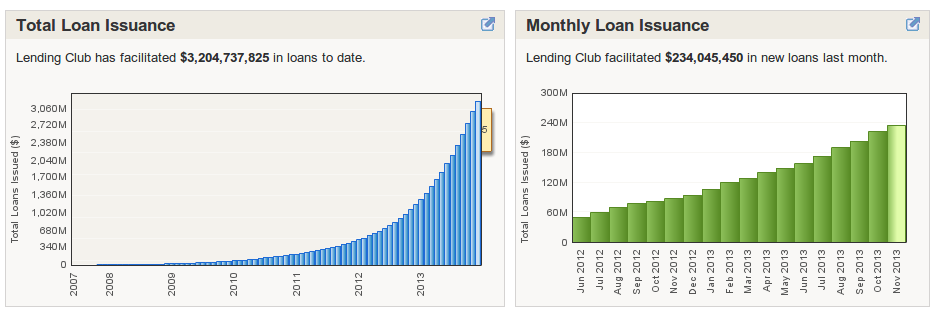
Backed by Google and recently valued at $2.3 Billion, Lending Club is expected to go public in the next 12 months. As they seek to extend their dominance from consumer lending to business lending, funders should seriously ask themselves, is there really enough opportunity out there for everyone?
The Achilles Heel for merchant cash advance companies is money. Regardless of how fast they turn it over, there’s no possible way to experience fast triple digit growth without outside capital. Some funders spend a lot of time and energy trying to raise it. Others are content without it and go chugging along at a moderate pace.
 Peer-to-peer lenders on the other hand have a unique advantage, unlimited access to cash. That’s because they source all the money from individuals. The money is crowdsourced from an infinite pool of investors and they just book the deals and service them. Combine this model with a sweet infusion from an IPO and alternative business lending will have its very own behemoth.
I’m not predicting the doom of merchant cash advance at the hands of Lending Club, but quite the opposite. Lending Club will legitimize non-bank business financing once and for all. Merchants will seek capital and investors will seek lucrative returns. Merchant cash advance companies offer a vastly better ROI than what 3-5 year loans can do with regulated interest rates. The top 10 Prosper investors are only earning 15-19%.
Lending Club will carpet bomb businesses across the nation with marketing and likely end up declining 90% of them. If they do indeed stick to their model of 3-5 year loans, they will undoubtedly leave a trail of interested but unfundable merchants. Alternative lenders and merchant cash advance companies will rush in to fill the void.
At the same time, that capital raising problem could fix itself. As everyone jumps on the peer-to-peer/crowdsourcing bandwagon, investors will be thrilled to learn that merchant cash advance is peer-to-peer based as well. Oh you didn’t know? Many funders already crowdsource capital from “syndicates”. Syndication in merchant cash advance is a simplified form of crowdsourcing. ISOs, investors, and account reps can pool funds collectively into deals just as someone could with Prosper or Lending Club.
I first raised this similarity in December 2010 (three years ago!) and even went so far as to make a mock version of Prosper’s site with MCA terminology plastered on it. Eerie isn’t it?
The difference between a company like Lending Club and say a company like RapidAdvance is whether or not funding is meant to be used as working capital or permanent capital.
The consumer lending model is not applicable when it comes to underwriting businesses. Renaud Laplanche, the CEO of Lending Club acknowledged that when he testified before congress a few weeks ago. But is he really ready to experience it for himself?
We shall see in 2014 when the line blurs once and for all. MCA, say hi to your family, P2P.
—————
Get familiar: