
California Lending License Process Isn’t Easy, State Painfully Slow on Paperwork
February 15, 2016 Quarterspot recently became a licensed lender in California. And it wasn’t quick, according to Quarterspot’s EVP Mike Green. It took much longer than a year, he says. Their CFLL license # is “603-K646”, but you can’t confirm that with California’s registry because the database hasn’t been updated in 42 days.
Welcome to the State that apparently has an abundance of resources to launch inquiries into marketplace lenders, but little time to work with the ones eager to operate in full compliance.
California attorney Paul Rianda told AltFinanceDaily back in December that it can take months just to get a reply on a lending license application. And when they do reply, they’re sticklers over details. “I have experienced a situation where the examiner rejected an application because the name of the company was incorrectly spelled on the application,” Rianda wrote. “The name of the company was submitted on the application with ‘Inc’ instead of the complete ‘Inc.’ at the end of the company’s name.”
Yellowstone Capital’s Isaac Stern said it took them 15 or 16 months to get their license and required a lot of legal help from law firm Hudson Cook LLP. The cost, including lawyers’ fees came to about $60,000. “Man, it was like pulling teeth to get that license,” Stern told AltFinanceDaily last year.
Tom McCurnin, an attorney for Barton, Klugman & Oetting LLP, disagrees. In an op-ed he wrote for Leasing News to counter a story published by AltFinanceDaily, McCurnin wrote, “I would point out that the process of obtaining a California license is awfully easy, and involves a small filing fee and a bond.”
But for those not from the leasing industry, “easy” is not a word that comes to mind. “They’ll take away your license if you even sneeze the wrong way,” Stern previously told AltFinanceDaily.
Worse, a change in the law regarding the payment of referral fees has led to a flurry of questions from lenders and commercial finance brokers alike. Law firm Hudson Cook LLP and Patrick Siegfried of the Usury Law Blog, both even had to weigh in on the issue. (See: Can California Lenders Pay Referral Fees to Unlicensed Brokers? | California Finance Lenders Push Legislative Agenda in Response to Growth of Alternative Small Business Finance Industry)
And even more confusing, is whether or not a license can be transferred. In February of 2015 for example, LoanMe Inc was ordered by the Department of Business Oversight to stop using what they claimed was another company’s lending license. But then a month later, the order was paused upon receiving “additional information” and then withdrawn.
As it stands with the State’s marketplace lending inquiry, 14 lenders have to respond by March. Among them is Kabbage Inc., Prosper Marketplace Inc., Avant Inc., On Deck Capital Inc. and Social Finance Inc., according to the Wall Street Journal.
Neither Kabbage or OnDeck are licensed California lenders from what AltFinanceDaily could ascertain. But both would be legally eligible to make loans in the State through their chartered bank relationships.
“These online lenders are filling a need in today’s economy, and we have no desire to squelch the industry or innovation,” said DBO Commissioner Jan Lynn Owen in a December announcement.
In the meantime, being a licensed lender in the state is being perceived as a competitive advantage. Quarterspot for example, wants brokers to know that they can do loans in California now. Of course, after having waited painfully long to become licensed, it’s disheartening for them to see that the state hasn’t even updated their records since January 4th.
AltFinanceDaily attempted to reach out to the California Department of Business Oversight a week ago to find out why their data was so slow to be updated. Nobody responded.
Bizfi Welcomes Record Quarter, Raises Equity
February 10, 2016 Bizfi, the marketplace lender for small businesses, originated a record $142 million in business financing in the last quarter of 2015.
Formerly known as Merchant Cash and Capital, they have financed over 27,000 small businesses through their proprietary marketplace with over $1.4 billion since 2005. They rebranded to Bizfi in 2015 and raised $65 million from Metropolitan Equity Partners for adding products and speeding up funding.
When company founder Stephen Sheinbaum was asked by AltFinanceDaily about the possibility of exploring personal loans, they said they would only do that through their partnerships with companies like OnDeck, Funding Circle and Kabbage. Sheinbaum also said that they were considering referrals and marketing tie-ups with some of these companies.
Bizfi’s lending platform provides a host of funding options like short-term financing, medical financing and lines of credit. The company plans to add more partners enriching their product offerings, among other plans. Alluding to immediate growth plans, Sheinbaum said that the firm will raise institutional equity this year along with augmenting the underwriting process to attract more customers as well as forging new partnerships.
Bizfi Secures $65 Million in Financing
December 15, 2015NEW YORK–(BUSINESS WIRE)–Bizfi (www.bizfi.com), the premier FinTech company whose online small business finance platform combines aggregation, funding and a participation marketplace, announced that Metropolitan Equity Partners (“Metropolitan”) has provided a structured financing facility of $65 million to the company to drive growth.
Closing this financing round enables Bizfi to:
- Expand its suite of funding programs, increasing its ability to fund America’s small business capital needs.
Increase the speed at which funding applicants access direct financing from Bizfi. - Develop and implement a national marketing campaign designed to increase the awareness of the Bizfi brand and platform within the small to medium-sized business community.
- Bizfi and its proprietary marketplace and funding technologies have provided in excess of $1.3 billion in financing to over 26,000 small businesses across the United States since 2005. Since Bizfi launched its aggregation platform in 2015, the Company has experienced 72% growth in year-over-year gross originations.
“The Bizfi platform is the simplest, fastest and most frictionless process for small businesses to access funding. Metropolitan’s financing will propel our growth plans to the next stage,” said Stephen Sheinbaum, founder of Bizfi. “Every day more and more businesses are turning to Bizfi because of our strong channel partners, enabling business owners to compare all their funding options in one place. The Metropolitan partnership provides Bizfi with additional capital to develop new products and fund more small businesses from its own branded product set.”
Metropolitan’s investment provides the financial flexibility and strength to support Bizfi’s growth plans. The new investment expands upon Metropolitan’s prior involvement as an active buyer of loan participations and a mezzanine lender to the Company for the past three years.
Bizfi’s proprietary technology and aggregation platform efficiently gathers applicant information from a wide variety of sources to quickly offer commercial funding products including loans and other capital products to small businesses. Bizfi’s technology is further strengthened by strategic relationships with more than 45 funding partners, including OnDeck, Funding Circle, IMCA Capital, Bluevine and Kabbage. Bizfi also participates as a lender on the platform. Regardless of what kind of capital is sought from any of the funding partners, the small business owner is guided through the entire process by a Bizfi funding concierge that is assigned specifically to him or her.
Paul Lisiak, managing partner of Metropolitan Equity Partners stated, “Metropolitan believes that the future of small business lending is being built by Bizfi. Their aggregation and direct lending marketplace is disrupting the fast growing FinTech industry. Our new investment is the result of the impressive performance we have directly experienced as a lender and participant in the company’s financing products over the past three years. In the rapidly evolving FinTech space, Bizfi’s management team has elegantly expanded their product offerings to create a platform that holistically meets the dynamic funding needs of small businesses. We look forward to being a part of Bizfi as they further solidify their position as a leader in the financial technology space.”
Metropolitan has been an active investor in the alternative lending and FinTech space with over $100 million committed in 2015 including investments in JH Capital Group, Debt Away, New Credit America and PledgeCap.
Mr. Sheinbaum concluded, “Bizfi has seen radical growth over the last 18 months. Not only have we developed one of the most robust FinTech platforms for the small business lending space, but we have cultivated significant deals with third party companies that service small businesses. These companies will utilize white label versions of Bizfi’s platform to offer financing to their clients. Now, with the Metropolitan financing supporting our growth, we can continue to expand our products, increase our market share and provide solutions to the critical financing needs of the companies that fuel our economy.”
About Bizfi
Bizfi, is the premier FinTech company combining aggregation, funding and a participation marketplace on a single platform for small businesses. Founded in 2005, Bizfi and its family of companies have provided more than $1.3 billion in financing to over 26,000 small businesses in a wide variety of industries across the United States.
Bizfi’s connected marketplace instantly provides multiple funding options to businesses from more than 45 funding partners and real-time pre-approvals. Bizfi’s funding options include short-term financing, medical financing, lines of credit, equipment financing, invoice financing, medium-term loans and long-term loans guaranteed by the U.S. Small Business Administration. The Bizfi API provides a turnkey white label or co-branded solution that easily allows strategic partners to access the Bizfi engine and present their clients with financial offers from Bizfi lenders all while maintaining their customer’s user experience. A process that once took hours, now takes minutes.
About Metropolitan Equity Partners
Metropolitan Equity Partners Management, LLC is an alternative investment manager that provides expansion capital to growing private companies via collateralized loan structures. Metropolitan was founded by Paul Lisiak who has 20 years of experience investing in private U.S companies through both debt and equity. Metropolitan traces its roots to a successful equity strategy managed by the current Metropolitan Principals which was backed by the Man Group plc. Since 2008, Metropolitan has committed over $300MM in collateralized debt investments through call funds, blind pools and institutional managed accounts. Metropolitan is based in New York City.
Contacts
KCSA Strategic Communications
Abbie Sheridan, 212-896-1207
asheridan@kcsa.com
or
Kenneth Cousins, 212-896-1254
kcousins@kcsa.com
or
Bizfi Sales:
855-462-4934
bizfisales@bizfi.com
or
Bizfi Marketing:
212-545-3182
marketing@bizfi.com
JPMorgan Chase and OnDeck Partner Up
December 1, 2015 Coming soon, when small businesses apply at a Chase bank for a loan under $250,000, there’s a good chance that OnDeck will be doing all the work. That’s because JPMorgan Chase and OnDeck announced a strategic partnership earlier today that is expected to commence in 2016.
A comment earlier in the day by Jamie Dimon hinted that something was coming. “We haven’t announced it yet, we’re going to be doing a thing with one of these peer-to-peer, small-business lenders,” Bloomberg reported.
That caused peer-to-peer lending industry advocates like Peter Renton of LendAcademy to speculate who that might be. He originally bet on Lending Club but posited that it could also be OnDeck, Funding Circle, or Kabbage.
When I asked Lending Club on twitter if they were slated to be JPM’s partner, I received a public reply back from a VP at OnDeck saying that it would in fact be them. By then the news had already been released.
The SEC filing states, “JPM will use the Company’s small business lending platform and the OnDeck Score® to serve its small business customers” and adds that they’re still in the process of building things out and finalizing agreements.
OnDeck (ONDK) which closed at $9.01 before the announcement is expected to soar on the news for the Wednesday open.
Money2020 Photos
November 1, 2015Below are some of the shots we got at the 2015 Money2020 Conference in Las Vegas!






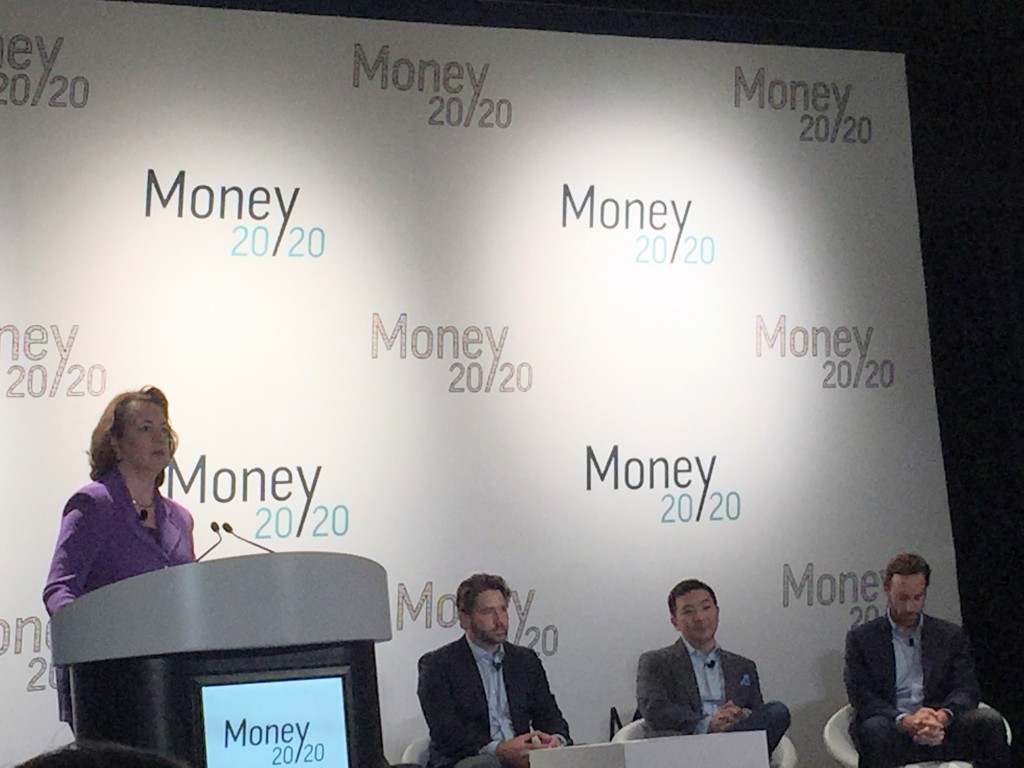


Did you go to money2020? Feel free to send us some of your photos 🙂
Alternative Lenders Are Waiting for a Shakeout
October 28, 2015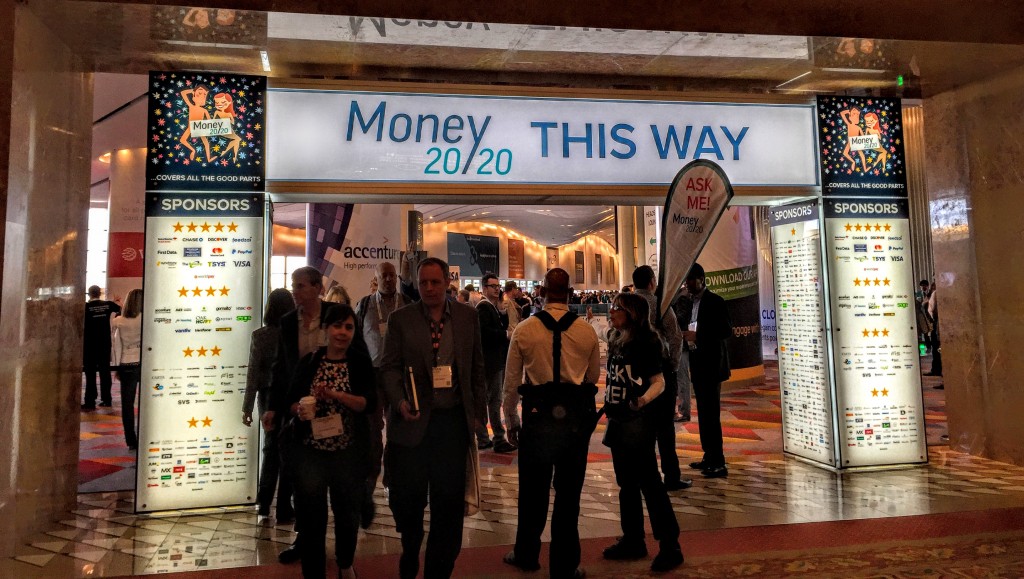 Back in April at the LendIt conference in New York, the big consensus was that not all underwriting was created equal and therefore several players wouldn’t survive long enough to make it back to LendIt in 2016. Six months later at Money2020 and so far everyone is still standing.
Loan terms are getting longer, rates cheaper and the cost to acquire borrowers higher. Somebody has to be feeling the pressure but in a rather benign economic and regulatory environment, it’s clear skies.
Valuations are soaring. SoFi is valued at more than $4 billion and Kabbage at more than $1 billion.
But Robert Greifeld, the CEO of Nasdaq warned attendees about the validity of private market valuations. “A unicorn valuation in private markets could be from just two people,” he said. “whereas public markets could be 200,000 people.” At best he described a private market valuation as being just a rough indicator.
And some wonder if these valuations are based on just scale, rather than the ability to underwrite more intelligently and efficiently than a bank. OnDeck for example, had a Compound Annual Growth Rate (CAGR) in originations of 159% from 2012-2014 when the average originations CAGR for their peers is currently 56%. But OnDeck has the advantage of time. With nearly a decade of data under their belt, they’ve been able to see what works and what doesn’t.
“You have to have enough bad loans to build a good credit model,” said OnDeck CEO Noah Breslow during a Money2020 panel discussion.
For Aaron Vermut, CEO of Prosper, getting their company to the next level was about having access to institutional capital. As a marketplace, and as a company that almost died several years ago, he pointed out, institutional money was the inflection point for them to grow. The peer-to-peer model that actually depended purely on “peers” is what held their company back.
One thing several lenders seemed to agree on was the limited applicability of FICO. FICO is not the thing to use for a small business loan, said Sam Hodges, Managing Director and Co-founder of Funding Circle. His words didn’t come as a surprise since credit scores are generally the domain of consumer lending.
But doubts about FICO’s ability to predict performance didn’t just come from the commercial finance side. Prosper’s Vermut explained that consumers still think their FICO score is the most important factor in the rate they get. So even though they’ve got a system to predict repayment outside of FICO, they’re kind of forced to incorporate it because consumers are being educated to believe that’s what matters most.
The irony was not lost that as Vermut said that on a panel, he was seated next to Kenneth Lin, the CEO and founder of Credit Karma, a company that educates consumers about credit. “A credit score is one of the most important components of a consumer’s financial profile,” says Credit Karma’s website. Such language puts a tech-based lender with their own scoring model perhaps at odds with what their own prospects believe.
For instance if a potential borrower with a 750 FICO score is offered a high interest rate because the lender’s advanced and more in-depth underwriting determined them to be high risk, they’re going to walk away confused.
That of course begs the question, who needs to change? Those educating consumers about credit scores or the lenders who are moving away from them?
Before educational services shift though, it would probably make sense if the lenders can prove that their non-FICO dependent systems will work in the long run. And the sentiment among many lenders is that there are plenty of flawed models out there that will inevitably fail. That makes a shakeout not just a matter of if, but when.
Six months after LendIt, everybody is still standing. Whispers from in and around Money2020’s halls and exhibit floor revealed that the confident lenders wish the correction would happen sooner rather than later but that they are prepared to wait however long it takes.
Right now, confidence about the future on the commercial finance side came in at an 83.7 out of 100, according to the Small Business Financing Report. While there are no other points of reference to compare that to, industry captains are generally very bullish.
That could mean that for those secretly under tremendous pressure already, you could be left waiting for a shakeout for a very long time.
Alternative Fintech Pioneer Merchant Cash and Capital Transforms into Bizfi
September 15, 2015NEW YORK–(BUSINESS WIRE)–Merchant Cash and Capital, one of the pioneers in the alternative finance space, announced today that MCC has transformed into Bizfi, an online lending and aggregation platform. Due to the success of Bizfi.com, launched earlier this year, Merchant Cash and Capital is completing its operational and brand metamorphosis in a way that better reflects the Company’s commitment to financial technology. The name change is a consideration of the Company’s rapid growth – in the second quarter of 2015 alone, the Company provided $115 million to more than 3,000 small business owners – as well as its online expansion.
Bizfi’s aggregation platform provides small businesses access to products from more than 35 funding partners including OnDeck, Funding Circle, CAN Capital, IMCA, Bluevine, Kabbage, and SBA lender SmartBiz. Bizfi, which is also a direct lender on the platform, can finance a small business owner in as little as 24 hours. It is the only funding platform that allows a business owner to go directly to contract online.
“Since the launch of Bizfi.com, we have received an overwhelming response from both business owners and funding partners,” said Stephen Sheinbaum, Founder of Bizfi. Bizfi and its family of companies over the past two years has doubled originations to fund more than 25,000 small businesses totaling $1.3 billion. Sheinbaum continued, “Bizfi stands at the nexus of alternative finance and financial technology. With Merchant Cash and Capital becoming Bizfi, we will provide fast and unparalleled funding options to businesses across all types of sectors in the United States and internationally.”
With 80 percent of small business owners today turning online to search for financing, and 66 percent making loan applications after traditional banking hours, Bizfi is positioned to be the leader in the future of small business financing. Bizfi offers a range of funding options including short-term funding, medium term-loans, SBA loans, equipment financing, invoice financing, medical financing, lines of credit, and franchise financing.
Mr. Sheinbaum concluded, “The marketplace for business funding has changed dramatically throughout the ten years that we have been in the industry. We are continuing to grow, adapt and combine our deep expertise with cutting-edge technology to meet the needs of small business owners around the country.”
About Bizfi
Bizfi.com is the premier alternative finance company combining both aggregation and funding on one platform with proprietary technology and unmatched customer service. Bizfi’s connected marketplace instantly provides multiple funding options to businesses with a wide variety of funding partners and real-time approvals. Bizfi.com’s funding options include short-term financing, franchise funding, equipment financing and invoice financing, medium-term loans and long-term loans guaranteed by the U.S. Small Business Administration. A process that once took hours, now takes minutes.
Formerly Merchant Cash and Capital, Bizfi and its proprietary marketplace and funding technologies have provided more than $1.3 billion in financing to over 25,000 small businesses across the United States since 2005. Businesses across all industries and sectors have received funding through Bizfi, including restaurants, retailers, health service providers, franchises, automotive service shops and many others.
Alternative Funding: Over The Top Down Under
September 2, 2015 San Francisco had its gold rush, Oklahoma had its land rush and now Australia is experiencing a rush of alternative funding. After a slow start a few years ago, foreign and domestic companies have been flocking to the market down under in the last 18 months.
As many as 20 new alt-funders are doing business in Australia, but that number could swell to a hundred, said Beau Bertoli, joint CEO of Prospa, a Sydney-based alternative funder. “The market in Australia has been very ripe for alternative finance,” Bertoli, said. “We see an opportunity for the alternative finance segment to be more dominant in Australia than it is in America.”
Recent entrants to the embryotic Australian market include Spotcap, a Berlin-based company partly funded by Germany’s Rocket Internet; Australia’s Kikka Capital, which gets tech backing from U.S.-based Kabbage; America’s Ondeck, which is working with MYOB, a software company; Moula, which began offering funding this year but considers itself ahead of the curve because it formed two years ago; and PayPal, the giant American payments company.
The new entrants are joining ‘pioneers’ that have been around a few years, like Prospa, which has been working for three years with New York-based Strategic Funding Source, and Capify (formerly AUSvance until it was consolidated into the international brand Capify), which came to market in 2008 with merchant cash advances and started offering small-business loans in 2012.
Some don’t take the newcomers that seriously. “There are small players I’ve never heard of,” said John de Bree, managing director of Capify’s Sydney-based office, in a reference to local Australian funders. “The big ones like OnDeck and Kabbage don’t have the local experience.”
But many players view the influx as a good sign. “I think it’s an endorsement of the market,” Bertoli said. “There’s more publicity and more credibility for what we’re doing here in terms of alternative finance.” It’s like the merchant who gets more business when a competing store opens across the street.
Besides, the market remains far from crowded. “I’m not concerned about the arrival of OnDeck and Kabbage because it really does validate our model,” maintained Aris Allegos, who serves as Moula CEO and cofounded the company with Andrew Watt.
The market’s relatively small size – at least compared to the U.S. – doesn’t seem to bother players accustomed to the heavily populated U.S., a development some observers didn’t expect. “I’m very surprised,” de Bree said of the American interest in Australia. “The American market’s 15 times the size of ours.”
Others see nothing but potential in Australia. “This is a market that will evolve over time, and we think the opportunity is enormous,” said Lachlan Heussler, managing director of Spotcap Australia.
Some view the Australian rush to alternative finance not so much as a solitary phenomenon but instead as part of a worldwide explosion of interest in the segment, driven by banks’ reluctance to provide loans since the financial crisis, de Bree said.
Viewed independently or in a larger context, the flurry of activity in Australia is new. “The boom is probably only getting started,” Bertoli maintained in a reference to the Australian market. “Right now, it’s about getting the foundation of the market established.”
To get the business underway in Australia, alternative funders are alerting small-business owners and the media to the fact that alternative funding is becoming available and teaching them how it works, de Bree said. “Half of our job is educating the market,” noted Heussler.
New players are building the track record they need to bring down the cost of funds, according to Allegos. “Our base rate is 2 percent or 3 percent higher than yours,” he said, adding that the cost of funds is more challenging than gearing up the tech side of the business.
Although the alternative-lending business started later in Australia than in the United States and lags behind America in in exposure, it’s maturing rapidly, said de Bree. Aussie funders are benefitting from the lessons their counterparts have learned in the U.S., he said.
 But the exchange of information flows both ways. Kabbage, for example, chose to enter the Australian market with a local partner, Kikka. Kabbage learned from its earlier foray into the United Kingdom that it makes sense to work with colleagues who understand the local regulatory system and culture, said Pete Steger, head of business development for Atlanta-based Kabbage.
Such differences mean that risk-assessment platforms that work in the United States or Europe require localization before they can perform effectively in Australia, sources said.
Sydney-based Prospa, for example, got its start three years ago and has been working ever since with New York-based Strategic Funding Source to localize the SFS American risk-assessment platform for Australia, said Bertoli, who shares the company CEO title with Greg Moshal.
Moula, which has headquarters in Melbourne, sees so many differences among markets that it decided to build its own local platform from scratch, according to Allegos.
One key difference between the two markets is that Australia does not have positive credit reporting. “We have nothing that even comes close to a FICO score,” said Allegos. The only credit reporting centers on negative events, he said.
Without credit scores from credit bureaus, funders base their assessments of credit worthiness largely on transaction history. “It’s cash-flow analytics,” said Allegos. “It’s no different from the analysis you’re doing in your part of the world, but it becomes more significant” in the absence of positive credit reporting, he said.
Australia lacks credit scores at least partly because the country’s four main banks control most of the financial sector and choose not to release credit information, sources said. The banks have warded off attacks from all over the world because the regulatory environment supports them and because their management understands how to communicate with and sell to Australian customers, sources said.
The big banks – Commonwealth Bank, Westpac, Australia and New Zealand Banking Group, and National Australia Bank – set their own rules and have kept money tight by requiring secured loans and long waiting periods, Bertoli said. It’s difficult for merchants who don’t fit into a “particular box” to procure funding, he maintained. “It’s almost like an oligarchy,” Allegos said of the banks’ grip on the financial system.
Eventually, the banks may form partnerships with alternative lenders, but that day won’t come soon, in Allegos’ estimation. It could be 12 months or more away, he said.
Even as the financial system evolves, deep-seated differences will remain between Australia and the U.S. Most Americans and Australians speak English and share many views and values, but the cultures of the two countries differ greatly in ways that affect marketing, Bertoli said. “In your face” advertising that can work well with “loud, confident” Americans can offend the more “laid-back” Australian consumers and business owners, he said.
Australians have become tech-savvy and comfortable with online banking, but they guard their privacy and often hesitate to reveal their banking information to a funding company, Allegos said. The entrance of OnDeck and Kabbage should help familiarize potential customers with the practice of sharing data, he predicted.
Cost structures for businesses differ in Australia from the U.S., Bertoli noted. Australian companies pay higher rent and have to pay minimum wages set much higher than in the United States, he said. Published reports set the Australian minimum wage at $13.66 U.S. dollars. The higher costs down under can take a toll on cash flow. “Take an American scorecard and apply it to Australia?” Bertoli asked rhetorically. “You just can’t.”
 Distribution’s not the same for commercial enterprises in the two countries, Bertoli maintained. Despite having about the same geographic area as America’s 48 contiguous states, Australia has a population of 23 million, compared with America’s 322 million.
No matter how many people are involved, changing their habits takes time. Australian merchants prefer fixed-term loans or lines of credits instead of merchant cash advances, Bertoli said. In many cases Australian merchants simply aren’t as familiar as Americans are with advances, Allegos said.
Besides, the four big banks in Australia tend to solicit merchants for credit and debit card transactions without the help of the independent sales organizations and sales agents. In the U.S., ISOs and agents play an important role in explaining and promoting advances to merchants, Bertoli said. Advances make sense for merchants because advances adjust to cash flow, and they help funders control risk, but just haven’t caught on in Australia, Bertoli said. Australians resist advances if too many fees are attached, said Allegos.
Pledging a portion of daily card receipts might seem too frequent, too, he said. Besides, advances are limited to merchants who accept debit and credit cards, while any business could conceivably choose to take out a loan, said de Bree.
Advances have to compete with inventory factoring, which has become a massive business in Australia, according to Heussler. The business can become intrusive because funders may have to examine balance sheets and talk to customers, he said.
Australia’s reluctance to turn to advances, leaves most alternative funders promoting loans and lines of credit. Prospa, for example, uses some brokers to that end but also relies on online connections, direct contact with customers, and referrals from companies that buy and sell with small and medium-sized businesses.
“Anyone that touches a small business is a potential partner,” said Heussler, including finance brokers, accountants, lawyers and even credit unions, which have the distribution but not the product.
Moula finds that most of its business comes from well-established companies and that loans average just over $27,000 in U.S. currency and they offer loans of up to more than $77,000 U.S. The company offers straight-line, six- to 12-month amortizing loans.
Using a model that differs from what’s common in the U.S., Moula charges 1 percent every two weeks, collects payments every two weeks and charges no additional fees, Allegos said. A $10,000 (Australian) loan for six months would accrue $714 (Australian) in interest, he noted.
 Spotcap Australia offers a three-month unsecured line of credit and doesn’t charge customers for setting it up, Heussler said. If the business owner decided to draw down, it turns into a six-month amortizing business loan for up to $100,000 Australian. Rates vary according to risk, starting at half a percent per month but averaging 1.5% per month.
If companies have all of the necessary information at hand, they can complete an application in 10 minutes, Allegos said. Moula has to research some applications offline if the company’s structure deviates too greatly from the usual examples – much the same as in the U.S., he maintained. The latter requires strong customer-service departments, he said.
Kikka uses a platform based on the Kabbage model, which gives 95 percent of customers a 100-percent automated experience, Steger said. “It goes to show the power of our automation, our algorithms and our platform,” he maintained.
Spotcap prefers to deal with businesses that have been operating for at least six months, Heusler said. The funder examines records for Australia’s value-added tax and other financials, and it likes to connect with the merchant’s bank account. Spotcap can usually gain access to the account information through cloud-based accounting systems and thus doesn’t require most companies to download a lot of financial documents, he noted.
Despite the differences between the two countries, banking regulations bear similarities in Australia and the United States, sources said. In both nations the government tries harder to protect consumers than businesses because they assume business owners are more financially savvy. For consumers, regulators scrutinize length of term and pricing, sources said, and on the commercial side the government is concerned about money laundering and privacy.
Regulation of commercial funding will probably intensify, however, to ward off predatory lending, Bertoli said. Government will consult with businesses before imposing rules, he said. A couple of alternative business funders aren’t transparent with their pricing and they charge several fees – that sort of behavior will encourage regulation, Allegos said.
“I know they’re watching us – and watching us very closely,” he added.
In general, however, the Australian government supports alternative finance, Bertoli said, because they want there to be options other than the four big banks and wants small business to have access to capital. Small businesses account for 46 percent of economic activity in Australia and employ 70 percent of the workforce, he noted, saying that “if small businesses are doing badly, the economy is doing badly.”
Hence the need, many in the industry would say, for more alternative funding options in Australia.