
Computers Continue to Fine Tune Underwriting
April 5, 2019 What’s the present role of computers in the underwriting process?
“It’s faster and more accurate,” CEO of Kapitus Andy Reiser said of the company’s new AI process. “We get thousands of pages a day of bank statements, and we can digitally read it through [our system] and then manipulate that data and analyze it.”
Co-founder of Clearbanc Michele Romanow said they don’t even have underwriters on staff. Instead, they have data scientists who work to improve their automated process.
CEO of Idea Financial Justin Leto said they have a robust AI model. It receives information like credit score, business type and details about other positions the company has; with that, it generates the term, rate and amount for a deal. But at Idea Financial, the human underwriters evaluate this information and make a decision.
“Human underwriting is still a critical part of funding,” Leto said. “There is an art to underwriting. It’s not just a science. It can’t be cookie cutter.”
Kapitus also employs underwriters. Despite continuing improvements to its AI system, Reiser acknowledged that there are always exceptions that require an underwriter, like if a merchant’s credit is extremely low. Also, underwriters generally get involved on deals for $150,000 or more, implying that more careful consideration by a human being has value, particularly when there’s more money at stake.
“There’s been a big uplift in the amount and quality of data available,” said Farrah Lakhani, Director of Growth and Operations for OakNorth Analytical Intelligence, which ultimately makes small business underwriting decisions mostly using AI.
“The more data you give [the AI machine], the better it learns…but you have to give the machine the right data.”
The right data, she explained, is similar enough data so that it can start to detect patterns and irregularities.
“All the data is useless if you’re not getting insights from it,” she said.
As for AI replacing human beings altogether, Lakhani doesn’t believe that will happen. She thinks we will always need human beings to think and reason.
“AI is replacing tasks, not people,” said Alex Jaimes, SVP of AI & Data Science at Dataminr at the Disruption Forum Fintech conference in New York this week. “So if all you do is tasks, then you might lose your job to AI.”
Deal Flow in the Heartland — From Mississippi and Beyond
February 23, 2019
 The political, cultural and economic abyss that separates the heartland from the coasts seems to grow deeper and wider with each passing day, and trying to reconcile the disparities can feel nearly hopeless. But differences among geographic locations aren’t nearly so well-defined or as troubling in the alternative small-business funding industry. What’s more, business opportunities can arise when localities differ.
First the lay of the land: Members of the alt finance community agree that funders and brokers are concentrated in just a few geographic locales—Greater New York City, Southern California and South Florida. Those three areas probably generate more than 75 percent of the industry’s volume, according to Jared Weitz, CEO of United Capital Source and one of three co-chairs of the broker council recently formed by the Small Business Finance Association (SBFA).
Sorting out how the industry differs in various regions can prove challenging. The Internet is erasing regional quirks and alleviating the need for physical proximity, says Steve Denis, SBFA executive director. What’s more, every ISO and funder develops a slightly different way of doing business regardless of location, he notes.
However, to a great degree it’s a matter of tweaking a single general outline for navigating the industry no matter where the office or client is based. That’s partially because many members of the industry conduct business in every state or nearly every state.

That said, old-fashioned, small-town ethics can sometimes seem closer to the surface in shops operating far from the coasts. “We’re focused on the values of our organization—like doing what we say we’re going to do, maintains Tim Mages, chief financial officer at Expansion Capital Group, a funder and broker based in Sioux Falls, S.D. “Some of that maybe comes from the Midwest culture or upbringing.”
Outside the major population centers, the industry occasionally seems a little more “laid-back.” In a light-hearted example of a relaxed heartland approach to the alt funding business, Lance Stevens, an attorney who’s a co-founder of Brandon, Miss.-based TransMark Funding, claims he can underwrite a deal while driving his golf cart and listening to Bon Jovi—all while maintaining his under 5 handicap.
Everything can seem a little more slow in the heartland, where people have time to stop and say hello to strangers, says Weitz. “Some folks are like, ‘Hey, my mailbox is three miles from my house, I check my mail once a week. I do not email. I do not fax,’ ” he observes. “It’s a nice change.”
Interactions are often more informal between the coasts. “Being in the Midwest we don’t use a lot of the lingo and terminology from this space, such as ‘stacking,’” says Austin Moss, a managing partner at Strategic Capital in Overland Park, Kan. That lack of jargon may be good or bad, he admits, but instead the staff speaks in a more general, even “holistic,” financial language.
Then there’s the occasional need for the human touch in the heartland. Deals there are sometimes sealed in person, with an office-park conference room substituting for the community bank building on the town square where merchant used to take out loans. “It’s not a widespread trend, but a handful of the ISOs we do business with actually do face-to-face solicitation,” says Mike Ballases, CEO of Houston-based Accord Business Funding.
In line with that mini-trend, an ISO based in Southern California operates a Texas office that specializes in face-to-face encounters, according to Aldo Castro, Accord’s former vice president of sales and marketing. “It’s rather meaningful here,” he says of using the practice in Texas. “You get on the road and shake a hand. They put a face to a name.”

The process can work in reverse, too. A few of the larger local companies seeking funding from Strategic Capital make the journey to the broker-funder’s Overland Park, Kan., offices, Moss says. Bankers who serve as referral partners also like the opportunity to meet in person, he observes.
The personal encounters often strike Moss as “refreshing,” he admits. That’s because the vast majority of the company’s deals occur online and by phone and fax—all without ever seeing the client in person.
Although the desire for personal contact arises from time to time, most heartland deals don’t hinge upon it. “It’s not a big number, but we see it,” Ballases says of face-to-face meetings. “Could it be the wave of the future? Absolutely not.”
Moreover, for some in the industry, the need for face-to-face discussions barely registers. It’s just not about meeting in person, according to Mages. Instead, he cites the importance of other factors. “Speed, convenience and service are the key differentiators, and that’s all driven by data and analytics,” he declares. Partnerships also drive the company’s business, he notes.
Luck outweighs geography, too, in Mages’ view. “It’s more an issue of right place, right time,” he contends. Deals occur primarily when funders manage to attract business owners’ attention at exactly the time when capital’s needed, he contends.
 Besides, lots of people tend to think in wide-ranging ways these days instead of in narrow, provincial modes, Mages continues. At Expansion Capital Group, he notes, executives have differing points of view because they come from commercial banking, investment banking, the Small Business Administration lending program and the credit card industry.
At the same time, people tend to take an increasingly cosmopolitan approach to their jobs, according to Mages. He notes that executives at his company maintain contacts across the continent, often forged in earlier chapters of their careers.
Meanwhile, well-trained employees can use a phone call to gather the details they need and establish a consultative relationship without a thought for geography or the need for face-to-face meetings, Mages says.
However, geography can indeed play a role at least once in a while. In a few cases merchants prefer a funder with an address across town or at least in the home state. Sometimes business owners and referral partners choose local brokers or funders simply because their names sound familiar.
Strategic Capital, for example, does more business at home than anywhere else, Moss says. The company’s headquarters is in the portion of greater Kansas City that spills over from Missouri into the state of Kansas, making the location convenient to a major population center.
But despite the massive size of greater Kansas City, Strategic Capital remains the only alternative small-business funding option in the area—there just aren’t any other local providers, Moss says. It’s not like New York, where banks and merchants can choose from among many brokers and funders, he says.
That trend toward being the only game in town or one of just a few can hold true for most companies in the heartland, Moss maintains. A broker or funder based in Denver, for example, would probably have higher volume there than anywhere else, he notes.
Several reasons explain that geographic bias, Moss continues. “The employees live there and have contacts, and we’re part of the local associations and chambers,” he notes. “We work with just about all the banks in the area, and everyone knows who we are.” The company also handles local government bonds and local construction projects, he says.
Mages offers a different perspective. Only a few small-business owners in South Dakota choose Expansion Capital Group because they prefer dealing with a Midwestern company or because they’ve seen local press coverage or heard Expansion’s recruiting ads on the radio, he maintains.

Hometown, home state or regional preferences aside, executives at Accord emphasize the importance of the small-town approach of knowing their customers as well possible. For Ballases—the Accord chairman who started the company with Adam Beebe, who now serves as CEO—that means combining personal and impersonal approaches to underwriting.
Ballases views funders and brokers as falling into three categories. Some choose a personal, hands-on approach and don’t rely upon algorithms. A second category emphasizes automation. A third blends the personal and the automated. His organization falls into the latter, he says
For Accord, the personal comes into play because of what Ballases has learned in his decades in the banking business. He knows margins and growth rates in his applicants’ industries, and those factors aren’t often incorporated into algorithms, he says.
In fact, commercial banks have failed to learn to evaluate small businesses on their true merits, Ballases continues. Banks tend to underwrite small businesses, which he defines as those in need of $100,000 or less, by using a “skinnyed-down” version of how they underwrite big companies, which they base on general financial information. Instead, he counts on discipline, data and his 50 years of experience in commercial banking to evaluate a merchant on an individual basis.
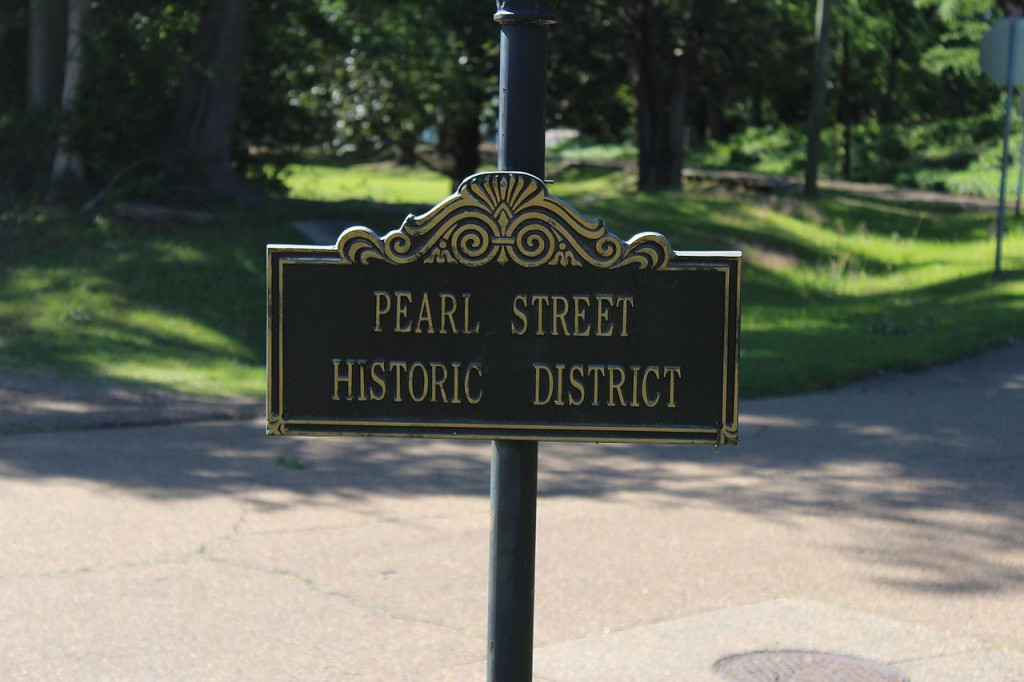
At another company, TransMark Funding, Stevens and his partner draw upon legal and small-business experience to evaluate potential customers’ creditworthiness. “That causes us to focus on an applicant’s business model and their sustainability, which may boil down to personalities,” Stevens says. Transmark combines those factors with “a little bit of credit metrics” to come to decisions on applications.
The company’s mix of objective and subjective reasoning differs starkly from the thought process at most coastal funders, Stevens says. While his company gives most of the weight to the subjective and just a bit to the objective, big-city competitors tend to do the exact opposite, he says.
Of the last five MCA deals that Transmark funded, the merchants averaged 12 checks returned for insufficient funds per month, Stevens says, noting that he can make that statement “with a straight face.” Sometimes it’s been as high as 35 NSF checks per month for successful applicants. “Those people would not even get into the parking lot of a bank and would not get through the door of any MCA funder who’s using any sort of reasonable metrics,” he adds.
An anecdote helps explain the thinking. Suppose a restaurant has been operating for several years in a town of 50,000 and has amassed 2,200 “likes” on its Facebook page, Stevens suggests. “I’m in,” he exclaims, noting that it would take compellingly negative numbers to convince him that the business won’t survive if he helps it obtains capital to improve its positioning in its market.
The vignette illustrates that a business can do well in the community despite the merchant’s financial difficulties, Stevens says. However, the story doesn’t mean Facebook becomes the only determining factor, he continues. Positive factors for success include good location and marketing, he notes.
The principals at many companies funded by TransMark have credit scores in the low 500’s, Stevens continues. “That’s tough,” he says, “because they’re going to have a lot of history of not living up to their financial obligations.” But if someone with that credit score has personally guaranteed a lease on a storefront for the next two years, they may be unlikely to abandon the business. A big bank might look upon that merchant as insufficiently nimble because of the lease, but TransMark takes the opposite view, he says.
Even if a store, restaurant or contractor is “circling the drain” and about to shut down, TransMark may simply believe the owner has the character to make the business work. “Given our minute default rate, we’re right most of the time,” Stevens maintains, adding that banks see applicants as customers, and TransMark sees them as partners.
The business model requires peering into the future to see how the merchants will look after using perhaps $25,000 in capital to make improvements and while dealing with 18 percent holdback for the next six months, Stevens observes. “If they look strong, I need to fund them,” he says of the company’s prognostications.
To find ISOs who appreciate the TransMark model, the company seeks out purveyors of credit card merchant services, Stevens says. They encounter those merchant-services providers at trade shows and through “some general poking around,” he notes.
The merchant-services people often have long-standing relationships with merchants and thus can feed information into the TransMark way of viewing deals. “Tell me what it looks like when you walk into their store at 11 a.m.,” Stevens says to illustrate the kind of conversation he has with ISOs. “How is their signage?”
Besides understanding clients, it also pays to understand markets, and proximity can help with the latter, according to Ballases and Castro in Houston. “We have an affinity for Texas,” Castro says.
Many of the businesses based in Texas are vendors to people—like mechanics who fix cars or restaurants that feed people—not vendors to businesses, Ballases notes. Vendors who cater to people are better candidates for merchant cash advances than business-to-business companies are, he maintains.

“It’s just a huge state,” Castro declares. “We’ve got a thousand new residents moving to Texas every day.” Nearly 10 percent of the nation’s small businesses operate in The Lone Star State, he notes.
“There’s a convergence of the population growth, a low tax rate, low regulations, low cost of running a small business relative to national levels, and a great small-business environment,” Castro says of the Texas scene. “In addition, the healthcare industry is exploding here, and there are the ancillary businesses to healthcare.”
Meanwhile, the state’s Hispanic entrepreneurs remain under-served by alt funding ISOs, which presents a great untapped opportunity, Castro maintains. Funders who cater to those Hispanic merchants will find them loyal, he predicts. In Texas alone, Hispanic consumers spend half a billion dollars annually, he says.
To capitalize on that burgeoning market, Accord has assembled a team that can help Anglo ISOs bridge the cultural and linguistic gap, Castro says. “We do that every day,” he maintains. “We’re jumping on the phone with merchants and helping them get the funding they need to support the growth of their operations.” Those conversations with merchants do not put Accord in competition with ISOs, Castro notes. Accord does not maintain an inside sales staff and does all of its business through ISOs, he says.
Only a few of those ISOs are based in Texas, according to Ballases. Most of Accord’s ISOs operate from offices in the Northeast, with many in the other common geographic spots of South Florida and Southern California, he says. So that makes Accord a national company despite its emphasis on Texas, Ballases says.
Accord’s experience at home, combined with nationwide contacts in the industry, have convinced the company’s leadership that too many brokers remain unaware of the opportunities in Texas.
That’s why Accord is producing ads, videos, infographics, blogs and social media posts to alert those coastal ISOs to opportunities in Texas. The company even offers a tab called “FundTEX” on its website. “We’re getting the word out,” Castro says of the company’s effort to publicize his state.
Besides operating in areas sometimes overlooked on the coasts, heartland brokers and funders sometimes have to reinvent the industry almost from scratch. Brokers can find themselves teaching the business to potential investors outside the Big Three geographic locations, Moss says. In New York, investors already know the industry and use that familiarity to evaluate brokers, he says.
Brokers and funders also have to deal with the heartland’s lack of workers with industry experience. As the lone company in the market, Strategic Capital, for example, can’t find many prospective employees with previous jobs in the business, Moss notes. “There is no OnDeck or Yellowstone or RapidAdvance down the street to provide a talent pool for hiring,” he says.
That’s good and bad, Moss maintains. New hires don’t require re-training to lose habits that don’t fit the Strategic Capital way of working. But it’s difficult to find underwriters, accountants and other prospective employees with the right background. It doesn’t work to put new salespeople on straight commission because the “ramp-up” period takes longer with employees unfamiliar with the industry, he says.
The lack of local experience sometimes prompts brokers in the heartland to tap the Big Three areas for talent. Expansion Capital Group, for example, has a business development director in New York who came from another ISO, Mages says. Besides cultivating relationships in NYC, the business development expert makes frequent trips to Southern California and South Florida.
Meanwhile, members of the industry who tire of the rapid pace on the coasts might want to consider moving inland to fill the vacant jobs, sources suggest. After all, the heartland has its advantages, according to Moss. “Most people here have houses, and the cost of living is lower than in places like New York,” he says. A spacious five-bedroom house in Kansas City might cost less than a cramped apartment in New York, he notes.
To commute to the company’s suburban office, his typical employee jumps into a car in a climate controlled attached garage, cruises for half an hour or so on roads relatively free of traffic and parks in the lot a few steps outside his office building. It’s less stressful than crowding into a subway car, he notes.
The hinterland’s not as culturally barren as some might believe, Moss continues. The public hears “Kansas City” and they think of tornadoes, cows and the Wizard of Oz, he says. But the reality includes a downtown replete with skyscrapers and pro sports, not to mention lots of tech, healthcare and aerospace companies. “It’s like a mini-Chicago,” he notes.
But a retreat from the coasts may not be in the offing. Ballases expects that the majority of ISOs will continue to concentrate on the East Coast and West Coast because that’s where population growth remains strongest and thus provides the most opportunities. “It’s a numbers game,” he observes.
LendingPoint Gets Even More Financing
February 4, 2019LendingPoint announced today that it has closed an increase of its mezzanine funding, a hybrid of debt and equity financing. The company’s mezzanine financing now totals more than $67.5 million. Paragon Outcomes Management LLC is the primary investor and was joined for this round by an unnamed co-investor.
“Paragon Outcomes continues to provide outstanding support for the growth of the LendingPoint platform and balance sheet,” said Tom Burnside, LendingPoint co-founder and CEO. “Their support enables us to continue to build our high performing balance sheet and fuels our march towards profitability quarter. To have companies like Paragon Outcomes want to be part of our future is a strong wind at our back.”
This is a continued expansion of an initial credit facility from Paragon Outcomes for $20 million in 2017, followed by an increase to $52.5 million in June 2018.
LendingPoint provides consumer loans of up to $25,000 and has a platform, called LendingPoint Merchant Solutions, that allows merchants to offer loans to their customs for point-of-sale purchases.
In addition to today’s announcement, LendingPoint also secured an up to $500 million senior credit facility in August 2017 and an up to $600 million senior credit facility in May 2018. Both deals were arranged by Guggenheim Securities.
Founded in 2014, LendingPoint is a privately held company headquartered in Kennesaw, GA with offices in San Diego, CA.
Capify Secures Massive Credit Facility from Goldman Sachs
January 16, 2019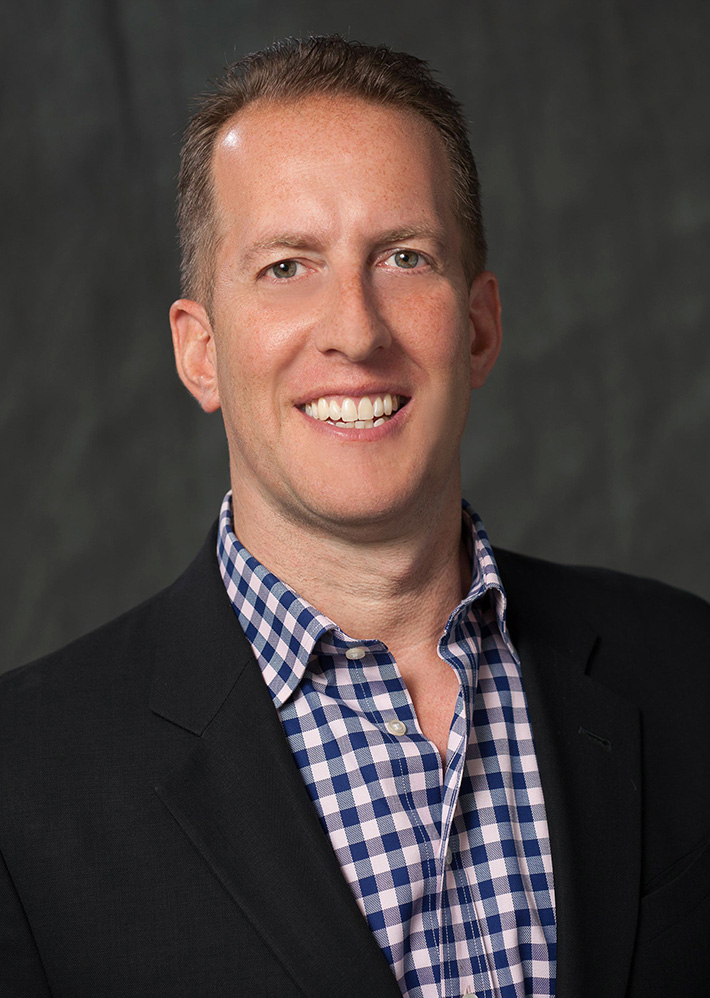 Capify, which serves the UK and Australia markets, announced this morning that it has secured a £75 million (roughly $95 million) credit facility from Goldman Sachs.
“This credit facility validates our company as a leader in the marketplace and underlines the strength of our business model to provide simple, affordable and smart financial options to UK and Australian small businesses,” Capify founder and CEO David Goldin said.
The achievement is notable for a company that is not venture capital or private equity based.
“Capify is one of the leading small business providers in the UK and Australia,” said Pankaj Soni, Executive Director at Goldman Sachs Private Capital. “We have been impressed with the management team, business model and innovative finance solutions for small businesses [and] we look forward to supporting their growth in the years ahead.”
Capify provides MCA deals and business loans to small business merchants. Goldin told AltFinanceDaily that MCA deals make up about 75% of Capify’s business in the UK, with about 25% in business loans. The ratio in Australia is the inverse, he said.
Goldin entered the UK and Australian markets in 2008 and said that they have become hyper competitive over the last three to four years. He acknowledged that both markets are still far smaller than the U.S. though.
“You don’t see these big crazy origination volumes [that you do in the U.S.]…[for us,] it’s about building a profitable, growing company.”
According to Goldin, another difference between the U.S. market and the UK and Australian markets is that the latter has embraced self-regulation much faster than the U.S. For instance, in Australia, there have been recommendations from semi-governmental organizations on how funders should perform, including the publishing of APR in contracts for business loans.
“These markets have moved quicker for self-regulation in the last two or three years than the U.S. market has moved in 10 years.”
This may be a matter of other countries learning from the experiences of the U.S., he said.
Goldin said that in addition to scaling Capify, the money from the facility will also be used to launch partner/broker programs in the UK and Australia. So far, the majority of Capify’s leads come from internal direct marketing efforts.
Capify employs more than 120 people divided between two offices, one in Manchester, England and the other in Sydney, Australia.
Goldin integrated the U.S. operations of Capify to Strategic Funding (now Kapitus) in 2017.
DataMerch.com Surpasses 20,000 Records Heading into 2019
January 9, 2019DataMerch.com surpasses 20,000 records heading into 2019
DataMerch continues rapid growth and adds many new members and merchant records
Tampa, Jan. 9, 2019 /DeBanked/ — Today, DataMerch.com, an online underwriting database for the alternative financing industry, announced that they have surpassed over 20,000 records in their database. DataMerch has been servicing funders in the alternative financing field since 2015 and has been widely adopted as the industry standard for online screening of merchants.
“We continue to grow our membership and database because our tool is so useful,” said Co-Founder Cody Burgess. “In 2018 we surpassed 60 active member companies with well over 500 individual users within those companies. We also added tools to support better member communication.” When asked what developments to expect looking forward in 2019, Mr. Burgess responded, “We have several projects we are working on to expand our features and membership. We are developing tools to make searching and reporting even easier, and we are planning on adding some additional industry markets to bolster results and relevancy.”
President and COO of IOU Financial Inc., Robert Gloer said, “We’ve been using DataMerch since the beginning and are thrilled with the results. We’ve automated our process where we screen every new application through DataMerch to check if there were issues with competitors in our industry. This allows us to save countless hours of time and money with an additional up-front underwriting tool that is easy to use.”
Management at DataMerch said they will continue to offer world-class support to members and improve the platform.
About DataMerch
DataMerch LLC was founded in 2015 and is designed to help funders determine if a future client of theirs has a bad track record in the alternative finance industry. DataMerch members can scrub their files using DataMerch’s specifically designed FEIN search and enter unsatisfactory businesses into the database. DataMerch currently has over 60 industry-leading subscribed members working together as a community. DataMerch can be accessed at https://www.datamerch.com and contacted for membership at support@datamerch.com
CAN Capital Hires Edward J. Siciliano as Chief Executive Officer
January 8, 2019Atlanta, GA (January 8, 2019) – CAN Capital, a technology-driven small business specialty finance company, today announced the appointment of Edward J. Siciliano as Chief Executive Officer. Siciliano brings over 30 years of experience in commercial financing, sales, marketing and operations.
Siciliano joins CAN Capital most recently from Marlin Business Services, a nationwide provider of commercial financing and depository products. While at Marlin, Siciliano served in roles including Chief Operating Officer, Interim Chief Executive Officer and EVP, and Chief Sales Officer. During that time, he was responsible for turning around Marlin post financial crisis by rebuilding the sales force, adding new products, improving operations, and driving optimal risk-adjusted returns for all segments, resulting in double-digit ROE and more than fivefold growth in originations.
After beginning his career at Xerox Corporation, Siciliano worked at Applied Theory Corporation as SVP of Sales and Marketing and at ALK Technologies, where he also led Sales and Marketing.
“Ed is a proven leader with deep industry knowledge and a strategist who is skilled at driving business growth,” said Gary Johnson, CAN Capital’s Executive Chairman. “Throughout his career, he has served the needs of small businesses while building loyal teams that deliver innovative products and a great customer experience. These skills will be invaluable as CAN Capital finds new ways to deliver on its mission of helping small businesses succeed.”
“It’s rare to have the opportunity to work with a company that is a pioneer in its space, yet has so much growth potential,” said Siciliano. “CAN Capital’s experience, brand recognition, data, and partner relationships make it uniquely positioned to support the expansion of the small businesses that drive the U.S. economy. I look forward to building a leadership team and working together to expand our offerings, invest in talent and technology, and help our customers grow.”
About CAN Capital
CAN Capital, Inc., established in 1998, is the pioneer in alternative small business finance, having provided access to over $7 billion in capital for over 81,000 small businesses in a wide range of locations and different business types. As a technology powered financial services provider, CAN Capital uses innovative and proprietary risk models combined with daily performance data to evaluate business performance and facilitate access to capital for entrepreneurs in a fast and efficient way.
CAN Capital, Inc. makes capital available to businesses through business loans made by WebBank, member FDIC, and through Merchant Cash Advances made by CAN Capital’s subsidiary CAN Capital Merchant Services, Inc. ©2018 CAN Capital. All rights reserved.
Follow CAN Capital on LinkedIn, Twitter and Facebook.
Meet CAN Capital’s New CEO
January 8, 2019 CAN Capital announced this morning the appointment of Edward J. Siciliano as its new CEO.
“There is still a huge delta between the need for capital for small businesses and the capital that banks are willing to provide,” Siciliano said. “And this creates an enormous opportunity for CAN to expand its business.”
Siciliano comes to CAN Capital from the equipment finance and small business lending company Marlin Business Services, based in New Jersey. He worked there for a decade in several roles including Chief Operating Officer and Chief Sales Officer.
“Ed is a proven leader with deep industry knowledge and a strategist who is skilled at driving business growth,” said CAN Capital’s founder and Executive Chairman Gary Johnson. “Throughout his career, he has served the needs of small businesses while building loyal teams that deliver innovative products and a great customer experience.”
Siciliano is relocating from Princeton, NJ to live near CAN Capital’s headquarters in Kennesaw, GA, near Atlanta. In September 2018, the company announced that it would be moving its finance and executive functions to Kennesaw from New York City. A CAN Capital spokesperson at the time said that Parris Sanz, the former CEO, did not want to move to the Atlanta area for personal reasons. Now, Siciliano said that there is no longer a New York City office, but there is a roughly eight person finance team in White Plains, NY, that will eventually be moved to the Georgia headquarters.
“I really value the work that [Sanz] has done…and we’re going to stay the course out of the gate. However, I’ve been tasked with accelerating the business,” Siciliano said.
In this effort, Siciliano said he will continue to invest in technology, but will also focus on the small business customer rather than a specific product. Instead, Siciliano said that he would like to see CAN Capital expand its product offerings to serve more needs of small business customers.
He also said that he would like to expand the company’s referral partners beyond brokers to include other players such as manufacturers, attorneys and accountants.
For Siciliano, there are two key elements to focus on for any funding company. The first is credit, or underwriting.
“CAN is one of the very few fintechs that lived through 2008, the recession. You get information about your credit portfolio and your credit model in stressful times like that, that is invaluable…I feel like we have great credit models, which will constantly be enhanced and will always be a focus. Your credit model is the Achilles heel of any lending company.”
The other element that Siciliano focuses on is lowering customer acquisition costs. He said he wants to broaden product offerings to attract different and more partners who will, in turn, bring their small business customers to CAN Capital.
Currently, Siciliano said that the company originates $25-30 million a month and 95% of the business is providing working capital and business loans while the remaining 5% is merchant cash advance. CAN Capital works with brokers but also has an internal sales team. There are about 100 employees at the Kennesaw headquarters, including the company’s executive, marketing, and analytics teams. There is also a technology team of about 20 people located in Costa Rica and Siciliano said that the company works with business development people who work independently throughout the country.
Founded in 1998, CAN Capital has provided more than $7 billion to more than 81,000 small businesses.
What We Learned About RapidAdvance From RapidAdvance’s Planned Securitization
January 1, 2019
RapidAdvance is raising money through their first-ever securitization. This is what we’ve learned about the company as a result so far, thanks to the bond ratings process:
2017 origination volume: $260 million | See how this ranks against their peers
Lifetime funding volume: > $1.5 billion
Total shareholder equity: $54 million
Majority owned by: Rockbridge Growth Equity LLC
# of employees: 168
Notable strategic partnerships: Office Depot and Worldpay
Provides: Mainly Business loans (≈80%) but also merchant cash advances (≈20%)
Founded: 2009
Generates deals via: 62% ISO & Funding Partner Channel / 38% Direct
Other funders that recently did their first securitizations include Credibly and Strategic Funding Source.