
CAN Capital to Grow Team and Business with New Facility
September 5, 2018 CAN Capital CEO Parris Sanz at Broker Fair May 2018
CAN Capital announced today that it agreed to a financing transaction of up to $287 million, provided by Varadero Capital. This is CAN Capital’s second facility with Varadero Capital. The first one came in July 2017. This financing will be used to fund more small business loans and to invest in talent and technology to enhance customer experience. The company plans to grow the size of its team with this new facility.
“We look forward to utilizing this funding to expand our ability to provide access to capital for small businesses, enhance our technology stack, and continue to build a dedicated, customer-driven team,” said Parris Sanz, CEO of CAN Capital.
CAN Capital also announced today that it has now provided small businesses with access to over $7 billion of working capital through more than 190,000 funding transactions with over 81,000 small business owners.
“Reaching $7 billion in working capital is a significant milestone for us,” Sanz said. “We are excited to use our deep experience and data to enable even more small business owners to grow with streamlined access to capital.”
CAN Capital makes business loans from $2,500 to $250,000 that last between 6 and 18 months. And they provide merchant cash advance financing, also from $2,500 to $250,000. They also work with broker partners to fund deals.
Founded in 1998, CAN Capital is among the oldest alternative lending companies. After an issue plagued them in 2016, the continued growth and confidence in the company from Varadero Capital is noteworthy. The company is now growing when it was making layoffs less than two years ago. Currently, CAN Capital’s headcount is 142.
“Since our initial facility, we’ve been impressed by the work ethic and dedication of CAN Capital’s staff, which have driven consecutive quarters of business growth and boosted confidence in the company’s fundamentals,” said Fernando Guerrero, Managing Partner and Chief Investment Officer at Varadero Capital.
CAN Capital Hires New CFO
April 17, 2018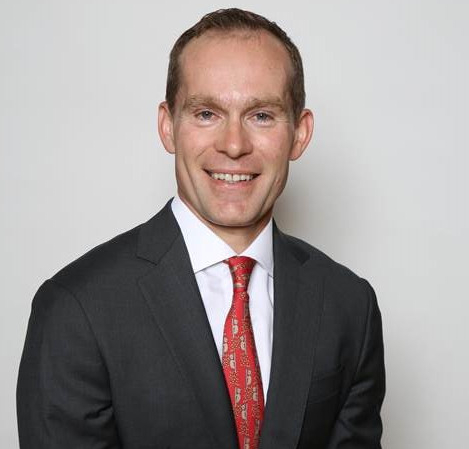 CAN Capital has just hired Tom Davidson, a finance veteran, to become its new CFO. Davidson joins CAN Capital from Sierra Auto Finance where he was Chief Financial Officer and Chief Capital Officer. Before that, he worked at GE Capital for 16 years, eventually becoming Chairman and CEO of GE Capital Markets, Inc.
“Given that we’re growing rapidly and looking to expand our business significantly, we were looking for someone with the kind of experience Tom has,” CAN Capital CEO Parris Sanz said. “Mainly an expert in capital markets [with] great experience and expertise with securitizations, treasury and investor relations. [The decision to hire Davidson] is reflective of our future growth plans and the speed with which we expect to be growing.”
CAN has funded more than $200 million to small businesses since their rebirth in July last year. Between term loans and MCA funding, Sanz said that CAN Capital’s business is about 80 percent term loans and 20 percent MCA.
“It’s rare to have the opportunity to join a company that is a genuine pioneer in its field and also so well-positioned for future growth,” Davidson said. “[Also] what attracted me to CAN Capital is the opportunity to serve the small businesses that form the backbone of the American economy.”
Davidson will be replacing Ray De Palma who is staying on at the company in the role of Chief Accounting Officer. Founded in 1998, CAN Capital celebrates its 20th anniversary this year. It has about 150 employees spread across three offices in New York, Georgia and Costa Rica. The bulk – about 120 employees – are in Georgia. The executive and accounting teams are located in New York and part of the company’s IT team is based in Costa Rica.
LendingPoint: CAN Capital’s Close Neighbor in Kennesaw
August 14, 2017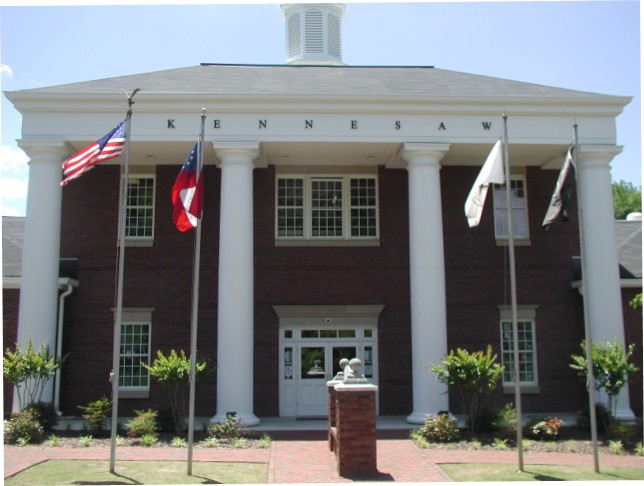 LendingPoint, a consumer lender staffed largely by former CAN Capital employees, may have something to teach the alternative small-business finance industry about creditworthiness. Three-year-old LendingPoint claims to go beyond FICO scores to bring each applicant’s sense of fiscal responsibility into sharper focus.
But first, let’s examine the CAN Capital connection. Four or five members of LendingPoint’s top management team came to the company after lengthy tenures at CAN Capital, a LendingPoint official says. That includes Tom Burnside, LendingPoint’s CEO and founder, and Franck Fatras, the company’s president and chief operating officer. Both worked 13 years for CAN Capital, with Burnside leaving as chief operating officer and Fatras departing as chief technology officer, according to biographies posted online.
All told, about 30 of LendingPoint’s 100 or so employees – a total that includes outsourced positions – formerly labored at CAN Capital, according to Fatras. Many put in considerable time at CAN Capital, holding jobs there in management, corporate governance, legal affairs, risk, sales, operations, IT, marketing, analytics, design, customer service, partner success and success delivery, online reports say.
Geography no doubt encourages CAN Capital employees to consider LendingPoint when it’s time to move on to another job. Both companies maintain headquarters in office parks in the Atlanta suburb of Kennesaw. In fact, the two companies operate half a mile apart, both of them just off of Cobb Place Boulevard Northwest, according to Google Maps and Directions.
Great news! Our new logo has OFFICIALLY made it's mark on our new building. What do you think?#Finance #LendingPoint #Logo pic.twitter.com/cpUIQvLy2w
— LPLoans (@LPLoans) March 13, 2017
The way Fatras tells it, LendingPoint hasn’t raided CAN Capital’s workforce. “We post the job, and they end up responding,” he says. “When they’re known quantities and people we have a lot of respect for, we just end up making it work.”
Moreover, LendingPoint’s connections with other companies don’t begin or end with CAN Capital. Some of the people in top management met when they worked at First Data Corp. and Western Union, Fatras recalls. Juan E. Tavares, co-founder and chief strategy officer, and Victor J. Pacheco, chief product officer, came from those relationships, he says.
Regardless of where they became acquainted, Lendingpoint’s leadership team has come together to form a direct balance-sheet consumer lender specializing in what they call a “near prime” clientele. The company defines the phrase “near prime” to include personal-loan applicants with FICO scores from 600 to 700, Fatras says, adding that the segment’s not sub-prime and not prime. The company has even trademarked “NEARPRIME” as a single word in capital letters, and it appears that way on the company website. It regards those consumers as “deserving yet underserved,” Fatras notes.
To qualify those applicants for credit, LendingPoint considers “behavior,” such as work history, education, and timeliness with paying rent, utility bills and cell phone bills, Fatras says. “A lot of what we do is identify patterns,” he says. “It’s all about asking the right questions.” The process requires tapping into multiple sources to collect the data, he observes.
 In a blog published online soon after LendingPoint was launched, executives Burnside and Tavares claim that most credit models search for ways to say no to applicants, while their company uses big data to find ways of saying yes. LendingPoint algorithms predict risk with great precision, they say.
In a newspaper opinion piece that ran about the same time, Burnside and Tavares maintain that their model examines cycles in an applicant’s life to pinpoint upward and downward trends. A consumer on the way up deserves a loan, according to the theory.
The company’s willingness to study information that resides outside credit scores did not originate with the CAN Capital connection, Fatras says. “The model is unique and the data structure we are using is unique,” he says. “It’s all about understanding the credit story of the person.”
Latin American lending practices had some influence on LendingPoint, Burnside and Tavares write in one of their editorial pieces. Lenders there review factors other than credit scores because the scores aren’t readily available in some countries, they write.
To analyze that type of non-FICO information, LendingPoint has developed its own internal scoring model and then automated the process, spending a lot of time to develop the technology, Fatras continues. Once again, asking the right questions determines the meaning that the company can extract from the data, he emphasizes. Otherwise, the information’s just not that beneficial, he says.
When consumers come to the LendingPoint website and answer five or six questions, they can receive a firm offer of credit in an average of seven seconds and sometimes as quickly as four seconds, Fatras maintains. The offers are contingent upon the company underwriting department’s validation of income and other figures, ne notes, adding that “we’re pretty happy with the infrastructure we’ve built.”
LendingPoint collects on the loans with automatic payments from customers’ savings or checking accounts twice a month, according to the company website. Deducting the payments twice a month helps customers with budgeting, the site says. Consumers can borrow up to $20,000 and pay it back in 24 to 48 months.
The system was devised by top management with combined experience of more than a century in credit and risk, Fatras says. When those executives with so much commercial lending experience gather around the conference table to talk about the business, the possibility of lending to small businesses occasionally comes up in the conversation.
But Fatras doubts the company will make that move to the commercial side anytime soon because companies in the alternative small-business finance industry are competing for 5 million to 6 million potential customers while the country has 50 million near-prime consumers. “The space is so big where we are,” he says. “The demand could be over a billion dollars a month. We have a lot of room in front of us for growth.”
With that seemingly infinite market, LendingPoint has been growing at a healthy pace, Fatras says. The company, which was self-funded for the first year, made its initial loan in January 2015. In 2016, it did $150 million in business, he notes. By the middle of this year, the company had made a total of $250 million in loans to 25,000 consumers, he says.
It’s a business model that members of the alternative small-business finance community might do well to emulate, Fatras suggests. “There could be a lot of cross-pollination,” between consumer and commercial loans when it comes to going beyond FICO, he says.
LendingPoint executives that were formerly at CAN Capital
Tom Burnside, CEO
formerly a COO and president at CAN
Franck Fatras, President and COO
formerly a CTO at CAN
Mark Lorimer, Chief Marketing Officer
formerly a CMO at CAN
Dave Switzer, Chief Analytics Officer
formerly a VP at CAN
Joe Valeo, EVP of Strategic Development
formerly an EVP at CAN
CAN Capital Resumes Funding
July 6, 2017
CAN Capital is back in business, thanks to a capital infusion by Varadero Capital, an alternative asset manager. Terms of the capital arrangement were not disclosed.
CAN Capital stopped funding late last year and removed several top officials after the company discovered problems in how it had reported borrower delinquencies. The discovery also resulted in CAN Capital selling off assets, letting go more than half its employees and suspending funding new deals, among other things.
Now, however, the company has a new management team and its processes have been revamped and staff retrained in anticipation of a relaunch, according to Parris Sanz, who was named chief executive in February. He was the company’s chief legal officer before taking over the helm after then-CEO Dan DeMeo was put on leave of absence.
As of today (7/6), CAN Capital has resumed funding to existing customers who are eligible for renewal. Within a month, the company plans to resume providing loans and merchant cash advance to new customers. It will have two products available in all 50 states—term loans and merchant cash advances with funding amounts from $2,500 to $150,000.
To be sure, getting back into the market after so many months will be a challenge. “I think we’re absolutely going to have to work hard, no doubt about it. In many ways, given our tenure and our experience, the restart may be easier for a company like us versus others. Based on the dynamics in the market today, I see a real opportunity and I’m excited about that,” Sanz said in an interview with DeBanked.
 Since its founding in 1998, CAN Capital has issued more than $6.5 billion in loans and merchant cash advances. It’s one of the oldest alternative funding companies in existence today, and, accordingly, it shook the industry’s confidence when the company’s troubles became public late last year.
The new management team includes Sanz, along with Ritesh Gupta, the chief operating officer, who joined CAN Capital in 2015 and was previously the firm’s chief customer operations officer. The management team also includes Tim Wieher as chief compliance officer and general counsel; he initially joined the company in 2015 as CAN Capital’s senior compliance counsel. Ray De Palma has been named chief financial officer; he came to CAN Capital in 2016 and was previously the corporate controller. The management team does not include representatives from Varadero.
Varadero is a New York-based value-driven alternative asset manager founded in 2009 that manages approximately $1.3 billion in capital. In the past five years, Varadero has allocated more than $1 billion in capital toward specialty finance platforms in various sectors including consumer and small business lending, auto loans and commercial real estate. In 2015, for instance, Varadero participated in separate ventures with both Lending Club and LiftForward.
Varadero began working with CAN Capital as part of its efforts to pay down syndicates. Varadero bought certain assets from CAN Capital last year and provided enough funding to allow CAN Capital to recapitalize. “The recapitalization enabled us to pay off the remaining amounts owed to our previous lending syndicate and provided us with access to additional capital to resume funding operations,” Sanz says. He declined to be more specific.
“We were impressed with the overall value proposition of CAN’s offerings as evidenced by the strength of its long standing relationships, the company’s core team, sound underwriting practices, technology and the strong performance of their credit extension throughout the cycle,” said Fernando Guerrero, managing partner and chief investment officer of Varadero Capital, in a prepared statement. “We’re confident the company’s focused funding practices will allow it to serve small business customers for many years to come.”
Guerrero was not immediately available for additional comment.
DLA Piper served as legal counsel for, and Jefferies was the financial advisor to, CAN Capital, while Mayer Brown was legal counsel to Varadero Capital, L.P.
Since its troubles last year, CAN Capital had been working with restructuring firm Realization Services Inc. for assistance negotiating with creditors. It also worked with investment bank Jefferies Group LLC for advice on strategic alternatives.
Sanz declined to discuss other options CAN Capital considered, noting that the Varadero deal provides the firm the opportunity it needs to jump back into the market—this time with “tip top” operations in place.
He declined to say how many employees the firm still has, other than to say it is now “appropriately staffed.” In addition to getting rid of the prior management team, CAN Capital reduced staffing in numerous parts of its business. That includes nearly 200 positions at its office in Kennesaw, Ga, according to published reports.
The company will still be called CAN Capital. “We feel that that brand has a recognition in the market, in particular with our sales partners,” Sanz says.
SEC Reported To Be Looking Into CAN Capital and Prosper
May 27, 2017Bloomberg reporter Matt Scully reiterated on Friday that the SEC is looking into CAN Capital “after that firm failed to report to bondholders that some customers’ loans were in default.” That was referencing a previous December inquiry reported back in February. CAN’s $200 Million securitization suffered a rapid amortization event in the second half of 2016, compounding other problems including a reported breach with their Wells Fargo credit facility. The company never quite recovered despite CAN’s Acting CEO, Parris Sanz, telling the WSJ back in January that the problems were akin to changing a flat tire. The previous CEO along with the company’s chief risk officer, chief financial officer, and chief marketing officer have all left.
Bloomberg also reported that online consumer lender Prosper is being probed by the SEC after they disclosed that they had overstated investor returns. The inquiry was said to only be in a preliminary stage.
Update: The inquiry with CAN originated in December but it was not widely reported. The above has been edited to reflect the timing.
Brief: Former CAN Capital CFO Moves On
March 9, 2017According to the WSJ, Aman Verjee, who was CAN Capital’s CFO up until late last year, has taken the COO position at 500 Startups. The company has invested in more than 1,800 startups across more than 60 countries. According to the website, “500 Startups was founded in 2010 by former PayPal and Google alumni Dave McClure and Christine Tsai, along with many other friends and supporters.”
CAN Capital has not yet named a replacement CFO.
CAN Capital is Changing the World’s Most Expensive Tire
January 16, 2017
Acting CEO Parris Sanz told the WSJ that what’s happening at CAN Capital right now is akin to changing a flat tire. “We hit a bump in the road and blew out a tire,” Sanz said. “We just need to change out the tire, and we’ll be back on the road.”
But sources say that the company is in the midst of trying to sell off assets including its loan portfolios to raise cash in a hurry. In the span of a few weeks the company has let go of more than half of its employees, has suspended funding new deals, put its top executives on leave, been sued by a shareholder, and suffered a rapid amortization event with its $200 million bond deal. That’s on top of a breach that the WSJ reported with CAN’s $650 million credit facility led by Wells Fargo. A spokesperson for Wells told me they could not provide any comment or information on the matter.
And CAN’s issues aren’t the result of a changing economy, but rather internal systems that couldn’t keep up with their innovations. They’ve even hired a restructuring company to assist them through this crisis. It now being more than a month and a half since the story first broke, the WSJ puts the amount CAN is trying to raise “to strengthen its financial position” at $100 million.
If this is how they go about changing a tire, it may be time they sign up for AAA Roadside Assistance. For the merchant cash advance industry, their predicament is one of the biggest events of the decade by virtue of their history, size and renown. The company has funded more than $6 billion to small businesses since they launched in 1998.
Consider that just a few months ago, CAN was seemingly riding high as it promoted its new lending transparency initiative as part of the Innovative Lending Platform Association. And in July, Sanz represented the MCA & small business lending industry in a congressional hearing dedicated to financial institutions and consumer credit.
CAN’s top competitor is OnDeck whose stock has only inched up 8% since November 29th.
A spokesperson for CAN reiterated that this was an issue that they self-discovered and self-reported. “In the absence of information, people are making incorrect assumptions,” she said. “It affected about 3% of total assets in the portfolio under our senior line. It’s a manageable situation and one we are working through as we position ourselves for success in 2017.”
CAN Capital Shareholder Files Lawsuit
December 25, 2016Add an aggrieved shareholder to the list of CAN Capital’s recent messes. On December 19th, Deborah Clearman filed a motion for summary judgment in lieu of a complaint in the New York Supreme Court, alleging that CAN had failed to comply with a settlement agreement that stipulated she be paid $150,000 by November 14, 2016.
Clearman, who has been a shareholder of the company since 2003, is the owner of 83,362 shares of CAN Capital preferred Series A-1 stock and 48,078 shares of CAN Capital preferred Series A-2 stock, according to the settlement agreement now visible to the public because of New York State’s open court system.
The original dispute between the parties precedes the latest events rocking the company, though the alleged non-payment could be related to liquidity woes. CAN was only just served the summons on Wednesday the 21st and has not yet filed a response to the allegations.
CAN recently suffered a Rapid Amortization Event with their $200 million securitization, has suspended the funding of new deals and has laid off nearly half of their employees.
The lawsuit is registered as case number 656603/2016 in the New York County Supreme Court