
Federal Court Agrees, Merchant Cash Advances Not Loans or Usurious
May 13, 2017 By now, numerous judges in the New York Supreme Court have concurred that purchases of future receivables are not loans nor usurious, yet challenges to these contracts continue. In the latest landmark ruling, defendants/counterclaim plaintiffs Epazz, Inc., Cynergy Corporation, and Shaun Passley a/k/a Shaun A. Passley, moved to have the original action involving their merchant cash advance dispute transferred from state court to federal court, perhaps hoping for a different opinion on whether such agreements are usurious.
The law was not on their side. In the Southern District of New York, a federal court, the Honorable Louis L. Stanton echoed on May 9th, 2017, what state judges have been saying all along, that a purchase is not a loan because the purchased receipts are not payable absolutely.
In this case, the “receipts purchased amounts” are not payable absolutely. Payment depends upon a crucial contingency: the continued collection of receipts by Epazz from its customers. TVT [TVT Capital] is only entitled to recover 15% of Epazz’s daily receipts, and if Epazz’s sales decline or cease the receipts purchased amounts might never be paid in full. See counterclaims, Exhs. A-C at 1. The agreements specifically provide that “Payments made to FUNDER in respect to the full amount of the Receipts shall be conditioned upon Merchant’s sale of products and services and the payment therefore by Merchant’s customers in the manner provided in Section 1.1.” Id. at 3 § 1.9.
Defendants’ argument that the actual daily payments ensure that TVT will be paid the full receipts purchased amounts within approximately 61 to 180 business days, id. ¶¶ 33-47, is contradicted by the reconciliation provisions which provide if the daily payments are greater than 15% of Epazz’s daily receipts, TVT must credit the difference to Epazz, thus limiting Epazz’s obligation to 15% of daily receipts. No allegation is made that TVT ever denied Epazz’s request to reconcile the daily payments. TVT’s right to collect the receipts purchased amounts from Epazz is in fact contingent on Epazz’s continued collection of receipts. See Kardovich v. Pfizer, Inc., 97 F. Supp. 3d 131, 140 (E.D.N.Y. 2015), quoting Amidax Trading Grp. v. S.W.I.F.T. SCRL, 671 F.3d 140, 147 (2d Cir. 2011) (“Where a conclusory allegation in the complaint is contradicted by a document attached to the complaint, the document controls and the allegation is not accepted as true”).
None of the defendants’ arguments, Counterclaims ¶¶ 51-109, change the fact that whether the receipts purchased amounts will be paid in full, or when they will be paid, cannot be known because payment is contingent on Epazz generating sufficient receipts from its customers; and Epazz, rather than TVT, controls whether daily payments will be reconciled.
The decision relies heavily on the reconciliation clause common to merchant cash advance agreements, whereby merchants can adjust their daily ACH amounts to correlate with their actual sales activity. This concept is explained at length in the Merchant Cash Advance Basics training course.
Furthermore, the court was incredulous over the defendants’ claim that they actually wanted loans but were instead fraudulently induced into purchase agreements.
Defendants do not claim that they were misled with regard to the amount of their payment obligation, only that they were misled into believing that their repayment obligation would be absolute when it actually is contingent. Their injury from that is unclear.
In short, the judge suggests that entering into a loan would’ve been worse because it was absolutely repayable, whereas the purchase agreement was not. So how could they have been damaged?
The entire decision surrounding all the claims can be downloaded here.
The case is Colonial Funding Network, Inc. as servicing provider for TVT Capital, LLC v. Epazz, Inc. Cynergy Corporation, and Shaun Passley a/k/a Shaun A. Passley in the United States District Court’s Southern District of New York. Case: 1:16-cv-05948-LLS.
Defendants Shaun Passley and Epazz also lost challenges in another merchant cash advance case in the New York Supreme Court.
Exercise of Ordinary Intelligence Would’ve Revealed Merchant Cash Advance Contract Was Not a Loan, Court Says
May 9, 2017 In the New York Supreme Court, the Honorable Linda S. Jamieson was tasked with ruling on twelve causes of action in a merchant cash advance contract case. While the 18-page decision covers a lot of ground, one notable section was the plaintiffs’ request for rescission based on “misrepresentations or unilateral mistake” and “damages for fraudulent inducement.” According to the order, the plaintiffs, K9 Bytes, Inc., Epazz, Inc., Strantin, Inc., MS Health Inc., and Shaun Passley, “claim that the defendants misled them by representing that they were entering into “loans governed by usury laws,” but instead caused them “to enter into ‘merchant agreements.'” Exhibits on the docket attached by the plaintiffs purport to demonstrate the word loan being used in communications, though the judge noted that the plaintiffs failed to identify how the individuals in those communications specifically attributed to the defendants. Nevertheless, the judge was unmoved by plaintiffs given the overt language spelled out in the contract itself.
[The plaintiffs] state that they would not have knowingly entered into merchant agreements, because what they really wanted were loans. Indeed, plaintiffs allege that “the word ‘purchase’ or ‘sale’ would have caused Passley to decline a transaction with [defendants] because a loan – the product Passley wanted to obtain – is not a purchase or sale.”
A review of the contracts in this action shows that not only do they all clearly state that they involve purchases or sales, but they all expressly state they are not loans. Even if someone were confused by the contracts, or did not understand the obligation or the process, by reading the documents, one would grasp immediately that they certainly were not straightforward loans. The very first heading on the page was “Merchant Agreement,” and the second heading says “Purchase and Sale of Future Receivables.”
[…] For plaintiffs to state that they would not have entered into a purchase or sale if they had known that that is what they were doing is utterly undermined by the documents themselves. As the Second Department has held, in Karsanow v. Kuehlewein, 232 A.D.2d 458, 459, 648 NY.S.2d 465, 466 (2d Dept. 1996), “the subject provision was clearly set out in the … agreements, and where a party has the means available to him of knowing by the exercise of ordinary intelligence the truth or real quality of the subject of the representation, he must make use of those means or he will not be heard to complain that he was induced to enter into the transaction by misrepresentations.” So too here, plaintiffs had the means to understand that the agreements set forth that they were not loans. As it has long been settled that a party is bound by that which it signs, the Court finds that the ninth cause of action, for recission based on misrepresentation or mistake, and the tenth cause of action, for fraudulent inducement based on misrepresentation, must be dismissed as a matter of law. Pimpinello v. Swift & Co., 253 N.Y. 159, 162-63 (1930) (“the signer of a deed or other instrument, expressive of a jural act, is conclusively bound thereby. That his mind never gave asset to the terms expressed is not material. If the signer could read the instrument, not to have read it was gross negligence; if he could not have read it, not to procure it to be read was equally negligent; in either case the writing binds him.”).
The plaintiffs are likely to be disappointed with the rest of the ruling as well. The decision can be found in the New York Supreme Court in the County of Westchester under Index Number 54755/2016 or can be downloaded in full here.
Nulook Capital Bankruptcy Envelops PSC
April 27, 2017Nulook Capital was not the only casualty of its April 4th Chapter 11 bankruptcy filing. On Wednesday, April 26th, a federal judge in a separate action issued an order aimed at one of Nulook’s alleged creditors, PSC. PSC is also a Long Island-based company engaged in the merchant cash advance business.
In the order, the Honorable Arthur D. Spatt appointed a receiver for International Professional Services Inc. dba PSC and PSC Financial, granting him exclusive dominion and control over all of their assets, books, records and business affairs.
PSC was originally listed as a creditor in the Nulook bankruptcy with $400,000 owed. Another creditor however, GWG MCA Capital, Inc., argued that PSC had interfered with its first position lien and taken possession of its collateral. Alas, in the suit that GWG brought, the court found the full extent of their arguments compelling enough to appoint a receiver over PSC.
Nulook Capital Has Filed Chapter 11
April 13, 2017NY-based merchant cash advance funding company Nulook Capital filed for Chapter 11 on April 4th, according to court records. They listed more than $2.6 million in creditor claims. The largest among them was a secured claim for $2 million by a specialty finance company.
Two other creditors in the bankruptcy proceeding are also involved in the merchant cash advance industry.
The voluntary petition was filed in the Eastern District of New York in the United States Bankruptcy Court.
Brickell Capital Finance Inks Deal with Liquid FSI Convert2Pay™
March 16, 2017Miami, FL. March 16, 2017—Brickell Capital Finance, Inc., a leader in providing consumer facing loans to the healthcare industry, will offer Liquid FSI’s Convert2Pay™ through its 75 sales reps nationwide.
Eli Mualin, President and CEO of Brickell said, “We believe that Convert2Pay is a ‘game changing’ Fintech product for the healthcare industry. It allows providers to convert their existing insurance claims on-demand. It will change the way healthcare professionals access business capital and Brickell wants to be part of that.”
“Convert2Pay is a user directed revenue cycle management tool that allows providers to open a gateway to low cost spot liquidity. It is designed to replace higher-cost offerings like business advances and complicated factoring products,” said Frank Capozza, President and CEO of Liquid FSI developer of Convert2Pay™.
“Brickell is a good distribution partner because they have a strong reputation with healthcare providers. Our goal is to drive liquidity into the healthcare ecosystem,” Capozza said.
For more information contact:
Frank Capozza
Liquid FSI, Inc.
www.liquidfsi.com
646-620-6088
Mel Chasen, Founder of Rewards Network and a Merchant Cash Advance Visionary, Has Died
March 15, 2017 Melvin Chasen passed away on Monday. He was 88. Chasen founded Rewards Network in 1984 as Transmedia Network, Inc. and it went on to become the world’s largest dining rewards program. As part of that, the company pioneered the use of future sales to facilitate working capital to restaurants.
Transmedia became iDine Rewards Network in 2002 but was later shortened to just Rewards Network in 2003. While Chasen had an incredibly accomplished career, a newspaper obituary paying tribute to his life says that Transmedia, a specialized restaurant financing company, was his biggest business success.
A 1991 New York Times article explained the business model as follows: “It gives the restaurant $10,000, a debt that is paid off by providing $20,000 worth of meals to Transmedia customers. The customers pay Transmedia $15,000, a 25 percent discount from face value. If the restaurant goes out of business before Transmedia’s customers eat enough meals, or if customers do not patronize a restaurant, Transmedia suffers the loss.”
To think that concept was not only being applied 26 years ago, but was already a big hit, undoubtedly makes Chasen a top player in merchant cash advance lore. He will be greatly missed.
A service will be held on Thursday, March 16 in North Miami Beach. Memorial donations may be made to the ALS Recovery Fund.
What Shakeout? Breakout Capital Secures $25 Million Credit Facility
February 8, 2017 Put a tally up on the board for small business lenders in 2017. McClean, VA-based Breakout Capital, which just announced a move into a larger office last week, has also secured a $25 million credit facility with Drift Capital Partners. Drift is an alternative asset management company.
Breakout is young by today’s industry standards, founded only two years ago by former investment banker Carl Fairbank, who is the company’s CEO. And don’t count them out just because they’re not in New York or San Francisco. Washington DC’s Virginia suburbs have become somewhat of a hotspot for fintech lenders. OnDeck, Fundation, StreetShares and QuarterSpot all have offices there, Fairbank points out. “And Capital One is right up the street,” he adds while explaining that the community has a strong talent pool that is familiar with creative lending. Breakout has already grown to about 20 employees and they’re still growing, he says.
Fairbank considers Breakout to be a more upmarket lender, whose repertoire includes serving the near-prime, mid-prime customer. CAN Capital and Dealstruck had focused on this area and both companies stopped funding new business in 2016. As I point this out, I ask if that suggests that segment is perhaps too difficult to make work.
“Candidly, that’s the part of the market that I feel the best about,” he says matter of factly. The company tries to product-fit deals based on the borrower, and will even make monthly-payment based loans. “I think the subprime side with the stacking and the debt settlement companies is a very very difficult place to play right now,” he says, adding that they have worked with subprime borrowers using their original bridge program but that they’ve kind of pulled back from doing those. As with all programs regardless, their goal is to graduate merchants into better or less costly products later on. We have helped merchants move on to get SBA loans, he maintains.
That all sounds very hands on, and part of it is, Fairbank confirms while asserting that technology does indeed do a lot of the legwork. “There’s absolutely a human element to underwriting these deals,” he says. He also agrees with much of what RapidAdvance chairman Jeremy Brown wrote in a AltFinanceDaily op-ed titled, The New Normal. Both Breakout and RapidAdvance refer to themselves as technology-enabled lenders, an acknowledgement that tech is a component of the company, not the entire company itself.
“I think we will see the beginning of the demise of fully automated, no manual touch funding,” Brown wrote in his article.
Brown also predicted that the legal system will ultimately impose order on some industry practices like stacking or that a state like New York could take a public policy interest in products he believes have legal flaws. As he was writing that, Governor Cuomo’s office published a budget proposal that redefined what it means to make a loan in the state. And it leaves much to be desired, some sources contend. Two attorneys at Hudson Cook, LLP, for example, published an analysis that demonstrates how its wording is ambiguous and far-reaching.
“What they really need to do is take the time to think through the implications and basically do a full study of the market to ensure that what they’re pushing forward is going to have the desired consequences,” Breakout’s Fairbank offers on the matter.
This doesn’t mean he’s anti-regulation. The company already holds itself to high standards and customer suitability and is a founding member of the Coalition for Responsible Business Finance.
“I personally do believe that there’s bad forms of lending or cash advances in the market and I’m sure that’s what Cuomo thinks as well but at the same time, it’s getting pushed very quickly and they really really ought to step back and do the research to understand the broader implications and to understand what exactly they’re trying to accomplish,” he maintains.
His pragmatism extends to the OCC’s proposed limited fintech charter, which he finds intriguing, assuming it gets buttoned up. “I believe it’s a concept worth pursuing,” he says, explaining that regulators will need to get comfortable with unsecured lending.
In the meantime, he’s optimistic about Breakout’s prospects. “In a time when institutional appetite for alternative finance companies has dried up, we believe our ability to raise a credit facility in this market speaks volumes about what we have already accomplished, our position as a leading player in the space, and our prospects for strong, but measured, growth,” Fairbank is quoted as saying in a company announcement. The company was also invited and joined the Task Force for the PLUM Initiative, a collaboration between the U.S. Small Business Administration (SBA) and the Milken Institute to more effectively provide capital to minority-owned businesses throughout the United States. The Task Force consists of a very select group of industry leaders, who are in positions to improve access to capital in underserved markets, according to the announcement.
While other companies are making adjustments or in his opinion, continuing to make questionable underwriting decisions, Fairbank thinks his formula for success works. “I think that we do look at deals differently than most folks because I intentionally built the core of my underwriting team with folks who are not from this space so they take a more traditional approach and mix it with some of the greatest aspects of alternative finance.”
Fifth Third Partners with QED Investors to Advance Fintech Strategy
January 20, 2017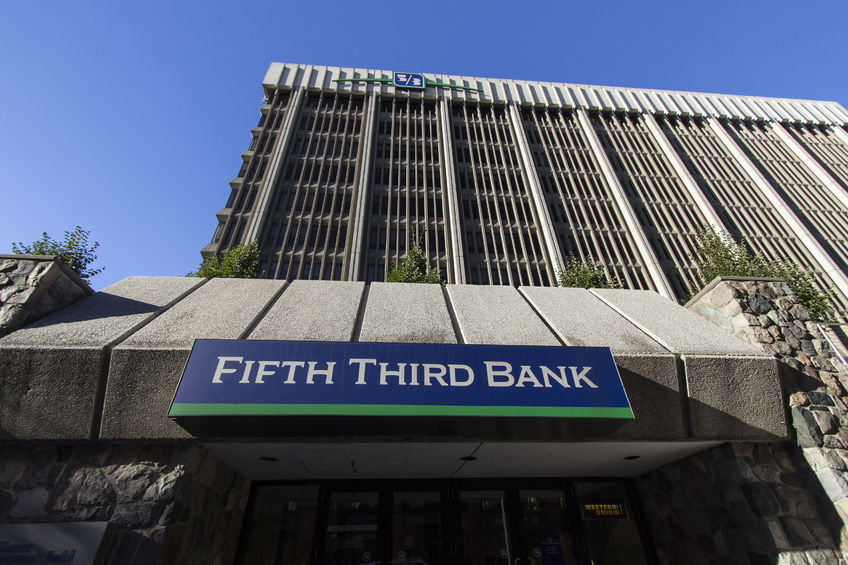 CINCINNATI–(BUSINESS WIRE)–Fifth Third Bancorp (Nasdaq: FITB) today announced an innovative partnership between Fifth Third Capital Holdings, LLC and leading financial technology (fintech) venture capital firm QED Investors. Under the exclusive partnership, QED Investors will advise on the continued development of Fifth Third’s strategy to leverage fintech innovation to bring new products and services to bank customers while promoting the growth of fintech companies in the U.S.
“There is an unprecedented amount of innovation emerging in all parts of the financial services ecosystem,” said Tim Spence, executive vice president and chief strategy officer for Fifth Third Bancorp. “Our partnership with QED should enable us to identify new, high-potential technologies to complement our internal R&D and innovation efforts.”
This partnership, in addition to prior fintech company investments such as GreenSky, Transactis and AvidXchange, supports Fifth Third’s NorthStar strategy of enhancing its products and serving its customers more effectively through technology. By delivering products and services that its customers can count on, Fifth Third can better help those customers achieve their financial goals.
“We are incredibly excited about partnering with Fifth Third, a bank that is at the vanguard of change in the fintech space,” said Frank Rotman, Co-Founder and Partner at QED Investors. “Fifth Third is a natural partner for QED, one that embraces innovation and shares many of our views about what the future will look like in the space. We are thrilled for what this unique partnership means for the future of fintech and financial services at large.”
Fifth Third Capital and QED Investors led ApplePie Capital’s Series B capital raise in the fourth quarter of 2016. Fifth Third Capital and QED are also investors in GreenSky and AvidXchange. Fifth Third Capital continues to seek strategic investments in Fintech companies in the US market.
About Fifth Third
Fifth Third Bancorp is a diversified financial services company headquartered in Cincinnati, Ohio. As of Sept. 30, 2016, the Company had $143 billion in assets and operated 1,191 full-service Banking Centers, including 94 Bank Mart® locations, most open seven days a week, inside select grocery stores and 2,497 ATMs in Ohio, Kentucky, Indiana, Michigan, Illinois, Florida, Tennessee, West Virginia, Georgia and North Carolina. Fifth Third operates four main businesses: Commercial Banking, Branch Banking, Consumer Lending, and Wealth & Asset Management. Fifth Third also has an 17.9% interest in Vantiv Holding, LLC. Fifth Third is among the largest money managers in the Midwest and, as of Sept. 30, 2016, had $314 billion in assets under care, of which it managed $27 billion for individuals, corporations and not-for-profit organizations. Investor information and press releases can be viewed at www.53.com. Fifth Third’s common stock is traded on the NASDAQ® Global Select Market under the symbol “FITB.”
About Fifth Third Capital
Fifth Third Capital Holdings, LLC is a subsidiary of Fifth Third Bancorp. Fifth Third Capital seeks to invest in strategically relevant companies that support innovation across Fifth Third’s lines of business, bringing new solutions to bank customers and creating value for shareholders. Established in 2010, Fifth Third Capital has made numerous equity investments spanning the full company life cycle, from early to mature stage.
About QED Investors
QED Investors is a leading boutique venture capital firm based in Alexandria, VA. QED was co-founded by Nigel Morris, who also co-founded Capital One. They are focused on investing in early stage, disruptive financial services companies in the U.S., U.K. and Latin America. QED is dedicated to building great businesses and uses a unique, hands-on approach that leverages their partners’ and principals’ decades of entrepreneurial and operational experience, helping their companies achieve breakthrough growth. Notable investments include Credit Karma, SoFi, Avant, Remitly, Fundera and LendUp. For more information, please visit www.qedinvestors.com.
Contacts
QED
Frank Rotman, 804-445-2232
or
Fifth Third
Sean Parker (Media), 513-534-6791
Sean.parker2@53.com
or
Sameer Gokhale (Investors), 513-534-2219