LeaseQ and ARF Financial Partner to Automate Hospitality Equipment Financing
September 12, 2017BOSTON (Sept. 12, 2017) – LeaseQ, an online marketplace connecting business owners, equipment sellers, and lenders to make selling and financing equipment fast and easy, today announced a national partnership with ARF Financial, the only FDIC-compliant financial lender that provides short-term, unsecured business loans and lines of credit for restaurant/hospitality business owners and retailers nationwide.
“We are unique in having our own sales organization, and LeaseQ gives our loan consultants around the country a lease product with instant quotes,” ARF Financial CEO Steve Glenn said. “Now we are a one stop lender offering additional products to satisfy our customers funding needs for their businesses.”
Innovations in the equipment finance industry will continue to increase flexibility and convenience for customers, according to the Equipment Leasing and Finance Association’s (ELFA) Top 10 Equipment Acquisition Trends for 2017. Automation fuels advances in instant quotes, soft credit pulls, same-day approvals, one-day funding and blockchain for secure, multi-party transactions – many of which are available today through LeaseQ and ARF Financial.
“You can finance a car in an hour, but not a walk-in freezer to start or expand a restaurant,” said Vernon Tirey, co-founder and CEO of LeaseQ. “One-day funding is a trendy thing to say in equipment financing, but when the restauranteur or hotel manager presses the button to get financing, it has to work. We’re advancing our technology and partnering with lenders like ARF Financial who understand the value of automation to make it happen.”
LeaseQ and ARF Financial offer automated, flexible equipment financing for hospitality merchants who are frustrated with the time it takes to get a bank loan, or who cannot get a bank loan at all, including those:
- Expanding a facility
- Upgrading equipment
- Adding a location and renovating the property
- Managing working capital, and more
There are currently 150 lenders on the LeaseQ platform serving 28 vertical markets. Learn more at www.leaseq.com.
About LeaseQ
LeaseQ is an online marketplace connecting businesses, equipment sellers, and equipment finance companies to make selling and financing equipment fast and easy. The LeaseQ platform is a free, cloud-based SaaS solution with a suite of on-demand software and data solutions for the equipment leasing industry. LeaseQ provides business process optimization (BPO) and information services that streamline the purchase and financing of business equipment across a broad array of vertical industry segments. Learn more at www.leaseq.com.
About ARF Financial
ARF Financial LLC is a California licensed lender that sources short-term business loans and lines of credit for restaurant/hospitality and retail merchants nationwide. Since 2001, ARF has filled the void between traditional bank financing and less attractive venues of obtaining capital, giving merchants the ability to maintain control of their business, be more profitable and meet their financial goals. The company is managed and staffed by industry veterans with extensive experience in restaurant finance and small to medium retail industries.
For more information on their services, visit their website at www.arffinancial.com. You may fill out their contact form at www.arffinancial.com/contact, call 1-866-702-4430, or send an email to funding@arffinancial.com for inquiries.
Breakout Capital Expands Senior Leadership Team
August 6, 2017Breakout Capital – a leading small business lender – announces the hires of Robert Fleischmann as Senior Vice President, Strategic Partnerships and Tom McCammon as Senior Vice President, Business Operations. These key additions position the small business lender for continued growth.
McLean, VA, August 7, 2017 – Breakout Capital announced today the appointments of Robert Fleischmann as Senior Vice President, Strategic Partnerships and Tom McCammon as Senior Vice President, Business Operations. Both Mr. Fleischmann and Mr. McCammon bring a wealth of knowledge and small business lending experience that can accelerate Breakout Capital’s rapid growth.
“Breakout Capital’s growing employee base shares the same passion and commitment to advancing the Company’s mission to provide transparent working capital solutions, educate small businesses, and promote industry-wide best practices. We are thrilled with the additions of Robert and Tom to the leadership team,” said Founder & CEO, Carl Fairbank.
“Breakout Capital impressed me with its outstanding commitment to educating and advocating on behalf of small businesses,” said Fleischmann. “The innovative loan products combined with the impressive team of professionals make me extremely excited about the opportunity.”
Mr. Fleischmann will lead Breakout Capital’s efforts to expand and diversify its channels through strategic partnerships. Prior to joining Breakout Capital, Mr. Fleischmann was Director of Strategic Partnerships at RapidAdvance where he worked with a diverse group of partners, including banks and commercial finance companies, to help meet the financing needs of their business clients.
Mr. McCammon joins Breakout Capital with direct industry experience as he was formerly Director of Portfolio Management and Credit Operations at OnDeck. Prior to OnDeck and his recent move to the Breakout team, Mr. McCammon was involved in two de novo banks and was a consultant to the FDIC during the financial crisis. He will be a central figure in continuing to build Breakout Capital’s stature as both a credit-and customer-centric enterprise.
“Having worked in both retail banking and fintech, I was drawn to Breakout Capital as they have successfully combined strong credit and ethics fundamentals from traditional banking while still efficiently delivering capital to small businesses,” said Mr. McCammon.
Breakout Capital has quickly established a reputation as one of the most trusted and respected lenders in the market with a focus on product innovation, transparency, responsible lending and a partnership-based approach that extends beyond providing capital. Additionally, Breakout Capital is a Principal Member of the Innovative Lending Platform Association (ILPA), the leading trade organization representing a diverse group of online lending and service companies serving small businesses.
About Breakout Capital
Breakout Capital, headquartered in McLean, VA., is a technology-enabled direct lender which has provided a wide range of working capital solutions to small businesses across the country. In addition to becoming one of the fastest growing companies in the market, Breakout Capital is a leading advocate for small business. Its CEO, Carl Fairbank, is a Board Member of the Innovative Lending Platform Association. Breakout Capital has produced a highly regarded “educational series” through its blog, Breakout Bites, that helps small businesses better understand the technology-enabled lending market and how to avoid the hidden fees and debt traps that are prevalent in the industry. With a laser focus on educating small businesses, advocating for industry-wide best practices, and providing diverse, transparent working capital solutions, Breakout Capital is changing the financial landscape for millions of small businesses in need of funding. For more information, visit http://www.breakoutfinance.com.
Fintech Sandbox? States, OCC Mull Regulatory Options
May 2, 2017It’s called the “New England Regulatory FinTech Sandbox.”
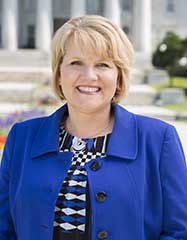
State banking regulators across the six New England states are exploring the creation of a regional compact that would allow financial technology companies to experiment with new and expanded products in “a safe, collaborative environment,” says Cynthia Stuart, deputy commissioner of the banking division at the Vermont Department of Financial Regulation.
Stuart asserts that she and her New England cohorts are adroitly positioned and uniquely qualified to oversee laboratories of finance. In Vermont, for example, she heads an agency that oversees regulation and examination of banks, trust companies, and credit unions as well as such nonbank financial providers as mortgage brokers, money transmitters, payday lenders and debt adjusters.
Financial watchdogs at the state level, Stuart observes, “are already witnesses to a wide breadth of financial services offerings and understand how they impact communities and consumers. As technology intersects with financial regulation,” she adds, “state regulators also appreciate the need to be open to technological innovation while balancing risk and return.”
The regional fintech sandbox is the brainchild of David Cotney, the former Massachusetts Commissioner of Banks, and Cornelius Hurley, director of Boston University’s Center for Finance, Law and Policy. The sandbox stitches together elements of Project Innovate, a development program for fintechs inaugurated by the U.K.’s banking regulator, and the European Union’s “passport” model for cross-border banking operations.
In the U.K., the Financial Conduct Authority is supporting both small and large businesses “that are developing products and services that could genuinely improve consumers’ experience and outcomes,” according to a 2015 report by the London agency. In harmonizing the regulatory regime for the sandbox across state lines of Maine, New Hampshire, Vermont, Massachusetts, Rhode Island and Connecticut, the program emulates the EU’s “passport.” Since 1989, a bank licensed in one EU country has been able to set up shop there while – thanks to the “passport” –operating seamlessly throughout the 28 states of the EU (soon to be 27 after “Brexit”).
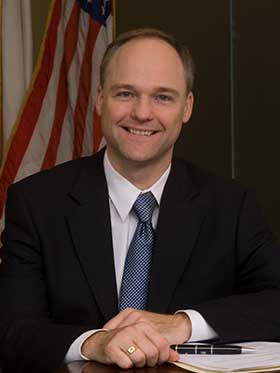
“It’s still preliminary,” Cotney says of the proposed New England sandbox-cum-passport, “but we’ve talked to the financial regulators in all six states and there’s universal openness. Nobody want to be seen as being a barrier to innovation.”
(Barred by law from lobbying in Massachusetts, Cotney hands off the Bay State duties to Hurley while he meets with regulators and other officials in the five remaining New England states. In March, Cotney was named a director at Cross River Bank, a Fort Lee, N.J.-based, $600 million-asset community bank known for its partnerships with peer-to-peer lenders including Lending Club, Rocket Loans and Loan Depot.)
This nascent effort of financial Transcendentalism in New England is, meanwhile, taking place against the backdrop of an increasingly acrimonious battle between the Office of the Comptroller of the Currency and state banking authorities over the licensing and regulation of fintech companies. At issue is the OCC’s plan announced in a December, 2016 “whitepaper” to issue a “special purpose national bank” charter to nonbank fintechs.
Siding with the OCC are the fintechs themselves, including Lending Club, Kabbage, Funding Circle, ParityPay, WingCash. “A special purpose national bank charter for fintechs creates an opportunity for greater access to banking products, empowers a diverse and often underserved customer base, promotes efficiency in financial services, and encourages industry competition,” Kabbage wrote to the OCC in a sample industry comment to its whitepaper (which is on the agency’s website).
Also on board for the OCC’s fintech charter are powerful Washington trade associations such as Financial Innovation Now, the membership of which comprises Amazon, Apple, Google, Intuit and PayPal, and industry research organizations like the Center for Financial Services Innovation. The U.S. banking establishment also appears largely supportive of the OCC. While qualifying its imprimatur somewhat, the American Bankers Association declared that it “views the OCC’s intent to issue charters as an opportunity to further bring financial technology into the banking system…”
But an irate army of detractors is condemning the fintech charter outright. Consumer groups, small-business organizations, community banks, and state attorneys general number among the furious opposition. No cohort, however, has been more hostile to the OCC’s fintech charter than state banking regulators.

Maria T. Vullo, superintendent of New York State’s Department of Financial Services, has emerged as a firebrand. “The imposition of an entirely new federal regulatory scheme on an already fully functional and deeply rooted state regulatory landscape,” she wrote to the OCC earlier this year, “will invite serious risk of regulatory confusion and uncertainty, stifle small business innovation, create institutions that are too big to fail, imperil crucially important state-based consumer protection laws, and increase the risks presented by nonbank entities.”
Although big-state regulators from New York, California and Illinois have been in the vanguard of opposition, their unhappiness with the OCC is widely shared. Vermont regulator Stuart, who emphasizes the need for regulators “to embrace change,” nonetheless disparages the OCC’s endeavor.
“Of particular concern is the creation of an un-level playing field for traditional, full-service Vermont institutions to the advantage of the proposed nonbank charter,” she told AltFinanceDaily. “The special purpose national nonbank charter would not be subject to most federal banking laws and would be regulated with a confidential OCC agreement. The disparity in regulatory approaches is concerning.”
What had been confined to a war of words – rounds of angry denunciations packed into letters and press releases directed at the OCC — reached fever-pitch last week when, on April 26, the Conference of State Banking Supervisors filed suit against the OCC in federal court. The lawsuit seeks to prevent the agency “from moving forward with an unlawful attempt to create a national nonbank charter that will harm markets, innovation and consumers,” according to a CSBS statement.
Among other things, the conference’s complaint charges that by creating a national bank charter for nonbank companies, the OCC has “gone far beyond the limited authority granted to it by Congress under the National Bank Act and other federal banking laws. Those laws,” the conference’s statement continues, “authorize the OCC to only charter institutions that engage in the ‘business of banking.’”
Under the National Bank Act, the conference’s complaint asserts, a financial institution must “at a minimum” accept deposits to qualify as a bank. By “attempting to create a new special purpose charter for nonbank companies that do not take deposits,” the complaint adds, the OCC is acting outside its legal authority.
Christopher Cole, senior regulatory counsel at the Independent Community Bankers Association – a Washington, D.C. trade association of Main Street bankers known for punching above its weight — asserts that the state banking regulators are on solid ground. “The whole question comes down to what should a bank be for purposes of a national bank charter,” he says in a telephone interview. “The Bank Holding Company Act (of 1956), federal bankruptcy laws, and tax laws – all three – define banks as insured depository institutions. It’s right there in the statutes. So our recommendation,” he says, “is for the OCC to go back to Congress” and ask for the explicit authority to create a fintech charter.
Because the OCC has “short-circuited rule-making” protocol required by another law – known as the Administrative Procedures Act — “the process hasn’t been kosher,” Cole adds.
 Many members of Congress are also expressing outrage at the OCC. Not only have Democratic Senators Sherrod Brown of Ohio and Jeff Merkley of Oregon strenuously objected to the OCC’s fintech charter, but on March 10, 2017, Jeb Hensarling, the chairman of the House Financial Services Committee, fired off a “hold-your-horses” letter to Comptroller Thomas J. Curry. Signed by 34 House Republicans, the March 10 letter reminded Curry that his term of office would officially be up at the end of April, 2017, and urged him not to “rush this decision” regarding the fintech charters.
“If the OCC proceeds in haste to create a new policy for fintech charters without providing the details for additional comment, or rushing to finalize the charter prior to the confirmation of a new Comptroller,” the letter from Hensarling et alia declares, “please be aware that we will work with our colleagues to ensure that Congress will examine the OCC’s actions and, if appropriate, will overturn them.”
Never mind the stern letter from Chairman Hensarling, or the fact that an impressive array of Congressmembers on both sides of the aisle are bipartisanly unhappy, or that state banking regulators’ have filed suit, or that Curry’s replacement as Comptroller is overdue: the OCC is pushing ahead. The agency will play host to a bevy of financial technology companies and other financial institutions on May 16 for two days of get-acquainted sessions in its San Francisco office.
Billed as “office hours,” the West Coast meetings will consist of one-on-one, hour-long informational meetings “to discuss the OCC’s perspective on responsible innovation,” Beth Knickerbocker, the OCC’s acting chief innovation officer, says in a press release.
The office hours, Knickerbocker adds, “are an opportunity to have candid discussions with OCC staff regarding financial technology, new products or services, partnering with a bank or fintech company, or other matters related to financial innovation.”
Back in New England, Hurley, the Boston University law professor advocating the regional sandbox, says: “No one knows where fintech is going. But one place it’s not going is away.”
Re-Banked
April 23, 2017
Just a few years ago, the financial services community was fixing for a battle of David and Goliath proportions—with scrappy, upstart online lenders threatening to rise up and vanquish the fearful and mighty brick and mortar banks. Instead, the unexpected happened: a number of well-respected online lenders and banks set aside their battle arms and began looking for ways to collaborate with their rivals—offloading loans, making referral agreements and establishing more formal partnerships, for example.
“In the real world, sometimes David wins. Sometimes Goliath wins. Just as plausibly, sometimes both sides carve up a market and they often have different offerings that target unique customers,” says Brayden McCarthy, vice president of strategy at Fundera, a New York-based marketplace for small business lending that works with a variety of lenders, including traditional banks.

Certainly, the change didn’t happen overnight. But over time, both online lenders and banks have been forced to tailor their expectations more closely to market realities. Despite their fast growth trajectory, several online lenders have come to realize that they lack several things many banks have, namely a strong, time-tested brand, a solid customer base and ample capital. Banks, meanwhile, have realized that their slow start out of the gate with respect to technology is a severe competitive disadvantage, and that they need more nimble, savvy partners to stay in the game.
Given these shifts, more and more online lenders and banks are taking the approach that if you can’t beat ‘em, join ‘em. Although some industry leaders are actively pursuing strategies that put them in direct competition with banks, partnerships of varying degrees between traditional banks and alternative players are increasingly common. As a result, the lines separating the two are getting increasingly blurry.
“Market forces are acting as a shotgun at the wedding. Whether the two sides are entirely comfortable with the marriage is irrelevant, they need one another,” says Patricia Hewitt, chief executive of PG Research & Advisory Services LLC in Savannah, Georgia. “They’re stronger together than they are alone.”
The evolution of Square is a prime example. The San Francisco-based company really packed a punch in the merchant services world with its mobile card reader designed for small businesses. From there, the payments company sought additional ways to diversify, eventually turning to merchant cash advance as a way to help small business customers obtain funds quickly. Then, in March of last year, Square moved into online lending, teaming up with Celtic Bank of Utah to offer small business loans online. The partnership got off to a running start. In its most recent earnings report, Square said it facilitated 40,000 business loans totaling $248 million in the fourth quarter of 2016—up 68 percent year over year—while maintaining loan default rates at roughly 4 percent.
Even SoFi, the San Francisco-based online lender that has been pointedly outspoken in its anti-bank rhetoric, now has bank-like aspirations. In February, the lender acquired mobile banking startup Zenbanx, giving it the ability to offer checking accounts and credit cards in 2017. Also in February, SoFi teamed up with Promontory Interfinancial Network to enable community banks to purchase super-prime student loans originated by the online lender. Large banks have been buying SoFi loans for several years.
COLLABORATION IS THE WAVE OF THE FUTURE
Many see collaboration between banks and online lenders as a logical step in the industry’s evolution. Online disrupters have forever changed the face of lending—in the same way that online brokerage shaped the financial advisor industry, according to Bill Ullman, chief commercial officer of Orchard Platform.
“There’s a tendency to want to view things as either black or white, online lenders vs. banks. The reality is that the entire financial services industry is undergoing a transformation with technology as the core driver,” he says. “I am of the view that both traditional financial services companies and fintech players can survive and thrive,” Ullman says.
For its part, Orchard recently inked a deal with Sandler O’Neill that provides access to the Orchard platform for the investment bank and brokerage firm’s bank and specialty finance clients. The deal is expected to help small banks better evaluate their options with respect to online lending opportunities.
Partnerships between online lenders and banks take many forms. Some of them are behind the scenes, where marketplaces sell loans to banks or banks informally refer customers. Others are more public. For example, in September 2015, Prosper and Radius Bank of Boston teamed up to offer personal loans to certain customers through the bank’s website using the Prosper platform. Customers can borrow from $2,000 to $35,000 in this manner.
Then in December 2015, JPMorgan Chase and OnDeck joined forces in order to dramatically speed up the process of providing loans to some of the banking giant’s small business customers. In April 2016, Regions Bank and Avant announced a partnership to better serve customers who don’t meet Regions’ credit criteria.
Avant’s customers typically have a credit score between 600 and 700, while Regions sets the bar higher. “The benefit for banks is that they do not need to worry about a platform taking away customers that meet their own credit criteria,” according to Carolyn Blackman Gasbarra, head of public relation at Avant.
She notes that Avant expects to replicate this model with more banks in 2017. “Lately many platforms and banks have come to realize their counterparts are more friend than foe,” she says.
Given the changing tides, industry watchers expect to see more relationships develop between online lenders and banks over time. These could include referral agreements, technology licensing arrangements, formalized revenue-sharing partnerships and perhaps even outright acquisitions.
PARTNERSHIP ADVANTAGES
Certainly, working together can be mutually beneficial for both online lenders and banks. For new online lenders and other fintech players, partnering with an established bank allows them to bypass significant regulatory and compliance hurdles because the necessary requirements are already in place.
“Why jump through all the hoops when you can just have a buddy system with an existing lender?” says Kerri Moriarty, head of company development at Cinch Financial, a Boston-based company dedicated to helping people make smarter investment decisions.
Fintechs that license their technology to banks still have to meet the high standards of third-party vendors determined by bank regulators, notes Stan Orszula, co-head of the fintech team at the Chicago law firm Barack Ferrazzano Kirschbaum & Nagelberg LLP.
“But it’s still less onerous than being a direct lender,” says Orszula, who works closely with banks and fintech providers on legal, regulatory and corporate issues. “They are learning that they need banks. They really do.”
Even seasoned online lenders that have a regulatory framework in place can benefit from bank relationships by using banks’ established brands as leverage. “Everyone knows Chase, Bank of America and American Express,” says McCarthy of Fundera. “They have a solid name and a solid in-built customer base to be able to offer product to them,” he says.
Teaming up with a bank gives added credibility to an online lender, at a time when the public’s confidence has faltered due to highly publicized troubles at certain firms. “Partnering has a very important signaling effect that these online players are here to stay,” McCarthy says.
Banks, meanwhile, need the nimbleness and innovation that online lenders provide. “Banks realize they have to catch up with the fintech disrupters,” says Mark E. Curry, president and chief executive of SOL Partners, which provides strategic management and information technology consulting services to financial services companies.
DIFFERENT TYPES OF PARTNERSHIP OPPORTUNITIES ABOUND

When it comes to partnerships between banks and online players, there are numerous options. In the small business lending space, for example, McCarthy of Fundera says he expects banks to continue buying loans from online lenders, as they have been for many years. He also expects more banks will route declined applicants to online lenders or online loan brokers. “This is a partnership that will allow them to make up some incremental revenue by referring business,” he says.
In addition, McCarthy says he expects banks to make products available through online marketplaces and use an online lender’s technology for online loan applications. He also expects banks will use online lenders’ technology for underwriting and servicing loans.
Years ago, before John Donovan joined Bizfi, he recalls talking to a salesman for a large national bank. The bank didn’t offer a lending product that he could give to small businesses and the salesman was losing customers as a result. “That’s where we see a lot of those opportunities,” says Donovan, chief executive of the online marketplace for small business loans.
For instance in March 2016, Bizfi partnered with Western Independent Bankers, a trade association, for over about 600 community and regional banks, to link small business clients to financing options through Bizfi. Many banks don’t offer small business loans below $150,000, whereas the average loan Bizfi does is $40,000, Donovan says, adding that the company would like to develop additional relationships similar to its agreement with Western Independent Bankers.
In the future, he predicts fintechs will continue to be more receptive to the idea of working with banks and vice versa, as the industry digests the impact of deals that are still in their early days.
FINDING STRATEGIC GROWTH OPPORTUNITIES
As banks and online lenders become increasingly accustomed to working together, there may be more opportunities for strategic acquisitions. For instance, Sandeep Kumar, managing director of Synechron, a global consulting and technology firm, expects to see banks—especially mid-tier players that don’t have the resources to innovate like big banks buying lending-related start-ups. He says banks will likely be most interested in companies that can help them with AI and other techniques to pinpoint where they should spend more efforts on cross-selling and customer profiling, for example. “There are many start-ups in this area that have very compelling technology,” he says.
On the other hand, Chris Skinner, an independent commentator at The Finanser Ltd., a research and consulting firm in London, points out that the two cultures don’t always mesh. “Quite a few startups have young, entrepreneurial founders that would loath the idea being acquired by a bank. So it really depends on the circumstances,” he says.
Valuation differences between large banks and leading online lenders may also be a sticking point for some deals, Ullman of Orchard points out. Banks’ concern over their valuation “will place a certain amount of restraint and discipline on the tech M&A activities they pursue,” he says.
ANTICIPATING TROUBLE IN PARADISE
While increased collaboration between online lenders and banks sounds good on the surface, John Zepecki, group head of product management for lending at D+H in San Francisco, urges both sides to proceed with caution. “You have to find an arrangement where you don’t have conflict,” he says. “If your innovation partner also is a competitor, it’s a challenge. If you have an inherent conflict, it doesn’t get better over time.”
That’s one reason why companies like Chicago-based Akouba have come on the scene. In Akouba’s case, its goal is to provide banks with the technology such that they don’t have to partner with an online lender that has the potential to compete for business. “We don’t compete with the bank in any way whatsoever,” says Chris Rentner, the company’s founder and chief executive.
Akouba’s business lending platform—which the American Bankers Association endorsed in February—provides banks with leading edge technology that integrates the bank’s own unique credit policies into a convenient, online process—from application to documentation— all the way to closing and funding. The bank uses its own credit policies, originates its own loans and owns the entire brand and customer relationship.
Rentner says he started the business with the idea in mind that the online lending model wouldn’t be sustainable long-term and that working alongside banks—as opposed to competing head to head— was the direction to go. “The idea that they could somehow get all of the consumers out of the banking world and onto their platforms was never going to happen. That’s why we exist today,” he says.
Catching Up With Marketplace Lending – A Timeline
April 20, 20172/17
- Prospa, an online small business lender based in Australia, was valued at $235M (AUD) in a $25M capital raise
- Square announced funding $248 million worth of business loans in Q4 2016
2/21 A Massachusetts state court vacated a merchant cash advance COJ
2/24 SoFi raised $500M in a financing round led by Silver Lake Partners that reportedly gave SoFi a $4.3B valuation
2/27 Prosper Marketplace closed a loan purchase agreement with a consortium of lenders for up to $5 billion of loans that has a provision that also enables the lenders to buy up to 35% of the company
2/28 BlueVine secured a warehouse line of up to $75M from Fortress
3/1 Lendio launched a new franchise program, allowing local offices around the country to become Lendio franchisees
3/3 Citing Madden v Midland, Colorado regulator brought a federal lawsuit against Marlette Funding for violating the state’s usury cap
3/5 Two trade associations, the Innovative Lending Platform Association (ILPA) and the Coalition for Responsible Business Finance (CRBF), joined forces. The merged company will continue to be known as ILPA
3/6 Upstart raised $32.5M
3/7
- It’s reported that former CAN Capital CFO Aman Verjee is now the COO of 500 Startups
- Kabbage priced a $525M securitization. It was oversubscribed
3/9 Citing Madden v Midland, Colorado regulator brought a federal lawsuit against Avant for violating the state’s usury cap
3/13
- Melvin Chasen, the founder of Rewards Network (originally Transmedia Network, Inc.) passed away. He was 88.
- The New York State Assembly rejected the Governor’s proposal to grant the Department of Financial Services (DFS) regulatory authority over any online lender doing business in the state
3/15
- The New York State Senate also rejected the proposal to further regulate lending
- The OCC published a manual on how it will evaluate charter applications from fintech companies
- The New York DFS published a statement rejecting the OCC’s plans
- The WSJ reported that Marlette Funding was cutting nearly 1/5th of its workforce
3/16 WebBank announced that it had a net income of $29.2M for 2016 and that it had a market valuation of $319.4M
3/20 Prosper Marketplace announced that it had originated $2.2B in loans in 2016, down from $3.7B in 2015, and had a net loss of $119M.
3/21 It’s reported that Kabbage will set up its European headquarters in Ireland
3/22 OnDeck expanded its credit facility with Deutsche Bank by $52M to a total of up to $214M
3/27 IOU Financial wins Gold Stevie Award for Best Use of Technology in Customer Service
3/30 In Advance Capital announced that they had secured access to an additional $50M
4/5
- Budget passes in New York. Proposed lending legislation was not included in it.
- Kabbage surpasses $3 billion funded to small businesses
See previous timelines:
12/16/16 – 2/16/17
9/27/16 – 12/16/16
Text The Merchant, Close The Deal
April 15, 2017
About a year ago, Cheryl Tibbs, general manager of Douglasville, Ga.-based One Stop Funding, was having trouble getting in touch with one of her clients. The merchant in question runs a lawn care service and is usually out on the job, so he isn’t quick to return phone calls or respond to email messages.
“I just got the idea to send a text,” Tibbs recalls. She typed a message expressing her regret for intruding but letting her client know that he needed to take certain steps to advance the funding process for his loan application. He texted right back.
After that initial success, the texting continued between Tibbs and the lawn care provider. He’s been a customer for us for a while, and that’s just how we communicate,” she says. “It’s easy for him to stop and shoot me a text as opposed to having a full conversation with me.”
Tibbs isn’t alone in her appreciation for text messaging as a part of the sales process. Quick responses to texts are making the medium increasingly important in the alternative small-business funding business, maintains Gil Zapata, CEO of Miami-based Lendinero. “Text messaging is more powerful than emailing nowadays,” he declares.
One reason for that shift is that texts are easy to use, according to Tibbs. “It’s a matter of convenience for the merchant,” she contends. “In this business, any way you can make it easier for the merchant to facilitate the transaction with you is the method you have to use.”
Besides the convenience, there’s the sense of urgency people feel when they receive a text, asserts Jeb Blount, a sales trainer who’s written eight sales-oriented books, including the bestselling Fanatical Prospecting. “When you send a text message you move to the top of a person’s priority list,” he says. In fact, people who are talking face-to-face often disengage from the conversation to respond to a text message, he notes. “It’s treated as something that’s urgent.”
 As texting becomes more commonplace in the alternative-finance business, some industry salespeople are beginning to view the medium in the same way they regard email, telephones and fax machines. “I use them as another tool for follow-up communications,” John Tucker, managing member of 1st Capital Loans in Troy, Mich., says of text messages. “In addition to sending them an email, I’ll shoot them a text.”
Texting has become almost standard procedure at Florida-based Financial Advantage Group LLC, according to Scott Williams, the firm’s managing member. He prefers that sales associates make the initial contact by phone to get a sense of what the merchant is looking for in a funding deal. After gathering information and getting approval, it’s best to send the offer by email so the merchant has “all the numbers in black and white” and more details than a text message can hold, he notes. After that, text messages can deliver requests for additional documentation and provide updates on the progress of the funding process. “We can tell them, ‘Hey, everything got cleared this morning – we should be able to do the funding this afternoon,’” he says.
Texting expedites communication regarding renewals, too, Williams observes. “If a merchant is 50 percent paid back, you can check in and see if they need some additional capital right now,” he says. “It’s really good for that.”
Clients can use messaging to convey images of documents needed in the funding process, Tibbs says. “I had a merchant yesterday who sent me over her IRS tax agreement through picture message,” Tibbs says by way of example. Often, funders request color images of both sides of an applicant’s driver’s license, she notes. To fulfill such requirements, it’s generally easier to snap a photo with a phone and send it as a picture message than to scan pages of paper into a computer to create an electronic document and then send the resulting file by email. “We do a lot with picture messaging,” she observes.
But as useful as text messaging can become for contacting phone-shy clients or helping clients share an image to document a key cancelled check, companies should exercise care when using the medium for prospecting, warns Zapata. He and just about everyone else AltFinanceDaily consulted emphasizes that sending unsolicited text messages can violate Federal Trade Commission regulations. “Just because our industry isn’t regulated doesn’t mean there aren’t regulations out there on the side,” he says.
 Most say they learned of the regulations from third-party vendors who specialize in sending batches of text messages simultaneously. The key to sending those groups of messages legally is to get permission from the recipients in advance, notes Ted Guggenheim, CEO of TextUs, a Boulder, Colo., company specializing in multiple-texting services. “If you’re (randomly) contacting people you got off a list somewhere, that’s a pretty bad idea,” he maintains.
The feds heavily regulate five-digit short-code texts but tread lightly with long-code texts – the ones sent from 10-digit phone numbers, Guggenheim says. The latter would apply in alternative finance, and if a text recipient calls back on the phone number associated with a long-code text, someone will answer, he notes.
Citing guidelines from the Cellular Telecommunications Industry Association (CTIA), Guggenheim stipulates that consumers should have the ability to opt out of additional messages after receiving the first one. Members of the industry who want to send groups of text messages can post conditions on their websites that compel users to grant permission to contact them by text if they submit their contact information, he suggests.
After ensuring everything’s legal, Tucker reports 1st Capital Loans nets a good response when he uses a vendor to blast multiple identical text messages to lists of prospective clients who have already granted permission for his company to contact them by text message. The strategy has helped bring in a reasonable number of deals because the prospects were “already in the pipeline,” he notes.
Remember, though, that cell phone numbers change more often than land line numbers, Tucker cautions. That means a call to a number that’s been reassigned could inadvertently fall into the unsolicited text message category that violates federal rules, he says. “You could be texting a 14-year-old,” instead of a small business, he warns.
When mounting a mass text campaign, marketers are wise to avoid lengthy missives, according to Tibbs. “Keep it simple,” she says. A typical message from her might read: “Looking for funding? Looking for capital? Give us a call,” she notes.
In business texts, avoid acronyms like “LOL” and write in complete sentences with proper punctuation and capitalization, Blount suggests. “Begin by typing out the message somewhere other than in the text box, read it, make sure it makes sense and then send it,” he says. Put your name with the word “from” at the top of the message so the recipient knows who sent it, he emphasizes.
 Keep messages conceptual rather than marketing-oriented, Guggenheim advises. Messages should directly address the customer’s situation to avoid seeming they were sent by a robot, he says. As with any response a salesperson receives, getting back to customers quickly pays off in better results, he adds. When sending a batch of texts, vendors of the bulk service can ensure every text bears the same phone number that the sales rep uses to call the client, thus avoiding the possible confusion of using more than one number, says Guggenheim. The system he offers can trigger a pop-up on the computer screen of a specified salesperson when a text recipient responds, he says. It also keeps management informed of the volume of texts and the response rate, he says. That helps managers determine which types of text messages are working, he maintains.
Users can also rely on Guggenheim’s TextUs system to schedule messages for delivery in the future to remind clients of meetings. The system detects land-line numbers and informs the user that the phone will not receive text messages, and it integrates with customer-relationship management systems to exchange information, he says.
So used properly, texting can offer benefits for everyone involved. But some unscrupulous players still insist upon using the medium to mislead prospective clients, says Zapata. His customers have shown him texts from competitors who make initial contact or early contact by sending text messages that might look like offers but are really just marketing letters, says Zapata. That approach, which might tout the availability of $50,000, can cause problems when it turns out that the merchant qualifies for only $25,000, he explains. “Trust me, you’re not going to look like the good guy,” he says of the firms that send what he considers objectionable text messages.
Sensitivity comes into play with text messaging, according to Blount. He and other sources say a great number of people regard email as business-oriented and texts as personal. That leads them to nonchalantly delete unwanted email messages but to become angry when they receive a text they didn’t want, he says. “You can’t send text messages to customers if they don’t know you,” he counsels.
 Once a relationship is established, however, text messages can nurture it, Blount maintains. Suppose two businesspeople meet at a networking event and exchange business cards, he says. He advises noting the cell number on the card and sending a LinkedIn invitation immediately after meeting the potential client. Twelve hours later he would send a text message mentioning the encounter. If the salesperson can get the potential client to respond to a text message, that prospect is granting permission to receive texts, he says.
Blount’s example seems to suggest the line between business and personal may be blurring when it comes to texting. People often check their email messages on phones these days – instead of on a laptop or desktop computer – which also minimizes the difference between texting and emailing, says Tibbs. “Everybody does everything with their phone these days,” she notes.
Communicating through a more personal channel such as texting has advantages, too, Williams contends. That’s because some merchants consider their financing to be personal and don’t want to broadcast the details to employees, he says. To protect their privacy, merchants often provide financial institutions with their cell phone number instead of their office number or toll-free line, he notes.
Meanwhile, the world continues to become more comfortable with texting. When Williams and his sales associates began messaging clients about four years ago, they found younger customers receptive and older ones reluctant, he remembers. In the intervening years, however, the 50 plus crowd has warmed to the medium, he observes.
An advantage that accrues with text messaging – compared with email – arises from the fact that spam filters and spam folders don’t seem to have a place in the world of texting. Several sources cite that as a big advantage with using texts. “If you send someone a text message, they’re going to see it,” notes Zapata.
Asked about a downside to the proper use of text messaging in business, most sources could not name one. However, Williams has discovered one area where the mode of communication comes up short. “I would not deliver bad news over text-messaging,” he advises. “If the merchant is upset or frustrated by the news, it would be better-handled in a phone call so you could explain the reason for the negative news. A text message leaves too many things unsaid.”
Funding Circle’s New $100 Million Funding Round is a Surprise, But it’s Really Not
January 13, 2017The alternative small business lender that is arguably offering the longest terms with the lowest rates has secured a $100 Million Series F Round, according to an announcement on Wednesday.
With the round led by Accel, the strong sign of confidence contradicts the sentiment felt by many in the US about their business model. In the last few months, several of Funding Circle’s US competitors have suspended operations, shut their doors, or integrated into other companies. Most of the questions we’ve received lately have centered around “who’s next to fall?” not “who’s next to raise $100 million?”
So what’s going on here?
Imagine in an alternate universe that the US government was using Funding Circle’s platform to fund millions of dollars to small businesses, that the US Treasury Secretary was publicly cheering them on, and that they sat on Capitol Hill drawing up new laws that would regulate their industry in a way that would help them succeed, would you bet on them to win?
 That alternate universe exists and it’s called the United Kingdom. It’s also Funding Circle’s primary market. Just last week the UK government lent Funding Circle another £40 million on top of the previous £60 million to lend to small businesses amid credit concerns related to Brexit and it’s only one example of how cozy government relations are over there.
Chancellor of the Exchequer (the US Treasury Secretary equivalent), Philip Hammond, said: “Funding Circle has become a real success story for British Fintech and news that it has attracted £80 million (US $100 mil) of investment is further evidence of the growing importance of this industry. This is another vote of confidence in a UK firm that plays an important role in our economy – helping businesses to grow and create jobs.”
And in a TV interview with Bloomberg, Funding Circle co-founder James Meekings said that the company is working with the government to help draft the regulations that they would have to abide by. Sounds like a nice arrangement.
The UK is still their biggest market but part of their $100 million funding round will be used to further develop their US business, Meekings said on Bloomberg. To date, the company has raised $375 million. Less than two years ago, their private market valuation was $1 billion, more than twice OnDeck’s current market cap. Funding Circle’s valuation in this round was not disclosed.
Funding Circle’s global loan volume these days rivals OnDeck’s. £400 million was lent by Funding Circle in Q4 versus $613 million lent by OnDeck in Q3, setting up the possibility that the former could surpass the latter in volume this year.
Funding Circle’s publicly traded SME Income Fund has also held up pretty well over the last year:
Shortly after announcing their funding round, a trade group they co-founded in the US, the Marketplace Lending Association, welcomed 11 new members. Might Funding Circle eventually gain the same favor in the US that they’ve nurtured in the UK? Would you bet on them?
A True Rapid Advance For Mark Cerminaro
December 16, 2016 In the 1999 film “Any Given Sunday,” Al Pacino plays a pro football coach whose obsession with winning has torn apart his family. He’s also plagued by a meddlesome team owner, challenged by an offensive coordinator who’s after his job, and vexed by a talented but narcissistic backup quarterback. But none of that stops the coach from reaching deep inside to deliver a stirring halftime pep talk to his dispirited losing team. Assuring his players that life and football are both games of inches, he beseeches them to look into the eyes of the men around them. “You’re going to see a guy who will go that inch with you,” he declares. “Either we heal now as a team or we will die as individuals.” The players rally and explode onto the field.
It’s a scenario the sales staff can’t get enough of at RapidAdvance, a Bethesda, Md.-based alternative small-business finance company with more than 200 employees. Mark Cerminaro has screened a clip of the scene countless times in a company conference room to fire up his crew. Salespeople emerged from those meetings eager to make that extra phone call, provide the telling detail on an application or do whatever else it would take to taste the victory of making the sale. For Cerminaro, the movie and the sales meetings embodied his penchant for winning ethically through teamwork, dogged persistence and great customer experience. That credo has helped propel him to top management at RapidAdvance and has earned him accolades from once-skeptical financial services peers.
Cerminaro’s story begins in his hometown of Highland Park, N.J., where he experienced a small-town vibe but enjoyed easy access to New York City, Philadelphia and the Jersey Shore. He graduated in a class of 85 students from the local public high school, playing varsity football, basketball and baseball. Summers, he worked construction, did landscaping, delivered flowers and umpired Little League. “It was a great place to grow up,” he says.
 In high school, Cerminaro sometimes went along for the ride when his sister, who was five years older, was choosing a college. On a visit to Georgetown University in Washington, D.C., Cerminaro stood in the student center and gazed out at the campus. “I’m going to come here and play football,” he told himself.
He made good on that vow when his high school football team made a reputation for itself, and Georgetown was among the schools that recruited him. Besides, it made sense to go there because he was interested in studying politics and going to law school. Growing up with a father who was chairman of the local Democratic Party, Cerminaro had his eye on eventually becoming governor of New Jersey.
Playing for the NFL on the way to the governor’s mansion seemed like a good idea, too. But Cerminaro, a quarterback, blew out his throwing arm two years into his collegiate football career. His dreams of making the pros died, but that left more time for academics. He plunged into a series of four rigorous internships, three of them in politics. He served two in the Clinton White House and one on Capitol Hill with Sen. Robert Torricelli, D-N.J. He fondly recalls talking to President Bill Clinton for five minutes before a state dinner. Then two hours later, after spending time with heads of state, the President called out, “There’s Mark, my fellow Hoya.” Cerminaro will never forget it.

In the end, however, the fourth internship won out. Although Cerminaro hadn’t studied business or finance too much, he landed an internship in the local Washington, D.C., office of Morgan Stanley. If nothing else, it would help him manage his investments some day, he reasoned. However, he soon approached the operations manager and some senior brokers and offered to take on duties they didn’t want to fulfill. He had decided to learn about operations, and taking on extra work without additional compensation was in line with his new habit of figuring out what steps would take him where he wanted to go in life.
Cerminaro earned his managerial license with Morgan Stanley and accepted a job as associate branch manager in the Washington, D.C., office, managing and training new financial advisors. He considered the position great exposure to sales, management, operations and compliance – “elements that have paid dividends in the growth of my career,” he notes.
 Early in Cerminaro’s tenure at Morgan Stanley, the company sent him for training with about 300 other new employees at 2 World Trade Center in Manhattan. The date was Sept. 10, 2001. When the trainees reported to the office the next day, they were in a 64th-floor conference room when they heard an explosion and saw shreds of paper floating past the windows. They didn’t realize yet that a terrorist-controlled jetliner had hit next door at 1 World Trade Center.
As they evacuated down a stairwell, the trainees heard and felt the concussion of the second plane that hit their building. “I’m 22 years old and I may be about to die,” Cerminaro remembers thinking. “Make sure my family knows I love them,” he prayed. He made it out and was greeted with smoke, debris, the flashing lights of emergency vehicles and panic in the streets. He walked to a restaurant some family friends operated in Little Italy and borrowed a working phone to call his family in New Jersey and let them know he was OK.
Returning to the D.C. office of Morgan Stanley, Cerminaro got back to work. He loved the entrepreneurial spirit at the company, but as the years passed he realized he was unlikely to amass enough power in the giant firm to dictate how it would operate, grow and change. So he was interested when someone he knew at Morgan Stanley told him about RapidAdvance, then a two-year-old company with about 20 employees. “I saw the opportunity to be part of building a company – that’s what drew me to RapidAdvance,” he recalls.
In 2007, Cerminaro interviewed with Jeremy Brown, who was RapidAdvance’s CEO at the time and has since advanced to chairman. “It was apparent that Mark had a well thought-out, well-articulated plan for sales,” Brown says of his first impression. “He had a presence about him, a command that said this guy a real leader – somebody who could make a long term component of the company.”
Cerminaro joined RapidAdvance as national sales director and began building a sales structure and team based on some of the elements of Morgan Stanley’s sales model. Developing KPIs, or key performance indicators, helped him measure progress. “You had to roll up your sleeves and get involved in every aspect of things,” he said of working for a startup in a fledgling industry. The company’s outbound call center came up with sales leads, and he cut and pasted them from an Excel spread sheet and divvied them up among the five or six account executives.
 Cerminaro wanted to teach that handful of salespeople to function as business advisors and help them become the single point of contact for clients. His salespeople guided small-business owners through the application process and stayed in contact with them after the sale. He emphasized doing right by customers, teammates and the company as a whole. It was a vision that inspired the team.
“Mark was a great mentor and provided me a lot of guidance and tutelage over the years,” says Devin Delany, who started as an account executive at RapidAdvance and has moved up to director of sales. “His real mission was to create a sense of family and he executed on that to the fullest extent, creating a close knit team of upward of 40 folks who really care about one another.”
That sales “family” used dialogue marketing to refocus attention on prospects who had fallen out of the sales cycle. In those days they used a product-driven sales pitch based on merchant cash advances. Third-party partners included credit card processors and credit card ISOs. Brokers came onto the scene later.
Soon after Cerminaro arrived at RapidAdvance, the financial crisis struck. The company managed to navigate the troubled times and emerged with improved underwriting skills, a better understanding of leading indicators and a truer grasp of how its portfolio performs. Something else happened, too.
 As traditional lines of credit dried up during the recession, small businesses that didn’t accept credit cards began to search for working capital. In response, Cerminaro, Brown and Joseph Looney, RapidAdvance’s chief operations officer and general counsel, sat down and outlined a plan to offer small-business loans as well as MCAs. “That effort really redefined who RapidAdvance was,” Cerminaro says of the new loans. “We went from a single-product company to now being more of a solutions-based company,” he maintains. “We were able to shift from selling a product to doing needs-based analysis with our clients and focusing on what was the right solution for them.”
Cerminaro found it exciting to develop the loan program and oversee sales, but he was looking for more. He turned part of his attention to business development and even expanded his purview to include marketing. The company was thinking along the same lines. In 2010, RapidAdvance promoted him to senior vice president, sales and marketing. “As the company has grown we have had different needs, and we leaned on Mark and his skill set every time we made a change,” Brown says. “Every time we made a change he has stepped up and done what’s asked of him.”
Producing one of the industry’s first national television ad campaigns highlighted Cerminaro’s period as senior vice president. “We were the pioneers in being able to market through that medium,” he says. “It was absolutely scary at the same time. It was a massive investment for us and we had no idea whether it would pan out.” The sales staff were waiting in anticipation when the phones began ringing after the public saw the commercial. “The original spot we put together still tests well and drives a lot of traffic,” he notes. Viewers find a tune featured in the ad sticks in their minds and can’t help humming it – sometimes when they’d prefer they didn’t, he adds.
Then came another promotion. In 2013, just before Detroit-based Rockbridge Growth Equity LLC acquired RapidAdvance, Cerminaro was named chief revenue officer and became responsible for all revenue-generating activities and all of the company’s front end efforts. The company had grown significantly over the years, but the merger increased financial backing and thus accelerated growth, he says. For him, that meant pursuing a new type of partner company – asset-based lenders and factoring companies. It wouldn’t be easy. “The traditional lending market had a lot of misconceptions about our industry,” Cerminaro admits. “A lot of people in that business were very critical.”

But Cerminaro made the rounds of trade shows and visited conference rooms until he succeeded in winning the hearts of bankers, according to Will Tumulty, RapidAdvance’s CEO. “Mark and his team have developed partnerships in the commercial lending space,” Tumulty says. “There are a number of companies that have historically viewed working-capital funding as a competitor. We don’t see ourselves competing with those companies. Mark and his team have worked with those companies to get merchants what they need.”
As a testament to Cerminaro’s success in that quest, the Commercial Finance Association named him to its 2016 list of “40 under 40” achievers. He was the only person from alternative small-business funding to make that venerable list of prominent young lending executives. He helped spur his company on to other awards, too. The RapidAdvance Bethesda office was chosen for The Washington Post Top Workplaces 2016 list, and the RapidAdvance Detroit office made the list of 101 firms recognized as Metro Detroit’s 2016 Best and Brightest Companies to Work For.
Meanwhile, Cerminaro was successfully courting mega retailers, says Brown. When the possibility of becoming a partner with Office Depot arose, Brown felt hopeful but remained skeptical because of the long lead time required to convince so many executives in such a large corporation. “But mark was dogged,” he says. “It took him probably a year to land and close the deal and negotiate the agreement and sign the account. He went to countless meetings down in Florida. He participated in endless conference calls, but mark got the deal done. It’s a relationship we’re proud of, and he is singularly responsible for closing that deal.”
In those encounters with Office Depot execs, Cerminaro displayed savvy and professionalism, Brown says. They’re traits that will continue to pay off not only for RapidAdvance but for the entire industry, maintains RapidAdvance’s Looney. “He’s out there with lots of big banks and other potential partners,” says Looney. “He’s a good face for the industry.”
For Cerminaro, it’s satisfying to see RapidAdvance become all he dreamed it could be. But that still comes in second for him and differentiates him from the coach played by Al Pacino. Cerminaro’s the kind of guy who asked his father to be his best man and now has a wife and two sons of his own. “Your family and your loved ones are by far more important than anything else in your life,” he says.