
It’s Here: Artificial Intelligence Changes MCA Broker’s Business, Improves Bank Underwriting and Debt Collection
November 22, 2016In this age of man versus the machine, the case for artificial intelligence and machine learning does not need many vociferous advocates.
Some predict that revenues from fintech startups using AI and predictive models is set to jump by 960 percent or to $17 billion by 2021. We might be closer to that number than we think, considering 140+ AI startups raised a total of $958M in funding in Q3’16, alone.
While healthcare, cybersecurity and advertising are frontiers of AI innovation, the growth and momentum of big data in finance (spurred by online lending) is fast bringing fintech to the forefront. In lending, specifically, data has become the new currency. It’s not so much that lenders didn’t use data for decision making earlier, but the data available then, wasn’t as rich or as extensive. A loan approval decision that just required a decent FICO score and assessment of character has expanded to include data points like a business’ social media presence, reviews, and owners’ background history.
Today, artificial intelligence in fintech has grown to tackle cybersecurity threats, act as a personal assistant, track credit scores and perform sentiment analysis to predict risk — making automated underwriting just the tip of the iceberg for what artificial intelligence and machine learning can do for the financial services industry. AltFinanceDaily spoke to three fintech upstarts that have taken AI beyond underwriting.
AI Assist
 When Roman Vinfield started his ISO, Assure Funding in early 2015 with 16 openers, five chasers and three closers, little did he know that a business intelligence software would replace 85 percent of his staff for the same productivity. He stumbled onto Conversica, a AI-powered virtual sales assistant and was convinced to give it a try.
“I hadn’t heard anything like an artificial-intelligence sales assistant,” said Vinfield. “The results we got within a month of using it were unbelievable.” Within the first month, Vinfield made $35,000 in revenues by spending just $4,000 and eventually reduced his staff of 24 to 4 people. He was so sold on its potential for the merchant cash advance industry that after prolonged negotiations, he secured the rights to be the exclusive reseller of the software, and called it AI Assist. The software is now used by leading MCA companies like Yellowstone, Bizbloom and GRP Funding.
While Conversica’s clientele includes auto and tech giants like Oracle, Fiat, Chrysler and IBM, for the financial services industry, it’s marketed and sold to MCA and lending companies through AI Assist. It integrates easily with CRM software like Salesforce and creates a virtual sales assistant avatar that tracks old leads and reestablishes engagement. In the lead generation race, where a 3-5 percent response rate could be considered good, the response rate for Conversica has been 38 percent.
Designed to be akin to a human sales assistant, Conversica’s technology can determine a lead’s interest based on the response and set up a conversation with the sales department to follow up. “Your Conversica virtual assistant is an extremely consistent, personable and tireless worker. She doesn’t get sick and never needs a break. She never gets discouraged, and she improves with each engagement,” says the AI Assist website.
 True Accord
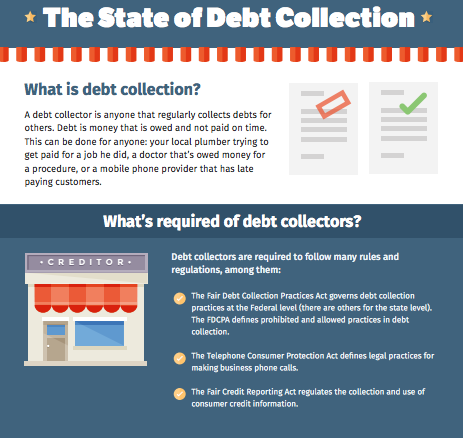
Personal chat assistants for money management and sales is one of the popular modes of AI implementation in fintech, given it’s scalability in lending for functions like debt collection. One company that does this, is True Accord. True Accord, similar to AI Assist uses automation software to schedule and send messages to customers by the company’s “Automated Staff”
The San Francisco-based company was founded by Ohad Samet who has over 11 years of machine learning experience in finance. The idea came to Samet while he was working as a chief risk officer at payments and e-commerce company Klarna, underwriting loans worth $2 billion. “While working at Klarna, I realized how big a piece debt collection is and I did not like the way it was done,” said Samet. “I needed machine learning to change it.”
Samet founded True Accord in 2013 to develop a debt collection AI assistant and today the company works with leading banks, credit card companies and food delivery services and has collected over half a billion dollars. It establishes targeted communication with the customer less frequently than traditional collection agencies and allows customers to pay their dues over mobile, which accounts for 35 percent of collections for the company.
“We humans don’t want to accept it but the reality is that, when it comes to scale, machines make better decisions than humans,” said Samet. “Machines are consistent, they are not tired, not angry, don’t fight with the significant other and all of this makes for better accuracy, better cost structure and better returns of scale.” While this might be true, building an efficient, compatible and compliant model is harder than it might seem.
James.Finance
 Since AI tools do not come in a one-size-fits-all package, its application can be as varied as the range of companies that use it. Building an AI framework that aligns with a company’s targets while being compliant to regulatory mandates can be an uphill task.
Recognizing this opportunity, James.Finance, a Portugal-based startup is using artificial intelligence to help financial institutions like banks build their own credit scoring models. Founder and CEO Pedro Fonseca, describes James as a “narrow AI” for a specific purpose of guiding risk officers to build machine learning models that follow regulatory compliance.
The startup works with consulting agencies or partners to reach out to banks. It offers a trial run of the software, which it calls a ‘jumpstart,’ where a risk officer is provided with James’ technology and in 24 hours, he or she will have to beat it with their in-house AI software.
“And we are consistently able to beat the models,” said Fonseca. The company won the startup pitch at Money 20/20 in Copenhagen earlier this year after receiving an uproarious response in Europe. Fonseca wants to divert his attention to the US’s fragmented banking market, which is dotted with smaller banks and credit unions. “The US is a perfect target for us. We are looking to work with local consultancies that know the problems of a bank intimately.”
As these entrepreneurs vouch for it, the current state of AI use in fintech is just the tip of the iceberg. And anything man can do, machines can do faster and better, right?
AltFinanceDaily: Europe’s ING Bank, Commerzbank to Slash Jobs, Go Digital
October 3, 2016Europe is debanking.
Last week, two large European banks — ING and Commerzbank announced they are slashing jobs and spending the savings on digitizing its their businesses.
Amsterdam-based ING Bank will slash 7,000 jobs, around 3500 jobs in Belgium and another 2300 in the Netherlands. The savings ( around 900 million euros in five years) under the bank’s ‘Think Forward’ strategy, will be used to migrate to a single integrated banking platform in the Netherlands and Belgium. Separately, ING will also invest 800 million euros in digital initiatives over the next five years.
“Customers are increasingly digital and bank with us more and more through mobile devices. Their needs and expectations are the same, all over the world, and they expect us to adopt new technology as fast as companies in other sectors,” said CEO Ralph Hammers in a statement.
ING is not alone in marching towards technology; Germany-based Commerzbank also said that it will slash approximately 7,300 jobs over the next four years and spend 700 million euros annually on technology under its ‘Commerzbank 4.0’ strategy. Later this month, the bank plans to roll out ‘One,’ an integrated sales interface, enabling the bank’s sales staff and customers to interact and transact on the same platform and by 2020, it aims to have 80 percent of its relevant business processes digitized.
“It is inevitable that the various measures and intentions announced today may have a significant impact on many of our colleagues. It means some functions will change significantly in nature,” said Hammers.
The move from major banks is coming at a time when fintech is heating up — Europeans startups raised $348 million (£238.2 million) in the first quarter of the year, up from $337 million (£230.6 million) in the first three months of 2015. And with banks deciding to go lean, it could only open up the opportunity for more collaboration than competition among banks and startups.
Again? Wells Fargo Fined $100 Million for Creating Fake Accounts
September 8, 2016The CFPB fines Wells Fargo, again — this time for opening unauthorized deposit and credit card accounts.
The agency fined the bank $100 million after employees opened “more than two million deposit and credit card accounts” unbeknownst to borrowers, racking up fees and charges, the CFPB said in a statement. Wells Fargo is also required to pay $2.5 million in customer refunds.
According to an internal analysis conducted by the bank, employees opened 1.5 million deposit accounts and 565,000 credit card accounts, issued debit cards and enrolled customers to online banking without consent, for bonuses and meeting sales goals.
“Wells Fargo employees secretly opened unauthorized accounts to hit sales targets and receive bonuses,” said CFPB Director Richard Cordray. “Because of the severity of these violations, Wells Fargo is paying the largest penalty the CFPB has ever imposed. Today’s action should serve notice to the entire industry that financial incentive programs, if not monitored carefully, carry serious risks that can have serious legal consequences.”
This is strike two for Wells Fargo from the CFPB which alleged that the bank indulged in illegal student loan practices by charging consumers illegal fees, not reporting credit score information accurately and a failure to provide adequate disclosures for payment information. The bank agreed to settle the case for $4 million.
Lend Us An Ear: Women in the Industry Speak Their Mind
August 11, 2016
The majority (52.5 percent) of employees in the banking and insurance industries are women — if this sounds strange, that’s because it is, considering only 1.4 percent eventually go on to become CEOs. While the male dominance is not apparent at the mid-management executive level, the sex ratio is rather skewed on top. Needless to say?
AltFinanceDaily grabbed the opportunity to speak to three women in the alternative business financing industry, charting their journey, reliving their experience, knowledge and the lessons that got them to where they are. Here are excerpts from the interviews.
Back to Roots
For some, their careers are not a deliberate choice, but a serendipitous stumble.
Heather Francis, CEO of Florida-based Elevate Funding, who went to college to become a healthcare professional entered finance by happenstance. “I went to school for health promotion and education at the University of Florida and graduated in 2007,” said Francis, who comes from a family of entrepreneurs and is a fifth generation Floridian. “I found that the position I was looking for was not a necessity for companies, it was a luxury like setting up gyms, that people were not willing to pay for at that time.”
Francis landed her first job in finance with a private equity firm called Strategic Funding in Gainesville, Florida where she set up the firm’s merchant cash advance business. After spending seven years there, in 2014, she set up Elevate Funding which in a short span of 16 months has made over 1,000 advances to businesses.
For Kabbage Loans cofounder Kathryn Petralia too, fintech was a far cry from wanting to be an English professor. A graduate from Furman University, Petralia’s tryst with finance was when she got roped into a project, valuing companies using data compression tools. Riding on building her tech expertise, she founded her first company at 25 which made store catalogues digital. “I was a kid and did not know anything about marketing or sales, so I ended up selling the startup to the company which helped me build it.” The venture however gave her an in into finance and she went on to work for Revolution Money and eventually built Kabbage Loans.
But for Danille Rivelli, VP of Sales at United Capital Source, however, the jump wasn’t as big or unusual. Although finance was not originally on her mind as an art major, it was a natural path from what she began doing to acquire real-world work experience during school, selling mortgages. Rivelli changed her academic focus and went on to get a business degree from Briarcliff College, where she also played on the softball team.
“A year or two into college, I started doing mortgages, making 5 percent commissions. It was natural and it just kinda flowed,” said Rivelli whose first job out of college was on the sales floor at Merchant Cash Capital, now Bizfi. “I wanted to get out of mortgages and I was hooked when I saw the sales floor, it was fun and upbeat.” She was also one of the company’s youngest salespeople at the time.
Women Can Do No Wrong. Or Can They?
When we asked what women need to do differently at workplaces? The answer was quick, resounding and not surprisingly – be more assertive.
“Women think from the heart more than the mind,” said Rivelli. “I find myself in situations sometimes where I know that I should be ‘leaving the emotions out of it’ so that I’m not second-guessing myself as much.” But it’s what helps her build lasting relationships with clients. “I think most effective sales people will agree that the most important part of our job is listening. You want to really know and understand who your client is and what they’re looking for before you try to sell to them.”
According to Petralia, who thinks of herself as ‘one-of-the-guys,’ the problem lies in overplaying the differences between men and women. “I think we perpetuate the stereotype that men are supposed to behave a certain way and women aren’t. I notice that when men crack a joke or use a curse word, they immediately apologize to the women in the room. We are making that happen,” she said. Petralia’s strategy in such scenarios is to swing to the other side and initiate banter. “I am very comfortable with dirty jokes and f-bombs.”
“Men are really good at faking it ’til they make it. They position themselves as experts when they are not but women are unsure of jumping into the deep end when they are not sure they can swim and that’s a big part of what we have to overcome,” Petralia said.
Francis is on the same page, “Men have no problem tooting their horn, but women don’t do that. We cannot expect anyone to stand up for us. If you think you’re getting looked over for a promotion, walk up to your boss and say it,” she said. Francis talks about most of the struggle being personal rather than operational. “I will admit to us having a need to be right… right about decisions, right in arguments and right about where the furniture goes,” she says jokingly. “A lot of what led me to start Elevate was my belief in that you could service the risky credit market without taking advantage or putting insane demands on the performance of the portfolio and still be successful… having that theory validated and accepted and in the end, being right.”
What’s the hurdle, what’s the race?
And the assertiveness comes from one’s belief in their struggle and the value of that struggle. Petralia reminisces of a time when as a scrimping 25-year-old entrepreneur, she pitched a tent and stayed on a campsite in San Francisco while raising money for her startup. Two decades later, she runs a billion dollar lending company. Petralia recognizes that not all women have the same opportunities.
“When I was raising money for Kabbage, I realized that I had only been in one or two meetings where a woman wasn’t bringing me water,” said Petralia who believes that bringing diversity requires work and companies should set targets and find qualified diverse candidates.
Kabbage allows for 12 weeks of maternity leave but that pales in comparison with other countries, says Petralia. “The problem with women is, we have the babies. Women have to choose between their careers and personal life and we are not even close to making that situation better. The key time in their 30s when they are having kids, they come back to compete with younger people who are cheaper.”
The movement to make it better, according to her should begin with creating a system of incentives like better child care, easy commute to work etc. where women don’t have to choose between advancing their career and having a child.
And her other gripe is limp handshakes from men. “Shake women’s hands better. Men give this limp, deadfish like handshake at conferences to women and it’s the worst.”
According to Francis, equal footing comes from striving for professional equality and representation. She says being a woman opens many doors but that’s where it stops. “People will talk to you nicely if you’re a woman but they don’t think you are the person making the decision. You have the ability to start the conversation but no one thinks that you can finish it.”
And for Rivelli, that means giving it your all. “The point is to keep being so good that no one can ignore you,” she said.
Amazon and Wells Fargo Shake Hands on Student Loans. Who is Surprised?
July 22, 2016Some might have seen this coming eventually but Amazon is dipping its feet into student loans with Wells Fargo.
Through Amazon Prime Student, the online retailer will offer discounts on student loans when they apply for a Wells Fargo private student loan. The bank will shave half a percentage point off the interest rate for referrals from Amazon.
“We are focused on innovation and meeting our customers where they are – and increasingly that is in the digital space,” said John Rasmussen, Wells Fargo’s head of Personal Lending Group.
Wells Fargo is banking on this multiyear agreement to reach millions of potential borrowers. Five of the largest private student lenders, including Sallie Mae, Wells Fargo and Discover Financial Services Inc., distributed $6.46 billion in loans between July 2015 and March 2016, up 7% from the same period a year earlier, the Wall Street Journal reported.
While the federal government is still the primary student loan lender, banks and other private lenders are steadily increasing their market share. Earlier this week, New York-based private student loan lender CommonBond raised $30 million in equity and $300 million in debt and acquired a startup that opens the gate to employers. San Francisco-based lender SoFi also has similar partnerships with employers for their student loan refinancing product.
“Over 99.99 percent of the student loan market is driven by the federal government and private banks and the tiny piece of the market is made up by CommonBond and SoFi,” said David Klein, CEO of CommonBond to AltFinanceDaily earlier. “And as big as that sounds, relative to the largesse of the market, we don’t even make up a percent of that.” The ilk of alternative lenders are tilling away at establishing such partnerships to widen their net but will the banks let them?
The Fed’s Analysis of Online Lender Satisfaction is Bogus
July 15, 2016
A strange statistic about borrowers and their supposed overwhelming dissatisfaction with online lenders is circulating where it shouldn’t be.
Only 15% of small business borrowers were satisfied with the loan they were approved for by an online lender, according to a Federal Reserve study published back in March. That’s actually not even what the study says but that’s the selective takeaway that some very influential people have gleaned from it. That figure in some way shape or form is being repeated at conferences, cited in academic papers, and even referenced in Congressional testimony. Apparently when it comes down to it, people are starting to believe that small businesses overwhelmingly hate their experience with online lenders because it’s something they think a very credible Fed study has confirmed.
It’s not a percent of satisfaction
The statistic in the study is actually representative of how many more people were satisfied than dissatisfied. That’s how they define it in their footnotes. 15% represents a net satisfaction score and it indicates that more borrowers were satisfied than dissatisfied. So 15% net satisfaction means that more than 50% of borrowers were satisfied.
Still though, banks scored higher than online lenders in the report so one might think that’s the important part at the end of the day. After all, this was a highly scientific study that we can still all make important decisions off of, right?
This wasn’t a scientific survey
The Fed disclaims any statistical meaning of their results in the fine print. Under methodology, it actually says:
- The data are not a statistical representation of small businesses.
- The SBCS is not a random sample of small employer firms, and therefore suffers from a greater set of biases than surveys that contact firms randomly.
- Businesses are contacted by email through organizations that serve the small business community in participating Federal Reserve Districts.
The Fed’s own authors seem to be pretty clear in stating that the data is not random, it’s biased, it’s not statistically representative, and that it was collected by third parties who coordinated distribution of the surveys on their own accord. Therefore for a policymaker, this report has no scientific value. Nonetheless, the Fed opens the report by saying “Our hope is that this report contributes to policymakers’ and service providers’ understanding of the business conditions, credit needs, and borrowing experiences of small business owners.”
Admitted falsehood becomes truth
Even though the figures are meaningless, they are being recited over and over. A major US Treasury report published in May for example, cited the Fed’s 15% satisfaction figure in its own analysis of marketplace lenders.
Testimony by Greg Baer, the President of The Clearing House Association, cited the study as well during a Senate hearing three weeks ago, but seemingly interpreted it to mean that only 15% of small businesses were satisfied with online lenders. “As reported in a recent small businesses survey, borrowers are generally dissatisfied with online lenders,” he said.
Marcus Stanley, Policy Director for Americans for Financial Reform, made the same mistake when he testified before the House Small Business Committee last month. “The evidence indicates they often provide a substandard and even exploitative product – just 15% of small business borrowers from online lenders expressed satisfaction with their experience,” he said, while arguing why they should be regulated further.
An article published by Nerdwallet also made the wrong assumption. “In fact, only 15% of small-business borrowers in the Federal Reserve survey said they were satisfied with their experience with online lenders,” they wrote in a story back in April.
Sadly, these are just a few examples.
Now what?
Does a study that’s not random, biased, not statistically representative, and not even controlled by the researchers, do more harm than good for an industry? Perhaps, because readers assume that a government study is scientifically sound on its face. Despite the authors’ move to disclaim the scientific value of it altogether, a mischaracterization of what is even presented anyway is becoming an oft quoted truism.
What is happening now is that both advocates and critics of the industry are starting to believe that only 15% of small businesses are satisfied with online lenders. No study has ever come to that conclusion though, not even the Fed study. It’s all in the fine print that openly says its not statistically representative and biased. And if that wasn’t enough, they even add “caution should be taken when interpreting the results.” Which in other words means, don’t use this stuff for anything important.
In a first, Bizfi crosses $144 million in Q1 funding
May 17, 2016
Thanks to the partnership with Western Independent Bank, Bizfi had a record Q1 to date with $144 milion in loan originations.
The New York-based fintech company funded 3,605 small businesses, a 49 percent increase from $96 million funded in Q1 last year, Bizfi said.
The partnership with Western Independent Bank in March this year opened up several markets in the midwest and west coast Alaska, Arizona, California, Colorado, Hawaii, Idaho, Montana, Nevada New Mexico, Oregon, Utah, Washington and Wyoming can benefit from this partnership. Referring to the partnership, Bizfi founder Stephen Sheinbaum said, “These types of relationships not only help to fuel Bizfi’s growth, they ensure the financial partner continues to maintain their customer relationships by providing their clients an alternative for the financing they need,”. “In 2016, we’re looking forward to further expanding our product set and partnering with more traditional financiers, enabling us to fund the growth of even more of America’s small businesses.”
Bizfi’s marketplace partners with lenders like OnDeck, Funding Circle and Kabbage and the company has so far funded 29,000 small businesses with $1.6 billion in capital since 2005.
China Ponzi Scheme: Police Crack Down on Shanghai Lender, Wealthroll
May 16, 2016
The crackdown of newfangled finance firms that emerged from the ashes of the Ezubao ponzi scheme opened up a can of worms.
And the latest head to roll is of Xu Qin, owner of Shanghai-based wealth management firm, Wealthroll Asset Management Co. who confessed to the authorities that his company still owed 5.2 billion yuan ($797 million) to 12,800 investors. Qin and 34 other executives from the firm were arrested on May 13th.
Qin who started the firm in 2011 with an initial investment of 5 million yuan from friends and family allegedly misused investor money on homes, luxury cars and on buying high-end office spaces for the firm in Shanghai.
This emerges in the wake of the shakedown of Ezubao, the Chinese P2P lending site which duped 900,000 investors of $7.6 billion in February this year. Following which, the Chinese police were ordered to shut down illegal online lending sites and take swift action against suspects.
The Ministry of Public Security also launched an online platform in a quest to garner more information from the public and warned of P2P lender defaults in June, when payments will be due.
The country’s banking regulator, China Banking Regulatory Commission (CBRC) and insurance regulator had also alerted the risks associated with investing in these schemes and barred these lenders from raising funds and signaled that close to 1,000 such businesses accounting for 30 percent of the industry could go belly up.
The Ezubao scam that surfaced on February 3rd revealed that 266 executives of Chinese P2P companies had fled and gone into hiding in the last six months. Ratings agency Moody’s has said that 800 platforms have already failed or were recently facing liquidity issues.