
Where’s the Reserve?
February 15, 2013 5 years ago it was merchant account sales. These days it’s all about the average daily ending balance in the business bank account. As the alternative business lending industry evolved, so too did the criteria to qualify, and nothing is more important now than historical cash flow. I spent a lot of time underwriting MCAs and one thing I noticed is that having a significant cash reserve is the exception, not the rule. Many small business owners I’ve encountered rely on overdraft protection just to pay their bills instead of using it as a backup cushion for the extremely rare circumstance that a check clears at the wrong time. The applicants with $1,000, $5,000 or $10,000 in daily reserves are treated very favorably in underwriting because heck, they can probably afford to take on debt. And then there’s the business owners with $20,000, $30,000 or $50,000 stashed away in the business account, a curious rarity that can actually throw up red flags.
“Why is this merchant applying for capital when they’ve got $30,000 sitting in the account right now? Something doesn’t add up here,” an underwriter might say. But the only thing that doesn’t add up is the fact that so many businesses are running on fumes. We’ve got a few small business owners writing about matters from their perspective on The Frontline, and we took great interest in something written by Chef Angela Bell. As a restaurant owner, she believes it is important to keep a cash reserve equal to a minimum of 3 months expenses. Depending on the size of the restaurant and seasonality, that reserve may need to be able to cover an entire year. This includes rent and salaries!
It seems in practice, this rule is constantly violated. Maybe holding on to extra cash hurts the competitive edge, maybe a cash reserve existed but was consumed during an emergency, or maybe the business just isn’t doing that great. There are a lot of possibilities to explain the disappearance of cash reserves, and I’m not faulting the businesses for being in this situation, but rather pointing out that in my experience, money seems to go out as fast as it comes in.
This isn’t a 2013 problem or a financial crisis problem. It’s a small business problem and one that has been around for decades. It’s why the purchase of future credit cards spawned into existence. The original Merchant Cash Advance (MCA) program wasn’t created to help people with poor credit, it was designed to help the businesses that had no cash reserves. If a business has $2,000 in deposits every day but also $2,000 in withdrawals, there’s a good chance a debt payment will bounce. Even with 750 credit, no bank would ever take the risk on a business like that, and that’s where MCA came in. Assuming the business’s plans were sound, an MCA funder would withhold a percentage of merchant account sales before they were even transferred to the business’s bank account. That eliminated the risk of bounced checks for the funder and put the burden of operating on tight cash flow on the small business. Funders then reduced the strain by withholding less in times of weak sales and more in times of strong sales. The percentage system was the bridge to ensure the relationship was not predatory.
 I’ve heard the frustrated replies from a business owner that was declined for weak or negative balances. They often sound something like this “Well, if I had cash I wouldn’t be needing a loan from you now would I?!” I feel for these people, I really do, but their approach to debt is misguided. Debt is not something you take on when you are out of money so you can continue business as usual. Debt is for growth or to be used as a temporary cash flow measure. Banks approve applicants that don’t need money because those that NEED IT are more likely to default.
MCA was the good faith option for small business owners that cried foul over the banks that wouldn’t lend to them. How could there be NOBODY willing to take a chance on them? And so MCA funding companies came along and did what the masses demanded, but at a cost to compensate them for the significant risk.
Today, there is high demand for merchant loans, loans that are evaluated based on a daily average bank balance and monthly revenue. Many people will get less than they want and others should consider traditional MCA instead. Those few that are at the breaking point and believe a loan will allow them to pay past due bills and keep them afloat are better off not applying at all. And for the rest that are contemplating using the $50,000 cash reserve they built up to expand should seriously consider financing instead to protect their cushion as best they can.
Tomorrow, the health inspector could close your doors, vandals could destroy your valuable assets, or the town could perform massively disruptive construction right outside the front steps that cripples sales for months. If you’re running on fumes, you’ll run out of gas. Always keep the cash reserve tank full and nobody will be able to stop you.
– Merchant Processing Resource
../../
MPR.mobi on iPhone, iPad, and Android
Letters from the Frontline
February 12, 2013 I’ve worked in the alternative business lending industry for quite a while and I’ve noticed something off about many of the marketing campaigns. Some lenders have gotten so caught up in the funding that they’re losing sight of what it’s like to run a small business. Admit it, we’re all a little rusty even if we were once small business owners ourselves.
I started working as a deli clerk when I was 15 years old and continued to do it part time until my senior year of college when I began waiting tables at a restaurant instead. I could definitely tell you a few things about the daily grind and the epic drama that happens in the back of the house on a Friday night, but it’s been a while since I lived it.
But don’t you own a small business now? Yes, I do. I’ve been a part of two successful Merchant Cash Advance start-ups and I went off on my own full-time near the end of 2011. These days I have vendors, invoices, customers, contractors, accountants, and lawyers to deal with. I have monthly financials to reconcile, servers to monitor, and office rent to pay. But let’s be honest, my experience doesn’t really translate if I’m on the phone with a merchant that just had a waitress quit, a 12-top walk out on the bill, and an oven break, all while a health inspector is doing an unannounced review. Yeah, something about THAT is a little different than my day-to-day routine.
Sometimes we need to take a step back and stop trying to find the algorithm that best calculates FICO scores and monthly cash flow figures and start analyzing small businesses for what they really are. That led us to an interesting idea; Why not have actual merchants spell it out for us? What better way for us to connect with the retailers and service people of the U.S. than to have a two way dialogue right here on MPR?
Starting today, we’re announcing our experimental Small Business Corner, aka The Frontline. A small group of actual retail store owners or managers are going to contribute regularly with stories, tips, and advice about what it’s like for them. I think it will be insightful for us, as well as for the other small business owners that visit our site.
As the alternative business lending industry gets more saturated, shouting from the rooftops that you have “cash available with fast approvals!” isn’t a way to connect with the actual businesses that may benefit from a cash infusion. I’m guessing we’ll learn what does. These contributors are free to write what they want, so there’s no telling what’s in store. We hope you enjoy it.
Visit the Frontline
– Merchant Processing Resource
../../
MPR.mobi on iPhone, iPad, and Android
Wonga Retreats
January 30, 2013 For about a month, we’ve discussed the merger negotiations between On Deck Capital and UK based lender, Wonga. It seems now that our quest to evaluate Wonga’s potential success in the US was all for naught. BusinessWeek reported yesterday that the deal is off after a price disagreement. The only figure known to us is the amount originally publicized in November at $250 million. We hope our readers realize that we made a lot of fuss about this merger because it was said to be in an advanced stage months ago.
With the deal dead, it has become evident that something was gained by all of this, and that is the valuable insight from Merchant Cash Advance (MCA) veterans on a range of topics. LinkedIn lit up like a light bulb when it came to debating UK lending practices and algorithmic underwriting. Below are a few snippets from the conversation:
There are significant cultural and other differences between MCA and small business lending in the UK and the US that work against a purely algorithmic MCA underwriting model in the US. In the UK, most small businesses have been established or owned for generations – or longer. Imagine underwriting a pub that has been in existence for 200 years, or a bucolic inn in the Scottish highlands that has been owned by the same family for over 100 years. The entrepreneurial culture in the US where anyone who needs a job starts a small business – and applies for a cash advance – doesn’t exist in the UK.
The rates MCA companies charge is less of an issue in the UK, there is more alternative finance that is generally accepted and rates are not objected to, which is probably why Wonga doesn’t have an issue with the rates they charge, and when borrowers don’t have a problem with the rate they are less likely to feel entitled to default. Also borrowers don’t move as much in the UK and tend to be much more stable in their communities and banking relationships which is correlative to default in the US. Lastly we saw very little fraud in the UK, which is a significant underwriting issue in the US. It will be interesting to see if this deal gets done and what Wonga might do in the US market with their business intelligence, but it may not be as easy as they think.
Our company uses a algorithm to help with our underwriting practices, but there is something to be said about the personal touch when it comes to merchant cash advance space.
After several years of researching the U.K. marketplace and preparing for significant differences—including no UCC filings–what I found were striking similarities. These included resistance to higher (than bank) fees, switching processors, mistrust of terms or the agreement (sale and purchase of future credit card receipts), difficulty recruiting referral partners or ISO s, etc. There were, however, two very important differences between the U.S. and European business models. The first, as J. Brown points out, is cultural. The European attitude toward debt assumption and repayment is more “responsible” than it is in the U.S. Many Pubs and Inns in the U.K. have been in the family for generations. Additionally, there are over 10,000 India restaurants in the U.K. most are run by hard working families. These are considered “honorable” professions and defaulting on an obligation is not “proper.” The second is product distribution and monitoring the performance of the distribution channels. In the U.K. distribution channels were “business referral partners.”
Automation and the proper utilization of technology is certainly the backbone to having a viable and more importantly scalable lending business. I do have however disagree that algorithms and data can completely eliminate the review of a file by a human brain. The ability to ascertain the credit worthiness, borrowing ability and most importantly likelihood of repayment of a business differs vastly from the consumer finance space.
Credit goes to J. Brown, F. Capozza, M. Landau, H. Francis, and everyone else for excellent input on these subjects.
Previous Wonga Articles:
Made for Each Other? 12/12/12
Funding Down to a Science 12/21/12
Not Science 1/14/13
– Merchant Processing Resource
../../
MPR.mobi on iPhone, iPad, and Android
History of Merchant Cash Advance
January 24, 2013The History of Merchant Cash Advance
Before it was mainstream, it was kind of mainstream. Merchant Cash Advance (MCA) is not new or even relatively new and it definitely isn’t a byproduct of the 2008-09 financial crisis. In fact, in 2007 some people thought the best days of the industry were already behind it. In an August 2007 issue of the Green Sheet, Dee Karawadra expressed reluctance to write about MCA because he believed the subject was stale.
When a GS Online MLS Forum member suggested I write an article on cash advance, I explained my research and said, “I think that boat has come and gone, and I missed it.”
Dee’s article is an excellent snapshot of the feeling of 2007. Excitement was running wild and bold predictions were being made. A lot of the same questions being asked today were asked and answered back then. Those employed in the industry that do not take the time to read up on MCA history are at a disadvantage. And one thing this industry did a great job of, was chronicling all of the events that unfolded.
The Green Sheet
Prior to 2007, The Green Sheet’s forum was the only source for information. It is still filled with threads going back as far as 2003 on the subject. The discussion seems to begin by one user posing the question:
Who thinks a cash advance program, (a loan) on future credit card volume will help themselves get more deals and their merchants operate better?
March 2003
By 2004, MCA was all the rage. Competition began to nibble at AdvanceMe’s monopoly, a monopoly they were rightfully entitled to because they owned the patent on split-funding. Many chose AdvanceMe anyway simply because they had already established a name for themselves.
You might want to check out AdvanceMe. I think they have a superior product and service as well as more money too … that you will be better served by AdvanceMe than you would by any of the other Cash Advance companies of which their [sic] are not that many.
August 19, 2004
And many weren’t even sure what they were selling exactly. Merchant Cash Advance had not yet even been coined as a term:
quick show of hands as to what title you would place on this product… A) Factoring of receivables B) Cash Advance C) something else… Just for the record – I don’t know what to honestly call it.
August 20, 2004
Those that responded called it an unsecured loan, factoring, merchant funding, and cash advance. Some that weren’t even familiar with the concept appeared completely lost in the conversations. It was common to confuse cash advance as meaning to take a cash advance out on an actual credit card. The need for a universal term was badly needed. An industry couldn’t progress forward if no one even knew what the industry was.
A Way to Build and Strengthen Merchant Account Portfolios
But on the subject of giving money to merchants in exchange for more back, programs offered by AdvanceMe and Rewards Network were compared on the merit of the cost to the customer. Since reps viewed MCA as an acquisition tool to obtain merchant accounts or retain them, commissions and renewals were rarely discussed. They were basically a non-factor and some folks from this era carried this mentality straight into the financial crisis age of MCA. Funders advanced merchants not to make money on advances, but to build their own processing residual portfolios and to sell or lease more POS equipment. The loan, cash advance, merchant funding, or whatever it was of the day was a tool to drive business, not a business itself. Right before and during the financial crisis, funding companies began to streamline their focus and suddenly it became all about funding and nothing else.
The MCA industry has remained in that state for about 5 years and some are starting to think that it’s time to evolve. A poster on DailyFunder.com recently ranted that his company can’t grow unless it diversifies, coincidentally citing that MCA would be better served as an acquisition tool. If this happened, history would repeat itself.
This should be a lesson to the MCA industry which is trying to make a product out of something everyone else views as an acquisition tool. Are we just lenders or diversified businesses? We are the former. As such, prices will never come down, margins can only get slimmer.
1/19/2013
In 2004, when the MCA industry was joined at the hip with payment processing, becoming a dedicated funder was a way to stand out from the crowd. But perhaps now that the market is saturated with dedicated funders, it is getting more difficult to build a presence in the market.
Behold! Merchant Cash Advance!
In May 2005, The Green Sheet was forced to label the product when it published a story about Merchant Cash Advances. We’re not claiming that this article coined the phrase, but it is a good approximation of when it started to be called such. A few sentences in, they actually disclaim their own term.
There isn’t even consensus on what to call the product, except that it is most definitely not a loan.
The three word term was not even used in the Green Sheet forums until October 2005, and then not again until March 2006. Soon after, that became the term of choice.
The One and Only MCA Blog
As MCA financing took on a life of its own outside of payment processing, the industry turned to a blog to learn about the unfolding events. From 2007 to 2010, David Goldin, the CEO of AmeriMerchant wrote weekly updates about his firm and experiences. He wrote about his harrowing battle with AdvanceMe. After invalidating their patent, he opened the floodgates for any funder interested in utilizing split-funding. He offered honest opinions and had excellent foresight, forever documenting what it was like for the MCA industry during the financial crisis. Anyone that didn’t get to experience that time firsthand should read it start to finish.
As Goldin’s company grew, he turned his focus to other matters. The North American Merchant Advance Association (NAMAA) was formed on April 29, 2010, a non-profit alliance designed to bring peace and order to an industry that had gone through tremendous turmoil in the last few years. He all but abandoned the blog afterwards.
Free Info for All
Where Goldin left off, I resumed by starting a credit card processing/MCA blog in July 2010 named Merchant Processing Resource (MPR). At that time, I was an MCAer that had toiled away as both the head of an underwriting department and as an account executive. The blog covered a lot of topics and was targeted towards business owners and ISOs simultaneously. I believed there was a vast amount of data that newcomers didn’t have about MCA and set off to share as much as I could without self-promoting a product or service.
By December, my web host (a very simple blog site named Webs.com) informed me that the website was using too much bandwidth for the current package. I upgraded it only to encounter the same problem again 9 months later. The site was forced to transfer to a real host in order to grow and be able to handle the surging stream of visitors. Webs.com’s format was not conducive to transfers and as a result, every article written prior to August 23, 2011 was time-stamped with that very date.
Three History Books
To recap, the Green Sheet and their forums were the places to follow MCA from 2003 to 2007. Goldin’s Blog narrated the story from 2007-2010 and MPR has carried the torch since then. If we go further back, and we believe everyone should, you’ll find that AdvanceMe kind of existed in a world of their own in the late 1990s. In 1999, they funded $9 million. What they were funding annually increased to $200 million by 2006, a time when they had already amassed more than 14,000 clients. These aren’t exactly the humble beginnings of a new industry. These are serious numbers that could arguably support the theory that MCA was already well into the mainstream.
MCA in Black and White
MCA information was publicly available nearly two decades ago via the U.S. patent office. Barbara S. Johnson is listed as the official inventor of split-funding AKA Automated Loan Repayment in documents filed in 1997. There were no forums or bloggers to explain how it worked. There was only this:

Systems and methods for automated loan repayment involve utilizing consumer payment authorization, clearing, and settlement systems to allow a merchant to reduce an outstanding loan amount. After a customer identifier (e.g., a credit, debit, smart, charge, payment, etc. card account number) is accepted as payment from the customer, information related to the payment is forwarded to a merchant processor. The merchant processor acquires the information related to the payment, processes that information, and forwards at least a portion of the payment to a loan repayment receiver as repayment of at least a portion of the outstanding loan amount owed by the merchant. The loan repayment receiver receives the portion of the payment forwarded by the merchant processor and applies that portion to the outstanding loan amount owed by the merchant to reduce that outstanding loan amount.
The Automated Loan Repayment kicked off an industry that would evolve significantly over the next 15 years and yet a payment processor was already doing this to fund merchants as far back as 1992. Litle & Company didn’t call it MCA. That name didn’t even come about until around 2005, but they were the first MCA funder in the country. The makes MCA more than 20 years old.
Been There, Done That
We may have closed a chapter in 2012 when it became evident the product had finally graduated from the minor leagues, but there is a forever long story that preceded it. MCA financing existed before some account reps were even born. Sadly some of these kids talk to prospects today without really even knowing what they’re selling. Then again, in 2004 no one knew what the heck they were selling either. There is still technically no formal name especially since split-funding is no longer the standard. If the poster in 2004 posed the same question today about what to label this product as, there would be just as much disagreement. Business cash advance, merchant financing, ach advance, cash flow loan, ach funding, merchant cash advance, unsecured loan, merchant loan. Nobody really agrees and nobody really even does it the same way as everyone else. It’s all MCA to me and I’ll keep reporting on it for as long as it lasts. And as long as it keeps reinventing itself, there will always be a chance to get in early. Those that read up on the past or were there and experienced it firsthand have a major advantage. History repeats itself in MCA.
You know those butterflies you’re getting about 2013? They were felt before in 1998, 2004, and 2007. MCA was kind of mainstream before it was mainstream. 2012 ignited a spark and some of us know what’s going to happen next. As for the rest of you, brace yourselves. It’s going to be more crazy than you can imagine.
– Merchant Processing Resource
../../
Not Science
January 14, 2013 We’ve published 2 articles recently about UK based lender, Wonga. In both, we expressed awe at their scientific algorithm that makes loans in 15 minutes without human interaction. Now we’re not sure that praise is deserved. A Guardian article recently revealed that their top secret super computer racked up 41% bad debt in 2011 as a percentage of annual revenue. 41%, a number that equates to 76.8 million pounds in write-offs. That’s apparently 4x higher than what it was in the previous year.
Is this science? Charge a high enough interest rate and you’re bound to find a balance between bad debt and profit. This isn’t science. This is what the average man calls rolling the dice. The problem with this strategy in the US is that most states cap the maximum interest rate so you can’t force a profit by charging an unlimited APR. Besides, there is proof that the worse the economy gets, the more their defaults pile up. Shouldn’t their algorithm factor in an economic downturn? What will their P&L look like in 2012 and 2013?
For years, we’ve made the case that aggressive lenders who make a point to grab market share while boasting of their dominance are the first to get smoked in the market. For some reason we let our guard down on this one. Maybe it had something to do with it being a British company. Believe it or not Wonga is still profitable, but to claim there is some kind of magic behind what they do is wishful thinking. To take a blogger’s words about this:
I’m sure Wonga would much rather it could know in advance who was going to default. Then it could charge its non-defaulting customers a lot less for its service.
Wonga apparently can’t do what it claims it is best at. Congrats on earning a profit Wonga, but here’s some words of advice about lending in the US. Technology is great, but don’t lend without humans. Trust us.
—–
Previous Wonga Posts:
Funding Down to a Science
Made For Each Other?
Made for Each Other?
December 12, 2012You want fast cash loan? “We have Short term loans online from £1 – £1000 with no fax required. Instant approval, 24 hour self-service account access and 15 minute cash payout guaranteed.” Not exactly the kind of advertising you’d see in the Merchant Cash Advance Industry. It sounds like a payday lender headline, the kind of marketing that critics would jump on and rally regulators to put an end to. It’s the antithesis of what many alternative loan providers that operate in the MCA space have come to stand for. And it could be coming to a theatre near you.

 Meet Wonga, an online payday loan company in the U.K. with a representative APR of 4,214%. According to many news sources, they’re looking for an entry point into North America and they may have found one (Watch out Silicon Valley, the Redcoats are coming!). In a deal that would be valued at around $250 million, Wonga is getting cozy with On Deck Capital (ODC). It was only a few years ago that former ODC CEO Mitch Jacobs was warning the public about the high costs of Merchant Cash Advances. It appears their views may be evolving. Not that we have anything against either company, because we don’t. It’s just that when you think of how respected ODC is in the market today, it’s hard to picture them being gobbled up by a company that offers fast cash loans from 1£ and up for a four figure interest rate.
Or maybe this is exactly what we’ve been predicting all along. One of Wonga’s primary investors is Accel Partners, the guys that got in early on Facebook and did a nice deal with Capital Access Network. They are joined by Greylock Partners, a self-described “Leading Silicon Valley Venture Capital Firm,” that coincidentally also invested in Facebook. So what the heck are these two companies doing in the U.K.? It sure looks like they are fulfilling our Silicon Valley Invasion prophesy:
How the Facebook IPO Affects the Merchant Cash Advance Industry 5/18/2012
The Bubble That Wasn’t 8/17/2012
The End of an Era 9/19/2012
Ten Days 9/28/2012

You can't get much more Silicon Valley VC than this...
Bloomberg.com’s article about the advanced stage talks between ODC and Wonga came just TWO DAYS after Steven Mandis walked into the room and bought a material stake of the 2nd largest company in the industry, RapidAdvance.
It seems like just yesterday we were all saying something about financing based off of credit card sales, but now? Now… it’s starting to look like you can get fast cash loan 15 minutes, no fax!
This business gets more interesting every day.
—–
Update: 12/13/12
Wonga does make loans to businesses already in the U.K. The application process takes about 12 minutes and funding happens in 30 minutes. This would be a game changer in the U.S. Refer to this article: http://techcrunch.com/2012/05/07/wonga-extends-its-payday-loans-to-small-businesses-in-uk/
– Merchant Processing Resource
../../
Movember Rocked!
December 1, 2012 Movember: Mo’ Merchants, Mo’ Deals
The pre-holiday season is usually big in the Merchant Cash Advance (MCA) industry but this year seemed different. We’ve been saying that we’ve entered a new era for a long time, but it’s finally starting to seem real. It feels like 2007 again in a way, when everybody was getting rich and nobody even knew what the heck they were selling. It took years for account reps to finally stop referring to advances as loans and by then it was too late because the ACH loan industry was born.
E-mails like this don’t happen very much anymore:

You know… the ones where the deal would be blatantly shotgunned to multiple companies at once. The major broker shops would “accidentally” CC everyone instead of BCC to let the funders know who was in charge.
That’s not to say that deals don’t get shopped, Some do, but the circumstances have changed. To minimize the risk of being flooded with bad paper, funders ask resellers to put their money where their mouth is. The syndication game has become THE game in town and it’s led to Super ISO networks like the Factor Exchange. A user on the DailyFunder that seems to be intimately familiar with Factor Exchange is quoted as explaining the model like this:
The “mom and pop” ISOs and “Onesy-Twosey” brokers are backed by one giant ISO network and The Factor Exchange assumes half of the risk by syndicating 50% on nearly ever deal…
The massive volume of FEX submissions to lenders gives the ISOs power to negotiate for better rates and terms, One point of submission reaches 15+ lenders, the merchants credit is only pulled once, and the commission is passed straight through to the ISOs because FEX makes their money from participation.
Companies like this empower the smaller brokerages…

Who Did Mo’ Deals in Movember?
Yellowstone Capital broke their single day funding record… TWICE. This actually happened on back to back days. Executive management reported that they funded approximately $3 million in 48 hours.
Who Got Mo’ Money?
Wall Street wizard and business professor, Steven Mandis acquired a stake in Bethesda-based RapidAdvance. The news is all the more interesting with the fact that RapidAdvance is easily one of the top 5 largest players in MCA. Single individuals don’t exactly just walk through door and buy a stake in companies like this. Mandis is taking on a Strategic Advisor position and it’s our guess Rapid is about to enter another major phase of growth.
Who Got Mo’ Likes?
Merchant Cash and Capital’s (MCC) facebook fan page has gotten thousands of Likes since the third week of Movember when they announced their charity campaign. For every new Like until December 7th, MCC is donating $1 to the American Red Cross to help people that were affected by Hurricane Sandy.
Who Got Mo’ Wins?
RapidAdvance was the first team to clinch the playoffs in the MCA industry fantasy football league for charity. Something tells us that Mandis is behind their incredible winning streak.

Who got Mo’ Leads?
You did if you bought leads from either one of our lead advertising partners, Meridian Leads or SmallBusinessLoanRates.com.
Lendio has also been making a splash on the MCA lead scene with Dave Young being a big contributor on DailyFunder. To discuss pricing, he can be reached at dave.young[at]lendio.com
Who lied Mo’?
According to CNN’s statistics, 247 million people in the U.S. went shopping on Black Friday. That’s equal to the entire American population over the age of 14. Something doesn’t smell right with these numbers. It’s our guess that CNN is using Mitt Romney’s polling experts. 😉
But someone else lied just a little bit Mo’. On Movember 26, 2012, PRWeb published a release that claimed ICOA Inc., a small tech company in Rhode Island was acquired by Google for $400 Million. The release turned out to be a hoax as part of a stock pump and dump scheme. Many critics have been left wondering why PRWeb didn’t do anything to verify its authenticity. Considering PRWeb is such a widely used PR service in the MCA space, we can testify that they’ll pretty much publish anything so long as you pay the fee. Some smaller companies use it as part of their SEO campaigns, which explains why there are so many strange looking releases out there that seem to repeat the same keyword in every sentence.
ABC Funding Co Just announced a program that will help small businesses in need of cash by providing these small businesses in need of cash with a special type of financing that will hep them if they are a small business in need of cash. Not exactly New York Times material…
Will Movember be followed by Make-a-lot-of-Doughcember? We’ll find out!
– Mo’chant Processing Resource
../../
MCA History in Honor of Thanksgiving
November 21, 2012
Before fax, e-mail, and e-signatures, merchants used to travel up to 400 miles to fill out a funding application.

The famous response to a British sea captain by John Paul Jones is actually believed to be a misquote. 'Fund' was changed to 'fight' to better preserve his memory but it is theorized that he predicted the birth of Merchant Cash Advance. He died in 1792, two hundred years before the first small business got funded based on their credit card sales

In 1621, the local merchants were funded on the third Thursday of November, just narrowly beating the wire deadline. This feast was almost not possible.

The first underwriters. Yeah... they were British.

The first collections department.
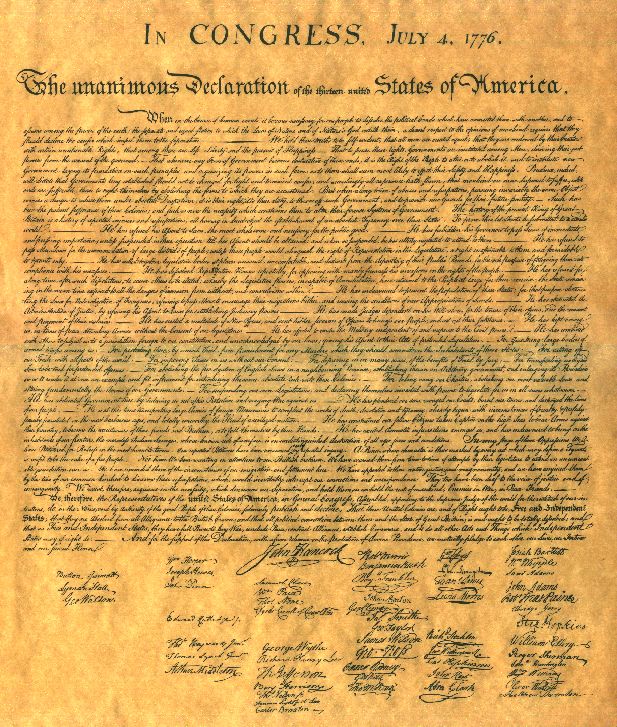
Back then you needed a lot more than just a payoff letter to change companies...

This merchant successfully opened his 2nd location.

This winery just refi'd again last week. $132,292,222,144,923,383,293,819,183,189,380,678 was withheld and credited to the outstanding balance.

Reason for Advance: Need to stock up on more tea inventory.

We apologize if our history is a little off 😉
– Merchant Processing Resource
../../