
AMEX’s Journey from Courier to Creditor
November 24, 2021 Have you swiped your American Express card lately?
If so, you belong to one of the most ambitious company pivots ever known. The credit card company known for its prestigious clientele was once a shipping company and up until the early 1900’s, it exclusively shipped stuff at an expedited pace across America.
The origins of the namesake comes from the company’s previous model, an express courier service in the mid 1800s. During that time, “express” services were the next up-and-coming industry. These services allowed quick and precise shipping of small, valuable items around the United States, and were frequent among people who were concerned with the fragility of their items. It was also a second, faster option to the US Postal Service.
By 1850, the top express services realized that their competition was doing more harm than good for one another. That’s when three New York-based express companies owned by Henry Wells, William Fargo, and John Butterfield combined their companies into one, dubbing the new service American Express.
During the formation of American Express, the California gold rush was at its peak. Promises of new cities that were an escape from the smog dens of the east coast brought millions of Americans out west. Wells and Fargo, the first President and Vice President of American Express, respectively, moved out to San Francisco in an attempt to extend American Express to the west coast during this time.
Wells and Fargo were discouraged by their colleagues at American Express to branch out west, and were forced to simultaneously run American Express in the East, and their new company in the west. This western venture became known as Wells Fargo.
Throughout the rest of the 1800s, American Express continued their ventures in express shipping, expanding operations into railways and expanding their routes around the east coast. The Civil War was a huge growth spurt for the company as the demand for express shipping skyrocketed.
After both Wells and Fargo made their way through the ranks at American Express, both serving as President prior to their departure, it was James Fargo, the son of William, who some say is the individual who introduced the idea of providing financial services for customers in 1891. James was the one to introduce American Express’ money order, a cheaper and more modern version of a system already in place by the postal service at that time. American Express became the provider of the go-to money order for immigrants who wished to send money to their families in various parts of the world. After the huge success of the money orders, this led to the company releasing their trademark product, the traveler’s check, at the turn of the century.
Their full blown transition to financial services occurred in 1918, when the US government nationalized all express shipping companies as part of the World War I fighting effort. This resulted in the company being left only to function off of its two side ventures, money orders and travelers checks.
These stayed relatively stagnant for the next fifty-or-so years until American Express started to become what we know them as in today’s market. In 1958, the company issued its first credit card. Half a million people signed up for the card in its first 90 days on the market.
The rest is history. The charge card, then the tier’d cards, followed by their prestigious centurion or “black” card, the options expanded into different tiers of luxury through credit. This prestige that justifies the consumer fee, combined with the high fees they charge merchants to process the payments, is why the company is so successful. As American Express clients tend to make and spend more money, merchants are inclined to take American Express cards to attract their market, and just consider the higher fees as just a cost of doing business.
Not only is American Express an impeccable example of brand construction and marketing, but a great learning opportunity for any business who is forced to change their business model due to extenuating circumstances. Their story gives the notion that no matter the size of the company, the opportunities are endless with the right balance of dedication, innovation, and calculated risk taking.
Yes Lender Becomes Fintegra, Brings on Former Federal Reserve Vice Chair
November 15, 2021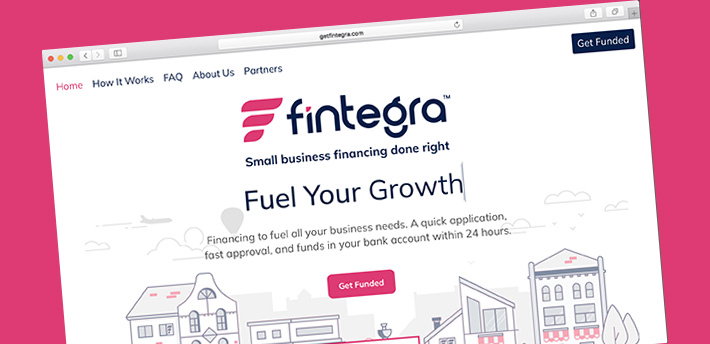 Yes Lender is now Fintegra. Along with the name change, the company is bringing on Roger Ferguson, former Vice Chair of the Federal Reserve (1997-2006) in an advisory role. Ferguson is also an investor in Fintegra.
“Our new name combines ‘fintech’ with ‘integrity’” said Glenn Forman, CEO at Fintegra. [The name] serves as a daily reminder to our customers and colleagues of our mission and values, which we take very seriously.”
The company’s goal is seemingly to write a lot of deals, and get them funded as fast as possible through a fintech application process. According to a press release, the online application can get merchants their funds within 24 hours of their application being submitted.
When touching upon Fintegra’s goals with the rebranding, Forman spoke on a good work environment along with customer-centric business decisions. “We’re committed to putting capital in the hands of entrepreneurs so they can grow their businesses and improve the lives of their customers, suppliers and employees, and we’ll continue to do so in a highly ethical and empathetic way.”
When speaking about the partnership with Ferguson, Forman believes this unprecedented addition will bring equally unprecedented opportunities to this company.
“We’re incredibly fortunate to be able to tap Roger’s wisdom and experience to accelerate Fintegra’s growth. His track record of success and impeccable ethics are perfectly aligned with our brand.”
Forman and Ferguson are looking to rekindle an old working relationship to help Fintegra take off. “While it’s been a few years since we worked together at McKinsey & Company, it feels great to be joining forces again to take Fintegra to new heights.”
Wing Lake Capital Announces New Capstone Fund
November 12, 2021 After acquiring Franklin Capital in October of last year, Wing Lake Capital CEO Shaya Baum spoke to AltFinanceDaily about a new fund the company is unveiling, the Capstone Fund.
A mix of debt and equity has put $50 million into the Capstone Fund, all from investors of the Franklin Fund. According to Baum, the Franklin Fund still has about $100 million in it.
“Wing Lake Capital has two funds now,” said Baum. “There’s the Franklin Fund and the Capstone Fund. The Franklin Fund was launched as a bridge for companies that are stuck in the cash advance merry-go-round. Companies are stacking cash advances until they are using Peter to pay Paul, and then there are no more Peters.”
Comparing the Franklin Fund to the Capstone Fund, Baum described it as a “graduate fund” that will enable companies with too many advances to move beyond them and that it would serve as a stepping stone between the Franklin Fund and traditional SBA or bank financing.
Additionally, the Capstone Fund is also a place where companies who have extenuating reasons why they’re denied credit, but aren’t in distressed business situations, can get access to capital.
Baum’s business model is sometimes at odds with the advance providers his companies try to draw customers away from, with Baum going so far as to say that some of these providers “hate” him. Despite this, he says that some quietly work with him.
“These companies say one thing publicly and privately do another,” said Baum. “These companies that come to us for help are companies that can no longer pay their cash advance debt.”
As part of his company’s program, the advance provider can recover some of its money, he asserted.
“We’re getting 800 deals a week from cash advance companies saying ‘hey, can you help us get out of these?’”
Regardless of the tension with competitors, Baum believes the new fund will ultimately benefit the merchants.
“The Capstone Fund is really focused on growth capital as opposed to restructuring distressed assets. Okay, we’ve restructured your business, you don’t have to pay that cost of capital, you have to focus only on growth. You have opportunities to grow, room for success, now let’s scale the business.”
IOU Financial Inc Surpasses $US 1 Billion in Loan Originations and Establishes All-time Record in Quarterly Loan Originations
November 2, 2021in its 12-year history of funding small business growth in North America
Atlanta, November 2, 2021 – IOU FINANCIAL INC. (“IOU” or “the Company”) (TSX-V: IOU), a leading online lender to small businesses (IOUFinancial.com), announced today that it has surpassed US$1B in total loan originations.
“This is a major milestone for all IOU team members, partners and stakeholders,” said Robert Gloer, President and CEO. “In 12 years, the company has grown but our values have not changed: now more than ever we are committed to exceeding the expectations of our broker partners and the small business owners across North America who rely on our funding solutions to drive their growth plans.”
In addition, IOU announced today that its loan originations for the quarter ended September 30, 2021 surpassed all previous records. The company originated over US$52 million in small business loans in Q3, a new high-water mark in the 12-year history of the company, representing a sequential growth of 51.5% vs. Q2 2021, and 183.1% over Q3 2020.
“We are thrilled to surpass pre-pandemic loan origination numbers and start setting new all-time records for IOU Financial,” said Robert Gloer, President and CEO. “We remain cautiously optimistic that the economic recovery will continue despite the lingering potential macroeconomic and public health risks.”
IOU Financial originated its first loan in December 2009 and quickly positioned itself as a trusted alternative to banks by helping small business owners get fast and easy access to funding visa its proprietary IOU360 technology platform. The Company continued funding small businesses throughout the Covid-19 pandemic and has subsequently introduced the industry-first IOU Financial Cash Back Loan and announced an-all-time record in monthly loan originations.
“We faced the challenges of the COVID-19 pandemic with the same entrepreneurial spirit that drove us to launch IOU Financial on the heels of the 2008 financial crisis – and both experiences have reinforced the importance of helping small businesses adapt to new challenges and grow” added Gloer. “Here’s to the next 12 years of small business growth!”
The Company is due to share its Q3 Financial Results in the coming weeks.
About IOU Financial Inc.
IOU Financial Inc. is a wholesale lender that provides quick and easy access to growth capital to small businesses through a network of preferred brokers across the US and Canada. Built on its proprietary IOU360 technology platform that connects underwriters, merchants and brokers in real time, IOU Financial has become a trusted alternative to banks by underwriting over $984 million as of September 20,2021 in loans to fund small business growth since 2009. IOU trades on the TSX Venture Exchange under the symbol IOU (TSXV: IOU), and on the US OTC markets as IOUFF. To learn more about IOU Financial’s corporate history, financial products, or to join our broker network please visit www.IOUFinancial.com.
Forward Looking Statements
Certain information set forth in this news release may contain forward-looking statements that involve substantial known and unknown risks and uncertainties. These forward-looking statements are subject to numerous risks and uncertainties, certain of which are beyond the control of IOU including, but not limited to, the impact of general economic conditions, industry conditions, dependence upon regulatory and shareholder approvals, the execution of definitive documentation and the uncertainty of obtaining additional financing. Readers are cautioned that the assumptions used in the preparation of such information, although considered reasonable at the time of preparation, may prove to be imprecise and, as such, undue reliance should not be placed on forward-looking statements. IOU does not assume any obligation to update or revise its forward-looking statements, whether as a result of new information, future events, or otherwise.
Neither TSX Venture Exchange nor its Regulation Services Provider (as that term is defined in policies of the TSX Venture Exchange) accepts responsibility for the adequacy or accuracy of this release.
For more information, please contact:
Robert Gloer, Chief Executive Officer, 866-217-8564 ext.308
David Kennedy, Chief Financial Officer, 514-789-0694 ext. 278
Carl Brabander, EVP of Strategy, 866-217-8564 ext. 4378
Fundomate Announces $50 Million Line of Credit to Bring Embedded Automated Funding and Real-Time Banking to Payments and SMB Marketplaces
September 30, 2021
Los Angeles, September 30, 2021 — Fundomate, a leading embedded finance provider of automated business funding solutions and real-time banking tools for merchant-facing platforms, announced the closing of a $50 million line of credit with Revere Capital today. The new line of credit is Fundomate’s largest to date.
Fundomate will leverage the credit facility to scale up its partnerships with merchant-facing businesses and grow the company’s new white-label banking platform. The platform enables merchant-facing platforms and marketplaces to rapidly expand their product suite and enhance engagement by offering automated financing and embedded banking tools under their own brand.
 “With the closing of the $50 million credit line, Fundomate can scale its proven automated funding platform via its one-touch funding tool already embedded within 100+ payment processing partners and marketplaces”, says Sam Schapiro, CEO and Founder of Fundomate. “We’re excited to also focus on our new embedded real-time banking platform, which uses AI and advanced forecasting to provide our partners the ability to offer their customers free short-term working capital that’s available for immediate use.”
Revere Capital Managing Director Christopher Gilker said, “We’re incredibly excited to grow with Fundomate. As I tell all my colleagues, Fundomate is a company at the right place at the right time. The team is ambitious, and I have no doubt the company will disrupt the fintech, payments, and banking space in a big way.”
Revere Capital Managing Director Suman Mallick commented further, saying, “I’m very excited about Fundomate’s potential to change how businesses manage their banking and credit needs. I believe the company will benefit from strong secular tailwinds and has vast opportunities for growth with merchant-facing businesses throughout the US.”
Waterford Capital structured and arranged the line of credit on behalf of Fundomate. Dave Piotrowski, Managing Director at Waterford Capital, said, “Fundomate has an advantage over others in the merchant finance space through the products offered through their payment processor partners. This financing relationship with Revere Capital will help take the company to the next level and further broaden their competitive advantage.”
About Fundomate
Fundomate is an innovative fintech company that operates in the alternative lending space and provides both direct-to-business and white-labeled turnkey solutions, enabling merchant-facing platforms to offer alternative funding products to their customers as a value-added proposition.
The company has deployed over $100M to more than 2000 merchants across various industries in
the United States.
About Revere Capital
Revere Capital is a private credit manager with expertise in lower middle-market real estate bridge lending & specialty finance. The firm’s disciplined underwriting utilizes fundamental real estate analysis and research, emphasizing intrinsic value to create a diversified portfolio for investors. Revere also specializes in financing other commercial interests, consumer interests and insurance-backed interests. With a national footprint, Revere Capital offers speed, certainty of execution, and creativity to structure loans to fit borrowers’ needs and provide contractual income for investors.
About Waterford Capital
Waterford Capital is a leading arranger of structured finance and asset securitization transactions. The firm advises specialty finance companies and asset managers in connection with warehouse credit facilities, private placements of asset-backed securities, whole loan sale programs, and mezzanine and equity capital raises.
LoanMe Now Officially Part of NextPoint
August 11, 2021 The Canadian SPAC deal to merge LoanMe with Liberty Tax was finally completed last month after being announced in February.
The combined entity, NextPoint Financial, trades on the Toronto Stock Exchange under the ticker NPF.
“In just over a year from establishing this SPAC, we have closed two acquisitions that immediately create a financial services company with scale and opportunities for synergistic growth,” said Andy Neuberger, Chairman of NextPoint Financial. “With a management team and board comprised of proven executives and operators across the financial services, digital and retail sectors, we have very quickly created an organization that is set to impact how financial services are delivered to North America consumers and small businesses.”
The deal is especially significant in the small business finance space since it will place LoanMe’s small business loan and merchant cash advance products into 2,700 Liberty Tax storefronts throughout North America.
IOU Introduces the “Cash Back” Concept to the Small Business Loan Market
August 4, 2021 Immediately following news of a management shakeup, small business lending company IOU Financial introduced a first-of-its kind offering to eligible customers, cash back.
“Available only to qualified new clients,” as the announcement says, the IOU Cash Back Loan enables borrowers to benefit from perfect payment history by receiving 3% of the original loan back in the form of a cash rebate.
According to Carl Brabander, the new EVP of Strategy, this is not a gimmick where the rebate can only be applied to a future loan or loaded up onto a gift card.
“The merchant would receive the cash back amount by ACH directly to their bank account,” he writes, “provided they (a) have a perfect repayment history and (b) apply for the rebate within 30 days of repaying the loan, using the cash back certificate we would have sent them when the loan closed.”
Translated into dollars, this reward could be sizable given that IOU’s average loan size hovers around $100,000 and can go much higher.
“The IOU Cash Back Loan gives us the opportunity to give something back to new clients that put their faith in us to fund their growth plans,” said IOU CEO Robert Gloer in a public statement.
The cash-back loan concept was developed scientifically through focus group testing, the company claims.
The sudden flurry of activity emanating from IOU can probably be attributed to a deal struck last year when Neuberger Berman, an investment manager with $374B under management, acquired a 15% stake in the firm.
Brabander says that IOU is very bullish on the rest of the year and 2022.
“We see small business coming back strong now that the 2nd round of PPP has finished working its way through the system,” he says. “That’s why we’re investing heavily in products (ex. Cash Back), technology (our IOU360 platform) and distribution right now…”
Shopify Capital Originated $363M in MCAs and Business Loans in Q2
August 4, 2021 Shopify Capital originated $363M between merchant cash advance and business loans in Q2, bringing the first half total to $671.6M.
“Not only does Shopify Capital help fuel our merchants’ growth,” said Shopify President Harley Finkelstein in the quarterly earnings call, “our data tells us that merchants that accept Capital stay with Shopify longer as they succeed on the platform and take more of Shopify’s other solutions, namely Shopify shipping, apps, themes and domains and maybe most importantly, extending capital when their business needs it, reinforces the trusted relationship that we have with our merchants, one that goes beyond what they have with their bank or any other vendor. When we talk about Shopify’s flywheel, this is exactly what we mean.”
Shopify Capital is in the same league as rivals Square and Enova in terms of small business financing volume. Square Loans originated $1B for the first half, for example, while Enova has originated $722M.