American Fintech Council (AFC) Welcomes Acting Director of the CFPB Scott Bessent and Doubles Down on its Commitment to Champion Earned Wage Access (EWA) Through Federal and State Advocacy
February 3, 2025Washington, D.C. (February 3, 2025) – The American Fintech Council (AFC), the premier industry association representing responsible fintech companies, innovative banks, and the largest number of responsible Earned Wage Access (EWA) providers, is intensifying its efforts to ensure responsible EWA services remain accessible to American workers. Through federal engagement and testimony before eight state legislatures so far across the country, with two upcoming hearings in Nebraska and Utah, AFC is committed to supporting clear, pragmatic regulation for EWA to empower consumers and foster responsible innovation.
“Earned Wage Access is an essential financial tool for millions of American families, offering a safe and responsible alternative to the predatory credit products of the past,” said Phil Goldfeder, CEO of the American Fintech Council. “For generations, workers have been captive to an arbitrary pay period system that separates their work from their wages. EWA restores this connection, providing greater financial flexibility and stability for those who need it. AFC and responsible EWA providers are committed to establishing a regulatory framework that protects consumers and preserves access to EWA by recognizing that this product is not a loan, and should not be regulated as such.”
In a letter to Treasury Secretary Scott Bessent, who also serves as Acting Director of the Consumer Financial Protection Bureau (CFPB), AFC urged the pursuit of a formal rulemaking process that would allow consumers and industry participants to convey the nuances and benefits of responsible EWA products. AFC emphasized that responsible EWA providers offer a non-recourse, fee-transparent alternative to traditional credit products that helps workers access their earnings when needed, without late fees or penalties. AFC also highlighted the need for consistent federal regulation to address the patchwork of state laws that risk undermining the stability and availability of EWA services.
In a previous letter to the CFPB in February 2024, AFC asked for formal legislative rulemaking process, but the request went unheeded by then-Director Chopra. Instead, the CFPB issued a proposed informal interpretive rule, which discussed a novel and inaccurate interpretation of EWA and was never finalized. In addition, the CFPB rescinded its 2020 Advisory Opinion–the Bureau’s only official position on EWA–in the final moments of the previous administration, leaving industry participants without a clear understanding of the CFPB’s position.
In addition to federal advocacy, AFC representatives recently testified at hearings on EWA in Colorado, Indiana, New Mexico, North Dakota, Oregon, and Vermont, as well as two hearings in Washington state, with upcoming testimony in Nebraska and Utah, to speak about the consumer benefits of these offerings and the need to support responsible EWA practices. AFC will continue to monitor legislative and regulatory developments around EWA at the state level, and is prepared to engage collaboratively with any state considering guidance around this technology.
“A regulatory framework for Earned Wage Access must be grounded in a clear understanding of its role as an empowering tool for financial stability—not mischaracterized as traditional credit,” said Ian P. Moloney, SVP and Head of Policy and Regulatory Affairs at AFC. “EWA provides workers with immediate access to their hard-earned wages, helping them avoid the cycle of high-interest debt and predatory financial products. Misguided regulation risks sidelining this critical innovation, leaving millions of Americans without a safe, transparent alternative to address their financial needs. AFC is committed to ensuring that regulatory decisions are informed by facts and protect the unique consumer benefits EWA provides.”
A standards-based organization, AFC is the premier trade association representing the largest financial technology (Fintech) companies and innovative banks offering embedded finance solutions. AFC’s mission is to promote a transparent, inclusive, and customer-centric financial system by supporting responsible innovation in financial services and encouraging sound public policy. AFC members foster competition in consumer finance and pioneer products to better serve underserved consumer segments and geographies.
###
Legal Complexities in the Revenue-Based Financing Industry: An Analysis of Recent Court Cases
January 6, 2025Jeffrey S. Paige is the General Counsel of CFG Merchant Solutions. Visit: https://cfgmerchantsolutions.com
Navigating the intricate legal landscape of the revenue-based financing industry has become increasingly complex, with recent court cases providing profound insights into the sector’s regulatory dynamics. Amidst legislative shifts, litigation between funders and merchants, and public enforcement actions, three prominent court cases have recently emerged, each offering further guidance into the nuanced legal dynamics governing this innovative sector.
SBFA vs. DFPI: Constitutional Challenges to California’s Regulatory Framework
In the Small Business Finance Association (SBFA) vs. California Department of Financial Protection and Innovation (DFPI), 9th Cir., Case No. 24-50, SBFA challenged the constitutional validity and federal preemption of California’s Commercial Financing Disclosure Law. Central to SBFA’s stance is the contention that the state’s regulatory framework infringes upon the First Amendment rights of its members. SBFA asserts that the regulations compel its members to disseminate inaccurate disclosures to customers, while simultaneously prohibiting any communication that could rectify or clarify purportedly misleading information. Furthermore, SBFA contends that California’s customized interpretation of the Annual Percentage Rate (APR) conflicts with the federal Truth in Lending Act (TILA), potentially causing confusion among merchants. The DFPI moved for summary judgment to dismiss the complaint.
Updates and Nuances: Recent Ruling on SBFA vs. DFPI
On December 4, 2023, the trial level judge ruled in favor of the DFPI, granting their motion for summary judgment and dismissing the case.
First Amendment Argument: The judge disagreed with SBFA, concluding that the disclosures would help small businesses understand the costs and were neither misleading nor unduly burdensome.
Federal Preemption Argument: The judge deferred to the Consumer Financial Protection Bureau (CFPB)‘s authority to resolve preemption issues. In March 2023, the CFPB ruled that the Commercial Financing Disclosure Law (CFDL) does not conflict with TILA.
The SFBA has filed an appeal of the lower court’s grant of summary judgment with the United States Court of Appeals for the Ninth Circuit. On May 28, 2024, SBFA filed their appellate brief setting forth the facts on the record on summary judgment and their specific legal arguments, emphasizing the reversible errors made by the district court, particularly regarding the false and misleading nature of the compelled disclosures, the controversy surrounding the use of APR metrics on products (like receivables-based funding transactions) that APR was not designed to properly describe, and the lack of justification for the regulations. The preemption argument is not being raised on appeal. Following this, on June 6, 2024, the Appellee DFPI’s unopposed motion for an extension of time to file the answering brief was granted. The answering brief of the DFPI is now due on August 30, 2024.
Given these developments, SBFA’s challenge continues to underscore significant constitutional, substantive, and procedural issues within California’s regulatory framework.
The People v. Richmond Capital Group: Uncovering Predatory Practices
In the case of The People v. Richmond Capital Group, 195 N.Y.S.3d 637 (N.Y. Sup. Ct. 2023, unpublished slip copy), allegations of predatory practices have uncovered crucial legal considerations for revenue-based financing providers. Initially filed by the People in 2020, the court ultimately found for the People, holding that the Defendants in that case were “predatory lenders” making thinly disguised loans with usurious interest. The keys to this decision were the reconciliation duty (which was allegedly never performed by the Defendants despite the mandatory contract provisions and requirement that merchants submit bank statements to Defendants on a monthly basis), the fact that the transactions were explicitly based upon fixed repayment amounts with fixed repayment timeframes (as opposed to revenue based funding products, where remittance of the purchased receivables may vary in amount and duration along with the merchant’s revenue stream), contract provisions such as making a few missed payments or declaration of bankruptcy events of default (shifting the risk of loss off of the funder), and the fact that Defendants always referred to their products as loans, and not a bona fide purchase and sale of future receipts. The reprehensible conduct of certain Defendants who harassed, bullied, and made numerous fraudulent statements to their merchant customers certainly did not help their cause. In September 2023 and February 2024, the court issued further decisions addressing accounting and disgorgement of funds, but the core principles related to reconciliation and data remain the same. It’s unclear if Richmond Capital Group appealed any of these rulings.
U.S. Info Group, LLC v. EBF Holdings: Implications for ISO Behavior and Funder Accountability
2023 WL 6198803 (S.D.N.Y., 2003), a case out of the Southern District of New York involving New York law, involves allegations by a Plaintiff against a receivables-based funder similar to those in Richmond Capital, but with a very different set of facts, and a different outcome. U.S. Info Group attempted a civil Racketeer Influenced and Corrupt Organizations Act (RICO) claim against EBF Holdings, alleging that the receivables-based funding transaction at issue was a disguised usurious loan under New York law.
In September 2023, the court dismissed the case entirely on the funder’s motion to dismiss the third amended complaint. The judge ruled that U.S. Info Group failed to adequately allege facts demonstrating a “RICO enterprise” or widespread fraud scheme involving EBF Holdings and their affiliates. In addition, the Court re-iterated the major hallmarks of a true purchase and sale receivables-based funding transaction: (i) that the contract contained a reconciliation provision (and that the funder actually preforms reconciliations where warranted such that the provision is not illusory); (ii) that the risk of non-performance due to bankruptcy or declined revenue of the merchant always rests with the funder; and (iii) that there is no finite, fixed repayment term, which would be typical of a loan.
Legal Recommendations for Funders
Funders should consult with knowledgeable and capable attorneys in this area of law to establish and effectuate clear provisions in their contracts along with steadfast adherence to their contract terms and best practices.
As for the DFPI and California’s disclosure requirements, they remain the law of the land unless the final, unappealable decision of a court states otherwise. Thus, funders should consult with their attorneys to ensure strict compliance with California’s disclosure law and regulations.
In conclusion, the recent legal battles involving the revenue-based financing industry underscore the need for continuous vigilance, genuine commitment to proper contract terms and best practices in servicing those contracts, and adaptation to emerging regulatory paradigms, in order to ensure sustainable growth and legal compliance within this dynamic sector.
NMEF Sets Unprecedented Milestones, Breaking All-Time Monthly, Quarterly, and Annual Origination Records
January 6, 2025JANUARY 6, 2025, NORWALK, CT – North Mill Equipment Finance LLC (“NMEF”), a leading independent commercial equipment lender and lessor headquartered in Norwalk, Connecticut, announced unprecedented performance milestones in originations for December, the fourth quarter, and the full year. Originations soared to an all-time high of $105.9 MM in the month of December, reflecting a remarkable 132% increase over December of last year. The fourth quarter closed with an extraordinary $252 MM in originations, while the full year reached a record-setting $654 MM, representing 21% growth compared to prior benchmarks.
David Lee, Chairman and CEO of NMEF, commented on the company’s historic success: “The fourth quarter was transformational for NMEF, with originations surpassing our previous quarterly record by an impressive 68%. This growth was driven in large part by the rapid expansion of our mid-ticket business, showing 178% growth year over year. Our evolution from a small-ticket subprime lender to a small and mid-ticket lender focused on near-prime opportunities reflects the success of our strategy and commitment to meeting the diverse needs of our partners. Furthermore, NMEF’s corporate-only product increased 11 points as a percentage of originations, underscoring our focus on mid-ticket portfolio enhancement.”
Mark Bonanno, President and Chief Revenue Officer of NMEF, attributed this exceptional performance to the company’s innovative culture and its robust network of partnerships. “This milestone is a testament to the incredible relationships we’ve built and nurtured over the years. Our ability to think creatively and work collaboratively with both new and long-standing partners has been instrumental in driving these results. We’re deeply grateful to our partner and referral network for their trust and collaboration, which enables us to continually push the boundaries of what’s possible in equipment finance.”
“We’re excited by the progress we’ve made this year. Through initiatives like integrating Taycor, expanding our credit appetite to include larger ticket sizes, and developing a true FMV program, our efforts to develop North Mill into a scalable platform for growth are beginning to show results. These advancements position us to support larger, more sophisticated transactions and deliver sustained growth in 2025 and beyond.” said Tom Lyle, COO of NMEF.
About North Mill Equipment Finance
NMEF originates and services small to mid-ticket equipment leases and loans, ranging from $15,000 and up to $5,000,000 for investment grade opportunities, and accepts A – C credit qualities and finances transactions for many asset categories including construction, transportation, vocational, medical, manufacturing, technology, franchise, renovation, janitorial and material handling equipment. NMEF is majority owned by an affiliate of InterVest Capital Partners. The company’s headquarters are in Norwalk, CT, with regional offices in Irvine, CA, Murray, UT and Voorhees NJ. For more information, visit www.nmef.com. Taycor Financial operates as an independent division of NMEF, with a focus on developing direct and vendor origination programs. For more information, visit www.taycor.com. One of NMEF’s controlled affiliates, BriteCap Financial LLC, is a leading non-bank lender providing small businesses with fast, convenient financing alternatives such as working capital loans from its main office in Las Vegas, NV. For more information, visit www.britecap.com.
###
CAFE’s Fall 2024 Accelerator Cohort a Success
November 25, 2024 AltFinanceDaily attended and sponsored the final demo day of CAFE’s Fall 2024 Accelerator Cohort. CAFE, as previously profiled, is the non-profit Center for Advancing Financial Equity. The six members of the Cohort were Carvertise, GivingCredit, Kredit Academy, Odynn, Salus, and Prismm.
As previously stated, the bi-annual accelerator aims to identify, support and grow extraordinary financial accelerated technologies and innovations. Hundreds of companies apply but only six get selected for each cohort.
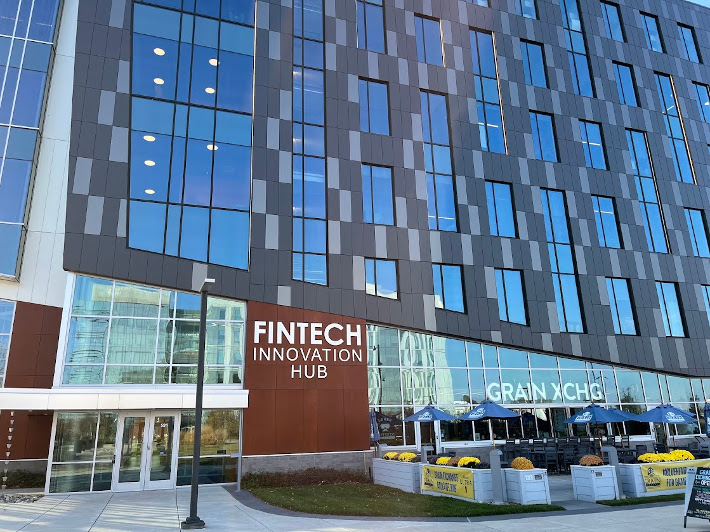
The demo day took place inside the Fintech Innovation Hub, situated on University of Delaware’s STAR campus. It was a major success.
To learn more about CAFE, visit: https://ftcafe.org/
OppFi Encouraged By Early Results With Bitty
November 10, 2024OppFi achieved a new record in Q3.
“The record quarterly net income was a result of credit initiatives that continue to drive strong loss payment and recovery performance, marketing cost efficiency and prudent expense discipline across the organization,” said OppFi CEO Todd Schwartz during the quarterly earnings call. One part of that organization is Bitty Advance, which it acquired a 35% stake in this past summer. “We are encouraged by the early results and potential opportunity of this platform and the strength of our relationship with Bitty,” Schwartz said of the progress so far. “We continue to explore similar opportunities that would be accretive and align with OppFi’s strategic vision.”
One analyst on the call inquired further about what similar opportunities Schwartz might be referring to on the M&A front. Schwartz responded with the following:
I mean I think whatever it is, it’s got to be something that’s highly accretive. I mean, OppFi’s vision is to be a platform for digital alternative financial service products where we see large supply-demand imbalances in large addressable markets. There’s definitely different profiles of business out there, different situations are pretty — it’s pretty bespoke, but we’re prepared to handle either-or. So it has to make sense for us, though. And obviously, we’re going to protect and mitigate risk with anything we do to make sure that it’s successful and make sure that we’re going to be getting a return on our capital and it’s highly accretive to shareholders.
Trump, Republicans To Take Over in 2025
November 6, 2024 With the 2024 election results in, the regulatory and legislative environment for the small business finance industry could shift significantly at the federal level in the coming years. In particular, it will be worth paying specific attention to what happens with the Consumer Financial Protection Bureau (CFPB). As many readers are aware, the largest regulations ever imposed on the small business finance industry, promulgated by the CFPB, are slated to go in effect in July 2025. That date comes after fifteen literal years (Since Dodd-Frank was passed in 2010!) of delays caused by confusion, debates, and disputes over the CFPB’s right to exist, the meaning of the law’s statute, and court orders pushing it forward or temporarily delaying it. Feelings about the CFPB were so contentious under Trump’s last presidency that the agency temporarily rebranded itself as the BCFP (Bureau of Consumer Financial Protection) as a symbolic gesture of statutory defiance.
The CFPB’s looming oversight of small business finance starting next year had particularly alarmed those in the merchant cash advance space. Its current head, Rohit Chopra, had previously disclosed that his mission was to “wipe out” merchant cash advance companies. He had also said that the structure of their products “may be a sham.” In response, one trade group representing such companies filed a lawsuit against the CFPB earlier this year. That case has not been decided yet. Other segments of the small business finance industry will be watching the CFPB closely in 2025 as well.
Another outcome is that it could mean that individual states that lean the other way politically become more aggressive. As readers are aware, the stream of disclosure legislation over the last few years all came from the state level. It’s possible that environment starts to accelerate even faster.
Meet the CAFE That Can Accelerate Your Fintech Startup
October 14, 2024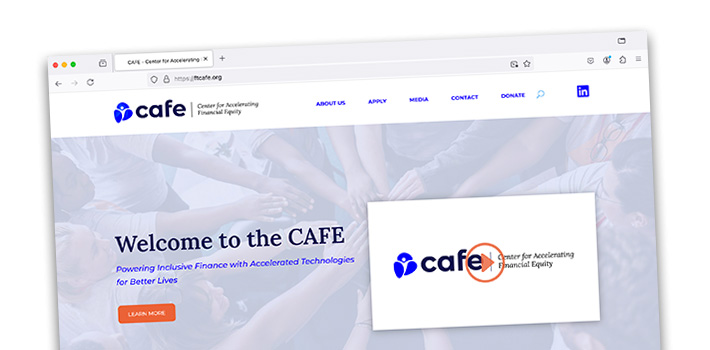 Newer fintechs on a mission to advance financial health and wellness for low-to-moderate income individuals and underserved populations may not have to weather the startup journey alone. Inside the Fintech Innovation Hub, situated on University of Delaware’s STAR campus, is the non-profit Center for Advancing Financial Equity (CAFE). Supported by numerous partnerships including the Small Business Administration, Discover, the Small Business Development Center (SBDC), the American Bankers Association, and more, one of its signature initiatives is its bi-annual fintech accelerator, which aims to identify, support and grow extraordinary financial accelerated technologies and innovations. Hundreds of companies apply but only six get selected for each cohort of the accelerator. One of those selected this past Spring, Parlay, offers a powerful tool to improve small business loan applications. Another, Stratyfy, offers interpretable AI solutions that enable financial institutions to make more accurate, efficient, and fair financial decisions in credit risk, fraud, and compliance.
Being accepted into CAFE requires a startup to already be up and operating.
“[These companies are] in market, the products are built already,” said Kristen Castell, Managing Director of CAFE. “They do have some customers, some of them are enterprise customers like banks, a full time team, and many of them have raised money already.”
Castell tells AltFinanceDaily that the companies applying to the accelerator still need a lot of help in terms of making industry connections, scaling distribution, and developing the right partnerships. It’s an eight-week program, some of which takes place on location at the Fintech Innovation Hub in Delaware. The rest is virtual. Applicants and those selected can be from anywhere in the US. The founders, all connected by some level of common interest, are bound to form a bond throughout the unique experience. Last week for example, the members of the Fall cohort went on a field trip to the Wilmington, Delaware headquarters of Best Egg (F/K/A Marlette), an online lender, and got to learn about their path from being a startup in 2014 to the fintech stalwart they are today.
“This time, we have some opportunities to meet the American Bankers Association in Washington, DC,” Castell said. “We also meet the regulators at CFPB in Washington, DC. There’s some other conference opportunities like another accelerator called RevTech Labs that has an investor conference in Charlotte. So there’s an opportunity to pitch there to investors.”
The learning curve for any company coming through the accelerator is dramatically shortened by the access and guidance they get, whether that be from other fintechs, from bankers, from regulators, or the largest fintech trade association, the American Fintech Council.
At the end of it all there’s a demo day in person at the Fintech Innovation Hub in Delaware, where they present to investors, bankers, academics, industry and community leaders, non-profit organizations and entrepreneurs alike to show what they’re made of.
Castell, a former banker herself that previously worked for JPMorgan and BlackRock, also experienced a taste of being a fintech entrepreneur when she became interested in impact investing. It’s a scene she loves. When the plan for CAFE was in development, the opportunity to be involved with financial inclusion, technology, and startups all in one was something she really wanted to take on.
“It’s really been an incredible opportunity to build the organization, to build the program, to work with all these partners, to bring all these stakeholders that I had mentioned earlier in and we’re not done,” she said. “We’re just getting started.”
The six members of the Fall cohort are Carvertise, GivingCredit, Kredit Academy, Odynn, Salus, and Prismm. Sponsors include the American Bankers Association (ABA), Siegfried Advisory, Delaware Prosperity Partnership (DPP), Wolf & Co, Delaware Tech Park, AltFinanceDaily, and Discover Financial Services.
AltFinanceDaily is expected to attend the demo day in November.
How Erica Bell of Tax Guard Won Second in The Poker Tournament
October 13, 2024
When the final hand of the B2B Finance Expo’s official poker tournament had concluded, Erica Bell, a Business Development Account Executive for Tax Guard, walked away with 2nd place. Bell has enjoyed poker for a long time and knows the game well. She’s even played in tournaments at the Ameristar Casino in Blackhawk, Colorado and won 1st place in one of them.
“The game’s strategy is what I truly enjoy,” Bell told AltFinanceDaily. “A couple of individuals came up to me and congratulated me [on coming in 2nd].”
Bell, who at least took home a small prize, has worked for Tax Guard for 5 and a half years. For those not familiar, “Tax Guard is a 3rd party due diligence company who provides real-time insights into hidden tax debt of individuals and businesses by retrieving and analyzing IRS data directly from the source, the IRS,” she says.
The company’s services are primarily used by commercial lenders and financial institutions to assess tax-related risks associated with borrowers. Tax Guard is widely known throughout the industry and has been frequently referenced on AltFinanceDaily. The company’s co-founder and CEO, Hansen Rada, even did a Zoom interview with AltFinanceDaily during the early lockdown era of Covid.
The company’s value is pretty straightforward, a lot of tax debt is not easily discoverable, and they’ll get the info you don’t even know you’re missing straight from the source.
“By offering earlier visibility into potential tax issues, liabilities, liens, & levies, we help our customers make more informed lending decisions and mitigate financial risks,” Bell explains.
And if there is a hidden tax issue, Tax Guard can proactively work to resolve it and even negotiate a payment plan. One downside of ignoring tax debt as a lender is having to compete with the IRS when they ultimately move to enforce collection.
Clients can use the Tax Guard portal to run reports or integrate their API right into a CRM. Other critical information can be obtained as well including a wage and income transcript from the IRS. “This includes data from W-2s, 1099s, and other income forms, as well as withholding details,” Bell says. “This data provides a comprehensive view of a taxpayer’s reported income and can be critical when assessing financial risks, resolving discrepancies and verifying financial details.”
Obviously, Bell says that anyone interested in learning more can reach out to her directly.
“My role is highly dynamic, being sales, strategic partnership and relationship focused,” Bell says. “I really enjoy working with extremely talented people at Tax Guard, meeting new folks in the finance industry and learning from their perspectives.”
She’s also apparently planning to host her own upcoming friendly poker tournament so it’s safe to say she has no intention of letting her skills get rusty.