Two Small Biz Owners Talk Online Borrowing
May 5, 2017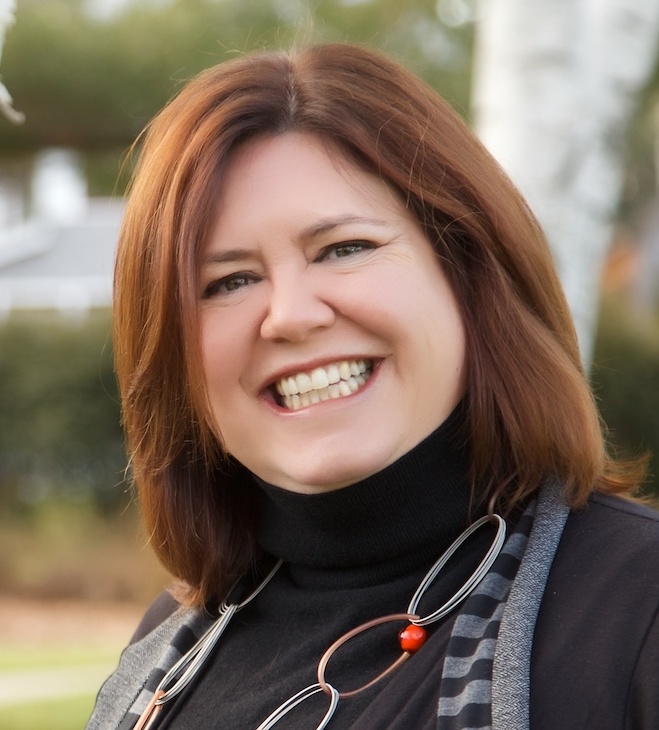 Katie Basson, President of Birch Tree Promotions
During National Small Business Week, we wanted to see what we can glean from a couple of small business owners who have taken to the Internet for their capital needs. Entrepreneurs Katie Basson of Birch Tree Promotions and Asha Waterstreet of Tasteful Additions document their experience as first-time online borrowers, and here’s a hint: Both of them would do it again.
And while their stories are unique, there are some parallels in Basson’s and Waterstreet’s online borrowing experience starting with the fact that both women got their capital needs met through SmartBiz Loans. Both raved about customer service. And for both, marketing and the media played a key role in their decision process.
Where their stories diverge, however, is in their response to the amount of financial products targeting women-owned small businesses. While Waterstreet does not give much thought to demo-tailored loans, Basson’s experience is that the number of programs geared toward women small business owners is lacking. This despite the fact that the United States is home to more than 11 million women-owned small businesses who employ millions and produce $1.6 trillion-plus in combined revenue.
Meanwhile SmartBiz Loans seems to buck the banking trend when it comes to extending capital to entrepreneurs like Basson and Waterstreet. “One third of loans [we process] are to women-owned businesses, which is higher than the average for traditional bank loans to small businesses,” Evan Singer, CEO of SmartBiz Loans, told AltFinanceDaily.
Katie’s Story
Birch Tree Promotions, whose name was inspired by a trip to Basson’s grandparents New England cottage where the moon-lit birch trees shined, was founded in 2006. The Newburyport, Mass.-based business, whose annual revenue hovers at about $1 million, specializes in selling premium promotional items. Similar to the birch tree at that vacation cottage, Basson seeks to make her brand stand out from the rest.
“It’s amazing to do this kind of volume for such a small place. I attribute that to technology, which is why I completely appreciate a company like SmartBiz that leverages that technology to be efficient,” said Basson, who counts among her clients Bain Capital, Philips and Amazon Robotics.
Her need for capital arose with a growth spurt during which time she hired a number of part-time employees.
“Up until [using SmartBiz Loans] we were sort of going along using lines of credit from local banks. I expressed my desire to have a long-term solution help with cash flow so it’s not boom and bust all the time. Instead there would be a significant amount of capital to use for managing the cash flow of the business where making payments each month made sense. None of them were interested. Somehow I didn’t fit their traditional model,” she explained.
The roots of Birch Tree Promotions reside in Basson’s quest to achieve a work/life balance, throughout which she observed financing needs for women-owned home-based business being overlooked.
“There was nothing I could see out there that was targeted to me. I didn’t have a storefront; I’m working out of my home office. That made it seem suspect to them. I wasn’t serious if I didn’t own office space,” she noted.
 But Basson, whose business is run 100 percent online, would not take no for an answer. “If I could pay a $20,000 line of credit, why wouldn’t they view me as a viable credit risk?” she quipped. So Basson set out on a journey to find a lender that was more open minded. She read about SmartBiz loans in an article published by a major financial publication, and then it was off to the races.
“I was amazed at how easy it was and how quickly everybody responded to me,” said Basson, adding that she even received a call on a Friday night from a SmartBiz representative to let her know where her loan stood and so that she wouldn’t have to worry over the weekend.
SmartBiz Loans matched her up with First Home Bank in Florida for an SBA-backed loan. Basson borrowed $200,000 over a 10-year term and her monthly payment is $2,274. The loan process took four weeks.
“Managing cash flow was the biggest, most important piece in addition to having funds available should I need them for big orders. We need some resources if we’ve just landed a huge order. We pay for the goods and then wait to get paid by the big company, and we needed more financial flexibility for that,” said Basson.
Perhaps the greatest testament to her online borrowing experience resides in whether or not she would return to the online lender for her capital needs in the future. The answer? “Indeed” she would.
Asha’s Story
Waterstreet launched Tasteful Additions about six years ago in Rochester, New York. The inspiration for her business came from a family vacation to North Carolina where she and her daughter visited a tasting store featuring flavored olive oils and balsamic vinegars. Ten bottles later coupled with frequent requests from her 12-year old for salads at dinner, Waterstreet knew there was something there.
So she opened up her own tasting store featuring flavored olive oils, balsamic vinegars and gourmet salts. And while in recent weeks she brought her small business entirely online doing away with the brick-and-mortar location, Waterstreet came across a need for capital about three years ago.
“I wanted to expand some of my products, and that was primarily the reason I decided to apply for a loan to get more capital. Credit cards were too high interest and I didn’t want to do that,” she said, adding that she initially went to her local banks only to be met with a process that she described as “tedious.”
In fact, after inquiring with a traditional bank for a loan, she was later greeted by her local banker with a pile of paperwork that she immediately rebuffed. “Being a small business and with me running things I didn’t have time, honestly. I’m trying to open the store, run the business and meet with customers, and I was like, ‘forget it,’” she said.
Instead she opted opting to complete an online application, a process she described as “simple.”
“They took care of everything. And when they had questions, they called me. It was so easy. Whenever you think something’s too easy you wonder, ‘What’s the catch?’ I was shocked there really wasn’t a catch,” said Waterstreet reflecting back.
It was while reading a food trade magazine that Waterstreet came across and ad for SmartBiz Loans. The rest is history. “I read about what they do. I called and the process was so easy and quick. And I got a very good interest rate as well. I was not getting raked over the coals or anything like that,” she said.
Waterstreet would not discuss the details surrounding her SBA loan but suffice to say that if she were to find the need to access more capital in the future, she would likely go to SmartBiz first.
Neither Basson nor Waterstreet considered any other online-lenders.
Fintech Sandbox? States, OCC Mull Regulatory Options
May 2, 2017It’s called the “New England Regulatory FinTech Sandbox.”
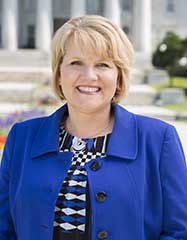
State banking regulators across the six New England states are exploring the creation of a regional compact that would allow financial technology companies to experiment with new and expanded products in “a safe, collaborative environment,” says Cynthia Stuart, deputy commissioner of the banking division at the Vermont Department of Financial Regulation.
Stuart asserts that she and her New England cohorts are adroitly positioned and uniquely qualified to oversee laboratories of finance. In Vermont, for example, she heads an agency that oversees regulation and examination of banks, trust companies, and credit unions as well as such nonbank financial providers as mortgage brokers, money transmitters, payday lenders and debt adjusters.
Financial watchdogs at the state level, Stuart observes, “are already witnesses to a wide breadth of financial services offerings and understand how they impact communities and consumers. As technology intersects with financial regulation,” she adds, “state regulators also appreciate the need to be open to technological innovation while balancing risk and return.”
The regional fintech sandbox is the brainchild of David Cotney, the former Massachusetts Commissioner of Banks, and Cornelius Hurley, director of Boston University’s Center for Finance, Law and Policy. The sandbox stitches together elements of Project Innovate, a development program for fintechs inaugurated by the U.K.’s banking regulator, and the European Union’s “passport” model for cross-border banking operations.
In the U.K., the Financial Conduct Authority is supporting both small and large businesses “that are developing products and services that could genuinely improve consumers’ experience and outcomes,” according to a 2015 report by the London agency. In harmonizing the regulatory regime for the sandbox across state lines of Maine, New Hampshire, Vermont, Massachusetts, Rhode Island and Connecticut, the program emulates the EU’s “passport.” Since 1989, a bank licensed in one EU country has been able to set up shop there while – thanks to the “passport” –operating seamlessly throughout the 28 states of the EU (soon to be 27 after “Brexit”).
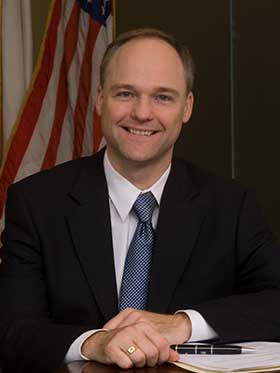
“It’s still preliminary,” Cotney says of the proposed New England sandbox-cum-passport, “but we’ve talked to the financial regulators in all six states and there’s universal openness. Nobody want to be seen as being a barrier to innovation.”
(Barred by law from lobbying in Massachusetts, Cotney hands off the Bay State duties to Hurley while he meets with regulators and other officials in the five remaining New England states. In March, Cotney was named a director at Cross River Bank, a Fort Lee, N.J.-based, $600 million-asset community bank known for its partnerships with peer-to-peer lenders including Lending Club, Rocket Loans and Loan Depot.)
This nascent effort of financial Transcendentalism in New England is, meanwhile, taking place against the backdrop of an increasingly acrimonious battle between the Office of the Comptroller of the Currency and state banking authorities over the licensing and regulation of fintech companies. At issue is the OCC’s plan announced in a December, 2016 “whitepaper” to issue a “special purpose national bank” charter to nonbank fintechs.
Siding with the OCC are the fintechs themselves, including Lending Club, Kabbage, Funding Circle, ParityPay, WingCash. “A special purpose national bank charter for fintechs creates an opportunity for greater access to banking products, empowers a diverse and often underserved customer base, promotes efficiency in financial services, and encourages industry competition,” Kabbage wrote to the OCC in a sample industry comment to its whitepaper (which is on the agency’s website).
Also on board for the OCC’s fintech charter are powerful Washington trade associations such as Financial Innovation Now, the membership of which comprises Amazon, Apple, Google, Intuit and PayPal, and industry research organizations like the Center for Financial Services Innovation. The U.S. banking establishment also appears largely supportive of the OCC. While qualifying its imprimatur somewhat, the American Bankers Association declared that it “views the OCC’s intent to issue charters as an opportunity to further bring financial technology into the banking system…”
But an irate army of detractors is condemning the fintech charter outright. Consumer groups, small-business organizations, community banks, and state attorneys general number among the furious opposition. No cohort, however, has been more hostile to the OCC’s fintech charter than state banking regulators.
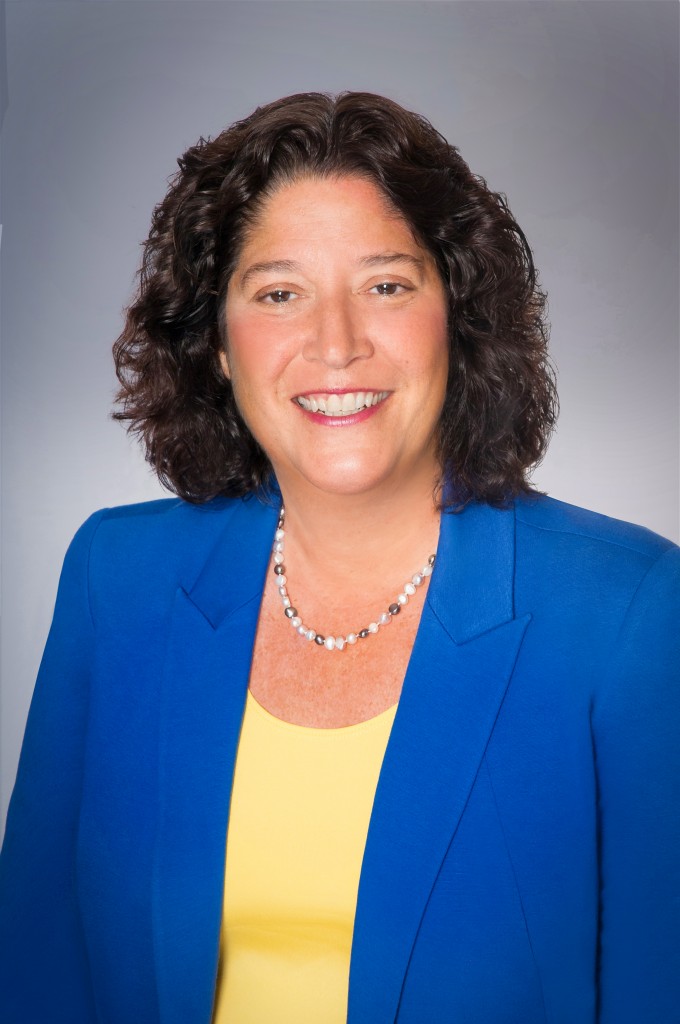
Maria T. Vullo, superintendent of New York State’s Department of Financial Services, has emerged as a firebrand. “The imposition of an entirely new federal regulatory scheme on an already fully functional and deeply rooted state regulatory landscape,” she wrote to the OCC earlier this year, “will invite serious risk of regulatory confusion and uncertainty, stifle small business innovation, create institutions that are too big to fail, imperil crucially important state-based consumer protection laws, and increase the risks presented by nonbank entities.”
Although big-state regulators from New York, California and Illinois have been in the vanguard of opposition, their unhappiness with the OCC is widely shared. Vermont regulator Stuart, who emphasizes the need for regulators “to embrace change,” nonetheless disparages the OCC’s endeavor.
“Of particular concern is the creation of an un-level playing field for traditional, full-service Vermont institutions to the advantage of the proposed nonbank charter,” she told AltFinanceDaily. “The special purpose national nonbank charter would not be subject to most federal banking laws and would be regulated with a confidential OCC agreement. The disparity in regulatory approaches is concerning.”
What had been confined to a war of words – rounds of angry denunciations packed into letters and press releases directed at the OCC — reached fever-pitch last week when, on April 26, the Conference of State Banking Supervisors filed suit against the OCC in federal court. The lawsuit seeks to prevent the agency “from moving forward with an unlawful attempt to create a national nonbank charter that will harm markets, innovation and consumers,” according to a CSBS statement.
Among other things, the conference’s complaint charges that by creating a national bank charter for nonbank companies, the OCC has “gone far beyond the limited authority granted to it by Congress under the National Bank Act and other federal banking laws. Those laws,” the conference’s statement continues, “authorize the OCC to only charter institutions that engage in the ‘business of banking.’”
Under the National Bank Act, the conference’s complaint asserts, a financial institution must “at a minimum” accept deposits to qualify as a bank. By “attempting to create a new special purpose charter for nonbank companies that do not take deposits,” the complaint adds, the OCC is acting outside its legal authority.
Christopher Cole, senior regulatory counsel at the Independent Community Bankers Association – a Washington, D.C. trade association of Main Street bankers known for punching above its weight — asserts that the state banking regulators are on solid ground. “The whole question comes down to what should a bank be for purposes of a national bank charter,” he says in a telephone interview. “The Bank Holding Company Act (of 1956), federal bankruptcy laws, and tax laws – all three – define banks as insured depository institutions. It’s right there in the statutes. So our recommendation,” he says, “is for the OCC to go back to Congress” and ask for the explicit authority to create a fintech charter.
Because the OCC has “short-circuited rule-making” protocol required by another law – known as the Administrative Procedures Act — “the process hasn’t been kosher,” Cole adds.
 Many members of Congress are also expressing outrage at the OCC. Not only have Democratic Senators Sherrod Brown of Ohio and Jeff Merkley of Oregon strenuously objected to the OCC’s fintech charter, but on March 10, 2017, Jeb Hensarling, the chairman of the House Financial Services Committee, fired off a “hold-your-horses” letter to Comptroller Thomas J. Curry. Signed by 34 House Republicans, the March 10 letter reminded Curry that his term of office would officially be up at the end of April, 2017, and urged him not to “rush this decision” regarding the fintech charters.
“If the OCC proceeds in haste to create a new policy for fintech charters without providing the details for additional comment, or rushing to finalize the charter prior to the confirmation of a new Comptroller,” the letter from Hensarling et alia declares, “please be aware that we will work with our colleagues to ensure that Congress will examine the OCC’s actions and, if appropriate, will overturn them.”
Never mind the stern letter from Chairman Hensarling, or the fact that an impressive array of Congressmembers on both sides of the aisle are bipartisanly unhappy, or that state banking regulators’ have filed suit, or that Curry’s replacement as Comptroller is overdue: the OCC is pushing ahead. The agency will play host to a bevy of financial technology companies and other financial institutions on May 16 for two days of get-acquainted sessions in its San Francisco office.
Billed as “office hours,” the West Coast meetings will consist of one-on-one, hour-long informational meetings “to discuss the OCC’s perspective on responsible innovation,” Beth Knickerbocker, the OCC’s acting chief innovation officer, says in a press release.
The office hours, Knickerbocker adds, “are an opportunity to have candid discussions with OCC staff regarding financial technology, new products or services, partnering with a bank or fintech company, or other matters related to financial innovation.”
Back in New England, Hurley, the Boston University law professor advocating the regional sandbox, says: “No one knows where fintech is going. But one place it’s not going is away.”
Blazing Trails in Unexplored Financial Markets
April 4, 2017 Once upon a time people with health insurance who were treated for medical emergencies, illnesses or chronic health conditions –an illness or accident requiring hospitalization, an appendectomy, or a hip replacement, say – could rest easy. Insurance underwriters like United Health, Wellpoint or Humana would surely handle most, if not all, of a patient’s medical expenses.
Today? Not so much. As healthcare becomes ever more pricey, employers are increasingly offering health insurance plans that are less generous and require consumers to pay higher deductibles. Individuals as well are finding that the same goes for them: The only way to afford health insurance is to purchase a plan with a high deductible.
“We’re at a tipping point where the cost of healthcare is outpacing GDP,” says Adam Tibbs, chief executive and co-founder of Parasail Health, a start-up alternative lender in the San Francisco Bay area. “As a result,” he adds, “the only way health insurance can work is either to raise (the cost of) premiums or opt for higher deductibles.”
Statistics confirm Tibbs’s assertion. As of last autumn, according to a September, 2016, survey by Kaiser Family Foundation, the average deductible for workers’ health insurance policies jumped to $1,478, up by more than 12% from $1,318 in 2015. The survey found, moreover, that – for the first time — slightly more than half of all covered workers have deductibles of at least $1,000. At smaller companies, the average deductible is now more than $2,000.
Parasail, a Sausalito-based alternative lender which opened its doors last September, is angling to fill that void. Funded with seed capital raised from four venture capital firms — Healthy Ventures, Montage Ventures, Peter Thiel, and Tiller Partners, reports online data-publisher Crunchbase – Parasail acts as a go-between, connecting the medical practitioners to third-party lenders.
In partnering with doctors, hospitals, and medical clinics, Parasail employs a business model that resembles an auto dealership. After the customers picks out a four-door sedan or a sport utility vehicle, he or she drives it home thanks to a five-year, monthly-payment plan from, say, Capital One.
Similarly, after agreeing to a costly medical procedure, the patient can strike an arrangement with a medical provider’s billing department for on-the-spot financing. Once the deductible is covered, the patient is cleared to glide into the operating room.
Despite being open for less than a year, Tibbs says, Parasail has enlisted as partners some 2,500 medical practitioners with unpaid patient debt of roughly $4 billion. The typical loan averages $6,000. “Our goal,” remarks Parasails marketing vice-president, Dave Matli, “is to create a normal retail experience” so that financing medical debts is as seamless as swiping a credit card.
Meanwhile, industry experts say that Parasail represents a new breed in the financial technology sector. As online alternative lending and the broader fintech industry grow more established, institutional investors and financiers are increasingly wagering bets on companies that promise more than disruptive technologies or cheaper loans.
Increasingly, they are hunting for companies like Parasail that are introducing new products or blazing trails in unexplored markets. “The area that I find most interesting,” says Phin Upham, a venture capitalist and board member at Parasail, is investing in companies that “are developing products that didn’t exist before, serving people who haven’t been served, and playing a unique role incentivizing long-term behaviors.” (Upham, who is a principal at Peter Thiel’s VC firm, emphasizes that he is speaking only for himself.)
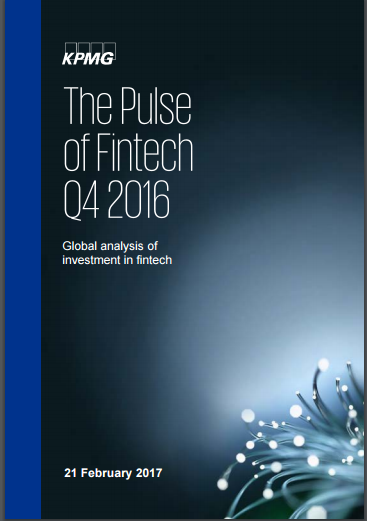 Parasail’s fundraising and launch has taken place against a dramatic drop in both global and U.S. fintech financing, according to KPMG’s annual report on the industry, “The Pulse of Fintech.” The accounting firm reports that total funding for fintech companies and deal activity plummeted by more than 50% in the U.S. in 2016 to $12.8 billion from $27 billion the prior year. KPMG attributed much of the drop to “political and regulatory uncertainty, a decline in megadeals, and investor caution.”
The year “2016 brought reality back to the market” after the banner, record-shattering year of 2015, the report noted.
Venture capital financing in the U.S., however, did not slip as dramatically as overall funding, sliding some 30% to $4.6 billion from $6 billion in 2015. (Almost overlooked in the report was that corporate investment capital was “the most active in the past seven years,” KPMG’s report notes, representing 18 percent of venture fintech financing.)
Steve Krawciw, a New York-based fintech startup executive asserts that “the business has matured and, yes, there have been defaults, but the business model for fintech has stabilized.” The author of “Real-Time Risk: What Investors Should Know About FinTech, High-Frequency Trading, and Flash Crashes,” Krawciw expects more funding to stream into the industry as new players such as banks, insurance companies, hedge funds and private equity get involved. They’ll “go in a number of different directions,” he reckons, “especially direct lending by hedge funds and private equity firms.”
No figures have yet been released by KPMG for the first quarter of 2017, just ended in March, but fintech industry participants are mightily impressed at news of the $500 million financing for Social Finance Inc. (SoFi). Best known for its refinancing of student loans, the San Francisco firm reported on February 24 that it raised a half-billion dollars in a financing round led by private equity firm Silver Lake Partners. Other investors include SoftBank Group and GPI Capital, bringing SoFi’s total investment to $1.9 billion, the company said in a press release.
 SoFi, which plans to use the funds to expand online lending into international markets and devise new financial products, is ambitiously transforming itself into an online financial emporium. Along with a suite of online wares that mimic traditional banking and financial products – savings accounts, life insurance policies and mutual funds – SoFi has also invented new online offerings.
For example, SoFi formed a partnership with secondary mortgage lender Fannie Mae and, together, the companies are enabling borrowers to refinance both mortgage and student debt. The SoFi financing, says Krawciw, “is not a seminal deal, it’s a sign of what’s coming.”
SoFi may also be providing a road map for fintech companies like Parasail. After building a customer base with health-care loans at 5.88% annual percent rate — compared with credit cards charging interest rates about four times as much – Parasail could be poised to sell additional products to its built-in audience.
Just as SoFi got big on refinancing student loans, Parasail could use healthcare lending as a springboard for future financial endeavors. Its revenues have been growing by 50% month-over-month.
By the first quarter of next year, Tibbs says, the firm will be breaking even.” And at that point, he adds, it expects to roll out a menu of new products too.
Does Fintech Have a Distinctively British Accent? – From Congressman McHenry’s Speech
April 1, 2017Regulation around technology-enabled lending has generally been a point of contention in the US. Even regulators are finding themselves at odds with other regulators, like the OCC vs. the NYDFS for example. Might relationships like these be contributing to America’s innovative decline?
At LendIt last month, Congressman Patrick McHenry (R-NC) said, “Is it any wonder that Fintech has a distinctively British accent these days? It’s good reason. We have regulatory competition around the globe, but we don’t have the right regulatory competition here in the United States. And while we have a patchwork of conflicting, and overlapping, and confusing regulations, in places like the U.K., they’re creating an entire ecosystem of financial innovation and allowing it to flourish. And they become the model for the rest of the world and the intellectual property center for the rest of the globe when it should be here in the United States.”
Forward-looking regulation has helped a nation like Kenya make the movement of money cheaper in their country than it costs to move money here, McHenry said. “They’ve moved generations ahead overnight,” he exclaimed.
If you haven’t seen the video, check it out below:
Or you can read the full text from our transcription of it:
“And thank you all for being here. This is a wonderful celebration on, you know, a stereotypical February or March day here in New York. Cold as can be. Good to be inside. But thank you for taking the time to gather. The work that you’re about improves the American economy, gives more options for my constituents and for the citizens across this great country of ours, and gives them better options and opportunities to make decisions for themselves and put power back into their hands in a very competitive environment.
In fact, it’s really liberating to be out of D.C. especially at moments like this. You don’t know what the latest news story is gonna be or the latest tweet, so good to talk about something meaningful over the long run. And the reason why I’m here is because my focus legislatively has been around utilizing technology for innovative forms of finance.
I came about this in a very simple way that’s relatable to other people. But you know, the idea of Fintech, in 10 years, in 20 years, the term “Fintech” will be scoffed at kind of the way that we scoff at how they described Amazon 20 years ago. They said it was an e-Commerce site, that it was a webpage. Right? And we laugh at people that would describe it that way today. Every company that’s in the retail space has an e-Commerce site. Everyone is competing in this new form that Amazon represented the new wave of 20 years ago. So, the term “Fintech” may be much like referring to something as not a website, but a webpage. And in time, the way people are interacting with the banking system is going to continue to change in fundamentally different ways.
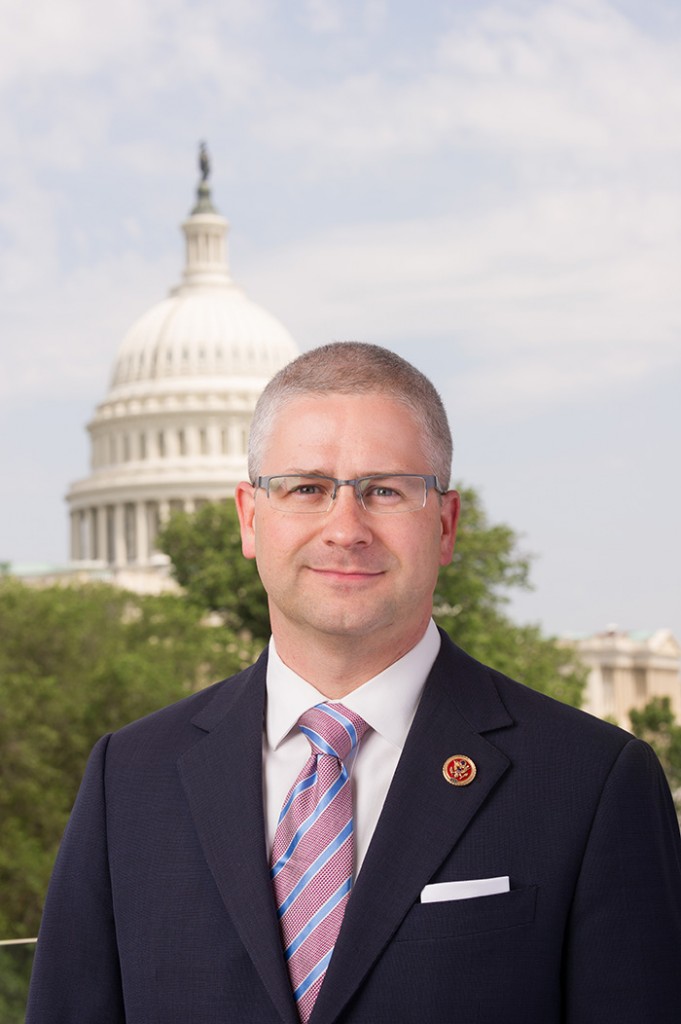 It’s exciting to think about how consumers and small businesses across America are gonna find these new ways to access capital over the next generation. And you all are at the forefront of that. And at D.C., I’ve tried to lead the change of that change in mindset. And you know, this is not only about helping Fintech companies, but also about fundamentally altering how regulators interact with innovative companies. And so, the focus on lending, helping families access capital as I said in the beginning, I came to it in a very natural way.
I saw my father start a small business as a child. When I was a child, the youngest of 5 kids, I saw my father start a business in the backyard mowing grass. Very simple, relatable thing. Most of us have mowed grass at some point in our life. And my father started that small business in our backyard and he used the great financial innovation of his time to buy his second piece of equipment, which he put on a MasterCharge. Great financial innovation and that helped him start a small business.
Now, that small business didn’t change the world, but it changed my brother’s and sister’s lives and put the 5 of us through college. That’s a meaningful thing and that is the American dream as my father defined it and as I define it. Now, that’s not creating Facebook. It’s not this other sort of revolution of internet technology, but it certainly made a huge difference in our community and for our family.
So, how did we utilize technology and help those small businesses like my father access and grow? The plight of small business in America though right now is real. The next generation of small business owners are struggling to get off the ground. The facts are that small business loans used to make up a majority of bank balance sheets. Now, 20 years— Well, in 1995, they were majority of the bank balance sheets. Now, it’s 20% of bank balance sheets.
Now, you also see small town America, which used to lead the country in small business starts, small counties, small communities across the country have lagged. So, smaller counties used to lead the nation in new businesses even as late as the 1990s, mid `90s. But just in this decade alone, small counties have lost businesses. U.S. counties with 100,000 people or fewer residents lost more businesses than they created. We see stagnation among small business owners and small business starts. This is why Fintech is so vital and so important. Technology is the only way to ensure that we spread and democratize capital outside of Austin, Boston, Silicon Valley, and New York.
How do we get the rest of the country, small town America, and even the urban areas that don’t get the focus and attention? And so, I think the power of harnessing big data is gonna fundamentally change the way we look at debt. It’s already happening. And you’re the leaders of it. Instead of relying on the credit score, which was a great innovation in the 1970s, fixed the problem in the 1970s, today, companies are using big data to better understand who will and who should qualify for loans. And what we’re discovering is that the way we help people out of debt is by understanding the data behind the debt.
Look at the way technology is fundamentally changing lives and places like Kenya. Think of this. In Kenya, the phone, your smartphone, our smartphone is that way to financial inclusion in Kenya. The movement of money cheaper in Kenya than it is here because of this simple device. It’s more powerful in that jurisdiction than in ours because of regulation and forward-looking regulation. And instead of loading buses filled with luggage that’s filled with cash in moving money in Kenya, they’re now doing it through a fast transfer over their mobile device. They’ve moved generations ahead overnight. And in fact, in many ways, they’re leading the world in Fintech deployment. So, we’re living in a new and exciting era in financial services. It’s actually matched the best interest of consumer protection with the demands of global smartphone-led revolution that we, as consumers, are driving. Now, that’s what’s happening in the real world.
So, let me translate back to you what is happening in the analog world of Washington. D.C. The regulatory challenges of Fintech are real. It’s major in Washington. We have a diversity of regulators. That’s certainly part of our American system. And that’s not gonna change any time soon. So, what is the current landscape? If you are in Fintech and you wanna make sure you’re complying with financial laws and regulations, where do you go? Who do you ask? Who do you talk to? Is there an open door in Washington? Do you know who your regulator is? Do you know who your regulator should be? Do they meet with you? Are they willing to meet with you? What’s your legal and compliance cost before you even get a product hashed out? These are major things you have to wrestle with in starting your businesses or growing your businesses. So, believe it or not, the difficult question is who do you talk to in Washington? And there is no simple answer. And because there’s so little clarity on which regulator to go to, often there’s even less clarity of how the underlying laws or regulations are being enforced by that regulator in this new marketplace.
And so, this is the hidden secret of Washington. The regulators themselves are so behind when it comes to understanding technology that they themselves do not really know how to apply regulation to innovations in Fintech. They just simply do not know. And trust me, I realize this as a legislator. 5 years ago, I helped craft what is called the JOBS Act. I wrote a piece of the JOBS Act. It resulted in 14 pages of legislative text around investment crowdfunding. 14 pages of legislative text. 3 years later, the Securities and Exchange Commission wrote 700 pages of regulation around my 14 pages of law. And if you are all involved in investment crowdfunding under Title 3 of the JOBS Act,— three of you, right— there will be a lot more had they written good regulation and actually complied with the mindset of Congress when we passed the JOBS Act.
So, I see this when regulators don’t actually know how to meet the demands of innovation and what’s happening in this information revolution that we have. And so, as a result, America is actually falling further behind the rest of the world. And unlike other areas of the world, which have created regulatory sandboxes for banks and technology companies to innovate and find a light-touch regulation, here in Washington or there in Washington, regulators are struggling to adapt.
And is it any wonder that Fintech has a distinctively British accent these days? It’s good reason. We have regulatory competition around the globe, but we don’t have the right regulatory competition here in the United States. And while we have a patchwork of conflicting, and overlapping, and confusing regulations, in places like the U.K., they’re creating an entire ecosystem of financial innovation and allowing it to flourish. And they become the model for the rest of the world and the intellectual property center for the rest of the globe when it should be here in the United States.
Well, while we’re all trying to figure out whether or not virtual currencies are more like property or money here in the United States, top countries around the world are using digital currency to move payment platforms overnight, change payment platforms, make it cheaper, more affordable to move funds for the smallest and the biggest. So, while the world’s rapidly adopting new financial technology to expand the middle class, our country’s regulators have created capital deserts here in the United States in rural and in urban areas. We understand the notion of an urban food desert. If you can get good food that is close to your home in an urban area, you can actually feed your children wholesome meals. We understand that. That’s a big discussion. Well, likewise, we’re starving off small business innovators in urban areas and let’s say less desirable zip codes in urban areas and less desirable zip codes in rural areas. And so, we’re starving off opportunity and that has a result in small business starts and the rise from the turn in the economy from those that are living on the margins to those that move up to the upper middle class and upper class based off being starved from capital.
We have to fix that. Fintech is the solution, but the regulation has to change. And that is something that I’ve been focused on over the last 6 years. And I think we have a trilogy of good ideas that I would submit to you this morning. First is let me just tell you my mindset in regulating and legislating. And to borrow from startup culture, the bills that I try to focus on are minimal viable bill. It’s a simple idea.
One idea that focuses on solving a discrete problem. Something in the marketplace that needs a regulatory fix in order to flourish. And it will help the greatest number of people and have the greatest impact on tech companies, bank startups, and small business folks and families. So, looking at the headache test, one of the areas of interaction with the government that’s creating unnecessary delay is the IRS not having a piece of technology that will allow people to verify income data.
And so, as a result of that, I’ve — legislation that is called the IRS Data Verification Modernization Act, 45060 for those of you who are in the game on this, but it simply will do this. It will automate a bottleneck manual process that is utilized via e-mail and fax with the IRS in verifying basic information that you, as lenders, need to allow mortgages, student debt, refinancing, and small business loans. It’s the taxpayer’s information. You pay for the service to verify it. We should have better service rather than the shoddy service IRS is currently giving you. You should be able to get this in an instant with an API rather than getting something faxed to you in 7 to 10 days. It’s absurd that the IRS can’t update and we’re gonna force them to update.
Our second bill, it goes directly to returning consistent uniform systems for our capital markets, which I believe is a fundamental thing in our 50-state regime with a variety of regulators. We have to have some base level of understanding on what is valid. And the bill is simple. It codifies the Valid-When-Made Doctrine that we’ve had in this country for nearly 100 years. And that was an established legal precedent prior to the Second Circuit Court’s decision in the Madden case. Madden versus Midland. And our view is the Second Circuit’s opinion was unprecedented. It’s created uncertainty for Fintech companies, banks, and the credit markets; making credit less available and more expensive. So, the simple fix is returning to the Valid-When-Made Doctrine. Congress under our constitutional system has the right to make this very clear to the courts of our intention when we pass the original law and nothing has changed when it comes to this. And this is the second bill that I’ll be pushing this year.
And finally, a third piece of legislation that is broader in discussion and it’s the Financial Services Innovation Act. This bill creates a new paradigm for regulators in Washington. It says in a first of a kind way, it forces regulators to meet the demands of rapid innovation in financial services. Instead of the old analog version of command and control regulation that’s messy and rigid based off of opinion, not fact, my bill requires agencies of jurisdiction to create offices of innovation that will engage with entrepreneurs and provide a regulatory on-ramp for financial innovation. It basically forces all the regulators, all the financial regulators to create a new door for financial innovation. A welcoming door. Come in with your ideas. Let’s talk about regulations that can enable this technology to flourish. And in getting data in return, the agency would be in permanent beta testing mode, which would give them data to prove out consumer benefit or consumer harm. It will give them data to adopt the whole footprint of regulation in all these financial regulators.
Now, that is a major mindset shift for our financial regulators, a major mindset shift for any regulator in our American system of governance. But with thorough analysis, I believe that innovators will be better off in this regime when you have data that is driving the decision making of regulators and regulators driving decisions that are informed rather than opinion based.
Now, saying that we’re gonna base our politics off of fact these days is its own enormous political challenge, but I think it’s important that we all agree facts are important things and we should base our decision-making solely on that set of facts in order to do the right thing for our country, the right thing for our economy, right thing for families, right thing for small business starts. So, permanent beta testing involves continuously evolving, testing, and proving. It’s what you do everyday as innovators.
Now, those are 3 major pieces of legislation that can have an impact, but the mindset in Washington is much— Well, it’s much different than you might think. Legislators are eager for new ideas, for new information. They’re eager to hear what you are about and what you’re doing. And given the nature and the speed of innovation, you have an obligation to be engaged in Washington. If you’re not engaged in Washington, Washington is still gonna be engaged in what you do. You’re just gonna get worse rather than better. So, if you inform decision makers you have data to backup what you’re expressing, what you’re advocating for, we’re gonna be better off, but you all in your pitches, right, have to— The basic startup pitch, you’ve got to answer one question. Why now? Why now? I think American financial innovation is at an inflection point. I really do. We’ll either lead the world in the next few years or we’re gonna be left behind. It’s our choice. It’s our choice. And it’s time that regulators treat innovation no longer as a threat, but as an opportunity to consumers. It’s time to recognize that regulators need to recognize— I think it’s time that they recognize that consumer protection and innovation are not mutually exclusive. Now, that’s the reason why it’s now, but it’s not gonna happen unless you engage in Washington and make your voices heard. You’ve gotta make your voices heard in order to get the results we need so we can have innovation flourish in this country, that we can be the market leader for the world, that we can be an exporter of these ideas rather than having to export ourselves to different markets in order to take that data and that mindset and deploy those resources globally.
Let’s make sure that we can lead this market to better and greater things. With your engagement, we can. Without your engagement, we’re gonna be left behind. So please, please engage in Washington. Make your voices heard. And with your voices being heard, I think we can have change for the better. So, thank you for your leadership. Thank you for the opportunity to be here with you. God bless.”
Why Banks and Alternative Lenders Will Play Ball in 2017
January 23, 2017 The economic recession over the last decade significantly slowed banks’ willingness to approve small business loans, and the impact on small businesses’ ability to get loans from banks is still being felt today. According to the Wall Street Journal last year, big banks have decreased the number of loans to small businesses by more than 38 percent since 2006.
But the recession helped pave way for another industry – alternative lending – which has significantly improved access to capital for small businesses. According to the Small Business Administration (SBA), the 2016 fiscal year was a record setting year for loans, with more than 70,000 approved that totaled $28.9 billion and supported nearly 694,000 jobs.
The success of alternative lending showed banks the importance of expanding their offerings, particularly with online loans and small businesses. Over eight years removed from the recession, banks are taking notice and rebounding to grant more small business loans and release new financial services. More and more headlines show that banks are shifting their strategies to keep up with America’s technology and alternative lending habits, making 2017 the year banks finally get back into the fray and play ball with alternative lenders to improve the lending process.
For one, banks already have built-in advantages to accomplish this:
- an extremely low cost of capital
- a built in customer base that can be targeted
- visibility into accounts and access to a treasure trove of key data
 In 2016, we saw large banks explore three key strategies: build, buy or partner. Let’s look at a few examples of each:
Build: Wells Fargo went to market with its own technology in 2014, called Wells Fargo FastFlex for Small Businesses. Opening access to lines of credit, term loans, and SBA loans, Wells Fargo set a five-year goal to extend $100 billion in loans to small businesses. In December 2016, Citizens Bank announced plans to start offering its own digital small-business loans by the middle of 2017.
Buy or License: Instead of building infrastructure, banks can acquire or license off-the-shelf technology. This route is for the financial institutions that don’t believe in building tools themselves or want to move more quickly than their internal development resources will allow. Instead of expanding its suite of offerings on its own, they would rather acquire an existing infrastructure and focus on the top end of the lending market. Kabbage has led the way on the licensing deals by announcing partnerships with ScotiaBank, Santander, and ING.
Partner: Through partnerships, banks can expand their loan offering and quickly leverage other’s technology. Through licensing deals or white-labels, banks can send businesses they decline to work with to alternative lending options to give their customers additional access to small business loans. In December 2015, JPMorgan Chase took this route and partnered with On Deck Capital to provide alternative lending and small businesses loans to its customers. JPMorgan Chase also partnered with LiftFund in October 2016 to fill the remaining gaps in its small business lending services.
It was a resurgent year for banks’ ability to offer small business lending. In fact, going into 2016, American Banker predicted that banks would set their sights on online lending by signing strategic partnerships with the leading platforms. That came true to an extent, but based on recent trends, 2017 will really be the year that banks and alternative lenders start to work together.
No longer content to be sidelined, banks are starting to play ball, and they will continue to do so at an even faster pace. The fact that banks are moving in now and increasing small business loans validates alternative lending. As JPMorgan Chase has showcased, partnerships between banks and alternative lending can offer channels of sales for both parties and improve the small business lending process. The next step is for banks and alternative lending to work together.
Fifth Third Partners with QED Investors to Advance Fintech Strategy
January 20, 2017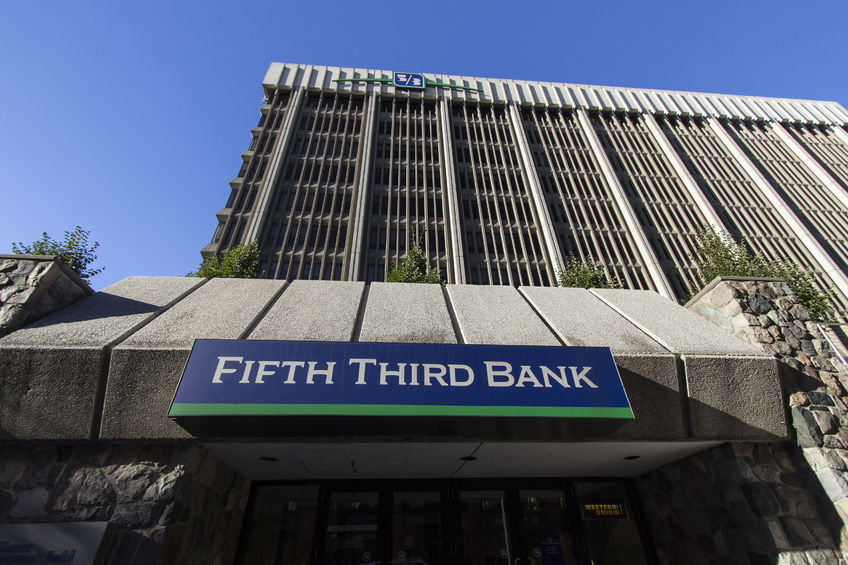 CINCINNATI–(BUSINESS WIRE)–Fifth Third Bancorp (Nasdaq: FITB) today announced an innovative partnership between Fifth Third Capital Holdings, LLC and leading financial technology (fintech) venture capital firm QED Investors. Under the exclusive partnership, QED Investors will advise on the continued development of Fifth Third’s strategy to leverage fintech innovation to bring new products and services to bank customers while promoting the growth of fintech companies in the U.S.
“There is an unprecedented amount of innovation emerging in all parts of the financial services ecosystem,” said Tim Spence, executive vice president and chief strategy officer for Fifth Third Bancorp. “Our partnership with QED should enable us to identify new, high-potential technologies to complement our internal R&D and innovation efforts.”
This partnership, in addition to prior fintech company investments such as GreenSky, Transactis and AvidXchange, supports Fifth Third’s NorthStar strategy of enhancing its products and serving its customers more effectively through technology. By delivering products and services that its customers can count on, Fifth Third can better help those customers achieve their financial goals.
“We are incredibly excited about partnering with Fifth Third, a bank that is at the vanguard of change in the fintech space,” said Frank Rotman, Co-Founder and Partner at QED Investors. “Fifth Third is a natural partner for QED, one that embraces innovation and shares many of our views about what the future will look like in the space. We are thrilled for what this unique partnership means for the future of fintech and financial services at large.”
Fifth Third Capital and QED Investors led ApplePie Capital’s Series B capital raise in the fourth quarter of 2016. Fifth Third Capital and QED are also investors in GreenSky and AvidXchange. Fifth Third Capital continues to seek strategic investments in Fintech companies in the US market.
About Fifth Third
Fifth Third Bancorp is a diversified financial services company headquartered in Cincinnati, Ohio. As of Sept. 30, 2016, the Company had $143 billion in assets and operated 1,191 full-service Banking Centers, including 94 Bank Mart® locations, most open seven days a week, inside select grocery stores and 2,497 ATMs in Ohio, Kentucky, Indiana, Michigan, Illinois, Florida, Tennessee, West Virginia, Georgia and North Carolina. Fifth Third operates four main businesses: Commercial Banking, Branch Banking, Consumer Lending, and Wealth & Asset Management. Fifth Third also has an 17.9% interest in Vantiv Holding, LLC. Fifth Third is among the largest money managers in the Midwest and, as of Sept. 30, 2016, had $314 billion in assets under care, of which it managed $27 billion for individuals, corporations and not-for-profit organizations. Investor information and press releases can be viewed at www.53.com. Fifth Third’s common stock is traded on the NASDAQ® Global Select Market under the symbol “FITB.”
About Fifth Third Capital
Fifth Third Capital Holdings, LLC is a subsidiary of Fifth Third Bancorp. Fifth Third Capital seeks to invest in strategically relevant companies that support innovation across Fifth Third’s lines of business, bringing new solutions to bank customers and creating value for shareholders. Established in 2010, Fifth Third Capital has made numerous equity investments spanning the full company life cycle, from early to mature stage.
About QED Investors
QED Investors is a leading boutique venture capital firm based in Alexandria, VA. QED was co-founded by Nigel Morris, who also co-founded Capital One. They are focused on investing in early stage, disruptive financial services companies in the U.S., U.K. and Latin America. QED is dedicated to building great businesses and uses a unique, hands-on approach that leverages their partners’ and principals’ decades of entrepreneurial and operational experience, helping their companies achieve breakthrough growth. Notable investments include Credit Karma, SoFi, Avant, Remitly, Fundera and LendUp. For more information, please visit www.qedinvestors.com.
Contacts
QED
Frank Rotman, 804-445-2232
or
Fifth Third
Sean Parker (Media), 513-534-6791
Sean.parker2@53.com
or
Sameer Gokhale (Investors), 513-534-2219
Two U.S. Senators Say ‘Not So Fast’ to OCC’s Plans for Limited Charter
January 10, 2017
Senator Sherrod Brown (D) and Jeffrey A. Merkley (D) both believe that the OCC does not possess the authority to grant the limited purpose charters it plans to move forward with. In a letter penned to Comptroller Thomas Curry on Monday, Brown and Merkley raise several concerns including that such charters would only blur the lines between banking and commerce, pointing out that an applicant need not necessarily be a fintech company to apply, nor need or want to accept deposits.
“As state banking supervisors have pointed out, because so many companies under an alternative charter would be exempt from the Bank Company Holding Act, nothing would ensure that both bank and currently impermissible non-bank activities were intermingled in one company, and that a commercial entity could not create or acquire an alternatively chartered company,” they write.
Brown and Merkley’s other concerns may be premature since the OCC is currently seeking information from the fintech industry on such issues in its official 13-question Request for Comment (found on the last pages of this document).
The full letter submitted to Comptroller Curry can be viewed here.
The OCC Wants Online Lenders to Become Limited Purpose Banks
December 2, 2016 Earlier today, Comptroller of the Currency Thomas J. Curry announced that the OCC will move forward with chartering financial technology companies that offer bank products and services that meet their high standards and chartering requirements.
“We have decided to move forward and to make available special purpose national charters to fintech companies for a few basic reasons,” he began saying during a speech at the Georgetown University Law Center. “First and foremost, we believe doing so is in the public interest. Fintech companies hold great potential to expand financial inclusion, empower consumers, and help families and businesses take more control of their financial matters.”
Curry also responded to critics who argued that a limited charter would put fully regulated banks at a disadvantage competitively. “The reality today is that the 4,000 fintech companies out there are already competing with national and state banks, without regard to any of the national bank responsibilities and under a patchwork of supervision,” he said. “Granting national charters to the companies who desire and warrant one doesn’t weaken the competitive position of existing banks or the dual banking system. In some ways, it levels the playing field because statutes that by their terms apply to national banks would apply to all special purpose national banks, even uninsured ones.”
Applying for this charter would be optional, not a requirement.
Like the Treasury RFI last year, the OCC has put up an official 13-question Request For Comment that is open until January 15th.
Those questions are:
1. What are the public policy benefits of approving fintech companies to operate under a national bank charter? What are the risks?
2. What elements should the OCC consider in establishing the capital and liquidity requirements for an uninsured special purpose national bank that limits the type of assets it holds?
3. What information should a special purpose national bank provide to the OCC to demonstrate its commitment to financial inclusion to individuals, businesses and communities? For instance, what new or alternative means (e.g., products, services) might a special purpose national bank establish in furtherance of its support for financial inclusion? How could an uninsured special purpose bank that uses innovative methods to develop or deliver financial products or services in a virtual or physical community demonstrate its commitment to financial inclusion?
4. Should the OCC seek a financial inclusion commitment from an uninsured special purpose national bank that would not engage in lending, and if so, how could such a bank demonstrate a commitment to financial inclusion?
5. How could a special purpose national bank that is not engaged in providing banking services to the public support financial inclusion?
6. Should the OCC use its chartering authority as an opportunity to address the gaps in protections afforded individuals versus small business borrowers, and if so, how?
7. What are potential challenges in executing or adapting a fintech business model to meet regulatory expectations, and what specific conditions governing the activities of special purpose national banks should the OCC consider?
8. What actions should the OCC take to ensure special purpose national banks operate in a safe and sound manner and in the public interest?
9. Would a fintech special purpose national bank have any competitive advantages over full service banks the OCC should address? Are there risks to full-service banks from fintech companies that do not have bank charters?
10. Are there particular products or services offered by fintech companies, such as digital currencies, that may require different approaches to supervision to mitigate risk for both the institution and the broader financial system?
11. How can the OCC enhance its coordination and communication with other regulators that have jurisdiction over a proposed special purpose national bank, its parent company, or its activities?
12. Certain risks may be increased in a special purpose national bank because of its concentration in a limited number of business activities. How can the OCC ensure that a special purpose national bank sufficiently mitigates these risks?
13. What additional information, materials, and technical assistance from the OCC would a
prospective fintech applicant find useful in the application process?
Read the OCC’s 17 page report on the matter. The Request For Comment and submission instructions are at the end of it.