It’s Here: Artificial Intelligence Changes MCA Broker’s Business, Improves Bank Underwriting and Debt Collection
November 22, 2016In this age of man versus the machine, the case for artificial intelligence and machine learning does not need many vociferous advocates.
Some predict that revenues from fintech startups using AI and predictive models is set to jump by 960 percent or to $17 billion by 2021. We might be closer to that number than we think, considering 140+ AI startups raised a total of $958M in funding in Q3’16, alone.
While healthcare, cybersecurity and advertising are frontiers of AI innovation, the growth and momentum of big data in finance (spurred by online lending) is fast bringing fintech to the forefront. In lending, specifically, data has become the new currency. It’s not so much that lenders didn’t use data for decision making earlier, but the data available then, wasn’t as rich or as extensive. A loan approval decision that just required a decent FICO score and assessment of character has expanded to include data points like a business’ social media presence, reviews, and owners’ background history.
Today, artificial intelligence in fintech has grown to tackle cybersecurity threats, act as a personal assistant, track credit scores and perform sentiment analysis to predict risk — making automated underwriting just the tip of the iceberg for what artificial intelligence and machine learning can do for the financial services industry. AltFinanceDaily spoke to three fintech upstarts that have taken AI beyond underwriting.
AI Assist
 When Roman Vinfield started his ISO, Assure Funding in early 2015 with 16 openers, five chasers and three closers, little did he know that a business intelligence software would replace 85 percent of his staff for the same productivity. He stumbled onto Conversica, a AI-powered virtual sales assistant and was convinced to give it a try.
“I hadn’t heard anything like an artificial-intelligence sales assistant,” said Vinfield. “The results we got within a month of using it were unbelievable.” Within the first month, Vinfield made $35,000 in revenues by spending just $4,000 and eventually reduced his staff of 24 to 4 people. He was so sold on its potential for the merchant cash advance industry that after prolonged negotiations, he secured the rights to be the exclusive reseller of the software, and called it AI Assist. The software is now used by leading MCA companies like Yellowstone, Bizbloom and GRP Funding.
While Conversica’s clientele includes auto and tech giants like Oracle, Fiat, Chrysler and IBM, for the financial services industry, it’s marketed and sold to MCA and lending companies through AI Assist. It integrates easily with CRM software like Salesforce and creates a virtual sales assistant avatar that tracks old leads and reestablishes engagement. In the lead generation race, where a 3-5 percent response rate could be considered good, the response rate for Conversica has been 38 percent.
Designed to be akin to a human sales assistant, Conversica’s technology can determine a lead’s interest based on the response and set up a conversation with the sales department to follow up. “Your Conversica virtual assistant is an extremely consistent, personable and tireless worker. She doesn’t get sick and never needs a break. She never gets discouraged, and she improves with each engagement,” says the AI Assist website.
 True Accord
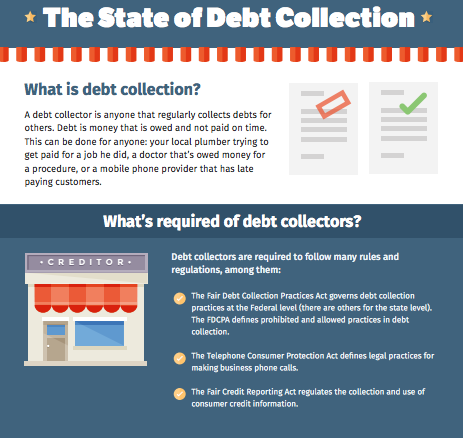
Personal chat assistants for money management and sales is one of the popular modes of AI implementation in fintech, given it’s scalability in lending for functions like debt collection. One company that does this, is True Accord. True Accord, similar to AI Assist uses automation software to schedule and send messages to customers by the company’s “Automated Staff”
The San Francisco-based company was founded by Ohad Samet who has over 11 years of machine learning experience in finance. The idea came to Samet while he was working as a chief risk officer at payments and e-commerce company Klarna, underwriting loans worth $2 billion. “While working at Klarna, I realized how big a piece debt collection is and I did not like the way it was done,” said Samet. “I needed machine learning to change it.”
Samet founded True Accord in 2013 to develop a debt collection AI assistant and today the company works with leading banks, credit card companies and food delivery services and has collected over half a billion dollars. It establishes targeted communication with the customer less frequently than traditional collection agencies and allows customers to pay their dues over mobile, which accounts for 35 percent of collections for the company.
“We humans don’t want to accept it but the reality is that, when it comes to scale, machines make better decisions than humans,” said Samet. “Machines are consistent, they are not tired, not angry, don’t fight with the significant other and all of this makes for better accuracy, better cost structure and better returns of scale.” While this might be true, building an efficient, compatible and compliant model is harder than it might seem.
James.Finance
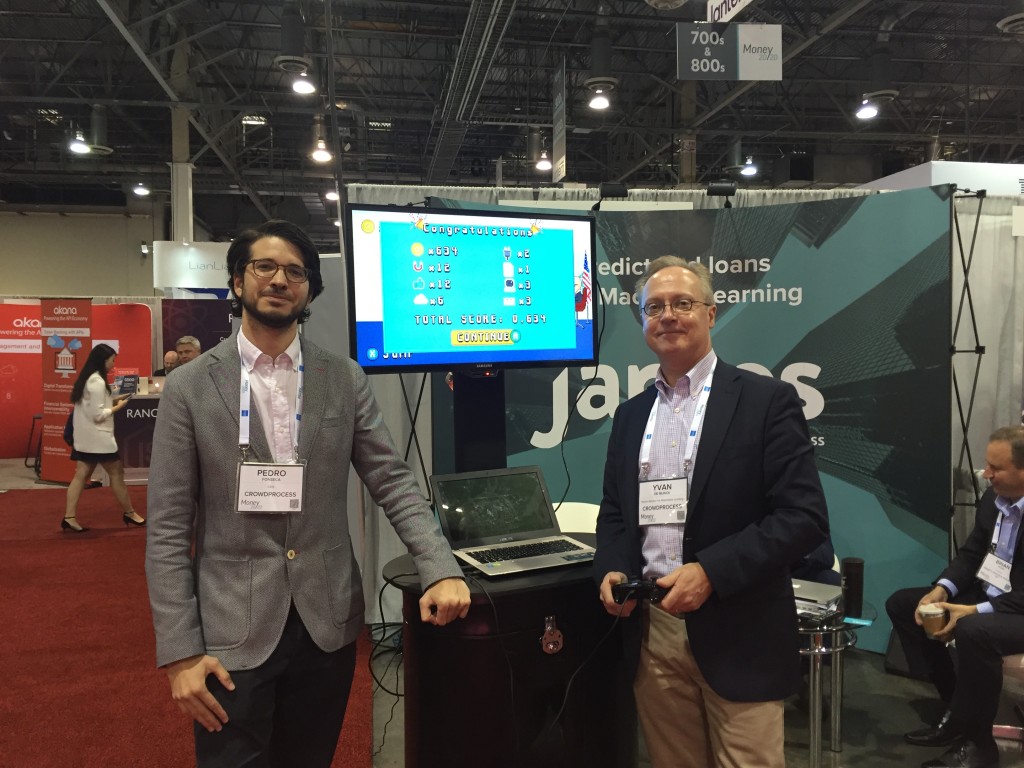 Since AI tools do not come in a one-size-fits-all package, its application can be as varied as the range of companies that use it. Building an AI framework that aligns with a company’s targets while being compliant to regulatory mandates can be an uphill task.
Recognizing this opportunity, James.Finance, a Portugal-based startup is using artificial intelligence to help financial institutions like banks build their own credit scoring models. Founder and CEO Pedro Fonseca, describes James as a “narrow AI” for a specific purpose of guiding risk officers to build machine learning models that follow regulatory compliance.
The startup works with consulting agencies or partners to reach out to banks. It offers a trial run of the software, which it calls a ‘jumpstart,’ where a risk officer is provided with James’ technology and in 24 hours, he or she will have to beat it with their in-house AI software.
“And we are consistently able to beat the models,” said Fonseca. The company won the startup pitch at Money 20/20 in Copenhagen earlier this year after receiving an uproarious response in Europe. Fonseca wants to divert his attention to the US’s fragmented banking market, which is dotted with smaller banks and credit unions. “The US is a perfect target for us. We are looking to work with local consultancies that know the problems of a bank intimately.”
As these entrepreneurs vouch for it, the current state of AI use in fintech is just the tip of the iceberg. And anything man can do, machines can do faster and better, right?
Smile, Dial and Trial? Why the Next Call Might be Your Worst Nightmare
October 26, 2016
Aaron Smith sued a merchant cash advance company in the United States District Court of Southern California earlier this year for allegedly making unsolicited calls to his personal cell phone registered on the Do-Not-Call list. His name has been changed for this story because he’s a vexatious litigator, even landing on an official list of vexatious litigants by the State of California in the early 2000s thanks to his tendency to file harassing lawsuits. But that’s not all, Smith has a criminal history that includes stalking and extortion and he’s served time in prison for his role in a multi-million dollar mortgage fraud RICO conspiracy.
These days he’s suing small business financing companies for alleged violating phone calls, at least five of which we could identify through San Diego court records just over the last several months. Two of the suits appeared while we were researching this story, which means that there could probably be even more by the time that you are reading this.
Smith presumably runs a business as his website has and still continues to advertise services to consumers. But if you are not an existing customer or have not been referred by an existing customer, his website warns that attempting to contact him by any means is a violation. Suffice to say that AltFinanceDaily did not attempt to contact Smith to get his side of the story.
In one complaint, Smith claims that the phone number receiving the unsolicited calls is a “private personal cellular telephone.” To his credit, a cursory glance of his business website does not appear to list any phone number for it at all. However, the Internet Archive Wayback Machine which allows users to see archived versions of web pages across time, revealed that very same phone number being prominently displayed on his business website for several years including up to as recent as September, 2015, after which it was removed. There’s reason then to question if Smith might be up to no good.
While the merits of Smith’s claims will be up to the courts to decide, his background doesn’t inspire confidence. Countless other plaintiffs using the Telephone Consumer Protection Act (TCPA) to file lawsuits have colorful backgrounds in their own right, a lot of which can be found using Google. But a suggestion relayed by some of our readers is that plaintiffs appear to be doing what they do for profit, not because they have been harmed by the calls they allegedly receive. AltFinanceDaily decided to conduct its own independent research on this issue.
SUING FOR PROFIT?
That’s just what the headline of a WDSU TV story alluded to in its coverage in 2004 of a stay-at-home Pennsylvania dad named Stewart Abramson. Titled, Man Who Turns Table On Telemarketers Turns Profit, Too, quotes Abramson as saying, “First, I’ll write them all and tell them that I’m willing to settle for the minimum statutory damages per call, which is $500, but if they don’t want to settle, then I’ll file a civil complaint.”
In a case he won against a debt consolidation firm for calling him with a prerecorded message, Abramson reportedly said, “It would have made sense for them to pay the minimum damages due me, but they wanted to put up a fight. I don’t mind. I’ll take more money.”
 Abramson continued to say at the time that he felt empowered by Congress to stop this illegal activity and that he was just doing his part and making a little money for doing so. More than a decade later, Abramson’s name is still showing up as a plaintiff in TCPA cases, including in at least one complaint discovered by AltFinanceDaily against a small business financing company.
According to court records, the defendant contended that Abramson was “in the business of suing entities for violations of the TCPA,” an accusation the judge ruled irrelevant to the particular matter at hand.
Michael Goodman, a partner in the Washington DC office of law firm Hudson Cook, who was not asked about this case specifically, said in an emailed interview that generally accusing someone of being a serial plaintiff might not really help.
“Accusing a plaintiff of being a serial or professional TCPA plaintiff is unlikely to affect the outcome much, if at all,” Goodman said. “While there are outliers, the general rule is that the court will assess the merits of each case individually and will not ‘punish’ a plaintiff for being a serial or professional TCPA plaintiff.”
An email address for Abramson could not be located and given the special circumstances of his history, we did not attempt to call him.
If ever there was a TCPA celebrity however, it’d be Diana Mey, a self-described stay-at-home mom who started wrangling with telemarketers in 1998 after what her website described as “a series of intrusive telemarketing calls by a Sears affiliate pitching vinyl siding.”
She’s an important figure in TCPA history, not just because she’s been awarded millions through her lawsuits but also because she helped draft the FTC’s rules. Reports show her participating in FTC-hosted telemarketing forums in 2000 and 2002 and her name even appears in the footnotes of the FTC’s Telemarketing Sales Rule entered into the Federal Register in 2003. And so we followed Mey’s story online, noting that she has actually become famous for her pursuits, even appearing in a TV segment for ABC News in 2012. Her website at www.dianamey.com teaches others how they too can pursue monetary damages from telemarketers that engage in illegal practices.
“The first step is to write a formal ‘demand’ letter to the president of the company, stating that the letter is a formal claim for money […] for violations of the Telephone Consumer Protection Act of 1991,” her website advises.
It was quite a surprise then to discover that this Diana Mey was the same Diana Mey captioned as a plaintiff in a current case against a small business financing company. Almost two decades after her first experience, she is still filing lawsuits for alleged telemarketing violations.
Mey declined to respond to our questions even though they were not about that case, citing pending litigation.
“I’m a mom and I’m a housewife, and I’m an accidental activist,” Mey said in that 2012 ABC News interview. Others have referred to her as a “private attorneys general,” defined as someone who brings a lawsuit considered to be in the public interest.
That same title has been attributed to one Robert Braver who is the man behind www.do-not-call.com which launched in 1998 as “a consumer’s resource for stopping unsolicited telemarketing calls.” His comments appear in FCC records and he was also featured in a Dateline NBC special in 2002 about a new telemarketing scheme that was alarming consumers. Suffice to say Braver has been a consumer proponent in this area of the law for a long time, a role that has not come without risks.
According to Braver, the attorney for one telemarketer he sued, arranged to have his (then) elementary school age kids stalked and photographed, a terrifying ordeal that was only made worse after the attorney allegedly sent him a fax bragging about it. But he has continued on, noting that while he has gotten much fewer junk faxes, telemarketing calls have gotten more out of hand over time, to the point where they’re disruptive to everyday life.
“My wife is a middle school teacher,” Braver said. “She doesn’t work in the summer and gets home before I do when she is teaching. She typically leaves her phone in her purse in a spot in the kitchen and hangs out in in the den or back patio. It’s gotten so bad at times that when I need to call her, she doesn’t get up and run to look at her phone when it rings, and I have ignored unknown calls on my cell and let them go to voicemail, only to find out later that they were legit calls.”
And sometimes it’s a total mystery how they even get added to a list. “We have two teenage boys still at home, and they have cell phones too. Somehow my youngest son’s cell number got on a marketing list for student loan debt relief, and was getting 10-15 calls a day for a while,” Braver explained.
Contrast that with a story that appeared in the Dallas Observer in 2010 about one Craig Cunningham, another celebrity-like TCPA figure who still has active cases pending, public records reveal.
According to the story, Cunningham stays at home on a “dumpy couch” to wait for a particular type of phone call, “one from a representative of a debt collection agency or a credit card company, whom he’ll try to ensnare like a Venus fly trap,” the Observer reported. Cunningham is said to have learned his trade from online message boards, where we decided to look next to see if there was anyone out there indeed talking about TCPA lawsuits for profit.
On May 25, 2014, a participant using the pseudonym codename47 published a thread titled, TCPA enforcement for fun and for profit up to 3k per call on fatwallet.com, the exact kind of salacious headline that defendant companies have probably imagined in their worst nightmares. Codename47 has a big fan base it seems, with one user even suggesting to him that he should create and sell a “sue telemarketers” package so that people could do what he does for side income.
Codename47 is Craig Cunningham, who we reached out to with some questions through the fatwallet forum. He declined to answer them, citing pending litigation and the fact that he no longer does interviews.
One user on fatwallet in 2010 said of Cunningham, “It’s kind of hard to convince a Federal judge that you are a victim when you are trying to find a publisher for a book called CREDIT TERRORIST.”
 WAIT, WHAT?
It now being six years later, no such book can be found in Amazon or through Google. A link to where purported information on it once was leads to a page-not-found error. The Archive Wayback Machine however, produces an interesting find.
Tales Of A Debt Collection Terrorist: How I Beat the Credit Industry At Its Own Game and Made Big Money From the Beat Down is the title of a proposed book in 2010 by Craig Cunningham and Brian O’Connell. O’Connell is a writer/content producer for TheStreet.com and a well-known and widely published author. He tells AltFinanceDaily that he wished he had written it with Cunningham but that they didn’t move forward with it.
But the proposal remains, including the description of Cunningham as being a highly sought after expert in the field of debt collection “revenge” industry.
Outside of fatwallet, the only other real mention of the proposed book could be found on a website called debtorboards.com. Lenders might find the website horrifying considering the forum’s tagline is “Sue Your Creditor and Win.” With more than 20,000 members and nearly 300,000 posts, the forum has an entire section dedicated to TCPA. Legal strategy is a dominant topic and it’s abundantly obvious that people are working together to stop companies from calling them.
Sadly, it’s not all innocent consumers out there. For example, the TCPA has invited abuse to the point where at least one person admitted to buying cell phones to maximize the chances of getting illegal calls so that they could sue. That’s what serial plaintiff Melody Stoops said in a June 2016 deposition as part of her case against Wells Fargo in the Western District of Pennsylvania.
Q. Why do you have so many cell phone numbers?
A. I have a business suing offenders of the TCPA business — or laws.Q. And when you say business, what do you mean by business?
A. It’s my business. It’s what I do.Q. So you’re specifically buying these cell phones in order to manufacture a TCPA? In order to bring a TCPA lawsuit?
A. Yeah.
 Purchasing at least 35 phones, she even went so far as to register them with out-of-state area codes in places she thought were more economically depressed and therefore more likely to get violating calls. Stoops sent out so many pre-litigation demand letters and filed so many lawsuits that she could not be certain how many she sent out or how many suits she was in, according her to deposition.
Apparently Stoops found the line of legal perversion and crossed it. On June 24, 2016, the judge ruled in favor of Wells Fargo because she wasn’t injured by the calls she received, nor were the injuries she claimed within the “zone of interests” the law was meant to protect. “It is unfathomable that Congress considered a consumer who files TCPA actions as a business when it enacted the TCPA,” he wrote.
A TURNING POINT?
Hudson Cook law partner Michael Goodman said, “the impact of Stoops v. Wells Fargo is still to be determined, but I would say that it is significantly fact specific and therefore unlikely to result in large-scale changes in TCPA private actions. Stoops put a lot of effort into becoming a magnet for calls that could violate the TCPA. In many TCPA cases, consumers do not need to try that hard to receive a call that could prompt a TCPA suit.”
Stoops was pursuing calls while most of the advice and discussion uncovered online is about what to do if you get a call, not about how to create the calls in the first place. Even debtorboards, for example, is a registered non-profit, keeping consistent with its image as a consumer empowerment tool.
If the tide is turning though, it’s not in a direction favorable to telemarketers. Goodman said that “in July 2015, the FCC announced a new interpretation of the TCPA’s ‘autodialer’ standard that significantly expanded the definition and introduced a lot of unnecessary uncertainty as to what is and is not a regulated autodialer. That interpretation is currently being challenged in court. There’s a bit of a trend among courts requiring plaintiffs in autodialer cases to do more than simply allege that they were called with an autodialer. These courts, possibly in an effort to frustrate TCPA autodialer cases, are requiring plaintiffs to include circumstantial evidence of dialer use in their complaints: dead air, hang-up calls, generic messages, and so on. But the TCPA’s penalty structure still encourages suits that should not be brought.”
FCC Commissioner Ajit Pai, who was appointed by President Obama, voiced dissent to this new interpretation, echoing Goodman’s comments that it encourages frivolous suits.
An excerpt of Pai’s official dissent is below:
“Some lawyers go to ridiculous lengths to generate new TCPA business. They have asked family members, friends, and significant others to download calling, voicemail, and texting apps in order to sue the companies behind each app. Others have bought cheap, prepaid wireless phones so they can sue any business that calls them by accident. One man in California even hired staff to log every wrong-number call he received, issue demand letters to purported violators, and negotiate settlements. Only after he was the lead plaintiff in over 600 lawsuits did the courts finally agree that he was a “vexatious litigant.”
The common thread here is that in practice the TCPA has strayed far from its original purpose. And the FCC has the power to fix that. We could be taking aggressive enforcement action against those who violate the federal Do-Not-Call rules. We could be establishing a safe harbor so that carriers could block spoofed calls from overseas without fear of liability. And we could be shutting down the abusive lawsuits by closing the legal loopholes that trial lawyers have exploited to target legitimate communications between businesses and consumers.
Instead, the Order takes the opposite tack. Rather than focus on the illegal telemarketing calls that consumers really care about, the Order twists the law’s words even further to target useful communications between legitimate businesses and their customers. This Order will make abuse of the TCPA much, much easier. And the primary beneficiaries will be trial lawyers, not the American public.”
The FCC reviewed 19 individual petitions on the matter, some of which included relatively recent comments from the individuals we’ve mentioned so far. The appearance is that the FCC has collaborated with some individuals continuously over time or that individuals have collaborated continuously with the FCC. It might not matter though. Michael Goodman says that “the TCPA gives distinct enforcement rights to the FCC as well as persons who receive a call that violates the statute.”
“It isn’t really a matter of whether a particular violation should be handled by the FCC or privately,” Goodman adds. “Private plaintiffs have independent incentive to sue thanks to the TCPA’s penalty structure, and, compared to the FCC, private plaintiffs do not have to be as choosy in picking targets for actions.”
And what are the violations and penalties exactly? Goodman explained as follows:
“Depending on the specific TCPA provision at issue, private actions may be brought by individual consumers as well as businesses. The autodialer and prerecorded message provisions can be enforced by individuals and consumers, and they can sue based on a single improper call. For these provisions, the TCPA directs courts to award $500 per violation; courts do not have discretion to award a lesser figure. Courts do have discretion to award up to three times that amount (i.e., up to $1,500) per violation for willful or knowing violations. The TCPA’s do-not-call provisions are enforced by individual consumers, and this type of action requires more than one unlawful call in a 12-month period. For the do-not-call provisions, courts do have discretion to award less than $500 per violation (and can triple the penalty for willful or knowing violations).
The FCC has authority to obtain penalties of up to $16,000 per day of a continuing violation or per violation. FCC rules establish factors for the FCC to consider in calculating a proper penalty figure, including the nature of the violation, history of prior offenses, and ability to pay.”
“The base $500 per violation in statutory damages that consumers are entitled to hasn’t increased since the TCPA went into effect in 1992,” said activist Robert Braver. “This should be increased, especially since the TCPA does not allow for the recovery of attorney’s fees.”
Goodman said that private actions are much more common than FCC enforcement actions. That much is obvious. Private actions are becoming all too common in the small business financing industry where so many cases were uncovered through public records that we lacked the resources to follow them all.
 More lawsuits might not be the cure though, according to Braver. He said that “more egregious telemarketing (massive robocall campaigns) should be criminalized on the federal level,” adding that “it’s one thing for an unscrupulous telemarketer to allow their shell corporation to have an uncollectible money judgment, but it’s another thing when individuals can wind up with a felony conviction on their records, and possible jail time.”
While that suggestion might antagonize telemarketers, Braver said that his cell phone, which is listed on the Do-Not-Call-Registry, can receive as many as 4-5 telemarketing calls per day, generally robocalls.
Whether plaintiff allegations from cases in this industry are true or not, legal fees over TCPA cases have continued to be an expense that many small business financing companies are contending with. Those costs have a way of being tacked on to the price of financing for small businesses that need capital, making it a lose-lose situation.
One marketing company in the industry who had to remain anonymous because settlement negotiations at the time were likely to include a non-disclosure clause, posed the question, “how are you supposed to help small businesses if you can’t actually call small businesses?”
“More and more merchants are using their cell phone as their business phone,” he argued. “The TCPA regulations need to be changed so that a merchant can’t claim his cell phone is his business phone one minute and his personal phone the next.”
Indeed, the motivations, facts and alleged damages in TCPA complaints are not always clear. And even though the plaintiffs don’t always win, the laws as they are, can make telemarketing difficult no matter how careful one is.
Still dialing for dollars these days? Just know that some folks may be just a little too happy that you called them. And for all the wrong reasons.
Good luck out there.
CFPB’s Power Structure Ruled Unconstitutional – Concentration of Enormous Power a Threat to Individual Liberty
October 11, 2016 The enforcement agency long panned for not being accountable to anyone, including Congress, has finally been checked by the judicial branch. On Tuesday, October 11th, the United States Court of Appeals for the District of Columbia Circuit, ruled the CFPB’s structure is unconstitutional because as a single-person-run agency of the executive branch, it is not even accountable to the President of the United States. The CFPB’s existence challenges the very framework set forth by the nation’s founders, the Court asserted.
The opening of the 110-page decision cites Article II of the United States Constitution. “The executive Power shall be vested in a President of the United States of America,” adding that Article II grants the President alone the authority and responsibility to “take Care that the Laws be faithfully executed.” As time has passed however, independent executive agencies have been created and overseen by multi-member commissions, which have become an acceptable check on the individual power of one person.
In other words, to help preserve individual liberty under Article II, the heads of executive agencies are accountable to and checked by the President, and the heads of independent agencies, although not accountable to or checked by the President, are at least accountable to and checked by their fellow commissioners or board members. No head of either an executive agency or an independent agency operates unilaterally without any check on his or her authority. Therefore, no independent agency exercising substantial executive authority has ever been headed by a single person. Until now. – Excerpt from the Court of Appeals decision
As it stood previously, CFPB Director Richard Cordray essentially had unlimited power to write his own rules, attack and fine companies whether warranted or not, personally motivated or not, on whatever whim he so desired. While very unpopular among Republicans and even among some Democrats, he received recent acclaim for his agency’s work on the Wells Fargo fake account scandal. Other moves have been more dubious, like their foray into lawmaking without the legislative branch (see a 1341-page law they invented) and reinterpreting their own statutory authority by expressing an interest to regulate commercial finance, all while potentially engaging in “chokepoint-like” tactics to intimidate business models they don’t like.
The Court of Appeal’s decision is especially damning because the CFPB was caught making legal errors in their enforcement action against a mortgage lender that led to this review to begin with. In effect, in a case that questioned whether or not the agency’s mere existence is rogue in that of itself, the CFPB was actually going rogue in how they applied the law. Basically, they removed any doubt about whether or not oversight should be warranted.
The CFPB will not be dismantled as a result of the decision and it will still possess incredible enforcement power. The decision instead directs the organization to conform to an existing executive agency structure, either through a multi-member commission or be directly accountable to the President of the United States.
The WSJ reported that the CFPB had no comment and is currently reviewing the decision.
“The CFPB’s concentration of enormous executive power in a single, unaccountable, unchecked Director not only departs from settled historical practice, but also poses a far greater risk of arbitrary decision-making and abuse of power, and a far greater threat to individual liberty, than does a multi-member independent agency,” the Court asserted.
Kalamata Capital Chairman Steven Mandis Authors Second Book
September 25, 2016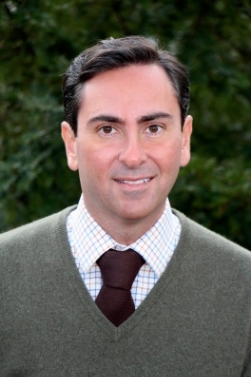 Kalamata Capital Chairman Steven Mandis is doing more than just approving small businesses up to $750,000 in under 24 hours. He’s also just authored a new book, The Real Madrid Way: How Values Created the Most Successful Sports Team on the Planet.
Not a subject you expected from a tech-driven small business lender? Steven Mandis is not your average industry executive…
Prior to Kalamata, he worked at Goldman Sachs in the investment banking, private equity, and proprietary trading areas. He assisted Hank Paulson and other senior executives on special projects and was a portfolio manager in one of the largest and most successful proprietary trading areas at Goldman. After leaving Goldman, he cofounded a multibillion-dollar global alternative asset management firm that was a trading and investment banking client of Goldman’s.
During the financial crisis, Mandis was a senior adviser to McKinsey & Company before becoming chief of staff to the president and COO of Citigroup and serving on executive, management, and risk committees at the firm.
He’s also an adjunct professor at Columbia Business School, where he teaches classes of MBA and executive MBA students on strategic issues facing investment banks and the European financial crisis.
His first book, What Happened to Goldman Sachs? was widely acclaimed. “Several authors have tackled the question of how Goldman’s culture changed post-1999 but none so deftly as Steven G. Mandis, a banker-turned-sociologist,” wrote the Wall Street Journal. I also read it cover-to-cover myself back in March of 2015.
In Real Madrid, “Mandis is the first researcher to rigorously analyze both the on-the-field and business aspects of a sports team. What he learns is completely unexpected and challenges the conventional wisdom that moneyball-fueled data analytics are the primary instruments of success.”
Former NBA Commissioner David Stern said of the book, “With unprecedented behind-the-scenes access, this book is the most complete study of any sports team ever done–which leads to fascinating conclusions.”
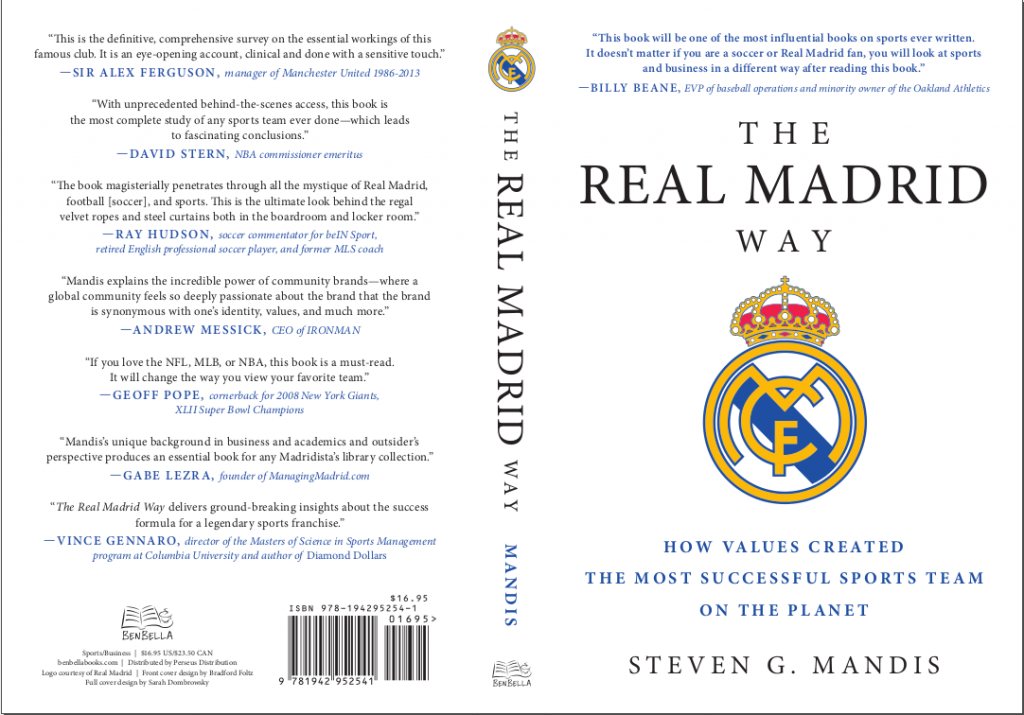
Are you a finance buff? Sports buff? Perhaps both? You’ll want to read his new book.
Is The “Uber” Of Merchant Cash Advance Actually Uber?
August 15, 2016
If imitation is the sincerest form of flattery, Uber is paying the alternative small-business finance industry a high compliment. The San Francisco based ride-sharing company is offering its drivers some programs that closely resemble merchant cash advances.
New drivers receive part of the advance before they pick up their first fare and the rest soon after that initial ride. Clearbanc, which bills itself as a financial services provider for “the self-employed, freelancers, independent contractors and entrepreneurs,” is putting up the money. As with a merchant cash advance, drivers can choose to pay back the Advance Pay funds by directing a portion of their weekly earnings to Clearbanc, according to a blog by Rachel Holt, an Uber regional manager. In the test the companies are limiting the automatic deductions to no more than 50% of the driver’s weekly paycheck, she said. Participating drivers can still work whatever hours they choose.
If $1,000 isn’t enough to put an aspiring Uber driver on the road, the company has another plan. Through the XChange Leasing program Uber automatically deducts car lease payments from drivers’ weekly income, a company spokesperson said. A number of financial institutions work with the ride-sharing company in the program, according to the Uber website.
Applicants have to agree to what the company calls “a routine screening.” If they’re approved they receive a list of participating local car dealers. The leases are up to three years for new cars valued at as much as $20,000 and used cars worth up to $18,500. Cars can’t be more than seven years old or have more than 75,000 miles. They have to have four doors and five seat belts. Drivers put up a $250 security deposit when they receive the leased car. Typically, they might have 156 payments of $115 each for a 2013 Toyota Corolla or 156 payments of $143 each for a 2016 Corolla. California requires rideshare insurance, and Uber provides it through Farmers Insurance or Mercury Insurance.
 Unlike many standard automobile leases, XChange Leasing does not have mileage caps, and drivers can exit the program by giving two weeks notice and paying a $250 “disposition fee,” essentially forfeiting their security deposit, the Uber spokesperson said. For drivers who prefer to own their vehicles, Uber has negotiated fleet discounts with a long list of car manufacturers, the company said. The deals can reportedly bring drivers thousands of dollars in savings over the sticker price of a car. Meanwhile, Uber is testing another foray into financial services. Drivers can use “Instant Pay,” an Uber debit card from Green Dot’s GoBank division, to collect the cash immediately after finishing a ride, according to Holt. The cards don’t require a minimum bank balance and don’t carry any fees, she said.
The company seemed upbeat about its new offerings. “We look forward to seeing how these pilots progress and to making innovative payment solutions more widely available to drivers soon,” Holt said in her blog of Advance Pay and Instant Pay.
But some Uber drivers don’t share that optimistic view. In fact, Advance Pay and XChange Leasing have both come under fire for what critics view as disadvantages for drivers and for the economy as a whole. Some have gone so far as to label the lease terms practices as predatory.
Uber offers Advance Pay only to new drivers, and they could receive just about as much as a signup bonus, according to a blog on UberPeople.net, a website for drivers. The author of the blog speculated that the company is using Advance Pay to eliminate the signup bonus and also to do away with its bonus for referring new drivers.
Drivers have to pay off the advance in 15 weeks, according to the UberPeople blogger. At the rate of 30 cents per mile that drivers receive in Detroit, paying back the $1,000 would require logging 3,333 miles, approximately the distance from New York to California, the blogger lamented. However, Uber pays a lower rate in Detroit than in most cities, according to statements from other drivers.
And although Advance Pay carries no interest, Clearbanc charges drivers a fee of up to $50 if they fail to pay off the advance in 15 weeks, according to published reports.
Complaints also arise with XChange Leasing, according to a website called therideshareguy.com. Dealers sometimes refuse to provide used cars for the program because they can make more money with new cars, according to the site.
If the dealers are willing to provide used cars, problems sometimes surface because XChange Leasing prohibits leasing a used vehicle for more than 105% of its book value, the site said. Cars with a reputation for reliability, such as Toyotas and Hondas, often sell for more than book value, according to the site.
 Drivers have reported elsewhere that they feel trapped by the leases, many of them continuing to work for Uber just to make the payments. However, the Uber spokesperson maintained that drivers can leave the program anytime after the first 30 days. Some critics bemoan the spread of subprime auto leases, which they have compared to the subprime mortgage debacle that contributed to the Great Recession that struck in 2008. Uber prefers comparisons to Amazon, a company that has expanded by continuing to enter new businesses.
In general, Uber has met resistance repeatedly from traditional taxi drivers who find their livelihood threatened by the ride-sharing service. Taxi drivers around the world have chided Uber for failing to pay taxes, obtain taxi licenses and uphold safety standards.
Complaints aside, Uber continues to grow prodigiously and now serves riders in more than 400 cities in 70 countries, according to metrics supplied by the Uber spokesperson. Seventy-five percent of Americans live in counties where Uber operates, the spokesperson added. Globally, Uber employs 7,000 workers and 1 million drivers, the company said.
The word “uber” is defined as “denoting an outstanding or supreme example of a particular kind of person or thing, according to a dictionary entry the company sometimes cites. In German, “uber” means “across” or “above.” Many potential riders know the word “uber” from the phrase “Deutschland, Deutschland uber alles,” a line from the German national anthem that translates as “Germany, Germany above all else.” The words to the song were written during Germany’s unification, and the lyrics refer to the idea that allegiance to the nation should trump loyalty to local kingdoms. Maybe Uber should stick with its own definition of “uber.”
Online Consumer Lenders Stumble, While Online Business Lenders Stay On Their Game
July 8, 2016
Something is happening in the land of marketplace lending, painful setbacks. And it’s mostly on the consumer side.
Avant, for example, plans to cut up to 40% of its staff, according to the Wall Street Journal. Prosper is cutting or has cut its workforce by 28%. For Lending Club it’s by 12% and for CommonBond by 10%. And then there’s Kabbage, whose consumer lending division playfully named Karrot, has been wound down altogether.
Kabbage/Karrot CEO Rob Frohwein told the WSJ that Karrot was put to sleep about three or four months ago, right around the time that it became obvious to industry insiders that the temperature had changed.
Ironically, the person who best summed up the problem is the chief executive of a lender that rivals the ones that are suffering, but has announced no such job cuts of his own. In March, SoFi CEO Mike Cagney told the WSJ “In normal environments, we wouldn’t have brought a deal into the market, but we have to lend. This is the problem with our space.” And that is a problem indeed because the success of these businesses becomes entirely dependent on making as many loans as possible so they can raise more capital to make as many more loans as possible so they can raise more capital. Perhaps the end game of that dangerous cycle is to go public, but the market has gotten a glimpse now of what that might look like, and they’re not very impressed with Lending Club.
The pressure of living up to the expectation of eternal loan growth manifested itself when Lending Club manipulated loan data in a $22 million loan sale to an investor, but it was a problem all the way back to their inception. In 2009, the company founder made $722,800 worth of loans to himself and to family members, allegedly to keep up the appearances of continuous loan growth. It was never found out until last month, seven years later.
That is a perfect example of the vulnerability that SoFi’s CEO spoke of months ago when he said, “we have to lend.” Because if they don’t lend or investors won’t give them money to lend, well then we’d probably see things like massive job cuts, falling stocking prices, and a loss of investor confidence. And that’s what we’re seeing now.
This wave of cuts is not affecting much of the business lending side
Despite the rush to the exits on consumer lending, Kabbage’s CEO is still very bullish on their business lending practice, so much so that they intend to increase their staff by more than 25%.
And in the last month alone, four companies that primarily offer merchant cash advances, have announced new credit facilities to the aggregate tune of $118 Million, one of whom is Fundry which landed $75 Million. Meanwhile, Fora Financial secured a $52.5 Million credit facility in May. Fora offers both business loans and MCAs.
And here’s one big difference between the consumer side and the business side. While online consumers lenders have found themselves trapped on the hamster wheel of having to lend, there is very little such pressure on those engaged in business-to-business transactions. Sure, their investors and prospective investors want to see growth, but only a handful are following the Silicon Valley playbook of always trying to get to the next venture round fast enough, lest they self destruct.
Avant’s latest equity investment, for example, was a Series E round. Prosper and Lending Club also hopped from equity round to equity round, progressing on a track with evermore venture capitalists that were likely betting on the companies going public.
But over on the business side, they’re much less likely to involve venture capitalists. Equity deals tend to be one-offs, major stakes acquired by private equity firms or private family offices, sometimes for as much as a majority share. These deals tend to be substantially bigger, are harder to land, and are less likely to be driven by long-shot gambles. In other words, the motivation is less likely to be driven by the hope that the company can simply lend just enough in a short amount of time to land another round of capital from another investor.
Examples:
- RapidAdvance was acquired by Rockbridge Growth Equity
- Fora Financial sold an undisclosed but “significant” stake to Palladium Equity Partners
- Strategic Funding Source sold a large stake to Pine Brook Partners
- Fundry sold a large stake to a private family office
Business lending behemoth CAN Capital has raised all the way up to a Series C round but they’ve been in existence for 18 years, way longer than any of their online lending peers. Several other of the top companies in the business-to-business space have relied only on wealthy investors that did not even warrant the need for press.
The upside is that these companies are less vulnerable to the whims of market interest and confidence. Having a down month would not trigger an immediate death spiral, where a downtick in loans means less investor interest which means a further downtick in loans, etc.
The margins in the business-to-business side tend to be bigger too, which means it’s the profitability that often motivates investments, rather than pure origination growth potential.
There are outliers, of course. Kabbage, which has raised Series A through E rounds already, admitted to the WSJ that they still aren’t profitable. Funding Circle, which also raised several rounds, disclosed that at the end of 2014, they had lost £19.4 Million for the year, about the equivalent of $30 Million US at the time.
These facts do not mean that either company is in trouble. Kabbage is not limiting themselves to just making loans for instance, since they also have a software strategy to license their underwriting technology to banks like they have already with Spain’s Banco Santander SA and Canada’s Scotiabank. And Funding Circle enjoys government support at least in the UK where they primarily operate. There, the UK government is investing millions of dollars towards loans on their platform as part of an initiative to support small businesses.
Business lenders and merchant cash advance companies may not necessarily be on the same venture capital track as many of their consumer lending peers because it is a lot more difficult to perfect and scale small business loan underwriting. Even the most tech savvy of the bunch are examining tax returns, verifying property leases, reviewing corporate ownership documents, and scrutinizing applicants through phone interviews. While this process can be done much faster than a bank, there’s still a very old-world commercial finance feel to it that lacks a certain sex appeal to a Silicon Valley venture capitalist who may be expecting a standalone world-altering algorithm to do all the risk related work so that marketing and volume becomes all that matters. Maybe on the consumer side something close to that exists.
Instead, a commercial underwriting model steeped in a profitability-first mindset makes online business lenders better suited to be acquired by a traditional finance firm, rather than a venture capitalist that is probably hoping to hitch a ride on the join-the-fintech-frenzy-and-go-public-quickly-so-I-can-make-it-rain express train.
Consumer lenders who had to lend and are faltering lately, will now have to figure out something more long term beyond just making as many loans as possible. It might not be something that excites their venture capitalist friends, but it is crucial to building a company that will last a long time.
Midland Funding Gets Mentioned in John Oliver’s HBO Show
June 6, 2016The infamous Midland Funding you might know from the Madden v Midland case, was mentioned on John Oliver’s Last Week Tonight and not in the best context. Midland is a subsidiary of Encore Capital Group, the largest publicly traded debt buyer in the United States and the episode was about the not-always-peachy world of debt buying and debt collection.
Oliver referenced Midland just to provide background on an industry as a whole, not to imply that they were involved in anything negative.
More background was added by Jake Halpern, the author of Bad Paper: Chasing Debt from Wall Street to the Underworld, who explained that the sale of debt from one party to another is not always done using the most sophisticated means, with it often being simply a list of fields on an Excel spreadsheet.
Oliver, who took his research to the extreme, actually set up his own debt collection company in Mississippi and purchased $15 million worth of debt that was aged beyond the statutory collections period for the bargain price of $60,000. Rather than try to collect on the debt, which he mentioned would not have been illegal, he decided to forgive the debt entirely and set the record for TV’s largest monetary giveaway in the process.
Oliver was careful to remind viewers throughout that while there are a few bad seeds and horror stories, the industry itself is regulated and is not illegal. You can watch the episode below:
Marketplace Lending Association Formed to Defend Investor Marketplaces
April 6, 2016
Funding Circle, Lending Club and Prosper have joined forces to create a collaborative non-profit body, i.e. a trade association. Its mission is “to promote a more transparent, efficient, and customer-friendly financial system by supporting the responsible growth of marketplace lending, fostering innovation in financial technology, and encouraging sound public policy.”
Among the already available resources on the association’s website is a white paper dictating “operating standards.”
The standards are broken down into five broad categories:
- Investor Transparency and Fairness
- Responsible Lending
- Safety and Soundness
- Governance and Controls
- Risk Management
The group’s initial members are notable because Prosper only does consumer loans and Funding Circle only does business loans. Lending Club bridges the gap by doing a combination of both. That means that the group’s prospective membership will be fantastically broad. After all, what does a commercial lender providing capital to a $10 million/year business have in common with a personal lender helping a single mother refinance a credit card? The answer is their investor base.
 All 3 companies allow investors to invest in loans on their respective marketplaces and lo and behold “investor transparency and fairness” is the first, foremost and most detailed category of their white paper.
Indeed, one requirement to join the association is to be matching 75% of loans, by dollar, with commitments for funding from investors before the loans are issued.
The Marketplace Lending Association therefore probably seeks above all else, permanent acceptance of the ability for investors to buy loans or securities backed by loans in online marketplaces.
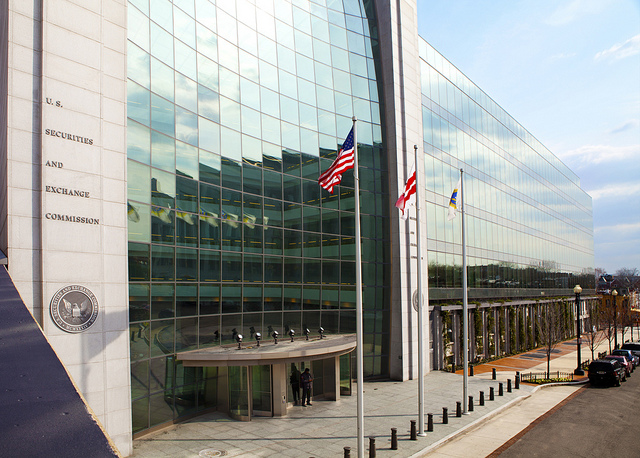
And it’s no wonder, just last week SEC Chairman Mary Jo White questioned these marketplaces during a keynote speech at Stanford University. “We expect that investors will receive disclosures about the loans underlying their investments, including information about the borrowers as well as the platform’s proprietary risk and lending models, that will enable them to make informed investment decisions – both at the time of investment and on an ongoing basis,” she said.
The SEC is not alone in their interest, hence the need for and now the emergence of, a Marketplace Lending Association.