
Addressing Stress and Depression Over Declined Deals
July 29, 2015 I wanted to add to my series discussion by touching on a topic that isn’t often discussed in our space, and it pertains to dealing with depression, stress and other mental health related conditions over the loss of a deal.
Let’s Be Honest
Let’s face it, most of us (as brokers) work on a 100% commission structure, or derive a significant portion of our income from commission, this means that our compensation is based on performance. This performance is directly correlated to the amount of new/renewal business that we fund. The word fund is the keyword here, as your performance in terms of selling might be excellent with the continued production of new leads, new applicants and new interested parties to our industry’s working capital selections. However, if those new leads and applicants don’t fund, then in terms of your performance, they don’t count. An applicant can be declined for a variety of reasons and all of them are usually totally out of your control. However, your compensation is dependent upon your merchant’s approval as well as the offering of terms/conditions that they deem acceptable. This high level of stress can lead to mild bouts of depression, and that depression could lead to a variety of other issues such as overeating, not eating, over sleeping, not sleeping enough, emotional breakdowns, paranoia, personal relationship issues, along with a variety of other inefficiencies.
The Loss Of Hope
Google says that the definition of depression is related to “the feelings of severe despondency and dejection.” Despondency and dejection refers to a state of low spirits caused by the loss of hope, and hope is sometimes all we have as Brokers. All we have going for us is an internal “hope” that our sales abilities will produce the commissions needed to not just cover our business/tax expenses, but cover our personal expenses, insurance, etc., and leave some left-overs to allow us to save for retirement. If you put your soul into this (like I do), then with every funded deal you will rejoice internally, and with every deal declined or approved with terms that are unacceptable to your client, you might feel sudden emotions of panic, fear and uncertainty. As a one man show, I have funded hundreds of deals while also building up a side merchant processing portfolio that processes tens of millions in volume every year. But I have also lost a ton of potential deals on both the funding side and the merchant processing side through declines or approvals that were unacceptable to my client. If left unchecked, still to this day I feel emotions of sickness and depression over declined and lost deals, so much so that sometimes I just have to go home and lay down in the bed for a minute.
Tackling The Stress Through Other Means Of Management
So how do I handle depression and stress over declined and lost deals for the most part? Here are some tips on how I handle the stress and depression of this industry, and perhaps they too can provide some assistance for you in those critical, nerve-racking situations of receiving emails from your Funder with “Declined” or “Application Ineligible” typed out in the Subject Line:
Diversify, Diversify, Diversify
This isn’t just true in Stocks, but it’s also true in being an Independent Agent/Broker. You are a 1099 Independent Sales Office and there’s just no reason why you ought to only be selling one product. Remember as I touched on in prior AltFinanceDaily articles, as a Broker your job is to be as Jeff Thull from Prime Resource Group explains, which is to be a valued source of business advantage for your prospective and current clientele. You should have access to knowledge, resources, networks, products and platforms that your prospective and current clientele lacks access to, allowing them to see you as a “valued extension” of their organization in terms of the value of your expertise and network.
So there’s no reason that you should just be selling Merchant Cash Advances or Alternative Business Loans, you should be selling a variety of other products in various different segments such as POS Systems, Merchant Processing, Equipment Leasing, Insurance, Big Data, Marketing Programs, Cost Reduction Programs, etc., just to name a few.
Do This Because It’s Your Purpose, Not Just For The Money
Listen, I’m not here to convert anybody to any particular Religion, but I believe that if you are going to be an entrepreneur (which is what you are as a 1099 Broker/Agent) then you need to have a very strong internal spirit or soulful foundation. Your motivation, joy, peace and confidence should extend beyond your earthly circumstances. You should see this industry as something you do as a Purpose that aligns with your spirit or soulful foundation, rather than just seeing it solely as a means to make an income.
Continued Learning and Development
The Merchant Services related industry continues to evolve and you should be following all of the trends and updates. The best places to do this for the Merchant Services related industry, is to make sure to follow AltFinanceDaily as well as other sources such as The Green Sheet, Payment Source’s ISO/Agent, The ETA, The SBFA, as well as various industry trade conferences such as LendIt and The AltLend Summit.
 Focus On Total Financial Management
Financial management is not just about bringing in decent income, it’s about managing the six pillars of finance which are Income, Investments, Insurance, Credit, Expenses and Taxes.
For example, you might be bringing in $100,000 a year in commissions from your Home Office, but you might be living in a high cost of living area, have horrible spending habits, have inefficient tax reduction strategies, and you have four children from four different women paying very high child support claims. This means that your expenses are too high and your financial efficiency is going to be off.
On the other hand, you might be making $50,000 a year in commissions from your Home Office, with no children, living in a low cost of living area, with efficient budgeting and tax reduction strategies, putting away let’s say $7,500 a year into your retirement accounts. If you do this for 40 years from 25 – 65 for example, with just a conservative 5% per year return, you will have over $1 million at age 65. You will have made yourself a self-made millionaire and you didn’t need a six figure annual commission compensation to do it. All you needed was Total Financial Management.
To Wrap
So in a nutshell, I manage the stress and depression of our industry through having a totally efficiently managed financial system in place, not selling just one product, always learning, and making sure that everything I do is grounded in Purpose. I believe that if you too were to adapt some of these techniques, the loss of that deal you worked so hard on, might not “sting” as bad after all.
Dealstruck Secures $10 Million Investment From Community Investment Management, Appoints Robert Riedl New Head of Capital Markets
July 27, 2015 CARLSBAD, CA–(Marketwired – Jul 23, 2015) – Dealstruck, the online lender that provides lending solutions for small businesses at every stage of their lifecycle, today announced that it received another $10 million capital investment from Community Investment Management LLC (“CIM”), an investment firm focused on marketplace lending. This investment allows Dealstruck to grow its capital available for lending to small businesses to more than $100 million.
“We’re pleased to be able to add new financing to the marketplace to help support small businesses,” said Ethan Senturia, CEO of Dealstruck. “The growth in alternative lending has breathed new life into so many small businesses, and growing the capital pool means more access and more opportunity. We’re transforming the financial landscape for small businesses.”
“We are excited to partner with Dealstruck as it grows its financing of small businesses with a suite of lending products,” said Jacob Haar, Managing Partner of CIM. “Small businesses deserve the type of transparent and compelling financing options which Dealstruck provides.”
To help expand Dealstruck’s funding capabilities, Dealstruck has appointed Robert Riedl as Head of Capital Markets. With leadership and expertise gained from 25+ years in specialty lending, Riedl will be responsible for pioneering, directing and executing strategies that enable Dealstruck to provide small businesses across the U.S. with the most appropriate and affordable financing solutions.
Prior to joining Dealstruck, Robert Riedl was the COO of a publicly traded specialty finance company, Consumer Portfolio Services, Inc. (“CPS”). Robert joined CPS in 2003 and held a variety of senior positions, including Chief Investment Officer and Chief Financial Officer. Robert started his career as an investment banker for ContiFinancial Services, Jefferies & Company, and PaineWebber. He has also served as a principal at Northwest Capital Appreciation, a middle market private equity firm.
About Dealstruck
The Dealstruck lending marketplace connects profitable, small- and medium-sized businesses (SMBs) with innovative credit solutions. Unlike the one-size-fits-all approach offered to them by banks and the high-cost, short-term credit offered to them by alternative lenders, Dealstruck provides growing SMBs with a suite of products that give them a credible and transparent path to bankable. Dealstruck is the first online lending platform to offer multiple products to SMBs, and the first to allow investors the freedom to choose specific investments. For more information, please visit https://www.dealstruck.com/.
About CIM
Community Investment Management (“CIM”) is an impact investment firm focused on marketplace lending. CIM provides responsible and transparent financing to small businesses in the United States in partnership with a select group of technology-driven lenders. CIM combines experience, innovation, and values to align the interests of small business borrowers and investors. More information is available at http://www.cim-llc.com.
Capify Consolidates Four Companies Including AmeriMerchant Under One Umbrella
July 21, 2015 What do US-based AmeriMerchant, UK-based United Kapital, Australia-based AUSvance, and Canada-based True North Capital all have in common? They’re now all under the Capify Umbrella. According to a press release issued earlier today,”Capify will now operate under one unified name to serve as a global conglomerate provider of alternative finance solutions, including business loans and additional working capital products, to small and medium-sized businesses. Capiota, United Kapital’s business loan product provider, will also be included in the global rebrand as a part of Capify’s UK office.”
The consolidation of an Australia-based funding company is notable since that country’s commercial financing landscape is the subject of an upcoming magazine feature story of AltFinanceDaily’s July/August issue due to be distributed in a couple weeks. In that story, AUSvance’s John de Bree said of American interest over there, “I’m very surprised, the American market’s 15 times the size of ours.”
But as our readers will learn when the story is published, that market is just beginning to heat up.
David Goldin, the founder and CEO of AmeriMerchant will continue to be the consolidated company’s CEO and President. For those not familiar with his background, the release states:
Goldin created this business enterprise with no outside capital or funding and grew the company to more than 200 employees combined globally in all four offices. He entered the alternative lending space in 2002, after previously selling his startup company to Winstar Communications, a multi-billion dollar publicly-traded company at the time of the sale. Goldin has overcome many business obstacles including winning a ground-breaking patent lawsuit that threatened to end the U.S. alternative finance industry in its infancy stages. Via its proprietary underwriting technology platform, the company has demonstrated low default rates especially during the 2007-2009 global recession, a challenging time that resulted in the collapse of many alternative funding companies.
You can check out the full press release here.
Manual Underwriting Still Dominates in Tech-based Lending Environment
July 21, 2015For all the talk that technology is changing the way people lend and borrow, the commercial side appears stubbornly reluctant to relinquish control to algorithms. At the AltLend conference in NYC, business lenders and merchant cash advance companies alike were mostly united on the idea that somebody needs to be double checking the computers.
 “I like eyes on a deal,” said Orion First Financial CEO David Schaefer. He discussed why an entirely manual underwriting process had weaknesses however through an experiment he conducted years ago when he sent the same deal to six underwriters. “Three said yes and three said no,” he explained.
Like most of the others that spoke on the topic, Schaefer was in favor of a scoring model and he believes an automated underwriting system creates consistency when assessing risk. He was steadfast in his assertion though that humans had to be the last line of defense in fraud detection.
“We’ve got guarantors that have nothing to do with the business,” he said, offering an example of an applicant that was more than 80-years old, yet was passing themselves off as a hands-on construction worker.
“I’m still a big believer in the review and subjectivity,” he concluded.
Funding Circle’s Rana Mookherje expressed similar views. “[Humans] pick up things that an algorithm really can’t do,” he told the crowd.
“We have an experienced underwriter sitting there and calling every borrower that we give money to,” he added.
 Mookherje said that their borrower profile differs from those that tend to use merchant cash advances. For instance, their average client has been in business for 10 years, does $2.2 million in annual revenue, and has 700 FICO. They also offer 1-5 year loans, where as merchant cash advance transactions tend to be satisfied in under twelve months.
“If you need money in an hour, we’re not the right place for you,” Mookherje stated.
Funding Circle’s reliance on manual reviews may have to do with the loan terms being extended so long. Even Schaefer had said earlier, “I think it’s a lot easier to determine the behavior of a loan that’s less than twelve months as opposed to one that’s sixty months.”
But do other companies feel differently? Kabbage’s Alan Reeves said that 95% of their customers are 100% automated since there are merchants who get stuck trying to connect their bank account in the online application process.
When Kabbage was asked over a year ago how much of a role computers should play in the underwriting of a deal, COO Kathryn Petralia responded, “Huge.” She also went on to say then that, “it is not going to be like the “Matrix” where machines are making all the decisions. You won’t see an underwriting world without humans.”
It’s ironic however that while Alan Reeves was introduced at the conference as the Head of Risk Analytics, both the printed agenda and his LinkedIn profile cite his title as being the Head of Manual Underwriting. It’s a telling title for a company that is often heralded as the pinnacle of automation and computational decisioning.
But why can’t lenders simply give in entirely to the machines? Mookherje said at one point that, “those that live and die by their underwriting are going to be the ones that survive.” And if that’s the case, then relinquishing control to the computers perhaps risks the chance of death if things don’t work properly.
But humans, with all their natural flaws and imperfections pose the same risk. “Banks want to know that underwriting is consistent, that for any given customer, that you would underwrite them the same,” said Sam Graziano, CEO of Fundation. “And it’s not just having written policies and procedures,” he added. “But having programs in place to ensure these policies are upheld.”

The widespread dependence on humans to tie up loose ends in assessing risk may seem both practical and prudent, but to some traditional bankers, that system carries nightmarish implications.
Jim Salters, CEO of The Business Backer for example shared an experience his company went through years ago when trying to partner with a bank. Salters placed a high value on the manual review process, explaining that it was basically a strength of their core competency. The problem however, was that the bank said that would totally freak out their regulators.
The recurring message from the event’s panelists was that banks not only want, but may actually require a firm credit model to make decisions. They need to be able to explain to regulators why some loans got approved and others got declined in a perfectly uniform and consistent manner.
 Schaefer and Reeves were aligned on the importance of consistency in underwriting. You basically can’t have a system where you arrive at three yeses and three nos on the same loan Schaefer explained.
But building an automated system and telling the humans to take a hike isn’t an easy process. There’s a high upfront cost associated with development and it can take years to generate statistically relevant conclusions. And a multivariate decline issued by an algorithm can potentially worsen the customer experience, especially if the customer asks for the specific reason they were declined. Reeves said it can be difficult to explain to the customer that their FICO score was too low relative to their sales volume but that their FICO score on its own was good enough.
And yet once an automated underwriting system is developed, the cost of underwriting should drop significantly according to panelists. With that comes a decision consistency that the company can rely on and a system that bankers can get comfortable with.
But despite it all, Credit Junction CEO Michael Finklestein bluntly stated, “We’re never going to approve a $2 million loan with an algorithm.”
The unifying concept that everyone seemed to agree on was that although credit models were undeniably important, human review would remain a complementary part of the process for the foreseeable future at least in the commercial finance space.
“At the end of the day, it all comes down to underwriting,” said Mookherjee.
MCC and BizFi Originate $115 Million in Q2
July 20, 2015Merchant Cash and Capital (MCC) and its family of companies including BizFi announced today that they had originated $115 million in deals for the second quarter of 2015. That translates to an average of $38 million per month, much higher than their average of $23 million monthly in 2014.
In their official release they state that the “significant increase in financing originations is in large part due to the launch of Bizfi, a connected online marketplace designed specifically to help small businesses compare funding options from different sources of capital and get funded within days.”
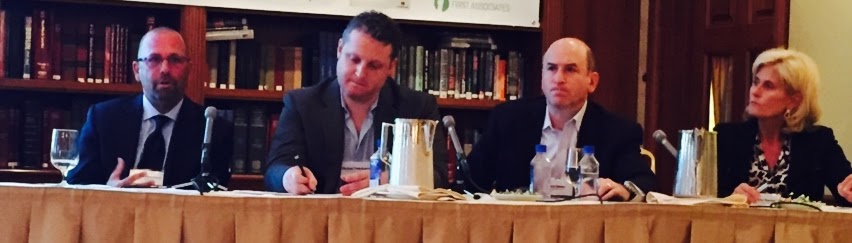
Meanwhile on the New Entrants Showcase panel at AltLend in NYC today, MCC founder Stephen Sheinbaum reiterated his desire for federal regulation of the industry to reduce the complexity of navigating the varying and sometimes obscure laws of 50 separate states.
I’m a little partial to the MCC story since I got my start in the industry there almost 10 years ago. The company is in the all-time top five biggest MCA funding companies.
Federal Government Wants Your Thoughts About Online Lending
July 19, 2015 Whether you’re a funder, lender, broker, or platform, the U.S. Treasury Department deserves to hear your input.
Only July 16th, the Treasury announced that it was seeking public comment on various business models and products offered by online marketplace lenders to small businesses and consumers. One stated purpose of this is to study “how the financial regulatory framework should evolve to support the safe growth of the industry.”
The comment period is only open for six weeks.
Over the last year, many funders and brokers have voiced their opinions on best practices, ethics, and standards. Some want regulation to curb what they believe to be immoral behavior and others just want clarity where the laws are obscure, illogical, or even in conflict with themselves.
In at least one recent case, a merchant cash advance company CEO wrote about the complexity of dealing with an endless amount of state laws. In Lift the Fog, Give us Regulation, Merchant Cash and Capital CEO Stephen Sheinbaum wrote, “It is also better, at least for the financial services industry, if the central government is the one to craft the regulation instead of getting one rule from each of the 50 state governments.”
Meanwhile the Consumer Financial Protection Bureau (CFPB) will eventually start to enforce the amendments to the Equal Credit Opportunity Act, which technically already became the law under Section 1071 of the Dodd Frank Act. As part of that, underwriters of business loans and merchant cash advance alike may no longer be allowed to meet applicants, speak with them on the phone, examine their driver’s licenses, review their social media profiles, or even ask what their business model is or how they market themselves.
One has to look at any opportunity afforded by a government agency to share input before future regulations are implemented then as a duty. It might not matter, but you should do it anyway, just like voting.
Below are the questions, the Treasury wants you to answer (or Click to view on Treasury.gov):
1. There are many different models for online marketplace lending including platform lenders (also referred to as “peer-to-peer”), balance sheet lenders, and bank-affiliated lenders. In what ways should policymakers be thinking about market segmentation; and in what ways do different models raise different policy or regulatory concerns?
2. What role are electronic data sources playing in enabling marketplace lending? For instance, how do they affect traditionally manual processes or evaluation of identity, fraud, and credit risk for lenders? Are there new opportunities or risks arising from these data-based processes relative to those used in traditional lending?
3. How are online marketplace lenders designing their business models and products for different borrower segments, such as:
• Small business and consumer borrowers;
• Subprime borrowers;
• Borrowers who are “unscoreable” or have no or thin files;
Depending on borrower needs (e.g., new small businesses, mature small businesses, consumers seeking to consolidate existing debt, consumers seeking to take out new credit) and other segmentations?
4. Is marketplace lending expanding access to credit to historically underserved market segments?
5. Describe the customer acquisition process for online marketplace lenders. What kinds of marketing channels are used to reach new customers? What kinds of partnerships do online marketplace lenders have with traditional financial institutions, community development financial institutions (CDFIs), or other types of businesses to reach new customers?
6. How are borrowers assessed for their creditworthiness and repayment ability? How accurate are these models in predicting credit risk? How does the assessment of small 10 business borrowers differ from consumer borrowers? Does the borrower’s stated use of proceeds affect underwriting for the loan?
7. Describe whether and how marketplace lending relies on services or relationships provided by traditional lending institutions or insured depository institutions. What steps have been taken toward regulatory compliance with the new lending model by the various industry participants throughout the lending process? What issues are raised with online marketplace lending across state lines?
8. Describe how marketplace lenders manage operational practices such as loan servicing, fraud detection, credit reporting, and collections. How are these practices handled differently than by traditional lending institutions? What, if anything, do marketplace lenders outsource to third party service providers? Are there provisions for back-up services?
9. What roles, if any, can the federal government play to facilitate positive innovation in lending, such as making it easier for borrowers to share their own government-held data with lenders? What are the competitive advantages and, if any, disadvantages for nonbanks and banks to participate in and grow in this market segment? How can policymakers address any disadvantages for each? How might changes in the credit environment affect online marketplace lenders?
10. Under the different models of marketplace lending, to what extent, if any, should platform or “peer-to-peer” lenders be required to have “skin in the game” for the loans they originate or underwrite in order to align interests with investors who have acquired debt of the marketplace lenders through the platforms? Under the different models, is there pooling of loans that raise issues of alignment with investors in the lenders’ debt obligations? How would the concept of risk retention apply in a non securitization context for the different entities in the distribution chain, including those in which there is no pooling of loans? Should this concept of “risk retention” be the same for other types of syndicated or participated loans?
11. Marketplace lending potentially offers significant benefits and value to borrowers, but what harms might online marketplace lending also present to consumers and small businesses? What privacy considerations, cybersecurity threats, consumer protection concerns, and other related risks might arise out of online marketplace lending? Do existing statutory and regulatory regimes adequately address these issues in the context of online marketplace lending?
12. What factors do investors consider when: (i) investing in notes funding loans being made through online marketplace lenders, (ii) doing business with particular entities, or (iii) determining the characteristics of the notes investors are willing to purchase? What are the operational arrangements? What are the various methods through which investors may finance online platform assets, including purchase of securities, and what are the advantages and disadvantages of using them? Who are the end investors? How prevalent is the use of financial leverage for investors? How is leverage typically obtained and deployed?
13. What is the current availability of secondary liquidity for loan assets originated in this manner? What are the advantages and disadvantages of an active secondary market? Describe the efforts to develop such a market, including any hurdles (regulatory or otherwise). Is this market likely to grow and what advantages and disadvantages might a larger securitization market, including derivatives and benchmarks, present?
14. What are other key trends and issues that policymakers should be monitoring as this market continues to develop?
The Treasury asks that you include your name, company name, address, job title, email address, and phone #. You can submit your responses on http://www.regulations.gov/. Just click on the tab that says “Are you new to the site?”
You can also submit by mail:
To: Laura Temel,
Attention: Marketplace Lending RFI,
U.S. Department of the Treasury, 1500
Pennsylvania Avenue NW., Room 1325
Washington, DC 20220
If you have questions, email marketplace_lending@treasury.gov or call 202-622-1083.
MCA Brokers: Constructing Your Funder Network
July 18, 2015 Progressing forward into the 3rd Quarter of The Year Of The Broker, I wanted to continue our focus on the vital issue of inefficient training that new broker entrants are receiving within our space. In the previous article for AltFinanceDaily on 6/22/2015, I inquired about if you knew what you were selling in terms of the Merchant Cash Advance product? Within the article, I discussed value points and overcoming the product’s criticism. In this article, I wanted to add to this discussion by deliberating over how to create a quality Funder Network for the Merchant Cash Advance Product.
As a Broker, I believe your job is to be as Jeff Thull from Prime Resource Group explains, which is to be a valued source of business advantage for your prospective and current clientele. In terms of the Merchant Cash Advance Product, you should have access to knowledge, resources, networks, and underwriting criteria that your prospective and current clientele lacks access to, allowing them to see you as a “valued extension” of their organization in terms of the value of your expertise and network. However, too many Brokers are not taking the time to truly be this source of business advantage for their prospective and current clientele, which involves not just continued knowledge, analysis and study over the industry from a “Macro” perspective, but also rounding up the quality relationships to properly serve their clientele on a “Micro” level, such as the creation of a high quality Funder Network. In this article, I wanted to provide some information to assist new Brokers in creating a high quality Funder Network for the Merchant Cash Advance product.
Keeping Things In Perspective
In my first article for AltFinanceDaily from 5/10/2015, I discussed the importance of Selecting The Right Funders, if you haven’t already done so, please review this article to keep things in perspective going forward. After you have reviewed that article, now you should focus on carefully crafting your Funder Network so that you can fulfill your job as being a source of business advantage to your prospective and current clientele. This creation will be based on understanding industry paper grades, which represent the various situations of your clientele during the underwriting process that determine their approval, risk based pricing, terms and conditions.
Paper Grades
The Paper Grades across the board are pretty much the same, but your job is to make sure you have 1-2 reliable, credible and quality lenders for each of the Paper Grades so that you can properly serve your clientele with tailored pricing, terms and conditions based on their risk based profile.
- A Paper: These are merchants that usually have a 650 plus FICO score, clean bank statements with low NSFs/Overdrafts/Negative Days, healthy bank balances (ending and average), no tax liens, no judgment liens, no recent bankruptcies, and no landlord/mortgage issues. In terms of pricing, this merchant should qualify for premium pricing or what I define as Tier I Pricing.
- B Paper: These are merchants that usually have a 600 – 640 FICO, with a variety of potential profile weaknesses on top of the lower credit scoring. Some of those potential weaknesses include having somewhat clean bank statements, somewhat healthy bank balances, they might have a tax lien or judgment lien on a payment plan (and the judgment is not from a prior MCA Company or based on fraud), they might have had a dismissed/discharged bankruptcy, and/or they might have landlord issues but can be resolved at closing. Note that in terms of these weaknesses, this merchant should really have no more than two of these weaknesses, such as they might have somewhat clean bank statements along with a tax lien on a payment plan. In terms of pricing, this merchant should qualify for Tier II Pricing.
- C Paper: These are merchants that usually have a 540 – 580 FICO, with a variety of actual profile weaknesses that push them into this lower credit grade. Some of these weaknesses include having bank statements with 5 – 10 NSFs/Overdrafts/Negative Days, along with not so healthy bank balances. In addition, they might have a tax lien or judgment lien on a payment plan (and the judgment is not from a prior MCA Company or based on fraud), they might have had a dismissed/discharged bankruptcy, and/or they might have landlord issues but can be resolved at closing. Note that this merchant should really have no more than three of these weaknesses, such as they might have bank statements averaging 10 NSFs a month, a tax lien on a payment plan, and they might be one month behind with their landlord which can be made “whole” at closing. In terms of pricing, this merchant should qualify for Tier III Pricing.
- D/E Paper: These are merchants that are considered high risk and might not even get an approval completed. They usually would have as high as a 520 FICO score, but their FICO score could actually come in lower than 500. In addition, expect a variety of actual profile weaknesses that make their approval difficult, such as over 10 NSFs/Overdrafts/Negative Days a month on their bank statements, along with not so healthy bank balances. Furthermore, they might have a tax lien that’s not on a payment plan, or they could have a judgment lien that’s not on a payment plan or a judgment that included a prior MCA Company. Finally, they might have landlord issues that can’t be resolved at closing. Usually the weaknesses are severe to the point where an approval cannot be generated, however, if an approval is generated it’s usually a very high costing advance along the levels of what I define as Tier IV and Tier V Pricing. This level of pricing is very expensive and it might just be in the best interest of the client to not provide him any funding at the moment, opting to instead allow him time to improve his credit standing so he can at least qualify for C Paper status.
Final Word
Note that many industries are on generic restricted lists of Funders, and while they might be A Paper in terms of general credit standings and profile status, their restricted industry status might lead to an auto-decline or a decrease in their Paper Grade.
When you construct your Lender Network, your job is to get 1 – 2 lenders for each Paper Grade so that you can serve your clients efficiently based on their risk based profile. This process involves researching your prospective lenders, understanding their criteria, underwriting their pricing/terms, and testing out the relationship by sending a couple of deals to see how it goes from a first-hand basis.
Doing this level of work upfront gives you a higher probability of surviving in one of the most competitive landscapes in financial services. Not doing this level of work upfront makes your chances of survival, office profitability and career sustainability (as a broker) less probable.
Is Amazon Already a Top 10 Funder?
June 29, 2015 18 months ago I mentioned Amazon’s quiet entry into business lending but nobody’s really talked about it. But earlier today in a story that was supposed to highlight the company’s push into China, they revealed some interesting details that the rest of the alternative lending industry deserves to know about.
1. Amazon offers three to six-month loans of $1,000 to $600,000 to help merchants buy inventory.
2. Amazon has already funded hundreds of millions of dollars.
3. Sellers are reporting interest rates of 6% to 14% but it’s unclear if these are APRs or dollar for dollar costs since the loans are for much less than a year. I suspect the effective APRs are higher.
While Amazon is obviously doing these to grow Amazon merchants, the short maturities and stunning loan volume definitely earns them a spot on the list of the biggest funders in the industry.
Another fact worth repeating is this tidbit from PayNet:
“The default rate for small businesses with credit under a $1 million stood at 1 percent in 2014 but is seen rising to 1.6 percent in 2015, as new lenders with varying ability to assess risk increase lending, according to small business credit ratings provider PayNet.”