
Should Alternative Lenders Be Regulated? (Video)
November 4, 2015Funding Circle’s Sam Hodges went back on Bloomberg TV to answer questions about the rise of marketplace lending. On the subject of regulation, Hodges explains that their business model is already pretty heavily regulated.
Meanwhile, David Stockman, a former US Congressman and former director of the Office of Management and Budget, said the regulators should stay away from alternative lenders. Video below:
OnDeck Q3 Earnings Report Shows Positive Signs (ONDK)
November 2, 2015 Back when OnDeck was telling analysts that they were focusing on growth, critics said they should be focusing on profitability. Now that they’ve had their second straight profitable quarter, critics are pointing out that loan origination growth has slowed. OnDeck can’t win with them, but this quarter’s results were the closest they’ve come to proving themselves.
They originated a little over $482 million worth of loans and reported a profit of $3.7 million. Selling loans through their marketplace to institutional investors is generating immediate income and creating the profits they lacked before.
The reliance on funding advisors (ISOs/brokers) shrank from 20.6% in Q2 to 18.6% in Q3. During the Q&A session, OnDeck CEO Noah Breslow hinted that they may have reached a floor in that ratio. That channel could stabilize and even grow a little bit, he said.
When one analyst asked whether or not loan aggregation platforms were counted under funding advisors or strategic partners, Breslow said they are counted as strategic partners. Only 4% of OnDeck’s loans come from these loan aggregation platforms, the company’s execs admitted, putting to bed any notion that loan aggregators had leverage over OnDeck’s business.
In Q2, analysts became alarmed over the competitiveness of the direct mail channel. This time around, Breslow said the environment hasn’t gotten more or less competitive, that it was about the same. Competition is stabilizing and the advantage goes to the scaled players, he argued after describing their ability to target, analyze, underwrite and fund faster than others. Breslow added that they are not banking on relief from the competition to carry out their long term objectives.
A sentiment discussed on the call but not exactly argued by anyone is that it’s become pretty late in the game for new lenders to start entering the field, the implication being that the long-term competition is already in business, instead of it being some new companies that have yet to form.
The regulatory environment was described by OnDeck as “stable.”
All in all, the results of Q3 were optimistic.
Listen to OnDeck’s Q3 Earnings Call
November 1, 2015 Anyone can listen in to OnDeck’s Q3 Earnings call on Monday, November 2nd by dialing into (877) 201-0168 and using conference ID 55963420.
OnDeck closed sunday at $9.52 and has been relatively stable since August 6th, but has not been able to gain any ground back toward its IPO price of $20.
In their Q2 earnings call, the company admitted that they were up against competition in the direct mail channel. CEO Noah Breslow argued their strategy was to “break through the clutter” and “better communicate our value proposition.” He later added that “competition for customer response remains elevated.”
Back in August, Compass Point analyst Isaac Boltansky wrote to subscribers that the Madden v Midland ruling would hang over the heads of OnDeck and other marketplace lenders.
In an article by Deborah Festa, Robert C. Hora, Douglas Landy and Albert A. Pisa of Milbank, Tweed, Hadley & McCloy LLP, they wrote that one thing that could be done is to simply avoid Second Circuit jurisdiction. “Madden is directly binding if a defendant to a usury claim is sued in and subject to personal jurisdiction in the Second Circuit,” they wrote. “Excluding loans to borrowers located in the Second Circuit may reduce the risk of a usury lawsuit being filed in that circuit,” but added that it wasn’t a foolproof fix.
Meanwhile, Manatt, Phelps & Phillips, LLP attorney Brian Korn said at an invite-only event hosted by Herio Capital on October 8th, that the Madden v. Midland ruling was a non-event for business lenders.
And in Lending Club’s Q3 earnings report, they said, “In regards to our loan issuance framework, we continue to see no measurable impact from the Madden decision that was rendered in May this year by the second circuit Court of Appeals.”
OnDeck is therefore likely to be evaluated on their ability to scale originations as well as keep marketing costs and bad debt down. Analysts may also consider whether or not the lender can defend its relatively high costs and collection practices in an age where the mainstream media is scrutinizing alternative lenders with a closer eye.
The company responded to a front-page NY Times article that put them in an unflattering light earlier this month.
Money2020 Photos
November 1, 2015Below are some of the shots we got at the 2015 Money2020 Conference in Las Vegas!




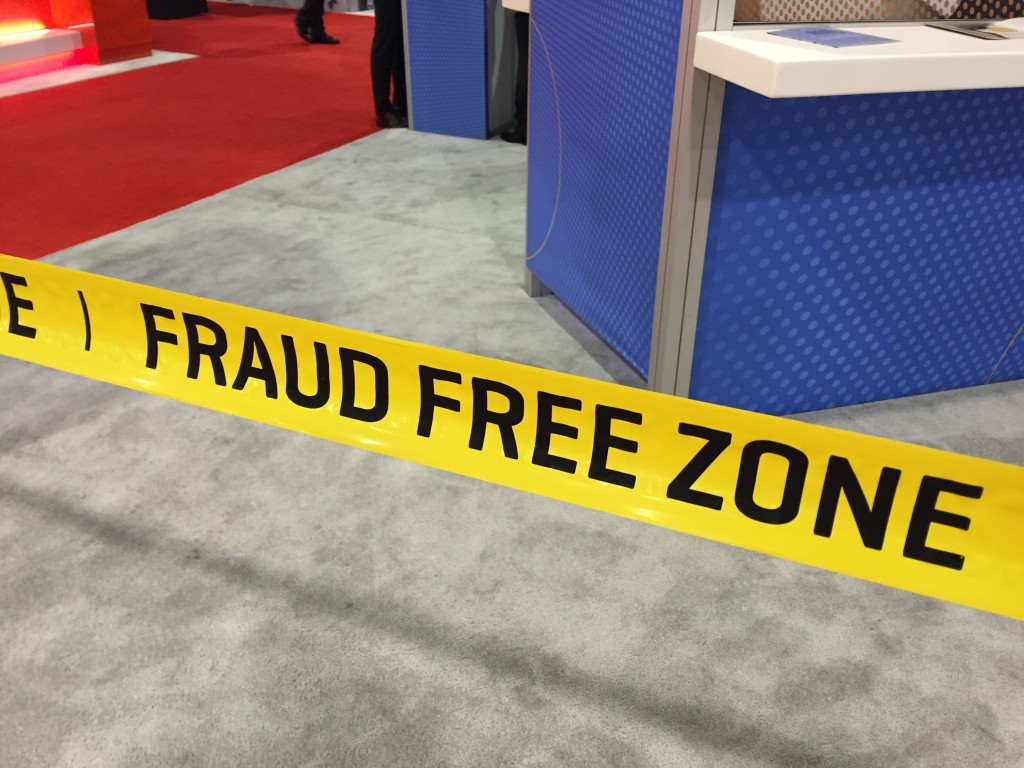

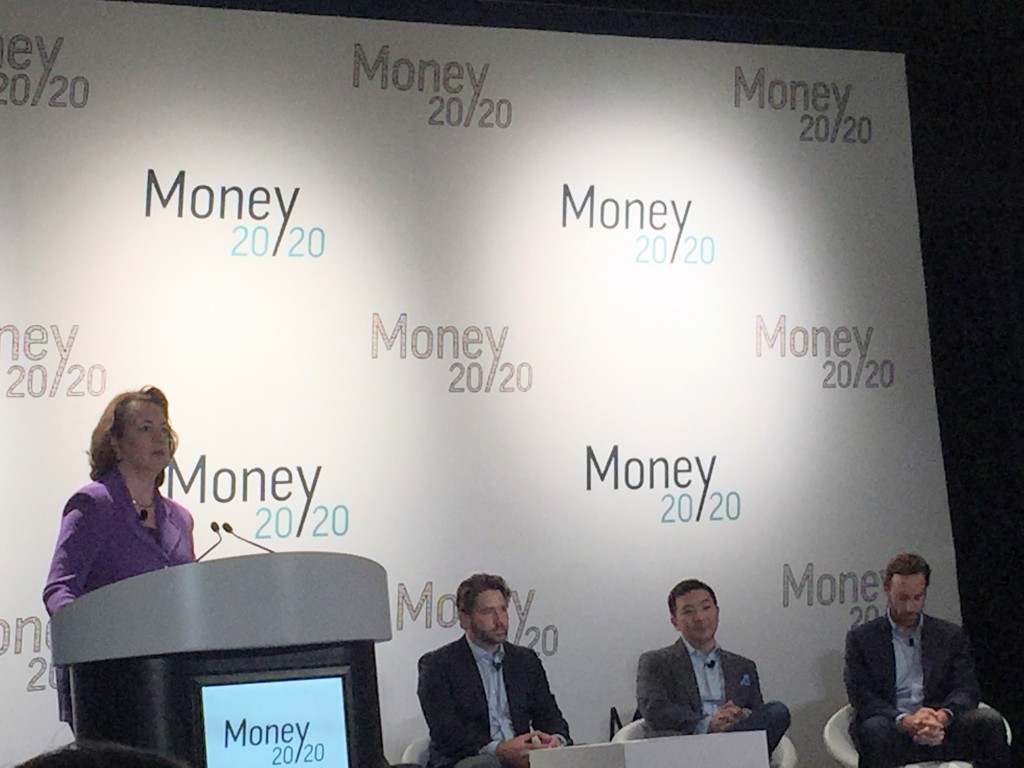

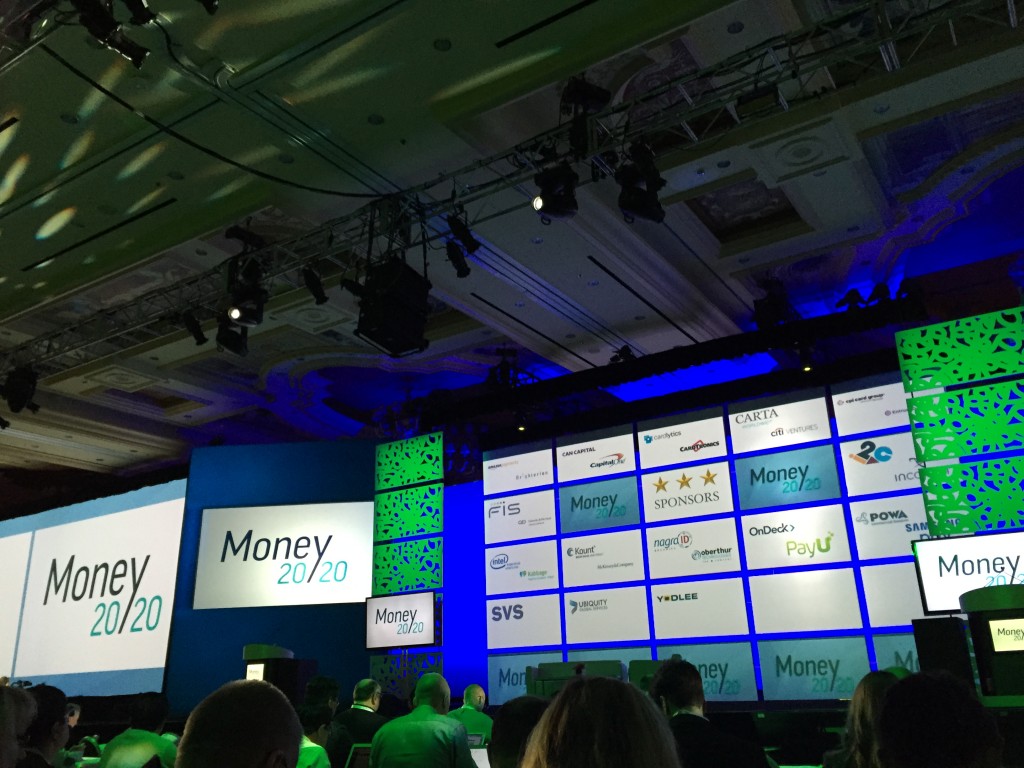


Did you go to money2020? Feel free to send us some of your photos 🙂
Letter From the Editor – November/December 2015
November 1, 2015 Somehow 2015 is already over. It started off as the year of the broker but it ended up as a culmination of many things. It was the year of capital raising and rebrands, the year of regulatory interest and RFIs, the year of unicorns and leaderboards. 2015 solidified alternative lending’s place across multiple continents. Bankers started talking like technologists and technologists like bankers.
In 2015, we introduced William Ramos who went from working at a Lowes Home Improvement store to driving a Maserati after he landed a temporary job as a financial cold caller. We also showed you Jared Weitz, who went from working as a plumber to running a financial company that’s now on pace to originate $100 million in small business funding a year.
As we close out 2015 here, we’ll introduce you to the man whose company is producing billions (that’s billions with a ‘b’) of small business funding. Daniel DeMeo is the CEO of CAN Capital, a company who has weathered both the dot-com bust and the financial crisis and still manages to be one of the industry’s top players. DeMeo shared what he’s all about and the story of CAN you haven’t read anywhere else.
That’s the good stuff, but there’s some bad stuff too. While critics have broadcast some of the not so flattering stories in alternative lending’s rise, there’s a darker side that no one has dared write about, bad borrowers. Perhaps a byproduct of rapid technological change, merchant fraud has become an all too common occurrence. These predatory merchants are causing chaos, damaging margins, exploiting underwriting weaknesses and potentially driving up the cost for the good guys. In this issue, we explore the reality of bad guys and their tactics.
And that’s not all we have of course. In 2015, we compiled the first report on merchant cash advance and small business lending in collaboration with Bryant Park Capital. We measured the industry’s growth, learned of its diversity, and got a numerical sense of the confidence for the future. A sample of that report is included within.
That was 2015 summed up, the year that Marty McFly met us all in the future. 2016 will undoubtedly mean robots, laser beams and interplanetary colonization. Sprinkled in between all that will be online loans, merchant cash advances, bitcoins, and financial disruption. In 2016, the world may become AltFinanceDaily once and for all.
–Sean Murray
The Quiet Innovator: Meet Dean Landis
November 1, 2015 Have you ever wondered who helped evolve our industry from the boutique “credit card factoring” of yesteryear, to today’s multi-billion dollar Alternative Lending industry? Credit Cash LLC may not be the best known MCA company out there. However, over its ten-year history, its innovations have become industry mainstays. Founded by, Dean Landis, an established asset based lender in 2005, Credit Cash has always focused on larger deals to better credits; but is also largely responsible for many of the important changes that have improved our industry over the years.
Its first, and only slogan, “Our rates are so low, they’re actually loans,” was telling from the start. Well before On Deck and others made loans an alternative to advances, Credit Cash had determined that to attract larger and better credits, rates had to be far lower. With lower rates, a loan structure was more practical in lieu of the then existing true sale structure (innovation #1).
When Dean, Credit Cash’s founder, came up with his concept, he posed it to some of the existing industry leaders. While all were supportive, none thought that the product worked well with the low rates Landis was proposing. Back then, with underwriting a bit more primitive, default rates were typically higher than they are today. A competitor urged Credit Cash to license its underwriting and split funding operation.
What the others didn’t appreciate is that Credit Cash was going to use its decades of asset based lending experience to create a whole new method for providing working capital to SMEs. Dean represents the third generation of his family to own and manage a specialty finance company. His asset based lending firm, Entrepreneur Growth Capital, is one of the best known and highly regarded national commercial finance companies serving small and lower middle market borrowers. First, these would not be purchases of future revenue or credit card receipts. Landis didn’t believe that was actually a tangible object that could be bought and sold. Thus, he chose the loan structure and with it, fixed daily payments (innovation #2).
 Next, while most of the MCAs at the time were solely using split funding, Credit Cash required the setup of a lockbox (innovation #3). This allowed each client to keep its on processor (innovation #4), but also gave Credit Cash more control over cash flow as all credit card receipts went through the lockbox, not just a percentage.
At this time in the industry’s evolution, all advances were based on credit card revenue, so clients were typically in food service, hospitality or retail. Early on, Credit Cash got a request from a Burger King franchisee. It was a good prospect, but there wasn’t enough credit card revenue to meet the fixed daily payments. That is when the idea of using an ACH to debit clients’ banks accounts was born (innovation #5). From there, it wasn’t long until both Credit Cash and others realized that this type of lending deserved a far larger audience than the existing marketplace. In fact, whereas restaurants used to be over 50% of Credit Cash’s business, it is now less than 25%.
One other change was in how Credit Cash treated renewals. At the time, clients were required to essentially buy back their existing advances in order to get more funding, thus increasing their costs. Credit Cash not only avoided this practice, but began offering early termination discounts (innovation #6).
Landis claims he is as surprised as anyone at the industry’s growth. While entering its 11th year, Credit Cash has intentionally not grown nearly as much as the other industry veterans. Credit Cash has always been a quality over quantity shop. In fact, they still do all of their underwriting by hand. As their average loan is over $500,000, Landis is hesitant to rely on computers and algorithms. Dean is interested in continuing to build a strong portfolio of borrowers who require additional capital with a creative approach. “Our borrowers appreciate that we are able to think outside of the box and take a hands on approach to underwriting and servicing their loans.”
As for growth, Landis jokingly admits that Credit Cash is often ISOs’ last choice. “Because our rates are so low, so is our commission structure. An ISO may make more money by funding a prospect elsewhere. Although because of the Credit Cash’s ability to fund much larger loans, it is not unheard of for an ISO to earn $100,000 or more from a closed, single transaction.” However, with larger loans, come stronger credits and more savvy borrowers. Landis continues to smile when stating that “a typical Credit Cash borrower would rarely take an MCA at the market rates.” However, ISOs continue to send Credit Cash deals as a funded deal, is better than no deal at all.
Alternative Lenders Are Waiting for a Shakeout
October 28, 2015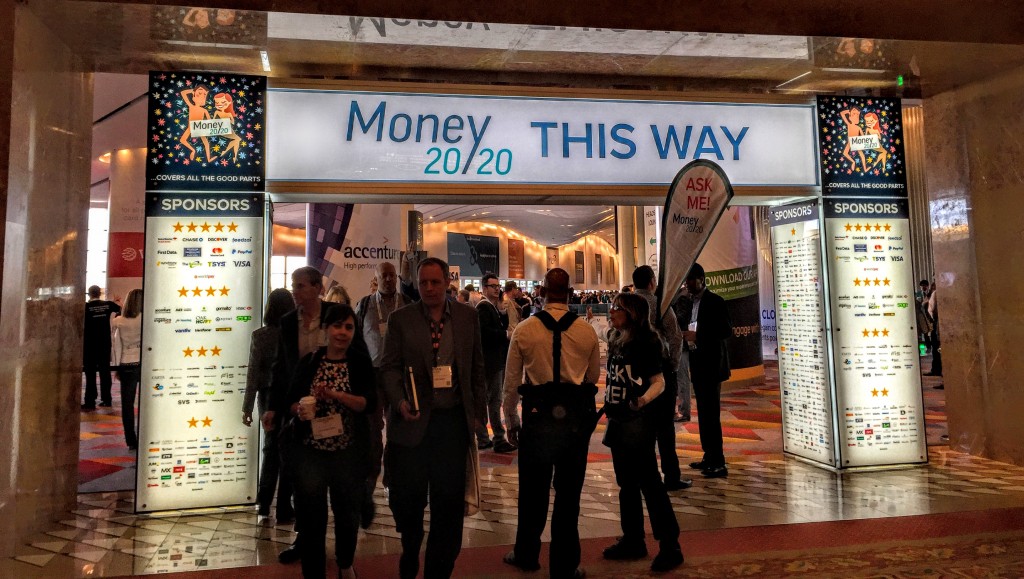 Back in April at the LendIt conference in New York, the big consensus was that not all underwriting was created equal and therefore several players wouldn’t survive long enough to make it back to LendIt in 2016. Six months later at Money2020 and so far everyone is still standing.
Loan terms are getting longer, rates cheaper and the cost to acquire borrowers higher. Somebody has to be feeling the pressure but in a rather benign economic and regulatory environment, it’s clear skies.
Valuations are soaring. SoFi is valued at more than $4 billion and Kabbage at more than $1 billion.
But Robert Greifeld, the CEO of Nasdaq warned attendees about the validity of private market valuations. “A unicorn valuation in private markets could be from just two people,” he said. “whereas public markets could be 200,000 people.” At best he described a private market valuation as being just a rough indicator.
And some wonder if these valuations are based on just scale, rather than the ability to underwrite more intelligently and efficiently than a bank. OnDeck for example, had a Compound Annual Growth Rate (CAGR) in originations of 159% from 2012-2014 when the average originations CAGR for their peers is currently 56%. But OnDeck has the advantage of time. With nearly a decade of data under their belt, they’ve been able to see what works and what doesn’t.
“You have to have enough bad loans to build a good credit model,” said OnDeck CEO Noah Breslow during a Money2020 panel discussion.
For Aaron Vermut, CEO of Prosper, getting their company to the next level was about having access to institutional capital. As a marketplace, and as a company that almost died several years ago, he pointed out, institutional money was the inflection point for them to grow. The peer-to-peer model that actually depended purely on “peers” is what held their company back.
One thing several lenders seemed to agree on was the limited applicability of FICO. FICO is not the thing to use for a small business loan, said Sam Hodges, Managing Director and Co-founder of Funding Circle. His words didn’t come as a surprise since credit scores are generally the domain of consumer lending.
But doubts about FICO’s ability to predict performance didn’t just come from the commercial finance side. Prosper’s Vermut explained that consumers still think their FICO score is the most important factor in the rate they get. So even though they’ve got a system to predict repayment outside of FICO, they’re kind of forced to incorporate it because consumers are being educated to believe that’s what matters most.
The irony was not lost that as Vermut said that on a panel, he was seated next to Kenneth Lin, the CEO and founder of Credit Karma, a company that educates consumers about credit. “A credit score is one of the most important components of a consumer’s financial profile,” says Credit Karma’s website. Such language puts a tech-based lender with their own scoring model perhaps at odds with what their own prospects believe.
For instance if a potential borrower with a 750 FICO score is offered a high interest rate because the lender’s advanced and more in-depth underwriting determined them to be high risk, they’re going to walk away confused.
That of course begs the question, who needs to change? Those educating consumers about credit scores or the lenders who are moving away from them?
Before educational services shift though, it would probably make sense if the lenders can prove that their non-FICO dependent systems will work in the long run. And the sentiment among many lenders is that there are plenty of flawed models out there that will inevitably fail. That makes a shakeout not just a matter of if, but when.
Six months after LendIt, everybody is still standing. Whispers from in and around Money2020’s halls and exhibit floor revealed that the confident lenders wish the correction would happen sooner rather than later but that they are prepared to wait however long it takes.
Right now, confidence about the future on the commercial finance side came in at an 83.7 out of 100, according to the Small Business Financing Report. While there are no other points of reference to compare that to, industry captains are generally very bullish.
That could mean that for those secretly under tremendous pressure already, you could be left waiting for a shakeout for a very long time.
Credibly and BodeTree Announce Strategic Partnership
October 27, 2015Today, Credibly, an emerging Fintech platform that provides a broad range of tailored capital solutions to satisfy the entire SMB credit spectrum, announced a partnership with BodeTree, a leading cloud platform that provides small businesses with real-time access to all of their financial accounts and cash flow trends in one place.
The partnership provides BodeTree’s customers with streamlined access to Credibly’s full suite of business capital solutions. The collaboration will also allow Credibly to further optimize their service offerings, which provide customized funding and financial management options that best fit a small business’s unique needs.
“At Credibly, we believe all businesses deserve the right to access capital, and our partnership with BodeTree makes good on the mission of providing that access to as many entrepreneurs as possible,” said Glenn Goldman, CEO of Credibly. “The insights garnered from the BodeTree platform, coupled with access to funding through Credibly, will help BodeTree’s customers achieve their growth goals.”
To date, Credibly has provided over $200 million of funding to more than 4,500 businesses in over 300 industries. In Q3 2015 alone, Credibly provided small businesses with access to over $26 million, and in the last year, the company has grown revenue 100%, opened new offices in three states, and doubled the number of its employees to 120.
“The integration of BodeTree’s financial tools and Credibly’s efficient and equitable lending process equips even more small businesses with the resources and capital they need to thrive,” said BodeTree CEO Chris Myers. “The spirit of our partnership, and the shared vision of both companies, is truly about helping small businesses.”
BodeTree was developed to fill the gap in business intelligence and financial resources available to small businesses and startups. The company’s intuitive financial management system aggregates and organizes financial information, giving businesses a clear and actionable picture of business health, cash flow, valuation and options for capital.
For information on BodeTree, visit www.bodetree.com, and learn more about the Credibly Partner Program at partners.credibly.com.
About Credibly
Credibly is a best-in-class Fintech platform that leverages data science and analytics to improve the speed, cost, and choice of capital available to all small businesses. Founded in 2010, with offices in New York, Michigan, Arizona, and Massachusetts, Credibly is dedicated to creating a superior lending experience that meets the needs of all small businesses, regardless of product need or credit profile. To learn more, visit www.credibly.com.
About BodeTree
Founded in 2010, BodeTree is an online financial management platform for small businesses, and an alternative to costly accounting services and complex bookkeeping applications. The BodeTree app securely imports data from bank records to automatically generate financial reports, forecasts, and benchmark analyses so owners can confidently take steps to bring their businesses to the next level. For more information, visit www.bodetree.com.
Contacts
Bliss Integrated Communication
Reed Handley, 212-840-0088
reed@blissintegrated.com