
The Top Small Business Funders By Revenue
September 14, 2017Thanks to the Inc 5000 list on private companies and earnings statements from public companies, we’ve been able to compile rankings of alternative small business financing companies by revenue. Companies that haven’t published their figures are not ranked.
| SMB Funding Company | 2016 Revenue | 2015 Revenue | Notes |
| Square | $1,700,000,000 | $1,267,000,000 | Went public November 2015 |
| OnDeck | $291,300,000 | $254,700,000 | Went public December 2014 |
| Kabbage | $171,800,000 | $97,500,000 | Received $1.25B+ valuation in Aug 2017 |
| Swift Capital | $88,600,000 | $51,400,000 | Acquired by PayPal in Aug 2017 |
| National Funding | $75,700,000 | $59,100,000 | |
| Reliant Funding | $51,900,000 | $11,300,000 | Acquired by PE firm in 2014 |
| Fora Financial | $41,600,000 | $34,000,000 | Acquired by PE firm in October 2015 |
| Forward Financing | $28,300,000 | ||
| IOU Financial | $17,400,000 | $12,000,000 | Went public through reverse merger in 2011 |
| Gibraltar Business Capital | $16,000,000 | ||
| United Capital Source | $8,500,000 | ||
| SnapCap | $7,700,000 | ||
| Lighter Capital | $6,400,000 | $4,400,000 | |
| Fast Capital 360 | $6,300,000 | ||
| US Business Funding | $5,800,000 | ||
| Cashbloom | $5,400,000 | $4,800,000 | |
| Fund&Grow | $4,100,000 | ||
| Priority Funding Solutions | $2,600,000 | ||
| StreetShares | $647,119 | $239,593 |
Companies who were published in the 2016 Inc 5000 list but not the 2017 list:
| Company | 2015 Revenue | Notes |
| CAN Capital | $213,400,000 | Ceased funding operations in December 2016, resumed July 2017 |
| Bizfi | $79,000,000 | Wound down |
| Quick Bridge Funding | $48,900,000 | |
| Capify | $37,900,000 | Wound down |
Why BFS Capital’s Glazer Is Passing the Torch
August 22, 2017
Marc Glazer co-founded BFS Capital in the early 2000s and has remained at the helm all this time – until now. Glazer has passed the torch over to Michael Marrache, effective last week. He isn’t going too far, as the former chief executive will remain chairman of the board working alongside Marrache on the next chapter for the MCA and small business lending company. Meanwhile the executive pair points to a future not only where there is sustainability but where there is growth.
“We’ve obviously grown the company year after year over the last 15 years, and as with every other type of business and industry there were ebbs and flows. Over the last couple of years with a significant amount of challenges going on, we as a company decided we want to continue to grow but we want to grow in a way that benefits the company from a profitability standpoint as well as serves our customers,” said Glazer.
In April 2017, BFS Capital surpassed $1.5 billion in financings since inception. The company expects to fund more than $300 million in new financings in this calendar year.
“We’ll increase our reliance on algorithmic solutions, transparency in the ISO and customer experience and we will increase the number of financing solutions. Culture is significant for us and we will continue to build on the legacy Marc created,” said Marrache.
Marrache takes the reigns at a time when the industry is at a crossroads that will leave some alt lenders in the dust while other rise to the occasion.
“The stories that were challenging in 2016 look good in 2017,” said Marrache, pointing to OnDeck’s forthcoming profitability, Kabbage’s lofty valuation, CAN Capital’s return to funding, PayPal’s acquisition of Swift Financial and Prosper looking good.
“We think alternative and non-bank lending are in a good place. And yes, some of the folks that are no longer operating in this space were overextended or may have exhibited irrational behavior for pricing or customer acquisition costs. We think what we’re witnessing is the normal lifecycle of the industry. There were lots of participants earlier. Now to participate the industry must show a bit more control and sophistication. If you execute well, the tomorrows will be better than 2016,” said Marrache.
And according to Glazer, because of the changes in the business environment over the last couple of years, it’s going to require a different skillset to take BFS Capital to the next level.
“There are clear differences between starting a company, growing a company and becoming a billion-dollar small business financing platform. We’ve needed to evolve at each stage and now again with Michael’s leadership,” he said.

For Glazer, Marrache was almost always the succession plan.
“To be fair, hiring Michael four years ago, maybe succession planning was in the back of my mind somewhat. But as our relationship developed and as he was COO for three-plus years and then president, it became apparent that Michael’s skill set, passion, desire and how he looked at culture were all similar to myself. Let’s grow, but let’s watch our numbers. Make sure we treat people fairly. And for the businesses we are financing — provide thoughtful capital to help them versus creating problems for them,” said Glazer.
More Funding
BFS Capital’s business model is comprised both of MCAs and small business loans. Alternative funding company CAN Capital does both MCAs and loans and had to pause lending until recently. For BFS, however, it’s all systems go. And that means unequivocally continuing to fund small businesses.
“Absolutely, yes. And there’s no quizzicality in mind. I would say we are going to continue funding small businesses and fund more of them this year than we did last year. And we will fund even more the year after. So absolutely,” Marrache said.
BFS Capital sells through both ISOs and directly to merchants, the former of which is where most originations derive. “There are a number of solutions we are putting together to benefit that network,” said Marrache, adding he doesn’t believe algorithmic solutions will replace underwriters.
“We have a strong legacy of customer underwriting. We believe lower level transactions can be significantly more automated. Above a certain level and certain amounts of origination, we think algorithms and data solutions at that point are a facilitator, not a replacement of our underwriting,” Marrache said.
The Legacy
There was a time when BFS Capital’s growth plans included debuting in the public markets. Those plans have since been sidelined amid a chilly investor reception for alternative lender stocks.
“We spent a lot of effort in our filing,” said Glazer. “But at the end of the day, the market for the space had softened. Going forward I think it’s really going to be a question of what the markets look like and what makes sense for our company. We will evaluate that as the situation warrants.”
IPO or not, it appears Glazer’s legacy is still being written.
“I co-founded the company 15-plus years ago. Before finance and accounting, at heart, I’m an entrepreneur. That’s what I do, what I enjoy. I love starting companies, having the vision and creating things,” he said.
As chairman of the board and a major stakeholder, Glazer will continue to be active in BFS Capital.
The Scoop on iPayment’s MCA Renaissance
August 18, 2017
iPayment, a small business payment processing company, is placing a bet that it could be better the second time around in the MCA industry. iPayment Capital, which is scheduled to launch in the fall, is iPayment’s second foray into the merchant cash advance market. In conjunction with this expansion iPayment tapped Tomo Matsuo as senior vice president to spearhead iPayment Capital.
iPayment’s announcement comes on the heels of industry peers Square Capital’s Q2 loan origination of $318 million and PayPal’s acquisition of Swift Financial. Rather than remain on the sidelines, especially with access to data on some 137,000 small businesses, iPayment is making its move.
“Before Daily ACH loans and MCAs, we all started with the split payment MCA, and it’s exciting to see the recent renaissance of that mechanism with companies like Square and PayPal making it a key product feature. Transaction-based underwriting and variable payback schedules have become much more mainstream thanks to companies like Square and Amazon,” said Matsuo.
iPayment’s timing for getting back into MCAs is apparent but also coincides with the industry being held under a microscope for some questionable practices, not the least of which involves stacking, which can get small businesses in over their heads. Matsuo said the industry has a shared responsibility to fix this.
“I think there’s an opportunity for the industry to clean up some of the stacking and other practices. We all need to do more to better align ourselves with the needs and long-term health of the customers,” said Matsuo.
Meanwhile David O’Connell, senior analyst at Aite Group, offered his thoughts on the future role of MCA in small business funding: “Although we will always have merchant card advances in large volumes and these will be important to SMBs seeking funding, some of this volume will be replaced as the practices of alternative lenders become more entrenched: the provision of capital to an SMB based on a variety of data sets that achieve a fuller view of an SMB’s ability to repay only some of which is related to credit card volume.”
Balance Sheet Funder
Similar to its predecessor product iFunds, iPayment Capital will be a balance sheet MCA origination business. The company has the benefit of hindsight with iFunds, which was before Matsuo’s time there, as well as any missteps by the industry from which to pull.
“My job is to launch and build our own balance sheet MCA product, and we have a management team committed to the initiative,” said Matsuo. “iPayment is in a unique position because of our long history with the product — as a funder, split payment technology provider, and referral partner — and have a lot of experiences to build upon. There’s a great team at iPayment with a ton of institutional knowledge.”
iPayment’s access to customer data and insights certainly gives the company an edge. “It’s a crowded market going after a finite universe of customers. From a customer acquisition standpoint, iPayment has the benefit of having 137,000 customers,” said Matsuo.
iPayment also has solid industry partners including the likes of RapidAdvance with whom the company serves merchant customers. iPayment will continue to work with RapidAdvance and others on MCA. “We recently had the opportunity to strengthen our balance sheet, and we believe investing in iPayment Capital makes great business sense,” said Matsuo.
Matsuo pointed to opportunities within the smaller merchant segment for MCAs. iPayment Capital’s average funding size will be somewhere between Square Capital’s range of $6,000 – $7,000 and that of ACH alternative lenders at about $40,000. “We’ll be right in the middle,” he said.
Matsuo, a Bizfi alum, officially started in his new role on July 1, and he has no interest in looking in the rearview mirror. “At the end of the day, it comes down to pricing risk appropriately and maintaining proper controls,” said Matsuo, adding: “We all want to grow, but there are responsible ways of doing so.”
Catching Up With Marketplace Lending – A Timeline
August 13, 20175/17 – Funding Circle surpassed Zopa in cumulative lending to become the UK’s biggest marketplace lender
5/18 – Breakout Capital announced appointment of Douglas J. Lanzo as EVP and General Counsel
5/22 – The New York State legislature held a joint hearing on online lending
5/25
- OnDeck had the maturity date of its $100M credit facility extended
- China Rapid Finance reported Q1 net revenue of $10.5M
- Prosper Marketplace closed $495 securitization transaction
- SoFi co-founder Dan Macklin announced his departure from the company
5/31 – IOU Financial reported Q1 results, had $1M loss on $4.3M in revenue and lent (CAD) $22.1M
6/2 – Zopa began allowing investors to sell loans that have previously been in arrears
New York State legislators proposed the formation of an online lending task force
6/6 – AltFinanceDaily and Bryant Park Capital published their Q1 confidence index in which industry CEOs scored their confidence in the continued success of the MCA and small business lending industry at 73.8%, the lowest level since the survey started in Q4 2015. It peaked at 91.7% in Q1 2016.
6/8 – Amazon surpassed $3 billion in loans made to small businesses since their lending program launched
6/9 – RealtyMogul announced that they had exited the residential fix-and-flip market
6/12 – The US Treasury published a report that called for the repeal of Section 1071 of Dodd Frank
6/13
- SoFi applied for a bank charter, specifically an Industrial Loan Company charter
- Lendio announced a pilot agreement with Comcast business
6/14 – Patch of Land expanded its debt facility from $10M to $30M
6/19 – Goldman Sachs’ online lender Marcus surpassed $1 billion in loans made since inception
6/20 – Former Lending Club CFO Carrie Dolan joined Metromile, an insurance company, as CFO LendingTree acquired MagnifyMoney
6/21 – Pearl Capital secured $15M in financing from Chatham Capital Management
6/27
- Square Capital announced that it will pilot a consumer loan program
- Former RapidAdvance CFO Rajesh Rao became the CFO at Beyond Finance, Inc.
6/29
- Funding Circle hired Joanna Karger as US Head of Capital Markets and Richard Stephenson as US Chief Compliance Officer
- Pave suspended lending operations
- Ron Suber, president of Prosper Marketplace, announced that he was stepping down from the company
- The SEC announced that all companies will now be able to submit draft IPO registrations confidentially, a perk previously only reserved for businesses designated as “emerging growth companies” under the JOBS Act.
6/30
- PayPal Holdings Inc announced that it had invested in LendUp
- Yellowstone Capital announced that they had funded $47 million to small businesses in the month of June
7/3 – Funding Circle announced that Sean Glithero had joined the company as its new global CFO
7/5 – Lending Club appointed Ken Denman to its Board of Directors
7/6
- CAN Capital announced that they had been recapitalized and were resuming funding operations
- Orchard Platform and Experian announced a strategic collaboration on data
7/7
- CFPB announced that it was extending the deadline of its small business lending RFI from July 14th to September 14th
7/10
- China Rapid Finance announced that they had made 20 million cumulative loans since inception
- CFPB announced new arbitration rule that effectively bans class action waivers from consumer finance contracts
- Former OnDeck VP of External Affairs and Associate General Counsel Daniel Gorfine, was appointed by the Consumer Future Trading Commission to be Director of LabCFTC and Chief and Innovation Officer
7/11
- dv01 and Upgrade (Former Lending Club CEO Renaud Laplanche’s new company) announced a strategic reporting partnership
- PayPal hired former Amazon executive Mark Britto to lead its lending business
- Fora Financial expanded its credit facility led by AloStar
See previous timelines:
4/6/17 – 5/16/17
2/17/17 – 4/5/17
12/16/16 – 2/16/17
9/27/16 – 12/16/16
SoFi Bank Puts ILC Charter in Spotlight
June 28, 2017
Online lender SoFi’s decision to apply for a bank charter has snagged the attention of alternative lenders, big and small banks and regulators alike. Market participants appear split between cheering the move and drawing a line in the sand. One thing they agree on is that the signs were there all along.
Christopher Cole, executive vice president and senior regulatory counsel at the Independent Community Bankers of America (ICBA) said it was only a matter of time.
“We were expecting the application from a fintech company to come eventually and it came pretty rapidly,” Cole told AltFinanceDaily. “What was surprising to me was that they took the ILC route as opposed to the OCC special purpose national bank charter.”
As a Utah-chartered industrial bank SoFi would be subject to the regulation of the FDIC. There have not been any ILC applications for deposit insurance in years in part due to a temporary moratorium that Dodd Frank placed on the ILC loophole following the financial crisis, a roadblock that has since been removed.
Richard Hunt, president and CEO of the Consumer Bankers Association (CBA), said that SoFi’s application was certainly not a shock.
“The whole world is evolving, fintech is evolving. This was inevitable one way or another,” Hunt told AltFinanceDaily, adding that there will probably be more applications coming down the pike, which he welcomes. “We’re glad more people are getting into banking. SoFi at one time railed against banks and now it wants to get into banking. Welcome to the world of banks and overregulation.”
The CBA is comprised of the country’s largest financial institutions as well as regional banks.
“This is the first true test of the FDIC in a new fintech world,” said Hunt, adding that it’s the duty of the FDIC to ensure that SoFi Bank is well capitalized. “That is part of the application process.”
The ICBA is comprised of approximately 6,000 small banks across $5 trillion in assets.
“This would actually create a risk to the deposit insurance system. An ILC would have deposit insurance from the FDIC. If SoFi Bank fails because parent SoFi can’t maintain it, the rest of the banking system must pay for it. They’re putting the banking industry at risk here,” said Cole.
And while the rise of fintech startups has created more competition for banks, neither trade organization has a problem with this.
“We’re not trying to keep fintech from competing, that’s not the case,” said Cole.
Meanwhile Hunt told of his trip to Silicon Valley in which he visited SoFi as well as many other fintech startups.
“I’ve always been a big fan of SoFi, especially after visiting. I’m head over heels they chose banking as their industry. We’re gloating that they want to join the banking industry. This is good for consumers, to have choices. We are not going to be afraid of SoFi joining the banking world. We welcome them to the banking world,” said Hunt, adding that banks are ready to compete as long as it’s fair.
Fair is precisely what the ICBA is seeking.
Level Playing Field
There are about 30 existing ILCs in existence now and thousands of insured banks. And SoFi’s use of the ILC charter is the ICBA’s main objection.
“It’s the fact that they’re using this loophole so that SoFi, the parent company of SoFi Bank the subsidiary, will not be subject to the same kind of restrictions that the owner of a commercial bank would. And therefore, you don’t have a level playing field,” said Cole.
The ICBA is also concerned that a successful SoFi ILC charter would set a precedent for other fintech firms.
“Who’s next? I could see Amazon trying to do this and waiting for SoFi to do it first. Who knows? I could see maybe Google and PayPal pursuing this. I could see some big commercial companies exploiting this loophole, and that is why we think it should be closed,” said Cole.
Meanwhile CBA’s Hunt sees things somewhat differently. He said SoFi’s application represents an opportunity for bank regulators to review the ILC in a new world environment and possibly make changes.
“No one envisioned when they wrote the ILC charter that we would have fintech companies that finance mortgages and student loans from private equity capital and not deposits. It’s a new world. Like with all rules and regulations, federal regulators should periodically review longstanding policy,” Hunt said.
Either way the influence of the banking sector should not be overlooked.
“We have been fighting the ILC charter for over a decade. When Walmart tried to apply for an ILC charter in 2006 we objected at that point. And that resistance was part of the reason why they never got a charter,” said Cole.
 SoFi Bank
The ICBA is preparing commentary for the FDIC, which is due by July 18. “Our comments will be focused mostly on the use of the ILC charter,” said Cole.
Once the comments are in, the ball is in the FDIC’s court. “We’re anticipating that a decision will be made in the next two to three months. We should know by the end of this year whether or not SoFi Bank gets its charter and deposit insurance,” said Cole.
If SoFi does become a bank, Hunt says he’s pleased that the fintech company has expanded its lending beyond only the elite universities though he’s still not sure they’ve gone far enough. “If they are granted the ILC charter, every student should have fair access to SoFi’s products just as they do with every other bank in this country,” said Hunt.
SoFi declined to comment for this story.
Amazon vs. Banks
June 23, 2017Amazon made headlines most recently for its blockbuster acquisition of Whole Foods, but the online behemoth already disrupted another sector – fintech — including banks and online lenders when in 2011 it started lending to small businesses. So far Amazon Lending has extended $3 billion-plus in capital to the small business community, a cool billion of which was lent in the past year alone.
Amazon has dealt a one-two punch to the lending market, filling a gap that was left by banks following the financial crisis and leveraging the massive data that the online retailer has access to through its Amazon Marketplace platform.

Matt O’Malley, co-founder and president of Looking Glass Investments, a fixed-income alternative investment firm focused on marketplace lending, said small business lending was a very natural evolution of Amazon’s business.
“Large levels of data give you the ability to increase your predictive power. Amazon has a great deal of information on how a company is doing and an ability to assess credit risk that is very likely unmatched as it relates to businesses selling on their platform,” O’Malley said.
This is not to suggest that Amazon’s future market share in the small business lending segment is a lock.
“In the long run, this entire fintech revolution is about the movement of capital and having to do it faster. So even Amazon is going to have competition. And the reason is there are fewer barriers to entry than before. From Milwaukee to Wisconsin, there is competition for building bank products. I’d put our math up against anybody in New York City thanks to technology,” said O’Malley of Looking Glass Investments’ own lending platform.
Nonetheless a lack of transparency surrounding interest rates for Amazon loans could interfere with repeat business. “Amazon should be careful about being respectful to business owners. Assuming the business does succeed, imagine that the borrower is either going to have a positive reaction or a negative reaction to the initial loan with Amazon. It won’t be good for long-term business if they have a negative reaction. If I were Amazon, I would be cautious on rates,” O’Malley said.

Something else that could throw a wrench into Amazon’s plans as a small business lender is banks, if and when they open the spigots to loan to this segment. While small businesses businesses have already proven a willingness and even a preference for turning to alternative lenders, the tables could turn at some point.
“That’s an unsettled question we think about every day. When do banks make the decision to get in the game? And we would like that to happen sooner rather than later because it would be good for our company LendSight, Inc. But at the same time, we don’t see that tipping point in the near term,” said O’Malley.
AltFinanceDaily spoke with a pair of business owners that sell on the Amazon Marketplace platform, both of which Amazon has lent to.
LonoLife Living the Life
San Diego-based food and beverage maker LonoLife, the Hawaiian translation for which is peace and prosperity, was offered a line of credit with Amazon without having to ask for it. Jesse Koltes, one of LonoLife’s co-founders, spent some time with AltFinanceDaily to talk about the offer, which came over the phone.
“It was super quick, super easy, as opposed to what you get with a banking relationship even if you get a better rate,” said Koltes. “Bank loans take more time and paper work, and with Amazon there was none of that.”
LonoLife never approached a bank for a loan. And given an exclusive agreement with Amazon for its top selling bone broth, they didn’t have to. “I 100 percent agree that access to capital for businesses without a lot of revenue is problematic. We’re not a capital intensive business so there are not a lot of assets to put behind as collateral for a loan with a bank,” Koltes said.
And while he declined to disclose the size of the credit line, Koltes characterized the amount as “meaningful” adding that Amazon adjusts it higher and lower, mostly to the upside.
“They have 100 percent transparency to one of the biggest parts of our business. That is something other lenders don’t have,” he said, referring to the sale of the bone broth product. “One reason they are able to move first and with more confidence is they have confidence you can pay something off. They are literally seeing how much money you make every month.”
LonoLife’s Koltes compared the rate at which Amazon lent to them as comparable to other non-bank lenders but probably not best in class and not equivalent to an asset-backed small business loan. “But it’s not as high as you get from venture debt,” he quipped.
LonoLife has been selling on Amazon since 2016 and was offered the line of credit about a year later. “It’s a virtuous cycle. We’re growing on Amazon and they’re funding the growth,” Koltes said.
Mini Bezos
Stephan Aarstol, founder of direct-to-consumer brand Tower, is best known for pitching his Stand Up Paddle Boards, in response to which he received a $150,000 backing from billionaire investor Mark Cuban. Little did Aarstol know that this would be the excuse banks would use not to lend.
“After Shark Tank banks no longer looked at us as a startup. They told us we don’t technically qualify for an SBA loan because they’re not in the business of giving billionaire loans,” said Aarstol referring to the company’s silent partner Cuban. Before the show banks pointed to the company’s lack of a two-year financial history. Meanwhile Tower’s revenue has climbed higher every single year since the company was founded, reaching $7.5 million last year.
Amazon, which offered its first loan to Aarstol in the amount of about $35,000 at about the same time PayPal offered him a $25,000 loan for working capital. He took them both. “We needed the capital for inventory,” he said of the Paddle Boards, which can take up to three months to produce. A couple of months later in 2013 Amazon followed up with another offer for a $145,000 loan. Tower accepted that loan too.
The first time Tower got a loan of any kind from a traditional bank was September 2014, more than four years from inception for a company that was profitable from day one. That fall the banks started lining up after Tower was named the fastest growing company in San Diego by the San Diego Business Journal.
Since then Aarstol has been straddling the fence of alternative lenders and traditional banks, having borrowed more than $1 million from Amazon alone. He feels loyalty to Amazon because they were one of the first lenders to offer him a loan. That plus the ease and speed at which he can access capital.
Meanwhile Aarstol has since widened the beach lifestyle brand, almost like a mini-Bezos would, to include sunglasses, surf boards, snorkeling, bikes, skateboards and even a magazine through which Tower can do its own advertising.
“We’ve expanded the brand and every new product class we open up requires additional inventory and additional capital,” he noted.

The Future Amazon
Perhaps the greatest sign for just how massive Amazon can become as a small business lender is in their ability to capture repeat business. If it’s any indication, both Koltes and Aarstol would return.
“We’ve been really pleasantly surprised with access to capital Amazon has given us,” said Koltes. “It has helped us grow our business. We’re growing at a fast rate. Without Amazon we would have had to pick and choose what we did.”
For Aarstol, it’s a combination of both allegiance and fear that fuels his relationship with Amazon as a borrower.
“What if banks all of a sudden are no longer willing to lend to small businesses again? What’s my fallback? This is a hedge for me to keep establishing credit. I’ll keep borrowing from and paying back Amazon loans,” he said, despite the interest rates of 11 percent to 13 percent.
Catching Up With Marketplace Lending – A Timeline
June 13, 20174/11 Regions Bank recruited Kabbage’s chief technology officer, Amala Duggirala, to become its chief information officer
4/12 Federal Reserve Published their 2016 Small Business Credit Survey
4/13
- Marathon Partners, a minority shareholder of OnDeck, publicly called on the company to make changes
- Fifth Third Bank partnered with Accion to support lending to underserved small businesses
4/17 Affirm surpassed the mark of making more than 1 million loans since inception
4/20 YieldStreet surpassed $100M in loans funded since inception
4/21 Glenn Goldman stepped down as Credibly’s CEO
4/25
- SmartBiz Loans announced partnership with Sacramento-based Five Star Bank
- CommonBond begins offering loans to undergrads directly
4/26 State regulators sued OCC over fintech charter proposal
4/28
- IOU Financial announced that they loaned $107.6M to small businesses in Q1
- China Rapid Finance announced their IPO
5/2
- Funding Circle closed their online forum
- Elevate’s Debt facility with Victory Park Capital increased from $150M to $250M
5/3
- Prosper Marketplace disclosed that it miscalculated returns shown to retail investors
- Square announced that they loaned $251M to small businesses in Q1
- Nav raised $13M from investors that include Goldman Sachs and Steve Cohen’s Point72 Ventures
5/4
- Vermont governor signed into law new licensing requirements for anyone soliciting loans to Vermont borrowers.
- Lending Club announced that they loaned $1.96B in Q1
5/5 Thomas Curry steps down as OCC head, replaced by Acting Head Keith Noreika
5/8
- OnDeck announced it was substantially reducing its workforce as part of its plan to achieve profitability. The stock price proceeded to hit record lows.
- Dv01 announced reporting partnership with SoFi
- With no IPO on the horizon, SoFi revealed that they began letting their employees sell some of their stock
5/9
- In the United States District Court, The Southern District of New York ruled that a purchase of future receivables was not a loan largely because it was not absolutely payable. Colonial Funding Network, Inc. as servicing provider for TVT Capital, LLC v. Epazz, Inc. CynergyCorporation, and Shaun Passley a/k/a Shaun A. Passley
- The value of 1 Bitcoin surpassed $1,700.
5/10
- CFPB announces that it will begin work on small business loan data collection pursuant to Section 1071 of Dodd-Frank.
- CFPB publishes a white paper on small business lending
- SoFi revealed that they will apply for an industrial bank charter
5/12 NY’s banking regulator sued the OCC over its proposed fintech charters
5/15
Prosper announced that they lent $585M in Q1 and had a net loss of $23.9M
5/16
- Media outlets reported that SoFi is expanding into wealth management
- Lending Club named PayPal’s former head of Global Credit Steve Allocca as President
- OnDeck’s share price hit a new all-time low
See previous timelines:
2/17/17 – 4/5/17
12/16/16 – 2/16/17
9/27/16 – 12/16/16
Fintech Sandbox? States, OCC Mull Regulatory Options
May 2, 2017It’s called the “New England Regulatory FinTech Sandbox.”
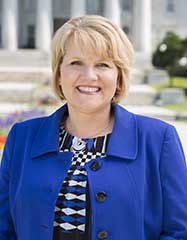
State banking regulators across the six New England states are exploring the creation of a regional compact that would allow financial technology companies to experiment with new and expanded products in “a safe, collaborative environment,” says Cynthia Stuart, deputy commissioner of the banking division at the Vermont Department of Financial Regulation.
Stuart asserts that she and her New England cohorts are adroitly positioned and uniquely qualified to oversee laboratories of finance. In Vermont, for example, she heads an agency that oversees regulation and examination of banks, trust companies, and credit unions as well as such nonbank financial providers as mortgage brokers, money transmitters, payday lenders and debt adjusters.
Financial watchdogs at the state level, Stuart observes, “are already witnesses to a wide breadth of financial services offerings and understand how they impact communities and consumers. As technology intersects with financial regulation,” she adds, “state regulators also appreciate the need to be open to technological innovation while balancing risk and return.”
The regional fintech sandbox is the brainchild of David Cotney, the former Massachusetts Commissioner of Banks, and Cornelius Hurley, director of Boston University’s Center for Finance, Law and Policy. The sandbox stitches together elements of Project Innovate, a development program for fintechs inaugurated by the U.K.’s banking regulator, and the European Union’s “passport” model for cross-border banking operations.
In the U.K., the Financial Conduct Authority is supporting both small and large businesses “that are developing products and services that could genuinely improve consumers’ experience and outcomes,” according to a 2015 report by the London agency. In harmonizing the regulatory regime for the sandbox across state lines of Maine, New Hampshire, Vermont, Massachusetts, Rhode Island and Connecticut, the program emulates the EU’s “passport.” Since 1989, a bank licensed in one EU country has been able to set up shop there while – thanks to the “passport” –operating seamlessly throughout the 28 states of the EU (soon to be 27 after “Brexit”).
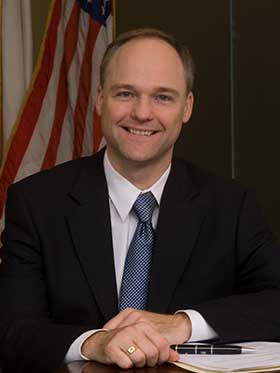
“It’s still preliminary,” Cotney says of the proposed New England sandbox-cum-passport, “but we’ve talked to the financial regulators in all six states and there’s universal openness. Nobody want to be seen as being a barrier to innovation.”
(Barred by law from lobbying in Massachusetts, Cotney hands off the Bay State duties to Hurley while he meets with regulators and other officials in the five remaining New England states. In March, Cotney was named a director at Cross River Bank, a Fort Lee, N.J.-based, $600 million-asset community bank known for its partnerships with peer-to-peer lenders including Lending Club, Rocket Loans and Loan Depot.)
This nascent effort of financial Transcendentalism in New England is, meanwhile, taking place against the backdrop of an increasingly acrimonious battle between the Office of the Comptroller of the Currency and state banking authorities over the licensing and regulation of fintech companies. At issue is the OCC’s plan announced in a December, 2016 “whitepaper” to issue a “special purpose national bank” charter to nonbank fintechs.
Siding with the OCC are the fintechs themselves, including Lending Club, Kabbage, Funding Circle, ParityPay, WingCash. “A special purpose national bank charter for fintechs creates an opportunity for greater access to banking products, empowers a diverse and often underserved customer base, promotes efficiency in financial services, and encourages industry competition,” Kabbage wrote to the OCC in a sample industry comment to its whitepaper (which is on the agency’s website).
Also on board for the OCC’s fintech charter are powerful Washington trade associations such as Financial Innovation Now, the membership of which comprises Amazon, Apple, Google, Intuit and PayPal, and industry research organizations like the Center for Financial Services Innovation. The U.S. banking establishment also appears largely supportive of the OCC. While qualifying its imprimatur somewhat, the American Bankers Association declared that it “views the OCC’s intent to issue charters as an opportunity to further bring financial technology into the banking system…”
But an irate army of detractors is condemning the fintech charter outright. Consumer groups, small-business organizations, community banks, and state attorneys general number among the furious opposition. No cohort, however, has been more hostile to the OCC’s fintech charter than state banking regulators.
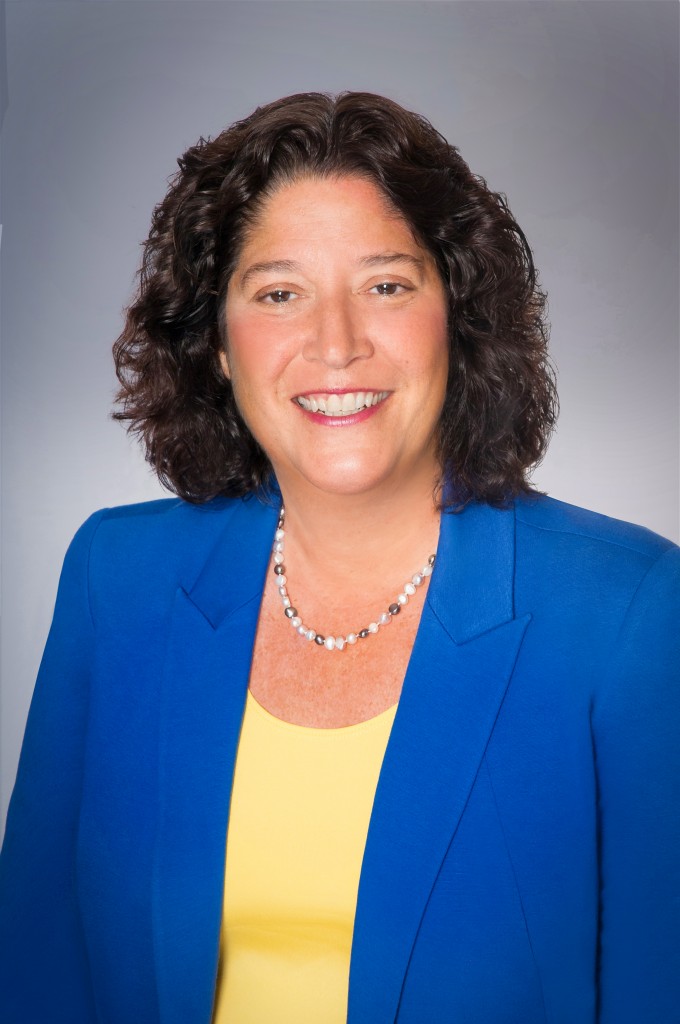
Maria T. Vullo, superintendent of New York State’s Department of Financial Services, has emerged as a firebrand. “The imposition of an entirely new federal regulatory scheme on an already fully functional and deeply rooted state regulatory landscape,” she wrote to the OCC earlier this year, “will invite serious risk of regulatory confusion and uncertainty, stifle small business innovation, create institutions that are too big to fail, imperil crucially important state-based consumer protection laws, and increase the risks presented by nonbank entities.”
Although big-state regulators from New York, California and Illinois have been in the vanguard of opposition, their unhappiness with the OCC is widely shared. Vermont regulator Stuart, who emphasizes the need for regulators “to embrace change,” nonetheless disparages the OCC’s endeavor.
“Of particular concern is the creation of an un-level playing field for traditional, full-service Vermont institutions to the advantage of the proposed nonbank charter,” she told AltFinanceDaily. “The special purpose national nonbank charter would not be subject to most federal banking laws and would be regulated with a confidential OCC agreement. The disparity in regulatory approaches is concerning.”
What had been confined to a war of words – rounds of angry denunciations packed into letters and press releases directed at the OCC — reached fever-pitch last week when, on April 26, the Conference of State Banking Supervisors filed suit against the OCC in federal court. The lawsuit seeks to prevent the agency “from moving forward with an unlawful attempt to create a national nonbank charter that will harm markets, innovation and consumers,” according to a CSBS statement.
Among other things, the conference’s complaint charges that by creating a national bank charter for nonbank companies, the OCC has “gone far beyond the limited authority granted to it by Congress under the National Bank Act and other federal banking laws. Those laws,” the conference’s statement continues, “authorize the OCC to only charter institutions that engage in the ‘business of banking.’”
Under the National Bank Act, the conference’s complaint asserts, a financial institution must “at a minimum” accept deposits to qualify as a bank. By “attempting to create a new special purpose charter for nonbank companies that do not take deposits,” the complaint adds, the OCC is acting outside its legal authority.
Christopher Cole, senior regulatory counsel at the Independent Community Bankers Association – a Washington, D.C. trade association of Main Street bankers known for punching above its weight — asserts that the state banking regulators are on solid ground. “The whole question comes down to what should a bank be for purposes of a national bank charter,” he says in a telephone interview. “The Bank Holding Company Act (of 1956), federal bankruptcy laws, and tax laws – all three – define banks as insured depository institutions. It’s right there in the statutes. So our recommendation,” he says, “is for the OCC to go back to Congress” and ask for the explicit authority to create a fintech charter.
Because the OCC has “short-circuited rule-making” protocol required by another law – known as the Administrative Procedures Act — “the process hasn’t been kosher,” Cole adds.
 Many members of Congress are also expressing outrage at the OCC. Not only have Democratic Senators Sherrod Brown of Ohio and Jeff Merkley of Oregon strenuously objected to the OCC’s fintech charter, but on March 10, 2017, Jeb Hensarling, the chairman of the House Financial Services Committee, fired off a “hold-your-horses” letter to Comptroller Thomas J. Curry. Signed by 34 House Republicans, the March 10 letter reminded Curry that his term of office would officially be up at the end of April, 2017, and urged him not to “rush this decision” regarding the fintech charters.
“If the OCC proceeds in haste to create a new policy for fintech charters without providing the details for additional comment, or rushing to finalize the charter prior to the confirmation of a new Comptroller,” the letter from Hensarling et alia declares, “please be aware that we will work with our colleagues to ensure that Congress will examine the OCC’s actions and, if appropriate, will overturn them.”
Never mind the stern letter from Chairman Hensarling, or the fact that an impressive array of Congressmembers on both sides of the aisle are bipartisanly unhappy, or that state banking regulators’ have filed suit, or that Curry’s replacement as Comptroller is overdue: the OCC is pushing ahead. The agency will play host to a bevy of financial technology companies and other financial institutions on May 16 for two days of get-acquainted sessions in its San Francisco office.
Billed as “office hours,” the West Coast meetings will consist of one-on-one, hour-long informational meetings “to discuss the OCC’s perspective on responsible innovation,” Beth Knickerbocker, the OCC’s acting chief innovation officer, says in a press release.
The office hours, Knickerbocker adds, “are an opportunity to have candid discussions with OCC staff regarding financial technology, new products or services, partnering with a bank or fintech company, or other matters related to financial innovation.”
Back in New England, Hurley, the Boston University law professor advocating the regional sandbox, says: “No one knows where fintech is going. But one place it’s not going is away.”