SoFi Hedge Fund was Not Created for Capital, says CEO Mike Cagney
April 19, 2016If you were at LendIt then you might nod at this — the echo from the alternative lending industry congregation last week had just three words: Long term capital.
Nearly 3500 industry folks gathered at San Francisco to share woes and celebrate victories.
“The nonbank lending industry is at an inflection point,” said Mike Cagney, CEO of SoFi. Cagney known for his candor warned that for the business to make a leapfrog, companies need to establish more balance sheet partnerships, preferably with banks. A failure to do so would cap the number of originations.
“What banks really like is for the alt lenders to be the infrastructure/origination framework and for them to be the balance sheets. But the problem occurs when they also want to retain the customer, this is going to dictate the direction of the industry because you will get a natural cap and you won’t be able to go more than a billion and half originations a month without having balance sheet partnerships.”
In house capital? Not really
Cagney doesn’t want to give the impression that its newly launched hedge fund came about because it couldn’t sell enough loans. It’s rather to gain more access to retail investors and this he said was a simpler vehicle than participating in equity and securitization.
“We have half a billion dollars going into the hedge fund and that’s a week’s production for us. So that’s not going to solve the funding problem.”
We’re not skirting regulation
“It’s a misconception that our industry exists because of some regulatory arbitrage,” Cagney said reasoning that the industry has to follow the same lending regulations as a bank.
“There are lot of limitations that we have because we are not a bank holding company.”
Who are we? Not Banks. What do we want? National lending licenses
Cagney championed the cause for a national lending license and said that Dodd Frank falls short by limiting the Office of the Comptroller of the Currency (OCC).
“The OCC was the mechanism to get a national lending license without the deposit insurance and the industry needs that back.”
California DBO Releases Report on Alternative Lenders
April 15, 2016 The results of a survey that the California Department of Oversight issued late last year to 14 alternative lenders are in. Affirm, Avant, Bond Street, CAN Capital, Fundbox, Funding Circle, Kabbage, LendingClub, OnDeck, PayPal, Prosper, SoFi and Square all responded. CircleBack Lending declined to take it.
The DBO requested data on term loans, lines of credit, merchant cash advances, factoring transactions and other products.
Other than determining that billions of dollars are being deployed from these companies, they found that median consumer loan APRs ranged between 5.37% APR and 35.94% APR. For businesses, the median APR ranged from 18.56% APR to 51.40% APR.
The number of delinquent (30 days or more past due) consumer financing dollars as a share of total dollars outstanding ranged from .99% to 20.30%
The number of delinquent business financing dollars as a share of total dollars outstanding ranged from .55% to 6.79%.
LendIt Recap: News Headlines You Need to Know
April 13, 2016
Al Goldstein of Avant speaking at the LendIt USA 2016 conference in San Francisco, CA, USA on April 11, 2016. (photo by Gabe Palacio)
As the industry wrapped up one of the biggest conferences of the year, here are some notable company announcements worth filing away:
Chicago-based online lender Avant named former UBS executive Raj Vora to lead the company’s capital raising efforts. Vora will lead strategy for its investment vehicles.
New York-based Student loan refinancer Lendkey crossed $1 billion in origination and deployment
Small business lender National Funding appointed first female president Torrie Inouye. Inouye headed data and analytics for the firm where she drove customer acquisition and underwriting.
Another millennial lender on the block raised Series A funding. New York-based online lender Pave Inc raised $8 million from Maxfield Capital that included existing investors C4 Ventures and Seer Capital. The four year old company lends unsecured personal loans to millennials.
Small business lender Streetshares won SEC approval to launch business bonds to the masses. The product will pay a fixed 5 percent interest (regardless of the performance of a particular underlying loan), is ensured by a provision fund, and provides liquidity as investors can access their funds at a 1 percent fee.
Prosper decided to end its loan sale agreement with Citi and might be in talks with Goldman Sachs. This move comes after a lukewarm reception on a batch of Prosper bonds after investors demanded as much as 5 percent points higher compared to last year.
Marketplace Lending Association Formed to Defend Investor Marketplaces
April 6, 2016
Funding Circle, Lending Club and Prosper have joined forces to create a collaborative non-profit body, i.e. a trade association. Its mission is “to promote a more transparent, efficient, and customer-friendly financial system by supporting the responsible growth of marketplace lending, fostering innovation in financial technology, and encouraging sound public policy.”
Among the already available resources on the association’s website is a white paper dictating “operating standards.”
The standards are broken down into five broad categories:
- Investor Transparency and Fairness
- Responsible Lending
- Safety and Soundness
- Governance and Controls
- Risk Management
The group’s initial members are notable because Prosper only does consumer loans and Funding Circle only does business loans. Lending Club bridges the gap by doing a combination of both. That means that the group’s prospective membership will be fantastically broad. After all, what does a commercial lender providing capital to a $10 million/year business have in common with a personal lender helping a single mother refinance a credit card? The answer is their investor base.
 All 3 companies allow investors to invest in loans on their respective marketplaces and lo and behold “investor transparency and fairness” is the first, foremost and most detailed category of their white paper.
Indeed, one requirement to join the association is to be matching 75% of loans, by dollar, with commitments for funding from investors before the loans are issued.
The Marketplace Lending Association therefore probably seeks above all else, permanent acceptance of the ability for investors to buy loans or securities backed by loans in online marketplaces.
And it’s no wonder, just last week SEC Chairman Mary Jo White questioned these marketplaces during a keynote speech at Stanford University. “We expect that investors will receive disclosures about the loans underlying their investments, including information about the borrowers as well as the platform’s proprietary risk and lending models, that will enable them to make informed investment decisions – both at the time of investment and on an ongoing basis,” she said.
The SEC is not alone in their interest, hence the need for and now the emergence of, a Marketplace Lending Association.
Why OnDeck Wants Small Biz Owners to be Financially Literate
April 5, 2016 OnDeck is preparing a market it can serve.
The New York-based lender partnered with SCORE, a non profit mentoring small businesses to offer training workshops to its mentors.
OnDeck’s training aims to raise awareness for alternative forms of lending such as crowdfunding, invoice financing among small businesses who typically borrow from banks. OnDeck will also screen entrepreneurs and small businesses for financing options they may qualify for.
Outreach and borrower referral programs have become far too common and a back door entry for marketplace lenders as they gradually march forth on banks’ turf. Last week, (March 31st) The National Federation of Independent Business (NFIB) joined hands with Atlanta-based Kabbage Capital throwing open a potential customer base of 325,000 businesses. Thanks to alt lenders or not, small business borrowing is growing. Reuters data showed that borrowing was up 17 percent in February, edging up from a two year low in January.
So maybe it’s working?
Santander Cuts Branches, Partners with Kabbage
April 4, 2016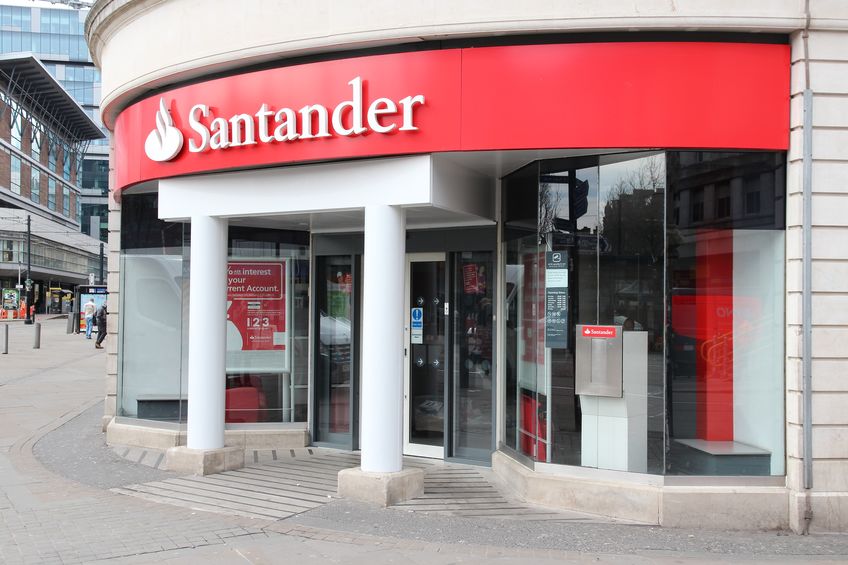
Santander is putting its money where its mouth is and launching Kabbage in UK.
The Spanish banking giant, an investor in Kabbage will use its technology to underwrite quick loans up to 100,000 pounds the same day for loans that typically take 2-12 weeks to process.
The service will roll out over the next two months and will be the bank’s second attempt at allying with an online partner. In 2014, it set up a referral program with UK-based Funding Circle for small business borrowers.
The announcement comes at a time when big banks are shedding weight and becoming leaner to adapt to the digital times. Last Friday (April 1st), Santander said that it will close up to 450 of its 3,467 (13 percent) branches to transition into “cheaper digital channels.”
The road to saving 3 billion euros by 2018 is paved in working with lean businesses like Kabbage. “The way we internalise and adapt to new technology in the coming years will determine our success,” Ana Botin, chairman of Santander said.
This isn’t a one off announcement by Santander. Through its venture arm, Innoventures set up in 2014, the bank dedicated $100 million to invest in fintech startups. The fund participated in Kabbage’s Series E funding last year along with Scotiabank, ING and Reverence Capital Partners.
The bank also set up what it called a “tech-focused international advisory board” led by former US Treasury Secretary Larry Summers with a panel consisting of Red Hat CEO Jim Whitehurst, former Oracle president Charles Phillips and Francisco D’Souza, CEO of software services company Cognizant.
As the alternative lending industry shapes itself into stability with regulation, reducing its dependency on Wall Street’s institutional money, there are doubts whether the industry will stand the test of time in tough credit markets. While venture dollars are increasing in these companies, investors demand more. Fintech upstarts raised $19 billion in 2015 and in the same time, bank staff has been slimming down as investors bet on automated finance to eventually overthrow banking. Already, 46 percent of private funding has gone to lending companies selling cheaper loans easily while the banks focus on the shift of a branch’s transactionary functions to a strategic, consultancy role.
Will we see more such debanking?
Online Lender Avant Hires Ex-FDIC Chief to Board
April 1, 2016 Soon, non banking lending will be made up of ex bankers.
The latest announcement comes from Chicago-based online lender Avant which hired the former head of Federal Deposit Insurance Corporation Sheila Bair to its board. Avant sells unsecured personal loans from $1,000 to $35,000 and has issued loans worth $3 billion.
Bair joins Avant after months of due diligence and said she was impressed Avant’s lending standards are similar to big banks where it retains half the loans on its balance sheet. At the FDIC where she spent five years between 2006 to 2011, she pushed for stricter lending standards with capital and risk. In 2014, she joined the board of Spanish bank Santander for a brief stint.
In the recent months, the new crop of fintech upstarts, backed by venture dollars and fiery ambition have clocked fast growth to justify the impressive hires. Stealth P2P insurance startup Lemonade brought on famous behavioral economist Dan Ariely to design risk models. Student lender SoFi hired Deustche Bank chief Anshu Jain to its board, Funding Circle appointed ex ECB chief Jorg Asmussen and last year Prosper hired former CFPB chief Raj Date.
The alternative lending space is garnering a lot of regulatory attention. SEC Chairwoman Mary Jo White called for more disclosure to investors as well as proprietary risk and lending models adopted by companies. The Small Business Finance Association is working on building a guide for industry best practices.
Watch out Bank Tellers, Robots are Coming for your Job
March 31, 2016 Watch out bank tellers, robots are coming for your job.
Investment in private fintech companies and upstarts has grown ten fold from $1.8 billion in 2010 to $19 billion in 2015 and in the same time, bank staff has been slimming down as investors bet on automated finance to eventually overthrow banking. Already, 46 percent of private funding has gone to lending companies selling cheaper loans easily.
The ambition to oust bank behemoths however will need continuous fueling. As things stand now, these lenders are nowhere close to managing that coup. Revenue impact from the digital banking upstarts cause a one percent dent in the $850 billion global banking revenue.
It may be negligible but not to be neglected, investors might say. In the US, online lenders like Lending Club and Prosper Loans sold loans worth $8 billion last year and are looking at a target market of $254 billion, 8 percent of the total consumer credit market.
In its report, Citigroup predicts that US and European banks will shed 1.7 million jobs by 2025 as the banking sector undergoes its own “Uber moment,” forcing banks to automate some lines of business. Anthony Jenkins, former Barclays CEO translates this to halving the number of branches and people over the next few years. If this is an eventuality, different markets will take different paths to get there.
While Nordic and Dutch banks have cut total branch levels by around 50 percent from recent peak levels, branch openings in the top US cities including Seattle, Denver and Dallas have increased between 2-17 percent in the last five years. Part of the reason is because customers still have to visit a branch for identity verification but mostly the benefits (easy access, brand recall) of having a bank branch in wealthy states outweighs the costs involved. “With wealth concentrated in the top cities in the US, a strong branch presence in these cities allows banks to capture wealth,” the report said.
Though the transition of the branch’s role from transactions to advisory/consultancy is imminent, the pace has been gradual, about 11-13 percent since peak pre-crisis. That number could reach 30 percent by 2025. As for the US, there are 15 percent less tellers than there were in 2007.
But the banks want in and are willing to pay. Citigroup and Goldman Sachs have been active in seeding fintech rivals. In the last five years, Citigroup has invested in 13 companies including Square.
Is it time to make another David and Goliath reference?