
Why BFS Capital’s Glazer Is Passing the Torch
August 22, 2017
Marc Glazer co-founded BFS Capital in the early 2000s and has remained at the helm all this time – until now. Glazer has passed the torch over to Michael Marrache, effective last week. He isn’t going too far, as the former chief executive will remain chairman of the board working alongside Marrache on the next chapter for the MCA and small business lending company. Meanwhile the executive pair points to a future not only where there is sustainability but where there is growth.
“We’ve obviously grown the company year after year over the last 15 years, and as with every other type of business and industry there were ebbs and flows. Over the last couple of years with a significant amount of challenges going on, we as a company decided we want to continue to grow but we want to grow in a way that benefits the company from a profitability standpoint as well as serves our customers,” said Glazer.
In April 2017, BFS Capital surpassed $1.5 billion in financings since inception. The company expects to fund more than $300 million in new financings in this calendar year.
“We’ll increase our reliance on algorithmic solutions, transparency in the ISO and customer experience and we will increase the number of financing solutions. Culture is significant for us and we will continue to build on the legacy Marc created,” said Marrache.
Marrache takes the reigns at a time when the industry is at a crossroads that will leave some alt lenders in the dust while other rise to the occasion.
“The stories that were challenging in 2016 look good in 2017,” said Marrache, pointing to OnDeck’s forthcoming profitability, Kabbage’s lofty valuation, CAN Capital’s return to funding, PayPal’s acquisition of Swift Financial and Prosper looking good.
“We think alternative and non-bank lending are in a good place. And yes, some of the folks that are no longer operating in this space were overextended or may have exhibited irrational behavior for pricing or customer acquisition costs. We think what we’re witnessing is the normal lifecycle of the industry. There were lots of participants earlier. Now to participate the industry must show a bit more control and sophistication. If you execute well, the tomorrows will be better than 2016,” said Marrache.
And according to Glazer, because of the changes in the business environment over the last couple of years, it’s going to require a different skillset to take BFS Capital to the next level.
“There are clear differences between starting a company, growing a company and becoming a billion-dollar small business financing platform. We’ve needed to evolve at each stage and now again with Michael’s leadership,” he said.

For Glazer, Marrache was almost always the succession plan.
“To be fair, hiring Michael four years ago, maybe succession planning was in the back of my mind somewhat. But as our relationship developed and as he was COO for three-plus years and then president, it became apparent that Michael’s skill set, passion, desire and how he looked at culture were all similar to myself. Let’s grow, but let’s watch our numbers. Make sure we treat people fairly. And for the businesses we are financing — provide thoughtful capital to help them versus creating problems for them,” said Glazer.
More Funding
BFS Capital’s business model is comprised both of MCAs and small business loans. Alternative funding company CAN Capital does both MCAs and loans and had to pause lending until recently. For BFS, however, it’s all systems go. And that means unequivocally continuing to fund small businesses.
“Absolutely, yes. And there’s no quizzicality in mind. I would say we are going to continue funding small businesses and fund more of them this year than we did last year. And we will fund even more the year after. So absolutely,” Marrache said.
BFS Capital sells through both ISOs and directly to merchants, the former of which is where most originations derive. “There are a number of solutions we are putting together to benefit that network,” said Marrache, adding he doesn’t believe algorithmic solutions will replace underwriters.
“We have a strong legacy of customer underwriting. We believe lower level transactions can be significantly more automated. Above a certain level and certain amounts of origination, we think algorithms and data solutions at that point are a facilitator, not a replacement of our underwriting,” Marrache said.
The Legacy
There was a time when BFS Capital’s growth plans included debuting in the public markets. Those plans have since been sidelined amid a chilly investor reception for alternative lender stocks.
“We spent a lot of effort in our filing,” said Glazer. “But at the end of the day, the market for the space had softened. Going forward I think it’s really going to be a question of what the markets look like and what makes sense for our company. We will evaluate that as the situation warrants.”
IPO or not, it appears Glazer’s legacy is still being written.
“I co-founded the company 15-plus years ago. Before finance and accounting, at heart, I’m an entrepreneur. That’s what I do, what I enjoy. I love starting companies, having the vision and creating things,” he said.
As chairman of the board and a major stakeholder, Glazer will continue to be active in BFS Capital.
Tech Banks: Will Fintech Dethrone Traditional Banking?
August 20, 2017On Halloween, 2014, a largely unknown, Boston-based financial institution, First Trade Union Bank, embraced high-technology, went paperless, and officially adopted a new name: Radius Bank.
 In reinventing itself, Radius did more than dump its dowdy moniker. It shuttered five of its six branches, re-staffed its operations with a tech-savvy team, instituted “anytime/anywhere” banking services, and offered customers free access to cash via a nationwide ATM network. And it teamed up with a fistful of financial technology companies to offer an impressive array of online lending and investment products.
Today, the bank’s management boasts that, using their personal mobile phones, some 2,700 people per week are opening up checking accounts, funneling $3 million in consumer deposits into the bank’s virtual vault. That’s a stark contrast from a decade ago when the financial institution was being rocked by the financial crisis and “we couldn’t get anybody to walk into our branches,” says Radius’s chief executive, Mike Butler.
“We tried to leave that old bank behind,” he says. “We’re a virtual retail bank now, an efficiently run organization that offers high levels of customer service and Amazon-like solutions.”
Radius Bank is not alone. At a moment when there is much discussion — and hand-wringing — over the future of seemingly outmoded, highly regulated community banks, a coterie of small but nimble banks is exploiting technology and punching above its weight. Almost overnight, this cohort is combining the skill and hard-won experience of veteran bankers with the lightning-fast, extraordinary power afforded by the Internet and technological advances. As a result, these small and modest-sized institutions are redefining how banking is done.
In addition to Radius Bank, independent banks winning recognition for their bold, innovative – and profitable — exploitation of technology, include: Live Oak Bank in Wilmington, N.C., which adroitly parlays technology to become the No. 2 lender to business and agricultural borrowers backed by the U.S. Small Business Administration; Darien Rowayton Bank in Darien, Conn., which is making a name for itself with coast-to-coast, online refinancing of student loans; and Cross River Bank in Fort Lee, N.J., which does back-end work for a passel of fintech marketplace lenders.
Interestingly, there’s not much overlap. Each of the banks goes its own way. But what all the banks have in common is that each has struck out on its own, each hitting upon a technological formula for success, each experiencing superior growth.
“These are companies that understand the value of a bank charter,” says Charles Wendel, president of Financial Institutions Consulting in Miami. “They have to work under the watchful eyes of state and federal regulators. But their cost of funds is low and they can offer more attractive rates. Because they’re less likely (than nonbank fintechs) to disappear, run out of money, or get sold,” the bank expert adds, “they also have the image of stability with customers.”
These modest-sized banks are emerging as not only pacesetters for the banking industry. Along with making common cause with the fintechs — which had promised to disrupt the banking industry – they’re even beating the fintechs at their own game.

“Classically, community banks have looked to technology partners to provide technological innovation,” says Cary Whaley, first vice-president for payment and technology policy at the Independent Community Bankers of America, a Washington, D.C.-based trade group representing a broad swath of the country’s 5,800 Main Street banks. “They still do. You’re seeing more partnerships. But now you also see community banks building innovative products and services outside of that relationship. You see forward-thinking banks developing their own technology to support big ideas like marketplace lending, distributed ledger technology, and emerging payments technology.”
With its extraordinary skill at exploiting technology, Live Oak Bank – which trades on the Nasdaq and is the only public company encountered in the cohort — has become a Wall Street darling. “While several banks have adopted an online-only model, and nearly all banks are shifting more and more delivery through online channels, Live Oak was built from the ground up as a technology-based bank,” Aaron Deer, a San Francisco-based research analyst at Sandler O’Neill Partners, wrote in a recent investment note.
Driving the success of Live Oak, which operates out of a single branch in the North Carolina seacoast town and has only been in business for a decade, is the explosive growth in its SBA lending, the bank’s “core strategy,” Deer notes. Last year, Live Oak lent out $709.5 million in SBA loans in increments of up to $5 million, the federal agency reports, making it the country’s No. 2 SBA lender. It trailed only megabank Wells Fargo Bank, the third largest bank in the U.S. with $1.5 trillion in assets, which made $838.93 million in SBA-backed loans last year.
As its SBA lending has taken off, Live Oak, which qualifies as a “preferred lender” with the federal agency, boasts assets that have nearly tripled to $1.4 billion in 2016, up from $567 million two years earlier. Those are flabbergastingly fantastic growth numbers. But just as incongruously — by nipping at the heels of Wells Fargo — Live Oak has been challenging a bank more than a thousand times its asset size for dominance in SBA lending.
And, interestingly, the bank is able to book those outsized amounts of SBA loans while lending to only 15 industries out of 1,100 approved by the government agency, slightly more than 1% of the universe. That’s up from 13 industries in 2015, and Live Oak is adding two to four additional industries yearly for its SBA loan portfolio, Deer reports. Included among the industries to which the bank made an average SBA loan of $1.29 million last year: Agriculture and poultry, family entertainment, funeral services, medical and dental, self-storage, veterinary, and wine and craft-beverage.
The bank has a team of financing specialists dedicated to each of the designated industries. Among Live Oak’s current SBA borrowers are Martin Self Storage in Summerville, S.C.; Utah Turkey Farms in Circleville, Utah; Pinballz Arcade, Austin, Tex.; and Council Brewery Company in San Diego. Steve Smits, chief credit officer at the bank, told NerdWallet: “When you specialize in something, you become efficient. Because we do it every day and we have professionals and specialists, we tend to be more responsive and quicker.”
The heady combination of technological sophistication and banking expertise has allowed the lender to slash its loan-origination time to 45 days, about half the three-month industry average for SBA loans. To speed up loan sourcing and generation, the bank developed its own in-house technology, which led to the formation of the Wilmington-based technology company nCino, which was spun off to shareholders in 2014.
Live Oak did not return calls to discuss its lending strategies, but in SEC filings bank management declared: “The technology-based platform that is pivotal to our success is dependent on the use of the nCino bank operating system” which relies on Force.com’s cloud-computing infrastructure platform, a product of Salesforce.com.
Natalia Moose, a public relations manager at nCino told AltFinanceDaily in an e-mail interview: “We work with Live Oak Bank, in addition to more than 150 other financial institutions in multiple countries with assets ranging from $200 million to $2 trillion, including nine of the top 30 U.S. banks. nCino was started by bankers at Live Oak Bank who found the logistics of shuffling paperwork among loan stakeholders to be unwieldy, inefficient and time-consuming.
“nCino’s bank operating system,” Moose adds, “leverages the power and security of the Salesforce platform to deliver an end-to-end banking solution. The bank operating system empowers bank employees and leaders with true insight into the bank, combining CRM (customer relationship management), deposit account opening, loan origination, workflow, enterprise content management, digital engagement portal, and instant, real-time reporting on a single secure, cloud-based platform.”
Live Oak, meanwhile, is not resting on its technological laurels. According to Deer’s report, the bank’s parent company, Live Oak Bancshares, has formed a subsidiary to inject venture capital into fintech companies. It’s already taken a small equity stake in Payrails and Finxact, “the latter of which is developing a completely new core processor to compete against the old legacy systems used by most banks,” the Sandler O’Neill analyst writes. “Quite simply,” he asserts elsewhere in his report, “the company is far beyond any other bank we cover in its technical capabilities and the growth outlook remains outstanding.”
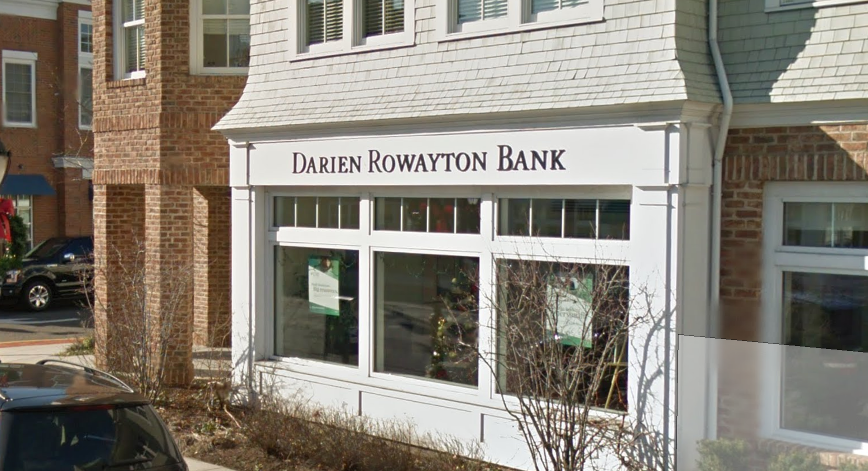 Five hundred and thirty-three miles due north along the Atlantic coast in southeastern Connecticut, Darien Rowayton Bank is also experiencing tremendous success as a lender using a home-grown technology platform. State-chartered by the Connecticut Department of Banking and regulated as well by the Federal Deposit Insurance Corp., the $600 million-asset bank is winning attention in banking circles for its online student-loan refinancing.
A few years ago, DRB, as it is known, was looking to go beyond mortgage and commercial lending — “the bread and butter for most community banks,” bank president Robert Kettenmann explained to AltFinanceDaily in a telephone interview – and was somewhat at a loss. The bank considered but then rejected the credit card business. Finally, DRB struck paydirt refinancing student loans. “Our chairman really seized on the opportunity,” Kettenmann says, adding: “It’s a $35 billion market.”
Thanks to the National Bank Act, it’s able to operate in all 50 states. As a regulated commercial bank with a strong deposit base, DRB can also offer low rates well below any state’s usury prohibitions.
What is most striking about DRB’s program is its nationwide targeting of upwardly mobile, affluent young professionals. According to a PowerPoint presentation obtained by AltFinanceDaily, all of the bank’s super-prime borrowers, who are mainly in the 28-34 age bracket, have a college degree and a whopping 93% have graduate degrees. Average income is $194,000.
 Forty-eight percent of those refinancing student loans with DRB are doctors or dentists and another 22 percent are pharmacists, nurses or medical employees; only about 20% are paying off their law degrees or MBAs. The heavy concentration of refinancing in the medical field reduces economic risk in an economic downturn. Forty-three percent of the borrowers are home-owners, the rest are renters – and prime candidates for an online, DRB-financed mortgage.
(Once known as “yuppies” today this cohort is “known by the acronym ‘HENRY,’” remarks Cornelius Hurley, a Boston University banking professor and executive director of the Online Lending Institute, explaining the initials stand for “High Earners Not Rich Yet.”)
The Connecticut bank partnered with a third-party on-line vendor, Campus Door, when it commenced making student loans in 2013. In the fall of 2016, however, DRB built out its own, proprietary loan-origination system, Kettenmann reports, emphasizing that CampusDoor had been an excellent partner but that the bank wanted to exercise end-to-end control over the process. DRB employs a seven-pronged, “omni-channel” marketing approach that includes interactive marketing, affinity partnerships, digital/online advertising, direct mail, mass-media advertising, and public relations/brand awareness campaigns.
DRB’s online enrollment provides “pre-approved rates” in less than two minutes with final approval on rates in 24-48 hours. Refinancers can complete the online application at their own speed. Through May, 2017, DRB had made $2.48 billion in refinancing to 20,000 student-loan borrowers, with only ten defaults, five of which were attributed to deaths or “terminal illness.”
On Yelp! the bank has received a batch of reviews ranging from very favorable, five-star (“I had a truly wonderful experience”) to one-star (“awful” and “truly a nightmare”). Many fault the application process as laborious, describing it as “time-consuming.” But for those who have succeeded, like the reviewer who counseled “patience,” the result can be “the lowest rate with DRB…my loan payments went down $100 a month.”
 Just about an hour’s drive south and taking its name from its proximity to New York city just over the George Washington Bridge is New Jersey-based, state-chartered Cross River Bank, which has a reputation as a partner-in-arms to fintech companies. “We’re both users and producers of technology,” declares Gilles Gade, the bank’s chief executive.
The bank provides “back-end” and infrastructure support to 17 marketplace lenders that offer a suite of lending products including personal loans, mortgages and home-equity loans. Following loan origination by a fintech company – Marlette Funding, Affirm, Upstart, loanDepot, SoFi, and Quicken Loan, among other partners — Cross River does the actual underwriting. Last year, Gade reports, the bank underwrote 1.9 million loans valued at $4-4.5 billion, about 10% of which Cross River kept on its books. The bulk of the loans are sold “back to the marketplace lenders” or to a third party. “We’ve created a high-velocity automated system,” he says.
Gade is manifestly unapologetic about the bank’s role in assisting fintechs in their competition with the banking establishment. “We’re a banking infrastructure services provider for those who want to disrupt the banking system,” he says. “Consumers expect a lot better than they’ve been getting from traditional banking services.”
 Back in Boston, Radius Bank’s chief executive reports that forging partnerships with fintechs to provide the full panoply of online banking services was no easy proposition. In its mating ritual, Radius not only had to determine that a fintech company’s offerings were sound and that it had the right characteristics – most especially “a long-term, sustainable business model” – but that its corporate culture meshed comfortably with Radius’s.
After meeting with as many as 500 fintechs and after a fair amount of trial and error, Radius formed partnerships with LevelUp, which enables customers to make mobile payments; with online lender Prosper, for refinancing consumer debt and “credit rehabilitation”; with SmarterBucks, for refinancing student loans; and with online investment firm Aspiration Partners – which allows investors to name their own fees and markets itself to a predominately middle-class audience as the firm “with a conscience.”
Radius employs advertising on social media websites and employs “psychographics” to appeal to “anyone who is zealous about using technology, not necessarily millennials,” Butler says. The data show that 65% of adults in the U.S. would prefer to use a traditional bank and have face-to-face interactions with a teller, he notes, leaving the remaining 35% as Radius’s target audience.
Christopher Tremont, executive vice-president for virtual banking, told AltFinanceDaily that a typical Radius customer is 42 years old, lives in Boston, New York, Chicago “or one of the bigger cities in the West,” is a “technophile,” earns $75,000 a year, and has $100,000 in personal assets.
Radius’s performance since it went paperless has been stellar. The bank has seen a rapid rise in deposits, spurting to $782 million through the first quarter of 2017, up from $565 million at year-end 2014. With little fee income but ample deposits and low-cost funds, Radius realizes the bulk of its revenues – and profits — on the interest-rate spread generated from its loan portfolio.
The bank booked $43.5 million in SBA loans last year, ranking it in the top 50 banks on the SBA’s league tables, while carrying another $105 million in its commercial leasing business at the end of the first quarter this year. Loan generation is driving asset growth, which are currently at $973 billion, up more a third from $726 million in 2014, and Butler expects the bank’s assets to top $1 billion sometime this year.
“Community banks love that part of the business—lending money,” Butler says.
The Scoop on iPayment’s MCA Renaissance
August 18, 2017
iPayment, a small business payment processing company, is placing a bet that it could be better the second time around in the MCA industry. iPayment Capital, which is scheduled to launch in the fall, is iPayment’s second foray into the merchant cash advance market. In conjunction with this expansion iPayment tapped Tomo Matsuo as senior vice president to spearhead iPayment Capital.
iPayment’s announcement comes on the heels of industry peers Square Capital’s Q2 loan origination of $318 million and PayPal’s acquisition of Swift Financial. Rather than remain on the sidelines, especially with access to data on some 137,000 small businesses, iPayment is making its move.
“Before Daily ACH loans and MCAs, we all started with the split payment MCA, and it’s exciting to see the recent renaissance of that mechanism with companies like Square and PayPal making it a key product feature. Transaction-based underwriting and variable payback schedules have become much more mainstream thanks to companies like Square and Amazon,” said Matsuo.
iPayment’s timing for getting back into MCAs is apparent but also coincides with the industry being held under a microscope for some questionable practices, not the least of which involves stacking, which can get small businesses in over their heads. Matsuo said the industry has a shared responsibility to fix this.
“I think there’s an opportunity for the industry to clean up some of the stacking and other practices. We all need to do more to better align ourselves with the needs and long-term health of the customers,” said Matsuo.
Meanwhile David O’Connell, senior analyst at Aite Group, offered his thoughts on the future role of MCA in small business funding: “Although we will always have merchant card advances in large volumes and these will be important to SMBs seeking funding, some of this volume will be replaced as the practices of alternative lenders become more entrenched: the provision of capital to an SMB based on a variety of data sets that achieve a fuller view of an SMB’s ability to repay only some of which is related to credit card volume.”
Balance Sheet Funder
Similar to its predecessor product iFunds, iPayment Capital will be a balance sheet MCA origination business. The company has the benefit of hindsight with iFunds, which was before Matsuo’s time there, as well as any missteps by the industry from which to pull.
“My job is to launch and build our own balance sheet MCA product, and we have a management team committed to the initiative,” said Matsuo. “iPayment is in a unique position because of our long history with the product — as a funder, split payment technology provider, and referral partner — and have a lot of experiences to build upon. There’s a great team at iPayment with a ton of institutional knowledge.”
iPayment’s access to customer data and insights certainly gives the company an edge. “It’s a crowded market going after a finite universe of customers. From a customer acquisition standpoint, iPayment has the benefit of having 137,000 customers,” said Matsuo.
iPayment also has solid industry partners including the likes of RapidAdvance with whom the company serves merchant customers. iPayment will continue to work with RapidAdvance and others on MCA. “We recently had the opportunity to strengthen our balance sheet, and we believe investing in iPayment Capital makes great business sense,” said Matsuo.
Matsuo pointed to opportunities within the smaller merchant segment for MCAs. iPayment Capital’s average funding size will be somewhere between Square Capital’s range of $6,000 – $7,000 and that of ACH alternative lenders at about $40,000. “We’ll be right in the middle,” he said.
Matsuo, a Bizfi alum, officially started in his new role on July 1, and he has no interest in looking in the rearview mirror. “At the end of the day, it comes down to pricing risk appropriately and maintaining proper controls,” said Matsuo, adding: “We all want to grow, but there are responsible ways of doing so.”
Go West, MCA Broker
August 16, 2017
If you check out the AltFinanceDaily forum, one of the latest discussions originated from a self-described newbie business owner who wants to know, ‘What separates a successful ISO from the rest?’ The user, who calls himself jellyfish capital, asks the AltFinanceDaily universe:
“I’m trying to figure out what the variables are that would dictate a successful brokerage/ISO vs. a shop that has a ton of turnaround and doesn’t make any money and ultimately ends up shutting its doors.”
The answer just might lie in the types of financial products the broker can sell.
MCA Broker Shift
Noah Grayson is managing director and founder of South End Capital, a commercial and investment residential real estate lender launched in 2009 that also started doing SBA loans and MCA consolidation loans in recent years to help out merchants with stacked MCA positions. Grayson pointed to a shift in the types of brokers signing up with the Encino, Calif-based lender.
“We’ve noticed a large number of brokers signing up with us are coming over from the MCA space. They’ve relayed to our staff that competition is too stiff to make enough money only originating MCAs, and they are looking for other avenues to bring in revenue,” Grayson said.
Indeed, South End Capital has seen an influx of brokers from the MCA industry gravitating their way. In fact, there has been more than a 10 percent spike year-to-date versus the same period last year in the number of brokers that discovered South End Capital through some form of Internet origin, such as AltFinanceDaily, versus a targeted ad in a real estate related publication or through more traditional real estate origination means.
“What we’re hearing from our MCA industry referral partners is that their[customers] now want any option other than an MCA. These brokers are coming to us now because they are trying to evolve their businesses to stay afloat. Offering real estate or SBA loans has proved to be the next logical step for these brokers and it has provided a big bump to our business,” said Grayson.
As in any industry, making a career change can introduce unexpected challenges. A hurdle for the brokers, particularly as it relates to making the jump to commercial real estate lending, has been unrealistic expectations.
“Many MCA brokers have an expectation that real estate or SBA loans will work similarly to an [MCA], but it’s a more involved process. There’s more documentation and more moving parts to understand. There has been a big learning curve for a lot of these brokers — some have been willing to learn and are excited about the opportunity. However, many MCA brokers have proven extremely resistant to change and unable to adapt” noted Grayson.
There are hurdles facing the MCA industry, too.
 Merchant Motivation
So what’s driving the shift? Small businesses, some of which are saddled with short-term obligations, have begun to realize that thanks to the rise of alternative lenders they have more options. Meanwhile unscrupulous collection agencies are throwing a monkey wrench into the situation, making it trickier for merchants to gain access to cash advances.
David Soleimani, CEO of LendFi Corp, said a major setback for the MCA industry has been the interference of collection companies convincing good paying merchants to default and cut their payments in half. By negotiating payments with a third party, merchants essentially become blacklisted from receiving any further MCAs.
LendFi senior account rep Jonathan Meyer specializes in cash advances, term loans, equipment leasing and lines of credit. He’s noticing a trend of more MCA brokers expanding their line of business in the last year.
“Companies are overextended [with cash advances.] It’s a problem,” said Meyer. “If everything is perfect, we can do a term loan or a line of credit if it falls under certain criteria.”
One small business came to LendFi’s Meyer recently and as a result saved himself a lot of cash. “I consolidated someone’s loan recently. I got him a term loan and saved him $14,000 a month. He had two loans at $110,000. I got him a term loan for $165,000 and he saved $14,000 a month. He was paying $22,000 per month,” said Meyer, adding that he also consolidated the payments from a daily to a monthly schedule. “That’s a huge savings,” he said.
For all of the twists and turns that may be up ahead for brokers and merchants alike, one thing seems clear. The MCA industry isn’t going anywhere.
“There will always be a [customer] whose only option is an MCA, and it has its benefits for many. For example, the only way to get business funding in one or two days is with an MCA. However, I think the reasons why someone would need an MCA are becoming fewer and fewer as other more viable financing options emerge,” said Grayson.
Catching Up With Marketplace Lending – A Timeline
August 13, 20175/17 – Funding Circle surpassed Zopa in cumulative lending to become the UK’s biggest marketplace lender
5/18 – Breakout Capital announced appointment of Douglas J. Lanzo as EVP and General Counsel
5/22 – The New York State legislature held a joint hearing on online lending
5/25
- OnDeck had the maturity date of its $100M credit facility extended
- China Rapid Finance reported Q1 net revenue of $10.5M
- Prosper Marketplace closed $495 securitization transaction
- SoFi co-founder Dan Macklin announced his departure from the company
5/31 – IOU Financial reported Q1 results, had $1M loss on $4.3M in revenue and lent (CAD) $22.1M
6/2 – Zopa began allowing investors to sell loans that have previously been in arrears
New York State legislators proposed the formation of an online lending task force
6/6 – AltFinanceDaily and Bryant Park Capital published their Q1 confidence index in which industry CEOs scored their confidence in the continued success of the MCA and small business lending industry at 73.8%, the lowest level since the survey started in Q4 2015. It peaked at 91.7% in Q1 2016.
6/8 – Amazon surpassed $3 billion in loans made to small businesses since their lending program launched
6/9 – RealtyMogul announced that they had exited the residential fix-and-flip market
6/12 – The US Treasury published a report that called for the repeal of Section 1071 of Dodd Frank
6/13
- SoFi applied for a bank charter, specifically an Industrial Loan Company charter
- Lendio announced a pilot agreement with Comcast business
6/14 – Patch of Land expanded its debt facility from $10M to $30M
6/19 – Goldman Sachs’ online lender Marcus surpassed $1 billion in loans made since inception
6/20 – Former Lending Club CFO Carrie Dolan joined Metromile, an insurance company, as CFO LendingTree acquired MagnifyMoney
6/21 – Pearl Capital secured $15M in financing from Chatham Capital Management
6/27
- Square Capital announced that it will pilot a consumer loan program
- Former RapidAdvance CFO Rajesh Rao became the CFO at Beyond Finance, Inc.
6/29
- Funding Circle hired Joanna Karger as US Head of Capital Markets and Richard Stephenson as US Chief Compliance Officer
- Pave suspended lending operations
- Ron Suber, president of Prosper Marketplace, announced that he was stepping down from the company
- The SEC announced that all companies will now be able to submit draft IPO registrations confidentially, a perk previously only reserved for businesses designated as “emerging growth companies” under the JOBS Act.
6/30
- PayPal Holdings Inc announced that it had invested in LendUp
- Yellowstone Capital announced that they had funded $47 million to small businesses in the month of June
7/3 – Funding Circle announced that Sean Glithero had joined the company as its new global CFO
7/5 – Lending Club appointed Ken Denman to its Board of Directors
7/6
- CAN Capital announced that they had been recapitalized and were resuming funding operations
- Orchard Platform and Experian announced a strategic collaboration on data
7/7
- CFPB announced that it was extending the deadline of its small business lending RFI from July 14th to September 14th
7/10
- China Rapid Finance announced that they had made 20 million cumulative loans since inception
- CFPB announced new arbitration rule that effectively bans class action waivers from consumer finance contracts
- Former OnDeck VP of External Affairs and Associate General Counsel Daniel Gorfine, was appointed by the Consumer Future Trading Commission to be Director of LabCFTC and Chief and Innovation Officer
7/11
- dv01 and Upgrade (Former Lending Club CEO Renaud Laplanche’s new company) announced a strategic reporting partnership
- PayPal hired former Amazon executive Mark Britto to lead its lending business
- Fora Financial expanded its credit facility led by AloStar
See previous timelines:
4/6/17 – 5/16/17
2/17/17 – 4/5/17
12/16/16 – 2/16/17
9/27/16 – 12/16/16
Breakout Capital Expands Senior Leadership Team
August 6, 2017Breakout Capital – a leading small business lender – announces the hires of Robert Fleischmann as Senior Vice President, Strategic Partnerships and Tom McCammon as Senior Vice President, Business Operations. These key additions position the small business lender for continued growth.
McLean, VA, August 7, 2017 – Breakout Capital announced today the appointments of Robert Fleischmann as Senior Vice President, Strategic Partnerships and Tom McCammon as Senior Vice President, Business Operations. Both Mr. Fleischmann and Mr. McCammon bring a wealth of knowledge and small business lending experience that can accelerate Breakout Capital’s rapid growth.
“Breakout Capital’s growing employee base shares the same passion and commitment to advancing the Company’s mission to provide transparent working capital solutions, educate small businesses, and promote industry-wide best practices. We are thrilled with the additions of Robert and Tom to the leadership team,” said Founder & CEO, Carl Fairbank.
“Breakout Capital impressed me with its outstanding commitment to educating and advocating on behalf of small businesses,” said Fleischmann. “The innovative loan products combined with the impressive team of professionals make me extremely excited about the opportunity.”
Mr. Fleischmann will lead Breakout Capital’s efforts to expand and diversify its channels through strategic partnerships. Prior to joining Breakout Capital, Mr. Fleischmann was Director of Strategic Partnerships at RapidAdvance where he worked with a diverse group of partners, including banks and commercial finance companies, to help meet the financing needs of their business clients.
Mr. McCammon joins Breakout Capital with direct industry experience as he was formerly Director of Portfolio Management and Credit Operations at OnDeck. Prior to OnDeck and his recent move to the Breakout team, Mr. McCammon was involved in two de novo banks and was a consultant to the FDIC during the financial crisis. He will be a central figure in continuing to build Breakout Capital’s stature as both a credit-and customer-centric enterprise.
“Having worked in both retail banking and fintech, I was drawn to Breakout Capital as they have successfully combined strong credit and ethics fundamentals from traditional banking while still efficiently delivering capital to small businesses,” said Mr. McCammon.
Breakout Capital has quickly established a reputation as one of the most trusted and respected lenders in the market with a focus on product innovation, transparency, responsible lending and a partnership-based approach that extends beyond providing capital. Additionally, Breakout Capital is a Principal Member of the Innovative Lending Platform Association (ILPA), the leading trade organization representing a diverse group of online lending and service companies serving small businesses.
About Breakout Capital
Breakout Capital, headquartered in McLean, VA., is a technology-enabled direct lender which has provided a wide range of working capital solutions to small businesses across the country. In addition to becoming one of the fastest growing companies in the market, Breakout Capital is a leading advocate for small business. Its CEO, Carl Fairbank, is a Board Member of the Innovative Lending Platform Association. Breakout Capital has produced a highly regarded “educational series” through its blog, Breakout Bites, that helps small businesses better understand the technology-enabled lending market and how to avoid the hidden fees and debt traps that are prevalent in the industry. With a laser focus on educating small businesses, advocating for industry-wide best practices, and providing diverse, transparent working capital solutions, Breakout Capital is changing the financial landscape for millions of small businesses in need of funding. For more information, visit http://www.breakoutfinance.com.
As Some Alternative Lenders Stumble, Lendio Surpasses New Milestone
July 27, 2017 Salt Lake City-based Fintech startup Lendio has surpassed the $500 million threshold for loans originated to U.S. small businesses through its online marketplace. Lendio has been on a tear, evidenced by the fact that much of that amount, or $453 million, was done in the past two years.
The loans were distributed to 21,000-small businesses, including a combination of new customers and repeat business, and are a reflection of a few different catalysts.
Lendio CEO and founder Brock Blake told AltFinanceDaily the drivers of Lendio’s growth are three-pronged, pointing to a strong economy, greater awareness of the Lendio brand and good partnerships.
“There’s never been a better time for small businesses to access capital. There are plenty of options out there. The economy is strong and healthy. Economic indicators suggest business owners are optimistic. They’re looking to get capital for growth,” he said.
Meanwhile awareness of the Lendio brand is on the rise.
“We see that on all of our metrics. People are finding us organically online, searching the name Lendio. We have a huge amount of customer referrals from existing customers. And a lot of repeat business. Our customers are coming back to us every three quarters, on average,” said Blake.
Lendio has become more ubiquitous thanks in part to some major partnership deals, the third leg of the growth stool. For instance, the small business lending startup has inked partnerships with the likes of Comcast, GoDaddy and Staples. This helps the company to compete with the likes of Amazon.
‘All of those partners have a base of small business owners that they then refer to Lendio. They say, ‘if you need financing, here you go. Here’s Staples powered by Lendio. Or Comcast powered by Lendio,’” explained Blake
And that pipeline is filling quickly.
‘We definitely have some really exciting partner deals in the works. I can’t mention names but there are at least three more big names that we’re working on, that we’re excited about,” said Blake.
Tech Platform
Lendio puts the tech in fintech by developing the technology infrastructure that facilitates the loan process, both for the small business owner and the lender. The lending process is similar to LendingTree for personal loans with some notable differences to the customer experience.
Instead of selling off a borrower’s information to lenders, Lendio assigns a funding manager to work with both the borrowers and the lenders. Once the small business owner fills out the application, Lendio then goes to work. The Lendio marketplace is comprised of around 75 different lenders.
“We pull credit. We connect with the credit bureaus. We pull bank statements. We connect with Google Local. We build the technology that has hooks into all borrower data and the lender underwriting engines. We’re trying to marry those two and make it a good experience for both sides,” explained Blake.
Lendio submits the information to three-to-five lenders that will provide the best loan options for that business owner. The lenders then decide whether they choose to underwrite the loan or decline.
“We go to the customer and say we have compiled three offers. Here’s the rate, etc. We present it in a way that they have a choice and they are in the driver’s seat. They work with one group and that’s Lendio. We do all the work,” said Blake.
The process is free to small business owners. Lendio generates revenue at the time the loan closes. “Lenders pay us an origination fee,” Blake explained, adding that the average loan size on the Lendio platform is $26,000. “We do loans as small as a couple thousand dollars and as high as $3 million. But most business owners don’t need a few million,” he said.
The Utah Connection
Utah has been coming up in the headlines a lot lately, mostly due to the fact that a couple of fintech lenders have applied for bank charters in the state. For Lendio, The Beehive State happens to be where Blake calls home.
“Utah isn’t necessarily the place to go and attract huge amounts of small business owners from a population standpoint. But from an economic and business perspective, it is a great state to do business in, very entrepreneurial. That’s the reason why bank charters set up shop here in Utah. It’s very business friendly. And the economy is extremely healthy,” said Blake, adding that the mountains and the skiing are great selling points for attracting top fintech talent everywhere from Silicon Valley to Chicago.
Future Growth
Lendio is a private company, and while Blake would not cross an IPO off of his list he wouldn’t say it’s something the fintech startup is pursuing right now.
“We’ve got an aggressive growth plan and we’ve got a strategy for how to execute and make it happen. We’re heads down to build a great business and see what the future holds for us as far as going public. But it’s not on our radar now,” said Blake.
Former Bizfi COO Now at iPayment
July 18, 2017Former Bizfi chief operating officer Tomo Matsuo is now a senior vice president at iPayment, according to LinkedIn. Matsuo worked at Bizfi from February 2011 until June 2017. In addition to running the company’s operations, he was also president of Bizfi’s Asia affiliate.
Last month, iPayment, a payments company with more than 140,000 customers, entered into a partnership with RapidAdvance to be their de facto small business funding provider.