
Bond Street Has Stopped Lending
September 13, 2017 NYC-based small business lender Bond Street has stopped making new loans, according to sources who worked with them. The Wall Street Journal published a similar report earlier today. In addition, the WSJ reported that Goldman Sachs is hiring 20 of Bond Street’s employees.
Just seven months ago, Bond Street announced that they had closed a $300 million loan purchase agreement with Jefferies. The WSJ reported that an inability to raise additional equity is what threw a wrench in their future. The same situation happened to Bizfi just a few short months ago, who wound down after 10 years and shipped their portfolio off to rival Credibly to service.
Bond Street’s 1-3 year loans with APRs ranging from 8% – 25% were terms that many in the alternative business lending universe say is a fundamentally unprofitable model. The company now appears to be joining the ever growing purgatory of alternative small business finance companies. They join Dealstruck, Herio Capital, Bizfi, and Nulook Capital. CAN Capital was previously on that list but was recently restructured and revived.
Able Lending, another small business lender, denied that they were going out of business but admitted they were looking to be acquired.
Square is also reportedly in talks to hire Bond Street employees, the WSJ claims. When Bizfi closed, their employees were mainly picked up by rivals World Business Lenders, Strategic Funding, iPayment, 6th Avenue Capital, and others.
LeaseQ and ARF Financial Partner to Automate Hospitality Equipment Financing
September 12, 2017BOSTON (Sept. 12, 2017) – LeaseQ, an online marketplace connecting business owners, equipment sellers, and lenders to make selling and financing equipment fast and easy, today announced a national partnership with ARF Financial, the only FDIC-compliant financial lender that provides short-term, unsecured business loans and lines of credit for restaurant/hospitality business owners and retailers nationwide.
“We are unique in having our own sales organization, and LeaseQ gives our loan consultants around the country a lease product with instant quotes,” ARF Financial CEO Steve Glenn said. “Now we are a one stop lender offering additional products to satisfy our customers funding needs for their businesses.”
Innovations in the equipment finance industry will continue to increase flexibility and convenience for customers, according to the Equipment Leasing and Finance Association’s (ELFA) Top 10 Equipment Acquisition Trends for 2017. Automation fuels advances in instant quotes, soft credit pulls, same-day approvals, one-day funding and blockchain for secure, multi-party transactions – many of which are available today through LeaseQ and ARF Financial.
“You can finance a car in an hour, but not a walk-in freezer to start or expand a restaurant,” said Vernon Tirey, co-founder and CEO of LeaseQ. “One-day funding is a trendy thing to say in equipment financing, but when the restauranteur or hotel manager presses the button to get financing, it has to work. We’re advancing our technology and partnering with lenders like ARF Financial who understand the value of automation to make it happen.”
LeaseQ and ARF Financial offer automated, flexible equipment financing for hospitality merchants who are frustrated with the time it takes to get a bank loan, or who cannot get a bank loan at all, including those:
- Expanding a facility
- Upgrading equipment
- Adding a location and renovating the property
- Managing working capital, and more
There are currently 150 lenders on the LeaseQ platform serving 28 vertical markets. Learn more at www.leaseq.com.
About LeaseQ
LeaseQ is an online marketplace connecting businesses, equipment sellers, and equipment finance companies to make selling and financing equipment fast and easy. The LeaseQ platform is a free, cloud-based SaaS solution with a suite of on-demand software and data solutions for the equipment leasing industry. LeaseQ provides business process optimization (BPO) and information services that streamline the purchase and financing of business equipment across a broad array of vertical industry segments. Learn more at www.leaseq.com.
About ARF Financial
ARF Financial LLC is a California licensed lender that sources short-term business loans and lines of credit for restaurant/hospitality and retail merchants nationwide. Since 2001, ARF has filled the void between traditional bank financing and less attractive venues of obtaining capital, giving merchants the ability to maintain control of their business, be more profitable and meet their financial goals. The company is managed and staffed by industry veterans with extensive experience in restaurant finance and small to medium retail industries.
For more information on their services, visit their website at www.arffinancial.com. You may fill out their contact form at www.arffinancial.com/contact, call 1-866-702-4430, or send an email to funding@arffinancial.com for inquiries.
Alternative Finance Bar Association Event is Wednesday
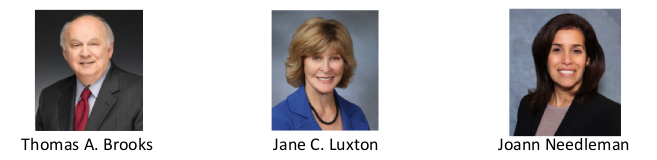
September 10, 2017If you’re interested in going, the Alternative Finance Bar Association event on Wednesday is open to both funding company executives and industry attorneys. The New Regulatory Challenges Facing Small Business Lending: Navigating the New Frontier will feature Joann Needleman, Esq., Jane Luxton, Esq. & Tommy Brooks, Esq. from Clark Hill PLC in the NYC Bar Association Offices on 42 West 44th Street in New York City.
To register or for more information, contact Tiffany Diaz at Tiffany@LRohanlaw.com.
The original announcement can be accessed here.
ShopKeep Joins the MCA Crowd. Are Loans Next?
September 8, 2017
ShopKeep, an iPad-based cloud-connected technology company designed around POS and payments for small businesses, is expanding into MCAs with the launch of ShopKeep Capital in recent days. With its move into funding ShopKeep joins an area that competitor Square already operates in. But while both companies have unlocked the secret of customer acquisition they are not targeting the same small businesses.
Meanwhile this latest move into MCAs is just a step in what ShopKeep CEO Michael DeSimone describes as an evolution, one that could potentially lead to small business lending sooner than later.
“We had a lot of interest from our customers,” said DeSimone, referring to the nearly 25,000 small businesses that are on ShopKeep’s payment and software platform. ShopKeep Capital extends funding offers to eligible small businesses on the ShopKeep platform, and funding is approved within a couple of days.
Playing Field
ShopKeep is entering a space – MCAs — that is only getting more crowded, with the recent addition of iPayment, for instance. And while ShopKeep and Square operate in a similar market segment, they’re targeting different SMBs.
“Our customers tend to be larger than Square and more complex in their business models,” said DeSimone, pointing to the example of a restaurant with numerous employees and multiple locations. On average, customers on the ShopKeep platform generate sales of $350,000 per year.
As a payments company, ShopKeep’s customer acquisition strategy is tied directly to its software and payments businesses.
“This leverages our ability to understand the small business data flowing through our POS platform and manage it the way we do payments based on the premise of greater visibility into their business by the virtue of our payments platform,” said DeSimone.
He is quick to point out that ShopKeep is built on technology, and he said like every other part of the economy tech is disintermediating some parties and bringing others closer to the outcome they desire.
“The closer you are to the actual customer, the more your opportunity is to be able to be top of mind when they need something,” he said. “They have huge amounts of interaction with us. This level of interaction predicated on technology is really what creates the ability to have a relationship with the merchant to then be able to offer them a range of different products and services.”
 DeSimone describes ShopKeep more as a technology play than a funder.
“We have a lot of information most other providers of capital aren’t going to have unless they ask merchants to do a lot of work,” said DeSimone, pointing to an underwriting model that is almost 100% automated.
“We’ve built it to be largely pre-underwritten We only offer advances based on running the merchant through our underwriting model to see who comes up as a good candidate for ShopKeep Capital and making it available to them. We continually tweak the algorithm to make sure we are not being too tight or too loose,” he added.
Funding is the third revenue stream for ShopKeep, with software and payments representing the other two legs of the revenue stool. Meanwhile ShopKeep Capital is turning to its balance sheet to fund MCAs, but that is not the long-term plan.
“Currently it’s coming off our balance sheet, but it won’t be for very long. We have had several discussions with funding partners. And we expect over time we will migrate to more of a loan product and away from MCAs. We will explore the features and benefits of both to understand both our perspective and that of our customers,” said DeSimone, adding that there could be more clarity about the direction of this evolution in the next six months.
If ShopKeep does move into loans, the company could open up the platform to investors. “They are debt funds looking for returns and specific underwriting criteria. They will buy an advance or a loan eventually from what we originate. That’s the model we think we’ll go toward,” he said.
Something DeSimone and other lenders might want to keep in mind is a credit gap that exists among small businesses today, as described by Karen Mills, a senior fellow at Harvard Business School and former administrator of the U.S. SBA.
“There is no doubt that online lenders have identified an important segment that is not getting enough access to credit, but data also shows that borrowers are less satisfied with the interest rates and repayment terms from online lenders than from traditional banks. So even if small businesses are getting the loan, if it is not at an appropriate price, we should still consider this a credit gap,” Mills said.
Future Plans
While loans could be the next growth phase for ShopKeep Capital, this could be one of many new directions that the payments company takes. For instance, with key competitor Square, which boasts a market cap of approximately $10 billion, in pursuit of obtaining a bank charter, they could have company someday.
“It’s an interesting idea. It’s still very early for us but we’re not ruling anything out at this point,” DeSimone said.
For the near term, however, he is focused on ShopKeep Capital, for which he expects to make a couple of key hires for soon. “In my mind, this helps us to be more competitive with Square. I think it’s a really good service for our customers and it fits very well into the other pieces of our business,” said DeSimone.
Marketplace Lending Investors Ponder Loan Defaults, Issues in Harvey’s Path
September 1, 2017On the LendAcademy Forum, a Lending Club investor posted that he had been selling notes belonging to Houston borrowers in anticipation of payment issues stemming from Hurricane Harvey. Other users chimed in with assessments of their own personal exposure, including one who noticed that affected zip codes made up a little under 4% of his outstanding principal. By now, secondary note buyers probably have their radar up to heed caution with these.
Elsewhere in the industry, MCA firm Strategic Funding and lender Breakout Capital both announced that they were suspending debits to businesses they’ve funded in the Hurricane’s path.
A message for our customers located in flood-affected areas of Texas pic.twitter.com/4nc8bjWzg5
— Strategic Funding (@SFSCapital) August 28, 2017
The OCC is also advocating that banks suspend payments in those areas from ATM fees to loans. They should consider “restructuring borrowers’ debt obligations, when appropriate, by altering or adjusting payment terms. Payment extensions should reflect individual borrower situations and generally should not exceed 90 days,” according to a statement.
Ford, MCA Funders Take Pages from Tech-Based Underwriting
August 29, 2017 Alternative lending fever has spilled over into the auto sector, evidenced by the financing arm of automaker Ford’s decision to move beyond FICO and deeper into machine learning for credit decisions. Ford is moving toward alternative lending strategies in an attempt to capture a wider swath of borrowers, including those with “limited credit histories,” and bolster auto sales.
Ford’s decision comes on the heels of a study with fintech play ZestFinance, the results of which favor a machine-learning based approach to credit decisions.
Ford’s decision comes on the heels of a study between Ford Credit and fintech play ZestFinance, the results of which favor a machine-learning based approach to credit decisions.
“There is absolutely no change in Ford Credit’s risk appetite. Ford Credit is maintaining the consistent and prudent standards it has applied for years. This enhanced ability to look at data will help us more appropriately place applicants along the full spectrum of the risk scale. The result will be some that some people may appear on that scale who did not before, and some applications that are approved today might not be approved in the future. The risk appetite remains the same,” Ford Credit spokesperson Margaret Mellott told AltFinanceDaily.
Until now, there has been no aspect of machine learning in Ford Credit’s underwriting process.
“The study showed improved predictive power, which holds promise for more approvals … and even stronger business performance, including lower credit losses,” according to Joy Falotico, Ford Credit chairman and CEO, in a press release.
Ford is targeting consumers with a lack of credit history, especially the millennial generation.
Tech-Driven Underwriting
While Ford embraces tech-driven underwriting, this style is already knit into the fabric of the MCA and online lending communities.
To name a few, Upstart takes a machine learning approach. FundKite developed algorithmic-based underwriting. UpLyft’s underwriting process has an automated component to it.
 Alex Shvarts, CTO and director of business development at FundKite, a balance-sheet based funder, said the company has been writing algorithms since the early days. Now the tech- and algorithm-driven funder wants to expand into small business lending in Q1 2018.
“We’re building our technology to the point that by Q1 next year, we will get into automated loan products. Our technology will be able to underwrite loan products within seconds. We have a lot of data we put together, which allows us to price deals and make offers relatively quickly,” he said.
By a lot of data, Shvarts is referring to hundreds of data points that are used to measure merchant performance. FundKite, which has a default rate of far less than 10 percent, takes the data, reworks and combines it, leading to a fast result.
“Besides the data points we look at the merchant from a collections point of view. If this person or business runs into trouble, could they go out of business or would they be okay?” he said.
That’s where the human element to the underwriting process comes in.
Human Element
While FundKite relies on algorithm-driven underwriting, the funder is not running an online app yet. There is still a need for human participation surrounding data input, information that is then verified by machines.
“The human element is entering the information correctly, and the machine spits out predetermined pricing based on the business data points and industry,” said Shvarts, adding that FundKite views that information in the context of micro-trends in the industry as well as the overall market environment.
“We know that during certain seasons some merchants perform worse than others. The numbers say the merchant should get this, but we dig a little deeper and say no, this merchant can’t handle this much of an advance and repayment along those lines. The final touches are done by humans. Our technology is advanced so that we are able to get to that point a lot faster and more accurately,” Shvarts said.
Second Opinion
Michael Massa, CEO and founder of Uplyft Capital, points to a hybrid approach in the company’s credit underwriting, referring to the automated scoring portion of Uplyft’s underwriting model as a second opinion. “We believe there must be a hybrid of human and automated technology,” said Massa.
Uplyft relies on a proprietary scoring model. The model includes an automated function that attaches a unique rating to the small business based on certain features in the prospective borrower’s profile, such as a home-based versus business location and the number of years the company has been in business, to name a couple.
“It’s only as second opinion for our underwriters, really,” he said, adding that cash flow and affordability are major drivers of the credit decision. “In most cases we price at max affordability for the client while protecting them from overleveraging their accounts, allowing us to provide real help and establish merchant loyalty.”
 Second opinion or not the automated function is part of what makes Uplyft a fintech play, setting the funder apart from the banks. “They’re like the payphone and we’re the iPhone. They’re yellow cab and we’re Uber,” said Massa, adding better yet, “we’re Lyft.”
Uplyft is in the process of developing a trio of portals designed for merchants, sales partners and investors to be released shortly. “We are API-ing that now into our CRM,” said Massa.
Merchants can access the portal to apply for funding while sales partners use it to submit files and view a status. Investors can track their participation via the portal. The new portals will be available on the website and through a mobile app that Uplyft is in the final stages of developing.
Uplyft also recently inked an exclusive partnership with an undisclosed software company allowing merchants to link their bank account to the application, capturing six months of actual PDF bank statements in the process.
“It can help us with the initial credit decision and when we’re conducting final verifications. We get the actual bank statement. It’s a legitimate bank statement, not a rendition,” said Massa.
Fintech & Auto Finance
As for the auto industry, don’t be surprised to hear about further collaboration between the automakers and the fintech market. “Financial technology is key … as fintech can contribute to an even more seamless and better personalized vehicle financing experience for the consumer,” according to the Ford press release.
The AltFinanceDaily Golf Outing 2017 Was a Success
August 28, 2017 Thanks to everyone that attended AltFinanceDaily’s first ever industry golf outing at Marine Park Golf Course in Brooklyn, NY. And thank you to all the sponsors who helped make it a success!
A PHOTO ALBUM IS NOW LIVE

- SOS Capital
- Elevate Funding
- Hudson Cook, LLP
- Yellowstone Capital
- Signature Printing & Consulting
- Grassi & Co
- Central Diligence Group
- Sure Funding Solutions
- Unique Funding Solutions
- Imperial Advance
Official photos from the event should be available soon. In the meantime, follow us on Instagram to see them when they come out.
P.S. The inaugural conference for MCA and business loan brokers is COMING SOON. Visit http://brokerfair.org to receive updates on Broker Fair 2018.
Was Section 1071 of Dodd-Frank a Massive Mistake?
August 23, 2017Did Congress make a huge mistake by thinking small business loans were easily commoditized?
Pursuant to Section 1071 of Dodd-Frank, the CFPB is planning to collect data from companies engaged in small business finance in order to potentially screen for discrimination against women and minorities. Before deciding how exactly they’re going to do that, they’ve asked the public for comment, and the public… isn’t showing the law much love. Below are some excerpts of the nearly 300 responses already submitted.
We can tell all the stories we want, and hold all the hearings imaginable, and there is still no way to disguise the fact that implementing a HMDA-like reporting requirement will add cost, complexity, and rigidity to our amazingly customized lending
– Alan Gay
A loan priced properly for the risk may be acceptable for one institution and not acceptable to another. For example a client requests funds to open their second doughnut shop in town. One bank declines the loan because they do not specialize in food service business per lending policy and the banks appetite for risk. Another bank would consider the loan, however after reviewing the current competition decides that the market is saturated and the loan is too risky based on the three competitors within five miles. The third bank is willing to loan the money based on the cash flow of the owner and her husband, but will not take into account the expected cash flow from the business, and will require the collateral to include the primary residence of the client. The fourth bank is an SBA lender and proposes the client use the SBA program to mitigate the risk for the bank. The fifth bank declines the loan due to cash flows. They will not consider the revenues from the new location, because it is considered a start-up business. As I understand it the CFPB will collect the data from all five banks to determine “Fair Lending” similar to the consumer lending program. I find this problematic on many levels: I believe in the scenario presented all the lenders were fair. The data is redundant and will not show the result of credit search on the commercial loan request or accurate results.
– Doug Mitchell
Creating additional documentation and regulation only makes those in Congress and the CFPB feel better without truly adding benefit to our community and it’s businesses.
– Joseph Williams
COLLECTING AND AGGREGATING THIS INFORMATION WOULD BE A BURDEN THAT WOULD REQUIRE ADDITIONAL STAFF AND NOT CHANGE OUR HISTORY AND BUSINESS MANDATE OF SERVING OUR SMALL TOWN BUSINESSES.
– Dee Baertsch
As a community banker in rural Ohio I strongly urge the repeal of Section 1071 of the Dodd-Frank Act. The addition of another report will be counterproductive to lending to small businesses.
– Chuck Dixon
Commercial lending is a completely different animal from consumer lending, and has so many different aspects to consider. While a consumer loan is typically viewed from and ability and intent to pay by reviewing a consumer credit score and debt to income calculation, a commercial loan is viewed from not only current earnings but also projected earnings, the economic conditions surrounding the specific business/industry, competitiveness in the market, and the speed of obsolescence of the business’ products and services. It is so much more than pulling a credit report and getting the last two pay stubs.
– Brian Smith
The Race and Sex questions should be eliminated from all loans.
– David Ludwig
Our bank in particular will be unduly burdened by small business lending data collection.
– Casey D. Lewis, CRCM, First Bank & Trust
This new requirement will place a large burden on our small bank and staff as more time will be spent on data collection and reporting rather than giving the value added service to our actual customers. It also may increase the cost of credit to our borrowers in order to offset the increased compliance cost to comply.
– Anita Drentlaw
These regulation proposed by the CFPB will only act to hamper and restrict our ability to continue meet the credit need of our communities and will not provide any meaningful benefit to anyone.
– Jim Goetz
Adding new requirements to collect and report data related to these loans much like HMDA diverts time of our limited staff away from serving our customer needs and expends resources that do not help our community.
– James Milroy
The last thing I need is to spend even more of my time collecting data similar to the HMDA data we collect on other loans. It is a timely, costly and inefficient use of our resources which could be better utilized for spending more time with potential and current customers and lowering their interest rates. Very few businesses are the same which would lead to misrepresentation and baseless fair lending complaints.
– Daniel Mueller
By making our jobs harder, you are making it harder for small businesses to thrive.
– Joy Blum
I have seen first hand the negative effects of the HMDA collection and reporting to our bank. The increased work for our small bank has driven up our costs and is making it harder for us to compete. In addition to the negative impact on our bank mortgage customers pay a cost and as more and more community banks decide they can no longer provide these services the community will be left with fewer options.
– Jeff Southcott
Stop all the paper work to get a commercial loan. Enough is Enough!
– Jeff Spitzack
We are a small $65 Million dollar bank with limited personnel now being asked to police another segment of our customer base. We do not have the resources to carry out more regulatory burden.
– Girard J. Hoel, Chairman, The Miners National Bank of Eveleth
Commercial lending cannot be “commoditized” in the way that consumer lending can, nor can it be subject to simplified, rigid analysis which may generate baseless fair lending complaints.
– Steve Worrell
We are so heavily burdened with keeping up with all the changing regulations and requirements, it would be very burdensome for not only our bank, but many other community banks. There has to be a way to ensure the end results that you are looking to achieve without making it so hard on Community Banks. We feel that we have to really analyze if it is cost prohibitive to actually make the loan – and how does that help the small businesses?
– Margi Fleming
We would never decline a profit making loan because of the race or sex of the applicant. You would be appalled to know how little attention borrowers pay to the dozens of pages of disclosures required by regulation. Over disclosure is no disclosure.
– Douglas Krogh
Community banks simply do not have numbers on our side, either in manpower or funding, to seamlessly and efficiently absorb the vast and sweeping regulatory changes.
– Cheryl Hiller, 1st National Bank of Scotia
The new data collection will add additional staff at our institution. This salary will be passed on in the form of origination fees or increased rates to our small business customers. This is not fair to them, but with the increased regulatory demands by the CFPB on small business lending if this is adopted will increase their borrowing cost.
– Russell Laffitte
The burden of data collection and reporting would in effect end up costing our customers more to get a loan.
– Shannon Fuller
This tracking will be onerous on a small bank that stays competitive by maintaining a small staff like ours
– Jim Legare
Section 1071 will have a chilling effect on lenders’ ability to price for risk. This, in addition to the expense of data collection and reporting, may impact community banks’ ability to provide affordable commercial lending products and curb access to small business credit, an engine of local economic growth and job creation.
– Freeman Park
Please make every effort to prevent the added burden to small business lending and community bank processes by repealing Section 1071 of the Dodd Frank Act.
– Julie Goll